
Choosing the wrong bedding for your ball python isn’t just inconvenient—it can directly impact their health, stress levels, and ability to shed properly. As a dedicated snake parent, you want a substrate that supports their natural burrowing instincts, maintains essential humidity, and poses no risk of ingestion or injury. This guide cuts through the confusion to help you build a thriving, comfortable home for your scaled companion.
I’m Mo Mahin — the founder and writer behind Furric. For this guide, my research involved analyzing veterinary safety standards for reptile husbandry, studying material composition for optimal moisture retention, and synthesizing thousands of data points from real ball python owners regarding shedding success and enclosure hygiene.
From the plush, humidity-holding fibers of coconut to the natural structure of cypress mulch and the complete ecosystem of a bioactive mix, each option serves a distinct purpose. The ideal choice balances your snake’s physiological needs with your maintenance routine, creating a foundation for long-term well-being. Selecting a best substrate for ball python is a critical husbandry decision that directly influences respiratory health and successful ecdysis.
How To Choose The Best Substrate For Ball Python
A ball python’s substrate is its terrain. It needs to feel secure, maintain a humidity gradient between 60-80%, and be safe if accidentally ingested during feeding. The wrong choice can lead to respiratory infections, dysecdysis (bad sheds), or scale rot. Let’s break down the key factors.
Primary Material & Safety
Safety is paramount. Avoid cedar and pine shavings, as their aromatic oils are toxic to reptiles. Aspen, while popular for some snakes, molds quickly in the high humidity ball pythons require. The top contenders are coconut fiber/husk, cypress mulch, and sphagnum moss—all natural, digestible in small amounts, and free of harmful chemicals. The texture should be soft enough not to scratch the snake’s belly scales or get lodged in their heat-sensing pits.
Humidity Retention vs. Mold Risk
Ball pythons need consistent, elevated humidity. Substrates like fine coconut fiber and cypress mulch excel at holding moisture. However, poor ventilation can turn a damp corner into a mold colony. Larger chips (like coconut husk or reptile bark) offer better airflow at the surface while retaining moisture underneath, creating a healthier humidity gradient and reducing mold risk. A substrate that holds tunnels when burrowed is a sign of good moisture balance.
Ease of Maintenance & Spot Cleaning
You’ll be spot-cleaning waste regularly. Loose, fine substrates like coconut fiber can make finding urates tricky and may stick to prey items. Larger, chunkier substrates like coconut chips or bark make waste removal straightforward. Consider if you prefer a loose, ready-to-pour product or a compressed brick that expands with water, which offers better value but requires prep time.
Supporting Natural Behaviors
A good substrate should enrich your snake’s life. Ball pythons are cryptic burrowers; they love to tunnel and hide. A substrate that holds its shape when burrowed into provides mental stimulation and security. Observe your snake: if they’re constantly trying to burrow against the glass, their substrate may be too shallow or not the right consistency.
Quick Comparison
On smaller screens, swipe sideways to see the full table.
| Model | Type | Best For | Key Feature | Amazon |
|---|---|---|---|---|
| ReptiChip Loose Coconut Chip | Coconut Husk | Optimal Humidity & Cleanliness | Ready-to-use loose chips, excellent odor control | Amazon |
| The Bio Dude Terra Firma | Bioactive Soil | Complete Bioactive Setups | Pre-mixed, plant-ready, supports clean-up crews | Amazon |
| Zoo Med Repti Bark | Fir Bark | Mold Resistance & Reusability | Washable, holds humidity without soggy surface | Amazon |
| ReptiEarth Coconut Fiber | Fine Coconut Fiber | Deep Burrowing & Moisture | Fluffy, low-dust blend, resistant to compaction | Amazon |
| Zoo Med Eco Earth Loose | Coconut Fiber | Budget-Friendly Humidity | Loose, no expansion needed, compostable | Amazon |
| REPTI ZOO Coconut Chip | Compressed Husk | High-Value Bulk Bedding | Massive 72-quart yield from compressed block | Amazon |
| Zoo Med Forest Floor | Cypress Mulch | Naturalistic Look & Feel | Classic cypress mulch, retains moisture well | Amazon |
| Zilla Coconut Husk Brick | Compressed Fiber | Entry-Level Humidity Control | Expands dramatically, very cost-effective | Amazon |
| Galápagos Sphagnum Moss | Sphagnum Moss | Humidity Boosting & Decor | Perfect for humidity hides and mixing into substrates | Amazon |
In-Depth Reviews
1. ReptiChip Reptile Bedding Loose Coconut Chip

For keepers seeking a flawless balance of humidity control, cleanliness, and safety, ReptiChip’s loose coconut chip substrate is a standout champion. This isn’t a compressed brick; it’s ready-to-pour, pre-sorted husk that creates a perfect tropical forest floor, mimicking the natural environment ball pythons crave while making your maintenance routine remarkably simple.
The chip size is the key to its success. Large enough to prevent ingestion during feeding and to avoid sticking in heat pits, yet porous enough to hold significant moisture at the lower layers while keeping the surface drier. This creates a healthy humidity gradient that discourages scale rot. Snake parents consistently report that a few cups of water poured into the corners keep humidity stable for days. Furthermore, its natural odor-absorbing properties encapsulate waste, keeping the enclosure fresher between cleanings.
Feedback from the ball python community is overwhelmingly positive. A rescuer noted it eliminated worries about substrate sticking in their snake’s mouth or heat pits, a common issue with finer fibers. Another long-term user credits it with resolving persistent shedding issues. It represents a premium choice that delivers on its promises, justifying its position as a top-tier substrate for serious hobbyists.
Why we love it
- Excellent humidity retention with a dry surface layer to prevent scale rot.
- Loose, ready-to-use format eliminates the mess of expanding bricks.
- Chip size minimizes risk of ingestion and is easy to spot clean.
- Naturally absorbs odors, keeping the enclosure smelling fresh.
Good to know
- Liquid waste is absorbed rapidly, requiring removal of a larger area of soiled substrate.
- A mid-range option that is an investment compared to basic compressed bricks.
2. The Bio Dude Terra Firma Substrate

If you’re ready to graduate to a self-sustaining ecosystem for your ball python, The Bio Dude’s Terra Firma is the professionally formulated foundation you need. This isn’t just bedding; it’s a living soil designed to support live plants, beneficial microbes, and clean-up crews like springtails and isopods, creating a dynamic, naturalistic vivarium that benefits both snake and keeper.
The magic lies in its precise blend of organic components, which provides perfect aeration and drainage to prevent anaerobic pockets and stagnation. It holds burrows and tunnels beautifully, satisfying your python’s instinct to dig and hide. For plant enthusiasts, this substrate is a dream—it supports everything from succulents to tropicals, allowing you to build a stunning landscape. Keepers with bioactive setups report their ball pythons exhibit more natural behaviors and that humidity stabilizes effortlessly through the soil and plant life.
Experienced hobbyists managing multiple enclosures swear by its consistency. One breeder with 18 ball python tanks switched exclusively to Terra Firma, noting thriving plants, successful clean-up crews, and perfectly maintained humidity between 50-60% simply through watering the plants. It represents a significant upfront investment in your pet’s environment, but for a truly holistic habitat, it is unparalleled.
Why we love it
- Creates a complete, bioactive ecosystem for plant growth and clean-up crews.
- Superior drainage and aeration prevent mold and harmful bacteria.
- Holds tunnels and burrows excellently for natural snake behavior.
- Can last the lifetime of the enclosure with proper bioactive maintenance.
Good to know
- A premium, specialized product with a higher initial cost.
- Requires knowledge and commitment to bioactive enclosure maintenance.
3. Zoo Med Premium Reptile Bark
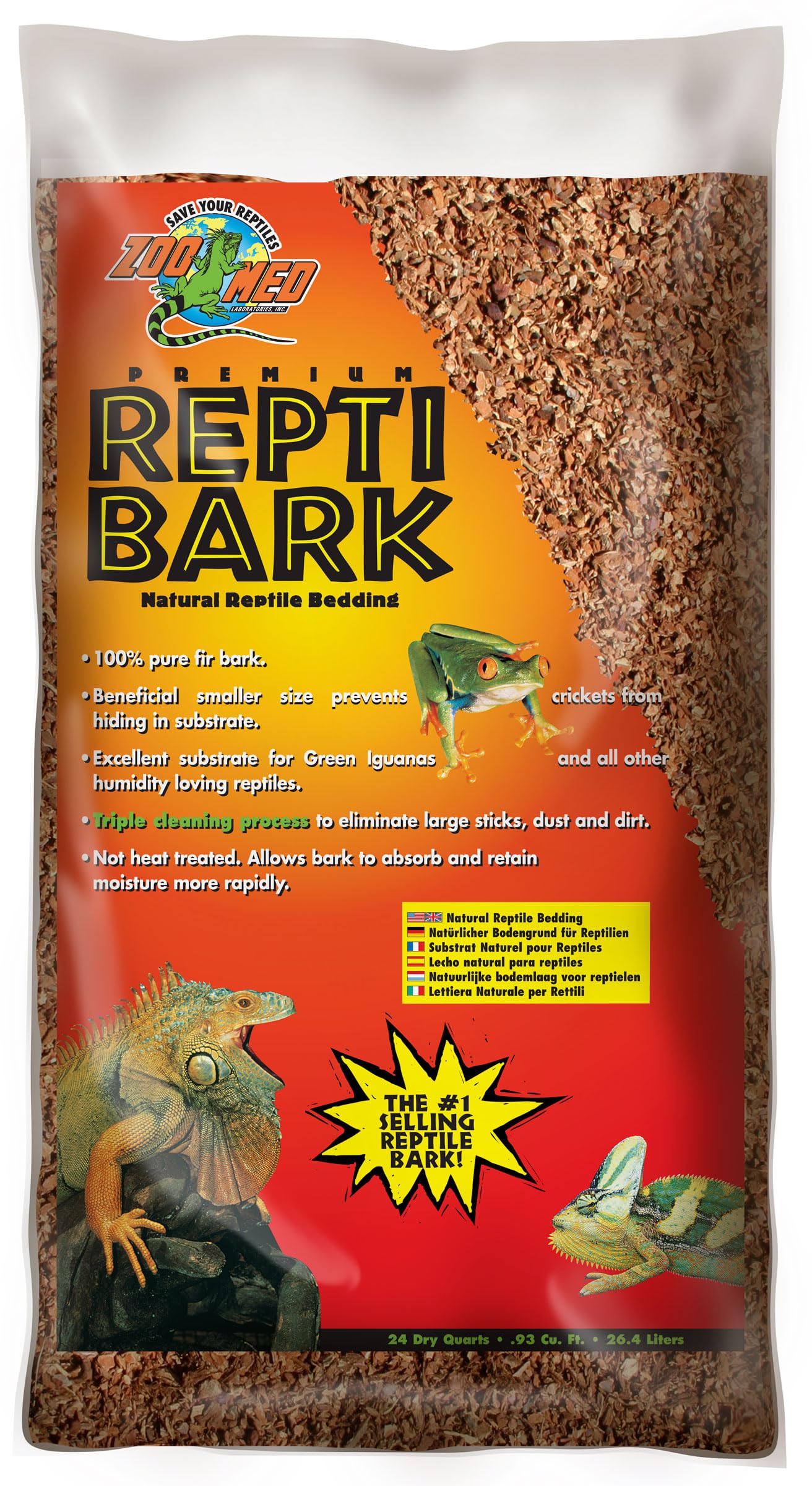
For ball python parents who have battled mold in constantly damp substrates, Zoo Med’s Repti Bark offers a brilliant solution. Made from fir tree bark, its chunky, irregular pieces create ample air pockets at the surface, allowing moisture to evaporate evenly while still maintaining high humidity levels beneath. This structure is inherently resistant to the soggy, compacted conditions where mold thrives.
A standout feature is its reusability. The bark can be washed, sterilized, and dried for reuse, offering exceptional long-term value. Its size also prevents feeder rodents from burrowing out of sight and reduces the risk of accidental ingestion compared to loose fibers. Many keepers find the natural, forest-floor aesthetic particularly appealing, and the bark’s ability to hold moisture without becoming waterlogged is frequently praised. Those in humid climates or with less-than-ideal ventilation find this substrate to be a game-changer for maintaining a healthy enclosure.
Long-term users are vocal advocates. One keeper with a collection of ten ball pythons declared it the best they’ve tried, specifically highlighting how it eliminates worries about blockage from ingested substrate. Another mentioned their snake has had perfect sheds and no mold issues since switching, even with the high humidity required. It’s a robust, reliable choice that prioritizes a healthy microclimate.
Why we love it
- Chunky texture provides excellent surface airflow, drastically reducing mold risk.
- Can be washed and reused multiple times, offering great long-term value.
- Holds humidity effectively without becoming soggy or compacted.
- Natural look and pleasant, woody scent.
Good to know
- Bark pieces can be quite large; some sifting of oversized chunks may be desired.
- Spot-cleaning solid waste is easy, but liquid waste can seep deep into the layer.
4. ReptiEarth Fluffy Coconut Fiber

Does your ball python love to disappear completely, crafting intricate tunnels beneath the surface? ReptiEarth’s specially formulated 70-30 blend of micro and small-strand coconut fiber is engineered for them. This substrate is fluffier and more resistant to compaction than standard coconut fiber, creating a supportive matrix that holds elaborate burrows without collapsing, providing immense security and enrichment.
This product arrives ready-to-use, triple-washed, and remarkably low-dust. Its fine texture holds immense amounts of moisture, making it a powerhouse for humidity. Savvy keepers often use it as a deep, moisture-rich base layer, topping it with larger chips like ReptiChip to keep the surface dry and prevent fibers from sticking to their snake. The community feedback highlights its efficacy; one user maintains 75% humidity for their pythons with only occasional watering using this method, resulting in glowing skin and perfect sheds.
It’s important to note that because it’s so fine, it can stick to wet prey items. Most experienced keepers recommend feeding in a separate enclosure or ensuring prey is thoroughly dried. For those who prioritize their snake’s burrowing satisfaction and need top-tier humidity retention, this substrate is a specialized tool that delivers profound results.
Why we love it
- Exceptional, loose texture perfect for deep burrowing and tunneling.
- Holds humidity incredibly well, ideal for snakes with persistent shedding issues.
- Triple-washed and ready to use straight from the bag with minimal dust.
- Works brilliantly as a moisture-retentive base layer in a substrate sandwich.
Good to know
- Fine fibers can stick to damp prey during feeding; target feeding or a separate feed box is advised.
- Can hold too much moisture if used alone in a poorly ventilated tank.
5. Zoo Med Eco Earth Loose Coconut Fiber

As a trusted staple in reptile keeping, Zoo Med’s loose Eco Earth offers a fantastic balance of performance and convenience for ball python owners. Unlike compressed bricks, this substrate comes ready to pour straight from the bag, eliminating the soaking, breaking, and drying process. It’s an excellent entry point into coconut-based substrates, providing reliable humidity retention without the prep-work fuss.
The soft, earthy texture is gentle on scales and encourages natural digging behavior. Many snake parents report their animals visibly prefer it over other options, spending more time exploring on the ground. Its moisture-holding capabilities are solid, though it may require more frequent misting than a chip-based substrate in very dry homes. An often-overlooked benefit is its environmental friendliness; old substrate can be composted or added to garden soil. The large 24-quart bag offers solid value, often covering multiple enclosure changes.
Community observations are telling. One keeper noted their carpet python, who previously avoided the ground on aspen, began spending equal time on and off the substrate after switching to Eco Earth. The consensus is that it’s a reliable, snake-approved choice that simplifies the keeping process, though mindful feeding practices are recommended to avoid substrate ingestion.
Why we love it
- Extremely convenient loose format, no expansion or prep required.
- Soft, natural texture that many snakes demonstrably prefer for movement.
- Holds moisture well and is 100% compostable and eco-friendly.
- Consistently available and a trusted brand in reptile care.
Good to know
- Fine fibers can cling to wet prey and may be ingested during feeding.
- Can dry out on the surface faster than chunkier substrates, requiring regular misting.
6. REPTI ZOO Coconut Chip Substrate

For keepers with multiple enclosures or those who prefer to buy substrate in serious bulk, the REPTI ZOO compressed coconut chip block presents a formidable value proposition. This dense, 10-pound brick hydrates into a massive amount of bedding—approximately 2.5 cubic feet—making it one of the most cost-effective ways to source quality coconut husk chips on a per-quart basis.
The resulting chips are a good size for ball pythons, offering decent moisture retention and a natural look. Many users find the expansion process straightforward, though breaking apart the fully hydrated block requires some effort. It’s a popular choice for breeders and multi-snake households where substrate costs can add up quickly. Positive reports highlight its effectiveness for maintaining humidity and its long-lasting nature between changes.
A critical note of caution comes from the community: quality control appears variable. While many have had great experiences, several detailed reviews reported finding foreign materials like rocks, plastic, and nylon ties within the brick, with one keeper attributing a subsequent case of scale rot in their snake to this contaminated batch. It underscores the importance of meticulously inspecting and sifting any compressed substrate before use. The value is undeniable, but it requires extra vigilance.
Why we love it
- Exceptional yield from a single compressed block, offering tremendous value.
- Produces nice, sized coconut husk chips suitable for humidity and burrowing.
- A go-to for keepers with several large enclosures to furnish.
- Often available at a competitive mid-range price point for the volume.
Good to know
- Multiple reports of foreign debris (rocks, plastic) found within the brick, requiring careful inspection.
- Hydrating and breaking apart the dense block can be a physical, messy process.
7. Zoo Med Forest Floor Bedding

A time-tested classic in the reptile world, Forest Floor cypress mulch has been bedding snakes for decades for good reason. It provides an instantly naturalistic “forest floor” aesthetic, retains moisture effectively to boost humidity, and has a pleasant, earthy smell. For many long-time ball python enthusiasts, this is the familiar, reliable substrate they’ve always turned to.
Cypress mulch is naturally resistant to decay and mold compared to many other woods, making it a durable choice. It encourages natural behaviors, with keepers reporting their snakes pushing it into mounds and paths. The bagged format is convenient, though the mulch pieces can vary in size, with occasional large chunks that might need to be removed. It’s a versatile substrate that also works well when mixed with coconut fiber to create a custom blend that holds humidity and structure.
The legacy of this product is evident in user testimonials. One keeper shared that they’ve used it for their ball python for nearly twenty years, and their snake consistently engages with it. Others appreciate its availability at local pet stores. While it may not have the specialized features of some newer coconut products, its proven track record and natural properties make it a solid, trustworthy standby.
Why we love it
- Classic, natural cypress mulch with a proven long-term safety record.
- Creates an authentic forest-floor appearance and holds humidity well.
- Naturally mold-resistant and encourages natural pushing/burrowing behavior.
- Widely available and a familiar choice for many experienced reptile owners.
Good to know
- Piece size can be inconsistent, requiring sorting of very large chunks.
- Can be slightly dustier than some processed coconut alternatives.
- Some keepers bake it before use to eliminate any potential pest concerns.
8. Zilla Coconut Husk Brick

If your primary concern is maximizing every dollar spent on substrate, the Zilla Coconut Husk Brick is a legendary value champion. This small, compressed brick expands up to five times its size when hydrated, producing a voluminous amount of fine coconut fiber that can fill a sizable enclosure. For new snake owners or those on a strict budget, it’s an incredibly economical way to provide a humidity-friendly substrate.
The resulting fiber is soft, encourages burrowing, and holds moisture admirably. It’s a fantastic introduction to the benefits of coconut substrate without a significant financial commitment. The expansion process is a bit messy but straightforward, and many keepers enjoy the “magic” of watching the tiny brick transform. It’s particularly popular for quarantine enclosures, temporary setups, or for those who don’t mind the prep work in exchange for major savings.
Feedback from the frugal herpetocultural community is enthusiastic. Reviews repeatedly use phrases like “most bang for your buck” and “great value.” Keepers appreciate that it allows for frequent, affordable substrate changes, which is key to maintaining hygiene. It’s the undisputed king of cost-per-gallon coverage, making proper ball python husbandry accessible to everyone.
Why we love it
- Extremely cost-effective, offering the highest yield per dollar.
- Expands into a soft, humidity-retentive coconut fiber perfect for burrowing.
- Ideal for temporary setups, quarantine tanks, or budget-conscious keepers.
- A small, easy-to-store brick that turns into a large volume of substrate.
Good to know
- Requires time and mess to properly hydrate and break apart.
- Produces a fine fiber that can stick to prey and is prone to ingestion if fed in the enclosure.
- Can compact over time and may dry out unevenly if not mixed well during hydration.
9. Galápagos Green Sphagnum Moss

While not a primary substrate for a full enclosure, no ball python toolkit is complete without sphagnum moss. Galápagos Green Sphagnum Moss is a superb tool for targeted humidity management. Its primary use is inside a snake’s humid hide—a critical microclimate that aids in perfect sheds. You can also mix handfuls into your main substrate to boost local moisture retention or use it as a decorative, moisture-rich top layer.
This moss is long-fibered and holds many times its weight in water, releasingit slowly to maintain a damp environment for days. The vibrant green color (note: it is dyed) adds a pop of naturalistic flair to the enclosure. Many keepers find their snakes specifically seek out and rest on patches of moist moss, especially in the days leading up to a shed.
It’s important to acknowledge the dye, as noted by several reviewers. The moss is intentionally colored green for aesthetic purposes, and some keepers observed colored runoff when soaking it. For those strictly avoiding dyes, seeking a natural, undyed sphagnum moss might be preferable. However, for its primary function as a humidity aid inside a hide, its effectiveness is widely praised by the community.
Why we love it
- Unmatched for creating a high-humidity microclimate in a shedding hide.
- Can be mixed into substrate to locally boost moisture retention.
- Long fibers hold water effectively and release it slowly over time.
- Adds a natural, decorative element to the terrarium landscape.
Good to know
- The green color is from dye, which may runoff when first wetted.
- Can develop mold if kept too wet without adequate air circulation.
- Not intended as a standalone primary substrate for the entire enclosure.
Safety & Care Tips
Preventing Scale Rot
Scale rot is a bacterial infection caused by prolonged contact with wet, soiled substrate. Ensure your substrate is moist, not soggy. Pour water into the corners or underneath the top layer to hydrate the base, leaving the surface dry. Provide a humid hide with sphagnum moss for shedding, rather than saturating the entire enclosure. Regularly spot-clean all waste immediately.
The Substrate “Sandwich” Method
For optimal humidity with a dry surface, use a layered approach. Start with a 2-3 inch base of moisture-retentive material like ReptiEarth or coconut fiber. Lightly moisten this layer. Then, add a 1-2 inch top layer of chunkier, drier material like ReptiChip or Repti Bark. This creates a humidity reservoir below while keeping the surface area where your snake rests arid and mold-resistant.
FAQ
Is coconut fiber safe if my ball python eats some during feeding?
How often should I completely change my ball python’s substrate?
Final Thoughts: The Verdict
For most pet parents, the best substrate for ball python winner is the ReptiChip Loose Coconut Chip because it masterfully balances humidity control, ease of cleaning, and safety from ingestion. If you want to create a self-sustaining, natural ecosystem, grab the The Bio Dude Terra Firma. And for exceptional value and deep burrowing satisfaction, nothing beats the ReptiEarth Fluffy Coconut Fiber as a base layer. Your choice ultimately builds the foundation for your snake’s health and happiness.