
Navigating a chronic kidney disease (CKD) diagnosis for your cat is a journey filled with love, worry, and a deep need for clear, actionable guidance. Choosing the right food is the single most important daily intervention you can provide, yet the options are overwhelming and the nutritional science is dense. This guide exists to cut through the confusion.
I’m Mo Mahin — the founder and writer behind Furric. My expertise in this area is built on analyzing countless veterinary nutrition studies, dissecting the formulations of therapeutic diets, and synthesizing feedback from a community of dedicated CKD cat parents to understand what truly works in the real world.
My goal is to translate the complex world of renal nutrition into a practical roadmap, empowering you to make a confident choice that supports your cat’s well-being, appetite, and quality of life. Choosing the best wet cat food for kidney disease is a critical step in managing their condition effectively and compassionately.
How To Choose The Best Wet Cat Food For Kidney Disease
Selecting food for a cat with CKD isn’t about finding the “best” in a vacuum; it’s about finding the *right* food for your individual cat’s stage of disease, taste preferences, and associated health needs. A food that sits untouched is worse than a theoretically “less perfect” one they’ll eagerly eat. Use these criteria as your filter.
Phosphorus Content: The Non-Negotiable Metric
Elevated blood phosphorus is a primary driver of CKD progression and clinical signs. The goal is to find a food with restricted, highly bioavailable phosphorus. Look for explicit claims of “low phosphorus” or “phosphorus controlled.” Be wary of foods that lower percentages artificially with fillers like powdered cellulose; the phosphorus that is present should be from quality sources and easily managed by compromised kidneys.
Protein: Quality Over Drastic Quantity Reduction
While reducing excessive protein workload is important, cats are obligate carnivores and require high-quality protein to prevent muscle wasting. Modern renal diets focus on providing moderate levels of highly digestible, bioavailable protein (like egg or hydrolyzed proteins) rather than extreme protein restriction. The protein should support lean body mass without overburdening the kidneys.
Moisture & Hydration Support
Wet food is essential for CKD cats, who are prone to dehydration. Beyond the base moisture content, look for broths, gravies, or hydrating purées that encourage drinking through eating. Some formulas are specifically designed with “bone-free” proteins to reduce mineral load and increase the hydration potential of the gravy.
Prescription vs. Non-Prescription (OTC)
Prescription Diets: Formulated under veterinary supervision for specific disease stages. They offer precise nutrient control (phosphorus, sodium, protein) and often include targeted functional ingredients (e.g., kidney defense prebiotics, joint support). Legally require vet authorization.
Non-Prescription Diets: Often marketed as “kidney support” or “low phosphorous.” Can be excellent for early-stage CKD, picky eaters who refuse RX food, or as a rotational option. Scrutinize the guaranteed analysis and ingredient list closely, as standards vary.
Palatability and Texture
A CKD cat’s appetite can be finicky due to nausea. Offering variety in texture—chunks in gravy, shredded, pâté, or stew—can help sustain intake. What your cat will reliably eat is the most important factor. Many caregivers find success rotating between 2-3 approved formulas to prevent taste fatigue.
Quick Comparison
On smaller screens, swipe sideways to see the full table.
| Model | Type | Best For | Key Feature | Amazon |
|---|---|---|---|---|
| Hill’s k/d + j/d Stew | Prescription | Cats with kidney & joint issues | Dual kidney & mobility support | Amazon |
| Forza10 Renal Wet Food | Non-Rx | Picky eaters needing variety | Hydrolyzed protein, GMO-free | Amazon |
| Weruva Wx Chicken Gravy | Non-Rx | Maximizing hydration intake | 50% less phosphorus, bone-free | Amazon |
| Purina Pro Plan NF Early Care | Prescription | Early-stage kidney management | Moderate protein, prebiotic fiber | Amazon |
| Hill’s k/d Chicken Stew | Prescription | Vet-recommended standard | ActivBiome+ Kidney Defense | Amazon |
| Blue Buffalo K+M | Prescription | Cats refusing other RX foods | Combined kidney & joint support | Amazon |
| Weruva Wx Tilapia Purée | Non-Rx | Cats preferring fish flavors | Ultra-low phosphorus purée | Amazon |
| Hill’s k/d Tuna Stew | Prescription | Adding flavor rotation | Tuna flavor, chunk in gravy | Amazon |
| Purina Pro Plan NF Advanced | Prescription | Advanced kidney disease | Reduced protein, omega-3s | Amazon |
In-Depth Reviews
1. Hill’s Prescription Diet k/d + j/d Kidney & Mobility Care

For the cat facing the dual challenges of kidney disease and age-related joint stiffness, this combination formula from Hill’s is a standout. It represents a premium tier of veterinary therapeutic nutrition, addressing two major quality-of-life concerns in one clinically tested recipe. It’s specifically designed for senior cats whose mobility is as much a priority as managing their renal values.
The foundation is Hill’s proven kidney support: controlled phosphorus and sodium levels to ease renal workload, plus their exclusive ActivBiome+ Kidney Defense, a prebiotic blend targeting gut-kidney health. Where it diverges is the added mobility component, with nutrients like glucosamine, chondroitin, and L-carnitine to support cartilage and muscle mass. The texture—tender chunks in a savory gravy—is consistently reported as highly palatable, which is half the battle.
Caregivers managing multi-condition seniors report this food can simplify feeding routines. A common sentiment from the community is relief at finding a single food that effectively supports both systems without compromise. It’s a strategic choice for extending vitality and comfort in cats with concurrent arthritis and CKD.
Why we love it
- Comprehensive two-in-one support for kidney and joint health, reducing the need for separate supplements.
- Features Hill’s proprietary ActivBiome+ prebiotic technology for targeted renal support.
- Chunks in gravy texture is widely accepted by picky senior cats, encouraging consistent intake.
- Backed by extensive clinical research and is a vet-recommended standard.
Good to know
- As a prescription diet, it requires ongoing authorization from your veterinarian.
- Some caregivers note the odor is strong, though this often signals palatability to cats.
- Falls into the higher investment category for specialized therapeutic nutrition.
2. Forza10 Renal Active Wet Cat Food

Forza10 brings European veterinary expertise to the table without the need for a prescription, making it a powerful option for early intervention or for cats who resist traditional renal diets. This Italian-made pâté is crafted with a clear philosophy: use high-quality, limited ingredients to support renal and cardiac health while maximizing digestibility.
The core of its formulation is hydrolyzed protein and potato protein, which provide controlled, easily processed amino acids without excess phosphorus. It’s further enriched with botanical extracts like cranberry, dandelion, and clover, chosen for their supportive properties. The commitment to being free from GMOs, by-products, and artificial additives is a significant draw for parents seeking a clean-label renal option. The soft pâté texture is easy for older cats to lap up and can be easily mixed with water for extra hydration.
Stories from feline guardians often highlight surprising success with notoriously finicky cats. Many describe a cat in later stages of CKD “wolfing down” this food after rejecting others, which is an immense emotional relief when maintaining caloric intake is critical. It serves as a testament to its palatability and gentle formulation.
Why we love it
- No prescription required, offering immediate access to a vet-formulated renal diet.
- Hydrolyzed proteins and potato protein provide excellent phosphorus control and digestibility.
- Clean ingredient list free from common fillers, GMOs, and artificial additives.
- Soft pâté texture is easy to eat and hydrate, often loved by cats who typically dislike pâté.
Good to know
- Some long-term users have noted recipe changes over time that affected their cat’s acceptance.
- Primarily available in a lamb flavor, which may not suit all feline preferences.
- The large 32-pack format is a commitment for a cat trying a new food.
3. Weruva Wx Phos Focused Chicken in Gravy

Weruva’s Wx line tackles renal nutrition with a unique and intelligent approach: dramatically reduce phosphorus by using “bone-free” proteins, resulting in a broth that’s inherently lower in minerals. This Chicken in Gravy formula isn’t just low phosphorus; it’s a hydration vehicle disguised as a meal, which is precisely what many CKD cats desperately need.
The key innovation is the removal of bone material from the protein source, which is a primary contributor of dietary phosphorus. What remains is highly bioavailable chicken protein in a flavorful, thin gravy that cats find irresistible. The “gravy” is more of a light, drinkable broth, allowing caregivers to add even more water to boost fluid intake significantly. The shredded chicken texture provides a satisfying chew that many cats prefer over pâté.
Feedback from the trenches of CKD care is emphatic: cats who had given up on eating often rediscover their appetite with this food. The consensus is that the combination of appealing texture, drinkable broth, and a palatable flavor profile can be life-changing for cats struggling with nausea and dehydration. It’s a frontline tool for encouraging voluntary fluid consumption.
Why we love it
- The bone-free protein concept creates a naturally low-phosphorus, hydrating broth.
- Shredded texture in abundant gravy is highly palatable and encourages drinking.
- Allows for easy addition of extra water without diluting flavor, supercharging hydration.
- Non-prescription and made with natural ingredients, free from carrageenan and fillers.
Good to know
- The 3-ounce can size may be inefficient for larger appetites or multi-cat households.
- Some cats may simply lick the broth and leave the shreds, requiring a bit of encouragement.
- As with any food, palatability isn’t universal; a small subset of cats may reject it.
4. Purina Pro Plan Veterinary Diets NF Early Care
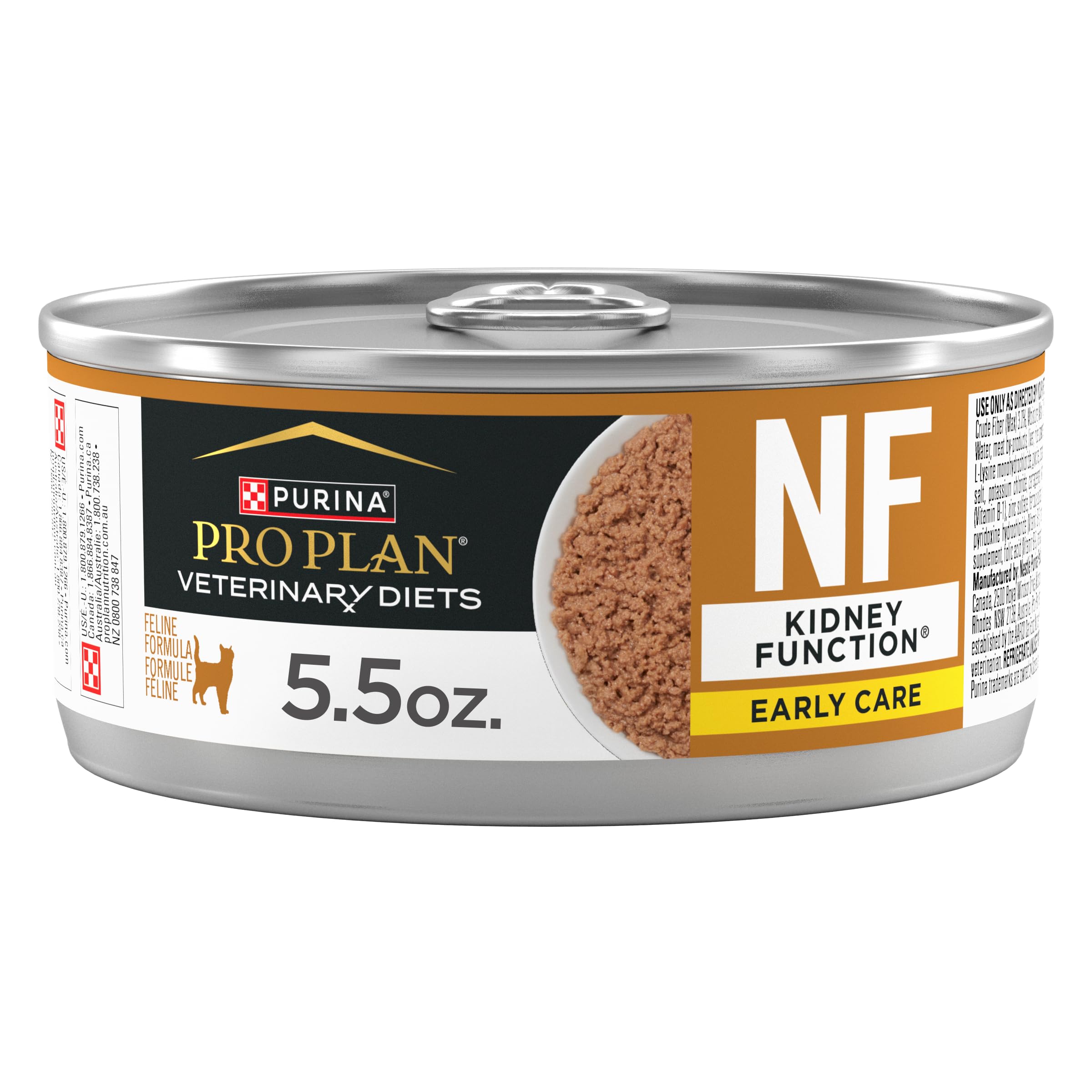
When your veterinarian diagnoses early-stage kidney disease, this Purina Pro Plan formula is a common and effective first line of defense. Designed for “Early Care,” it provides moderate levels of high-quality protein—enough to maintain muscle mass without overtaxing the kidneys—alongside the essential phosphorus restriction needed to slow disease progression.
Its formulation is a balanced blend of targeted nutrients. It includes omega-3 fatty acids (EPA & DHA) from fish oil for their anti-inflammatory benefits, antioxidants to combat oxidative stress, and a prebiotic fiber to nourish a healthy gut microbiome, which is increasingly linked to overall wellness. The pâté is smooth and moist, and many cats transition to it well from non-prescription pâtés. For guardians, it offers the confidence of a scientifically backed, vet-prescribed diet at the onset of the CKD journey.
Parents of cats newly diagnosed often express gratitude for a prescription option their cat will actually eat. Reviews frequently mention that cats maintain good weight and energy on this diet, and some even see improved kidney values on subsequent blood work. It represents a proactive, manageable step in long-term disease management.
Why we love it
- Specifically formulated for early-stage CKD, balancing protein maintenance with phosphorus control.
- Includes a beneficial package of omega-3s, antioxidants, and prebiotic fiber for whole-body support.
- Salmon-flavored pâté is generally well-accepted, even by cats new to therapeutic diets.
- Trusted Purina Pro Plan Veterinary Diets formulation backed by extensive research.
Good to know
- As a pâté, it may not appeal to cats who exclusively prefer chunks, shreds, or gravies.
- Requires a veterinary prescription for purchase.
- Some shipments have been reported to arrive with dented cans, so inspect upon delivery.
5. Hill’s Prescription Diet k/d Chicken Stew

This is the archetypal prescription renal diet—the one most veterinarians reach for first. Hill’s k/d Chicken & Vegetable Stew has a long history of clinical use and proven results in supporting kidney function and improving quality of life. It’s a reliable, no-surprises choice for cats across various stages of CKD.
The stew leverages Hill’s ActivBiome+ Kidney Defense technology and provides controlled levels of phosphorus and sodium. What sets this particular formula apart is its texture: small, tender chunks in a savory gravy. This can be a game-changer for cats that turn their noses up at the more common renal pâtés. The taste is designed with picky eaters in mind, using wholesome ingredients like chicken and vegetables to trigger appetite.
Long-term users of this food often report stable kidney values and a good quality of life for their senior cats. A recurring theme is that while the smell might be strong to human noses, feline patients frequently find it irresistible. It’s a workhorse diet that forms the dependable backbone of many successful CKD management plans.
Why we love it
- The #1 vet-recommended therapeutic pet food, with extensive clinical proof behind it.
- Chunks in gravy texture is highly successful with cats resistant to pâté-style foods.
- Contains ActivBiome+, a targeted prebiotic blend for gut-kidney axis support.
- Formulated with elevated essential amino acids to help preserve precious muscle mass.
Good to know
- Some caregivers find the cost of long-term feeding to be a significant consideration.
- Limited flavor variety within the chunk-in-gravy line can lead to taste fatigue over time.
- Requires a prescription and ongoing veterinary oversight.
6. Blue Buffalo Veterinary Diet K+M

Blue Buffalo brings its “natural” ingredient philosophy to the prescription realm with this K+M (Kidney + Mobility) formula. It’s designed for the cat whose renal issues are accompanied by the need for joint support, offering a familiar brand alternative for pets who may have eaten Blue Buffalo diets earlier in life.
This pâté starts with real chicken as its primary protein source, controlled for kidney workload, and is fortified with glucosamine and chondroitin for joint health. It adheres to Blue’s standards by excluding chicken by-product meals, corn, wheat, soy, and artificial preservatives. The texture is a softer, more moist pâté compared to some other prescription brands, which some cats find more appealing. For guardians seeking a therapeutic diet with a recognizable, whole-food ingredient approach, this is a compelling option.
Anecdotes from the community highlight this as a “last resort” success story for cats who staunchly refused other prescription renal foods. The familiar taste and texture profile of the Blue brand seem to bridge the gap for some finicky felines, making the transition to a therapeutic diet less stressful for everyone involved.
Why we love it
- Combines essential kidney support with glucosamine and chondroitin for joints.
- Formulated without common fillers like corn, wheat, or soy, and no artificial flavors.
- Softer pâté texture can be more palatable for cats rejecting drier prescription pâtés.
- Often succeeds where other prescription diets have failed due to picky eating.
Good to know
- The product image can be misleading; it is a pâté, not chunks or shreds.
- There have been consistent reports of receiving cases with dented or damaged cans.
- As a prescription diet, availability depends on your vet’s authorization.
7. Weruva Wx Phos Focused Tilapia & Tuna Purée
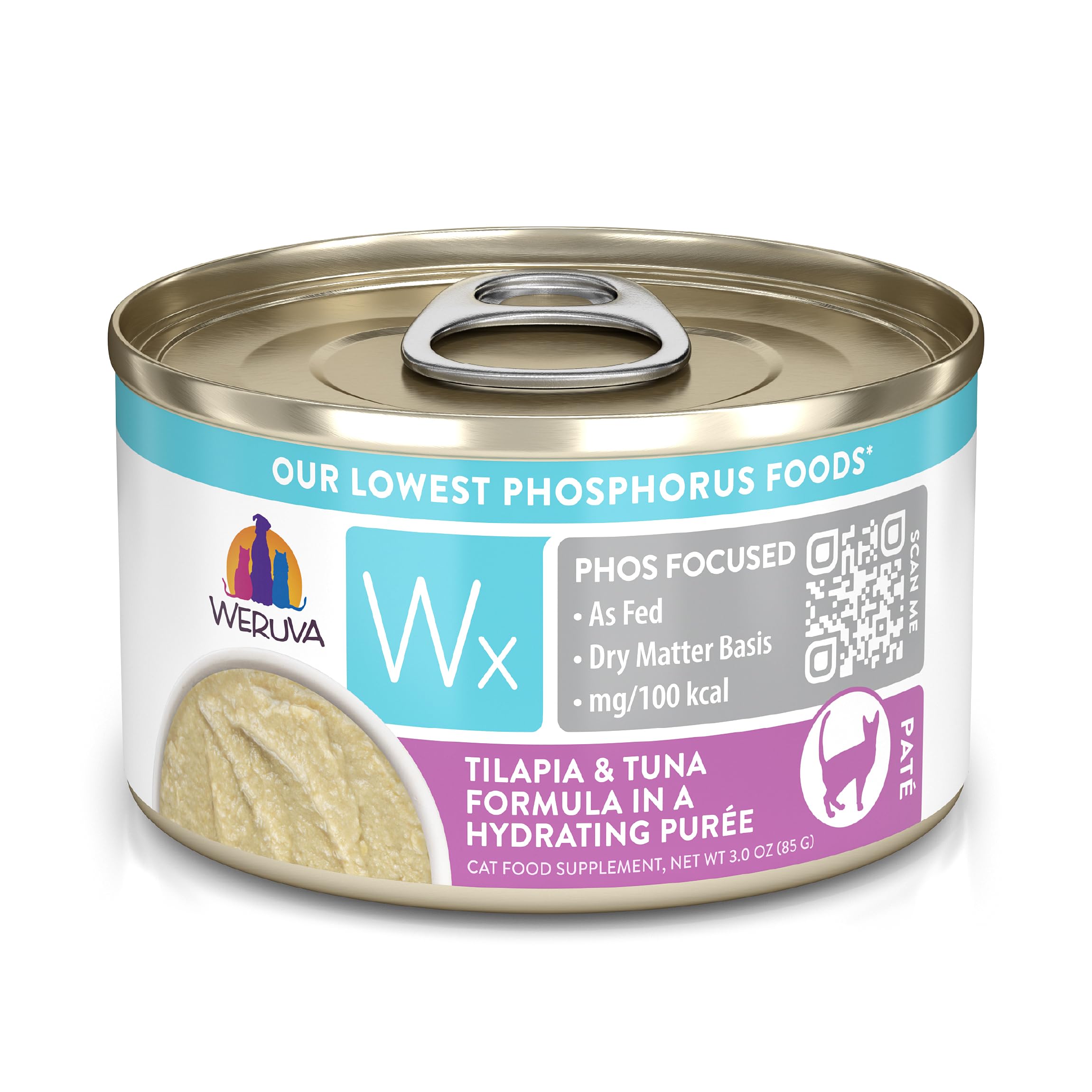
For the cat with a steadfast craving for seafood, this Weruva Wx formula offers a fish-based, ultra-low phosphorus alternative. Using the same bone-free protein principle as their chicken version, this recipe features tilapia and tuna in a hydrating purée, making it exceptionally easy to eat and absorb for cats with dental issues or diminished appetite.
The texture is a smooth, homogenous purée, which is ideal for syringing if necessary, or simply for cats who prefer to lap their food. It maintains the critical low phosphorus levels (up to 50% below AAFCO minimums) through its selective ingredient sourcing. This can be an invaluable tool for caregivers needing to rotate proteins to keep a CKD cat interested in food, or for those whose cats have always had a strong preference for fish flavors.
Feline enthusiasts report that this purée is sometimes the only thing a nauseous cat will consider. Its strong aroma and smooth consistency seem to bypass aversions in sick cats. It’s frequently described as a “magic bullet” for getting calories and fluids into a cat during rough patches, making it a vital part of a contingency plan for CKD management.
Why we love it
- Provides a vital fish-flavor option within the ultra-low phosphorus category.
- Smooth purée texture is perfect for senior cats, those with dental problems, or syringe feeding.
- Extremely hydrating and easy to mix with additional water or supplements.
- Non-prescription, grain-free, and made with natural ingredients.
Good to know
- The purée is very smooth; some cats expecting chunks or shreds may be initially confused.
- As with the chicken version, the 3-ounce can size may not be cost-effective for large appetites.
- Quality can vary; rare reports mention cans that seem to be mostly gel with minimal fish content.
8. Hill’s Prescription Diet k/d Tuna Stew

Variety is the spice of life, and for a cat on a long-term therapeutic diet, it can be the key to sustained interest in food. This Tuna Stew variant from Hill’s k/d line offers the same clinically proven renal support as the chicken stew but in a different flavor profile, providing a crucial tool for preventing food boredom.
It features the same beneficial chunk-in-gravy texture that is so successful with picky eaters, now with vegetables and tuna. It contains all the hallmark features: controlled phosphorus and sodium, ActivBiome+ Kidney Defense, and elevated essential amino acids. For a cat that starts to lag on the chicken flavor, introducing this tuna option on a rotational basis can rekindle their enthusiasm for mealtime without compromising their nutritional management.
Caregivers who use a rotation strategy between the chicken and tuna stews often report more consistent eating patterns. They appreciate having a vet-approved alternative on hand for those days when their cat seems indifferent to their usual fare. It’s a simple but effective strategy for supporting both physical health and mental engagement at the bowl.
Good to know
- As with all prescription diets, requires veterinary authorization and monitoring.
- The tuna flavor may not be as universally appealing as chicken to some cats.
- Can have a strong odor that some caregivers find unpleasant.
9. Purina Pro Plan Veterinary Diets NF Advanced Care

When kidney disease progresses to more advanced stages, nutritional needs shift. This Purina Pro Plan formula is specifically designed for that scenario, with further reduced levels of high-quality protein to minimize renal workload while still providing essential nutrients to support the cat’s systemic health.
It maintains the core principles of renal support: restricted phosphorus, added omega-3 fatty acids (EPA and DHA) for anti-inflammatory benefits, antioxidants, and prebiotic fiber. The key differentiation from the “Early Care” formula is the adjusted protein content, tailored for cats whose kidneys can no longer efficiently process standard amounts. The pâté texture is consistent and can be easily mixed with water or hydrating supplements to ensure adequate fluid intake, which is critical in later stages.
Guardians of cats with advanced CKD often share that this food, while not always eagerly devoured, provides a manageable way to deliver necessary nutrition. Some note that its smell is more acceptable compared to other prescription pâtés, which can be a small but significant victory. It represents a compassionate option for supporting quality of life when managing a progressive condition.
Why we love it
- Specifically formulated for advanced chronic kidney disease, with appropriately reduced protein.
- Includes supportive omega-3s, antioxidants, and prebiotics for holistic care.
- Pâté texture is smooth and can be easily adjusted for hydration or syringe feeding.
- Often reported to have a more palatable smell than some other prescription renal diets.
Good to know
- Designed for advanced stages; not suitable for early CKD without veterinary guidance.
- As a pâté, it may not entice cats who strongly prefer chunks, shreds, or gravies.
- Requires a prescription and is part of a premium therapeutic diet category.
Safety & Care Tips
Transition Gradually
When introducing a new renal diet, mix it slowly with your cat’s current food over 7-10 days. This allows their digestive system to adjust and reduces the risk of refusal or gastrointestinal upset, which is crucial for cats with already sensitive health.
Prioritize Hydration
Always serve wet food at room temperature or slightly warmed to enhance aroma and palatability. Consider adding extra water, unseasoned broth, or a veterinary-recommended hydration supplement to the food to significantly increase fluid intake, supporting kidney function.
FAQ
Can I feed a non-prescription kidney food instead of a vet diet?
How important is phosphorus compared to protein in renal food?
What if my cat with kidney disease refuses to eat the new food?
Should I give my cat subcutaneous fluids at home?
Final Thoughts: The Verdict
For most pet parents, the best wet cat food for kidney disease winner is the Hill’s Prescription Diet k/d + j/d because it offers comprehensive dual support for kidney and joint health in a highly palatable form. If you want exceptional hydration and no prescription requirement, grab the Weruva Wx Phos Focused Chicken in Gravy. And for managing early-stage disease with a vet-trusted formula, nothing beats the Purina Pro Plan Veterinary Diets NF Early Care.