
Choosing the right viewing tool can transform a casual glance at a distant tree into a vibrant, intimate encounter with the natural world. For birdwatchers, the instrument you hold is your bridge to observing intricate feather patterns, subtle behaviors, and species you might otherwise miss entirely. It’s about bringing the beauty closer, not just seeing it farther away.
I’m Mo Mahin — the founder and writer behind Furric. My research focuses on dissecting the optical science that delivers sharp, bright images, analyzing the durability standards needed for field use, and synthesizing thousands of real-world experiences from birding communities to find genuine value.
This guide cuts through the marketing jargon to focus on what truly matters for birders: clarity, stability, and ease of use in real-world conditions. The right best telescope for bird watching sharpens every detail and turns a routine outing into a series of captivating discoveries.
How To Choose The Best Telescope For Bird Watching
Selecting an optical device for birding is less about getting the highest number and more about balancing key specifications for a comfortable, effective viewing experience. The goal is a clear, bright, and steady image that lets you identify species quickly and enjoy their beauty.
Magnification & Objective Lens: The Balance of Power and Light
Magnification (e.g., 8x, 12x) determines how much closer the subject appears. Higher magnification isn’t always better for birding, as it narrows the field of view and amplifies hand shake. For handheld use, 8x to 12x is the sweet spot. The objective lens diameter (e.g., 42mm, 56mm) is crucial—it’s the light-gathering element. A larger lens (like 56mm vs. 32mm) provides a brighter image, which is vital for dawn, dusk, or shaded woodland viewing. Look for a balanced pair, like 8×42 or 12×56.
Optics & Coatings: The Heart of Image Quality
The quality of the glass and its treatments define clarity. A BAK-4 prism is superior to a BK-7 prism, providing sharper edges and better light transmission. Fully Multi-Coated (FMC) lenses have anti-reflective coatings on all air-to-glass surfaces, maximizing light entry and reducing glare. This combination is a hallmark of mid-range and premium optics and is non-negotiable for serious, color-accurate viewing.
Form Factor: Monocular vs. Spotting Scope
Your primary birding style dictates the tool. A monocular is a single-barrel, compact device perfect for hiking, quick sightings, and observers who prefer one-handed use or have difficulty with binoculars. A spotting scope offers variable zoom (e.g., 20-60x) and a much larger objective lens (70-85mm) for exceptional detail at long distances, but requires a tripod for stable use. It’s ideal for stationary observation at wetlands, coastlines, or from a blind.
Durability & Usability Features
Birding happens in all weather. Look for nitrogen-purged, O-ring sealed construction for waterproof and fogproof performance. A rubber armored body provides a secure, non-slip grip and shock protection. Consider eye relief—the distance from the eyepiece to your eye—especially if you wear glasses; longer eye relief (15mm+) is necessary for a full field of view. A tripod mount socket is essential for any device over 10x magnification to achieve a rock-steady view.
Quick Comparison
On smaller screens, swipe sideways to see the full table.
| Model | Type | Best For | Key Feature | Amazon |
|---|---|---|---|---|
| Gosky EagleView 20-60×85 | Spotting Scope | Stationary, long-range observation | 85mm lens, variable zoom | Amazon |
| Nocs Zoom Tube 8×32 | Monocular | Ultra-portable, everyday carry | Compact design, lifetime warranty | Amazon |
| Gosky 12×55 HD Monocular | Monocular | General birding with phone adapter | BAK-4 Prism & FMC Lens | Amazon |
| Adasion 15×56 HD Monocular | Monocular | Low-light and distant viewing | High power, large 56mm lens | Amazon |
| SVBONY SV28 25-75×70 | Spotting Scope | Target shooting & range use | Angled eyepiece, includes tripod | Amazon |
| Pankoo 12×60 HD Monocular | Monocular | Versatile kit with accessories | Complete kit (adapter, tripod) | Amazon |
| hd360pro 12×56 Monocular | Monocular | Beginner all-in-one kit | Includes metal tripod & phone adapter | Amazon |
| FEEMIC 8×42 Monocular | Monocular | Wide-field, handheld viewing | 8x power for stable hand-held use | Amazon |
| Usogood 10×42 Monocular | Monocular | Lightweight, entry-level birding | Lightweight, comfortable eyepiece | Amazon |
| Barska Blackhawk 10×25 | Monocular | Compact backup or pocket option | Very small, waterproof build | Amazon |
| Pankoo 16×52 Monocular | Monocular | Budget-conscious gift option | High magnification on a budget | Amazon |
In-Depth Reviews
1. Gosky EagleView 20-60×85 Spotting Scope

For the birder who sets up shop at a marsh, coastline, or backyard feeder station, this spotting scope is a transformative tool. Its massive 85mm objective lens gathers an exceptional amount of light, delivering bright, vivid views even during the overcast days or the golden hours of dawn and dusk when bird activity peaks.
The 20-60x zoom eyepiece lets you start with a wide field to locate your subject, then dial in for incredible detail on feather patterns or beak shape. The build quality is substantial, with a smooth helical focus dial and a rubber-armored, waterproof body built for the elements. The included smartphone adapter, while requiring patience to align, unlocks the world of digiscoping, allowing you to capture shareable images through the scope’s superb optics.
Birding forum contributors consistently praise this model for punching far above its weight class, offering performance that flirts with that of scopes costing several times more. It requires a tripod, but that trade-off is essential for the detail and stability it provides at higher magnifications.
Why we love it
- Superb light gathering from the large 85mm lens makes for bright, clear images.
- Versatile zoom range is perfect for scanning and then observing fine details.
- Robust, weather-sealed construction ready for all-day field use.
Good to know
- A sturdy tripod is mandatory, as the high magnification amplifies any vibration.
- The carrying case is functional but somewhat tight for the scope body.
- The smartphone adapter has a learning curve for perfect alignment.
2. Nocs Provisions Zoom Tube 8×32 Monocular

When your birding style involves constant movement—hiking forest trails, city park walks, or traveling light—this monocular is your ideal companion. It represents a thoughtful marriage of optical quality and minimalist design, built for the birder who values gear that disappears into a pocket until the moment it’s needed.
The 8×32 configuration offers a smart balance: enough power to bring birds closer with a wide, bright field of view that’s easy to keep steady in your hand. The fully multi-coated optics and BAK-4 prism deliver crisp, color-accurate images that defy the device’s tiny footprint. The textured “Rugged Wave Grip” ensures a secure hold, and its water-resistant rating means a sudden rain shower won’t end your outing.
Active birders on the trail report that its greatest strength is its “always-with-you” nature. It won’t replace high-power optics for stationary viewing, but for quickly identifying a warbler in the canopy or scanning a pond from the path, its speed, clarity, and incredible portability are unmatched in its class.
Why we love it
- Exceptionally compact and lightweight, fitting in almost any pocket.
- Superior build quality and optics for its size, with a no-questions lifetime warranty.
- Easy one-handed operation with a comfortable, non-slip grip.
Good to know
- The 8x magnification is perfect for portability but limits long-distance detail.
- Lens covers are not attached, so a dedicated pouch is wise to prevent loss.
- While bright for its size, low-light performance can’t match larger objective lenses.
3. Gosky 12×55 HD Monocular

This monocular is for the enthusiast who demands high-performance optics in a handheld form factor, without compromise. The 12×55 specification is a classic for good reason: it provides significant reach for detail-oriented viewing, backed by a large 55mm lens that ensures the image remains bright and clear.
Where it truly excels is in its optical construction. The combination of a BAK-4 prism and Fully Multi-Coated lenses is the hallmark of serious optics, providing high light transmittance, excellent contrast, and minimal distortion. The focus knob is notably smooth and precise, allowing for fine adjustments. The included quick-alignment smartphone adapter is a generation ahead of many bundled options, making the process of capturing photos through the scope (digiscoping) more intuitive and stable.
Seasoned observers note that this model feels substantial and well-made in the hand. The image quality rivals that of many mid-range binoculars, making it a superb solo optic for those who prefer monocular viewing or want a powerful, yet packable, primary tool.
Why we love it
- Professional-grade optical formula delivers outstanding clarity and brightness.
- Well-balanced design that feels solid and allows for relatively stable handheld viewing at 12x.
- Comes with one of the better smartphone adapters included in a kit.
Good to know
- At 12x, a tripod or monopod is recommended for extended, shake-free observation.
- The carrying case is designed for the monocular only, not the full accessory set.
- It’s a premium option, reflecting its higher-grade components and performance.
4. Adasion 15×56 HD Monocular

For the birder chasing owls at dusk, scanning shaded forest understories, or wanting maximum reach for open-field and wetland species, this high-power monocular is a specialized tool. The 15x magnification pulls distant subjects remarkably close, while the generous 56mm objective lens acts like a large window, flooding the view with light.
This combination is specifically engineered for challenging lighting conditions. The advanced fully multi-coated optics work to maximize every bit of available light, providing a brighter, higher-contrast image than typical compacts. The focus knob is designed for smooth, one-handed operation, which is critical when you’re trying to track a moving subject. The build is IPX7 waterproof, ready for humid marshes or sudden downpours.
Users focused on waterfowl and raptor observation appreciate the extra reach and light-gathering capability. They frequently mention that while the 15x power demands extra steadiness (a tripod is highly recommended), the payoff in detail and low-light performance is significant for this category.
Why we love it
- Exceptional light-gathering ability makes it effective in dawn, dusk, or overcast conditions.
- High 15x magnification provides detailed views of far-off subjects.
- Solid, waterproof construction with a comfortable grip and smooth focusing mechanism.
Good to know
- The high magnification greatly amplifies hand shake; a tripod is almost essential for clear viewing.
- The field of view is narrower due to the high power, making it trickier to locate fast-moving birds.
- It is a larger, heavier monocular compared to standard 8×42 or 10×42 models.
5. SVBONY SV28 25-75×70 Spotting Scope
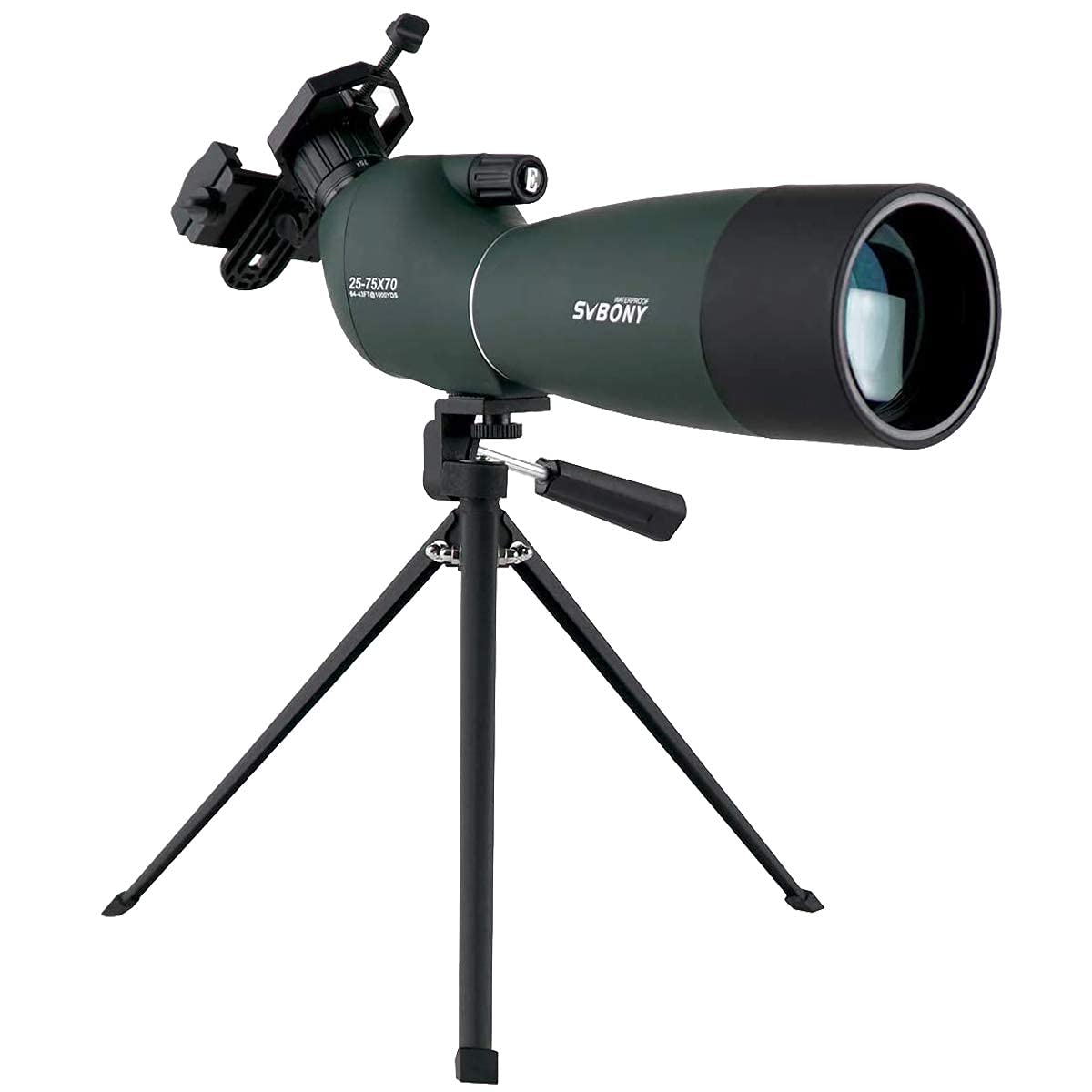
This spotting scope is the gateway to high-magnification observation without a intimidating investment. It provides a complete, ready-to-use system right out of the box, including a scope, phone adapter, tabletop tripod, and case. The 70mm lens offers a clear step up in light gathering from smaller monoculars.
The 25-75x zoom range is versatile, and the angled eyepiece design is a major ergonomic benefit for birding. It allows for comfortable viewing whether you’re sitting, standing, or even looking upward into trees, reducing neck strain. Image quality at the lower end of the zoom range (25-40x) is quite good for the category, providing clear, usable detail for identification.
Many first-time spotting scope buyers are delighted by its performance relative to its accessible positioning. It’s frequently cited as a perfect “test” scope to see if the spotting scope style fits your birding habits before committing to a more premium model.
Why we love it
- Excellent value, providing a full spotting scope system at an entry-level point.
- Angled eyepiece is more comfortable for extended viewing sessions.
- Good performance at mid-range zoom levels for general bird and wildlife observation.
Good to know
- Image quality and brightness degrade noticeably at the highest zoom settings (above 50x).
- The included tabletop tripod is light-duty; a full-sized tripod is better for stability.
- Some units may have minor quality control issues like loose lens caps.
6. Pankoo 12×60 HD Monocular
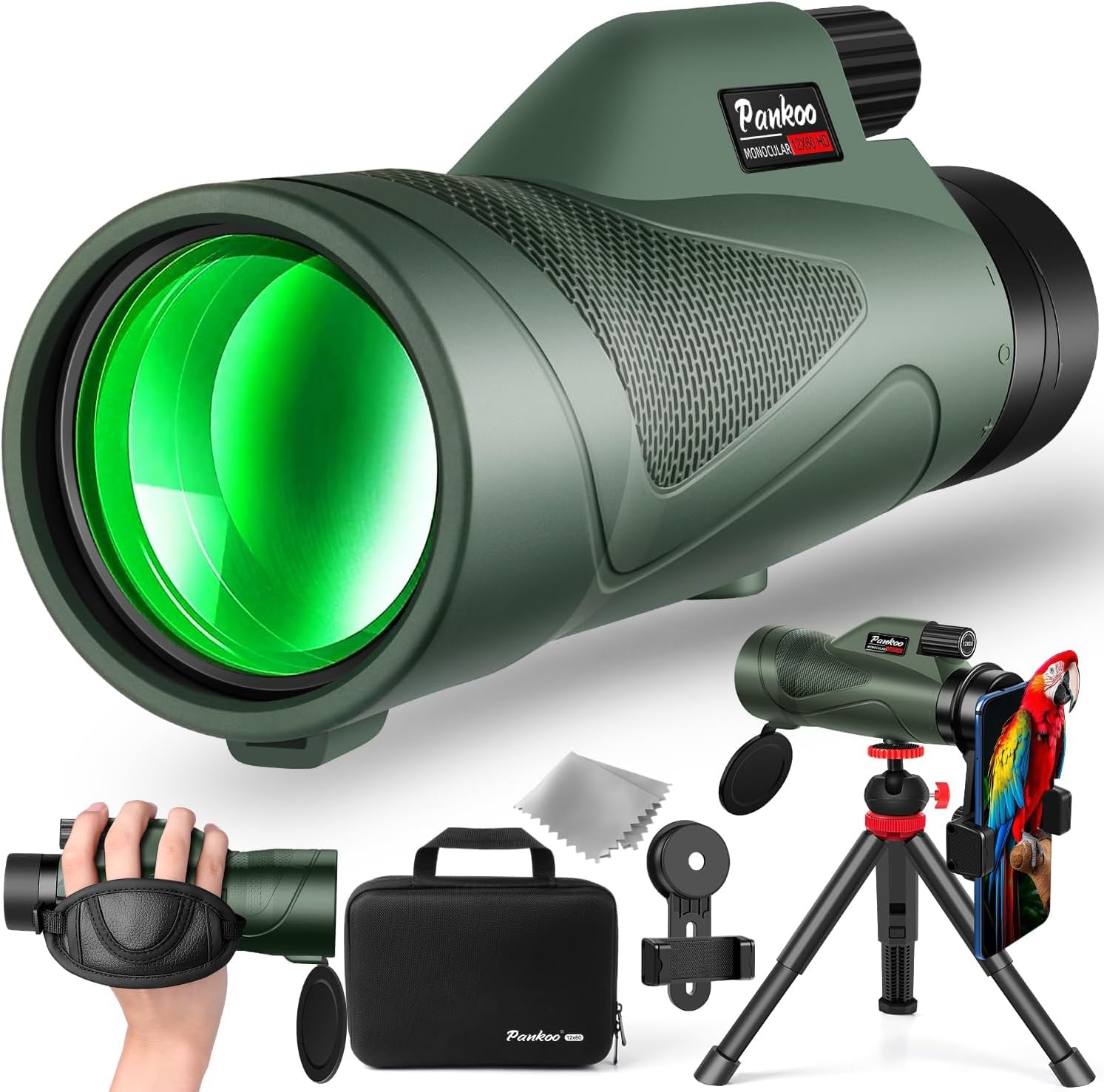
If you want a single purchase that includes everything needed to start viewing and capturing images, this kit is a compelling choice. The monocular itself offers a potent 12×60 configuration, with the large 60mm objective lens promising bright images. The build is rubber-armored and feels substantial.
The true value lies in the accessories. It comes with a quick-alignment smartphone adapter, a small but usable tripod, a hand strap, a soft case, and lens covers. This allows you to immediately experiment with digiscoping and stable viewing without additional purchases. For a birder curious about photography or who wants the flexibility of a tripod mount from day one, it’s a convenient package.
Families and casual birders find this kit particularly appealing. The ability to share the view by mounting a phone and showing the screen, or to set it up on a tripod for kids to use steadily, adds a layer of functionality that enhances the overall experience.
Why we love it
- Truly all-in-one box; includes smartphone adapter and tripod ready to use.
- Large 60mm lens provides a bright viewing image.
- Solid feeling construction with a comfortable, non-slip rubber grip.
Good to know
- The included tripod is lightweight and best for tabletop or very calm conditions.
- The carrying case is quite bulky and not the most streamlined for packing.
- Optical quality is good, but not quite as refined as more premium dedicated monoculars.
7. hd360pro 12×56 Monocular Telescope

Positioned as an accessible entry into higher-power observation, this monocular kit aims to deliver significant capability. The 12×56 specs suggest strong performance, and the inclusion of a metal tripod (not just plastic) and a smartphone adapter makes it stand out in its segment.
The monocular provides a clear, magnified view that beginner birders will find impressive. The ability to immediately mount it on the provided tripod solves the inherent shake of handheld 12x viewing, allowing for relaxed, detailed observation. The smartphone adapter, while basic, enables the first steps into taking photos through the optics.
Newcomers to birding optics frequently express pleasant surprise at the clarity this kit offers for the investment. It serves as a practical introduction to understanding how magnification, aperture, and stability work together in the field.
Why we love it
- Includes a more substantial metal tripod compared to flimsier plastic competitors.
- Good magnification and light grasp for the price point.
- Everything needed to start viewing and experimenting with phone photography is in the box.
Good to know
- Optical quality is functional but may show some chromatic aberration (color fringing) on high-contrast edges.
- The field of view is somewhat narrow, which can make tracking active birds a challenge.
- Some descriptions can be slightly misleading regarding exact lens size and zoom capability.
8. FEEMIC 8×42 Monocular

This monocular champions the often-overlooked virtue of a wide, stable field of view. The 8×42 configuration is a classic for handheld birding because the 8x magnification is easy to hold steady, and the 42mm lens provides a bright, generous viewing window. It’s exceptionally user-friendly, especially for those new to optics.
The build is rugged, with a nitrogen-filled waterproof and fogproof design. The rubber armor offers a secure grip and protection. The focus knob is large and easy to turn, even with gloves on. This model excels in environments where birds are active and close—like woodlands or gardens—where finding and following a moving subject quickly is more important than extreme magnification.
Birding educators and guides often recommend this magnification as a starting point because it minimizes user frustration. Reviewers who use it for hiking and general nature observation praise its ease of use and the relaxed, shake-free view it provides.
Why we love it
- Very stable handheld view due to lower 8x magnification.
- Wide field of view makes it easy to locate and track birds in motion.
- Durable, weather-sealed construction suitable for rough outdoor use.
Good to know
- Lacks the “reach” of 10x or 12x models for distant observations.
- The focus dial can be a bit too easy to turn, accidentally moving from a set point.
- Accessories are basic, and it does not include a smartphone adapter.
9. Usogood 10×42 Monocular
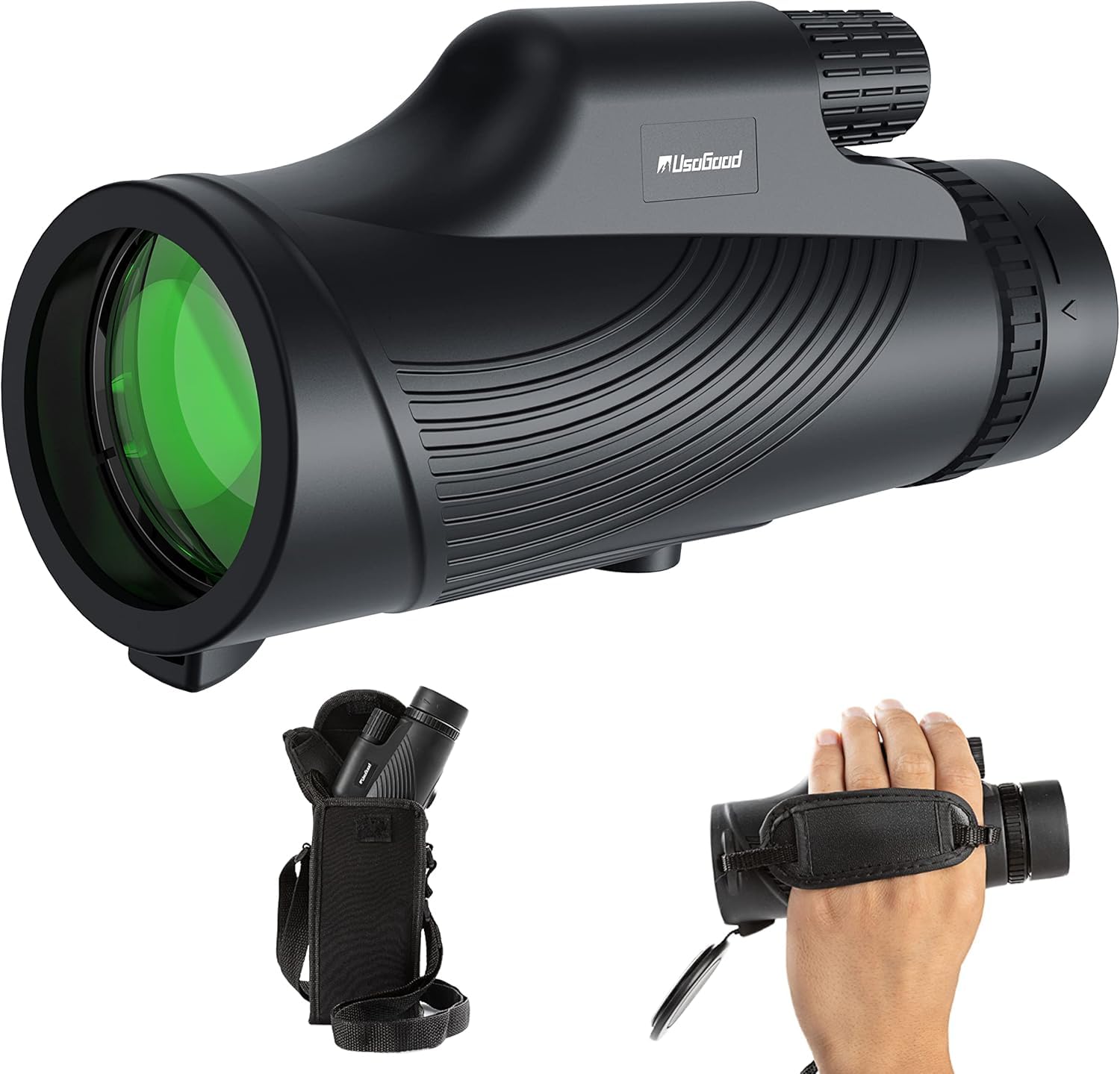
Striking a fine balance between power and portability, this monocular feels remarkably light in the hand without sacrificing optical performance. The 10×42 specification is a versatile “go-to” for many birders, offering a useful boost in magnification over 8x models while remaining manageable for extended handheld sessions.
A standout feature is the extra-large 22.5mm eyepiece, which is designed to provide a more comfortable viewing experience by reducing eye strain and the “tunnel vision” effect. The BAK4 prism and fully multi-coated lenses work to deliver a clear, bright image. It comes with a thoughtful array of carrying options, including a hand strap and a neck-strap case.
Birders who have struggled with binoculars due to vision issues in one eye or who simply prefer a less bulky option have found this model to be a revelation. Its combination of capable optics, lightweight design, and thoughtful ergonomics makes it a reliable companion for all-day outings.
Good to know
- At 10x, some users still find it challenging to hold completely steady for fine detail.
- The lens covers are attached but can be somewhat loose and prone to falling off.
- Best for general use; may not satisfy those needing extreme long-range capability.
10. Barska Blackhawk 10×25 Monocular
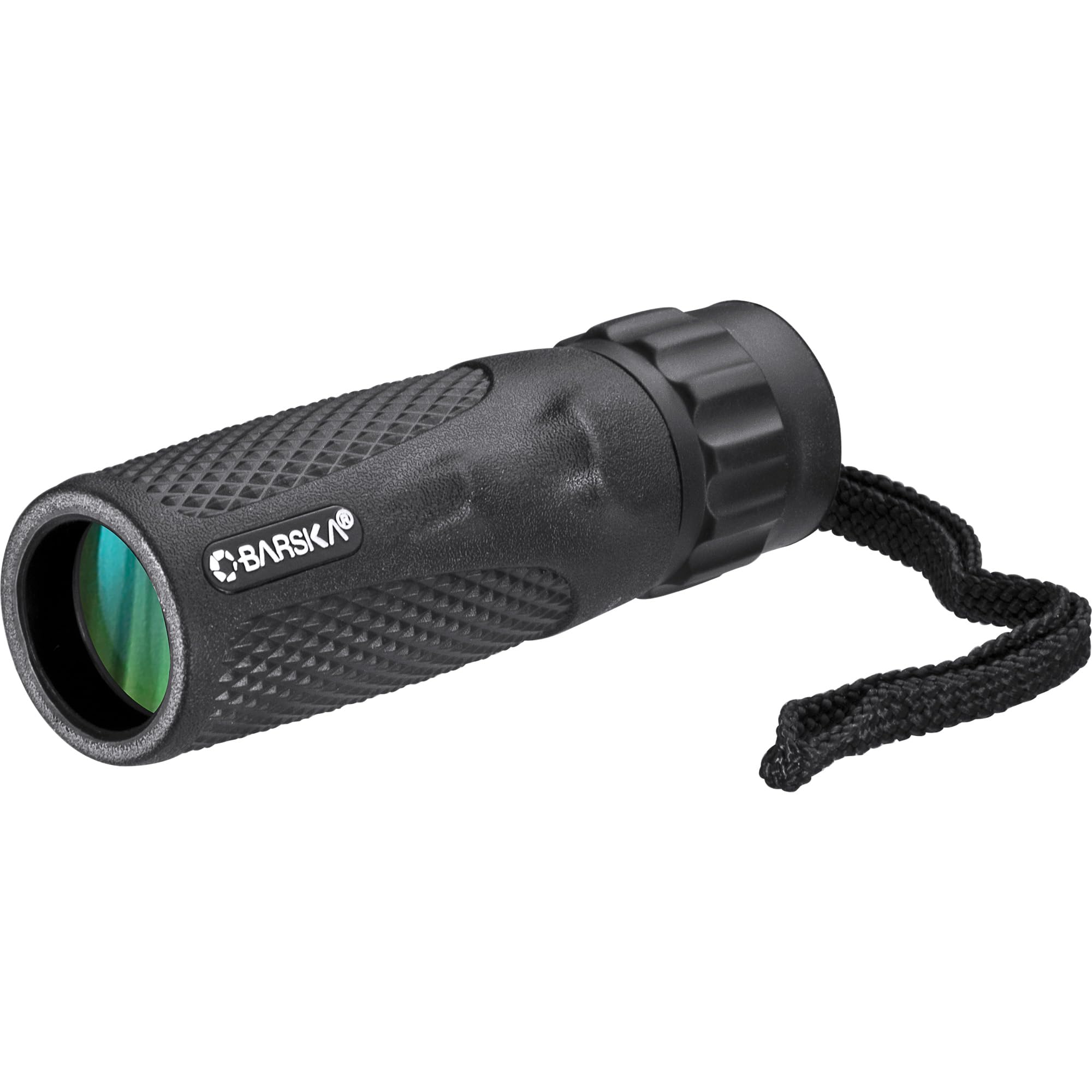
When space is at an absolute premium, this monocular proves that capable optics can fit in the smallest of pockets. Its primary virtue is its diminutive size, making it an ideal “always-have” tool you can forget about until a surprise birding opportunity arises.
The 10×25 configuration provides useful magnification, though the smaller 25mm objective lens means the image will be dimmer than with larger models. It compensates with a fully waterproof and fogproof nitrogen-purged build and a textured, shock-absorbing rubber grip. It’s a durable, no-fuss option designed for quick glimpses rather than prolonged study.
Many seasoned birders recommend a compact like this as a backup to their primary optics, or for situations like travel where packing light is key. It’s a reliable way to ensure you’re never caught without any magnification at all.
Why we love it
- Extremely compact and lightweight, truly pocketable.
- Fully waterproof and ruggedly built for its size.
- Provides a competent magnified view in a pinch.
Good to know
- The small objective lens results in a noticeably dimmer image, especially in low light.
- Narrow field of view can make locating subjects more difficult.
- Image quality is functional but not as sharp or bright as larger models.
11. Pankoo 16×52 Monocular

This monocular is a testament to how much optical capability is now available at an entry-level point. It offers a very high 16x magnification paired with a decent 52mm lens, promising significant reach for a very modest investment.
It includes features like BAK-4 prisms and fully multi-coated lenses, which are impressive for the category. The build is rubber-armored and includes basic accessories like a case and strap. For a casual user or as a gift for someone curious about birding, it provides a dramatic “wow” factor in terms of how much closer it brings distant objects.
First-time buyers are often amazed by the power for the price. However, they quickly learn the trade-off: the high 16x magnification is extremely difficult to use handheld without significant shake, making a stable rest or tripod necessary for clear viewing.
Why we love it
- Offers very high magnification at a budget-friendly price.
- Includes better optical components (BAK-4, FMC) than typical at this level.
- Comes with a basic case and strap, ready to gift or use.
Good to know
- 16x power is impractical for handheld birding; requires external support.
- Optical quality, while good for the price, cannot match mid-range models.
- The field of view is narrow, and image brightness is adequate but not exceptional.
Safety & Care Tips
Protect the Optics
Always use the lens caps when the device is not in view. Never touch the glass with your fingers; use only a microfiber lens cloth or blower brush to remove dust. For stubborn spots, apply a small drop of lens cleaning fluid to the cloth, not directly to the lens. Store your monocular or scope in its case in a dry, temperature-stable environment.
Ensure Stable Viewing
For magnifications above 10x, a tripod or monopod is not a luxury—it’s essential for clear, shake-free observation. This reduces eye strain and allows you to study details calmly. When using a tripod, ensure all legs are securely locked and the mounting plate is tight to prevent costly drops.
FAQ
Is a monocular or binoculars better for bird watching?
What does BAK4 prism mean and why is it important?
Can I use my smartphone to take pictures through these devices?
What magnification is best for beginner bird watchers?
Final Thoughts: The Verdict
For most pet parents, the best telescope for bird watching winner is the Gosky EagleView 20-60×85 because it delivers exceptional, tripod-stable clarity for serious observation and digiscoping. If you want unmatched portability and quality for on-the-move birding, grab the Nocs Provisions Zoom Tube 8×32. And for a superb balance of optical performance and value in a handheld form, nothing beats the Gosky 12×55 HD Monocular.