
Robins are the first cheerful visitors that signal spring, but their diet is far more complex than the generic seed mixes most backyard birders toss out. These ground-foraging thrushes thrive on protein-rich insects and soft fruits, meaning the average sunflower-and-millet blend often goes untouched. I’ve watched robins hop past full feeders in search of real nutrition — and that’s when I knew the standard advice wasn’t working.
I’m Mo Mahin — the founder and writer behind Furric. Over the past few years I’ve analyzed veterinary and ornithological feeding guidelines, cross-referenced hundreds of real owner experiences, and studied how specific ingredients impact robin health during nesting and migration. This guide distills that research into actionable choices for your backyard.
The secret to turning your yard into a robin haven lies in understanding their natural cravings. After testing dozens of products and reading countless customer stories, I’ve narrowed down the best bird seed for robins to options that actually deliver the high-protein, high-moisture diet these birds evolved to eat.
How To Choose The Best Bird Seed For Robins
Robins are not typical seed-eaters. They have soft bills designed for insects and fruits, so conventional hard seeds like milo or cracked corn are often ignored. To attract robins consistently, you need to focus on three key factors: protein content, moisture-rich ingredients, and feeder placement near the ground.
Protein Is Non-Negotiable
Robins require up to 20-30% protein in their diet during breeding season. Mealworms — either live or dried — are the most effective protein source. Look for products that list mealworms as a primary ingredient, and avoid blends heavy in filler grains that robins simply won’t eat.
Fruit Attracts & Hydrates
Robins love berries, raisins, and chopped fruits. Blends that include dried cranberries, cherries, or papaya mimic their natural foraging. Suet cakes with fruit also work well because they provide energy-dense fats alongside moisture.
Feeder Style Matters
Robins are ground feeders. Use platform or tray feeders at low heights, or scatter food directly on the ground. Avoid tube feeders with small ports that block robins’ larger bodies. Suet feeders mounted low on tree trunks also work.
Quick Comparison
On smaller screens, swipe sideways to see the full table.
| Model | Type | Best For | Key Feature | Amazon |
|---|---|---|---|---|
| Hatortempt 1.8lb Dried Mealworms | Mealworms | High-protein protein boost | 50% protein, 32% fat, whole crisp worms | Amazon |
| C&S Mealworm Delight No Melt Suet | Suet Dough | Warm‑weather feeding | No melt up to 100°F, real mealworms | Amazon |
| Cool Birds Nut & Fruit | Gourmet Seed | Premium fruit & nut blend | No corn/milo, real papaya & raisins | Amazon |
| Audubon Park Waste Free | No Mess Seed | Clean patios & decks | Shell‑free sunflower hearts & peanuts | Amazon |
| Valley Farms Fruit Nut & Berry | Fruit Blend | Robins who love berries | Dried cherries, raisins, cranberries | Amazon |
| Kaytee Mealworms | Mealworms | Budget‑friendly protein | Oven dried, preservative‑free | Amazon |
| Pet Faves 5lb Dried Mealworms | Bulk Mealworms | Large multiple‑bird households | 55% protein, resealable bag | Amazon |
| C&S Fruit n’ Nut Suet | Suet Cakes | Year‑round energy boost | Real fruit, attracts thrushes | Amazon |
| Audubon Park Extreme Variety | Mixed Seed | Attracting many species | Includes almonds, walnuts, fruit | Amazon |
| Nature Anywhere Bird Banquet | No Filler Seed | Less waste under feeder | No filler grains, cost‑effective | Amazon |
| Freebird Premium Songbird Blend | All‑Natural Seed | Cardinals & finches also | Locally sourced, resealable bag | Amazon |
In-Depth Reviews
1. Hatortempt 1.8lb Dried Mealworms
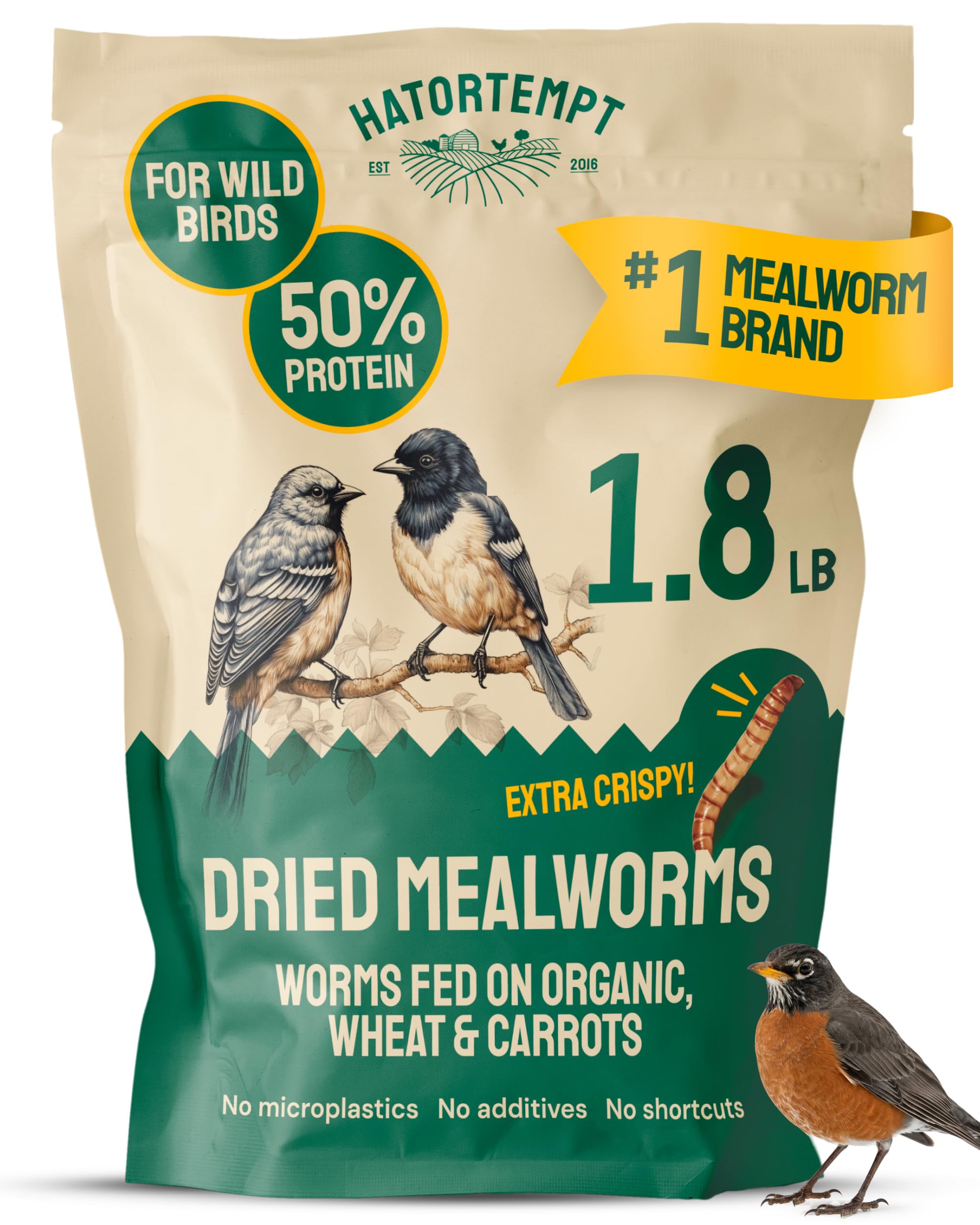
When robins scout your yard, they’re looking for dense protein — not empty calories. Hatortempt delivers exactly that with a staggering 50% protein content and 32% fat, making it the closest you can get to a natural insect feast in a resealable bag. The double-drying process keeps worms plump and crunchy, so there’s no dusty powder that robins will ignore. Birders report that Eastern Bluebirds, Carolina Wrens, and of course American Robins become daily regulars within days of offering these.
The 1.8-pound bag holds roughly four gallons of whole mealworms — a substantial volume at a mid-range price point. Hand-inspected batches ensure you’re not paying for broken bits or filler. The sturdy resealable bag locks in freshness for up to two years at 5.2% moisture, preventing mold even in humid climates. One customer noted the worms arrive “plump, full-sized, and high-nutrition,” with feeder activity increasing noticeably after switching from a grocery store brand.
If you want one product that will single-handedly turn your platform feeder into a robin magnet, this is it. The combination of whole-bodied worms, high protein, and no-smell storage makes it a standout. The only minor trade-off is the bag size: for very large flocks you may need to reorder sooner, but the value per pound is hard to beat.
Why we love it
- Whole, crisp worms with minimal breakage
- 50% protein supports nesting and egg production
- Resealable bag stays fresh for 2 years
- Attracts robins, bluebirds, wrens, cardinals
Good to know
- Bag size may be small for heavy daily feeding
- Not a complete diet — pair with fruits
2. C&S Mealworm Delight No Melt Suet Dough
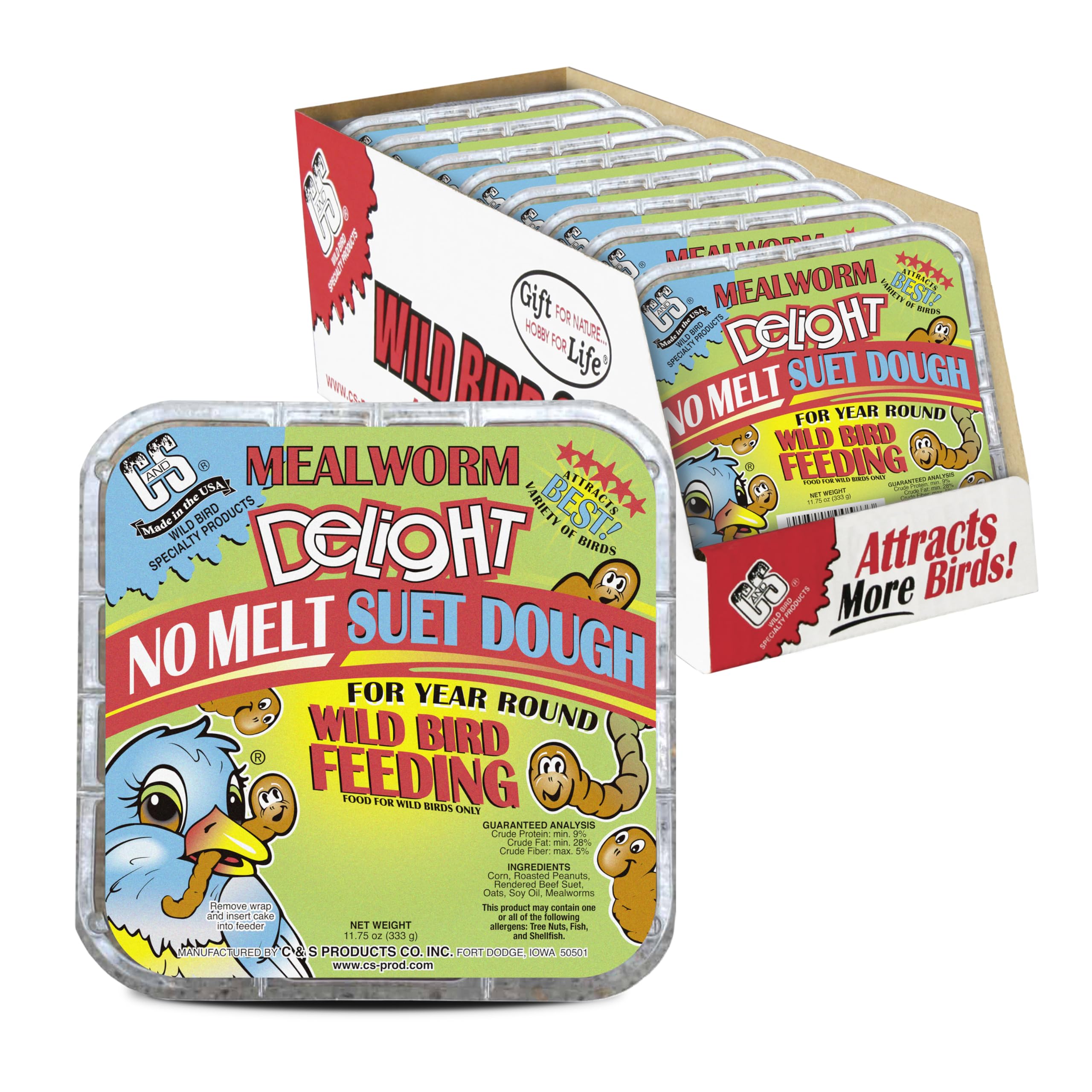
Summer robin feeding presents a real challenge: traditional suet melts into a greasy puddle, while dried mealworms alone lack the fat content for energy-intensive nesting. C&S solved this with a no-melt dough that stays solid up to 100°F, combining real mealworms with roasted peanuts. The soft texture mimics natural insect larvae and robins grab it readily from wire suet feeders. One reviewer called it “the birds’ favorite cake,” noting that woodpeckers and robins devour two cakes in just a couple of days.
The pack of eight 11.75-ounce cakes offers excellent value for warm-weather feeding. Made in the USA (family-owned since 1986), this blend provides the energy robins need for foraging, nesting, and migration without the mess of traditional suet. Customers consistently observe that even picky robins that normally skip feeders will visit daily once this dough is out. The mealworm content is substantial enough to attract insect-loving species like wrens and bluebirds too.
For southern birders or those facing abruptly warm spring days, this no-melt dough is a game-changer. It doesn’t crumble or drip, keeping your feeder area clean. The only catch is that raccoons and squirrels also love it — so consider using a feeder with a cage or baffle to protect your investment.
Why we love it
- Stays solid in hot weather — no melted mess
- Real mealworms plus roasted peanuts boost protein
- 8‑cake pack lasts weeks with regular robin visits
- Made in the USA with trusted quality
Good to know
- Attracts raccoons and squirrels easily
- Soft dough may need a suet feeder with tight mesh
3. Cool Birds Nut & Fruit Wild Bird Seed
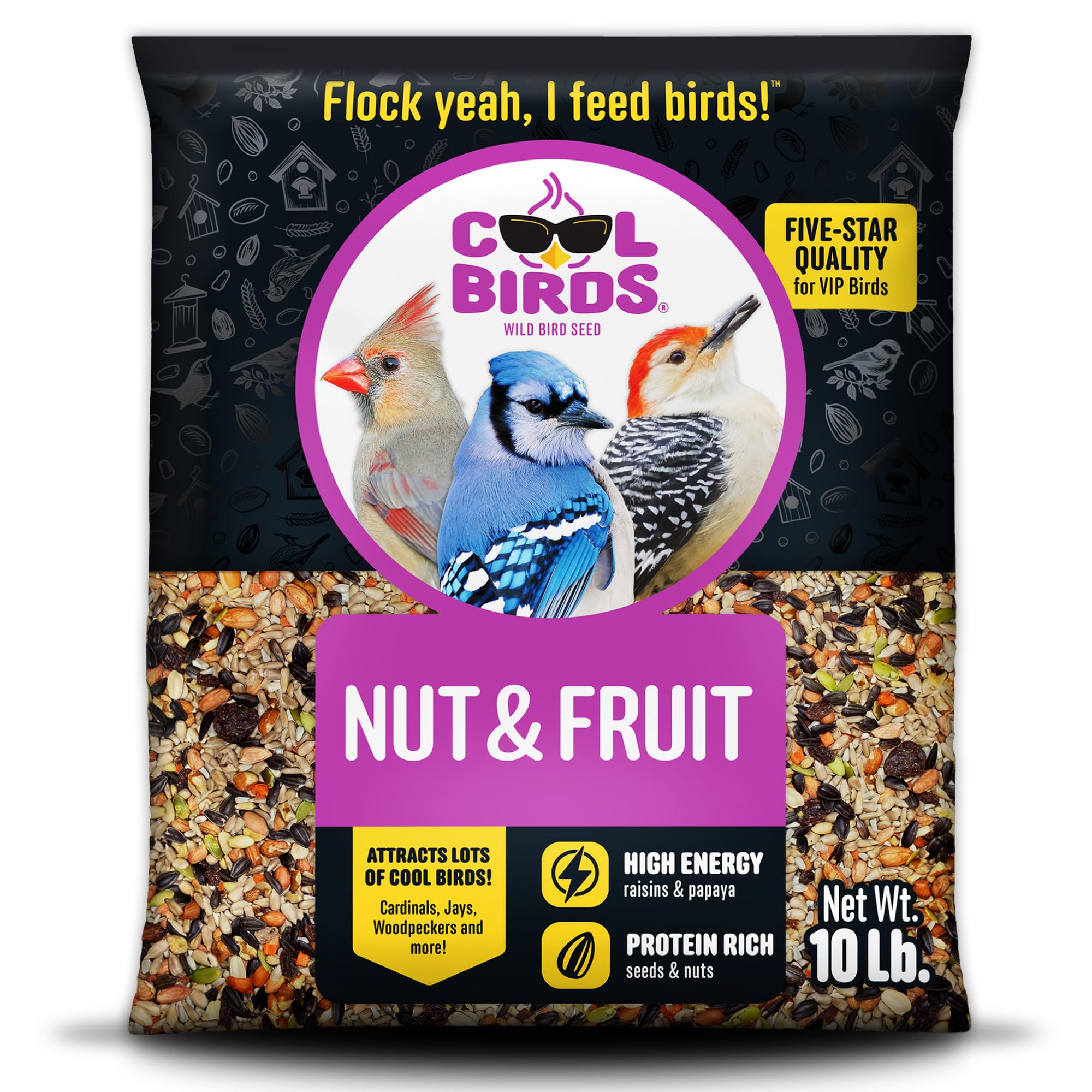
Robins have a natural sweet tooth for fruits, and Cool Birds delivers with generous chunks of papaya, raisins, and sunflower hearts — all without a single grain of corn, milo, or millet. This 10-pound bag is a premium seed blend that mimics the soft fruits and insect-rich diet robins forage in the wild. The sunflower hearts provide essential oils, while the tree nuts (almonds, pecans) offer lasting energy. One birder compared it side-by-side with Kaytee and declared Cool Birds the winner, with birds eating more and wasting less.
The blend is remarkably clean: no dust, no filler, just high-value ingredients. Customers note that it attracts “cooler” species like grosbeaks and woodpeckers alongside robins, turning your feeder into a diverse birdwatching hub. The large fruit pieces are easily picked up by robins’ soft bills. For those who dislike the mess of hulls, this mix has mostly shelled components, though whole peanuts may require a hopper feeder with larger ports.
If you want a single bag that does double duty — feeding robins their beloved fruits while also catering to cardinals and chickadees — this is an excellent choice. The only downside is the price per pound is a step up from basic mixes, but the reduced waste and high consumption rate actually make it more economical over time.
Why we love it
- No corn, milo, or millet — what robins actually eat
- Real dried fruit (papaya, raisins) provides natural sugar
- Sunflower hearts and nuts offer clean energy
- Less waste under feeder compared to shelled seeds
Good to know
- Whole nuts can jam tube feeders with small ports
- Higher cost per bag than traditional seed mixes
4. Audubon Park Waste Free Wild Bird Seed
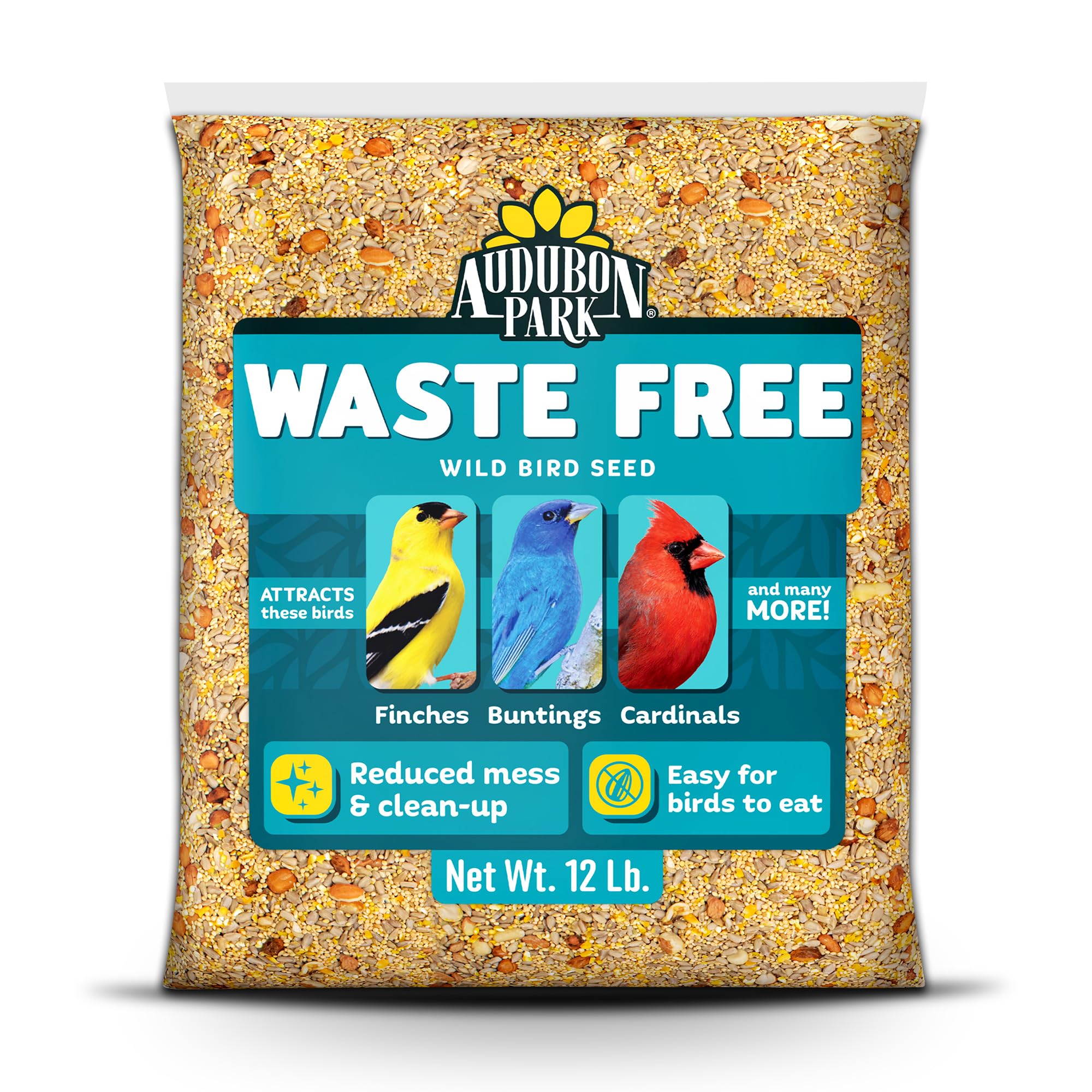
Ground-feeding robins are notorious for scattering seed hulls across patios and decks. Audubon Park solved this with a 12-pound shell-free blend of sunflower hearts, peanut pieces, and tiny millet that leaves absolutely no mess. Robins go straight for the soft hearts and peanut bits, while finches and cardinals pick at the millet. One reviewer raved: “I love not having the messy shells on my front deck.” The high-energy formula attracts thrushes, wrens, and buntings alongside robins.
The ingredients are top-notch: sunflower kernels provide essential fatty acids, and peanut pieces add protein. Because there are no hulls, the birds eat nearly 100% of what you put out, which means the bag actually lasts longer than cheaper seeded mixes. Customers confirm that cardinals, chickadees, and sparrows visit regularly. The seed stays fresh even when stored in a bin outdoors, making it convenient for continuous feeding.
For birders who value a clean feeding environment — especially those with HOA restrictions or second-floor balcony feeders — this is the ideal robin-friendly option. The only trade-off is the inclusion of millet, which some robins may ignore, but the overall consumption rate is still excellent.
Why we love it
- Zero hulls or filler — no cleanup needed
- Birds eat almost everything, reducing waste
- Attracts a wide variety including robins, finches, cardinals
- Seed stays fresh long after opening
Good to know
- Small percentage of millet may be ignored by robins
- Tube feeders with very small ports may clog
5. Valley Farms Fruit Nut & Berry (4 LB)
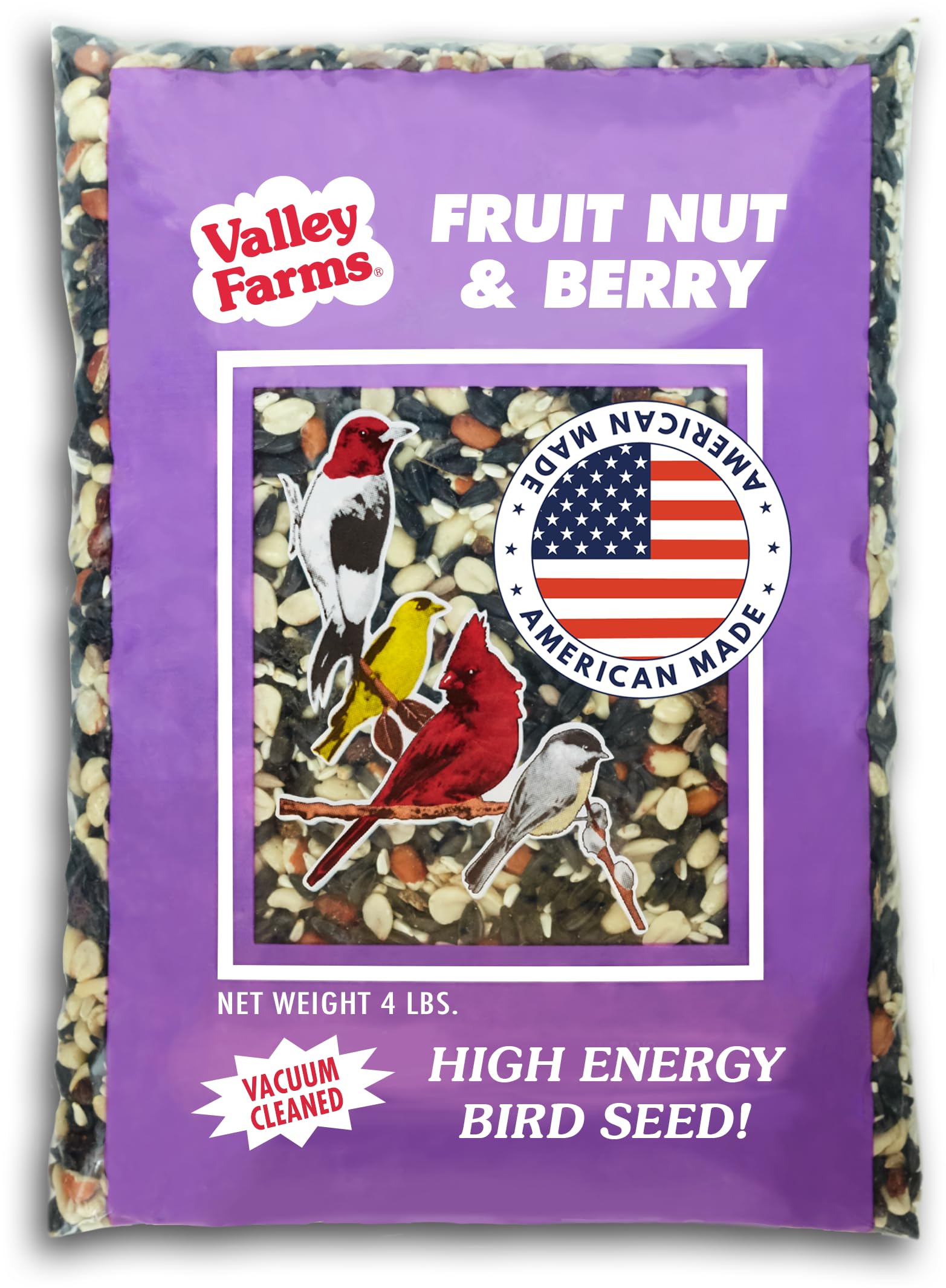
Robins have a well-documented fondness for berries, and Valley Farms leans into that with a dried cherry, cranberry, and raisin mix alongside black oil sunflower seeds, peanut kernels, and safflower. This 4-pound bag is vacuum-cleaned to reduce dust and filler, giving you a clean product that mimics the natural fruit-insect combination robins seek. The dried fruit pieces are large enough for robins to grab with ease, and the fat-rich peanuts keep energy levels high. Customers report birds coming “from all around” when this goes out.
The blend is effective for a range of birds — cardinals, grosbeaks, and buntings love the safflower, while robins zero in on the fruit. The small 4-pound size is ideal for testing or for households with moderate feeding. However, reviewers note that the bag can disappear in a week if you have a busy feeder; the cost per feeding is higher than standard seed mixes.
If your goal is to specifically target robins and thrushes with a berry-rich option, this blend is a top contender. The family-owned business making it adds a nice touch. Just be aware that the small bag might require frequent reordering if your robin population swells.
Why we love it
- Dried cherries and cranberries mimic natural robin diet
- Vacuum-cleaned — minimal dust and waste
- Attracts a variety of fruit-eating birds
- Proudly made in the USA by a family company
Good to know
- 4‑pound bag goes fast with heavy feeding
- Price per pound is higher than standard blends
6. Kaytee Wild Bird Food Mealworms 17.6 oz

Kaytee’s 17.6-ounce bag of oven-dried mealworms is the entry-level standard for feeding robins without breaking the bank. The preservative- and additive-free worms are full-size and crisp, perfect for ground feeding or mixing with fruit blends. Customers rave about bluebirds and robins showing up daily, with one reviewer saying birds “have figured out my feeding schedule and sit and wait for this treat.” The zip-seal bag keeps the worms fresh, though some breakage occurs during shipping.
These mealworms are versatile — they can be fed alone in a tray or mixed with favorite seeds. Kaytee is a trusted name in wild bird food, and this bag offers a good balance of quantity and quality for the price. A customer using them for chickens and wild birds alike appreciated the freshness and lack of dust. The worms are a high-energy treat that supports robin nesting, egg production, and chick development.
For budget-conscious birders who still want to provide robins with the protein they need, this is the go-to choice. The 17.6-ounce size is convenient for small to medium backyards. The main downside is that some bags have a higher proportion of broken pieces, but the overall value remains strong.
Why we love it
- Affordable entry point for feeding robins mealworms
- Oven-dried for quality and easy storage
- No preservatives or additives
- Trusted brand with positive track record
Good to know
- Some broken pieces in the bag
- 17.6 oz may be small for heavy feeding
7. Pet Faves 5lb Dried Mealworms
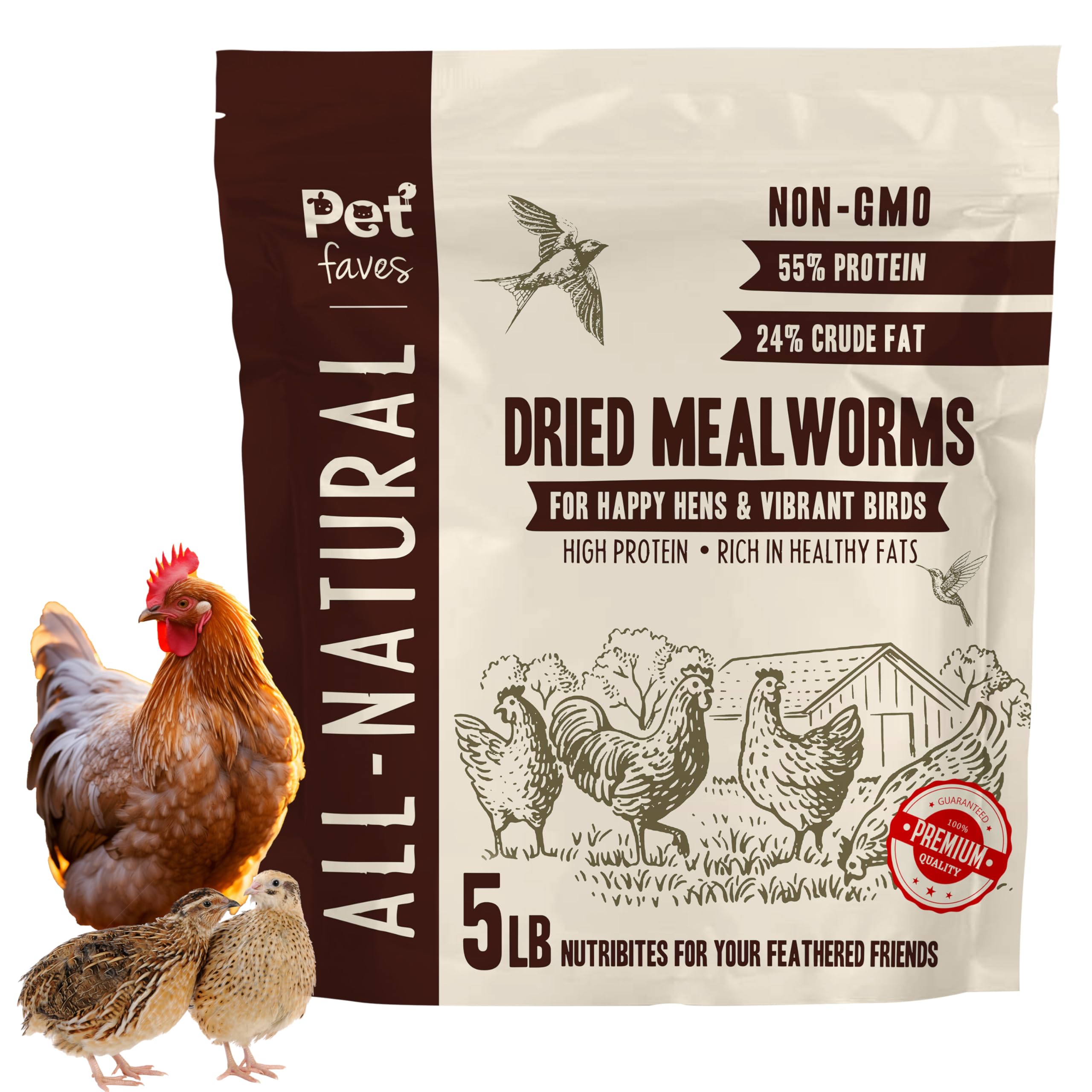
When your robin feeding operation scales up — maybe you’re attracting flocks of 20+ or have a bluebird trail — a bulk bag like Pet Faves 5-pounder is a smart investment. With 55% protein content, these Non-GMO mealworms are among the highest protein options on the market, supporting rapid feather growth and egg production during nesting season. Customers who feed both chickens and wild birds praise the sturdy packaging and fresh, dry worms that arrive without dust.
The resealable bag is heavy-duty and keeps the worms fresh for months. Reviewers consistently mention that their bluebirds, robins, and cardinals “love them” and that the price per pound beats smaller retail packages. One reviewer noted that other brands had broken bits and dust, but Pet Faves delivered whole, plump worms. The versatility extends to reptiles, hamsters, and turtles, but for robins it’s a pure protein bomb.
If you’re serious about sustaining large robin populations through breeding and migration, this bulk bag offers the best cost efficiency. The only caveat is the size: you’ll need a cool, dry place to store 5 pounds, but the resealable bag handles that well. It’s a no-fuss, high-quality option for committed birders.
Why we love it
- 5 pounds for extended feeding — fewer reorders
- 55% protein is among the highest available
- Non-GMO and free from harmful additives
- Sturdy resealable packaging preserves freshness
Good to know
- Large bag requires adequate storage space
- Not all worms are full size; occasional small pieces
8. C&S Fruit n’ Nut Suet Treat 8 Pack
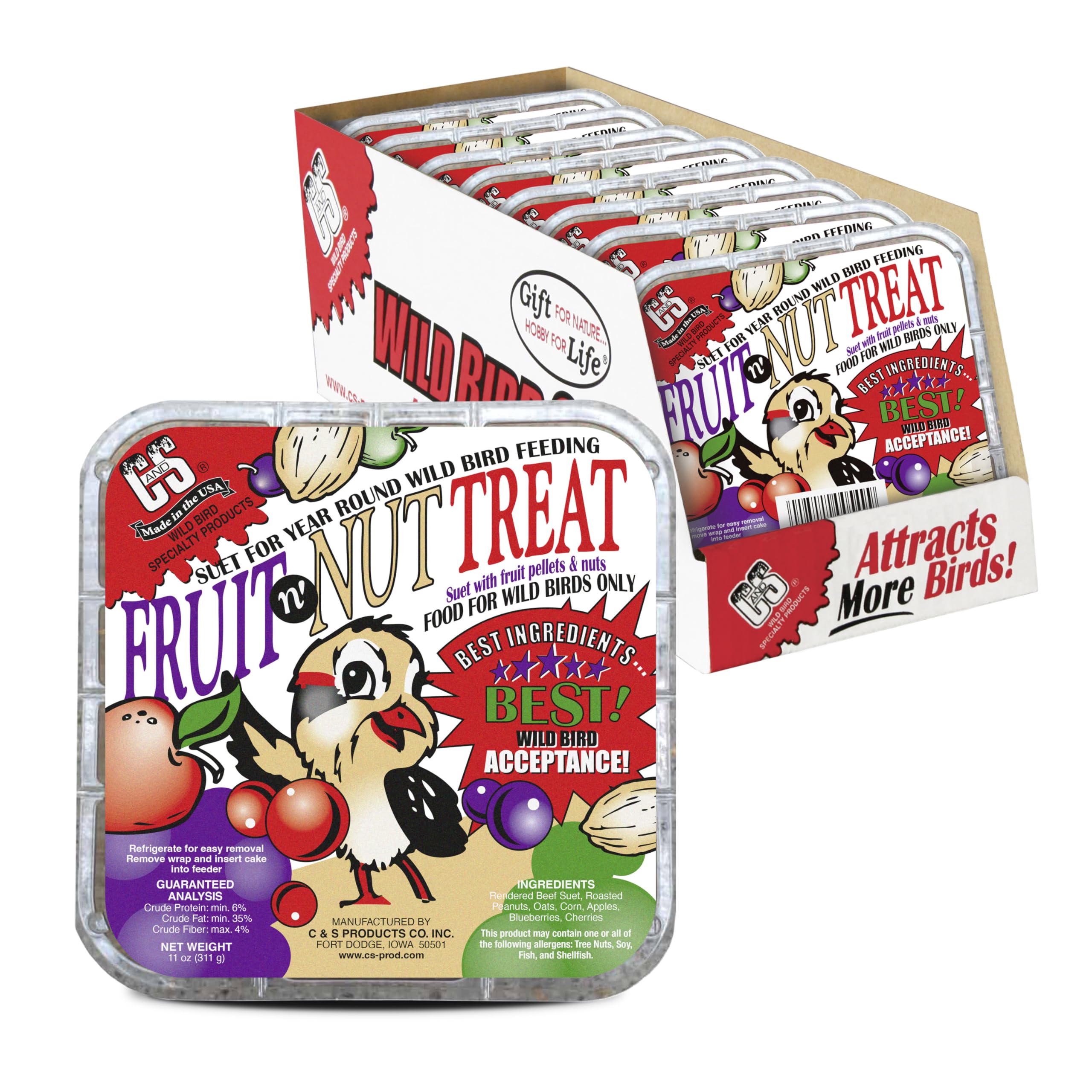
Robins are suet fans, especially when it’s packed with fruit. C&S Fruit n’ Nut Suet combines real fruit pieces with nuts to create a high-energy cake that keeps robins coming back through winter, migration, and nesting. The eight-pack offers substantial value, and each cake fits standard suet feeders. Customers report woodpeckers, blue jays, and thrushes all flocking to these cakes, with one reviewer noting the birds “quickly going” through them — a sign of high palatability.
Made in the USA and available in many flavors, this fruit variety is specifically formulated for fruit and nut-eating birds. The suet provides the essential calories robins need for foraging and staying warm. Because the cakes are semi-soft, even young robins can peck at them easily. Unlike some brands, C&S uses no artificial preservatives, and the cakes hold together well in warm weather without melting excessively.
For a simple way to add variety to your robin feeding station, this suet pack is a reliable choice. The only downside is that suet can attract unwanted animals like squirrels or raccoons if not protected. Still, for year-round robin activity, these cakes are a solid buy.
Why we love it
- Real fruit bits attract robins and thrushes
- High-energy cakes support migration and nesting
- 8‑pack lasts well for moderate feeding
- Made in the USA with trusted ingredients
Good to know
- May attract squirrels and raccoons
- Softer cakes can break apart in very hot weather
9. Audubon Park Extreme Variety 15 lb
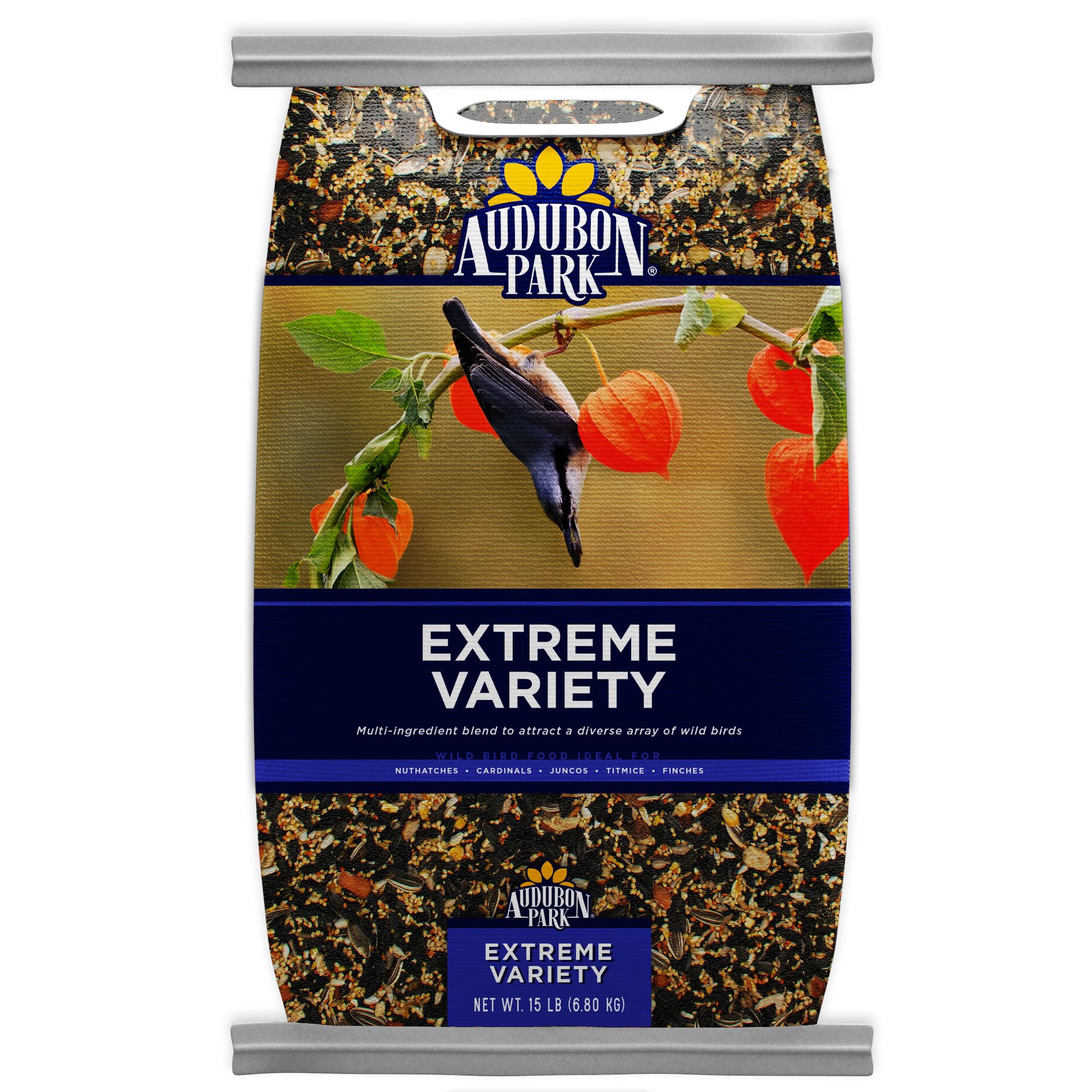
Audubon Park’s Extreme Variety is exactly that — a whopping 15-pound mix of black oil sunflower seeds, peanuts, sunflower chips, raisins, and tree nuts like walnuts, almonds, and pecans. Robins are drawn to the soft fruit and nut pieces, while finches and cardinals pick at the sunflower. One impressed customer described it as “largely good quality sunflower seeds with nuts and fruit, almost no grain fillers.” The sheer variety ensures that every bird in your backyard finds something to eat.
The bag is packed with premium ingredients — reviewers mention whole almonds, pistachios, and dried fruit — making it almost a gourmet blend at a mid-range price. The lack of cheap grains means less waste under the feeder. However, the large nuts can clog tube feeders with narrow ports, so a hopper or tray feeder works best. Some birds may need time to adjust to the new mix, but once they do, activity increases dramatically.
For birders who want a single mix that brings robins, cardinals, woodpeckers, and even squirrels (if you don’t mind them) to the yard, this is a fantastic value. The 15-pound bag lasts a long time and the quality is consistently praised. Just be prepared to switch feeders if yours can’t handle whole nuts.
Why we love it
- 15 pounds of premium nuts, seeds, and fruit
- Almost no filler grains — less waste
- Attracts the widest variety of birds
- Great value for the quantity and quality
Good to know
- Large nuts may clog tube feeders
- Some birds may pick out favorite pieces and leave rest
10. Nature Anywhere Bird Banquet Bird Seed
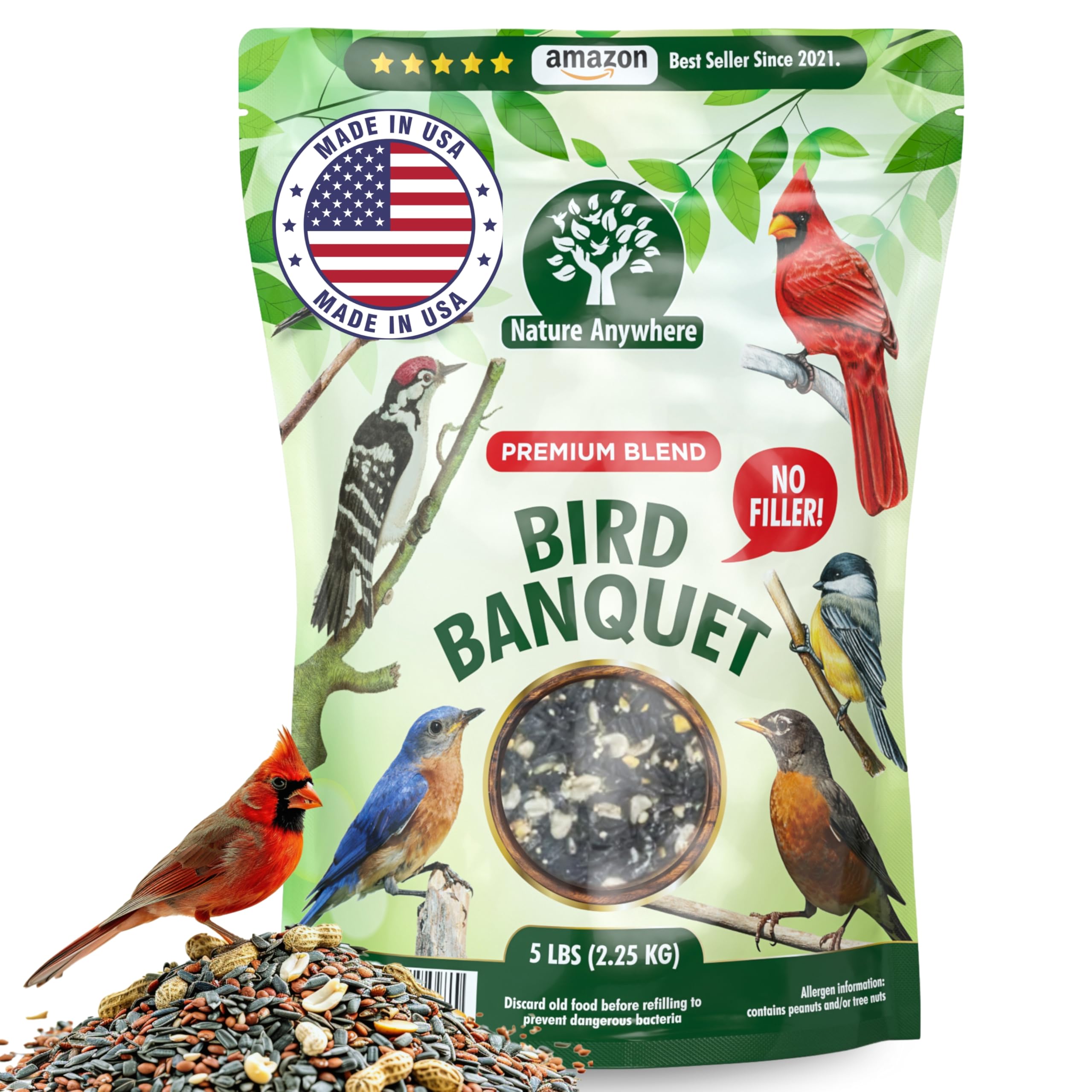
If you’re tired of seed mixes that leave a pile of uneaten filler on the ground, Nature Anywhere’s Bird Banquet is the antidote. This blend of black oil sunflower, peanuts, safflower, striped sunflower, and white millet contains no cheap grains — meaning every seed is something birds actually eat. Robins will pick through the sunflower hearts and peanuts, and the safflower attracts cardinals. Customers love that the feeders empty faster and the ground stays cleaner.
The brand even offers a satisfaction guarantee: if your feeder isn’t the busiest in the neighborhood, they’ll refund you. Made with domestically grown ingredients, this seed is formulated to appeal to a wide range of songbirds. Reviewers note that birds go for it “right away” and that the variety of species increases noticeably. The bag is sturdy and resealable, preserving freshness.
For the price point, this mix competes well with major brands and often outperforms them in terms of consumption rate. The only minor complaint is that sunflower seed casings still drop to the ground (as with any hulled sunflower), but that’s unavoidable. If you want a no-filler mix that robins and cardinals both love, this is a top contender.
Why we love it
- No cheap filler grains — every seed is eaten
- Attracts robins, cardinals, chickadees, and more
- Made in the USA with quality ingredients
- Satisfaction guarantee from the manufacturer
Good to know
- Sunflower shells still create some mess
- Price per pound slightly higher than basic mixes
11. Freebird Premium Songbird Blend 5 lb
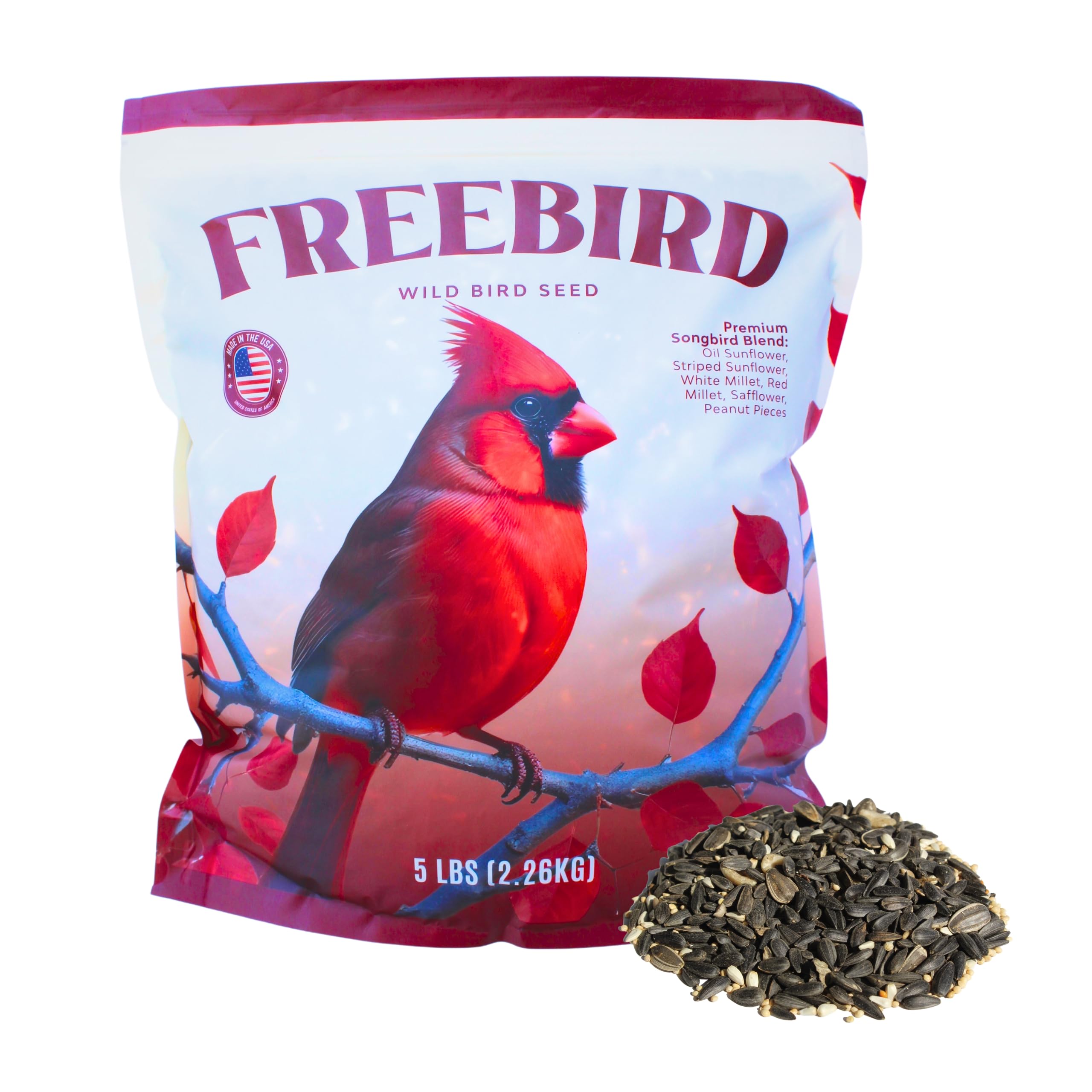
Freebird’s 5-pound blend is a carefully curated mix of black oil sunflower, striped sunflower, safflower, peanut pieces, white millet, and red millet — all sourced from trusted US farms. What sets it apart is the quality of the seeds: high oil content and no additives. Robins will go for the sunflower hearts and peanut bits, while the millet attracts ground-feeding sparrows and juncos. One customer saw their “number of visiting Cardinals tripled” after switching to this blend.
The heavy-duty bag with a resealable zipper locks in freshness and prevents spills. The blend is designed to work in hopper, tube, or platform feeders. Reviewers appreciate that it attracts multiple species beyond robins — including chickadees, nuthatches, and woodpeckers — making it a versatile choice. The seeds are all natural and Non-GMO, appealing to eco-conscious birders.
For those who want a premium yet affordable songbird mix that includes robin-friendly ingredients, Freebird is a solid pick. The 5-pound size is good for testing or smaller backyards. The only downside is the inclusion of red millet, which some birds ignore, but overall consumption is high. It’s a reliable, high-quality option.
Why we love it
- Locally sourced, all natural, Non-GMO seeds
- High oil content for energy
- Attracts robins, cardinals, finches, and more
- Resealable bag keeps seeds fresh
Good to know
- Red millet may be ignored by some birds
- 5 lb bag may need frequent refills for active feeders
Safety & Care Tips
Keep Feeders Clean & Dry
Robins are ground feeders, so platform and tray feeders need regular wiping to remove droppings and wet seed. Moldy or damp seed can cause fatal fungal infections. Empty and scrub your feeder at least every two weeks with warm water and a mild vinegar solution, letting it dry completely before refilling.
Store Bird Seed Properly
Mealworms and fruit-heavy blends are more prone to spoilage than standard seeds. Always keep bags in a cool, dry place away from direct sunlight. Use airtight metal or plastic containers to deter rodents and insects. Check for any signs of mold or musty odor before offering to robins.
FAQ
What is the single best food to attract robins?
Can robins eat standard bird seed blends?
Should I feed robins live or dried mealworms?
How do I protect robins from predators at the feeder?
What time of year do robins need supplemental feeding most?
Final Thoughts: The Verdict
For most pet parents, the best bird seed for robins winner is the Hatortempt 1.8lb Dried Mealworms because it delivers unmatched protein density in a convenient, whole-bodied form that robins cannot resist. If you want a warm‑weather no‑melt option, grab the C&S Mealworm Delight No Melt Suet Dough. And for a low‑mess fruit and nut blend that keeps your deck spotless, nothing beats the Audubon Park Waste Free Wild Bird Seed.