
When your dog receives an IVDD diagnosis, every movement feels weighted with concern. You watch them navigate stairs, hop onto furniture, or simply walk across the room, and your mind races with questions about safety, comfort, and long-term mobility. The right harness becomes more than a walking tool — it transforms into a daily lifeline that protects their spine while preserving their dignity and joy.
I’m Mo Mahin — the founder and writer behind Furric. I’ve spent countless hours analyzing veterinary rehabilitation protocols, studying canine spinal biomechanics, and sifting through thousands of verified owner experiences to understand what truly makes a harness safe for IVDD-affected dogs.
Through careful analysis of veterinary guidelines and extensive real-owner feedback, this guide delivers expert recommendations for the best harness for dogs with ivdd.
How To Choose The Best Harness For Dogs With IVDD
Selecting a harness for a dog with intervertebral disc disease requires a shift in thinking. You are no longer looking for a tool that simply controls pulling or looks stylish. Every strap, buckle, and panel directly impacts your dog’s spinal alignment and comfort. The wrong harness can aggravate a herniated disc, while the right one supports healing and prevents further injury.
Prioritize Full-Body Support Over Neck Pressure
Standard harnesses that cinch around the neck or put pressure on the cervical spine are dangerous for IVDD dogs. Look for designs that distribute support across the chest and shoulders or provide a dedicated rear sling for hind-end weakness. A Y-front or step-in style that keeps the sternum clear and the neck free from tension is ideal for dogs with neck or back involvement.
Evaluate Handle Placement and Lifting Mechanics
The best IVDD harnesses feature one or more sturdy handles positioned over the center of gravity, not just at the neck. A mid-back handle lets you lift your dog without torquing the spine, while a rear handle supports the hindquarters during stairs or car entry. Handles with padded grip zones reduce strain on your hands and give you precise control during assisted movement.
Check for Breathability and Pressure Distribution
Dogs with IVDD may wear their harness for extended periods during recovery. Materials like closed-cell foam padding, soft neoprene, or breathable mesh prevent chafing and overheating. Wide straps that sit flat against the body spread pressure evenly and reduce the risk of rub sores, which can become serious in a dog with limited mobility.
Quick Comparison
On smaller screens, swipe sideways to see the full table.
| Model | Type | Best For | Key Feature | Amazon |
|---|---|---|---|---|
| GingerLead Support Sling | Support Sling | Small dogs & dachshunds with IVDD | Padded neoprene sling, used in veterinary hospitals | Amazon |
| OneTigris Invictus | Full-Body Harness | Large dogs needing 360° mobility support | Three grab handles, configurable rear leg straps | Amazon |
| Ruffwear Front Range | Walking Harness | Everyday walks with padded spinal protection | Closed-cell foam padding, dual leash attachment points | Amazon |
| OneTigris Skywalker | Lift Harness | Hind-end weakness and post-surgery recovery | Y-shaped harness with detachable rear leg support | Amazon |
| PetSafe Easy Walk | No-Pull Harness | Controlled walks without neck strain | Front martingale loop, 5 adjustment points | Amazon |
| Carhartt Nylon Duck | Walking Harness | Outdoor durability with water resistance | 500-denier polyester with Rain Defender DWR | Amazon |
| Lafoty Full-Body Lift | Lift Harness | Senior dogs needing full-body stair assistance | Three reinforced handles with detachable shoulder strap | Amazon |
In-Depth Reviews
1. GingerLead Dog Support Sling Harness

The GingerLead is the only product on this list specifically engineered for dogs with IVDD, and it shows in every design detail. This rear support sling targets the exact needs of dachshunds and small breeds prone to disc disease — a padded neoprene cradle that lifts the hindquarters without compressing the spine. Veterinary hospitals across the United States use this sling for post-operative recovery, luxating patella rehabilitation, and senior dogs with arthritis or disc degeneration. The integrated leash keeps you upright while the adjustable length accommodates owners of different heights, making assisted walks feel natural rather than awkward.
The support pad measures 1.5 inches wide and 6 inches long on the X-Small size, creating a targeted lift zone that prevents bunching or shifting during movement. Owners report that the machine-washable neoprene holds up well after repeated washes and dries quickly when air-dried. The adjustable sling length ranges from 28 to 69 inches, which means you maintain good posture while your dog walks — no bending or stooping required. Several owners of dachshunds recovering from spinal surgery noted that the sling gave their dog enough confidence to attempt short walks without dragging their back legs.
If you own a small dog with a confirmed IVDD diagnosis or are navigating the early stages of disc disease, the GingerLead belongs in your home. It is not a full walking harness — you will need a separate chest harness for front-end support — but as a dedicated rear support tool, it outperforms every general-purpose mobility aid I have evaluated. The price reflects specialized veterinary-grade design, and the peace of mind it delivers during recovery is genuinely hard to quantify.
Why we love it
- Specifically designed for IVDD and spinal conditions
- Used in veterinary hospitals for post-surgery recovery
- Adjustable sling length keeps the owner upright and comfortable
- Machine-washable neoprene holds up to frequent use
Good to know
- Requires a separate chest harness for full-body support
- Best suited for small breeds and dachshunds under 25 lbs
- Some owners reported shipping delays during urgent orders
2. OneTigris Invictus Mobility Assistance Vest
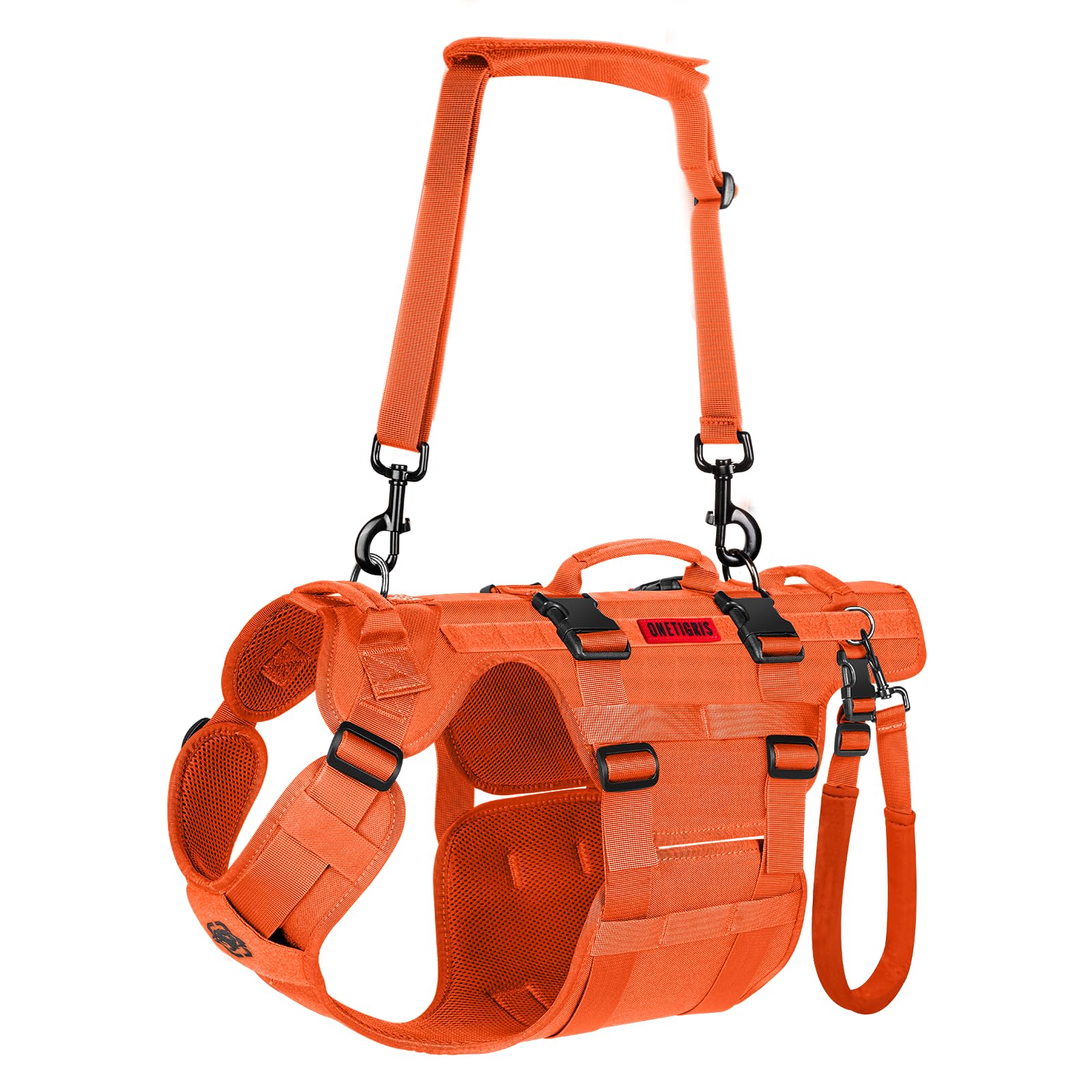
The Invictus is OneTigris’s most comprehensive mobility platform, and it addresses the full spectrum of challenges that come with IVDD-related weakness. This harness integrates a snug-fit front chest piece with a separate rear support system, connected by adjustable straps that distribute weight evenly across your dog’s body. The 360-degree support design includes three grab handles — two horizontal and one vertical — plus a detachable shoulder strap that doubles as a lifting aid or simple leash. For large dogs struggling with hind-end collapse or stair navigation, this system gives you mechanical leverage without asking you to contort your own back.
Build quality is exceptional for this price tier. The 1000-denier nylon exterior resists tears and abrasion, while the mesh lining promotes airflow during extended wear sessions. Stainless steel D-rings with reinforced stitching handle significant weight loads without deformation, and the zinc-alloy snap hooks make strap removal and reconfiguration straightforward. Owners of giant breeds, including a Pyrenees with hip problems, reported that the XL size accommodated their dog comfortably and made standing assistance noticeably easier. The anti-chafing sleeves on the rear leg straps prevent rub sores during repeated lifting cycles, which is a thoughtful inclusion for dogs requiring frequent bathroom breaks.
This harness truly shines for medium-to-large dogs with moderate to advanced mobility loss. The learning curve for fitting is real — expect to spend 15 to 20 minutes adjusting straps the first time — but once dialed in, the Invictus provides the most stable lifting platform in this guide. It is heavier than a standard walking harness and may feel bulky for smaller dogs, but for owners of large breeds facing degenerative myelopathy or post-surgical IVDD recovery, this is a long-term investment that pays for itself in saved physical strain.
Why we love it
- Three strategically placed handles for balanced lifting
- 1000D nylon with breathable mesh for durability and airflow
- Detachable rear leg straps with anti-chafing sleeves
- Versatile shoulder strap converts to leash or additional lift
Good to know
- Heavier than standard harnesses, may overwhelm small dogs
- Initial fitting requires patience and careful adjustment
- Hip straps run slightly short for deep-chested large breeds
3. Ruffwear Front Range Dog Harness

The Ruffwear Front Range is not marketed as a medical device, but its closed-cell foam padding and four-point adjustability make it a standout option for IVDD dogs who still enjoy controlled walks. The chest and belly panels are built with foam that absorbs impact and distributes pressure evenly across the sternum and ribcage, which reduces the concentrated forces that can aggravate a sensitive spine. The aluminum V-ring on the back provides a secure attachment point for your leash, while the reinforced webbing at the chest gives you the option to redirect your dog without torqueing their neck.
Owners consistently praise the Front Range for its ability to stay centered on the dog’s body without twisting or slipping, which is critical for dogs with IVDD who cannot afford uneven pressure shifts. The reflective trim adds a layer of safety for early morning or evening walks, and the dedicated loop for the Beacon light (sold separately) makes this harness adaptable for low-light conditions. Multiple reviewers noted that their dogs showed no signs of chafing even after hours of wear, thanks to the smooth interior seams and padded construction. The quick-adjust buckles make it easy to achieve a snug fit without struggling with stiff webbing.
If your IVDD dog is still active enough for daily walks and you need a harness that balances spinal protection with unrestricted movement, the Ruffwear Front Range is the right choice. It lacks the rear-support functionality of dedicated lift harnesses, so it works best for dogs in the early or managed stages of disc disease rather than those requiring full hind-end assistance. For what it does — comfortable, stable, everyday walking — it is arguably the best foam-padded harness available.
Why we love it
- Closed-cell foam padding prevents chafing and distributes pressure
- Four points of adjustment for a custom, stay-put fit
- Dual leash attachment points for training and everyday walking
- Reflective trim improves visibility in low light
Good to know
- No rear-support sling for hind-end weakness
- Must go over the head, which can be tight for some dogs
- Limited color options for the medium size
4. OneTigris Skywalker Dog Lift Harness
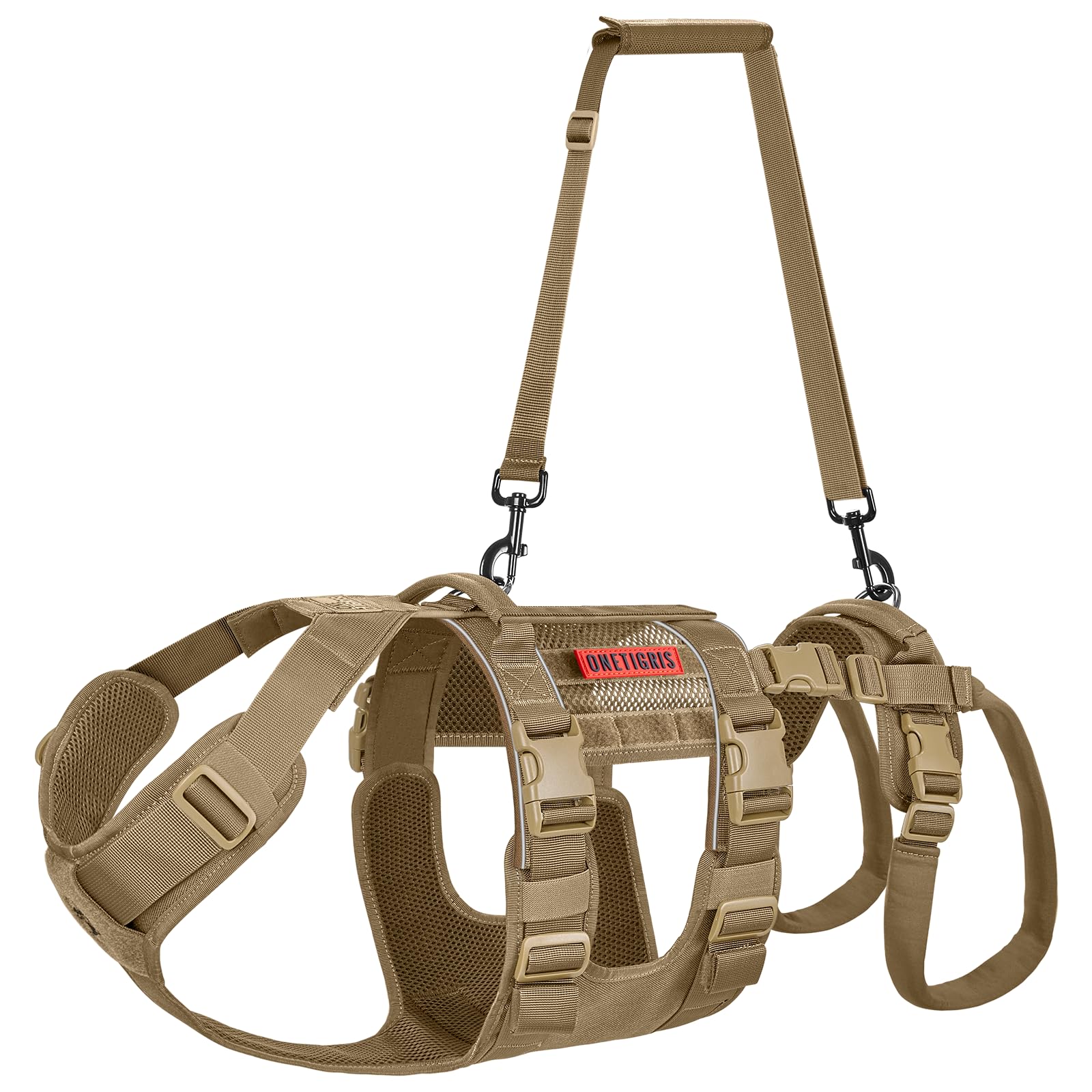
The Skywalker offers a middle ground between a basic walking harness and a full medical support system. Its modular design includes a Y-shaped front harness that clips into a rear leg support piece, giving you the flexibility to remove the rear section when your dog only needs front-end control. The inclusion of two horizontal handles and one detachable lifting strap means you can assist your dog up stairs, into the car, or during bathroom breaks without reaching under their belly. Dogs recovering from IVDD surgery often need this type of targeted hind-end help during the first weeks of limited mobility.
Material quality is consistent with OneTigris’s reputation for overbuilt construction. The 1000-denier nylon shell shrugs off abrasion from doorways and curbs, while the mesh lining keeps air moving against your dog’s skin during longer wear sessions. The stainless steel D-rings and UTX-Duraflex buckles resist corrosion and hold firm under load, which matters when you are lifting 50-plus pounds of dog several times per day. Several owners of arthritic seniors and degenerative myelopathy patients reported that the Skywalker made a noticeable difference in their dog’s willingness to attempt standing and short walks, likely because the rear support reduces the fear of falling.
For IVDD dogs that still have some hind-end awareness but need occasional lifting assistance, the Skywalker hits the sweet spot. It is easier to put on than full-body wrap-style harnesses and more supportive than a standard walking harness. The rear leg straps may require careful positioning to avoid rubbing on male dogs, and the adjustments can loosen slightly during extended use, but these are minor trade-offs for a harness that genuinely improves quality of life during recovery.
Why we love it
- Modular design with detachable rear support section
- Two horizontal handles plus a detachable lifting strap
- 1000D nylon with breathable mesh for durability and airflow
- Light-reflective trim for nighttime visibility
Good to know
- Rear leg straps may rub on male dogs without careful positioning
- Adjustments can loosen slightly over repeated use
- Not designed for all-day continuous wear
5. PetSafe Easy Walk No-Pull Harness
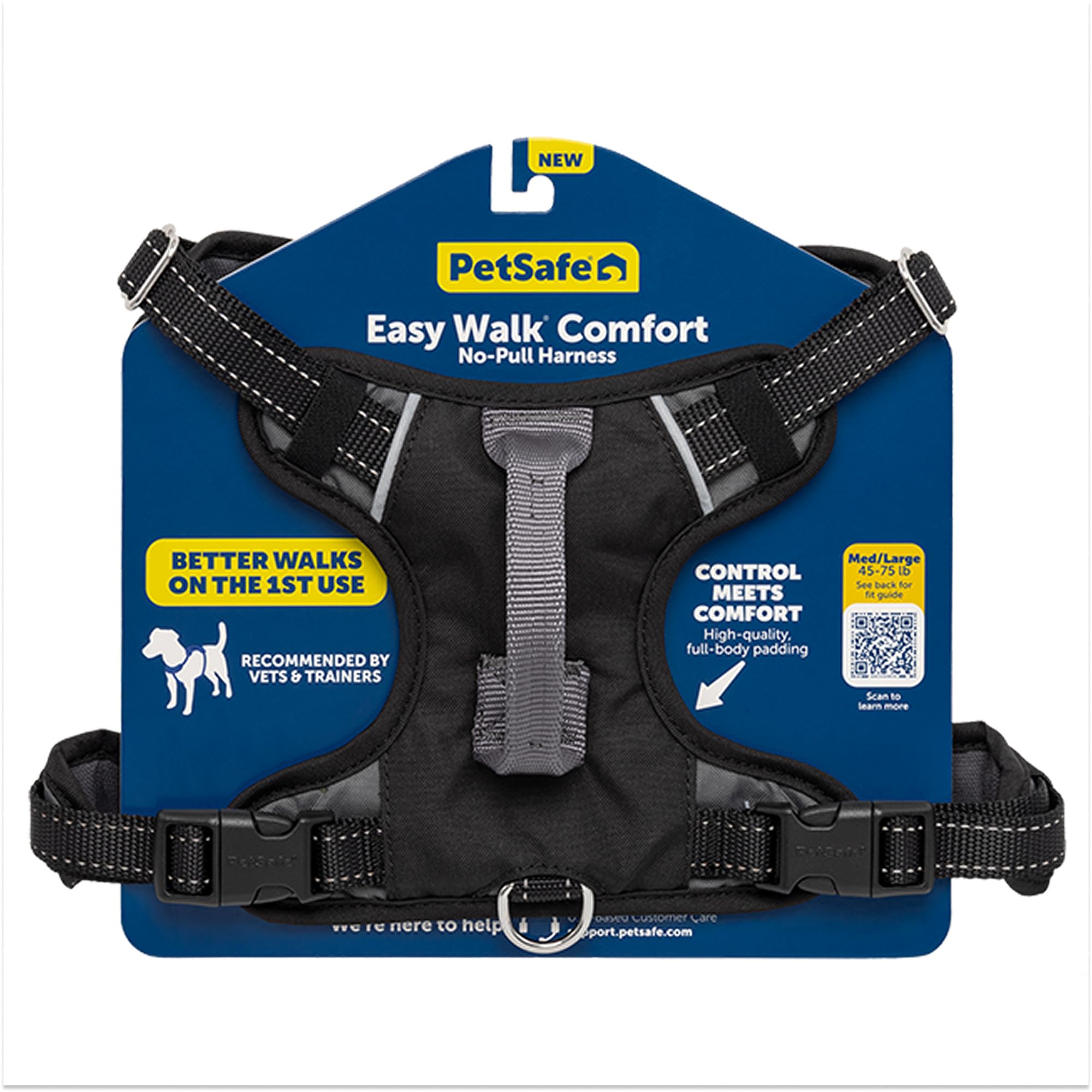
The PetSafe Easy Walk takes a fundamentally different approach to leash control that aligns well with IVDD safety requirements. Instead of tightening around the neck or throat when a dog pulls, the front martingale loop redirects forward momentum by gently turning the dog’s shoulders to the side. This mechanism eliminates the need for choke chains or prong collars and keeps all pressure off the cervical spine. For dogs with IVDD located in the neck region, this feature alone can prevent the painful flare-ups that occur when standard collars or back-clip harnesses allow sudden jerking movements.
The full-body padding on this harness is a meaningful upgrade over earlier PetSafe models. The padded panels run along the chest and belly, reducing the risk of rub sores during longer walks. Five points of adjustability let you fine-tune the fit across the neck, chest, and belly, which is essential for dogs with the irregular body proportions that sometimes accompany spinal conditions. The top handle provides an extra layer of control for guiding your dog over obstacles or steadying them on uneven terrain. Owners of reactive dogs and strong pullers reported that the front clip dramatically improved their walking experience, with many noting that their dogs stopped pulling within the first few walks.
If your IVDD dog is still mobile and you need a harness that prevents sudden lunges without putting pressure on the spine, the Easy Walk delivers dependable performance at a practical price. It is not a mobility aid — there is no rear support or lifting handle — but as a spinal-safe walking harness for dogs in the early stages of disc disease or those managed conservatively, it is difficult to beat. The martingale design is not magic for every dog; extreme pullers may still require additional training tools, but for the majority of IVDD dogs who simply need gentle redirection, this harness gets the job done.
Why we love it
- Front martingale loop prevents pulling without neck pressure
- Full-body padding reduces chafing on sensitive skin
- Five adjustment points for a precise, custom fit
- Top handle offers extra control for guiding and steadying
Good to know
- Not designed for hind-end support or lifting
- Some dogs can back out if straps are not snug enough
- May not be sufficient for extremely strong, reactive pullers
6. Carhartt Nylon Duck No Pull Dog Harness

Carhartt brings its workwear DNA to the dog harness world, and the result is a tough, no-nonsense harness that holds up to daily use in rough conditions. The 500-denier polyester shell with Rain Defender DWR technology repels light rain and resists moisture absorption, which means the harness stays lightweight even on damp mornings. The martingale chest strap provides gentle no-pull correction without cinching around the throat, and the over-the-head yoke style distributes weight across the shoulders rather than the neck. For IVDD dogs that need to avoid sudden jolts, this design offers a reasonable compromise between control and spinal safety.
The spacer mesh backing adds a layer of breathability that prevents heat buildup during active walks. Reflective low-light stitching runs along key panels, giving you added visibility during early morning or evening outings. Owners of working breeds and high-energy dogs praised the harness for its ability to withstand dirt, mud, and repeated use without losing shape or fraying. One owner of a 110-pound dog noted that the duck material repelled sticker weeds and burrs that would normally get embedded in fabric harnesses. The single-buckle closure makes it easy to get on and off, which is a real convenience when your dog is excited about a walk.
The Carhartt harness is best suited for IVDD dogs who still enjoy outdoor adventures and need a rugged, weather-resistant option for walks and hikes. It lacks padding on the interior — the spacer mesh provides some cushion but not the plush relief that dogs with advanced disc disease may need. If your dog has sensitive skin or requires significant rear-end support, this is not the right primary harness. But as a secondary harness for short, controlled outings in wet or dirty conditions, it earns its place in the rotation.
Why we love it
- Rain Defender DWR technology repels moisture and light rain
- Spacer mesh backing promotes airflow during active use
- Reflective stitching improves visibility in dim conditions
- Single-buckle design makes on-and-off effortless
Good to know
- Interior padding is minimal compared to foam-padded harnesses
- Must go over the head, which can be cumbersome for some dogs
- No rear support or lift capabilities for hind-end weakness
7. Lafoty Full-Body Lift Harness for Large Dogs
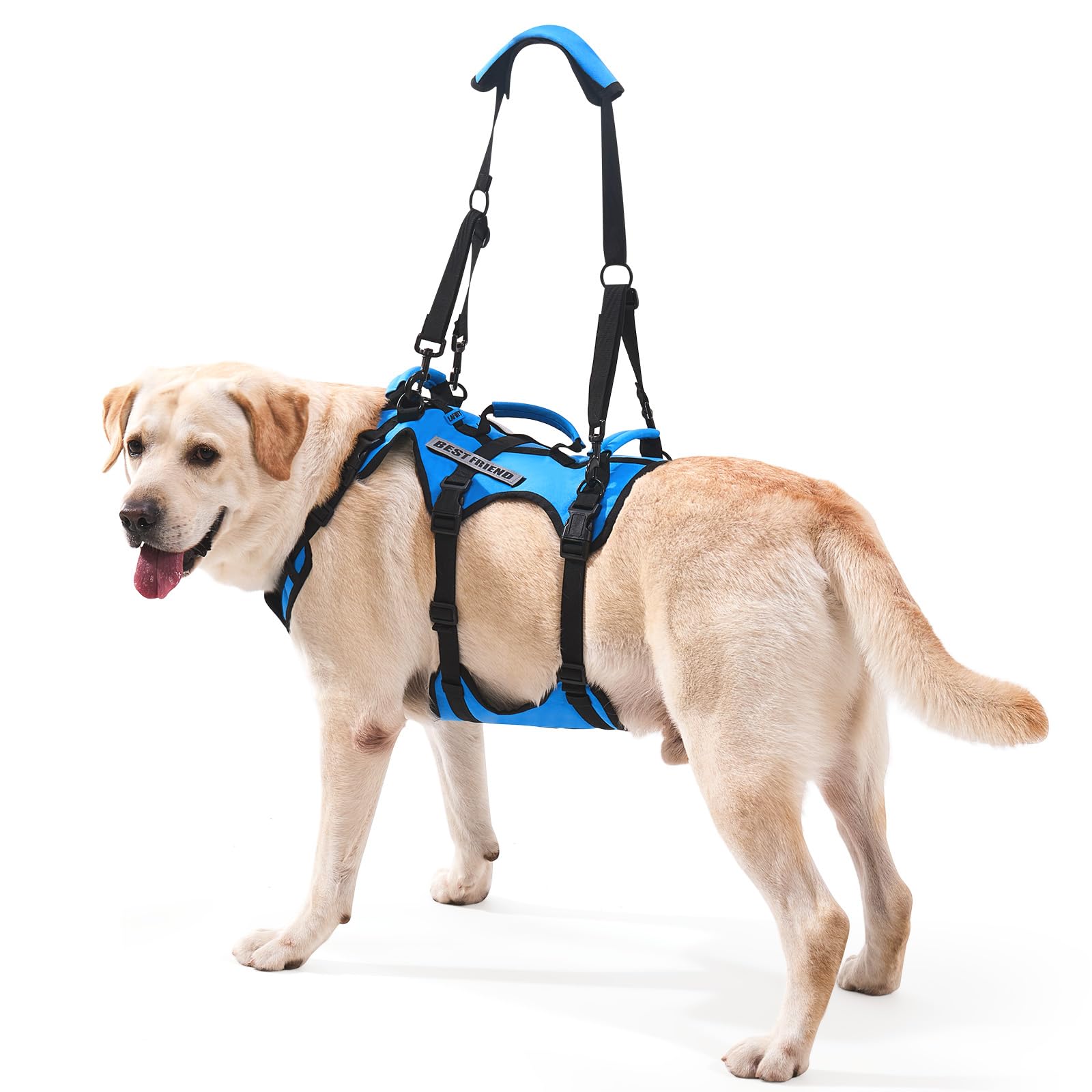
The Lafoty Full-Body Lift Harness is designed for the heaviest lifting scenarios — literally. With three reinforced handles positioned along the back and a detachable shoulder strap, this harness gives owners of large, heavy dogs the mechanical advantage needed to navigate stairs, cars, and standing assistance without throwing out their own backs. The soft, breathable padding wraps around the chest and abdomen without applying direct pressure to the spine, which matters for IVDD dogs whose vertebral columns cannot tolerate any additional compression. For owners managing a 100-plus-pound dog with disc disease, this harness can make the difference between being housebound and maintaining an active lifestyle.
The adjustable straps accommodate a wide range of body shapes, from deep-chested retrievers to stocky bulldogs. The padding is thick enough to prevent digging and rubbing but not so bulky that it restricts natural movement. Owners of giant breeds praised the harness for its ability to support their dog’s full weight during stair climbs — one owner of a 200-pound dog confirmed that the harness held up consistently over weeks of daily use. The included shoulder strap adds versatility by allowing you to distribute the dog’s weight across your own torso, which is a game-changer when you need to carry your dog short distances or steady them during slippery conditions.
This harness is the most expensive option in the guide, and the price reflects the heavy-duty construction and full-body support system. It is best suited for large and giant breed dogs with advanced mobility loss from IVDD, arthritis, or degenerative myelopathy. The sizing can be tricky for dogs that fall between standard size ranges — one owner of a 50-pound Labradoodle found the large slightly loose despite following the measurement guide. If you can dial in the fit, the Lafoty delivers hospital-grade support that protects both your dog’s spine and your own body during the physically demanding work of caregiving.
Why we love it
- Three reinforced handles provide flexible lifting options from multiple angles
- Soft, breathable padding protects the abdomen and chest
- Detachable shoulder strap distributes weight across the owner’s torso
- Sturdy construction supports giant breed dogs reliably
Good to know
- Premium price point reflects heavy-duty construction
- Sizing can be tricky for dogs between standard dimensions
- Hand wash only, which requires extra care after muddy outings
Safety & Care Tips
Fitting and Pressure Checks
A properly fitted harness should allow two fingers to slide flat between the strap and your dog’s body at every contact point — neck, chest, and belly. Check for rubbing or redness after each use, especially in the armpits and behind the elbows. Dogs with IVDD often shift their weight unevenly, so inspect the harness daily for signs of slipping or twisting that could create pressure points on the spine. Re-measure your dog every few weeks during recovery, as muscle loss or weight changes can alter the fit significantly.
Cleaning and Material Longevity
Hand wash neoprene and foam-padded harnesses with mild soap and air dry away from direct heat sources. Machine washing can degrade closed-cell foam and cause neoprene to lose its shape over time. For nylon harnesses with metal hardware, rinse mud and debris off immediately to prevent corrosion of buckles and D-rings. Replace any harness that shows frayed stitching, cracked plastic buckles, or rusted hardware — a failure during a lift can cause a fall that worsens your dog’s spinal condition. Rotate between two harnesses if your dog wears one for extended periods to allow foam padding to fully decompress.
FAQ
Can a regular no-pull harness work for a dog with IVDD?
How do I know if the harness is too tight on my IVDD dog?
Should I use a harness with a handle for lifting my IVDD dog?
Can my IVDD dog wear a harness all day during recovery?
Final Thoughts: The Verdict
For most pet parents managing IVDD in a small breed dog, the winner is the GingerLead Support Sling Harness because it is the only product specifically designed for intervertebral disc disease and carries the endorsement of veterinary hospitals for post-surgery recovery. If you need padded everyday walking support for a dog still active with mild IVDD, grab the Ruffwear Front Range. And for large breed dogs requiring full hind-end and stair assistance, nothing beats the comprehensive 360-degree support of the OneTigris Invictus.