
Few things frustrate a dedicated cat parent more than watching a finicky feline sniff their fresh litter box, then turn around and find a corner of the carpet instead. When your cat refuses to step into the box, the problem is rarely rebellion — it is almost always a mismatch between their sensitive paws, nose, and the texture or scent of what you have poured in. Finding the formula that earns your cat’s daily trust is the single most important step toward a clean home and a relaxed cat.
I’m Mo Mahin — the founder and writer behind Furric. I have spent years analyzing veterinary safety standards for cat litter ingredients and evaluating real feedback from thousands of owners who have struggled with cats that refuse to use anything less than the perfect substrate.
My thorough research identified the leading options for best cat litter for picky cats that genuinely finicky felines will consistently accept with ease.
How To Choose The Best Cat Litter For Picky Cats
A cat that refuses their litter box is communicating discomfort, not disobedience. Picky cats are often reacting to one of three triggers: a texture that feels unnatural under their paws, a fragrance that overwhelms their sensitive nose, or fine dust that irritates their respiratory tract. Understanding these three factors will help you narrow your choices fast.
Texture and Paw Feel
Cats develop strong preferences for grain size and shape. Some will only dig into fine, sand-like clay, while others prefer the chunkier feel of wood pellets or tofu granules. The wrong texture can cause a cat to avoid the box entirely. Look for a consistent, medium-grain texture that mimics natural soil without sharp edges or sticky residue.
Dust and Respiratory Safety
Excessive dust is a dealbreaker for many cats and can worsen allergies in both pets and humans. Low-dust or dust-free formulas are essential for picky felines, especially those with sensitive airways. Silica gel, wood pellets, and certain clay blends are engineered to minimize airborne particles during pouring and digging.
Scent and Odor Control
Artificial perfumes are a common culprit behind litter box refusal. Unscented formulas or those with a very mild natural scent (vanilla, wood, or baked clay) are far more likely to be accepted. Effective odor control should come from absorption and clumping, not from masking fragrances that irritate your cat’s nose.
Quick Comparison
On smaller screens, swipe sideways to see the full table.
| Model | Type | Best For | Key Feature | Amazon |
|---|---|---|---|---|
| Dr. Elsey’s Ultra Unscented | Clumping Clay | Multi-cat households | 99.9% dust-free, hard clumping | Amazon |
| Catit Go Natural | Plant-Based Hybrid | Eco-conscious owners | 70% pea husk, 30% bentonite clay | Amazon |
| pidan Mix | Tofu-Bentonite Blend | Low-tracking preference | 70% tofu, 30% bentonite, flushable | Amazon |
| Catalyst Natural Soft Wood | Wood Fiber | Respiratory sensitivity | Biodegradable, lightweight, low dust | Amazon |
| PetSafe ScoopFree Crystal | Silica Crystal | Automatic litter boxes | Dries waste 5x faster than clay | Amazon |
In-Depth Reviews
1. Dr. Elsey’s Ultra Unscented Clumping Clay

Dr. Elsey’s has earned a loyal following among shelter rescues, breeders, and multi-cat households for good reason. The 100-percent bentonite clay formula delivers dense, rock-hard clumps that lock in moisture before it can pool at the bottom of the tray. The medium-grain texture strikes a careful balance — small enough to feel natural under the paw, yet heavy enough to minimize the tracking that drives many owners crazy. The unscented formulation is a standout for picky cats with fragrance aversions.
Veteran owners who have tested dozens of litters over decades consistently praise the odor control in multi-cat environments, with some noting that visitors could not detect the presence of cats at all. The 99.9 percent dust-free claim holds up well during scooping, though a small puff may appear when pouring a fresh bag. The 40-pound bag offers substantial value, and the clumps hold together firmly enough to avoid crumbling during scooping.
For owners of particularly finicky cats, this is the safest first try. The texture is familiar enough for clay-trained cats, the lack of scent removes a common refusal trigger, and the clumping performance keeps the box fresh between cleanings. Heavy clumps can fill a Litter Genie faster than lighter alternatives, but the trade-off is a genuinely clean box that most cats will accept without hesitation.
Why we love it
- Exceptional clumping strength with no crumbling
- Genuinely low dust and low tracking for clay
- Unscented formula ideal for fragrance-sensitive cats
Good to know
- Heavy 40-pound bag can be tough to carry
- Clumps are dense and fill waste containers faster
- Slight dust may appear when pouring fresh litter
2. Catit Go Natural Plant-Based Cat Litter
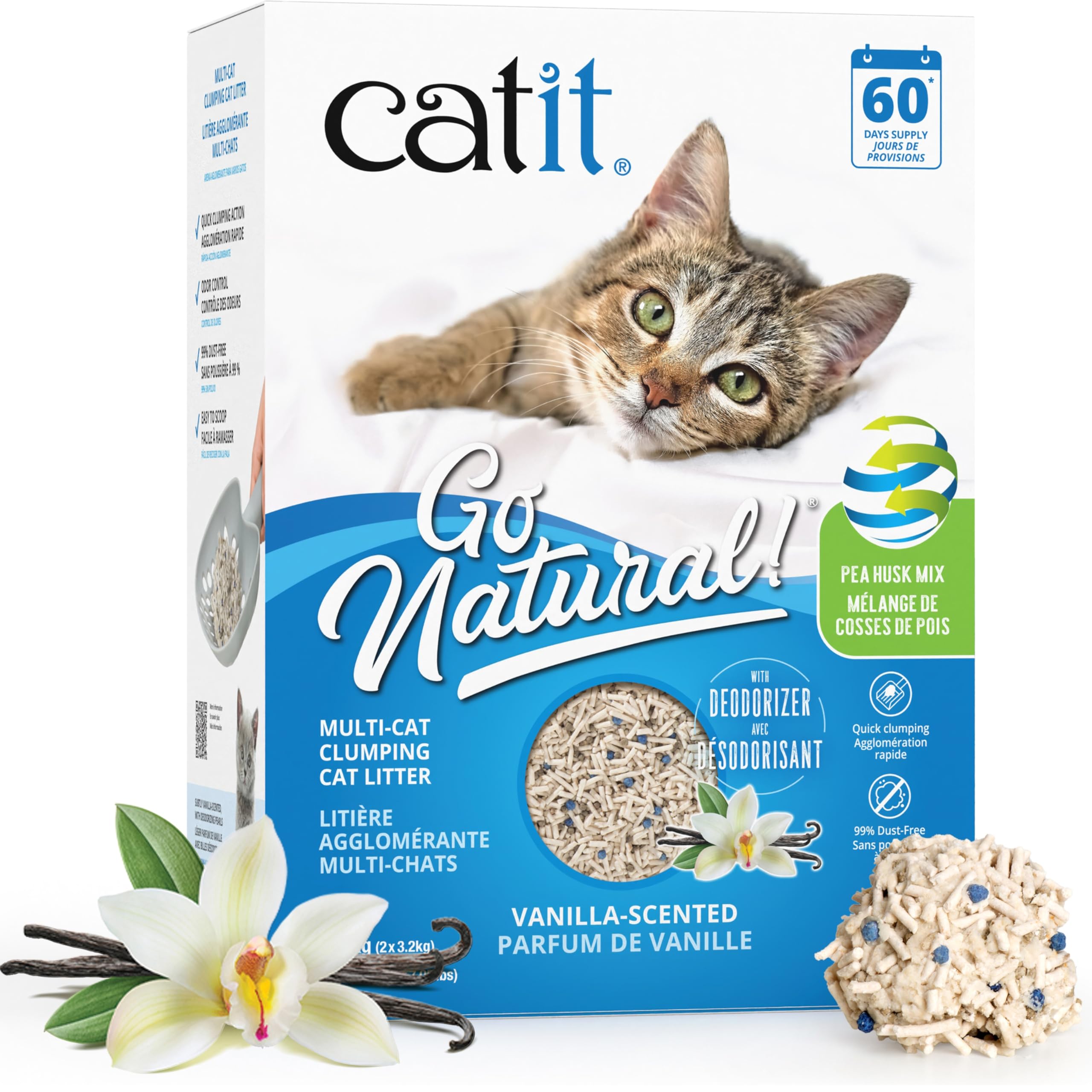
Catit Go Natural bridges the gap between traditional clay performance and eco-conscious formulation. The hybrid blend uses 70 percent pea husk fiber and 30 percent bentonite clay, delivering the clumping reliability of clay with the lighter environmental footprint of plant material. The lightweight formula is a relief for anyone tired of hauling heavy clay bags, and the vanilla scent is mild enough that it fades within minutes of pouring.
Long-term users report that the clumps dry quickly and do not stick to the sides of the box, making daily scooping noticeably faster. The low-tracking design works well because the granules are larger and heavier than standard clay particles. Several owners who switched from traditional clay found that their cats adapted within the first use, which is a strong sign for picky felines who resist change. The 99 percent dust-free formulation keeps the air around the box noticeably cleaner.
This is an excellent choice for owners who want a more sustainable option without risking rejection from a texture-sensitive cat. The hybrid composition makes the transition from clay seamless, and the odor control holds up well for one to two cats between cleanings. The scent may become slightly more noticeable after a few days of use, so owners of extremely scent-averse cats may want to monitor their cat’s reaction.
Why we love it
- Lightweight and easy to handle compared to clay
- Clumps dry quickly without sticking to the box
- Cats transition from clay with very little resistance
Good to know
- Vanilla scent may become more noticeable over time
- Slightly higher cost per pound than basic clay
- Some users report occasional dust at the bottom of the bag
3. pidan Mix Tofu and Bentonite Cat Litter

pidan’s 70-to-30 tofu and bentonite blend is engineered for cats that reject both pure clay and pure plant litter. The tofu granules are larger and softer than clay, which many cats find more comfortable on sensitive paw pads, while the bentonite component provides the clumping strength that pure plant litters sometimes lack. The flushable design is a practical bonus for owners who want quick disposal without plastic waste.
Cat parents who made the switch report that the tracking reduction is immediately noticeable — the larger granules simply do not stick to paws the way fine clay does. The mild vanilla scent is pleasant without being cloying, and the clumping action is fast enough to prevent urine from spreading across the box. Some users noted that clumps can adhere to the corners of the box if the layer is too thin, so maintaining adequate depth is important for best results.
For a picky cat that has rejected both clay and wood alternatives, the tofu-bentonite hybrid offers a completely different texture profile that often breaks the cycle of refusal. The dust levels are impressively low, and the odor control lasts well through daily scooping. The smaller bag size means more frequent purchases, but the performance per pound justifies the cost for owners who prioritize their cat’s comfort.
Why we love it
- Minimal tracking due to large, heavy granules
- Nearly dust-free and flushable for easy disposal
- Unique texture appeals to cats that reject clay
Good to know
- Clumps can stick to box corners if fill is shallow
- Requires a scoop with wider gaps for larger granules
- Smaller bag size leads to more frequent repurchasing
4. Catalyst Natural Soft Wood Cat Litter
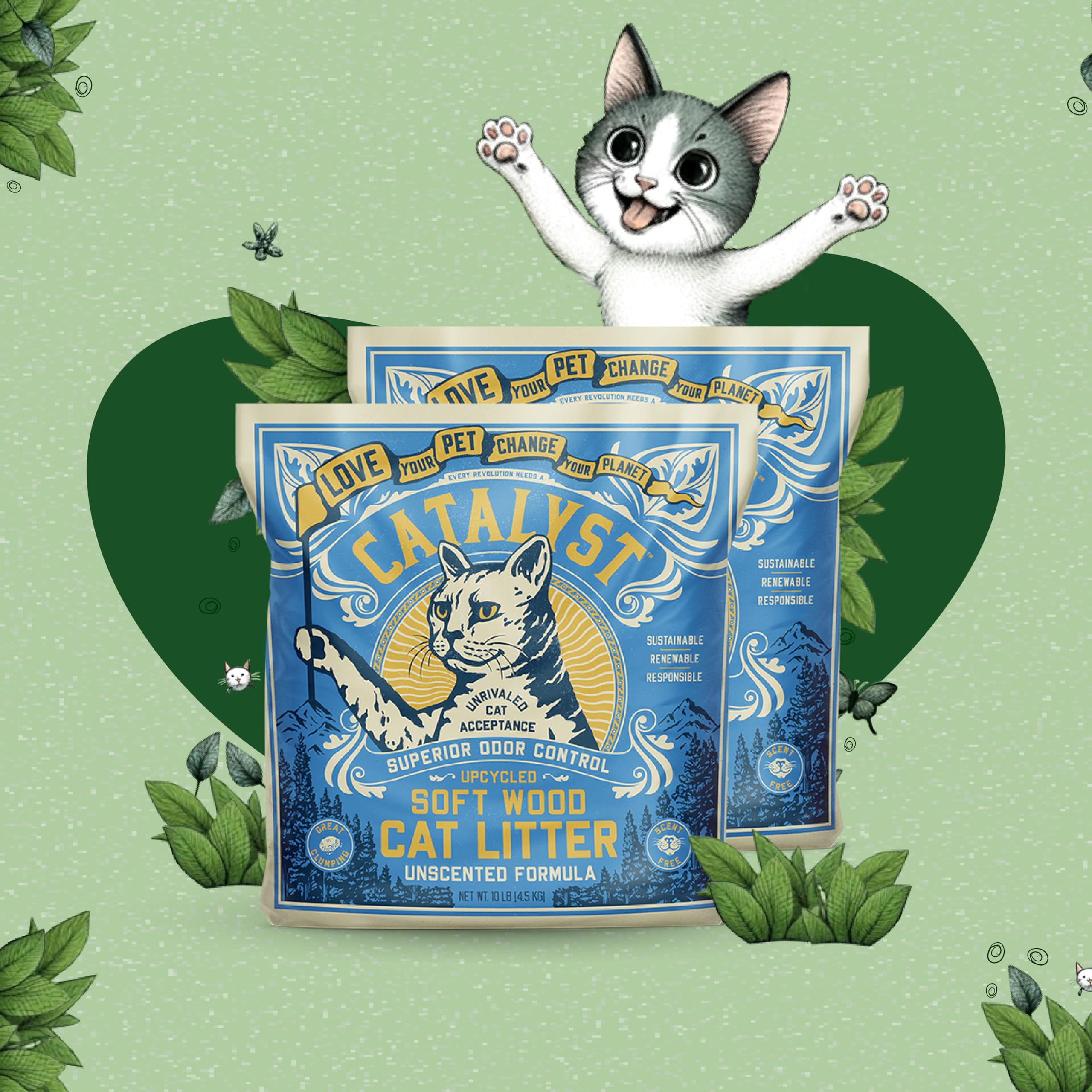
Catalyst uses upcycled soft wood fiber to create a litter that is lightweight, highly absorbent, and remarkably low in dust. The wood fibers expand as they absorb moisture, forming tight clumps that lock in odor without relying on fragrances or chemical additives. The natural pine scent is subtle and dissipates quickly, making it an excellent option for cats with respiratory sensitivities or those that have reacted poorly to perfumed litters.
Devoted users who have used Catalyst for years praise its ability to control ammonia odor even when scooping is delayed, and the minimal tracking keeps the area around the box noticeably cleaner than clay alternatives. The lightweight formula means one person can easily handle a 10-pound bag, and the biodegradable composition appeals to environmentally conscious owners. Some owners noted that the clumps are slightly softer than clay, so gentle scooping is recommended to prevent breakage.
This is the top choice for owners whose cats have asthma, allergies, or a known sensitivity to clay dust. The texture is soft and natural under the paw, and most cats adapt quickly. The cost per use is competitive with mid-range clay when factoring in the longer-lasting absorption. More frequent cleaning may be needed compared to heavy-duty clay formulas, but the health benefits for a sensitive cat are well worth the trade.
Why we love it
- Exceptional odor control without added fragrances
- Virtually dust-free and lightweight for easy handling
- Biodegradable and made from renewable wood waste
Good to know
- Clumps are softer and may break with aggressive scooping
- Requires more frequent cleaning than some clay litters
- Higher upfront price per bag than basic clay options
5. PetSafe ScoopFree Premium Crystal Cat Litter
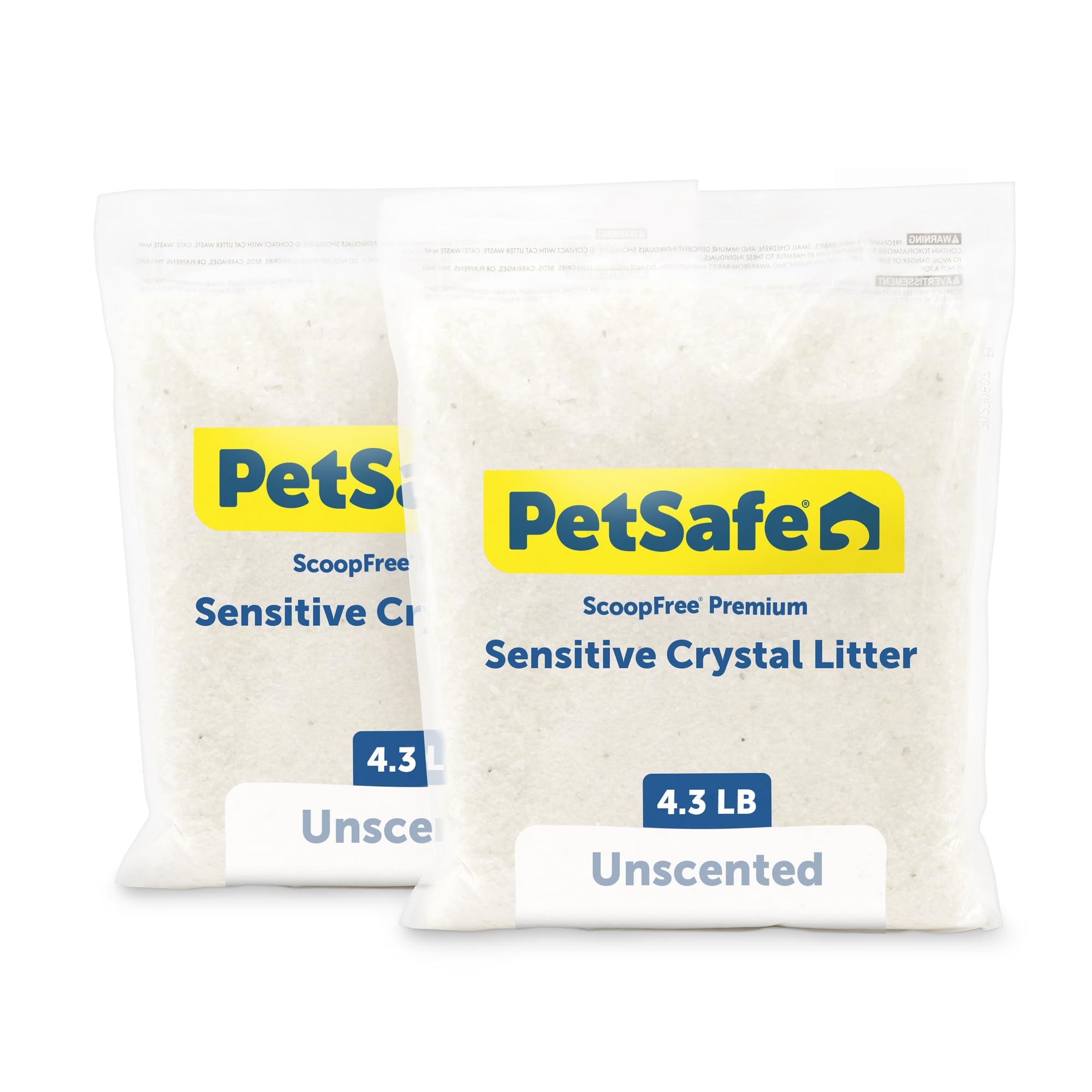
PetSafe’s crystal silica litter takes a fundamentally different approach to odor control. Rather than clumping around waste, the ultra-absorbent silica crystals soak up liquid and dry solid waste up to five times faster than traditional clay. This rapid dehydration stops ammonia from forming and keeps the box smelling fresh for weeks without the need for daily scooping. The unscented version contains no perfumes, making it a viable option for cats that reject fragranced products.
Owners of multiple cats report that a single fill can last a full month with proper maintenance, and the lack of clumping means no sticky residue on the box walls. The crystals do not track as heavily as fine clay granules, though some dust may appear at the bottom of the bag. The pre-portioned bag design is convenient for automatic litter boxes, and the lightweight nature of silica makes it easy to handle.
Cats that are used to clumping clay may need a transition period, as the texture of silica crystals is noticeably different under the paw. Mixing a small amount of their previous litter during the switch can help ease acceptance. For owners who prioritize convenience and long-lasting freshness, and who have a cat willing to adapt, this crystal formula delivers maintenance-free performance that no clay litter can match.
Why we love it
- Lasts up to one month without needing a full change
- Dries waste rapidly to prevent ammonia buildup
- Unscented option is safe for fragrance-sensitive cats
Good to know
- Texture difference may require a gradual transition
- Some dust can appear at the bottom of the bag
- Not compatible with all self-cleaning litter boxes
Safety & Care Tips
Gradual Transition Is Essential
Switching a picky cat’s litter abruptly is the fastest way to trigger avoidance. Mix a small ratio of the new litter into the old formula and increase the proportion over seven to ten days. Watch for signs of hesitation like hovering at the edge of the box or rapid exit after entering. If your cat refuses the mix, slow the transition further or try a different texture category entirely.
Maintain Proper Box Depth
Most cats prefer a depth of two to three inches. Too little litter leaves the bottom of the box exposed, which can cause urine to pool and create odors that discourage use. Too much litter can feel unstable underfoot. For clumping clay and hybrid formulas, deeper fill helps clumps form properly without sticking to the box floor.
Clean the Box on a Consistent Schedule
Picky cats are far more tolerant of a new litter formula when the box is kept scrupulously clean. Scoop at least once daily and perform a full dump and wash with mild unscented soap every two to four weeks. Avoid bleach or strong disinfectants, as lingering chemical odors can be just as off-putting as perfumed litter.
Monitor for Respiratory or Skin Reactions
Some cats develop mild respiratory irritation or paw pad redness when exposed to certain dust levels or materials. If you notice sneezing, watery eyes, or excessive paw licking after switching litter, discontinue use and consult your veterinarian. Wood-based and silica litters are generally the safest options for cats with known sensitivities.
FAQ
Why is my cat suddenly refusing the litter box?
What texture do most picky cats prefer?
Should I choose scented or unscented litter for a picky cat?
How long does it take a picky cat to accept a new litter?
Final Thoughts: The Verdict
For most pet parents, the best cat litter for picky cats winner is the Dr. Elsey’s Ultra Unscented because it combines reliable clumping, minimal dust, and a neutral texture that satisfies the widest range of finicky felines. If you want a lighter, plant-based option, grab the Catit Go Natural. And for a respiratory-safe alternative that keeps your home fresh with less frequent scooping, nothing beats the Catalyst Natural Soft Wood.