
Finding a reliable glucose monitor for your diabetic dog can feel overwhelming when every kit claims to be the most accurate. Between human meters repurposed for pets and dedicated veterinary systems, the difference isn’t just marketing—it’s in the calibration, sample size, and stress level your dog experiences during testing.
I’m Mo Mahin — the founder and writer behind Furric. My recommendations come from cross-referencing veterinary safety standards, analyzing calibration protocols across species, and studying real owner feedback from diabetic pet communities.
After thoroughly evaluating veterinary safety standards and real owner experiences, here is the best glucose monitor for dogs I truly recommend today.
How To Choose The Best Glucose Monitor For Dogs
Diabetic dogs need consistent monitoring, and the wrong meter can lead to inaccurate insulin dosing or unnecessary stress for your pet. Focus on three areas when choosing: calibration for canine blood, sample size requirements, and ease of use during daily testing.
Pet-Specific vs. Human Glucose Meters
Human glucose meters are not calibrated for canine blood chemistry. Dogs have different glucose distribution in red blood cells, so a meter designed specifically for pets—or one with validated accuracy for dogs—gives you readings you can trust when adjusting insulin. Using a human meter risks off readings that could affect your dog’s health.
Quick Comparison
On smaller screens, swipe sideways to see the full table.
| Model | Type | Best For | Key Feature | Amazon |
|---|---|---|---|---|
| Pet Control HQ Pet Kit | Complete Kit | Diabetic Dogs & Cats | 2 Code-Chips for Species | Amazon |
| AlphaTrak 3 Strips | Test Strips | Vet-Recommended Accuracy | 0.3µL Sample Size | Amazon |
| Pip Glucose Kit | Human Kit | Painless At-Home Testing | Compact Travel Design | Amazon |
| Metene TD-4116 | Human Kit | Budget-Friendly Tracking | Large Display & Alarms | Amazon |
| PetTest Strips | Pet Strips | Diabetic Dog Monitoring | Individually Foil Sealed | Amazon |
In-Depth Reviews
1. Pet Control HQ Pet Blood Sugar Glucose Monitoring Kit

This is the only kit in the lineup built entirely for pets with separate calibration for dogs and cats. The two code-chip system is a genuine differentiator—one chip calibrated for canine glucose metabolism, another for feline—so you are not guessing whether your meter is reading correctly for your dog’s biology. The kit includes 50 test strips, 50 lancets, a lancing device, control solution, logbook, and a carrying case, making it truly ready out of the box.
The GDH enzyme technology in the strips requires only a 0.6µL blood sample and delivers results in 10 seconds. Dog parents on diabetes support forums consistently mention that the small sample size makes ear or lip pricks less stressful for their pets. The included logbook helps track trends between vet visits, and the quick reference guide is genuinely helpful when you are still learning the testing routine.
For a dedicated pet glucose monitoring system that removes the guesswork of using a human meter, this kit offers everything you need. The dual code-chip approach alone justifies the investment for owners who want species-specific accuracy from day one.
Why we love it
- Two code-chips for dogs and cats ensure species-calibrated readings
- Complete kit with strips, lancets, control solution, and case
- Small 0.6µL sample reduces stress for your dog
Good to know
- Replacement strips are pricier than some human options
- Some owners report needing extra practice for consistent reads
2. AlphaTrak 3 Test Strips

AlphaTrak is the most recommended brand by veterinarians for in-clinic glucose monitoring, and the third-generation strips maintain that reputation. The redesigned strip shape makes it easier to collect blood directly from the sample site, which matters when you are working with a wiggly dog who has already had enough poking for the day. The 0.3µL sample requirement is the smallest on this list—half of what most other strips need.
These strips are designed exclusively for the AlphaTrak 3 monitor, so you are locked into that ecosystem. The vial packaging protects each strip from moisture and light, and the no-coding setup means one less step before testing. Experienced diabetes caregivers on pet health forums note that the AlphaTrak system tends to read slightly more conservatively than some human meters, which can be safer when determining insulin doses.
If your veterinarian already uses AlphaTrak in the clinic and you want continuity between home and professional readings, this is the clear choice. The smaller blood requirement alone can make a meaningful difference for dogs who dislike the testing process.
Why we love it
- #1 veterinarian-recommended brand for accuracy
- Industry-leading 0.3µL blood sample size
- New strip design simplifies blood collection
Good to know
- Requires the AlphaTrak 3 monitor (sold separately)
- Premium pricing compared to human alternatives
3. Pip Glucose Monitor Kit
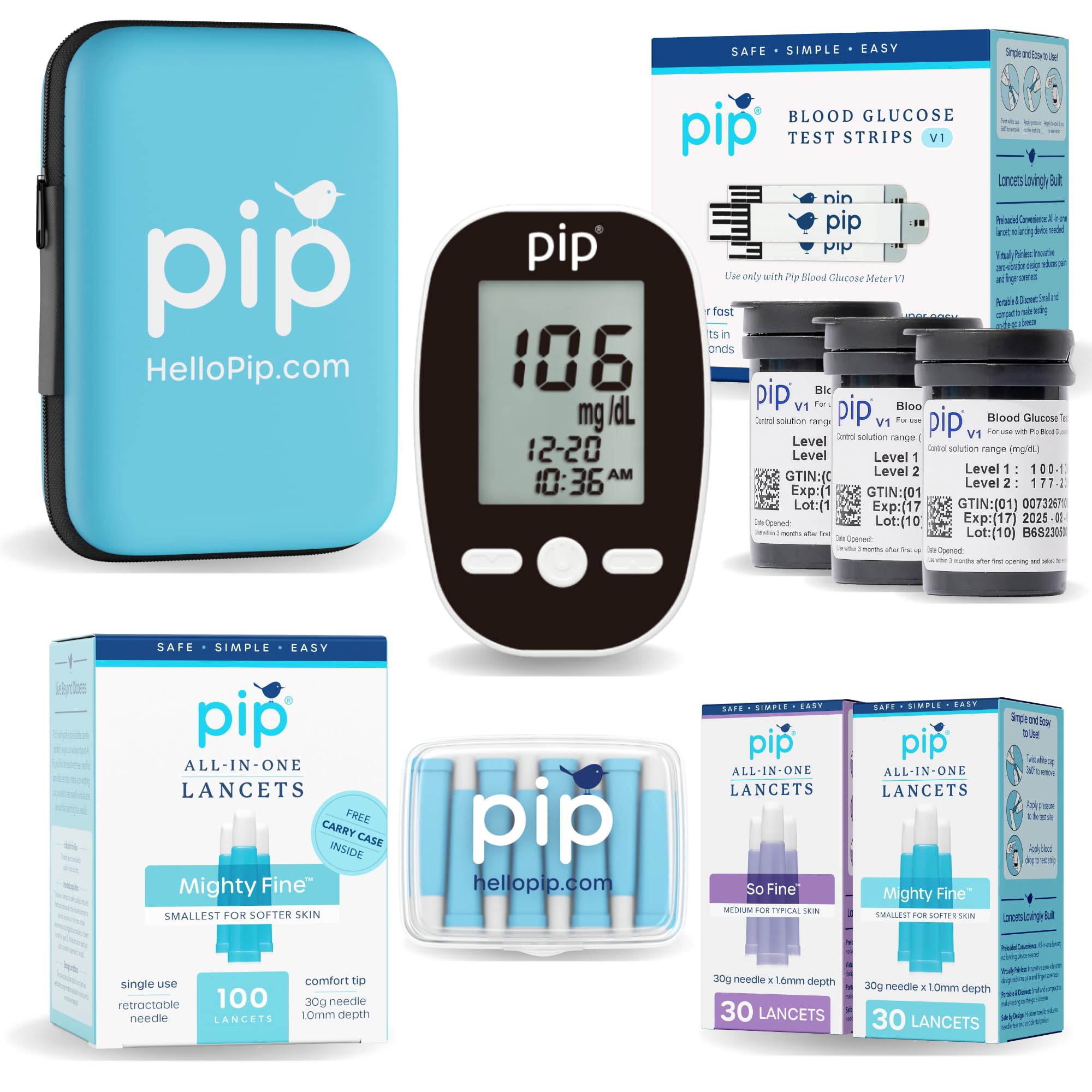
The Pip kit stands out for its thoughtful design focused on reducing the discomfort of finger pricks—and that same gentleness translates well when testing your dog. The lancing device has adjustable depth settings, and owners report it feels significantly less aggressive than standard lancets. While Pip is designed for human use, its precision and small sample requirement make it a viable option for dog owners who want a smooth testing experience for themselves and their pets.
The kit includes 150 test strips, 160 lancets, a glucometer, lancing device, and a travel case compact enough to toss in a bag for trips to the vet. The large display screen is easy to read without glasses, and the one-button operation means fewer fumbled steps during testing. One experienced dog mom on a diabetes support group mentioned that the Pip meter gave her consistent readings that matched her vet’s AlphaTrak results closely enough to feel confident adjusting insulin.
For owners who want a meter that feels premium in the hand and minimizes the pinch for both human and pet testing, Pip delivers a polished experience. The generous strip count in the kit also helps offset the initial cost.
Why we love it
- Adjustable depth lancing for gentler pricks
- Compact travel case fits everything neatly
- Large display for easy reading
Good to know
- Not calibrated specifically for canine blood chemistry
- Occasional strip malfunctions reported
4. Metene TD-4116 Blood Glucose Monitor Kit

Metene’s TD-4116 kit offers a feature-packed human glucose monitoring system at a sensible price point, making it attractive for dog owners who want affordability without sacrificing essential functions. The kit comes with 150 test strips, 150 lancets, a control solution, lancing device, and a carrying case—enough supplies to last months of regular testing. The no-coding design and 7-second results keep the process quick, which matters when your dog is getting restless.
The 0.7µL blood sample requirement is only slightly larger than dedicated pet strips, and the 4-mode memory system tracks glucose values across different times of day. Owners caring for senior diabetic dogs appreciate the 4 daily reminder alarms, which help maintain a consistent testing schedule. The data storage holds 450 readings with 14 to 90-day averages, giving you useful trend information to share with your vet.
If budget is a primary concern and you are comfortable using a human meter alongside periodic vet calibration checks, the Metene kit provides exceptional value. The sheer volume of included strips alone makes it one of the most cost-effective ways to start monitoring your dog’s glucose at home.
Why we love it
- 150 strips included—exceptional value for the kit
- 7-second results with small 0.7µL sample
- Reminder alarms help maintain testing schedule
Good to know
- Human-calibrated meter may need cross-checking with vet readings
- Some users report accuracy variance of 10-20 points
5. PetTest Blood Glucose Test Strips

PetTest strips are designed specifically for diabetic dogs and cats, and they work with the PetTest glucometer to give you species-appropriate readings. The individually foil-wrapped strips are a meaningful advantage for pet owners who test infrequently or travel—each strip stays protected from humidity until you open it, which helps preserve accuracy over the life of the pack. The small blood sample requirement makes ear pricking less stressful for both you and your dog.
A common thread among owners in canine diabetes support groups is that PetTest strips are the most frequently recommended starting point for newly diagnosed dogs. The no-coding feature removes a potential error step, and the strips are designed to work specifically with the PetTest glucose monitor. One longtime caregiver shared that these strips helped her catch a dangerous hypoglycemic episode early, allowing her to intervene with honey before her dog needed emergency care.
For owners who want a pet-specific testing option without committing to a premium ecosystem upfront, PetTest strips paired with the PetTest monitor offer a dedicated canine solution. The individual wrapping is a practical touch that extends the shelf life and ensures each test starts with a fresh, uncontaminated strip.
Why we love it
- Individually foil-wrapped for freshness and travel
- Calibrated specifically for dogs and cats
- Very small blood sample needed for testing
Good to know
- Requires the PetTest glucometer (sold separately)
- Fewer strips per pack compared to some human options
Safety & Care Tips
Choose the Right Testing Site
Ear margins and lip margins are the most common testing sites for dogs because they have good blood flow and fewer nerve endings than paw pads. Always rotate sites to prevent soreness, and use a warm compress briefly before lancing to improve blood flow. Avoid testing near the mouth if your dog has eaten within the last hour, as food residue can affect the sample.
Track Trends, Not Just Numbers
A single high or low reading is less important than the overall pattern. Record results alongside notes about your dog’s appetite, activity level, and insulin timing. Share these logs with your veterinarian during checkups. Most glucose meters store averages over 14, 30, or 90 days, which gives you a clearer picture of how well your dog’s diabetes management plan is working.
FAQ
Can I use a human glucose meter on my dog?
How often should I test my diabetic dog’s glucose?
Final Thoughts: The Verdict
For most pet parents, the best glucose monitor for dogs winner is the Pet Control HQ Pet Blood Sugar Glucose Monitoring Kit because it offers species-specific calibration with two code-chips, a complete starter kit, and a small blood sample size that reduces stress for your dog. If you want the highest veterinary trust and the smallest blood sample available, grab the AlphaTrak 3 Test Strips. And for a budget-friendly human option with generous included supplies, nothing beats the Metene TD-4116 Kit.