
Finding the right home for your tarantula is about more than just keeping it contained — it is about creating an environment where it can thrive, molt successfully, and display natural behaviors without constant stress. The wrong enclosure can lead to escape attempts, humidity crashes, or even injury during a delicate shed.
I’m Mo Mahin — the founder and writer behind Furric. I have analyzed dozens of enclosures across every price tier, evaluating ventilation design, material safety, and the real-world feedback from experienced keepers to identify what truly works for the long haul.
The market offers everything from simple acrylic boxes to comprehensive starter kits, and the choice depends heavily on your spider’s species, size, and habits. I have spent countless hours researching ventilation, material safety, and escape-proof designs to help you find the perfect best enclosure for tarantula.
How To Choose The Right Enclosure For Tarantula
Selecting an enclosure is one of the most important decisions you will make as a tarantula keeper. The right choice supports healthy molting, proper humidity, and natural behavior. The wrong one creates stress for both you and your spider. Here are the key factors to weigh before buying.
Ventilation and Cross-Flow Design
Tarantulas require consistent airflow to prevent mold, stagnant air, and respiratory issues. Look for enclosures with ventilation on multiple sides — typically a combination of side holes and a mesh top. Cross-ventilation is especially critical for terrestrial species that spend time near the moist substrate. Without proper airflow, you risk fungal outbreaks that can harm your spider.
Material Safety and Transparency
Acrylic is lightweight, shatter-resistant, and offers excellent clarity, but it can scratch over time. Glass provides superior scratch resistance and heat retention but is heavier and more fragile. Polycarbonate sits between the two — durable and clear but more expensive. Whichever material you choose, ensure it is non-toxic and free of sharp edges that could injure your tarantula during a fall.
Escape-Proof Locking Mechanisms
Tarantulas are surprisingly strong and resourceful when it comes to escaping. A secure locking latch or sliding mechanism is non-negotiable. Magnetic closures can startle spiders with their sudden pull, so traditional latches or sliding doors are often preferable. Check for gaps around doors and hinges — even a small opening can be an escape route for a determined spider.
Size and Growth Considerations
An enclosure that is too large can make it difficult for a sling to find prey, while one that is too small restricts movement and natural behaviors. As a general rule, the length plus width of the enclosure should be at least three times the spider’s leg span. Arboreal species need vertical height for climbing, while terrestrial species require more floor space. Consider whether the enclosure will serve your spider through multiple molts or if you plan to upgrade as it grows.
Quick Comparison
On smaller screens, swipe sideways to see the full table.
| Model | Type | Best For | Key Feature | Amazon |
|---|---|---|---|---|
| REPTI ZOO Mini Glass | Glass Terrarium | Easy access & visibility | Front opening door with locking latch | Amazon |
| EctoTherm Jumping Spider | Acrylic Enclosure | Arboreal spider species | Pre-assembled with dual sliding doors | Amazon |
| HELIME Starter Kit | Polycarbonate Kit | First-time keepers | Complete 7-piece starter kit | Amazon |
| Zilla Micro Habitat | Acrylic Terrarium | Terrestrial ground dwellers | Leak-proof molded base | Amazon |
| smartang Tall Arboreal | Acrylic Cylinder | Climbing species on a budget | No assembly required | Amazon |
| MYGIIKAKA Acrylic | Acrylic Terrarium | Small invertebrates | 360-degree clear viewing | Amazon |
| REPTI ZOO 34 Gallon | Glass Terrarium | Large or multiple specimens | Foam background included | Amazon |
In-Depth Reviews
1. REPTI ZOO Mini Glass Terrarium

The REPTI ZOO Mini Glass Terrarium is a compact powerhouse that immediately stands out with its front-opening door — a feature spider keepers quickly learn to appreciate. Unlike top-opening enclosures that force you to dismantle webbing, this design lets you access the habitat without destroying your tarantula’s hard work. The locking latch adds genuine peace of mind, keeping fast-moving species securely contained.
The full-screen top ventilation allows UVB and infrared penetration while keeping the interior properly aired out. At 8 x 8 x 12 inches, it provides ample vertical space for arboreal species while remaining compact enough for a desktop setup. The glass construction offers clarity that acrylic struggles to match, and the build quality feels solid. Experienced keepers who reviewed this unit praised its sturdy feel and the convenience of the front-opening design during feeding and cleaning.
For tarantula keepers who value accessibility and visibility, this enclosure hits the sweet spot. The 12-month quality assurance from REPTI ZOO backs a product that already feels built to last. It is the enclosure I would recommend to anyone serious about creating a comfortable, low-stress home for their spider, whether you are keeping a regal jumping spider or a small arboreal tarantula.
Why we love it
- Front-opening door preserves webbing and simplifies maintenance
- Glass construction provides crystal-clear, scratch-resistant viewing
- Screen top ventilation supports healthy airflow and UVB penetration
Good to know
- Glass is heavier than acrylic alternatives of similar size
- Some users noted the latch can be slightly stiff at first
2. EctoTherm Jumping Spider Enclosure
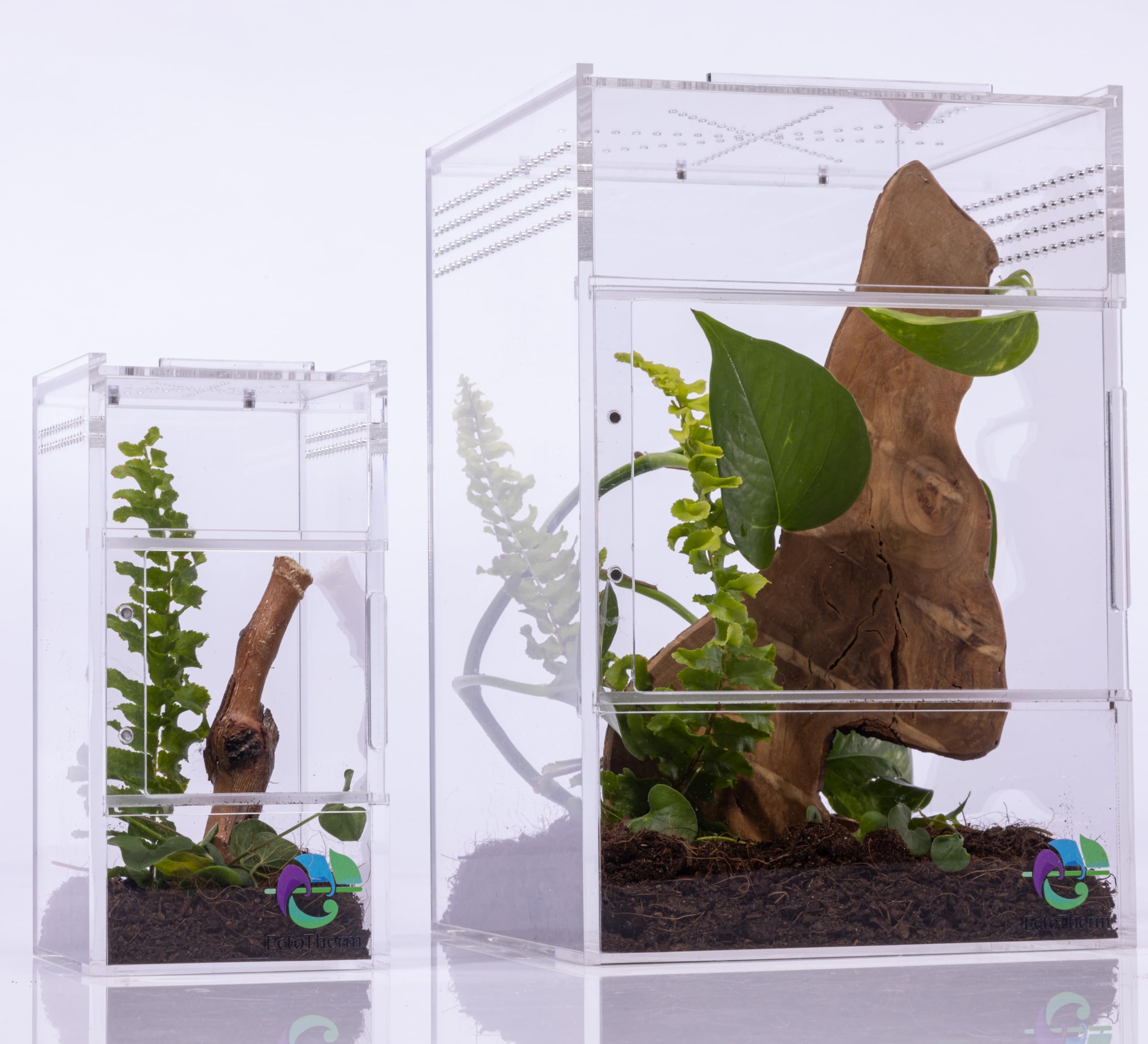
The EctoTherm Jumping Spider Enclosure arrives pre-assembled, which is a rare and welcome convenience in this category. The seamless acrylic plates eliminate potential escape routes, and the dual sliding doors — one front-facing and one overhead — give you flexible options for feeding and maintenance without disturbing the inhabitant more than necessary.
Designed specifically for arboreal species, the 6 x 6 x 9-inch dimensions provide generous vertical climbing space that jumping spiders and tree-dwelling tarantulas will actively use. The included climbing branches and cozy shelters help create an enriching environment from day one. The premium acrylic offers distortion-free viewing that makes daily observation a genuine pleasure, and the sealed construction keeps even the smallest spiderlings safely contained.
What sets this enclosure apart is the thoughtful door system. The front door preserves existing webbing while allowing access for feeding, and the overhead door is perfect for quick prey drops or spot cleaning. Multiple keepers who have purchased this unit note that the pre-assembled design saves significant setup time and that the build quality justifies the investment. It is a well-executed design that shows the manufacturer understands spider behavior at a deep level.
Why we love it
- Pre-assembled with seamless acrylic for zero escape risk
- Dual door system preserves webbing while allowing easy access
- Includes climbing branches and shelters for enrichment
Good to know
- Premium price reflects the pre-assembled convenience
- Size is best suited for arboreal species, not large terrestrials
3. HELIME Reptile Polycarbonate Terrarium Kit

The HELIME Reptile Polycarbonate Terrarium Kit is essentially everything a new tarantula keeper needs in one box. Beyond the tank itself, you get a digital hygrometer for monitoring humidity, a hide cave for security, stainless steel tweezers for feeding, a sprayer for misting, a feeding bowl, and a lamp. It is a complete starter package that removes the guesswork from initial setup and gets you focused on your spider rather than shopping for accessories.
The polycarbonate construction is notably shatter-resistant and lighter than glass, making it a practical choice for households with multiple pets or children. The 12 x 7 x 9-inch rectangular footprint fits well on standard shelving, and the waterproof base supports both desert and rainforest humidity setups without leaking. The secure sliding top with mesh ventilation keeps inhabitants safely contained while allowing adequate airflow. The one-piece structure with escape-proof locking adds another layer of security.
For beginners, this kit represents the most straightforward path to a proper enclosure setup. Rather than piecing together components from different brands, you get a cohesive system that works together from day one. The value is not just in the accessories — it is in the confidence that comes from having a complete, tested habitat ready to go. Experienced keepers looking for a secondary enclosure will also appreciate the all-in-one convenience.
Why we love it
- Complete 7-piece kit with everything needed to start
- Shatter-resistant polycarbonate is safer than glass
- Waterproof base supports multiple humidity setups
Good to know
- Polycarbonate can scratch more easily than glass
- Kit components are functional but not premium-grade
4. Zilla Micro Habitat Terrarium

The Zilla Micro Habitat Terrarium is purpose-built for ground-dwelling species, with a low-profile design that prioritizes floor space over height. The 15.43 x 9.45 x 2.68-inch dimensions create a generous terrestrial footprint that burrowing tarantulas and isopods will appreciate. This is not a vertical climbing enclosure — it is a wide, stable home for spiders that prefer staying close to the substrate.
The transparent acrylic walls offer a complete 360-degree view, and the locking handle prevents accidental escapes — a critical feature when housing fast-moving species or during maintenance. The molded base is leak-proof, allowing you to maintain proper substrate moisture without water damage to surfaces. Assembly is straightforward, and the stackable design is a practical bonus for collectors managing multiple enclosures on a rack system.
Zilla is a trusted name in reptile and invertebrate keeping, and this micro habitat delivers on its promises with consistent quality. It is specifically designed for terrestrial tarantulas, isopods, and similar ground dwellers that need horizontal space rather than climbing height. Keepers who have used this enclosure for multiple species report that the locking mechanism holds up well over time and that the clear acrylic remains easy to see through with routine cleaning.
Why we love it
- Low-profile design maximizes floor space for terrestrial species
- Leak-proof molded base protects surfaces from moisture
- Stackable design saves space in multi-enclosure setups
Good to know
- Not suitable for arboreal species that need vertical height
- Acrylic may develop light scratches with frequent cleaning
5. smartang Tall Arboreal Tarantula Enclosure

The smartang Tall Arboreal Tarantula Enclosure arrives fully assembled — no tools, no frustration, no guesswork. The cylindrical design is inherently stronger than square constructions of similar thickness, and the 6 x 6 x 12-inch dimensions provide the vertical height arboreal species need for climbing, web-building, and exploring. The round shape also eliminates the corner gaps that some spiders use as leverage points for escape attempts.
The front-opening door uses a traditional latch rather than magnetic closure, which means no sudden vibrations that could startle a sensitive spider during feeding or maintenance. Cross ventilation is achieved through side and top holes, ensuring adequate airflow without creating drafts that could stress the inhabitant. The waterproof sealed bottom holds substrate without leaking onto your furniture, and the highly transparent acrylic provides excellent viewing clarity from every angle.
At an accessible price point, the smartang enclosure offers features typically found on more expensive models. The no-assembly requirement and sturdy cylindrical build make it an excellent secondary enclosure or a solid choice for keepers expanding their collection on a budget. It proves that budget-friendly does not have to mean flimsy — this enclosure feels substantial and well-thought-out for the species it targets.
Why we love it
- Fully assembled and ready to use out of the box
- Cylindrical design is structurally stronger than square tanks
- Traditional latch avoids startling spiders with magnetic pull
Good to know
- Round shape limits some decoration and hide placement options
- Acrylic is more prone to scratches than glass over time
6. MYGIIKAKA Acrylic Jumping Spider Enclosure

The MYGIIKAKA Acrylic Jumping Spider Enclosure measures 13.78 x 7.48 x 7.87 inches, offering a generous rectangular space that works well for a wide variety of small invertebrates. The assembly is refreshingly simple — rubber bands hold the panels together while you align everything, and the clamshell top provides easy access without removing the entire lid. Several buyers specifically noted that even younger keepers could assemble it independently.
Ventilation holes on both sides ensure fresh air circulation throughout the enclosure, while the dedicated feeding hole on top allows for targeted prey drops without opening the main door and disturbing the inhabitant. The locking handle keeps everything secure, and the acrylic is clear and free of the distortion sometimes seen at lower price points. The transparent design allows for true 360-degree observation, making it easy to spot health issues or web-building activity.
Multiple keepers have praised this enclosure for jumping spiders and praying mantises, noting the easy assembly and durable feel once constructed. The size is appropriate for adult jumping spiders, and the ventilation is adequate for most species without creating excessive airflow. Buyer feedback consistently mentions that the enclosure arrives in perfect condition with no cracks or gaps, which speaks to the packaging and quality control. It is a capable all-rounder that delivers solid performance without stretching the budget.
Why we love it
- Simple assembly that even younger keepers can manage
- Feeding hole on top allows targeted prey drops
- Clear acrylic provides true 360-degree visibility
Good to know
- Rubber band assembly may feel less permanent than snap-fit designs
- Ventilation holes are adequate but not adjustable
7. REPTI ZOO 34 Gallon Large Glass Terrarium

The REPTI ZOO 34 Gallon Large Glass Terrarium is a substantial enclosure suitable for larger tarantula specimens or as a permanent home for adult females of larger species that need generous floor space. The 24 x 18 x 18-inch dimensions provide extensive room for burrowing, climbing, and exploration. This is an enclosure built for the long term, with enough space to create a bioactive setup with live plants and clean-up crew colonies.
The included foam background simulates natural rock and provides a visually appealing backdrop while also offering grip for climbing species that enjoy vertical exploration. The dual front-opening doors allow for easy access to all areas of the enclosure, and the screen top ventilation supports healthy airflow. The raised bottom frame accommodates substrate heaters for species that need supplemental warmth, and the waterproof base maintains proper humidity levels without leaking. Assembly takes about five minutes with labeled parts.
Keepers who have used this enclosure for multiple years report that the build quality holds up well, with the foam background maintaining its appearance and the glass staying clear. The dual-door design makes feeding and maintenance significantly easier compared to top-opening tanks of similar size. For dedicated tarantula enthusiasts with multiple specimens or those looking to create a showpiece bioactive habitat, this enclosure provides the space, features, and durability needed for a thriving long-term setup.
Why we love it
- Spacious 34-gallon capacity for large or multiple specimens
- Foam background adds visual depth and climbing grip
- Dual front doors simplify feeding and maintenance access
Good to know
- Requires assembly, though parts are clearly labeled
- Large footprint may not fit on standard shelving units
Safety & Care Tips
Maintaining Proper Humidity Levels
Tarantulas have specific humidity requirements that vary by species. Use a digital hygrometer to monitor levels inside the enclosure. For terrestrial species, mist the substrate lightly rather than spraying the spider directly. Ensure that ventilation is balanced — too much airflow dries out the enclosure, while too little invites mold growth. A water dish with a small pebble prevents drowning while providing drinking water and localized humidity.
Cleaning and Substrate Management
Spot-clean the enclosure weekly by removing boluses, shed exoskeletons, and any uneaten prey. Replace substrate every three to six months depending on the species and moisture levels. When cleaning, use only warm water — avoid soap or chemical cleaners that can leave residues harmful to your spider. For persistent stains, a diluted vinegar solution can be used, but rinse thoroughly and air out the enclosure completely before returning your tarantula.
FAQ
What size enclosure does my tarantula need?
Is glass or acrylic better for a tarantula enclosure?
How much ventilation does a tarantula need?
Can I keep multiple tarantulas in one enclosure?
Final Thoughts: The Verdict
For most pet parents, the best enclosure for tarantula winner is the REPTI ZOO Mini Glass Terrarium because it combines a front-opening door with excellent visibility and reliable security at a reasonable price point. If you want a pre-assembled enclosure optimized for arboreal species, grab the EctoTherm Jumping Spider Enclosure. And for a complete starter experience with all the accessories included, nothing beats the HELIME Reptile Polycarbonate Terrarium Kit.