
A reliable vest changes everything when you are miles from the truck and the birds are holding tight in thick cover. You need something that stays put through a sprint, blocks the wind on a cold morning, and makes your dog visible at a glance. The wrong choice means chafing, restricted movement, or a vest that shifts sideways mid-retrieve.
I’m Mo Mahin — the founder and writer behind Furric. I spend my time analyzing field reports, reviewing material specifications against veterinary safety standards, and listening to the real-world experiences of hunters who put their dogs through punishing terrain day after day.
For waterfowl hunters and upland enthusiasts, the right best hunting dog vest balances visibility, durability, and freedom of movement in the field.
How To Choose The Best Hunting Dog Vest
A vest is not a simple piece of gear — it is the interface between your dog and the environment. Get the material wrong and you fight constant maintenance. Get the fit wrong and you risk restricted breathing or shoulder sores. Here is what I focus on when evaluating any model.
Durability & Material Quality
The fabric must handle barbed wire, thick brush, and hours of wet cover without delaminating or tearing. Look for 1000-denier nylon or heavy duck canvas with triple-needle stitching at stress points. Metal buckles rated to 2800 Newtons or higher beat plastic every time on a working dog that lunges into a retrieve.
Fit & Range of Motion
A vest that restricts the front legs will alter your dog’s gait and cause fatigue long before the hunt ends. Y-shaped chest plates and generous cutouts behind the elbows allow full extension. Five-point adjustability lets you dial the fit so the vest stays centered without shifting even during sharp turns.
Visibility & Safety Features
Hunter orange is the gold standard for a reason — it contrasts against almost every natural background. Reflective piping or tape adds another layer during low-light mornings and late evenings. A sturdy handle on the top gives you quick control near roads, fences, or when loading into the truck.
Weather Protection
Not every hunt happens in fair weather. A water-repellent finish or insulated lining keeps a dog comfortable during cold-water retrieves and windy ridge walks. Breathability matters too — a dog that overheats slows down and loses focus. Look for moisture-wicking liners or mesh panels in high-exertion zones.
Quick Comparison
On smaller screens, swipe sideways to see the full table.
| Model | Type | Best For | Key Feature | Amazon |
|---|---|---|---|---|
| Carhartt Firm Duck Chore Coat | Insulated Coat | Cold-weather hunting | 12-oz duck canvas with quilted liner and corduroy collar | Amazon |
| AIWAI Tactical Harness | Tactical Vest | Training & utility work | Built-in zippered pouches and 1000D nylon shell | Amazon |
| Carhartt Quick Duck Fleece Jac | Fleece Vest | Light rain & mild cold | Rain Defender DWR with microfleece lining | Amazon |
| ICEFANG GN8 Harness | Tactical Harness | Large-breed control | 4 metal quick-release buckles (2800N) and rotating V-ring | Amazon |
| ICEFANG Tactical Harness | Tactical Harness | Entry-level field use | MOLLE/PALS webbing and dual leash clips | Amazon |
In-Depth Reviews
1. Carhartt Firm Duck Dog Chore Coat

Carhartt brought the same heavy-duty Firm Duck canvas that built their workwear reputation and tailored it into a proper hunting coat for dogs. The 12-ounce shell stops wind and brush while the quilted liner and corduroy-lined collar trap warmth without adding bulk. Triple-needle stitching on the main seams means this coat survives seasons of rough use, not just a single season.
Adjustable neck and chest tabs with loop-lined straps give a secure fit across medium to extra-large builds. The hunter orange color with reflective piping delivers excellent visibility in low-light conditions, and the leash hole on the back keeps the coat centered when your dog is working at range. Owners of GSPs, Labs, and Vizslas consistently report that the coat stays in place during active retrieving and does not ride up behind the shoulders.
This is the vest I recommend to hunters who want one coat that handles cold mornings, wind, and light moisture without fuss. The only trade-off is that the Velcro chest straps can feel stiff at first, but they break in after a few wears. For a field-worthy insulated coat from a brand that understands durability, this is the pick.
Why we love it
- Heavy-duty 12-oz duck canvas stands up to thick brush and repeat use
- Quilted liner and corduroy collar provide real warmth without bulk
- Hunter orange with reflective piping offers strong field visibility
- Easy on-and-off with adjustable neck and chest tabs
Good to know
- Velcro straps can be stubborn to pull apart initially
- Not designed for heavy rain — water-repellent, not waterproof
- Chest sizing runs snug for deep-chested breeds like pointers
2. AIWAI Tactical Dog Harness

The AIWAI stands out because it treats a harness as more than just a restraint — it becomes a load-bearing platform for the field. Two zippered side pouches carry treats, poop bags, or small tools, and a top-mounted stash pocket fits an AirTag or keys. The 1000-denier nylon outer shell with military-standard stitching handles the abuse of training sessions and rough terrain without showing wear.
Metal buckles rated to a 1000-pound proof load sit at the shoulder position where pulling force is highest. The Y-shaped front chest plate keeps the vest centered, and the soft mesh lining prevents chafing even during all-day wear. Owners of Belgian Malinois, American Bullies, and working Labs report that the pouches stay securely closed during runs and that the handle offers genuine control for guiding dogs in and out of vehicles.
If your hunt or training routine demands carrying small gear on the dog itself, this is the most practical option at this level. A few users noted that the rear buckles are plastic rather than metal, and the sizing runs slightly large, so measure carefully. For a versatile tactical vest with real cargo capacity, the AIWAI delivers.
Why we love it
- Built-in zippered pouches eliminate the need for a separate gear bag
- 1000D nylon shell with reinforced stitching handles heavy use
- Metal shoulder buckles rated for high pulling loads
- Soft mesh lining prevents chafing during long wear
Good to know
- Rear buckles are plastic, not metal — a durability weak point
- Sizing runs large; double-check chest measurements before ordering
- Limited color options beyond the camouflage pattern
3. Carhartt Quick Duck Fleece Lined Dog Jac

Carhartt’s Quick Duck fabric is lighter than the Firm Duck line but still tough enough for daily field work. The Rain Defender DWR coating beads up light rain and morning dew, and the microfleece lining provides warmth without the weight of a full insulated coat. Silver reflective pocket tape and reflective piping add visibility without screaming “tactical.”
Adjustable straps on the chest and waist allow a custom fit across a range of body shapes, and the Velcro closure makes quick work of getting the vest on and off. Hunters with active sporting breeds like Aussiedoodles and Dalmatians praise the lightweight feel — their dogs move freely without overheating during extended runs. The handle on the back gives solid control for short lifts over obstacles.
This is the right choice for mild-weather hunts and dogs that run warm but still need protection from wind and damp cover. The main consideration is sizing: several owners had to size up one or two steps, especially for deep-chested or barrel-bodied dogs. If you want premium fabric technology in a low-bulk package, this Jac earns its place.
Why we love it
- Rain Defender DWR sheds light rain and wet brush effectively
- Microfleece lining adds warmth without trapping excess heat
- Reflective piping and pocket tape improve low-light visibility
- Lightweight construction allows full freedom of movement
Good to know
- Sizing runs small — most dogs need at least one size up
- Velcro closure works well but can catch on undercoat fur
- Not insulated enough for bitter cold or ice-water retrieves
4. ICEFANG GN8 Tactical Dog Harness
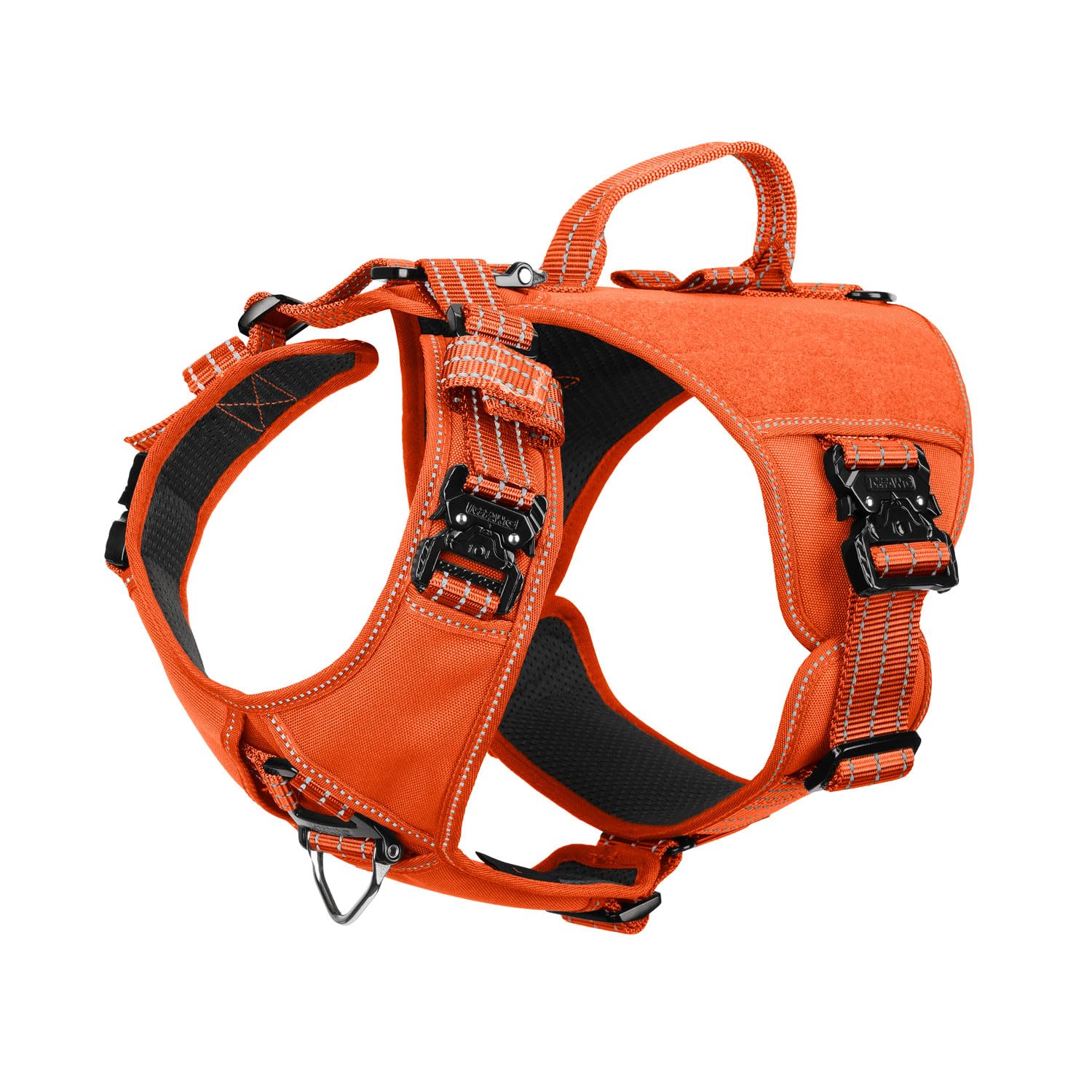
ICEFANG stepped up the GN8 with four metal quick-release buckles rated at 2800 Newtons — a serious upgrade over mixed-hardware designs. The rotating V-shaped leash clip integrates into the metal component so pulling force transfers directly to the metal and webbing rather than the fabric seams. For a 90-pound dog that hits the end of the lead hard, this matters.
The Y-shaped chest plate keeps the vest centered during lateral movement, and the cutouts behind the front legs provide the range of motion needed for running and climbing. Reflective webbing runs through the harness for low-light visibility, and the hook-and-loop panels on each side accept morale patches or ID. Owners of 110-pound working breeds report that the four-point adjustment delivers a snug, escape-proof fit that stays put through full-speed retrieves.
The GN8 hits a sweet spot between heavy-duty hardware and reasonable investment. A few users wish the rear buckles were also metal, and the orange color, while visible, shows dirt readily. For hunters with large, powerful dogs who need a harness that will not fail at a critical moment, this is a strong contender.
Why we love it
- Four metal buckles rated at 2800N ensure no weak points under load
- Rotating V-ring directs pulling force to metal components
- Y-shaped chest plate keeps the harness centered during movement
- Excellent range of motion with generous rear leg cutouts
Good to know
- Rear buckles are not metal despite the front being metal
- Orange color shows mud and debris quickly
- Buckles may need light lubrication for smooth operation at first
5. ICEFANG Tactical Dog Harness
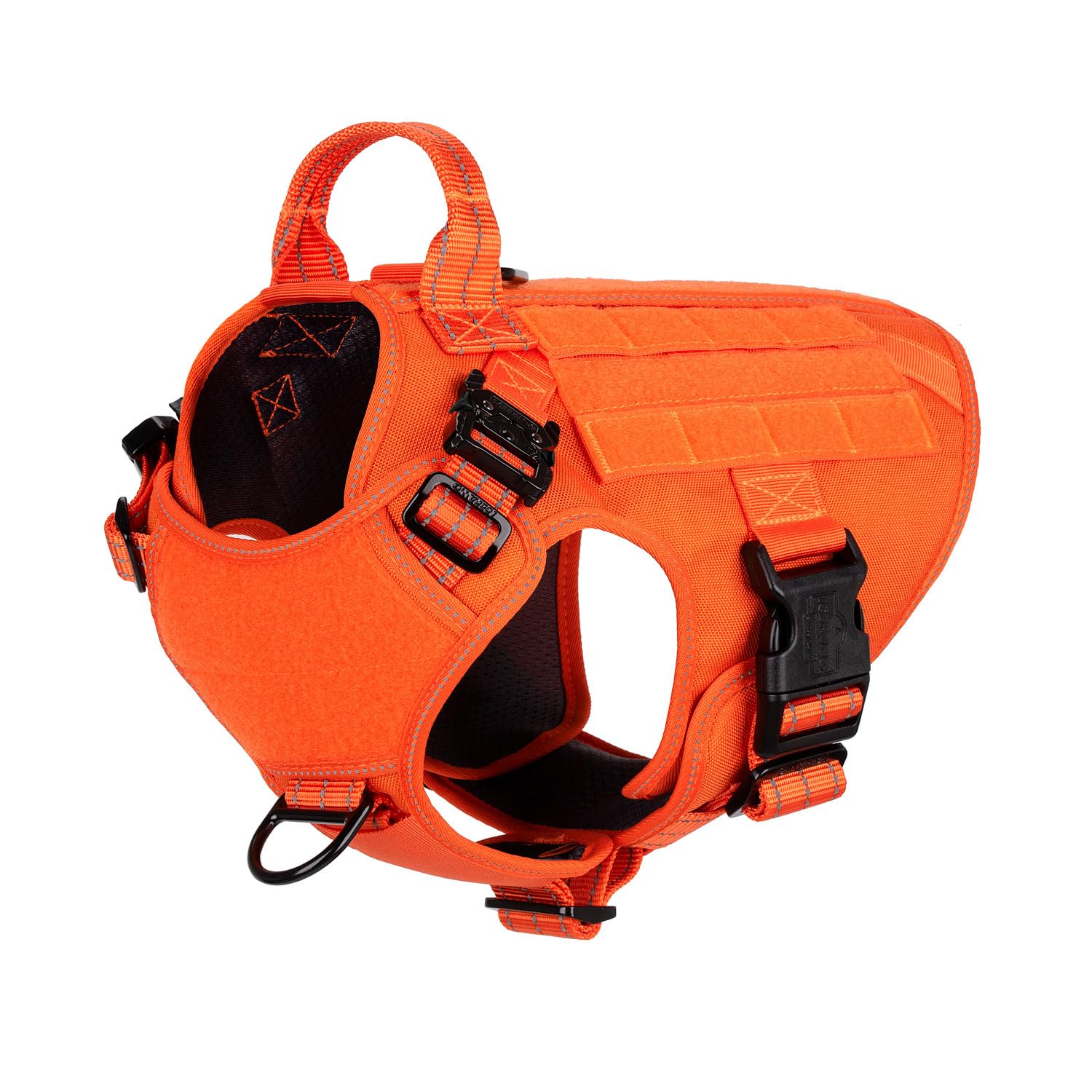
The original ICEFANG tactical harness has been a staple for budget-conscious hunters who still want real functionality. Two metal buckles on the neck area and reinforced stitching at every joint give it a sturdy feel that belies the entry-level price point. MOLLE/PALS webbing on each side allows attachment of pouches, water bottles, or a collapsible bowl, and both a rear V-ring and a front anti-pull D-ring are included.
Five adjustment points accommodate growing dogs or seasonal coat changes, and the hook-and-loop panels on the sides and chest accept custom patches for identification. A regular user of this harness on multiple dogs over several years reports never having a failure, which speaks to the build consistency. The fabric has held up to daily walks, training sessions, and weekend adventures without fraying or delamination.
This is the smart starting point for a young dog still growing or for hunters who need a second backup vest without stretching the budget. The plastic chest buckles are the main concession at this level, and the front chest strap can overlap the Velcro patch area in certain configurations. For the value it delivers, this harness punches well above its weight class.
Why we love it
- MOLLE webbing offers gear attachment options at a budget-friendly price
- Two metal neck buckles with reinforced stitching add real durability
- Five adjustment points allow a custom fit as the dog grows
- Dual leash clips provide both walking and anti-pull control
Good to know
- Plastic chest buckles are the weakest link in the hardware
- Front strap can cover the chest patch panel when adjusted tightly
- Not ideal for extreme pulling dogs due to mixed buckle materials
Safety & Care Tips
Check Fit Before Every Hunt
A vest that fit perfectly last season can shift as your dog builds muscle or loses winter weight. Run two fingers between the harness and your dog’s chest and neck — if you cannot slide them in easily, loosen the straps. Pay close attention to the armpit area; any rubbing here will cause soreness that takes days to heal.
Clean and Inspect After Wet Days
Dirt and moisture trapped against the skin lead to hotspots and bacterial growth. Rinse the vest with fresh water after every use in muddy or marshy conditions, then air-dry it completely before storing. Check the metal buckles for rust or debris buildup and apply a drop of lightweight oil to the moving parts if they start to stick. Hand wash with mild soap when needed — machine washing can degrade the water-repellent coating and weaken stitching.
Retire at the First Sign of Failure
Frayed webbing, cracked plastic buckles, or separated seams are not worth the risk. A vest failure in the middle of a retrieve near a road or fence line can have serious consequences. Keep a spare on hand so you are never tempted to push a damaged piece of gear through one more hunt. Most manufacturers recommend replacement every two to three seasons under regular field use.
Prioritize Visibility in All Conditions
Hunter orange is not just tradition — it is the color most easily distinguished by other hunters and vehicle operators in low light. If your vest does not already have reflective elements, add reflective tape to the top handle and side panels. A dog that disappears into tall grass or shadows becomes a safety risk that no amount of training can fix.
FAQ
What is the difference between a hunting vest and a tactical harness?
How do I measure my dog for a hunting vest?
Can my dog swim in a hunting vest?
How often should I replace my dog’s hunting vest?
Is a padded vest better for a dog that pulls on the leash?
Final Thoughts: The Verdict
For most hunters, the best hunting dog vest winner is the Carhartt Firm Duck Dog Chore Coat because it combines genuine cold-weather insulation with the rugged durability that field work demands. If you want the utility of built-in storage and tactical flexibility, grab the AIWAI Tactical Dog Harness. And for a lightweight, breathable layer that handles damp cover without overheating your dog, nothing beats the Carhartt Quick Duck Fleece Lined Dog Jac.