
Nothing stops a cat parent’s heart faster than spotting a raw wound, a torn pad, or a mystery sore on your feline friend. You want relief for them and clarity for yourself — fast. The problem is that many household first-aid staples can actually harm cats, and the pet aisle is full of options that promise healing but deliver irritation.
I’m Mo Mahin — the founder and writer behind Furric. I’ve spent years analyzing veterinary wound-care protocols, cross-referencing ingredient safety databases, and studying real feedback from cat owners to separate the genuinely effective treatments from the risky or useless ones.
After thorough research and careful evaluation of veterinary safety standards, this guide presents the genuine best ointment for cat wounds for your feline companion.
How To Choose The Best Ointment For Cat Wounds
Felines have uniquely sensitive skin and a fastidious grooming habit that makes topical product selection critical. A formula that works beautifully on a dog may cause toxicity or severe irritation on a cat. Here is what you need to evaluate before buying.
Understand Your Cat’s Wound Type
Not all wounds are the same. Minor scrapes and superficial cuts may respond well to a gentle protective ointment, while deeper punctures, abscesses, or infected hot spots require veterinary attention and possibly a medicated formula. Always assess the wound depth, location, and signs of infection — redness, swelling, heat, or discharge — before choosing a product. When in doubt, a vet check comes first.
Check the Ingredient Safety Profile for Felines
Cats lack certain liver enzymes needed to metabolize common topical ingredients like zinc oxide, tea tree oil, and some essential oils. Even small amounts absorbed through licking can cause toxicity. Prioritize ointments labeled specifically for cats or those that use non-toxic bases like lanolin, manuka honey, or microsilver. Avoid anything with hydrocortisone unless a veterinarian directs you otherwise.
Consider Application and Grooming Behavior
A thick, greasy ointment may stay put longer but can attract litter and debris. A lighter gel may absorb faster but requires more frequent reapplication. Because cats groom rigorously, the ideal ointment dries or absorbs reasonably well while remaining safe if a small amount is ingested. Look for formulas that explicitly state they are safe if licked in small quantities.
Quick Comparison
On smaller screens, swipe sideways to see the full table.
| Model | Type | Best For | Key Feature | Amazon |
|---|---|---|---|---|
| Absorbine Silver Honey | Ointment | Rapid wound healing | Manuka honey & MicroSilver BG | Amazon |
| HomeoPet HP Healing Cream | Cream | All-natural, multi-species care | Homeopathic formula, no side effects | Amazon |
| Veterinus Derma GeL | Gel | Protective film barrier | No secondary dressing needed | Amazon |
| Corona Ointment | Ointment | Value-sized barrier protection | Lanolin-based, moisture barrier | Amazon |
| Durvet Pierce’s Nu-Stock | Oil | Older pets, deep skin issues | Veterinary-tested oil formula | Amazon |
In-Depth Reviews
1. Absorbine Silver Honey Hot Spot & Wound Care Ointment

This is the ointment I recommend most often to cat parents who want a fast-acting, natural-based formula that actually works without harsh chemicals. Absorbine Silver Honey pairs medical-grade Manuka honey with MicroSilver BG — two powerful healing agents that create a moist wound environment while actively suppressing bacterial growth. The thick, spreadable texture clings well to furless areas and stays in place better than thinner lotions.
Cat owners report visible improvement within 24 to 48 hours on hot spots, superficial cuts, and paw pad abrasions. The formula is made in the USA and explicitly labeled safe for cats, dogs, and small animals — a rare and reassuring detail. It also reduces the urge to bite and scratch thanks to its soothing, non-stinging feel upon application. Apply once or twice daily after gently cleaning the wound, and you do not need to rinse it off.
For a premium ointment that balances natural ingredients with real antimicrobial science, this is the clear top pick. It earns the top spot because it checks every box: feline-safe, rapid-healing, multi-use, and backed by a respected animal care brand.
Why we love it
- Fast-acting relief visible within one to two days
- Safe for cats with no antibiotics or harsh chemicals
- Thick formula stays on the wound and reduces licking
Good to know
- Tube size is modest at 2 oz for the price point
- Not ideal for deep puncture wounds needing vet care
2. HomeoPet HP Healing Cream
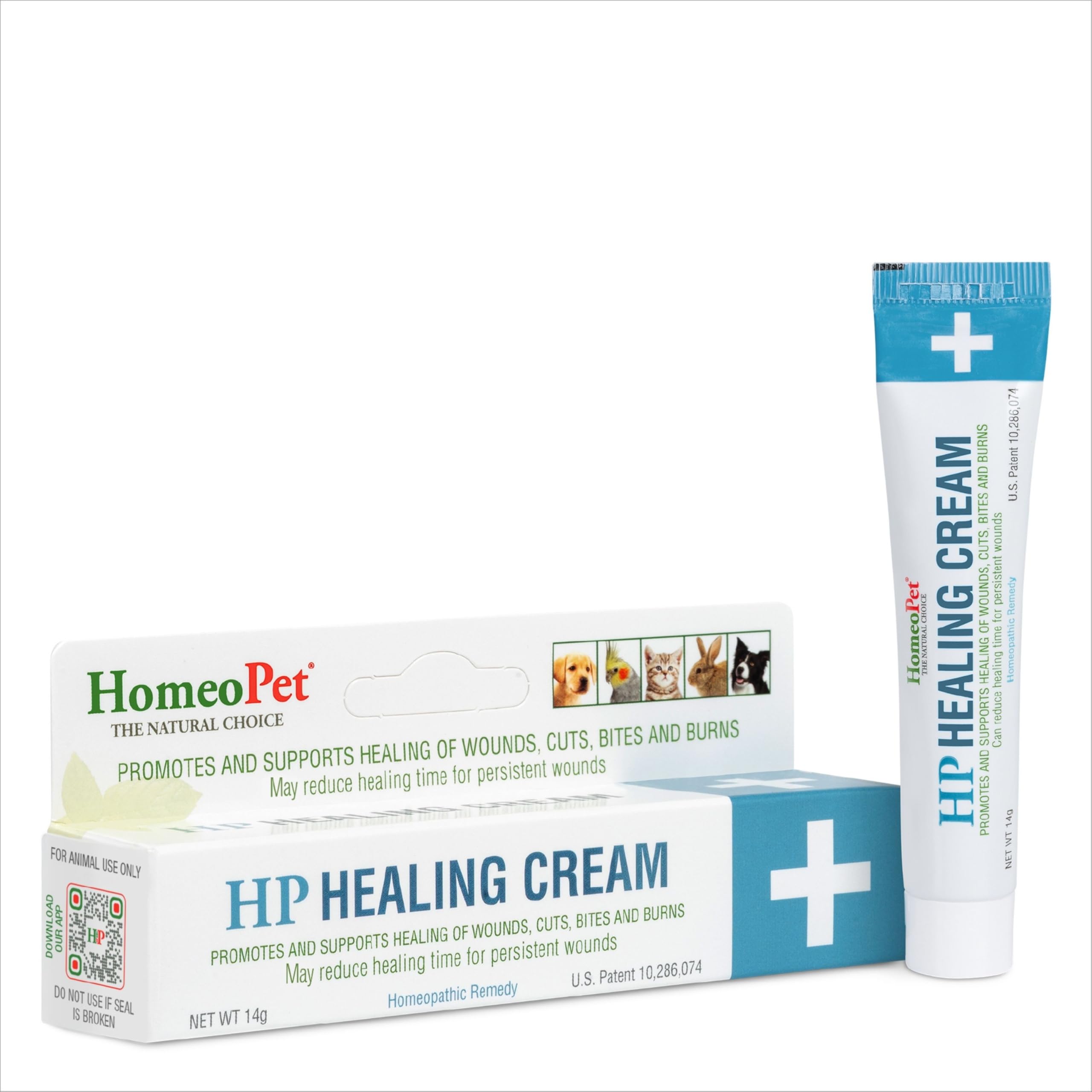
For cat parents who prefer a gentle, homeopathic approach to wound care, this cream from the veterinarian-founded HomeoPet brand offers a thoughtfully crafted alternative. The formula uses natural active ingredients in microdoses to support the body’s own healing response for cuts, bites, burns, abrasions, and even cracked paw pads. It is well tolerated across all life stages — from rambunctious kittens to senior cats with thinner skin.
Feline owners especially appreciate that this cream has no known side effects and can be applied one to three times daily as needed. It works on a wide range of surface-tissue damage, including stubborn sores that seem slow to close. The 14-gram tube is compact enough for a first-aid kit, and the cream consistency spreads easily without dripping. HomeoPet also makes it clear that this product is safe for cats, dogs, rabbits, ferrets, and hamsters — a versatility that many multi-pet households value.
If your cat has sensitive skin or you want a gentler option that still supports healing, this cream is a solid choice. It does not rely on antimicrobial heavy-hitters like silver or honey, so it works best for minor wounds rather than infected or oozing spots.
Why we love it
- Safe for all ages including kittens and seniors
- No known side effects from natural ingredients
- Works on cuts, burns, bites, and cracked pads
Good to know
- Not formulated for infected or deep wounds
- Small tube may require repurchase for chronic issues
3. Veterinus Derma GeL

This gel stands apart because it forms a clear, protective film over the wound that lasts around the clock — meaning fewer reapplication sessions and no need for bulky secondary dressings that cats hate. The formula is designed for round-the-clock effectiveness, which is a real advantage when you have a cat who squirms at every handling. Simply apply a thin layer and let it dry to create a breathable shield against bacteria, debris, and moisture.
Cat owners who have used this product note that it works well for small cuts, abrasions, and post-surgical incision sites where keeping the area clean is the top priority. The 100 ml (3.4 fl. oz.) tube is generous compared to many competitors, offering good value for a premium gel. It is listed as suitable for cats, dogs, horses, birds, and rabbits, reflecting a broad safety margin. The gel consistency also means less messy transfer onto furniture or bedding.
For active cats who refuse to leave a bandage alone, this gel simplifies wound management dramatically. Just be aware that it functions primarily as a barrier rather than an active healing or antimicrobial treatment, so it pairs best with a medicated ointment underneath for infected wounds.
Why we love it
- Long-lasting film reduces reapplication frequency
- No bandages or secondary dressings required
- Large 100 ml tube offers excellent value
Good to know
- Primarily a barrier, not a healing agent
- May need pairing with a separate antimicrobial
4. Corona Ointment

Originally developed for horses, this thick lanolin-based ointment has earned a loyal following among multi-pet households and rescue organizations — and for good reason. The 14-ounce tub is the largest size in this lineup, making it the most economical choice for treating multiple animals or managing chronic skin issues over time. It creates an excellent moisture barrier against insects, dirt, and moisture while supporting rapid healing of cuts, abrasions, and sores with minimal scarring.
A detail that matters: the manufacturer states the ointment can be safely applied without gloves, unlike many equine products that contain harsh chemicals. While not specifically marketed for cats, many feline owners report successful use on superficial wounds and dry, cracked paw pads. The thick consistency stays where you put it, which helps reduce the chance of your cat licking it off immediately. It has even won awards from horse journals for wound care efficacy.
For budget-conscious cat parents or those with multiple pets, this tub delivers remarkable value. Just spot-test a small area first to confirm your cat tolerates the lanolin base, and reserve it for minor surface wounds rather than deep or infected injuries.
Why we love it
- Massive 14 oz tub at a budget-friendly price point
- Creates a strong barrier against moisture and debris
- Safe to apply without gloves for easy treatment
Good to know
- Not specifically formulated for cats — patch test first
- Thick, greasy texture can attract litter and dust
5. Durvet Pierce’s Nu-Stock

This oil-based formula from Durvet has been a staple in barns and veterinary clinics for years, and many cat owners turn to it for persistent skin issues that other ointments haven’t resolved. It is tested safe for use even in very old dogs, and the same gentle profile applies to cats as well. The liquid oil consistency allows it to spread easily over large or hard-to-reach areas without tugging at sensitive skin.
Anecdotal reports from long-time users describe good results with chronic dry patches, minor abrasions, and skin that needs intensive moisturizing. The oil penetrates rather than sitting on top of the skin, which can be helpful for deep cracks or calloused paw pads. It is manufactured in the United States and comes in a 12-ounce bottle that will last through months of occasional use. Because it is an oil rather than a cream or gel, expect a lighter feel that absorbs faster into the skin.
This product works best as a supportive treatment for dry, rough, or mildly irritated skin rather than an active wound healer. If your cat has a specific wound that needs infection control, choose one of the medicated or antimicrobial options above instead.
Why we love it
- Light oil consistency absorbs quickly into skin
- Veterinary-tested and safe for older animals
- Generous 12 oz bottle for long-term use
Good to know
- Not designed as an active wound-healing treatment
- Oil formula may drip if applied too liberally
Safety & Care Tips
Clean the Wound Properly First
Before applying any ointment, gently flush the wound with warm saline or a pet-safe antiseptic solution like diluted chlorhexidine. Avoid hydrogen peroxide and alcohol — both damage healthy tissue and delay healing. Pat the area dry with a clean gauze pad, then apply the ointment in a thin, even layer. A clean wound bed is the foundation of fast recovery.
Monitor for Licking and Infection
Even cat-safe ointments can cause digestive upset if ingested in large amounts. Use an Elizabethan collar or a soft recovery cone for at least 15 to 30 minutes after application to let the product absorb. Check the wound daily for worsening redness, swelling, heat, or pus. These signs require a veterinarian visit regardless of which ointment you use.
FAQ
Can I use Neosporin or human antibiotic ointment on my cat?
How often should I apply wound ointment to my cat?
When should I take my cat to the vet instead of treating at home?
Final Thoughts: The Verdict
For most cat parents, the ointment for cat wounds winner is the Absorbine Silver Honey Hot Spot & Wound Care Ointment because it combines fast-acting Manuka honey with antimicrobial MicroSilver in a feline-safe, non-antibiotic formula that visibly reduces wound size within two days. If you prefer a gentle, homeopathic approach for minor scrapes, grab the HomeoPet HP Healing Cream. And for a protective barrier that keeps wounds clean without bandages, nothing beats the Veterinus Derma GeL.