
Watching your cat struggle in the litter box is heartbreaking. Constipation is uncomfortable for them and stressful for you, but the right food can make all the difference. With so many options on the shelf, finding a wet food that truly helps with regularity and comfort requires knowing exactly what ingredients to look for.
I’m Mo Mahin — the founder and writer behind Furric. I’ve spent years analyzing feline nutrition studies, veterinary digestive health protocols, and countless owner experiences to help cats live happier, more comfortable lives.
After evaluating moisture content, fiber sources, and digestibility across dozens of formulas, I’ve narrowed the field to the seven most effective choices. This guide walks you through everything you need to confidently choose the best wet cat food for constipation for your cat.
How To Choose The Best Wet Cat Food For Constipation
Choosing a wet food for constipation is about more than just picking a can with pumpkin. You need a formula that balances hydration, digestible protein, and the right type of fiber to encourage natural bowel movements without causing dependency or irritation.
Moisture Content Is Everything
Wet food naturally provides 75-85% moisture, which is far superior to dry kibble for cats who struggle with constipation. Higher water intake softens stool and helps it pass more easily through the colon. Look for foods with broth, gravy, or sauce as the primary liquid base.
Fiber Source Matters
Soluble fibers like chicory root (inulin), pumpkin, and psyllium help bulk stool and feed healthy gut bacteria. Insoluble fibers add roughage but can worsen impaction if a cat is already dehydrated. Aim for moderate, gentle fiber sources rather than heavy grain-based fillers.
Limited Ingredients for Sensitive Systems
Many constipated cats also have food sensitivities. A limited-ingredient diet with a single novel protein and minimal additives reduces the chance of inflammatory reactions that can slow gut motility. Avoid artificial colors, preservatives, and carrageenan.
Prescription vs. Over-the-Counter
If your cat has chronic or severe constipation, a veterinary therapeutic diet is often the safest route. These foods are clinically tested and precisely balanced to support digestive transit. Over-the-counter options work well for mild or occasional episodes.
Quick Comparison
On smaller screens, swipe sideways to see the full table.
| Model | Type | Best For | Key Feature | Amazon |
|---|---|---|---|---|
| Hill’s Prescription Diet i/d | Prescription | Chronic digestive issues | ActivBiome+ prebiotic fiber blend | Amazon |
| Royal Canin Digestive Care | Veterinary Diet | Sensitive stomach with stool odor | Highly digestible proteins + prebiotics | Amazon |
| Weruva Meow Luau | Premium | Hydration + gentle fiber | Wild-caught mackerel + pumpkin in gravy | Amazon |
| Applaws Chicken with Pumpkin | Limited Ingredient | Minimalist diet with pumpkin | Single protein + pure pumpkin in broth | Amazon |
| Purina Pro Plan Sensitive Skin & Stomach | Mid-Range | Mild constipation + skin issues | Chicory root prebiotic fiber | Amazon |
| Hill’s Science Diet Hairball Control | Mid-Range | Hairball-related constipation | Natural fiber for hair passage | Amazon |
| Purina Pro Plan Hairball Control Variety | Budget-Friendly | Occasional blockage from hair | Natural prebiotic fiber + high protein | Amazon |
In-Depth Reviews
1. Hill’s Prescription Diet i/d Digestive Care

This is the gold standard for cats dealing with persistent constipation. Hill’s i/d is formulated by veterinary nutritionists and uses their proprietary ActivBiome+ prebiotic fiber blend to rapidly stimulate the gut microbiome. The chicken and vegetable stew texture is highly palatable, and the moisture-rich gravy helps soften stool from the inside out.
Beyond fiber, this food includes high levels of B vitamins and electrolytes to replenish nutrients lost during digestive upset. The S+OXSHIELD technology also reduces the risk of urinary crystal formation, a common concern when feeding cats with digestive issues. The 2.9 oz can size is perfect for portion control.
Long-time feline owners report seeing visible improvement in stool quality within the first week, and cats who previously needed manual laxatives often transition off them entirely. It is a prescription diet, so a vet consultation is required, but that also means you are getting a clinically proven product.
Why we love it
- Clinically proven to improve stool quality
- Contains ActivBiome+ prebiotic fiber blend
- Supports urinary health alongside digestion
- High moisture content for hydration
Good to know
- Requires veterinary prescription
- Premium price point
- Some cats dislike stew texture
2. Royal Canin Feline Digestive Care

Royal Canin’s Digestive Care formula targets the two biggest complaints from owners of constipated cats: poor stool quality and unpleasant odor. The loaf-in-sauce texture is soft and easy to eat, and the highly digestible proteins ensure maximum nutrient absorption while reducing the amount of fermentable waste in the colon.
What sets this apart is its precise balance of prebiotics and psyllium fiber. It helps bulk stool without creating the gassy side effects some cheaper fiber sources cause. The formula also supports weight management, which is crucial because overweight cats are more prone to constipation. Each 3 oz can provides a complete and balanced meal.
According to feedback from multi-cat households, even picky eaters accept this food readily, and the reduction in litter box odor is a welcome bonus. It is a veterinary diet, so you will need a prescription, but the results are consistent and reliable.
Why we love it
- Reduces stool odor significantly
- Highly digestible proteins for sensitive stomachs
- Soft pate texture is easy to eat
- Supports healthy weight management
Good to know
- Requires veterinary approval
- Contains chicken, not for all allergies
- Loaf texture may need mashing for some
3. Weruva Meow Luau with Mackerel & Pumpkin

Weruva has earned a loyal following among owners who want a high-end, natural wet food that doubles as a constipation aid. The Meow Luau recipe features hand-flaked wild-caught mackerel and pumpkin in a light gravy. Pumpkin is a well-known gentle fiber source that helps regulate bowel movements, and the mackerel provides omega-3 fatty acids to reduce gut inflammation.
The ingredient list is refreshingly clean: no grains, gluten, GMOs, MSG, or carrageenan. Every can is made in a human-food facility with rigorous safety standards. The 5.5 oz size is generous and works well for larger cats or multi-cat households. The gravy adds significant moisture, which is critical for softening stool.
Cat guardians frequently note that even cats who have had chronic constipation for years begin passing stool normally within days of switching to Weruva. It is a complementary food, so it works best alongside a balanced dry diet or as part of a fully wet feeding plan.
Why we love it
- Contains real pumpkin for gentle fiber
- No carrageenan or artificial additives
- High moisture gravy for hydration
- Made in a human-food facility
Good to know
- Complementary food, not complete on its own
- Larger cans may spoil if not refrigerated
- Mackerel flavor may not suit all cats
4. Applaws Natural Chicken with Pumpkin
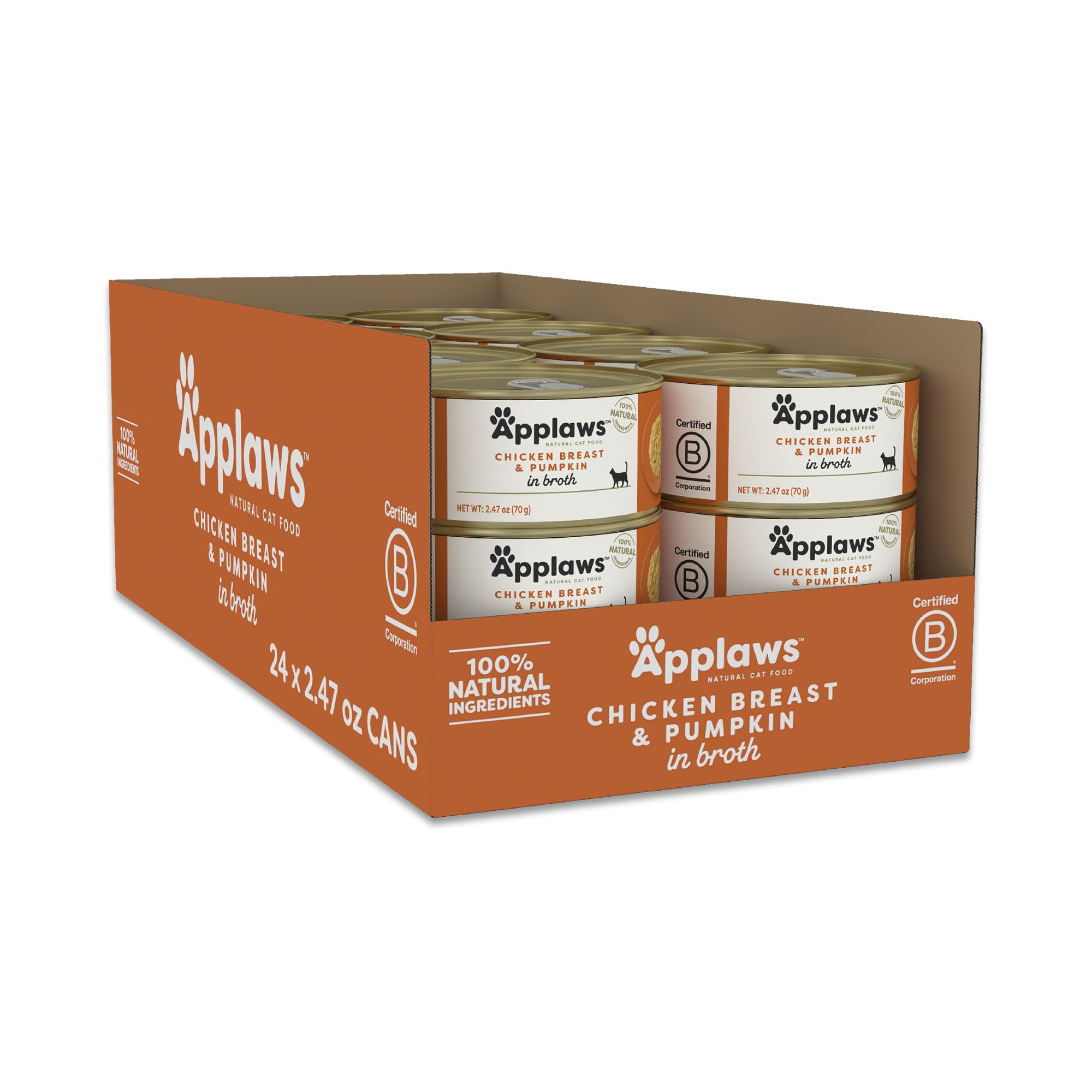
When you suspect food sensitivities are the root cause of your cat’s constipation, Applaws offers a beautifully simple solution. Chicken with Pumpkin in Broth uses just a handful of ingredients: deboned chicken, pumpkin, chicken broth, and a few natural supplements. No artificial preservatives, no fillers, no mystery ingredients.
The flaked texture in broth is extremely appealing to cats, and the pumpkin provides a steady source of soluble fiber. This is a complementary food, designed to be fed alongside a complete dry food, but the simplicity makes it an excellent tool for troubleshooting digestive issues. It is also dairy-free and gluten-free.
Stories from rescue organizations show this food is often the first choice when transitioning underweight or blocked cats to a healthier diet. Owners love that they can see exactly what is in the can, and cats love the real chicken shreds.
Why we love it
- Ultra-limited ingredient list for sensitive cats
- Real pumpkin as a natural fiber source
- No artificial colors, flavors, or preservatives
- High palatability for picky eaters
Good to know
- Not a complete balanced meal
- Small 2.47 oz cans require frequent opening
- Not suitable for severe chronic cases
5. Purina Pro Plan Sensitive Skin and Stomach
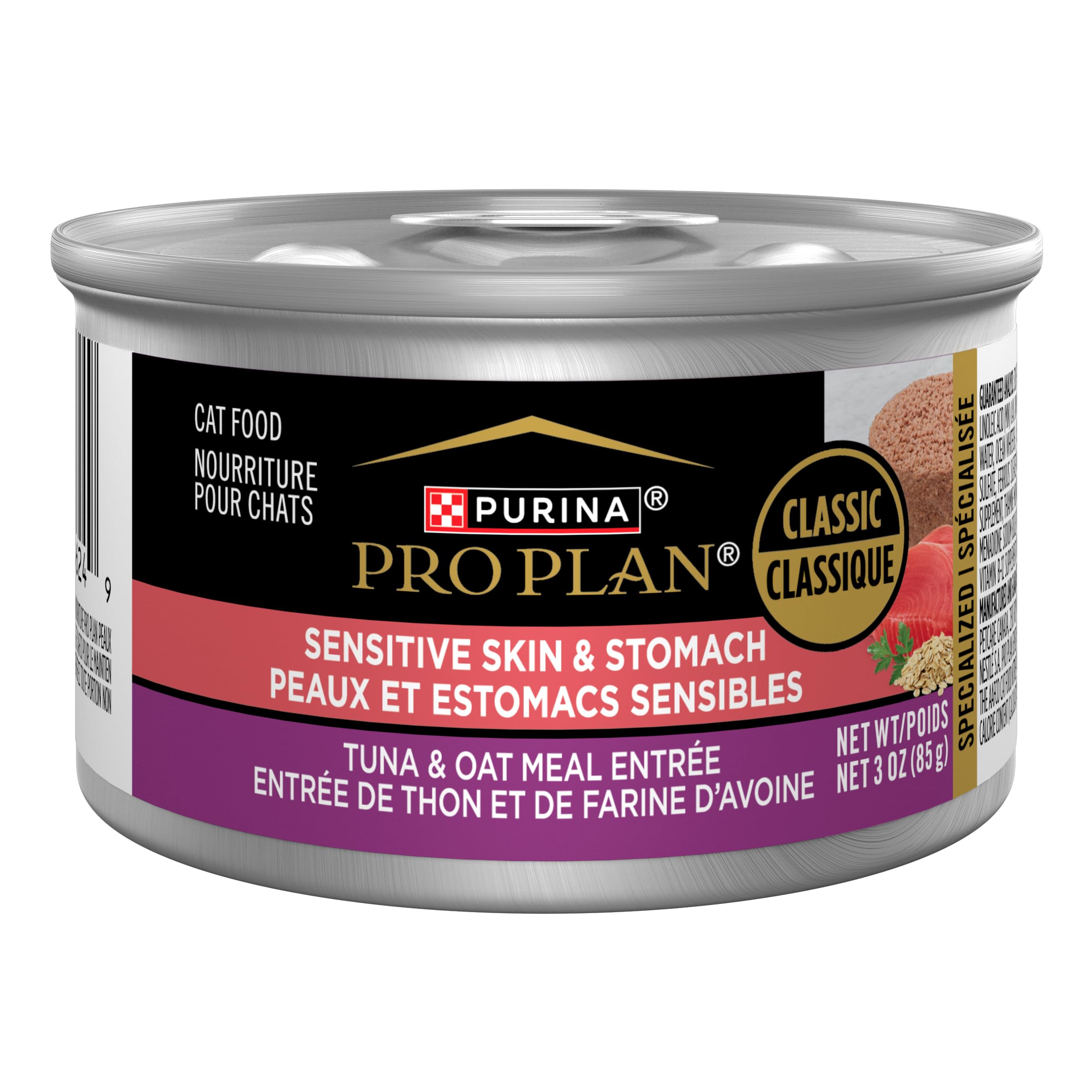
This is an excellent entry-level option for owners who want a reliable, affordable wet food that supports digestion. The Tuna and Oat Meal Entree is formulated with natural prebiotic fiber from chicory root, which feeds beneficial gut bacteria and helps regulate bowel movements. It also contains 25 essential vitamins and minerals plus taurine for overall health.
The high protein content helps maintain lean muscle mass, and the moisture-rich pate texture supports hydration. This food is corn-free, potato-free, and contains no artificial colors. It is especially well-suited for cats who also struggle with dry skin or dull coats, as the fatty acid blend addresses both issues at once.
Reviews from cat parents frequently mention this as the food that finally stopped their cat’s constipation without causing diarrhea. It is a complete and balanced diet, so you can feed it exclusively without worry.
Why we love it
- Chicory root prebiotic supports digestive health
- Complete and balanced for everyday feeding
- Great for cats with concurrent skin issues
- Good value for the quality
Good to know
- Contains tuna, may not suit fish-sensitive cats
- Some cats dislike oat meal texture
- Not a veterinary therapeutic diet
6. Hill’s Science Diet Hairball Control
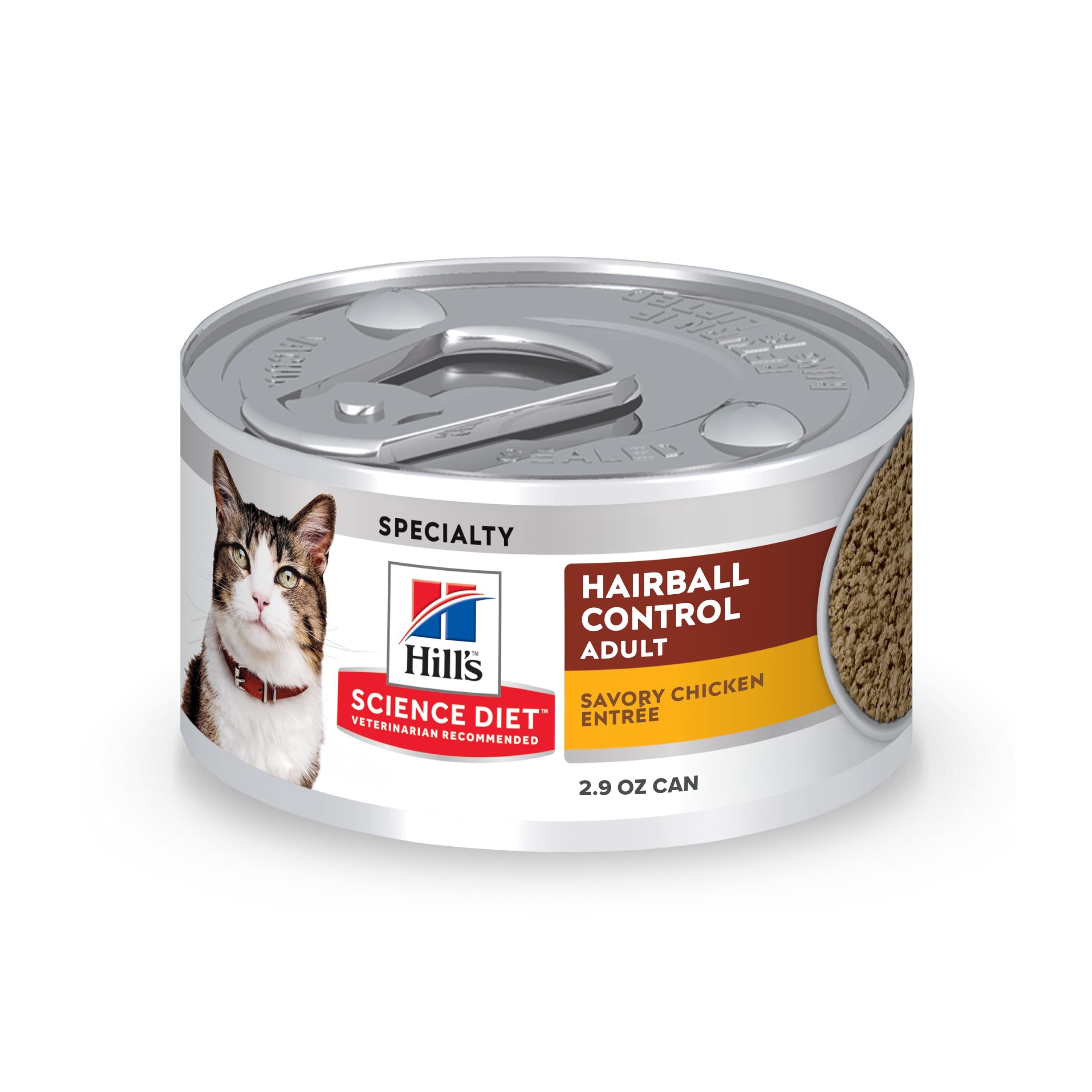
Hairballs are a leading cause of transient constipation in cats, and Hill’s Science Diet Hairball Control is purpose-built to address that. The chicken minced recipe includes natural fiber that helps hair pass through the digestive tract rather than clumping in the stomach. It also provides clinically proven antioxidants for immune support.
The food is made with high-quality protein to maintain lean muscle, and the ingredients are easily digestible. It is formulated for adult cats aged 1-6 years and contains no dairy. The 2.9 oz can size is convenient for portioning, and the minced texture is softer than pate, which encourages cats to eat the full serving.
Cat owners managing long-haired breeds like Persians or Maine Coons often find this food reduces hairball frequency by over 50%. While it is not a heavy-duty constipation fix, it works beautifully for mild, hair-related blockage.
Why we love it
- Specifically designed for hairball passage
- Contains natural fiber for gentle movement
- Clinically proven antioxidants
- Made in the USA with trusted ingredients
Good to know
- Not intended for chronic constipation
- Only for cats 1-6 years old
- Some owners report hairball frequency unchanged
7. Purina Pro Plan Hairball Control Variety Pack

For owners on a budget who still want quality ingredients, this variety pack is a solid choice. It includes a mix of salmon, whitefish, tuna, and chicken recipes, all with natural prebiotic fiber to support hairball control and digestive regularity. The high protein content helps maintain lean muscle mass, and the food contains no artificial colors or preservatives.
The variety pack format is great for picky cats who get bored with the same flavor, and the 3 oz cans are portion-friendly. Each recipe is made in Purina-owned U.S. facilities. While the primary focus is hairballs, the added fiber and moisture can help with mild constipation episodes.
Busy cat moms appreciate the convenience of having multiple flavors on hand, and the low price point makes it easy to rotate into a daily feeding routine. For chronic constipation, this may need supplementation with a higher-fiber treat, but it is a fantastic maintenance food.
Why we love it
- Variety pack prevents flavor fatigue
- Includes natural prebiotic fiber
- No artificial colors or preservatives
- Budget-friendly price point
Good to know
- Primary focus is hairballs, not general constipation
- Some cats react to the fish blend
- May need additional fiber for severe cases
Safety & Care Tips
Introduce New Food Slowly
Abruptly switching to a new wet food can cause diarrhea or worsen constipation. Transition over 7-10 days by mixing increasing amounts of the new food with the old formula. Watch for changes in stool consistency and appetite during this period.
Prioritize Fresh Water Access
Even with wet food, your cat needs clean, fresh water at all times. Consider a pet fountain to encourage drinking. Dehydration is a primary cause of constipation, and no food can compensate for chronic low water intake.
Monitor Litter Box Habits
Track how often your cat uses the box and the appearance of the stool. Healthy stool should be formed but moist, not hard and dry. If your cat goes more than 48 hours without a bowel movement, consult your veterinarian immediately.
Avoid Over-Supplementing Fiber
Too much fiber can have the opposite effect, causing bloating, gas, or impaction. Stick to the fiber levels within the food you choose unless your vet specifically recommends a supplement like psyllium or canned pumpkin.
FAQ
Can wet cat food alone cure my cat’s constipation?
Is pumpkin safe for cats with constipation?
Do I need a prescription for Hill’s i/d or Royal Canin Digestive Care?
How quickly will I see results after switching food?
Final Thoughts: The Verdict
For most pet parents, the best wet cat food for constipation winner is the Hill’s Prescription Diet i/d Digestive Care because it combines clinically proven prebiotic fiber with high moisture and urinary health support. If you want a limited-ingredient natural option, grab the Applaws Chicken with Pumpkin. And for a premium, grain-free choice that promotes hydration, nothing beats the Weruva Meow Luau.