
Raising a Blue Heeler puppy means raising a whirlwind of energy, loyalty, and intelligence. These little Aussie cow dogs grow fast and need a diet that supports their developing bones, muscles, and sharp minds — without upsetting their often sensitive stomachs.
I’m Mo Mahin — the founder and writer behind Furric. I’ve spent years analyzing veterinary nutritional guidelines, parsing ingredient panels, and listening to real owner feedback to separate the food that truly nourishes from the one that just fills a bowl.
After digging through hundreds of customer reports and ingredient specifications, these five picks stand out as the safest and most effective options to put in your cart. This guide will help you find the best dog food for blue heeler puppy that matches your pup’s unique needs and your peace of mind.
How To Choose The Best Dog Food For Blue Heeler Puppy
Blue Heeler puppies are medium-size dogs with a tremendous work drive. Their nutritional needs are unique — they require controlled calcium and phosphorus for proper bone development, high-quality animal protein for muscle growth, and DHA for brain and eye development. Look for a food that meets AAFCO puppy standards and avoids cheap fillers like corn, wheat, and soy that can trigger skin or digestive issues.
Understand Your Puppy’s Life Stage
Blue Heelers grow rapidly until about 12 months. A puppy-specific formula ensures the right calcium-to-phosphorus ratio and DHA levels. Avoid “all life stages” foods unless they are specifically formulated for growth. The foods on this list are tailored for puppies except one (Blue Buffalo Adult Salmon), which we include as a cautionary note for owners considering switching too early.
Prioritize Animal Protein and Healthy Fats
Active working breeds need a minimum of 28–30% protein and 15–20% fat during puppyhood. Real meat or fish should be the first ingredient. Omega-3 and Omega-6 fatty acids from fish oil or flaxseed support healthy skin, coat, and cognitive function — especially important for a breed prone to shedding and allergies.
Watch Out for Sensitivities
Many Blue Heelers have sensitive stomachs or chicken allergies. If your puppy shows signs of loose stools, gas, or itchy skin, consider limited-ingredient diets or novel protein sources like salmon, venison, or bison. The products below include options that are easy on the digestive system.
Quick Comparison
On smaller screens, swipe sideways to see the full table.
| Model | Type | Best For | Key Feature | Amazon |
|---|---|---|---|---|
| Hill’s Science Diet Puppy Sensitive Stomach & Skin | Dry Kibble | Puppies with sensitive digestion | Prebiotic fiber + DHA + omega fatty acids | Amazon |
| Purina Pro Plan Sport Development 30/20 | Dry Kibble | Active, high-energy puppies | 30% protein, 20% fat for strong muscles and endurance | Amazon |
| Taste of the Wild High Prairie Puppy | Dry Kibble | Grain-free diet lovers | Roasted bison & venison with probiotics | Amazon |
| Blue Buffalo Basics Puppy Turkey & Potato | Dry Kibble | Food sensitivities & picky eaters | Limited ingredient diet with single animal protein | Amazon |
| Blue Buffalo Life Protection Adult Salmon | Dry Kibble | Adult dogs (not for puppies) | Chicken-free, salmon first – allergy relief | Amazon |
In-Depth Reviews
1. Hill’s Science Diet Puppy Sensitive Stomach & Skin, Salmon & Brown Rice
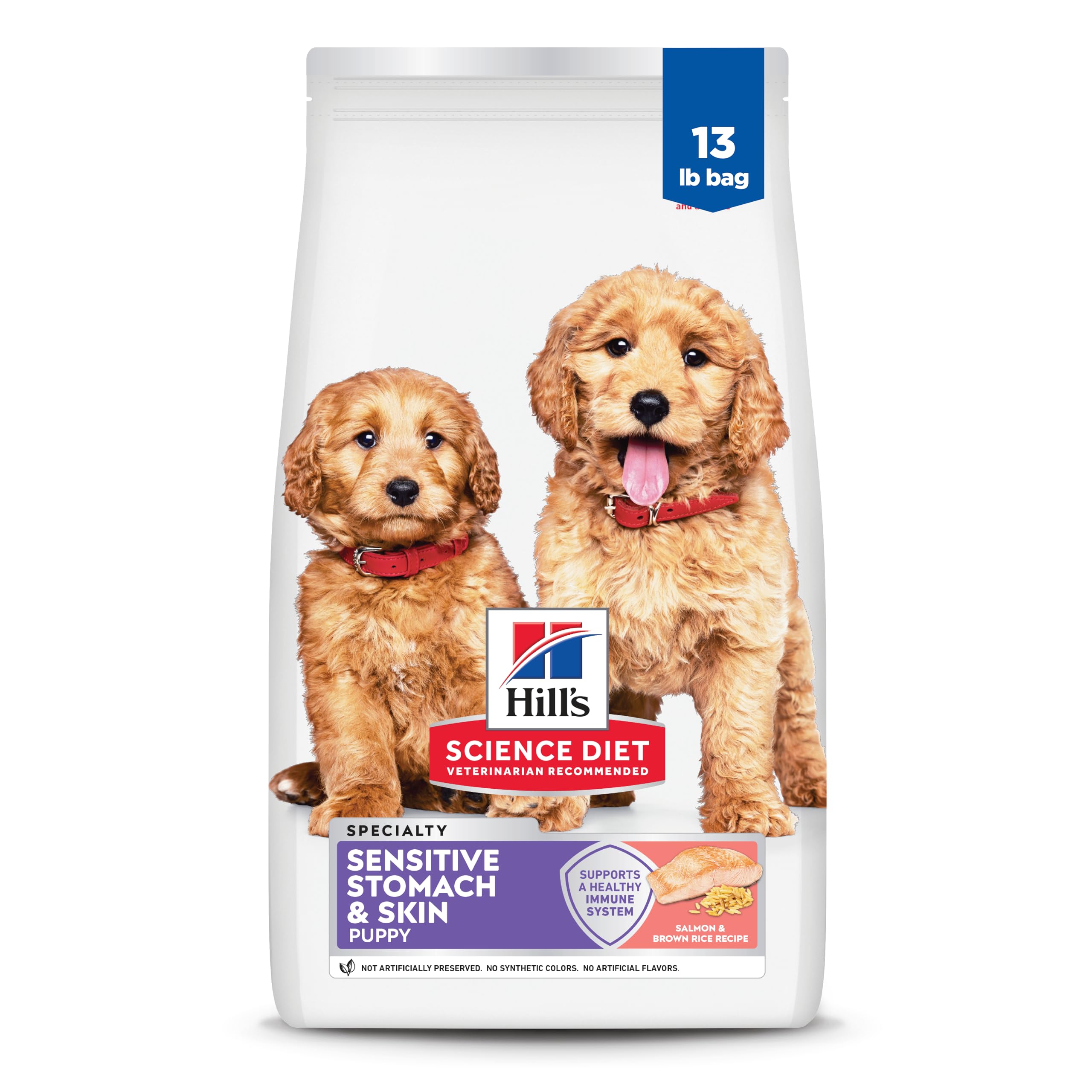
Hill’s Science Diet Puppy Sensitive Stomach & Skin is the gold standard for puppies with delicate tummies. Blue Heelers are notorious for digestive sensitivity, and this formula is built around a highly digestible salmon base with prebiotic fiber that soothes the gut while maximizing nutrient absorption. The 13-pound bag is packed with DHA for brain development, high-quality protein for growing muscles, and omega-3 and 6 fatty acids for a shiny coat and healthy skin.
What sets this food apart is the triple support for stomach, skin, and immune system. Real owners report that even picky puppies — including those with chronic loose stools — thrive on this recipe. The kibble is small enough for tiny mouths, and the velcro-seal bag keeps the food fresh. As the number one brand recommended by US veterinarians, you can trust the science behind every bite.
Our final take: If your Blue Heeler puppy has a sensitive stomach or you simply want a premium, proven formula for healthy growth, this is the one to choose. The only sacrifice is the price point, but for many owners it’s worth every cent — even if we can’t say that here.
Why we love it
- Veterinarian-formulated for sensitive digestion
- Salmon is the first ingredient – great for coat health
- Contains DHA for brain and eye development
- Prebiotic fiber for optimal stool quality
Good to know
- Premium price tier – bigger investment per bag
- Only available in 13-lb size; larger bags not offered
2. Purina Pro Plan Sport Development 30/20 Chicken and Rice
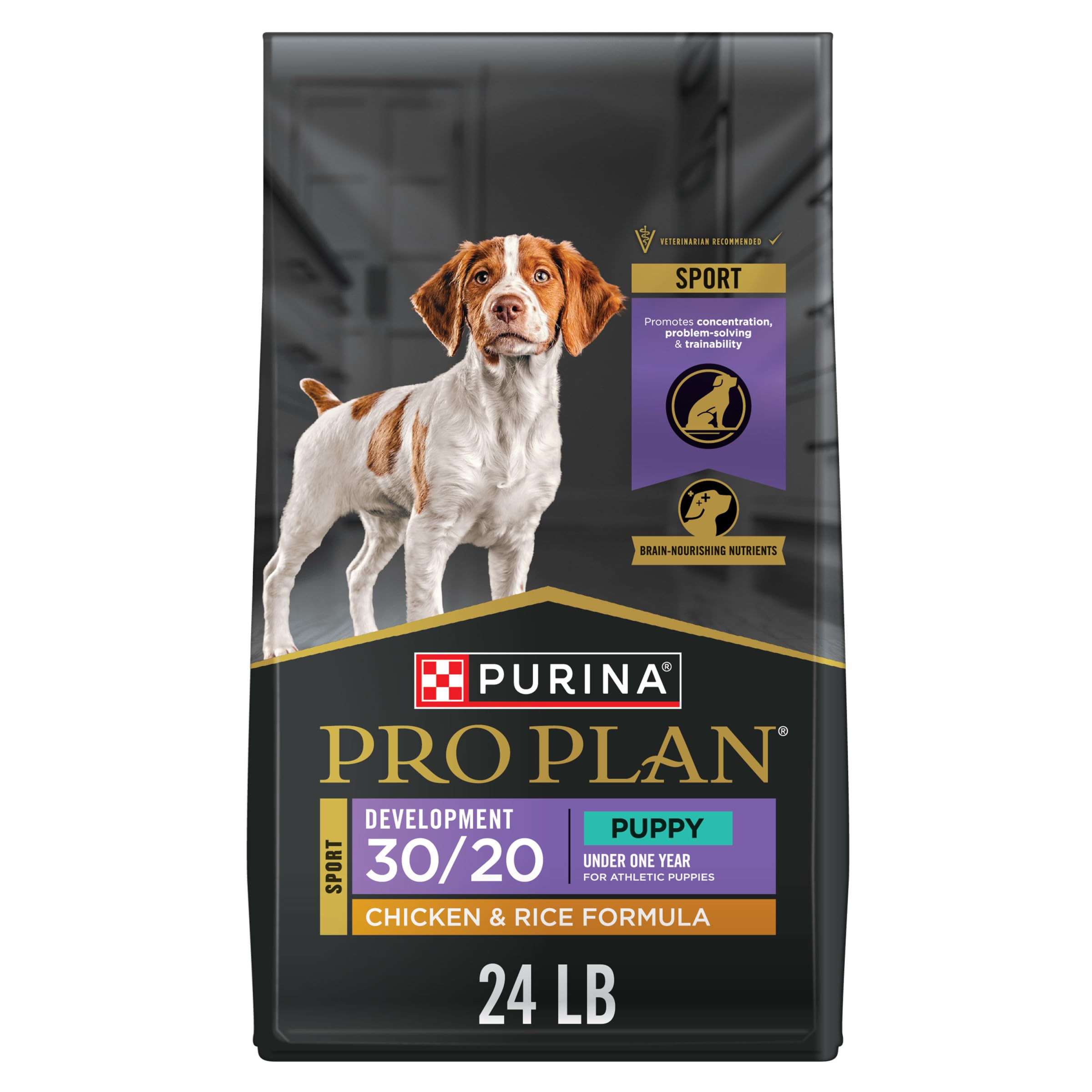
For the Blue Heeler who never stops moving, Purina Pro Plan Sport Development 30/20 delivers the fuel a working puppy craves. With real chicken as the number one ingredient and a whopping 30% protein and 20% fat, this food is engineered to support lean muscle growth, sustained energy, and mental focus. Brain-nourishing nutrients like DHA, EPA, taurine, and choline help your pup concentrate during training sessions.
This recipe is a favorite among breeders of active breeds like German Shorthaired Pointers and Australian Shepherds — and Blue Heeler owners report similar satisfaction. The kibble is crunchy and well-sized for medium-breed puppies. The 24-pound bag offers excellent value for a high-protein formula. Customers with GSP pups and mountain doodles commend the food for maintaining firm stools and shiny coats even during rapid growth.
Our verdict: If your Blue Heeler puppy is destined for agility, herding, or marathon fetch sessions, this is the food that keeps up. Just confirm your pup tolerates chicken well — some Heelers are sensitive to poultry.
Why we love it
- Highest protein content for muscle development
- Includes DHA, EPA, and taurine for brain and heart health
- Large bag size provides great overall value
- Promotes trainability and concentration
Good to know
- Chicken-based – not suitable for chicken allergies
- Higher fat may cause loose stools if transitioned too fast
3. Taste of the Wild High Prairie Puppy Grain-Free Roasted Bison & Venison
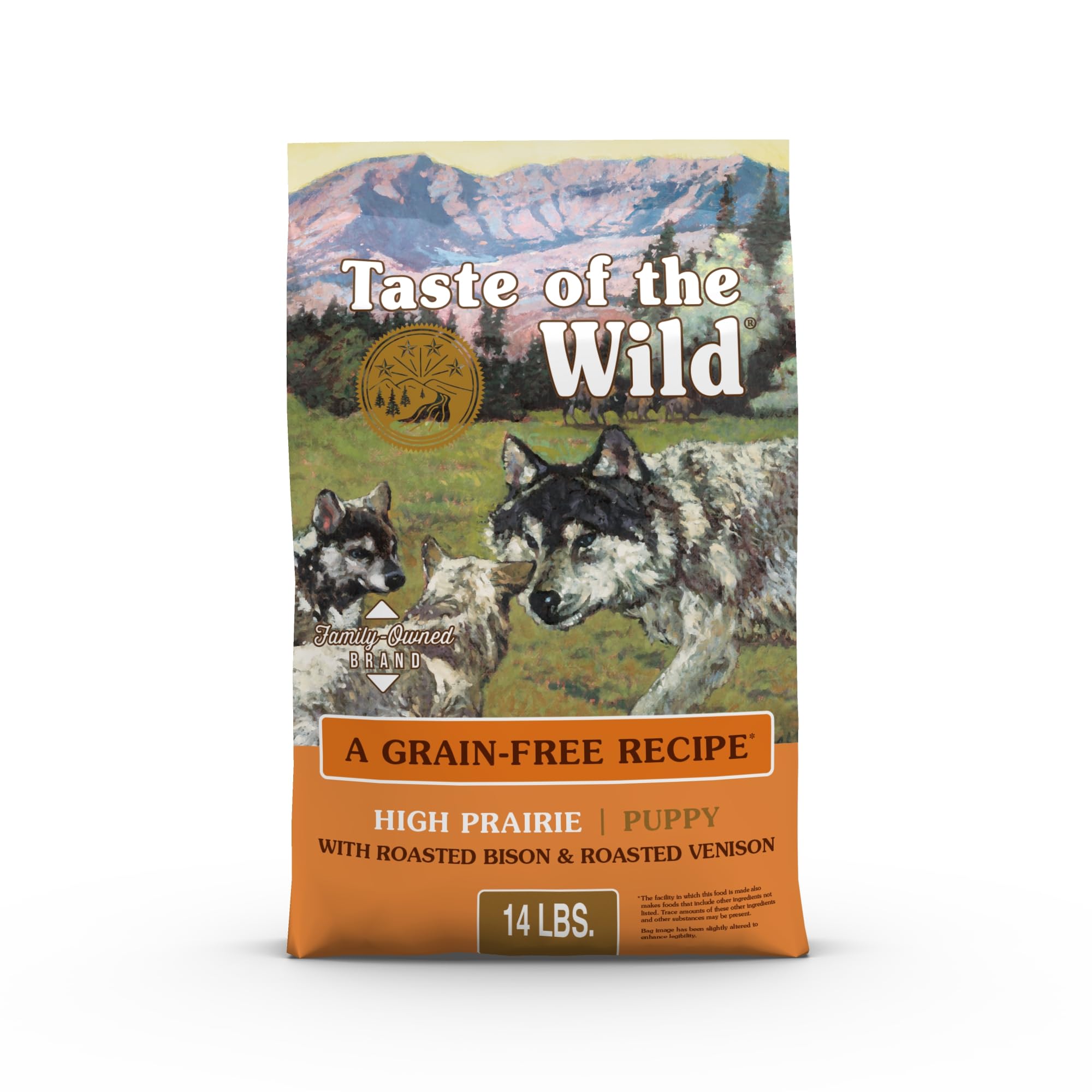
Taste of the Wild High Prairie Puppy brings a unique twist with roasted bison and venison — two novel proteins that are less likely to trigger allergies in sensitive Blue Heeler puppies. Grain-free and packed with 28% protein, this formula supports strong bones, joints, and lean muscles. The inclusion of species-specific K9 Strain probiotics, plus antioxidants and prebiotics, helps maintain digestive health.
Owners of English Bulldogs, German Shepherds, and even Pomeranians have praised this food for keeping their puppies thriving. The small, easy-to-chew kibble is perfect for growing mouths. One long-time customer noted their 13-year-old Pom had clear eyes and good health after a lifetime of this brand. The 14-pound bag is a solid entry point for owners wanting to give their pup a grain-free diet without breaking the bank.
Bottom line: If your Blue Heeler puppy does well on grain-free food and you want to rotate protein sources to keep meals interesting, this is a fantastic choice. Just be aware that grain-free diets are not recommended for all breeds unless there’s a specific need.
Why we love it
- Novel bison and venison proteins – good for allergies
- Probiotic blend supports sensitive stomachs
- Small kibble size for easy eating
- Competitive price point for a premium recipe
Good to know
- Grain-free – some puppies may still need grains
- Not all veterinarians recommend grain-free for large breed puppies
4. Blue Buffalo Basics Puppy Limited Ingredient Turkey & Potato

Blue Buffalo Basics Puppy Turkey & Potato is specifically formulated for puppies with food sensitivities. Limited ingredients mean fewer chances for allergic reactions, and turkey provides a lean, digestible protein source that’s easy on the stomach. DHA supports brain and eye development, while antioxidant-rich LifeSource Bits boost the immune system. This 11-pound bag is ideal for owners who want a simple, natural diet without chicken, corn, wheat, or soy.
Cocker Spaniel owners turned to this food after their vet advised eliminating chicken and grains due to recurring ear infections. They report that even picky eaters gobble it up. Another owner with a chicken-allergic pup saw immediate improvement in stool quality. The price is slightly higher per pound than some competitors, but for a puppy with confirmed allergies, it’s a lifesaver.
Our take: If your Blue Heeler puppy shows signs of food intolerance — itching, ear problems, or soft stools — this limited-ingredient formula is an excellent starting point for an elimination diet. It’s not the cheapest, but it’s targeted relief.
Why we love it
- Single animal protein – great for allergy testing
- No chicken, corn, wheat, or soy
- LifeSource Bits for immune support
- DHA for brain development
Good to know
- Small bag size – 11 pounds doesn’t last long
- Some puppies may need a transitional topper to accept it
5. Blue Buffalo Life Protection Adult Salmon & Brown Rice
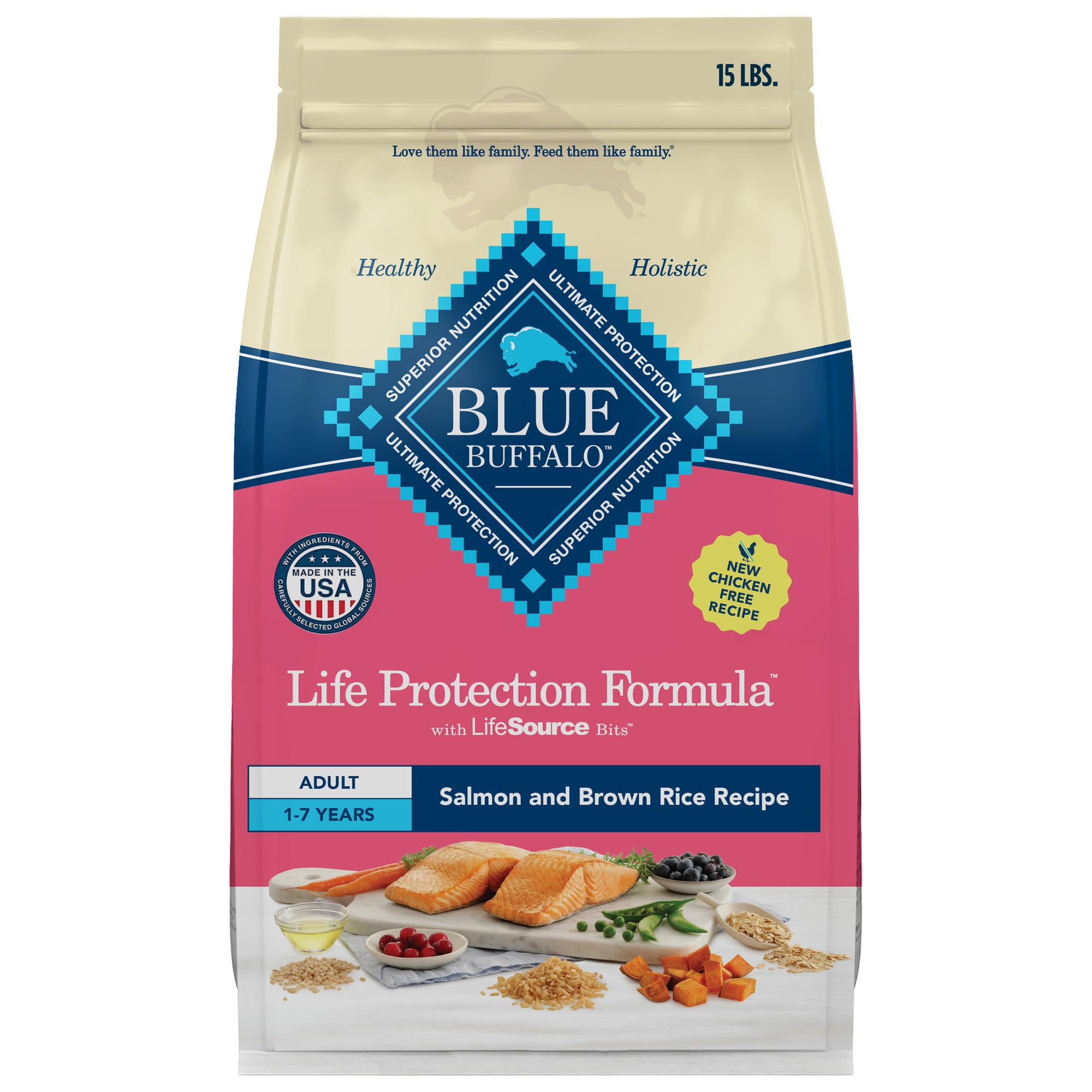
This Blue Buffalo Life Protection Adult Salmon formula is not recommended for growing Blue Heeler puppies. It is formulated for adult dogs and lacks the precise calcium-to-phosphorus ratio and DHA levels required for proper skeletal development. We include it here because some owners may consider it for older puppies transitioning to adult food, but a puppy should stay on a growth formula until at least 12 months of age.
That said, as an adult maintenance diet, this salmon-based recipe is excellent for dogs with chicken allergies. The chicken-free formula has received rave reviews from owners whose dogs suffered from chronic itching and “raccoon eyes” — tear stains caused by chicken allergies. The LifeSource Bits provide antioxidant support, and salmon delivers healthy omega fatty acids for skin and coat.
Bottom line: Hold off on this bag until your Blue Heeler reaches full maturity. For a puppy, stick with the puppy-specific options higher on this list. This adult formula is a solid choice once your dog is fully grown and needs a chicken-free, well-balanced diet.
Why we love it
- Chicken-free – great for adult allergy management
- Salmon first ingredient for skin and coat health
- LifeSource Bits for immune support
Good to know
- Not suitable for puppies – lacks essential growth nutrients
- Some dogs may still need a topper for palatability
Safety & Care Tips
Transition Between Foods Gradually
Puppies have sensitive digestive systems. If you’re switching from one food to another — especially between protein sources or kibble sizes — do it over 7 to 10 days. Start with 25% new food mixed with 75% old, then gradually increase the ratio. A sudden switch can cause diarrhea, vomiting, or refusal to eat. Blue Heeler puppies are particularly prone to stress-related stomach upset, so take it slow.
Check the Ingredient Panel for AAFCO Statement
Ensure the food you choose has a clear statement that it is “formulated to meet the nutritional levels established by the AAFCO Dog Food Nutrient Profiles for growth” (puppy). Avoid foods that only say “all life stages” unless specifically designed for large breed puppies. Also look for a named protein source (e.g., chicken, salmon, bison) rather than generic “meat meal.” This simple check can prevent nutritional imbalances that lead to orthopedic issues later.
FAQ
Is grain-free dog food safe for Blue Heeler puppies?
How much should I feed my Blue Heeler puppy?
Can I mix wet and dry dog food?
Final Thoughts: The Verdict
For most pet parents, the dog food for blue heeler puppy winner is the Hill’s Science Diet Puppy Sensitive Stomach & Skin because it offers veterinarian-recommended nutrition tailored for digestion and development. If you want a high-protein option for an extremely active pup, grab the Purina Pro Plan Sport Development 30/20. And for a budget-friendly grain-free choice with novel proteins, nothing beats the Taste of the Wild High Prairie Puppy.