
Every small breed puppy deserves a nutrition plan tailored to their rapid growth and delicate digestive system. The wrong kibble size or ingredient list can lead to upset tummies, picky eating, or even developmental issues. You are here because you want a precise, vet-friendly foundation for your little one’s first months.
I’m Mo Mahin — the founder and writer behind Furric. My recommendations come from analyzing veterinary nutritional standards, sifting through hundreds of real owner testimonials, and comparing ingredient quality across the most trusted brands in the market.
After carefully evaluating the top contenders, I have curated this complete guide to help you pick the best small dog puppy food for your pup’s unique needs, from sensitive stomachs to breed-specific growth requirements.
How To Choose The Best Small Dog Puppy Food
Selecting the right nutrition for your small breed puppy is not just about brand loyalty — it is about matching their metabolic speed, jaw size, and developing immune system. Small breeds mature faster than large breeds, so they require nutrient-dense formulas with precise calcium and phosphorus levels. A general all-breed puppy food may not provide the right energy density or kibble dimensions for a tiny mouth.
Kibble Size & Texture
Tiny teeth need tiny bites. A kibble that is too large can discourage proper chewing and lead to choking hazards or poor digestion. The best small breed puppy foods feature a small, often star-shaped or rounded kibble that encourages chewing and slows down fast eaters. This simple physical adaptation makes a big difference in mealtime safety and nutrient absorption.
Ingredient Quality & Allergen Profile
Small puppies often have sensitive stomachs. Look for a named meat protein as the first ingredient — turkey, lamb, or beef are common alternatives to chicken, which is a frequent allergen. Avoid fillers like corn, wheat, and soy, and consider formulas with prebiotic fiber and probiotics to support gut health during the transition from mother’s milk to solid food.
DHA & Balanced Minerals
Docosahexaenoic acid (DHA) is an omega-3 fatty acid critical for healthy brain and eye development in the first year of life. Additionally, balanced minerals like calcium and phosphorus support the rapid skeletal growth of small breeds without over-supplementing, which can cause joint issues later. A formula that lists DHA explicitly on the label is a strong indicator of quality.
Quick Comparison
On smaller screens, swipe sideways to see the full table.
| Model | Type | Best For | Key Feature | Amazon |
|---|---|---|---|---|
| Blue Buffalo Basics Turkey & Potato | Limited Ingredient | Sensitive stomachs & chicken-free diets | Real turkey #1 + LifeSource Bits | Amazon |
| Hill’s Science Diet Lamb & Brown Rice | Veterinary Diet | General growth & immune support | DHA + Fish Oil for brain/eye development | Amazon |
| Solid Gold Mighty Mini Beef | Grain-Free | Tiny breeds & all life stages | 90 million probiotics per pound | Amazon |
| Hill’s Science Diet Sensitive Stomach Chicken | Veterinary Diet | Adult small dogs with digestive issues | Prebiotic fiber + Omega-6s for skin | Amazon |
| Royal Canin Small Puppy | Breed-Specific | Puppies 2-10 months (9-22 lbs) | Crunchy kibble + tailored nutrient profile | Amazon |
In-Depth Reviews
1. Blue Buffalo Basics Turkey & Potato Puppy

Blue Buffalo Basics earns the top spot because it solves the most critical challenge for small puppies: ingredient sensitivity. With real turkey as the single animal protein and a complete ban on chicken, beef, corn, wheat, and soy, this formula is a lifeline for pups suffering from ear infections or loose stools. The 4-pound bag keeps the first few weeks manageable without committing to a huge volume.
The inclusion of DHA supports brain and eye development, while exclusive antioxidant-rich LifeSource Bits give the immune system a gentle boost. Owners of Cocker Spaniel and other allergy-prone breeds consistently report a turnaround in digestion and coat quality within days. The kibble size is appropriate for small mouths, though some reviewers noted it could be slightly smaller for toy breeds.
Our final verdict: this is the safest starting point for any puppy with an unknown allergy history. It delivers premium, limited-ingredient nutrition without the premium price tag of boutique brands. If you are dealing with constant tummy troubles, start here.
Why we love it
- Single novel protein (turkey) minimizes allergic reactions
- LifeSource Bits add antioxidant support without artificial additives
- No corn, wheat, soy, or chicken by-products
Good to know
- Kibble size may still be too large for very tiny breeds like Yorkies
- Some owners prefer higher protein content for very active pups
2. Hill’s Science Diet Lamb & Brown Rice Puppy

Hill’s Science Diet is the #1 veterinarian-recommended brand in the US, and this lamb and brown rice formula exemplifies why. It provides a complete nutritional foundation with balanced minerals for growing bones and teeth, DHA from fish oil for cognitive development, and a proven antioxidant blend for immune defense. The kibble size is ideal for small mouths — small, round, and easy to pick up.
Rescue parents and first-time puppy owners report that this food is highly palatable and rarely causes digestive upset. The lamb protein offers a novel alternative for pups sensitive to chicken. Reviewers especially highlight the soft, shiny coat and consistent energy levels after switching. This formula also avoids artificial colors and flavors, keeping the ingredient list clean and transparent.
If you want a food backed by decades of clinical research and a near-universal acceptance by veterinarians, this is the choice. It is a reliable, mid-range option that supports healthy growth without gimmicks. Perfect for owners who prefer a trusted, evidence-based approach to puppy nutrition.
Why we love it
- Veterinarian recommended for balanced growth
- Lamb + brown rice is gentle on sensitive stomachs
- Contains DHA from fish oil for brain development
Good to know
- Not grain-free — includes brown rice as a carbohydrate source
- Some puppies may find lamb flavor less exciting than chicken
3. Solid Gold Mighty Mini Beef & Sweet Potato
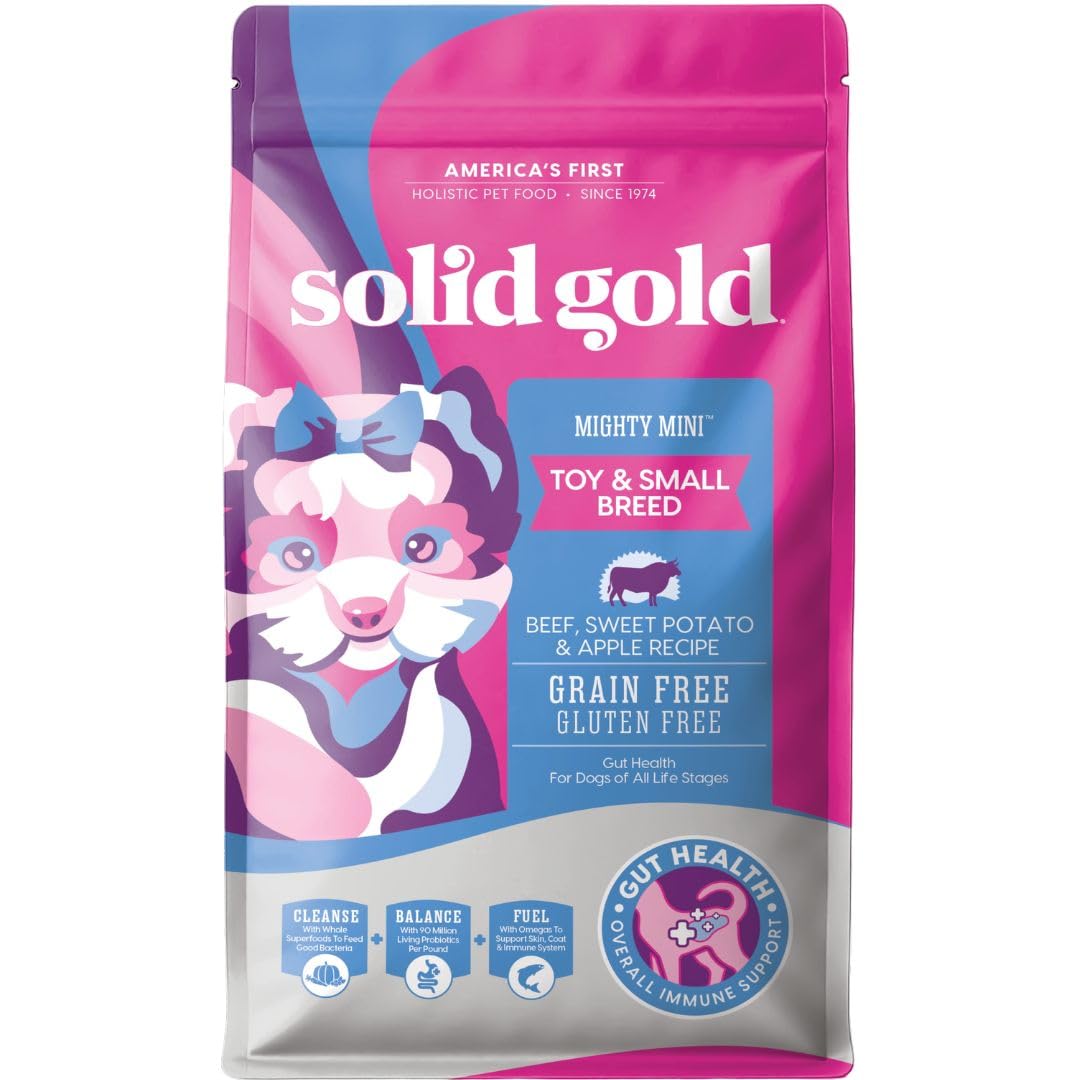
Solid Gold’s Mighty Mini is tailor-made for toy and small breeds with tiny teeth. The kibble is exceptionally small, heart-shaped, and easy for Chihuahuas, Yorkies, and Shih Tzus to chew and swallow. The formula is grain-free and gluten-free, using real beef as the first ingredient to support muscle tone and energy in active small dogs. It also works for all life stages, so it can grow with your puppy.
The standout feature here is the 90 million probiotics per pound, which actively support gut health and nutrient absorption. Owners of senior dogs with missing teeth also use this kibble because of its soft, digestible texture. The beef flavor is a huge hit among picky eaters, and many owners report their dogs finishing every bowl — a rare achievement with finicky small breeds.
As a grain-free formula, it is best suited for puppies without grain sensitivities. The beef content provides a rich protein profile that supports high energy levels. This is our top pick for tiny puppies who need a kibble that fits their mouth and a recipe that fits their digestion.
Why we love it
- Extremely small heart-shaped kibble perfect for toy breeds
- High probiotic count for superior digestive support
- Grain-free and gluten-free with real beef as #1 ingredient
Good to know
- Not specifically formulated for puppies — suitable for all life stages
- Some dogs may need a gradual transition due to high probiotic content
4. Hill’s Science Diet Sensitive Stomach & Skin Small Breed Chicken
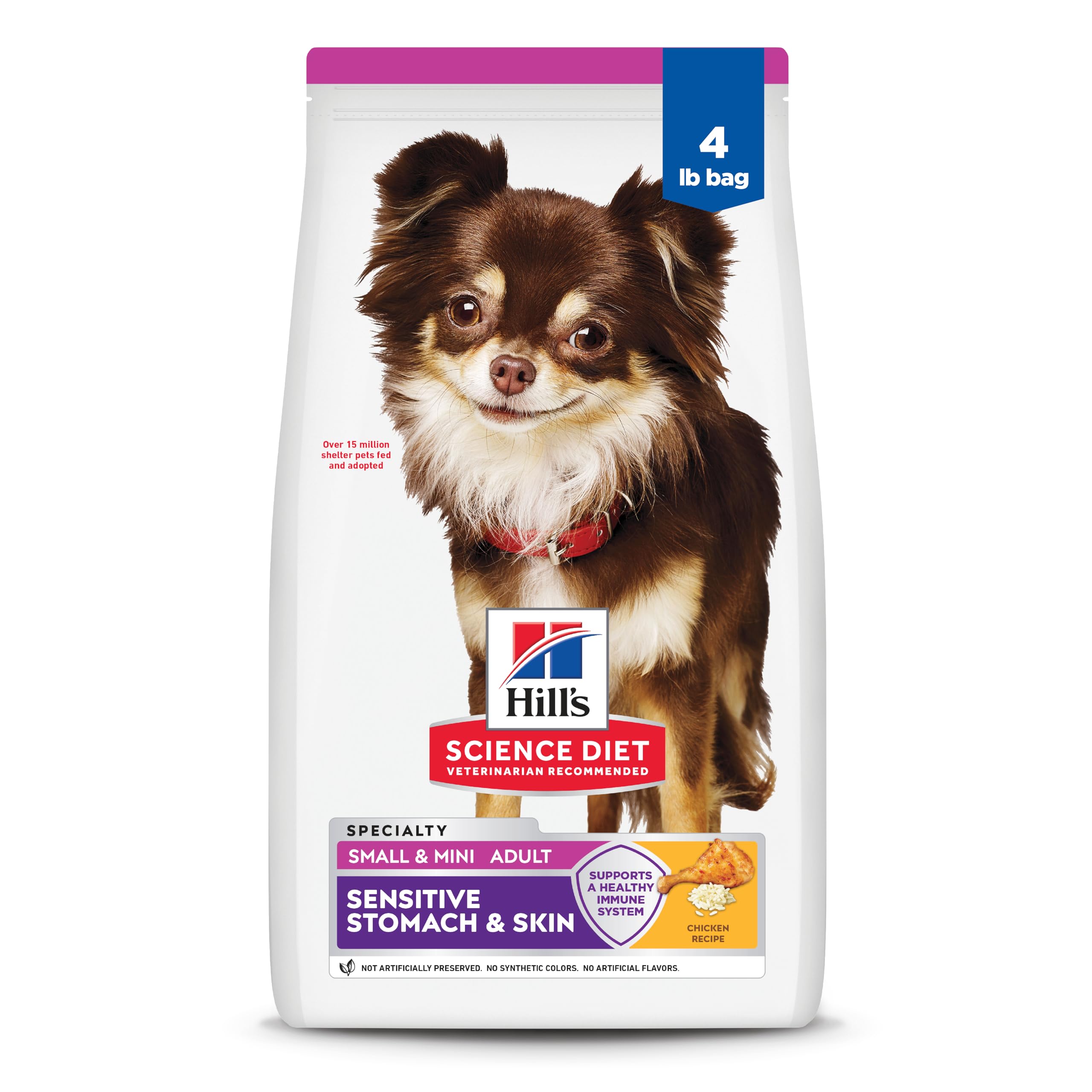
While technically formulated for adult small dogs (ages 1-6), many owners of puppies with chronic digestive or skin issues turn to this Hill’s Science Diet recipe as a transitional food. It features a highly digestible formula with prebiotic fiber that calms the stomach and improves stool quality. The chicken-based recipe is enriched with Vitamin E and Omega-3 & 6 fatty acids to soothe dry, itchy skin and promote a glossy coat.
Owners of rescue puppies with unknown dietary histories frequently praise this food for stopping diarrhea and reducing skin inflammation. The kibble size is designed for small jaws, and the formula avoids artificial fillers. However, because it is an adult formula, it contains slightly lower protein and fat levels than a dedicated puppy food, so it is best used under veterinary guidance for growing pups.
This is the ideal choice if your puppy has specific skin allergies or a notoriously sensitive stomach that fails on standard puppy foods. Pair it with advice from your vet to ensure your puppy still receives adequate DHA and balanced minerals during the growth phase.
Why we love it
- Prebiotic fiber for optimal digestive health
- Omega fatty acids support skin hydration and coat shine
- Clinically proven antioxidant blend for immune support
Good to know
- Formulated for adult maintenance — not a complete puppy growth formula
- Chicken protein may be an allergen for some sensitive pups
5. Royal Canin Size Health Nutrition Small Puppy

Royal Canin Small Puppy is engineered specifically for puppies between 2 and 10 months old with an expected adult weight of 9 to 22 pounds. The crunchy kibble texture is calibrated to encourage chewing, which helps maintain dental health during the teething phase. This formula supports brain development with tailored nutrients and also includes antioxidants to strengthen the immune system during the critical growth window.
Breeders are the biggest champions of this food. Many owners of Bichons, Pomeranians, and Chihuahuas report that their puppies refuse any other kibble after trying Royal Canin. The precise prebiotic and protein blend promotes firm stools and reduces gas. The bag includes feeding guidelines based on exact puppy weight, which takes the guesswork out of portion control.
If you prefer a breed-specific, research-backed approach that eliminates trial and error, Royal Canin delivers consistent results. It is a premium option that justifies its cost through targeted nutrition and a proven track record among breeders and small breed enthusiasts.
Why we love it
- Specifically tailored for small breed puppies 2-10 months
- Crunchy texture supports dental health during teething
- Highly palatable — even picky breeders trust it
Good to know
- Contains chicken, which may not suit all allergy profiles
- Premium price point compared to mid-range alternatives
Safety & Care Tips
Transitioning to New Food
Always introduce any new puppy food gradually over 7 to 10 days. Mix a small amount of the new kibble with the old food, increasing the proportion by roughly 25% every two days. This slow transition minimizes digestive upset and allows your puppy’s microbiome to adapt to the new protein and fiber profile. Watch for loose stools or refusal to eat — if these occur, pause the transition and consult your vet.
Portion Control & Hydration
Small breed puppies have high metabolisms but small stomachs. Follow the feeding guidelines on the bag based on your puppy’s current weight and age, and split the daily portion into three or four meals for the first few months. Always provide fresh, clean water alongside dry kibble. Never free-feed a puppy food, as it can lead to rapid weight gain and skeletal stress.
FAQ
When should I switch from puppy to adult food?
Is grain-free food safe for small breed puppies?
Final Thoughts: The Verdict
For most pet parents, the best small dog puppy food winner is the Blue Buffalo Basics Turkey & Potato Puppy because it balances a limited-ingredient approach with robust immune support and a budget-friendly value. If you want a clinically proven, veterinarian-backed formula for general growth, grab the Hill’s Science Diet Lamb & Brown Rice. And for tiny breed puppies who need a kibble that fits their miniature mouths, nothing beats the Solid Gold Mighty Mini.