
If your cat is scratching constantly, losing fur, or leaving messy stools, the culprit is often a hidden food sensitivity. Standard proteins are too large for a sensitive immune system to ignore, triggering inflammation that shows up on the skin and in the gut. The solution is a protein chopped down into fragments so small the body can’t recognize them as a threat—this is the science behind hydrolyzed diets.
I’m Mo Mahin — the founder and writer behind Furric. I’ve spent years analyzing veterinary nutritional guidelines, studying the differences in protein molecular weights across brands, and poring over thousands of verified owner reports to determine which hydrolyzed formulas deliver the most consistent results without triggering new reactions.
Finding the right food for a cat with a confirmed or suspected allergy requires precision, not guesswork — which is why I built this guide around best hydrolyzed cat food options that are backed by rigorous hydrolyzation methods and low molecular weight protein targets.
How To Choose The Best Hydrolyzed Cat Food
Not every bag labeled “hydrolyzed” is created equal. The core variable is how small the protein fragments are cut. If the fragments are too large, a sensitized cat’s immune system can still recognize them, and you’ll see zero improvement in skin or stool quality.
Protein Molecular Weight — The Make-or-Break Spec
Serious hydrolyzed formulas aim for very low molecular weight peptides—small enough that the immune system generally can’t recognize them as a threat—versus an intact protein, which is much larger. When you see a brand that uses isolated soy or chicken feather hydrolysate, check whether the final molecular weight is described as low enough to bypass detection. Veterinary-exclusive brands like Hill’s and Royal Canin describe their hydrolyzation processing in these terms; generic “hydrolyzed” labels often do not.
Single Carbohydrate Source
A true elimination diet relies on one protein source and one carbohydrate source. If the ingredient list shows potato, rice, tapioca, and pea starch, the cat could react to any one of them. Premium formulas stick to a single carbohydrate—usually corn starch or rice—to eliminate confusion during the trial.
Veterinary Oversight vs. Over-the-Counter
Veterinary-exclusive hydrolyzed diets require a prescription because they are designed for diagnostic elimination trials. Over-the-counter “sensitive skin” or “limited ingredient” foods do not use hydrolyzed proteins and are not suitable for a true food allergy workup. If your vet suspects a food allergy, only a veterinary-exclusive hydrolyzed food is appropriate for the eight- to twelve-week trial period.
Quick Comparison
On smaller screens, swipe sideways to see the full table.
| Model | Category | Best For | Key Spec | Amazon |
|---|---|---|---|---|
| Hill’s Prescription Diet z/d | Veterinary Diet | Reducing scratching & digestive upset | ActivBiome+ prebiotic fiber blend | Amazon |
| Purina Pro Plan Veterinary HA | Veterinary Diet | Urinary and allergy dual management | Struvite & oxalate crystal defense | Amazon |
| Blue Buffalo Natural Veterinary Diet HF | Veterinary Diet | Salmon-based hydrolyzed for novel protein | Hydrolyzed salmon as first ingredient | Amazon |
| Royal Canin Veterinary Diet HP | Veterinary Diet | High hydrolyzation confidence for adults | Hydrolyzed soy protein isolate | Amazon |
In‑Depth Reviews
1. Hill’s Prescription Diet z/d Skin/Food Sensitivities Dry Cat Food

Hill’s z/d is the benchmark in the hydrolyzed category because of its rigorous protein processing. The chicken protein is hydrolyzed to a molecular weight low enough that the immune system cannot flag it, which is why this formula is the first-line recommendation from the majority of US veterinarians for adverse food reactions. The addition of ActivBiome+—a proprietary blend of prebiotic fibers—rapidly activates the gut microbiome, which Hill’s states supports improved stool quality.
The kibble is formulated with a single carbohydrate source (brewer’s rice) to eliminate cross-reactivity from mixed starches. Omega-6 and omega-3 fatty acids support skin barrier repair, which directly reduces the scratching and hair loss that brought you here. This is a dry food, so ensure your cat drinks adequate water, especially if transitioning from a wet diet.
Because this is a veterinary-exclusive diet, you will need a prescription from your veterinarian—which is appropriate given that diagnosing food allergies requires strict dietary control. The 4-pound bag is ideal for a two-week elimination trial before scaling up to the larger size if the cat tolerates it well.
Why we love it
- ActivBiome+ fiber blend rapidly improves stool consistency
- Single carbohydrate source removes cross-reactivity risk
- #1 US vet-recommended therapeutic food brand
Good to know
- Requires a veterinary prescription
- Chicken protein still unreliable for ultra-sensitive cats
- Only sold in 4 lb. and 8.5 lb. sizes
2. Purina Pro Plan Veterinary Diets HA Hydrolyzed Feline Formula

Purina Pro Plan Veterinary HA stands out for its dual-action formulation—it targets both food sensitivities and urinary crystal prevention simultaneously. The St/Ox Defense system promotes a urinary pH that discourages the formation of both struvite and calcium oxalate crystals, a critical feature for cats who develop bladder issues alongside skin allergies.
The hydrolyzed protein in this formula comes primarily from soy, along with hydrolyzed chicken liver and hydrolyzed chicken—so it is not a chicken-free option, and cats with a confirmed chicken sensitivity should discuss this ingredient mix with their vet before starting the trial. It is paired with rice starch as the primary carbohydrate to help maintain elimination diet integrity. The kibble is unflavored, which means picky cats may need a slow transition mixed with their previous food over seven to ten days.
This is also a veterinary-exclusive formula requiring a prescription. The 4-pound bag is priced to compete directly with Hill’s z/d, making it a strong option if your vet prefers Purina’s research or if the cat has a history of urinary issues that you want to manage alongside the food allergy trial.
Why we love it
- Struvite and oxalate crystal prevention built into an allergy food
- Primarily soy-based hydrolyzed protein
- Rice starch as the primary carbohydrate keeps the diet clean
Good to know
- Unflavored; some cats reject the taste initially
- Requires prescription
- 4 lb. bag only—no larger size available
3. Royal Canin Veterinary Diet Feline Hydrolyzed Protein Adult HP
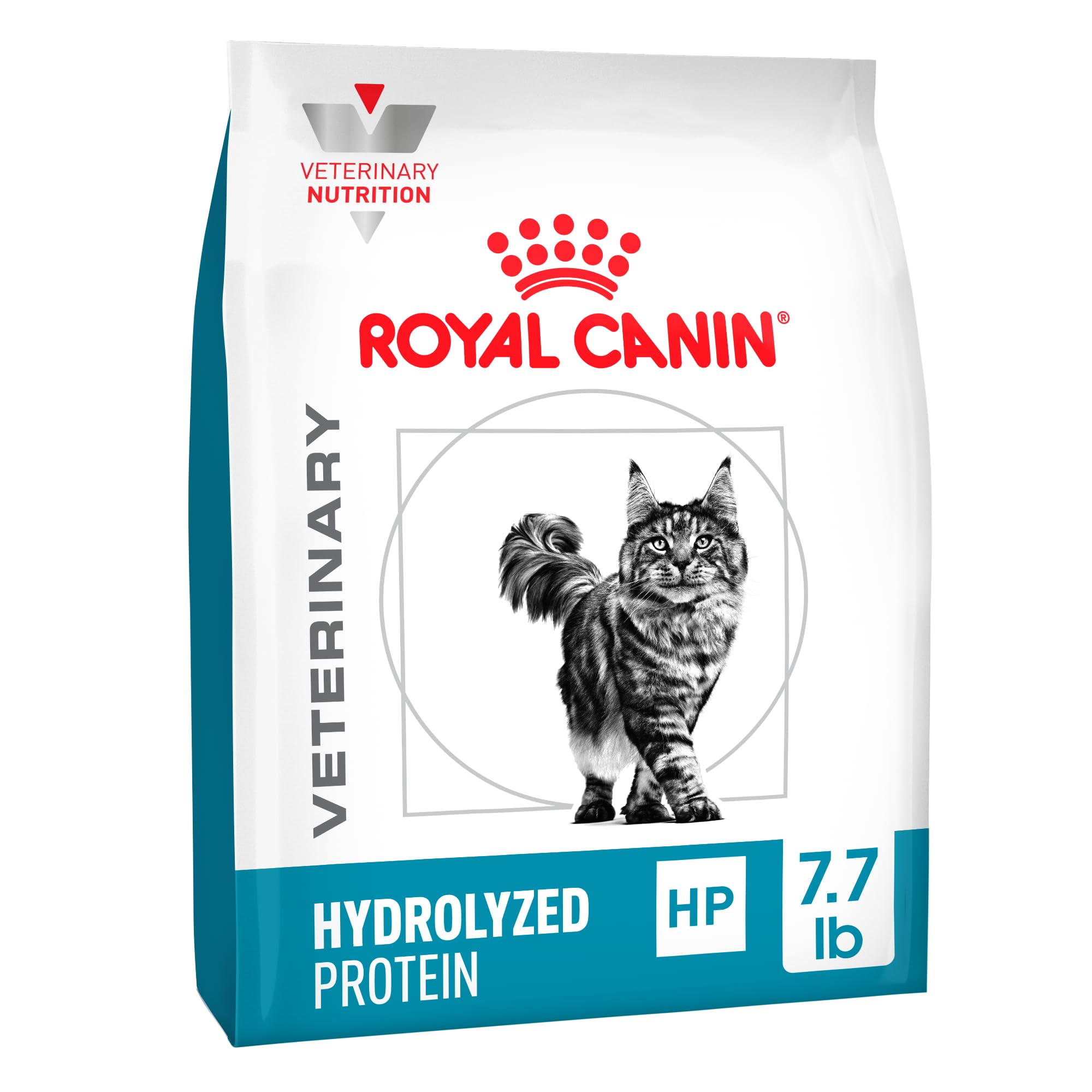
Royal Canin Hydrolyzed Protein HP is built around a hydrolyzed soy protein isolate, processed down to low molecular weight peptides intended to minimize immune recognition. This makes it a common next option for cats who have failed earlier trials with other hydrolyzed brands.
The formula includes dried beet pulp to promote a healthy gut transit time and prebiotic support. The kibble shape is flat and small, designed to encourage chewing rather than gulping, which aids digestion in sensitive stomachs. Essential fatty acids and a tailored zinc-copper balance support skin regeneration in cats already showing alopecia or dandruff.
At 7.7 pounds, this bag offers more volume than the 4-pound alternatives, which is useful for multi-cat households where one cat requires a hydrolyzed diet. Like all veterinary-exclusive hydrolyzed foods, it requires a prescription. The soy base is also a plus for cats with poultry allergies that extend beyond chicken to include duck, turkey, or egg.
Why we love it
- Low molecular weight peptide processing for resistant cases
- 7.7 lb bag reduces reorder frequency
- Soy isolate avoids all poultry-based allergens
Good to know
- Most expensive per-pound option on this list
- Requires prescription
- Flat kibble shape may not suit all cat preferences
4. Blue Buffalo Natural Veterinary Diet HF Hydrolyzed for Food Intolerance
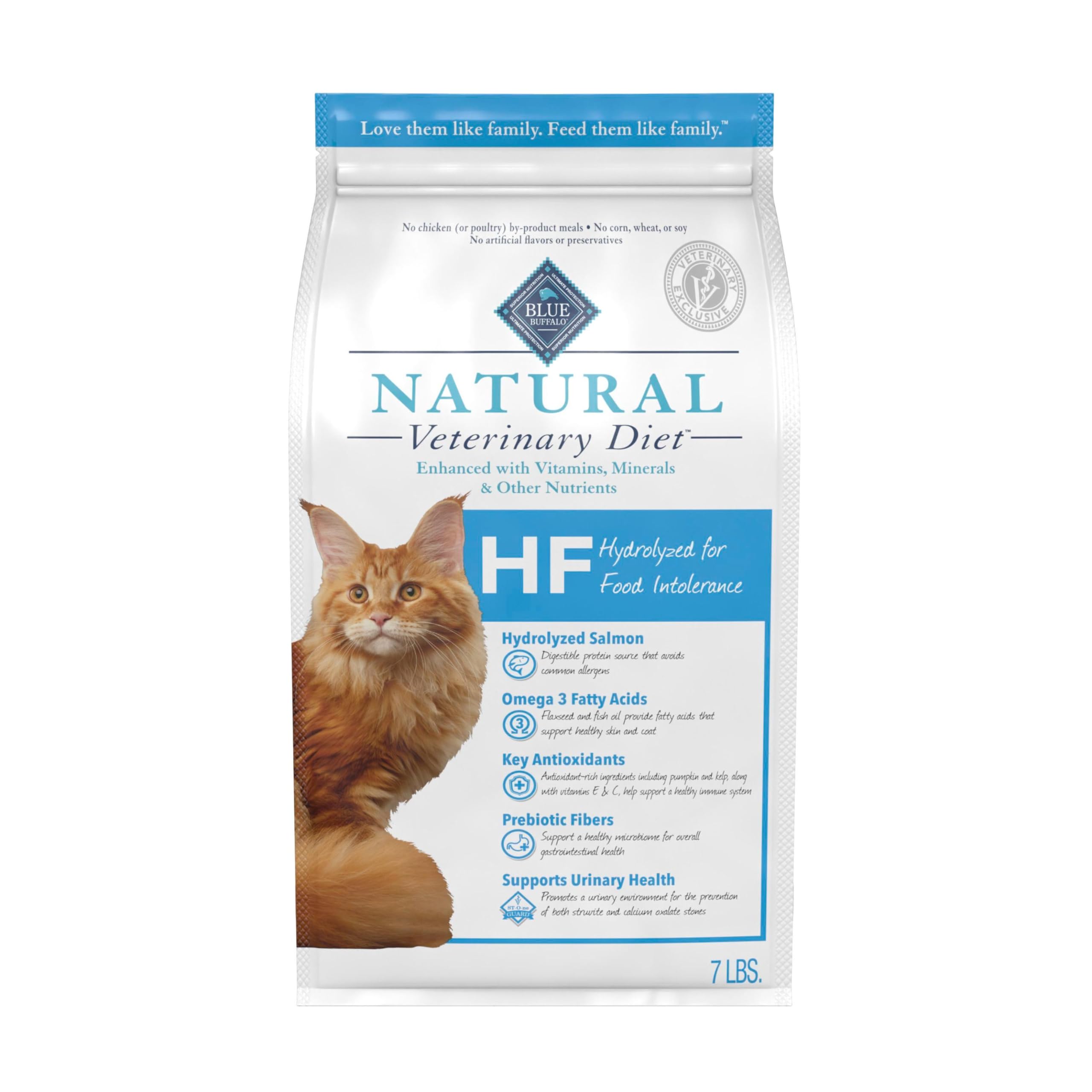
Blue Buffalo HF Hydrolyzed is unique on this list because it uses hydrolyzed salmon as its primary protein source. For cats who have only ever been exposed to chicken and beef, salmon acts as a genuinely novel protein, reducing the likelihood of cross-reactivity even before hydrolysis. The formula is also free of chicken by-product meals, corn, wheat, and soy, which broadens its appeal for multi-allergy cats.
The bag size is 7 pounds, which is generous for the mid-range tier and makes this a practical option for the eight-week elimination trial without needing a second bag. The kibble is coated with a digest-enhancing blend that includes prebiotic fibers and taurine for cardiac health. Owners report that the salmon flavor tends to be more palatable than the unflavored or chicken hydrolyzed options.
Like all veterinary-exclusive foods, this requires a prescription. The hydrolyzation process for fish protein can be slightly less aggressive than for poultry or soy at some facilities, so if your cat does not respond to this food within six weeks, consider switching to a more heavily processed formula like Royal Canin or Hill’s, in consultation with your vet.
Why we love it
- Hydrolyzed salmon acts as a novel protein for most cats
- No corn, wheat, soy, or chicken by-product meals
- 7 lb. bag is a practical size for an elimination trial
Good to know
- Less aggressive hydrolyzation spec than competitors
- Requires prescription
- Salmon may still trigger fish-allergic cats
FAQ
How is hydrolyzed cat food different from limited-ingredient food?
Can I switch from one hydrolyzed brand to another without restarting the trial?
Is a prescription required for all hydrolyzed cat foods?
Final Thoughts: The Verdict
For most pet parents, the best hydrolyzed cat food winner is the Hill’s Prescription Diet z/d because of its proven ActivBiome+ digestive support and strong clinical track record in reducing scratching and stool issues. If you need a dual-purpose food that also prevents urinary crystals, grab the Purina Pro Plan Veterinary HA. And for the most sensitive cats who have already failed other trials, nothing beats the extreme hydrolyzation of the Royal Canin Veterinary Diet HP.