
The wrong parrot cage is a trap disguised as a home — bar spacing that catches toes, wrought iron that rusts within months, and a layout so cramped your bird’s wings touch the walls. A cage isn’t just metal and wire; it’s the single most important safety and enrichment decision you’ll make for a companion that may live decades. The difference between a cage that thrives and one that fails comes down to measurable specs you can’t eyeball.
I’m Mo Mahin — the founder and writer behind Furric. I’ve evaluated dozens of cage designs against veterinary safety standards and aggregated thousands of real parrot owner experiences to separate durable, species-appropriate enclosures from dangerous, short-lived structures.
In this guide, I break down the critical measurements, material integrity checks, and design features that define the absolute best parrot cages for small through medium-large species.
How To Choose The Best Parrot Cages
Selecting a cage for your parrot means matching the enclosure’s geometry, material, and hardware to your bird’s specific species and behavior. A cockatiel and an African grey have completely different needs for bar spacing, internal volume, and perch placement. Here are the non-negotiable factors that separate a secure, enriching home from a cramped, risky one.
Bar Spacing — The Most Common Safety Failure
Bar spacing is the single most overlooked spec by new owners. For small parrots like budgies, lovebirds, and cockatiels, spacing between 0.4 and 0.6 inches prevents head entrapment and escapes. Medium birds like conures and quakers need 0.5 to 0.75 inches. Larger parrots like African greys or mini macaws can tolerate up to 1 inch, but anything wider risks a bird getting its head or wing caught. Always cross-check the manufacturer’s gap size before committing to a cage.
Material and Finish — What Touches Your Bird’s Beak
The cage’s finish is in direct contact with your bird’s beak every day. Wrought iron or powder-coated steel is the standard for durability and non-toxic safety. Avoid cages with unknown paints or glossy coatings that chip under heavy chewing — those chips can be ingested or become sharp edges. Look for hammered or hammer-tone paint that resists rust and oxidation, especially if the cage sits in a humid room or near a window.
Cage Dimensions and Flight Space
Height is not a substitute for width. Your parrot needs horizontal flight space to stretch its wings, not just vertical climbing room. The minimum recommended cage width for a small parrot is 18 inches. For medium birds, aim for 24 inches or more. A cage that is taller than it is wide may look impressive but limits natural wing movement. Internal volume — measured in cubic inches — matters more than the total height including the stand.
Door Security and Feeder Access
Parrots are intelligent escape artists. A cage with simple latch mechanisms that can be jiggled open is a liability. Look for button locks, hook locks, or sliding bolts on both the main door and the feeder doors. Separate feeder doors that allow you to swap bowls without opening the main enclosure reduce stress during cleaning and prevent sudden escapes.
Cleaning System and Tray Design
A slide-out tray and removable grate are essential for long-term hygiene. Cages that require you to dismantle panels to clean the base accumulate bacteria and mold faster. The tray should be smooth plastic or coated metal that wipes clean easily. A seed guard — a raised rim around the base — catches falling hulls and reduces daily mess around the cage perimeter.
Quick Comparison
On smaller screens, swipe sideways to see the full table.
| Model | Category | Best For | Key Spec | Amazon |
|---|---|---|---|---|
| Mcage Large Double Ladders | Premium | Large parrots needing playtop & ladders | Bar spacing 5/8 inch | Amazon |
| Topeakmart X-Large | Premium | Small/medium multi-bird flocks | 37 x 22.5 x 44.5 inch interior | Amazon |
| Yaheetech 63-inch Open Play Top | Premium | Mini macaws & African greys (1-inch bars) | Bar spacing 1 inch | Amazon |
| Prevue Pet Products Select | Premium | Cockatiels & conures, vertical climbing | Bar spacing 0.75 inch | Amazon |
| Yaheetech 63-inch Rolling | Mid-Range | African greys & quakers, budget flight cage | Bar spacing 3/8 inch | Amazon |
| VIVOHOME 54-inch Flight Cage | Mid-Range | Canaries & lovebirds, flat top decoration | Bar spacing 10 mm | Amazon |
| HSM 53-inch Flight Cage | Mid-Range | Conures & Jardine’s parrots | Bar spacing 12.7 mm | Amazon |
| BOINN 82-inch Flight Cage | Mid-Range | Ringnecks & golden parakeets, playtop | Bar spacing 15 mm | Amazon |
| ZENY 61-inch Playtop | Budget | Parakeets & cockatiels, entry-level | Bar spacing 0.5 inch | Amazon |
In‑Depth Reviews
1. Mcage Large Double Ladders Open Play Top Bird Cage

The Mcage cage delivers the most complete enrichment package in this lineup with its double dome ladders, open playtop, and integrated toy hook. The overall height of 65 inches includes a full playtop area with a standing wooden perch, transforming the roof into an active gym rather than just a cage top. The interior cage dimensions of 24 x 22 x 43 inches provide serious horizontal flight space for African greys, cockatoos, and medium parrots.
Four stainless steel cups with swivel solid metal feeder doors prevent food spillage and allow bowl changes without opening the main enclosure. The 5/8-inch bar spacing is ideal for medium to large parrots, preventing head entrapment while remaining chew-resistant. Along with the seed guards and four heavy-duty swivel casters, this cage is built for daily movement and mess containment.
Assembling the playtop and attaching both ladders takes attention to alignment, but the result is a stable, multi-functional enclosure that encourages climbing and foraging. The slide-out metal tray and grate system at both the bottom and top make deep cleaning manageable. Owners of larger birds consistently note the door lock’s security against determined beaks.
Why we love it
- Double ladders and playtop add vertical enrichment without sacrificing interior space
- Four stainless steel cups with lockable feeder doors reduce daily mess
- Heavy-duty casters roll smoothly on hardwood and tile
Good to know
- Assembly requires careful alignment of playtop ladders
- White vein finish shows dirt faster than black hammertone
2. Topeakmart X-Large Parrot Cage

The Topeakmart X-Large cage is a true multi-bird enclosure with interior dimensions of 37 x 22.5 x 44.5 inches and a 5/8-inch bar spacing. It comfortably accommodates 10 to 12 small or medium birds like budgies, lovebirds, and cockatiels. The 4-level play area integrated into the top adds climbing variety that smaller parrots actively use throughout the day.
Every door on this cage features a locking mechanism designed to outsmart escape artists — a critical detail when housing multiple energetic species. The four ball casters glide smoothly across floors, making it practical to shift the cage between sunny spots and cooler corners as needed. Four wooden dowel perches and four feeders arrive in the box, allowing immediate setup without extra purchases.
The assembly instructions rely on minimalist line drawings, which some owners find challenging. However, the structural rigidity after assembly is excellent, with no wobble even when birds are active on the top level. The pull-out tray is wide and deep enough to catch debris from a full flock, cutting daily cleaning time significantly.
Why we love it
- Extra-large interior supports mixed flocks of up to 12 small/medium birds
- Locking mechanisms on all doors prevent escapes
- 4-level play area adds natural climbing variety
Good to know
- Assembly instructions are minimalist line drawings
- Some panels may arrive with minor bends (straightenable)
3. Yaheetech 63-inch Open Play Top Parrot Cage

The Yaheetech 63-inch cage is specifically engineered for larger species like mini macaws and African greys. Its 1-inch bar spacing and thick wire construction provide the strength needed to withstand heavy chewing. The open playtop roof allows you to close the top firmly when not in use or leave it open for supervised interaction, giving you flexibility in how you manage your bird’s out-of-cage time.
The hammertone paint coating offers excellent rust and water resistance, a common failure point on lower-tier cages. Stainless steel feed bowls and two solid wood perches are included, removing the need to upgrade cheap plastic accessories. The button lock on the main front door and hook locks on feeder doors provide redundant security layers that prevent accidental openings.
Four ball-shaped rolling casters move this 49-pound cage smoothly, and the slide-out metal tray paired with the four-sided seed guard keeps daily debris contained. Assembly takes roughly 30 to 45 minutes with clear instructions. Owners of African greys repeatedly highlight the cage’s durability and the fact that it rivals top-brand cages costing significantly more.
Why we love it
- 1-Inch bar spacing and thick wires built for large parrots
- Hammertone paint resists rust better than standard powder coating
- Included stainless steel bowls eliminate upgrade costs
Good to know
- Tall and narrow profile limits horizontal flight for active birds
- Seed guard assembly requires precise snapping into place
4. Prevue Pet Products Wrought Iron Select Bird Cage

Prevue Pet Products, a Chicago-based brand with a history dating back to 1869, brings that legacy of craftsmanship into this Select Bird Cage. The 18 x 18 x 57 inch vertical design with 0.75-inch bar spacing is optimized for cockatiels and green cheek conures that naturally climb rather than require wide horizontal flight. The heavy-duty powder-coated steel frame feels solid even when your bird is actively moving between perches.
A large front door makes it simple to reach inside for cleaning or handling, while the removable bottom grille and pull-out debris tray keep maintenance fast. Owners consistently mention the cage’s sturdiness compared to pet store alternatives at similar price points, and the black hammertone finish resists scratching from daily wear. The rolling stand adds mobility without compromising the structural weight.
Assembly takes about an hour and a half with one person, though having a second pair of hands helps lock the top frame into alignment. Some units have arrived with minor shipping damage, but the metal can be bent back into shape without affecting structural integrity. For owners of a single cockatiel or conure seeking a durable, space-efficient vertical cage, this remains a benchmark design.
Why we love it
- Heavy-duty powder-coated steel provides long-term durability
- Vertical layout fits smaller floors while offering climbing height
- Large front door simplifies daily access and cleaning
Good to know
- Tall and narrow design limits horizontal flight space
- Some units may arrive with minor cosmetic bends from shipping
5. Yaheetech 63-Inch Wrought Iron Rolling Large Bird Cage
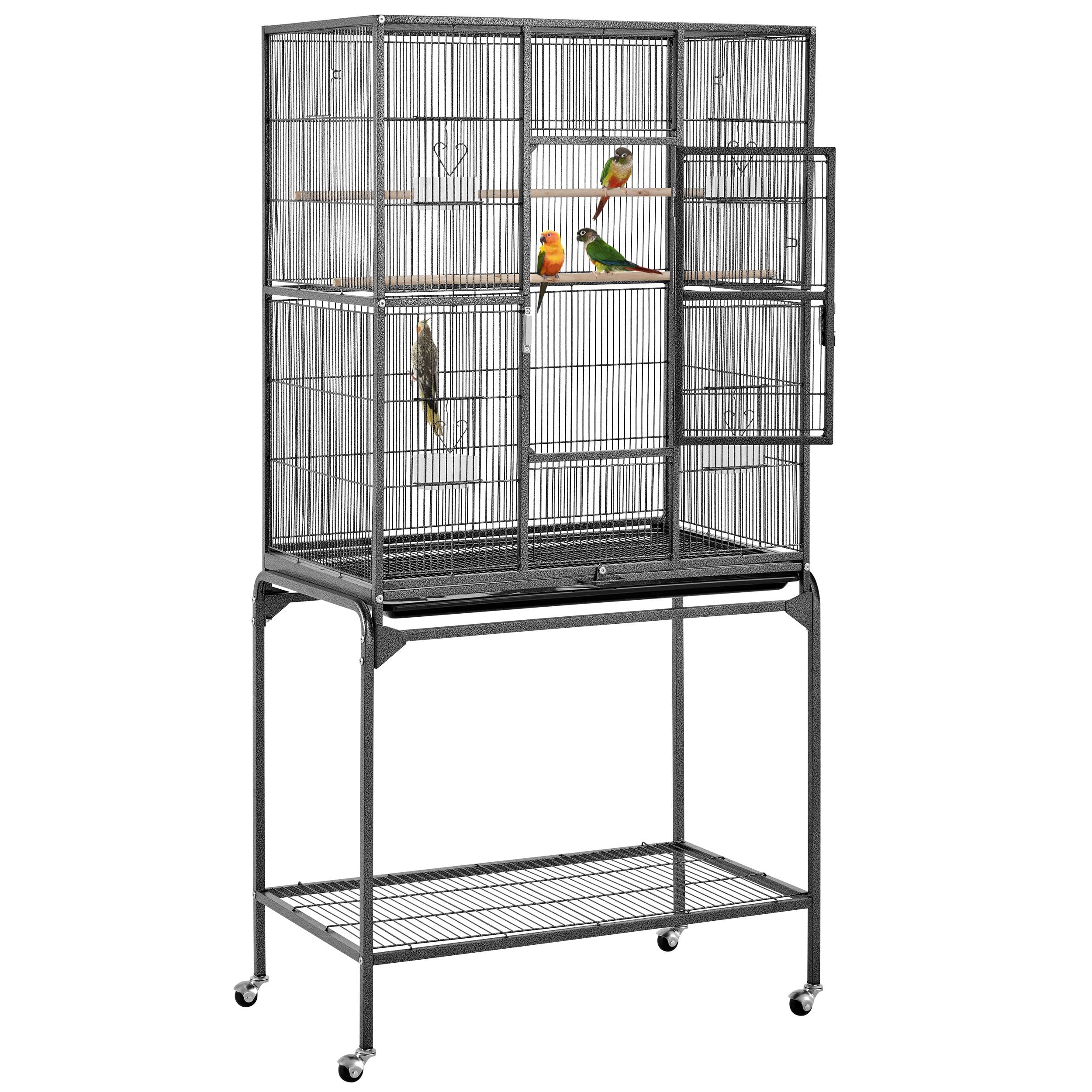
The Yaheetech 63-inch cage balances a generous interior footprint with a realistic budget for owners of African greys, quakers, and small Amazons. The 3/8-inch bar spacing is tighter than most cages in its price bracket, making it a safe choice for smaller parrots like cockatiels as well. The water- and oxidant-resistant wrought iron construction holds up well to daily use and regular cleaning.
A slide-out tray and bottom grate prevent birds from walking on their droppings, while the detachable stand with four 360-degree swivel casters allows you to roll the cage from indoor perches to a covered patio during pleasant weather. The cage arrives with four plastic feeders and two long perches — adequate for immediate setup, though upgrading to stainless steel bowls is recommended for durability.
Customer feedback consistently highlights the cage’s generous internal volume for the cost, with one owner reporting their African grey actively uses the full height for climbing. Assembly with two people takes about 40 minutes, and the allen wrench is included. A few reports mention the locking mechanism on the main door can stick initially, requiring light lubrication to operate smoothly.
Why we love it
- Generous 32 x 18.5 inch footprint for the price tier
- Tight 3/8-inch bar spacing suits both small and medium parrots
- Detachable stand with 360-degree casters offers flexible placement
Good to know
- Plastic feeders should be replaced with stainless steel over time
- Main door lock may need adjustment or lubrication initially
6. VIVOHOME 54 Inch Wrought Iron Large Bird Flight Cage
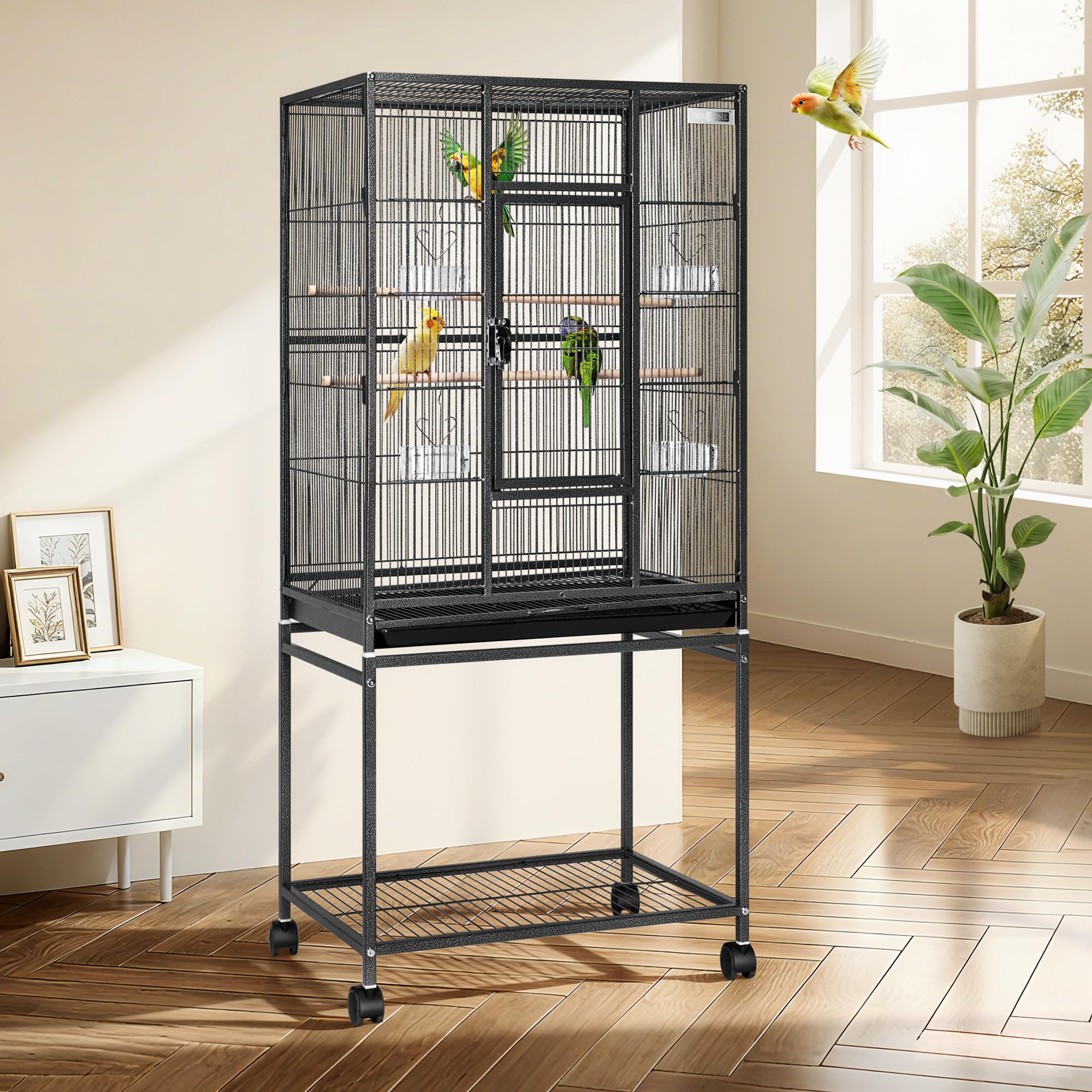
The VIVOHOME 54-inch cage fits well in tighter living spaces while still offering a functional flight area for canaries, lovebirds, and conures. The 10-millimeter bar spacing and alloy steel construction provide a secure environment without the bulk of larger flight cages. The flat-top design gives you flexibility to hang toys or place a small plant on top, blending the cage into your home decor naturally.
Four universal casters lock in place when you want the cage stationary, and the unique latch design prevents clever birds from jiggling the door open. The drawer-style tray slides out smoothly for cleaning, and all shelves can be removed without tools. The package includes four plastic food boxes and two wooden perches, enough to get started.
Assembly is straightforward, with each panel clearly labeled. Owners of lovebirds and parakeets note that the 24.2 x 16.9 inch internal floor space is adequate for a pair of small birds but would feel cramped for single active conures. The plastic food cups are functional but not chew-resistant — upgrading to stainless steel or ceramic cups improves longevity.
Why we love it
- Compact footprint fits apartments and small rooms
- Flat-top design allows hanging toys or decorative placement
- Drawer-style tray and removable shelves simplify deep cleaning
Good to know
- Internal width may feel tight for larger conures
- Included plastic food cups require upgrade for heavy chewers
7. HSM 53 Inch Wrought Iron Large Bird Flight Cage

The HSM 53-inch cage is tailored for mid-sized species like Conures, Jardine’s Parrots, Meyer’s Parrots, and Pionus. Its 12.7-millimeter bar spacing and nontoxic hammer-pattern paint offer a corrosion-resistant finish without compromising visual appeal. The flat-top design gives you the option to hang bird toys or potted plants, increasing the cage’s enrichment potential without extra accessories.
Eight feeder doors — more than most cages in this price range — provide multiple access points for swapping bowls, reducing the need to open the main enclosure. The four swivel casters have locks, and the slide-out tray with a bottom grille prevents birds from contacting droppings directly. The package includes four feeding cups and two interior long wooden perches.
Assembly time averages around 45 minutes for one person. Owners of Meyer’s Parrots specifically note that the cage height allows comfortable climbing without feeling excessively tall. The primary trade-off is that the 25.4 x 16.5 inch footprint is narrower than some other mid-range models, which may limit horizontal flight for highly active birds.
Why we love it
- 8 feeder doors provide excellent bowl access without disturbing the bird
- Nontoxic hammer-pattern paint offers corrosion resistance
- Flat-top design supports hanging enrichment toys
Good to know
- Footprint is narrower than some competitors at 25.4 x 16.5 inches
- Plastic feeding cups may need eventual replacement
8. BOINN 82 Inch Bird Flight Cage

The BOINN 82-inch cage offers the tallest overall height in this lineup at 82.7 inches, making it a dramatic vertical enclosure for ringnecks, golden parakeets, and larger cockatiels. The 15-millimeter bar spacing and premium welded steel construction with non-toxic hammer paint provide durability against beak wear. The integrated playtop with a wooden bird stand creates a natural perching area outside the main cage.
The internal flight dimension of 24 x 22 x 37.4 inches gives birds room to stretch their wings, and the 0.6-inch bar distance prevents head trapping. The pull-out plastic waste tray and seed guard keep the surrounding area tidier than open-bottom cages. Assembly can be completed in around 30 minutes with the included instructions, and the 360-degree swivel casters allow smooth repositioning across rooms.
Owners of larger ringnecks appreciate the extra vertical space for climbing, though the cage’s narrow width means it works best for birds that prefer height over horizontal flight. The plastic waste tray is easy to clean but can warp if exposed to high heat during washing. The locking mechanisms on feeder doors are secure, but the main door lock is a hook design that some clever parrots may learn to manipulate over time.
Why we love it
- Towering 82.7-inch height provides extensive vertical climbing space
- Playtop with wooden stand adds out-of-cage perching variety
- Quick 30-minute assembly for a cage this large
Good to know
- Narrow width limits horizontal flight for active birds
- Main door hook lock may be outsmarted by intelligent parrots
9. ZENY 61-inch Playtop Parrot Bird Cage

The ZENY 61-inch cage serves as a functional entry-level enclosure for parakeets, cockatiels, quakers, and conures. The 0.5-inch bar spacing is appropriate for small to medium birds, and the wrought iron frame with non-toxic powder-coated finish resists rust during the first year of use. The internal cage size of 18 x 17.9 x 32.9 inches provides enough room for a single bird or a bonded pair of smaller species.
The playtop balcony and middle pipe offer enrichment zones within the cage, while the 360-degree swivel casters allow you to move it between rooms without strain. Two stainless steel bowls, a long wooden perch, and a lower removable sliding grid for cleaning are all included. The two feeder doors with easy feeding locks make bowl swaps safe and reduce escape risk.
Assembly is manageable with two people, though the instructions are sparse. Some owners report that the powder coating can chip if the cage is bumped against hard surfaces, so careful placement matters. The price makes it a solid starting point for first-time parrot owners, but the cage lacks the heavier gauge wire and reinforced welds found in premium options, meaning it’s best suited for lighter chewers.
Why we love it
- Entry-level price with appropriate 0.5-inch bar spacing for small birds
- Included stainless steel bowls and wooden perch reduce initial upgrades
- Playtop balcony adds enrichment without extra accessories
Good to know
- Powder coating may chip if cage contacts hard surfaces
- Internal space is limited for larger or multiple birds
FAQ
What bar spacing is safest for parrot cages?
How do I clean a large parrot cage without stressing my bird?
Can I use a parrot cage for multiple birds of different species?
Is powder-coated wrought iron safe for parrots?
How often should I replace the wooden perches in a parrot cage?
Final Thoughts: The Verdict
For most parrot owners seeking the absolute best value with enrichment, the best parrot cages winner is the Mcage Large Double Ladders Open Play Top Bird Cage because it combines generous flight space, durable stainless steel hardware, and a playtop design that keeps active medium-to-large parrots engaged. If you need a spacious multi-bird haven with extra security, grab the Topeakmart X-Large Parrot Cage. And for budget-conscious owners of a single cockatiel or parakeet, nothing beats the value of the Yaheetech 63-Inch Rolling Cage.