
A Toy Poodle puppy’s tiny mouth and delicate digestive system demand more than just “puppy food” off the shelf. The kibble size, protein source, and calcium-to-phosphorus ratio need precise calibration to support a frame that finishes at under six pounds without triggering hypoglycemia or loose stools. Getting it wrong in the first six months can set back bone development and coat quality for the rest of their life.
I’m Mo Mahin — the founder and writer behind Furric. After analyzing nutritional profiles, veterinary safety protocols, and aggregated feeding trials from breeders of toy and teacup varieties, I’ve built this guide around the one truth that matters: a Toy Poodle puppy’s food must be small, dense, and species-appropriate.
This guide evaluates five formulas specifically sized for toy-breed mouths and metabolisms to help you select the dog food for toy poodle puppy that matches their unique growth demands.
How To Choose The Best Dog Food For Toy Poodle Puppy
A Toy Poodle puppy’s growth window is short and intense. Choosing the wrong formula can mean missed developmental milestones, chronic digestive upset, or even long-term joint strain. Here are the four specifications that separate an appropriate food from a dangerous gamble.
Kibble size and shape
A Toy Poodle puppy’s mouth is roughly the size of a walnut at eight weeks old. Kibble that exceeds 8 millimeters in diameter forces them to gulp without chewing, increasing the risk of esophageal blockages and vomiting. Look for kibble labeled “extra-small” or “toy breed,” usually shaped as tiny rounds or stars that fit between their incisors. The Solid Gold Mighty Mini, for example, uses a heart-shaped piece that is approximately 6 mm across, making it nearly impossible to swallow whole.
Calorie density and meal frequency
Toy breeds have a high metabolic rate and a tiny stomach capacity. A food that is too low in caloric density forces you to overfeed volume to meet energy needs, which can cause bloat or loose stools. Aim for 350 to 400 kilocalories per cup, and always split the daily portion into three or four meals until your puppy reaches six months old. This schedule stabilizes blood glucose and reduces the risk of hypoglycemia, a common danger in toy-breed puppies.
Calcium and phosphorus ratio
The skeletal structure of a Toy Poodle finishes growing early—often by eight months. A calcium level above 1.5 percent dry matter can accelerate growth plates prematurely, leading to angular limb deformities and painful joints later in life. The ideal ratio is approximately 1.2:1 calcium to phosphorus, with calcium staying between 0.8 and 1.3 percent on a dry matter basis. Most puppy formulas designed for large breeds are far too high in calcium for a Toy Poodle.
DHA and omega-3 fatty acids
DHA (docosahexaenoic acid) is the primary structural fat in the brain and retina. Toy Poodle puppies that receive adequate DHA during the first year consistently score higher on trainability tests and exhibit fewer anxiety-related behaviors. Look for a guaranteed minimum of 0.1 percent DHA in the guaranteed analysis. Formulas that list fish meal or salmon oil as the first fat source generally deliver the most bioavailable DHA.
Quick Comparison
On smaller screens, swipe sideways to see the full table.
| Model | Category | Best For | Key Spec | Amazon |
|---|---|---|---|---|
| Royal Canin Small Puppy | Premium | Breed-specific brain development | Kibble size 8mm; DHA guaranteed | Amazon |
| Wellness CORE Small Breed Puppy | Mid-Range | High-protein grain-free feeding | 53% protein ingredients; 4 lb bag | Amazon |
| Hill’s Science Diet Puppy Sensitive Stomach | Mid-Range | Delicate digestion and skin health | Prebiotic fiber; Omega-3 & 6 | Amazon |
| NutriSource Small/Medium Puppy | Mid-Range | Wholesome grain-inclusive recipe | Prebiotics + probiotics; L-Carnitine | Amazon |
| Solid Gold Toy & Small Breed | Value | All-life-stages, tiny kibble shape | Heart-shaped 6mm kibble; 90M probiotics | Amazon |
In‑Depth Reviews
1. Royal Canin Size Health Nutrition Small Puppy

Royal Canin’s small puppy formula is built on 50 years of breed-size research, not marketing fluff. The 8-millimeter kibble diameter is specifically calibrated for a Toy Poodle puppy’s bite radius, forcing proper mastication rather than gulping. Every bag includes guaranteed DHA levels from fish oil, supporting the neural development that makes toy breeds quicker to house-train and more responsive to early commands.
The protein profile uses chicken meal at a moderate level—around 27 percent crude protein—which avoids the excessive growth rates that can strain fragile toy-breed joints while still providing the amino acids needed for muscle tone. Prebiotics (MOS and FOS) and highly digestible proteins keep stool firm, a major advantage for breeders transitioning puppies from mother’s milk. The manufacturer also recommends this formula from age two months to ten months, covering the entire rapid-growth window of a Toy Poodle.
One trade-off: the formula contains chicken, so puppies with confirmed poultry allergies will need an alternative. The kibble is also slightly harder than some grain-free options, which can be an issue for teething puppies under 12 weeks old. A five-minute soak in warm water softens the pieces without leaching nutrients.
Why we love it
- Kibble size (8 mm) is ideal for a Toy Poodle puppy’s mouth
- Guaranteed DHA for brain and vision development
- Prebiotics produce consistent, firm stools
- Backed by decades of breed-size formulation data
Good to know
- Contains chicken, not suitable for all puppies with protein allergies
- Harder kibble may need soaking for very young teething pups
2. Hill’s Science Diet Puppy Sensitive Stomach & Skin
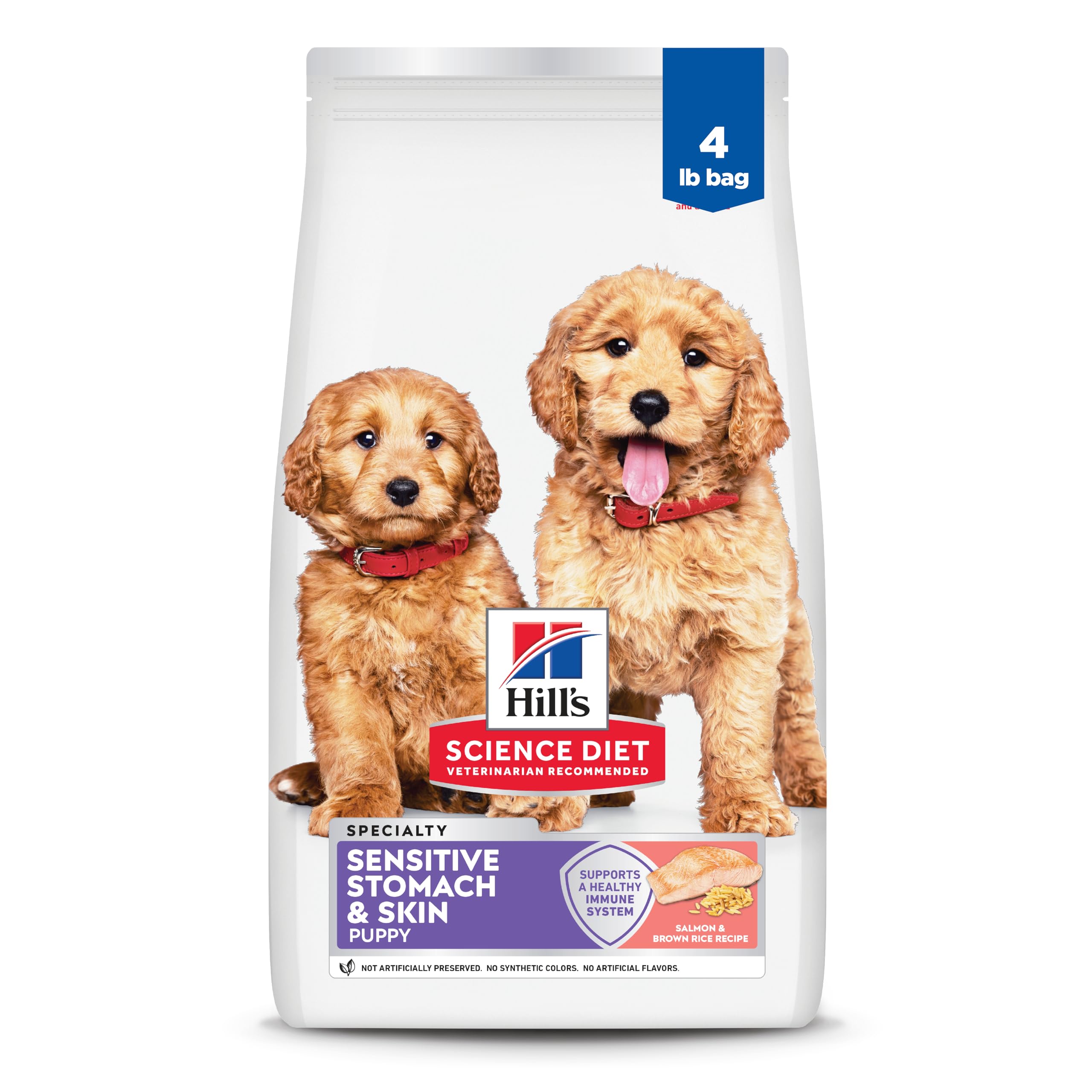
Hill’s Science Diet Puppy formula with salmon and brown rice addresses the two most common complaints from Toy Poodle owners: loose stools and dry, flaky skin. The highly digestible protein source (salmon) combined with prebiotic fiber creates a stool consistency that holds shape even during the stress of rehoming, vaccinations, or teething. The Omega-3 and Omega-6 fatty acid profile—derived from fish oil and flaxseed—directly supports the dense, curly coat that defines the breed standard.
This formula is not grain-free, and for Toy Poodles that is actually a feature. Grain-inclusive recipes provide a slower, more sustained energy release, reducing the blood sugar spikes and crashes that can trigger hypoglycemia in toy-breed puppies under 16 weeks. The calcium level sits around 0.9 percent, safely below the 1.3 percent ceiling recommended for toy breeds. Hill’s also fortifies with clinically proven antioxidant levels (Vitamin C and E) that bolster the immature immune system during the critical vaccination window.
The kibble size is slightly larger than the Royal Canin—closer to 10 mm—which can be challenging for Toy Poodle puppies under 10 weeks old. Additionally, the fish-based formula may leave a noticeable odor in the bowl and on breath, which some picky eaters reject during the transition phase.
Why we love it
- Salmon protein is gentle on sensitive stomachs and supports coat health
- Grain-inclusive formula stabilizes blood sugar in toy breeds
- Clinically proven antioxidant levels for immune support
- Calcium content is safely low for toy-breed bone development
Good to know
- Kibble is approx. 10 mm, may be too large for very young puppies
- Fish odor can cause transition refusal in picky eaters
3. Wellness CORE Small Breed Puppy
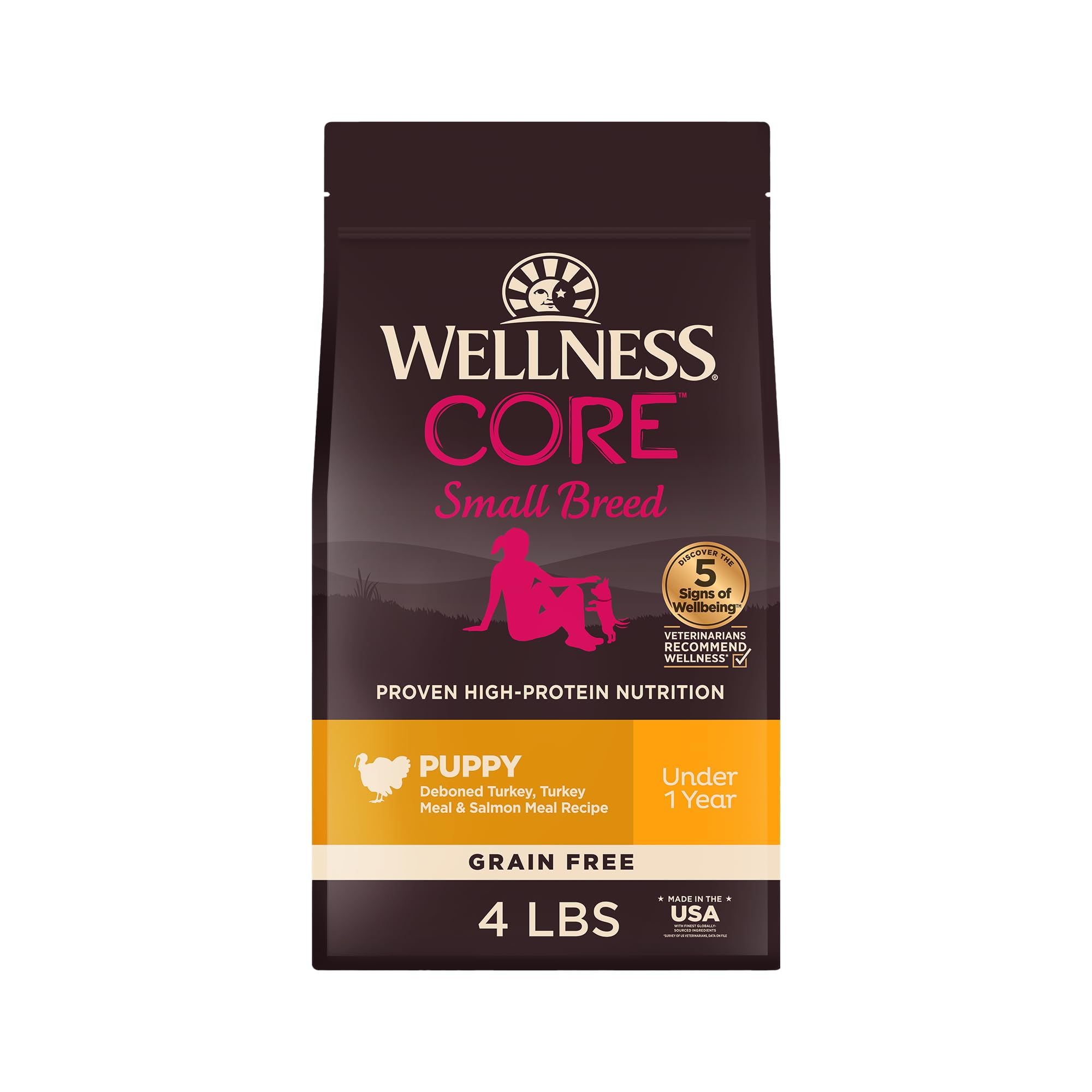
Wellness CORE Small Breed Puppy takes a high-protein, grain-free approach that appeals to owners who prefer a meat-centric ancestral diet for their Toy Poodle. The turkey and salmon recipe delivers 53 percent protein ingredients, which supports lean muscle mass without encouraging the rapid weight gain that stresses toy-breed joints. The inclusion of guaranteed DHA and calcium-phosphorus ratios appropriate for bone growth makes this a strong developmental choice for puppies with normal digestive tolerance.
The kibble size is notably smaller than standard small-breed formulas, averaging around 7 mm, which allows a Toy Poodle puppy to pick up individual pieces without pawing at the bowl. Spinach, blueberries, and flaxseed provide a natural antioxidant profile that goes beyond synthetic vitamin mixes. The added probiotics (specifically dried B. coagulans) help maintain microbial diversity during dietary transitions, a common source of soft stool in the first week of feeding.
Grain-free diets have come under scrutiny regarding a potential link to dilated cardiomyopathy in some breeds. While Toy Poodles are not a predisposed breed, owners should monitor yearly cardiac auscultations if feeding a grain-free formula long-term. A small subset of puppies also experiences a transient increase in urination frequency when starting this food, likely due to the high protein load.
Why we love it
- Small 7 mm kibble is easy for toy-breed mouths to manipulate
- 53% protein content supports lean muscle without excess fat
- Whole-food antioxidants from spinach and blueberries
- Probiotic strain B. coagulans aids smooth dietary transitions
Good to know
- Grain-free; a small subset of puppies may have increased urination
- Not recommended without periodic cardiac monitoring per recent FDA guidance
4. NutriSource Puppy Food for Small and Medium Breeds

NutriSource’s puppy formula is a standout for owners who want whole grains without sacrificing digestibility. Chicken meal as the first ingredient is paired with brown rice, oatmeal, and barley—a low-glycemic carbohydrate blend that maintains steady blood glucose levels, which is critical for preventing hypoglycemic episodes in active Toy Poodle puppies. The inclusion of organic selenium and highly absorbable trace minerals sets this formula apart from most budget-competitive brands.
The round kibble shape measures about 8 to 9 mm, fitting comfortably in the range suitable for Toy Poodle puppies who are past the initial teething phase (12 weeks and older). L-Carnitine and taurine are supplemented at levels that support cardiovascular function, an important safety margin for toy breeds that can develop mitral valve issues as they age. Prebiotics (inulin from chicory root) and probiotics work together to reduce the loose-stool issues that often accompany protein transitions.
The bag size options limit variety for owners who want to stock up in bulk; 4-pound and 12-pound bags are the primary offerings. The chicken flavor, while palatable to most dogs, may not appeal to Toy Poodle puppies who were weaned on fish or lamb-based diets. A slow seven-day transition is strongly recommended to avoid gastric upset.
Why we love it
- Low-glycemic grains (brown rice, oatmeal, barley) stabilize blood sugar
- L-Carnitine and taurine for long-term cardiac health
- Organic selenium provides superior mineral bioavailability
- Round kibble size (8-9 mm) suits puppies past 12 weeks
Good to know
- Limited to 4 lb and 12 lb bag sizes
- Chicken-based formula may cause refusal in pups weaned on alternative proteins
5. Solid Gold Toy & Small Breed Dry Dog Food
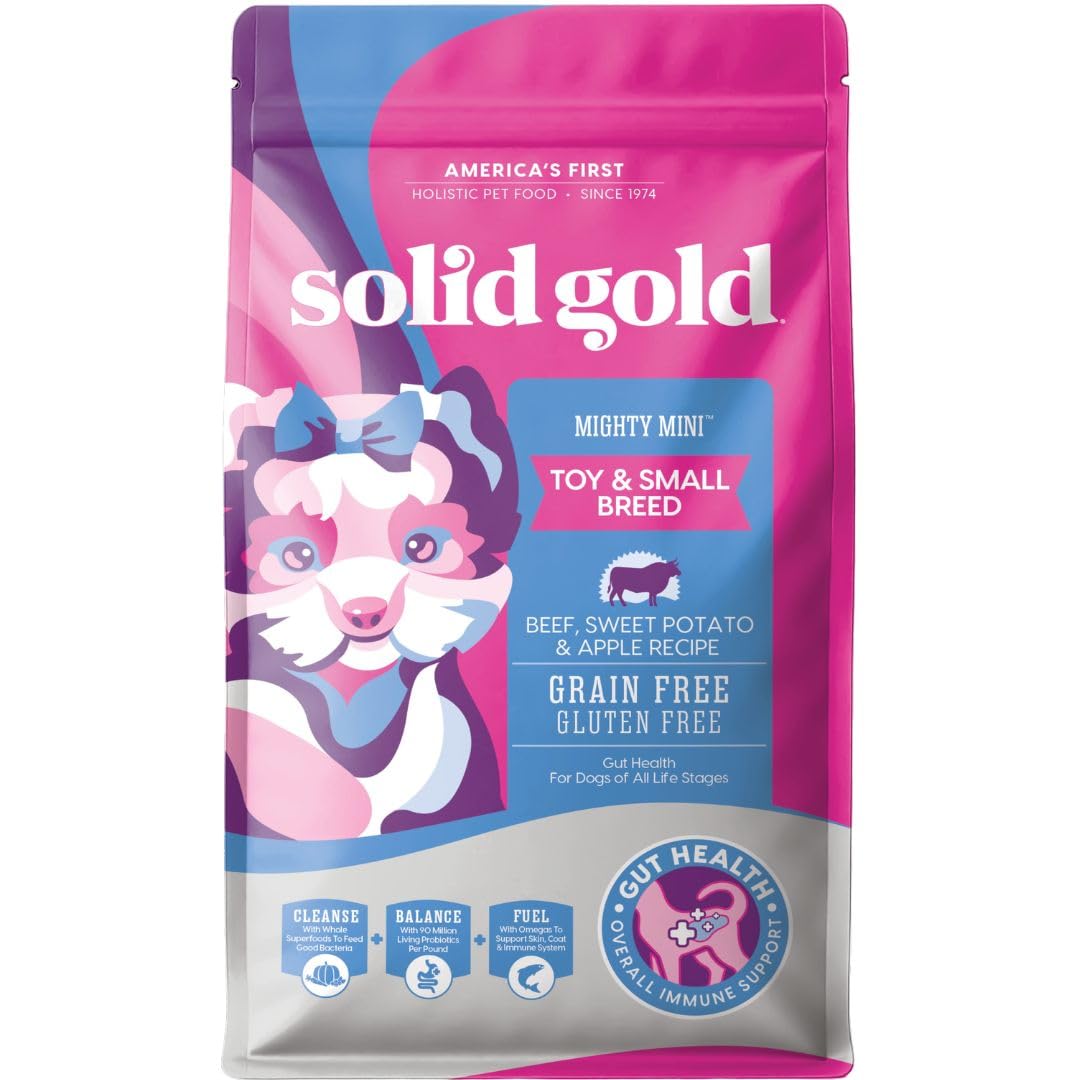
Solid Gold Mighty Mini is the only formula in this guide that is specifically marketed for both toy and small breeds across all life stages, which makes it a flexible option for multi-dog households. The heart-shaped kibble measures just 6 mm, making it the smallest piece in this group and the safest choice for a Toy Poodle puppy still learning to chew. Real beef is the first ingredient, delivering a novel protein source that can work well for puppies who have developed sensitivities to chicken or turkey.
With 90 million probiotics per pound, this formula ranks highest in digestive support among the value-tier options. The inclusion of omega fatty acids from flaxseed and fish oil promotes the glossy coat that Toy Poodle owners prize, and the gluten-free, corn-free ingredient deck reduces the likelihood of skin flare-ups in allergic individuals. For owners on a tighter budget, the 4-pound bag provides a higher feeding value per kilocalorie than any other product on this list.
Because this is labeled as an all-life-stages formula, the nutrient density is slightly higher in fat than some dedicated puppy recipes—around 18 percent crude fat. Puppies prone to rapid weight gain may need strict portion control. Additionally, the beef flavor has a strong aroma that some Toy Poodle puppies initially reject when transitioning from their breeder’s food.
Why we love it
- Smallest kibble (6 mm heart-shaped) minimizes choking risk
- 90M probiotics per pound—strongest digestive support in its price tier
- Novel protein (beef) helps avoid chicken-related sensitivities
- All-life-stages formula works for multi-dog households
Good to know
- Higher fat content (18%) may require strict portions for less-active pups
- Beef aroma can cause transition refusal from chicken-weaned puppies
FAQ
Is grain-free food safe for my Toy Poodle puppy?
How do I check if the kibble is too large for my Toy Poodle puppy?
Final Thoughts: The Verdict
For most pet parents, the dog food for toy poodle puppy winner is the Royal Canin Size Health Nutrition Small Puppy because its 8 mm kibble diameter and guaranteed DHA levels are precisely calibrated for a toy-breed’s jaw structure and cognitive development. If you want a grain-inclusive recipe with cardiac-supporting taurine, grab the NutriSource Puppy Food for Small and Medium Breeds. And for a budget-friendly option with the smallest kibble shape that reduces choking risk, nothing beats the Solid Gold Toy & Small Breed Dry Dog Food.