
When your cat’s kidneys start to struggle, potassium levels often drop first—leaving them lethargic, weak, and at risk for worsening renal function. A targeted potassium supplement for cats can help restore electrolyte balance, support muscle strength, and protect kidney health, but the market is flooded with formulas that differ wildly in form, dosage, and bioavailability.
I’m Mo Mahin — the founder and writer behind Furric. Over the years, I’ve evaluated dozens of veterinary-recommended supplements, cross-referencing manufacturer claims against published feline nephrology data and thousands of aggregated owner reports to separate clinically meaningful formulas from expensive placebos.
This guide breaks down the five top-rated options based on ingredient integrity, palatability, and real-world efficacy, so you can confidently choose the right potassium supplement for cats without guesswork or wasted money.
How To Choose The Best Potassium Supplement For Cats
Not all potassium supplements deliver the same results. The form of potassium, the delivery method, and the presence of synergistic nutrients like B-complex vitamins or cranberry extract all play a role in how effectively the supplement works for your cat.
Potassium Gluconate vs. Potassium Citrate
Potassium gluconate is the most bioavailable and stomach-friendly form for cats, especially those with kidney disease. Potassium citrate is often used in urinary health formulas because it helps alkalinize urine, but it can be less gentle on sensitive stomachs. If your primary goal is renal support without altering urine pH, gluconate is the safer bet.
Palatability and Administration Form
Cats are notoriously picky, so the supplement’s taste and texture matter. Unflavored powders can be hidden in wet food, while liver or bacon-flavored liquids may be easier to syringe-feed. Granules mix best with pâté-style foods. If your cat refuses food with additives, an unflavored powder with a small dose size gives you the best chance of success.
Dosage Precision and Scoop Size
Look for a product that provides a clear measurement per serving, ideally with an included scoop. The serving size should allow you to adjust based on your cat’s weight and veterinary guidance. Products offering 60+ doses per container are more practical for daily long-term use than those requiring frequent reordering.
Quick Comparison
On smaller screens, swipe sideways to see the full table.
| Model | Category | Best For | Key Spec | Amazon |
|---|---|---|---|---|
| Vetoquinol Renal K+ | Premium | Kidney disease & low potassium levels | 3.5 oz powder, potassium gluconate | Amazon |
| Rx Vitamins Amino B+K | Mid-Range | Kidney + immune + energy support | 4 oz liquid, B-complex + taurine + lysine | Amazon |
| Pet Health Solutions K-Plus | Premium | Urinary balance & kidney function | 300 g granules, potassium citrate + cranberry | Amazon |
| Pala-Tech Potassium Citrate Plus | Mid-Range | UTI prevention & bladder health | 300 gm granules, potassium citrate + cranberry | Amazon |
| Rx Vitamins Feline Minerals | Value | General mineral & immune support | 8 oz powder, potassium + calcium + magnesium | Amazon |
In‑Depth Reviews
1. Vetoquinol Renal K+ (Potassium Gluconate) Powder

Vetoquinol Renal K+ uses potassium gluconate, the gold-standard form for correcting hypokalemia in cats with chronic kidney disease. The unflavored powder is maple-scented to mask the medicine taste, making it more palatable than many bitter renal supplements I have seen owners struggle with.
Each 3.5-ounce container delivers a concentrated 100 gm powder dose, and the included scoop allows for precise measurement by body weight. The formula also includes B-complex vitamins to support nerve function and energy metabolism—an important bonus for cats already losing condition from renal failure.
This product works best when mixed into a small amount of wet food. Some owners report the maple scent can be overwhelming at first, but most cats accept it after one or two meals. It is a premium-priced option, but the veterinary backing and ingredient purity justify the cost for cats with diagnosed low potassium.
Why we love it
- Uses bioavailable potassium gluconate with B-complex support.
- Maple flavoring helps mask the mineral taste for picky cats.
- Designed specifically for renal care with precise dosing.
Good to know
- Smaller container size (3.5 oz) compared to some powder alternatives.
- Maple scent may not appeal to every cat.
2. Rx Vitamins Amino B+K Liquid Supplement
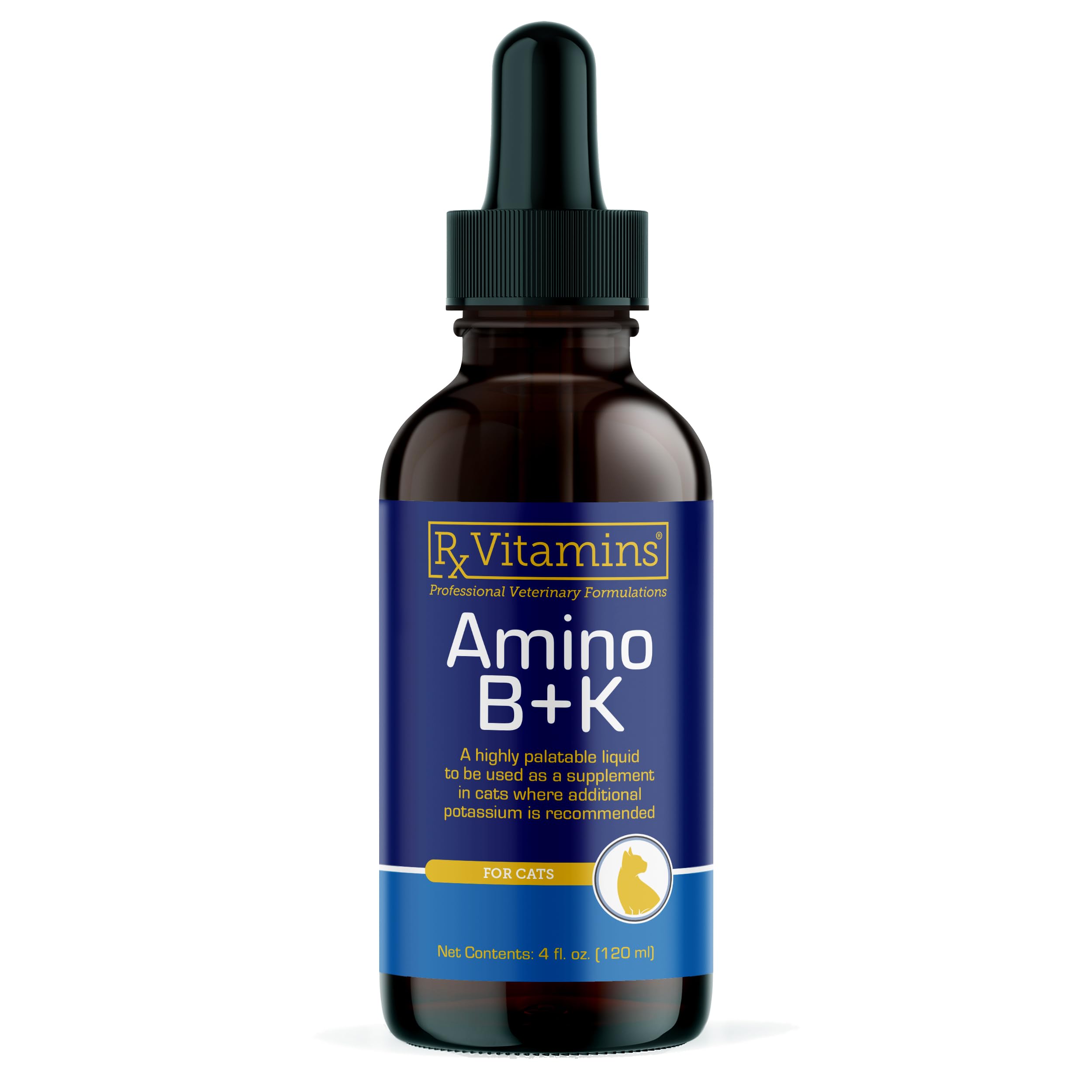
Rx Vitamins Amino B+K takes a multi-target approach by combining potassium gluconate with taurine, L-lysine, spirulina, and B-complex vitamins. This makes it a strong choice for cats who need renal support alongside immune and energy benefits, especially those recovering from illness or showing early kidney decline.
The liquid form in liver and bacon flavor is a practical advantage for syringe-feeding or mixing into a small amount of broth. Each 4-ounce bottle provides a dense nutrient profile, with taurine supporting heart function and lysine helping manage feline herpesvirus flare-ups that stress the immune system.
Because it is a flavored liquid, some cats may refuse it if they dislike the taste profile. Starting with a micro-dose mixed into a favorite treat can help with acceptance. The formula is vet-formulated and includes spirulina for added antioxidant support, which is a thoughtful extra for senior cats.
Why we love it
- Liquid formula with liver/bacon flavor is easy to syringe or mix.
- Includes taurine, lysine, and spirulina for comprehensive support.
- Great for cats needing potassium plus immune and energy help.
Good to know
- Flavor may not work for every cat; some may need gradual introduction.
- Dosing can be tricky with liquid; requires careful measurement.
3. Pet Health Solutions K-Plus Potassium Citrate + Cranberry Granules
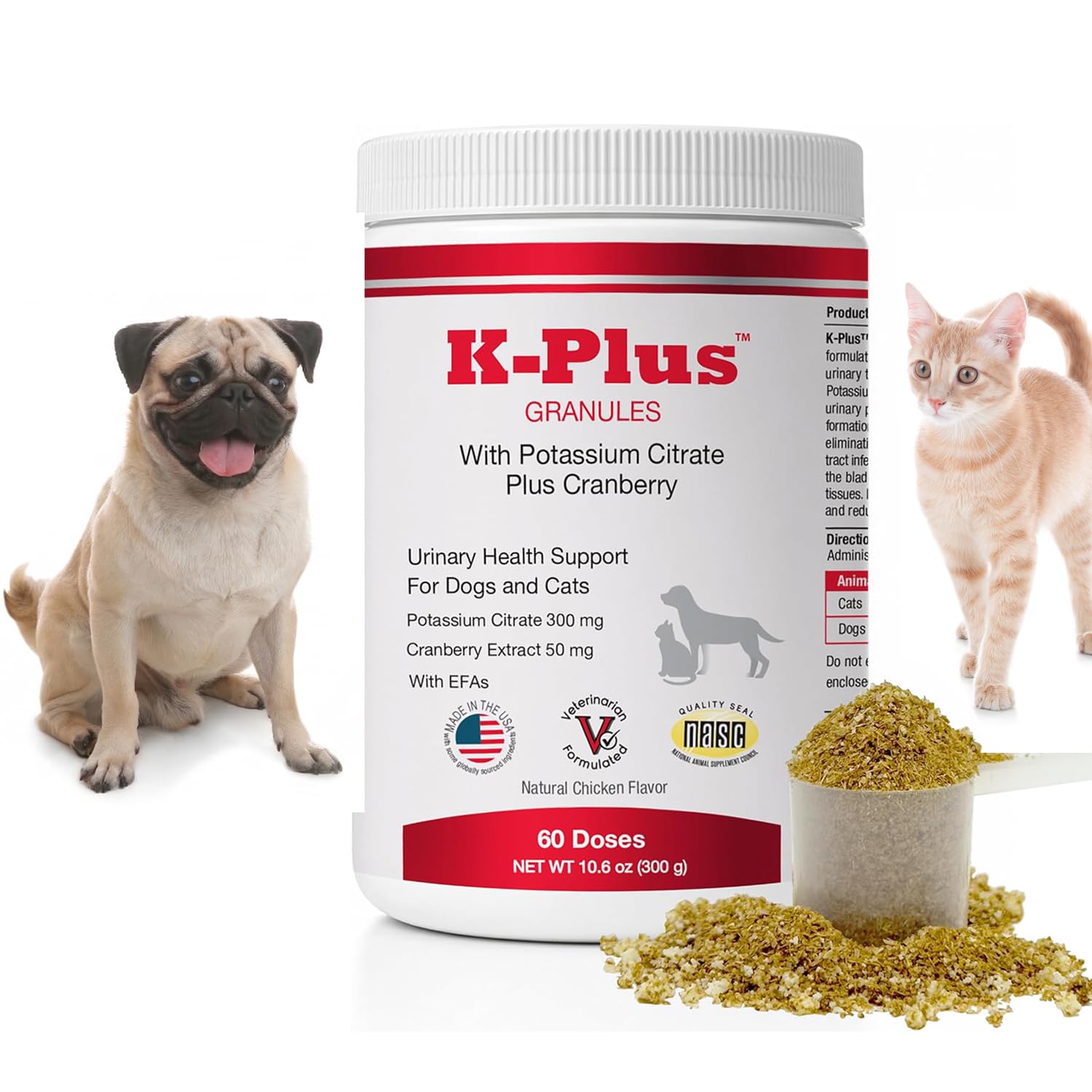
Pet Health Solutions K-Plus combines potassium citrate with cranberry extract, making it a dual-action supplement for cats prone to urinary tract infections, bladder stones, or crystal formation. The potassium citrate helps alkalinize urine, while cranberry extract prevents bacteria from adhering to the bladder wall.
The granules are highly palatable and can be mixed into wet food or sprinkled over dry kibble. Each container provides 60 doses, making it a solid mid-range option for long-term maintenance. The formula is vet-formulated and suitable for both cats and dogs, which is convenient for multi-pet households.
Because potassium citrate raises urine pH, this product is not ideal for cats with struvite crystals that require an acidic environment. Always consult your vet before using citrate if your cat has a history of specific stone types. Otherwise, for general urinary health and potassium support, this is a reliable pick.
Why we love it
- Cranberry extract helps prevent bacterial adherence in the bladder.
- 60 doses per container make it a great value for daily use.
- Granule form mixes seamlessly into wet or dry food.
Good to know
- Potassium citrate may not suit cats with certain crystal types.
- Not a standalone treatment for active UTIs; requires vet oversight.
4. Pala-Tech Potassium Citrate Plus Cranberry Granules

Pala-Tech Potassium Citrate Plus Cranberry offers a similar urinary-focused formula to the K-Plus but at a slightly more entry-level price point. The 300 gm container provides a solid supply of granules that mix easily into food, targeting bladder health through alkalinization and bacterial inhibition via cranberry.
This supplement is made with natural ingredients and is free from artificial fillers, which is reassuring for owners who prioritize clean-label products. It works best for cats with a tendency toward calcium oxalate stones or recurrent urinary tract infections where an alkaline urine pH is beneficial.
As with any citrate-based supplement, it is not suitable for cats with struvite crystals or those already on a urine-acidifying diet. The granules dissolve well but may leave a slight residue if not fully mixed. For owners watching their budget, this is a functional alternative to more expensive urinary formulas.
Why we love it
- Large 300 gm container provides extended use at a lower cost.
- Natural cranberry extract supports urinary tract health.
- Free from artificial additives and fillers.
Good to know
- Potassium citrate may conflict with certain kidney diets.
- Granules may not fully dissolve in dry food; best with wet food.
5. Rx Vitamins Feline Minerals Powder
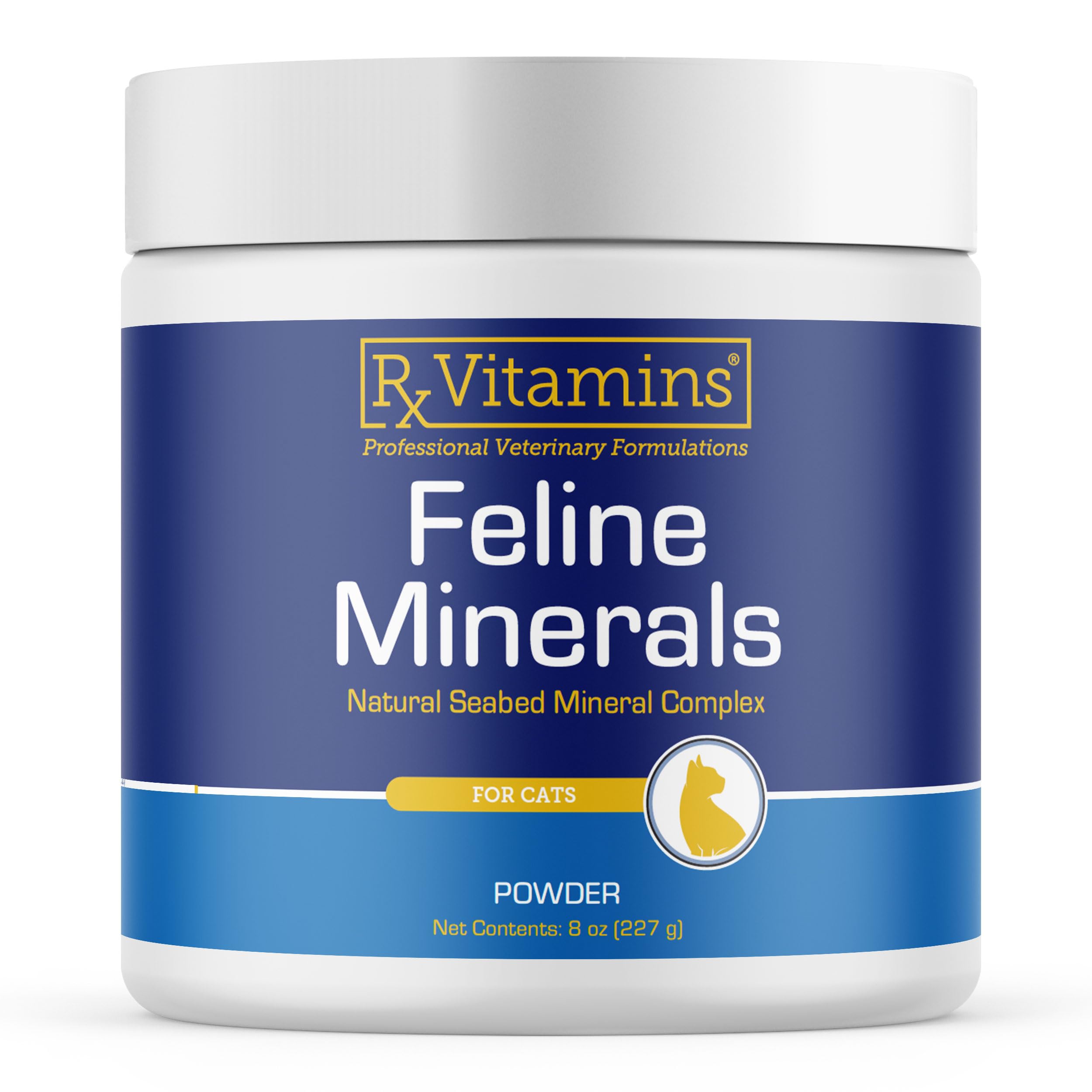
Rx Vitamins Feline Minerals is a broad-spectrum mineral supplement that includes potassium, calcium, magnesium, and taurine in a flavorless powder. It is designed for cats who need a general mineral boost rather than targeted renal support, making it a versatile option for picky eaters with multiple deficiencies.
The 8-ounce container is the largest in this group by volume, offering good value for daily use. The flavorless formula means it can be hidden in any food without altering taste, which is a major advantage for finicky cats who reject flavored supplements. It is vet-formulated and suitable for all life stages.
Because it is a multi-mineral blend, the potassium content per scoop is lower than dedicated potassium supplements. This product is best used as a daily maintenance mineral topper rather than a high-dose therapeutic for diagnosed hypokalemia. For owners seeking a gentle all-in-one, this is a solid entry-level choice.
Why we love it
- Large 8 oz container offers plenty of servings for the price.
- Flavorless powder is easy to hide in any type of food.
- Includes calcium, magnesium, and taurine for full mineral support.
Good to know
- Potassium content per dose is lower than dedicated renal formulas.
- Not intended for treating diagnosed low potassium levels.
FAQ
What is the safest form of potassium for cats with kidney disease?
Can I give my cat a potassium supplement without a vet test?
How long does it take to see improvement after starting potassium?
Final Thoughts: The Verdict
For most pet parents managing a cat with diagnosed low potassium, the potassium supplement for cats winner is the Vetoquinol Renal K+ because it uses pure potassium gluconate with B-complex support and offers the most reliable dosing precision. If you want a multi-nutrient approach that includes immune and energy support, grab the Rx Vitamins Amino B+K. And for urinary-focused protection with cranberry, nothing beats the Pet Health Solutions K-Plus.