
If your laying hens are giving you pale yolks, thin shells, or a drop in egg count, the problem is almost always the nutrition in the pan. A layer feed that skimps on calcium, protein, or omega-3s directly impacts both your flock’s health and the quality of every egg you collect. That is why picking the right formulation matters more than just grabbing any bag off the shelf.
I’m Mo Mahin — the founder and writer behind Furric. Over years of following poultry nutrition science, evaluating veterinary safety standards around calcium-to-phosphorus ratios, and analyzing aggregated feedback from backyard flock owners across dozens of forums, I’ve built a sharp picture of what truly works for layer hens.
This guide breaks down the top contenders so you can confidently choose the best feed for laying hens that delivers stronger shells, richer yolks, and consistent egg output for your flock.
How To Choose The Best Feed For Laying Hens
Choosing the right feed is about matching your flock’s specific needs — age, breed, and egg-production goals — to the nutritional profile of the bag. Here are the key factors that separate a solid maintenance feed from one that actively improves egg quality.
Protein Content and Source
Layer hens need at least 16% protein to maintain body condition and keep producing eggs. Feeds with 18-20% protein can help during peak laying or molt, but too much protein without balancing calcium can cause kidney strain. Look for whole-food protein sources like soybean meal, sunflower seeds, or black soldier fly larvae rather than cheap fillers.
Calcium for Shell Strength
Calcium is the single most critical mineral for laying hens. Most layer feeds include oyster shell or calcium carbonate, but the key is bioavailability. The “Oyster Strong System” used by some Purina formulas pairs oyster shell with vitamin D and manganese to improve calcium absorption. Without enough calcium, you will get thin-shelled or shell-less eggs.
Omega-3 Enrichment and Yolk Quality
Omega-3 fatty acids from flaxseed, linseed oil, or black soldier fly larvae directly transfer into the egg yolk, creating darker, richer yolks with higher nutritional value. If you sell eggs or want deep-orange yolks for your family, prioritize a feed with guaranteed omega-3 levels — typically 250mg or more per large egg.
Quick Comparison
On smaller screens, swipe sideways to see the full table.
| Model | Category | Best For | Key Spec | Amazon |
|---|---|---|---|---|
| Purina Layena+ Omega 3 | Premium | Omega-rich eggs | 250mg Omega-3 per large egg | Amazon |
| Purina Layena+ High Protein | Premium | Natural craving satisfaction | 19% Protein + black soldier fly larvae | Amazon |
| Prairie’s Choice Layer Formula | Premium | Non-GMO and gluten-free flocks | 16% Protein, 25lb crumble | Amazon |
| Small Pet Select Layer Pellets | Premium | Corn/soy-free sensitive flocks | 18% Protein, 20lb corn/soy-free | Amazon |
| Wholesome Harvest Layer Blend | Premium | Ducks and chickens together | 16% Protein, mash with whole grains | Amazon |
In‑Depth Reviews
1. Purina Layena+ | Omega 3 Formula

The Purina Layena+ Omega 3 formula is the benchmark for anyone who wants measurable nutritional improvements in their eggs. At 250mg of omega-3 per large egg, this feed directly enhances yolk color and omega density without needing any supplements. The pellet form reduces waste compared to mash, and the vegetarian, non-GMO ingredients make it a clean pick for backyard flocks.
I appreciate that Purina has dialed in the calcium-to-phosphorus ratio here — hens on this feed consistently produce thicker shells with fewer cracks. The all-breed recommendation means it works across standard layers like Rhode Island Reds, Leghorns, and Orpingtons alike. The 10-pound bag is a manageable trial size before committing to larger quantities.
One thing to keep in mind: the label says “vegetarian,” which some keepers feel misses the insect protein hens naturally crave. If your flock free-ranges heavily, they may still need supplemental black soldier fly larvae or mealworms to satisfy that instinct. For confined flocks, this formula provides complete nutrition with no gaps.
Why we love it
- Guaranteed 250mg omega-3 per large egg
- Non-GMO and vegetarian formulation
- Low waste pellet form
Good to know
- 10 lb bag may be small for larger flocks
- No insect protein if your hens crave bugs
2. Purina Layena+ High Protein

This Purina Layena+ High Protein version adds black soldier fly larvae directly into the pellet, giving your hens the insect protein they instinctively forage for. At 19% protein, it is ideal for peak laying cycles or during molt when protein demands spike. The inclusion of the Oyster Strong System — oyster shell, vitamin D, and manganese — ensures that extra protein doesn’t come at the cost of shell integrity.
Flocks on this feed often show improved feather condition and more consistent daily lay rates. The larvae also add natural omega-3s and lauric acid, which supports gut health. The pellet form keeps the larvae integrated evenly, so you don’t have hens picking out bugs and leaving the grain behind.
The bigger bag is a 10-pound option, which is a bit small for large flocks. Some keepers note the price per pound is higher than standard layer feeds, though the higher protein and larvae inclusion justify the cost for those who want premium egg quality with minimal supplementation.
Why we love it
- Black soldier fly larvae for natural insect protein
- 19% protein supports peak laying and molt
- Oyster Strong System for shell quality
Good to know
- More expensive than standard layer feeds
- 10 lb bag may require frequent reordering
3. Prairie’s Choice Non-GMO Layer Formula

Prairie’s Choice delivers a non-GMO, antibiotic-free, non-medicated, and gluten-free layer feed that is grown, milled, and packaged in the USA. The 25-pound bag makes it a practical choice for small-to-medium flocks that need a reliable daily feed. The crumble form is easier for younger hens or those transitioning from starter feed to layer rations.
At 16% protein, it meets the baseline for mature layers without pushing into the higher protein territory that some keepers find unnecessary for steady production. The digestibility is noticeably better than generic store brands — hens waste less and convert feed to eggs more efficiently. The all-natural formulation means no synthetic additives or growth promoters.
The main trade-off is the lack of a guaranteed omega-3 level or insect protein. If your eggs already get deep-yellow yolks from pasture access, this feed is a clean, solid foundation. If you need yolks to be darker from a confined system, you may want to supplement with flax or fish oil separately.
Why we love it
- 25 lb bag offers better value per pound
- Non-GMO, gluten-free, and antibiotic-free
- Grown, milled, and packaged in the USA
Good to know
- 16% protein may not suit peak-laying heavy breeds
- No guaranteed omega-3 level for yolk enrichment
4. Small Pet Select Layer Pellets

Small Pet Select focuses on high-quality, nutrient-dense ingredients with no corn, no soy, and no artificial fillers. The 18% protein comes from sunflower seeds, pumpkin seeds, and flax seeds, which also provide natural omega-3s and fiber. The added calcium supports strong shells, while probiotics aid digestion.
This feed works especially well for flocks that have shown sensitivity to corn or soy — common allergens that can cause loose droppings or reduced feed intake. The inclusion of herbs and botanicals adds variety that keeps hens engaged during feeding. You can also ferment these pellets to create a probiotic-rich mash that reduces waste even further.
The price per pound is higher than standard layer feeds, reflecting the premium ingredient sourcing from the Pacific Northwest. For larger flocks consuming several bags a month, the cost can add up. But for smaller backyard setups focused on clean-label eggs, this is one of the most carefully formulated options available.
Why we love it
- Corn-free and soy-free formula
- 18% protein from seeds, not fillers
- Probiotics support digestive health
Good to know
- Higher cost per pound
- 20 lb bag may be small for large flocks
5. Wholesome Harvest Non-GMO Layer Blend
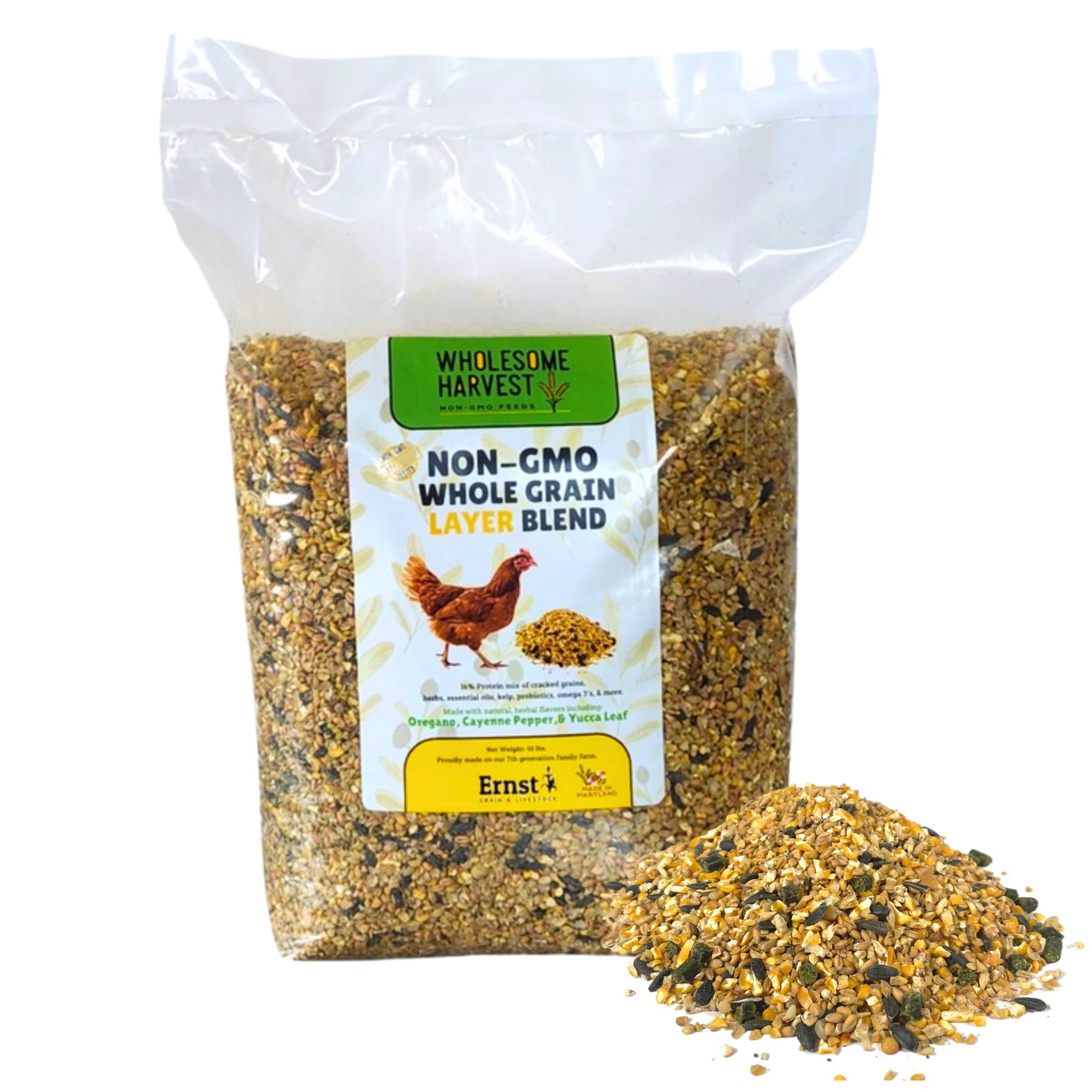
The Wholesome Harvest Layer Blend is a non-GMO mash made from cracked corn, soybeans, wheat, barley, along with essential oils, herbs, and oyster shell. The 16% protein level serves as a balanced maintenance feed for both chickens and ducks. The addition of linseed oil boosts omega-3s, helping yolks develop a richer color.
This feed really shines for mixed-flock keepers who have both laying hens and ducks, since both species thrive on the blend. The mash form allows hens to peck and sort, which satisfies natural foraging behavior. The inclusion of probiotics supports consistent digestion across different bird sizes.
The 10-pound bag is the smallest in this lineup, so larger flocks will need to order frequently or consider a bigger alternative. Some keepers also note that the mash form can create more waste if feeders aren’t designed to minimize spillage. For small mixed flocks that value whole-grain variety and omega enrichment, this is a smart choice.
Why we love it
- Works for both chickens and ducks
- Non-GMO whole grains with essential oils
- Linseed oil boosts omega-3 levels
Good to know
- 10 lb bag is small for larger flocks
- Mash form can lead to more waste
FAQ
Can I feed layer mash to chicks or young pullets?
How much layer feed should I give each hen per day?
Do I need to supplement scratch grains with layer feed?
Is organic layer feed always better than non-organic?
Final Thoughts: The Verdict
For most pet parents, the feed for laying hens winner is the Purina Layena+ Omega 3 Formula because it delivers measurable omega-3 enrichment and strong shells without requiring extra supplementation. If you want insect protein that satisfies natural foraging instincts, grab the Purina Layena+ High Protein. And for a corn- and soy-free premium option, nothing beats the Small Pet Select Layer Pellets.