
Rotating dewormers is the single most important decision you make for your horse’s gut health, yet most owners get stuck using the same ivermectin tube year after year, breeding resistance and leaving dangerous small strongyles untreated. The fast-acting paste, the alfalfa pellet that feeds and treats in one step, and the pour-on for hard-to-handle horses each serve a different purpose in a seasonal rotation plan.
I’m Mo Mahin — the founder and writer behind Furric. I evaluate equine parasite control products against veterinary rotation protocols and aggregated feedback from barn managers who track fecal egg counts seasonally.
After comparing active ingredients, administration methods, and dose accuracy, I’ve isolated the five most effective options that belong in every horse owner’s medicine cabinet — what I call the best horse dewormer selection for a complete, resistance-aware parasite control program.
How To Choose The Best Horse Dewormer
Selecting a dewormer is not about picking one product and using it forever — it is about building a rotation strategy. The three chemical classes you need to cycle through are macrocyclic lactones (ivermectin, moxidectin), benzimidazoles (fenbendazole, oxibendazole), and tetrahydropyrimidines (pyrantel pamoate). Each kills a different set of parasites, and overusing one class creates drug-resistant worms that survive the next dose.
Active Ingredient and Parasite Spectrum
Ivermectin 1.87% kills bots, large strongyles, and ascarids in a single dose, but it does not touch encysted small strongyles — the most common and damaging equine parasite. Fenbendazole 10% (the active in Panacur and Safeguard) reaches those encysted larvae when given at the five-day double-dose protocol. A product that only contains ivermectin is worthless for a spring rotational dose aimed at small strongyles.
Administration Method: Paste, Pellet, or Pour-On
Oral paste syringes are the gold standard for accurate dosing because you deposit the measured amount on the back of the tongue. Pellets mixed with feed are easier for horses that hate the syringe, but you must confirm the entire dose is eaten — a selective eater can leave half the treatment in the bucket. Pour-on formulations applied to the topline are the least stressful for nervous horses but require the horse to not roll or get wet for several hours after application.
Weight-Based Dosing Accuracy
A 1,200-pound horse and a 1,000-pound horse need different volumes of paste. Using a weight tape or scale is non-negotiable: underdosing leaves surviving worms that are already partially resistant to the drug, accelerating full resistance. Every syringe in this list is pre-marked for pounds of body weight, and the two-pack and three-pack options let you treat multiple horses or complete a rotational schedule without reordering mid-season.
Quick Comparison
On smaller screens, swipe sideways to see the full table.
| Model | Category | Best For | Key Spec | Amazon |
|---|---|---|---|---|
| Durvet Duramectin Paste 3pk | Premium | Full-season rotation supply | Ivermectin 1.87%, 3 syringes | Amazon |
| Intervet Safeguard Pellets 2pk | Mid-Range | Encysted small strongyles | Fenbendazole, alfalfa pellet | Amazon |
| PANACUR Paste 10% 2pk | Mid-Range | Five-day double-dose protocol | Fenbendazole 100mg/g paste | Amazon |
| OZIPCO Ivermectin Paste 2pk | Budget-Friendly | Budget-conscious ivermectin dose | Apple flavor, 6.08g syringe | Amazon |
| Durvet Ivermectin Pour On | Premium | Hard-to-handle horses | 1 liter topical pour-on | Amazon |
In‑Depth Reviews
1. Durvet Duramectin Equine Wormer Paste – 3 Tubes

Duramectin delivers the same active ingredient (ivermectin 1.87%) as the branded version at a fraction of the per-dose cost, and the three-tube pack gives you an entire seasonal rotation in one purchase. One syringe treats a horse up to 1,250 pounds, and the paste formula kills bots plus the arterial stages of Strongylus vulgaris — the large strongyle that causes colic-causing verminous arteritis. Barn owners who rotate through twenty horses per season consistently reach for this three-pack because it eliminates mid-cycle reordering.
The paste consistency is thick enough to stay on the tongue without dripping, which matters when you are dosing a horse that tosses its head during administration. It has been on the market since 2016 with a solid track record of efficacy against the parasite spectrum listed on the label. The syringe plunger is clearly marked in 250-pound increments, making it simple to dose a 1,000-pound horse at the 80% mark and save the remainder for a second smaller horse within the same treatment window.
Because ivermectin does not kill encysted small strongyles, Duramectin must be paired with a fenbendazole-based product like Safeguard or Panacur during a different rotation window. Use it in late fall after the first hard frost to target bots and large strongyles, then follow with a small-strongyle-targeting product in early spring. The three syringes also make it practical to treat three horses simultaneously during a farm-wide deworming day.
Why we love it
- Three syringes per pack simplify multi-horse rotation schedules and save money per dose
- Kills bots and arterial stages of large strongyles in a single administration
- Thick paste formula adheres to the tongue, reducing waste from head-tossing horses
Good to know
- Ivermectin alone does not treat encysted small strongyles — requires a rotation partner
- Single syringe tubes are not available in this pack; you buy three at once
2. Intervet Safeguard Dewormer Pellets for Horses, 1.25-Pound (Pack of 2)
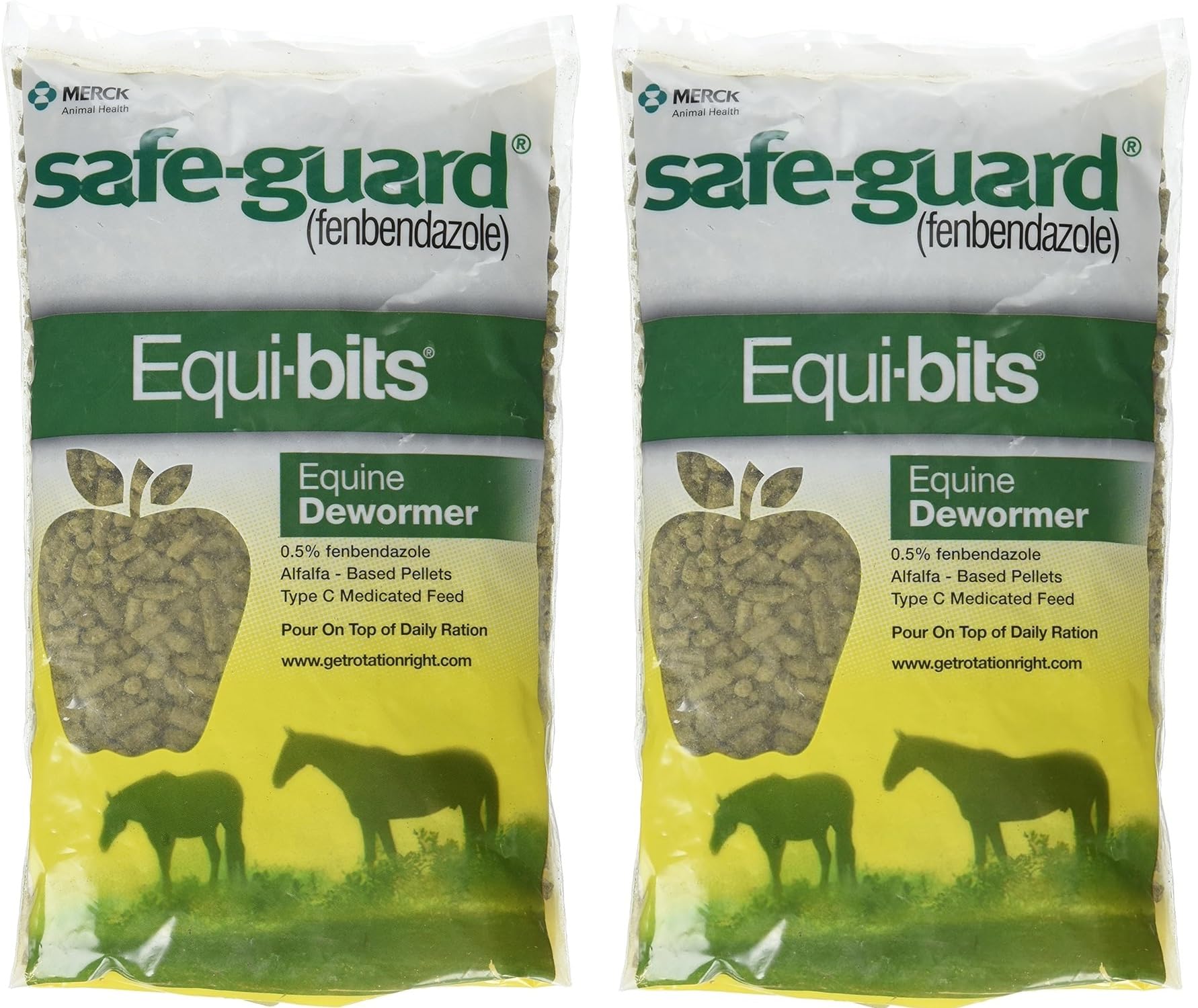
Safeguard pellets are the only product on this list that uses fenbendazole in a feed-through format, making it the best choice for horses that refuse oral paste syringes. The alfalfa-based pellets are palatable enough that most horses eat them mixed into a small grain meal without noticing, and one pouch treats a 1,250-pound horse in a single feeding. Because fenbendazole reaches encysted small strongyles — the parasites that survive ivermectin and moxidectin — this pellet is critical for the spring rotation when small strongyle larvae emerge from the gut wall.
The two-pack provides two full doses, which is enough for a single horse to complete a rotation cycle or for two horses to be treated simultaneously. The manufacturer recommends using it as a single-dose treatment, but veterinarians often prescribe the five-day double-dose protocol (fenbendazole 10 mg/kg for five consecutive days) for heavy encysted burdens — you would need five pouches for that protocol. The pellets have been manufactured by Intervet/Merck Animal Health since the 1990s, giving them a long safety record with minimal side effects.
The downside of the feed-through format is that you cannot verify the exact dose if your horse drops pellets or eats selectively. For horses in group turnout, Safeguard pellets should be fed individually in a stall to ensure the entire dose is consumed. The alfalfa base also means horses with alfalfa allergies or those on low-protein diets may need an alternative paste form of fenbendazole like Panacur.
Why we love it
- Feed-through format eliminates syringe stress for hard-to-dose horses
- Fenbendazole targets encysted small strongyles that ivermectin misses
- Palatable alfalfa pellets are accepted by most horses when mixed with grain
Good to know
- Cannot confirm full dose consumption if horse leaves pellets uneaten
- Five-day double-dose protocol requires five pouches, increasing total cost
3. PANACUR Dewormer Horse Paste 10%, 100mg (2-Pack)

Panacur is the paste equivalent of Safeguard pellets, sharing the same active ingredient (fenbendazole 10% at 100 mg/g) but in a syringe format that guarantees dose accuracy. The artificial apple cinnamon flavor improves acceptance for horses that object to the bitter taste of plain fenbendazole, though some horses still foam at the mouth from the flavoring rather than the drug. Each syringe is pre-calibrated for 1,250 pounds, and the two-pack gives you one full dose plus a spare for a second horse or a re-treatment.
This is the paste you want for the five-day fenbendazole protocol because the syringe allows precise daily dosing without relying on the horse finishing a bucket of feed. For a 1,000-pound horse, you would set the plunger at the 800-pound mark to get 80% of a full dose, then repeat for five consecutive days — the standard veterinary recommendation for killing encysted small strongyles. The paraben-free formulation reduces the risk of contact sensitivity, and the white paste has a smooth, non-gritty texture that deposits cleanly on the back of the tongue.
Because fenbendazole has a narrower spectrum against bots and large strongyles compared to ivermectin, Panacur works best as part of a rotational schedule: use it in late winter or early spring to clear small strongyles, then switch to an ivermectin product in late fall for bots. Horses with a known history of small strongyle resistance may require a fecal egg count reduction test (FECRT) to confirm the drug is still effective in your specific herd.
Why we love it
- Paste format ensures complete dose is delivered regardless of feeding behavior
- Apple cinnamon flavor masks the bitterness of fenbendazole for picky horses
- Paraben-free formulation reduces risk of local irritation at the dosing site
Good to know
- Some horses foam at the mouth from the artificial flavoring, not the drug
- Five-day protocol requires multiple syringes for a single treatment course
4. OZIPCO Ivermectin Horse Paste 1.87% Apple Flavor (2-Pack)
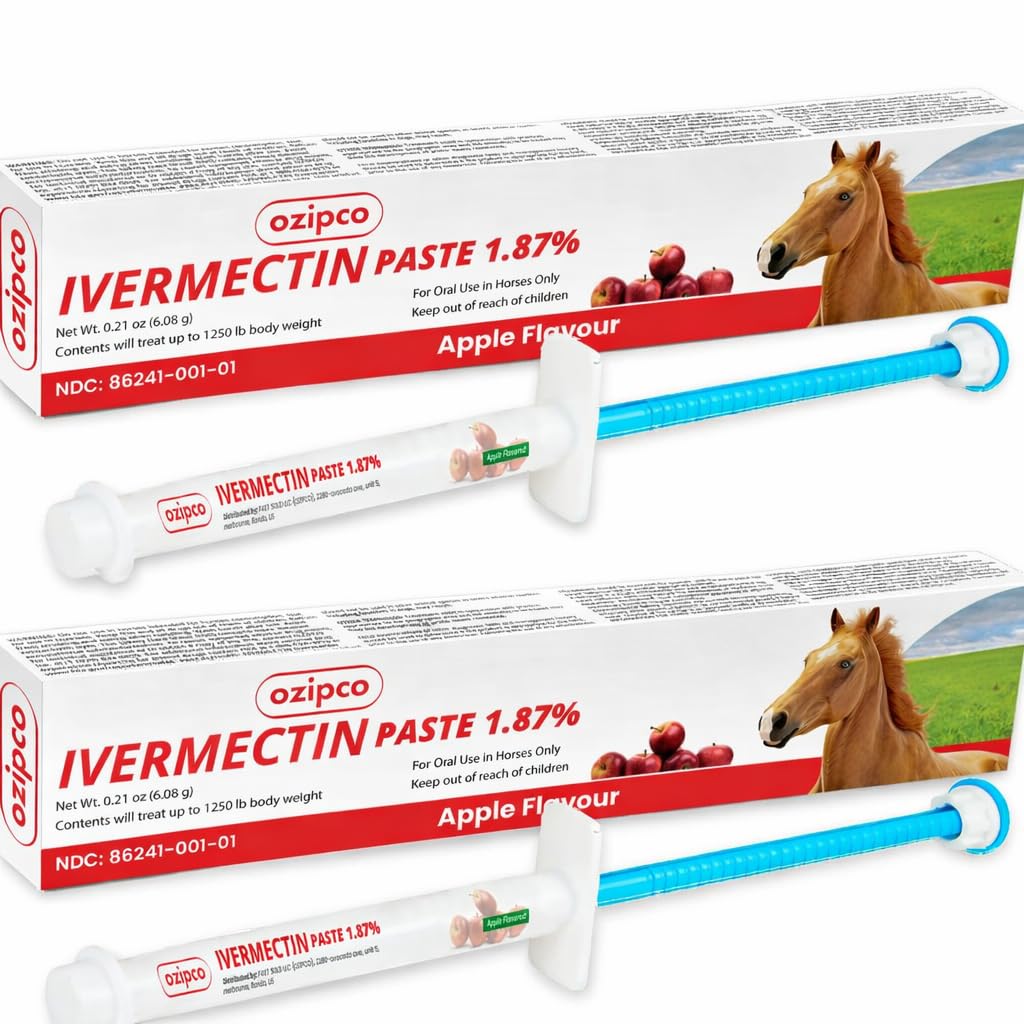
OZIPCO is the budget-friendly ivermectin option that delivers the same 1.87% active concentration as name-brand pastes at a lower per-syringe cost. The two-pack includes two pre-measured 6.08-gram syringes, each calibrated to treat horses up to 1,250 pounds, and the apple flavoring improves acceptance for horses that resist unflavored pastes. For owners who need to treat a single horse twice per year (spring and fall) or two horses in one treatment cycle, this two-pack covers both events without leftover syringes expiring on the shelf.
The paste texture is slightly softer than Duramectin, which can make it more likely to drip from the syringe tip if you are not careful about angle and speed during administration. It is manufactured by OZIPCO, a less established brand than Durvet or Intervet, but the active ingredient is chemically identical to any other ivermectin paste. The syringe plunger markings are clear and durable — they do not wear off during handling, which is a common complaint with bargain-brand dosing syringes.
Because this is a budget-tier ivermectin product, it does not include any additional anthelmintic coverage beyond the standard avermectin spectrum. You must still rotate to a fenbendazole product for encysted small strongyle coverage. The apple flavor also attracts some horses to the point that they try to chew the syringe tip, so keep the syringe moving back on the tongue rather than letting the horse mouth the plastic.
Why we love it
- Lowest per-dose cost for ivermectin 1.87% paste without compromising active ingredient quality
- Two syringes per pack cover a full year of seasonal rotation for one horse
- Apple flavor improves compliance for horses that resist bitter pastes
Good to know
- Softer paste texture can drip from the syringe if not administered at the correct angle
- Less established brand compared to Durvet or Merck, though active ingredient is identical
5. Durvet Ivermectin Pour On 1 Liter

Durvet’s pour-on formulation is the most practical option for horses that are dangerous to handle with a syringe — the kind that throws their head, bites, or clamps their jaw shut. You apply the ivermectin directly to the topline from the withers to the tailhead along the midline, and the drug is absorbed through the skin to reach systemic parasites. The one-liter bottle contains approximately 33 doses for a 1,250-pound horse (30 mL per dose), making it the highest-volume option on this list and suitable for a multi-horse barn or a full treatment season.
The pour-on format has a slightly slower absorption rate than oral paste, meaning it takes longer to reach peak blood concentration against bots and large strongyles. Horses should not be turned out in rain or allowed to roll for four to six hours after application, which makes timing critical. The topline application also means the drug collects on the hair and can transfer to handlers or other horses through direct contact, so designate a specific treatment day when the horse will be stalled or dry paddocked.
Because this is a topical ivermectin product, it shares the same parasite spectrum limitation as oral ivermectin paste: it does not kill encysted small strongyles. The pour-on format is less precise than a syringe — the dose is measured by volume rather than weight pre-markings — so use a graduated measuring cup or syringe to draw each 30 mL dose. This product is a premium choice strictly for the administration convenience it offers with difficult horses, not for broader parasite coverage.
Why we love it
- Topical application eliminates oral dosing stress for head-shy or aggressive horses
- Large 1-liter volume provides enough doses for a multi-horse barn across multiple seasons
- Same ivermectin 1.87% systemic efficacy as oral paste when properly applied
Good to know
- Cannot be used if horse will be wet, rolling, or in rain within 4-6 hours of application
- Dose must be measured by volume externally rather than relying on syringe markings
FAQ
How often should I rotate horse dewormers to prevent resistance?
Does fenbendazole kill encysted small strongyles better than ivermectin?
Can I use pour-on ivermectin on horses that are turned out in pasture full time?
What dose of Panacur paste do I give for a 1,100-pound horse?
Can Safeguard pellets cause digestive upset in horses with sensitive stomachs?
Final Thoughts: The Verdict
For most horse owners building a proper rotation, the best horse dewormer overall is the Durvet Duramectin Paste 3pk because it delivers three accurate ivermectin doses at a per-syringe cost that beats the single-tube alternatives, and it targets bots and large strongyles in one pass. If you need to treat encysted small strongyles with a guaranteed dose, grab the PANACUR Paste 2pk for its syringe accuracy and five-day protocol compatibility. And for the horse that fights every oral dose, nothing beats the Durvet Ivermectin Pour On for stress-free topical application — just plan around the rain.