
Purple martins are the most sought-after backyard cavity-nesters, but their survival depends entirely on the quality of the housing you provide. A poorly designed house invites predators, overheating, and competing species that can drive an entire colony away in a single season.
I’m Mo Mahin — the founder and writer behind Furric. I’ve spent years evaluating construction materials, compartment geometry, and ventilation patterns in purple martin houses to separate functional designs from those that put birds at risk.
Whether you’re starting your first colony or expanding an established roost, selecting the right purple martin bird house is the single most important decision you’ll make for both nesting success and long-term colony health.
How To Choose The Best Purple Martin Bird House
Purple martins have specific nesting requirements that differ from every other backyard bird. Selecting a house built around their biology — not just aesthetics — is what determines whether you host a thriving colony or an empty structure.
Compartment Depth and Internal Volume
Martin nesting compartments must be deep enough to prevent chicks from falling out and to allow natural nest cup construction. Look for compartments that are at least 6 inches deep and 6 inches wide, with a ceiling height of 6 inches. Shallow compartments are the leading cause of nest abandonment in poorly designed houses.
Entry Hole Shape and Size
Round entry holes can easily be used by starlings and house sparrows, which compete aggressively with martins. The industry standard for starling resistance is the crescent-shaped opening, which lets martins pass through while excluding larger pest birds. Avoid houses marketed with decorative openings that do not conform to published martin-specific dimensions.
Ventilation and Heat Management
Purple martins nest during the hottest months of summer, and internal attic temperatures can exceed 120 degrees in poorly ventilated houses. Look for houses with gaps between the roof and walls, screened ventilation ports, or reflective roofing materials. Porch overhangs also provide shade that reduces compartment temperatures.
Material and Longevity
Aluminum houses offer the best thermal performance and are resistant to cracking and warping, but they can feel cold in early spring. Wood provides natural insulation but requires regular sealing to prevent rot. Recycled plastic offers a middle ground with no maintenance but can absorb heat. Your local climate should drive material choice.
Quick Comparison
On smaller screens, swipe sideways to see the full table.
| Model | Category | Best For | Key Spec | Amazon |
|---|---|---|---|---|
| Birds Choice PMC12 | Premium | Large colonies & durability | Aluminum, 12 compartments, 3 floors | Amazon |
| CEDAR ALPHA 12-Room | Wood | Starling resistance & natural insulation | Western red cedar, crescent openings | Amazon |
| Kingsyard 12-Room | Recycled Plastic | Zero-assembly & low maintenance | Pre-assembled, 3.5 lb, 12 compartments | Amazon |
| Heath AH-12D | Aluminum | Hot climates & rust resistance | Aluminum, 12 rooms, hexagonal design | Amazon |
| S&K BH12 | Mid-Range | Budget-friendly colony startup | UV polypropylene, 12 compartments | Amazon |
| S&K Dual 24-Room | Expandable | Multiple colony management | Plastic, 24 rooms, 2 house units | Amazon |
| Birds Choice PMC8 | Smaller Colony | Smaller yards & starter colonies | Aluminum, 8 compartments, no assembly | Amazon |
In‑Depth Reviews
1. Birds Choice PMC12 Coates Original 12-Room
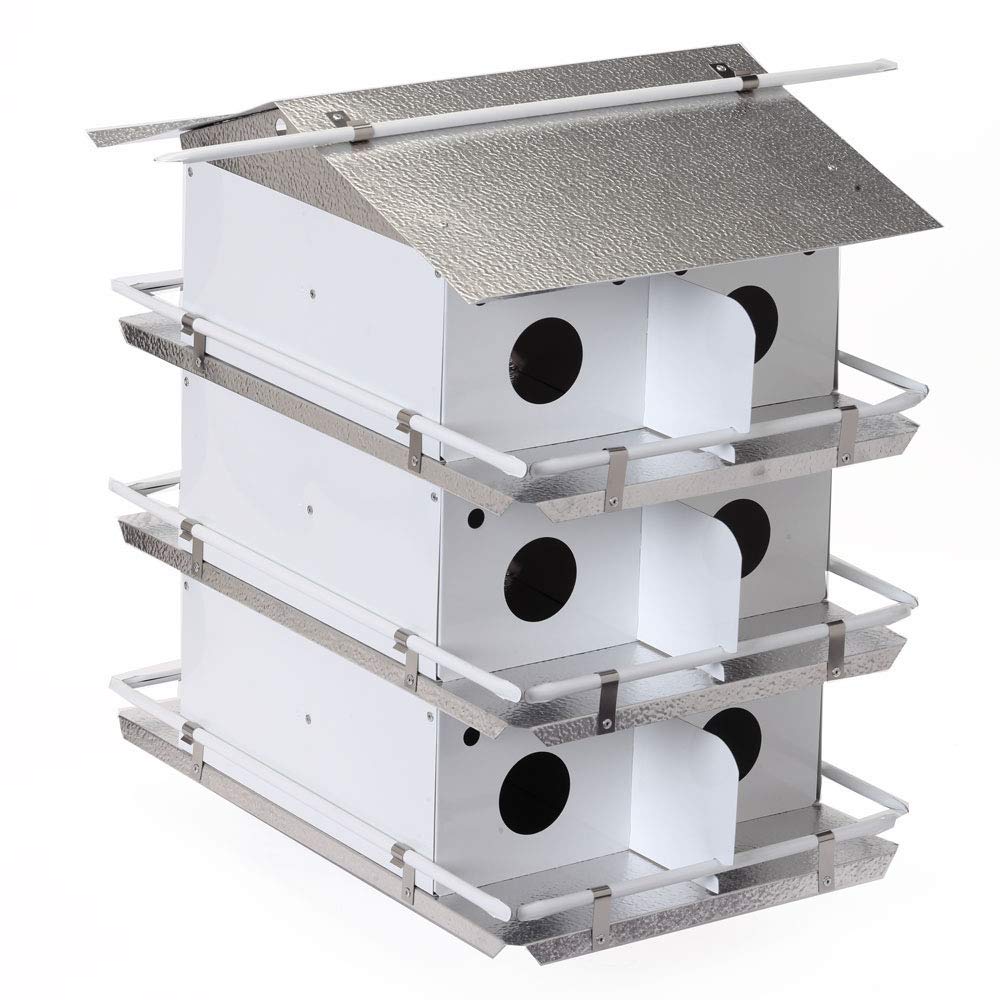
The Birds Choice PMC12 is the gold standard for serious purple martin landlords. Its three-floor layout provides 12 deep compartments, each with properly sized round holes and clear porch dividers that keep nest compartments separate. The cool aluminum and stainless-steel construction resists corrosion and reflects heat, keeping the internal compartments significantly cooler than plastic alternatives during peak summer.
Assembly is required, but every component — from the hinged clean-out doors to the reflective roof panels — is thoughtfully engineered for long-term colony management. The included door plugs allow you to seal floors during the off-season or to manage nesting density in a growing colony. This is the same design that set the industry benchmark in the 1980s, and it remains unmatched for thermal performance and durability.
One consideration: the rounded entry holes are not starling-resistant out of the box. If you live in an area with heavy starling pressure, you will need to add aftermarket crescent plate converters. The weight is moderate at roughly 12 pounds assembled, so it pairs well with a dedicated telescoping pole system.
Why we love it
- Cool aluminum construction prevents heat stress in summer broods
- Hinged clean-out doors make seasonal maintenance fast
- Made in the USA with stainless-steel hardware
Good to know
- Round holes require aftermarket crescent converters for starling resistance
- Assembly takes about an hour with basic tools
2. CEDAR ALPHA 12-Room Purple Martin House
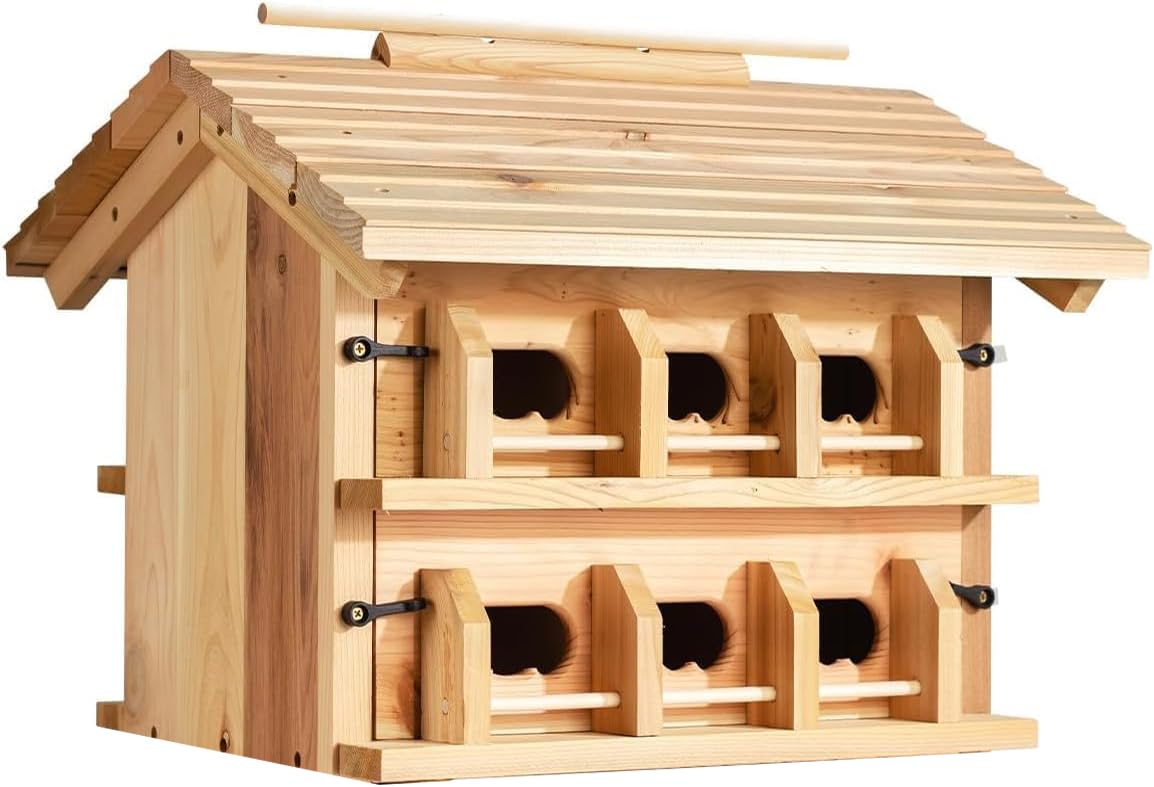
The CEDAR ALPHA stands alone in this list as the only wood house built with natural starling resistance at the design level. Each of the 12 compartments features crescent-shaped entry holes that allow purple martins to pass freely while blocking European starlings — no aftermarket converters needed. The Western red cedar construction provides natural insulation that keeps compartments cool in direct sun, and the wood aroma deters mites.
Porch rails run across the full front of each tier, preventing chicks from falling out during their fledging phase — a critical safety feature often overlooked in plastic houses. The roof removes fully for complete access, and the interior dividers lift out individually, making deep cleaning straightforward between seasons. Assembly is required, and the cedar is left unfinished, so the bird-safe surface is ready for immediate occupancy.
At nearly 22 pounds assembled, this is a heavier house that demands a sturdy pole system. The cedar will weather to a natural silver-gray over time, which many landlords prefer aesthetically, but the wood should be sealed with a bird-safe finish every two to three years to prevent checking in dry climates.
Why we love it
- Integrated crescent openings block starlings without modifications
- Natural cedar insulation reduces peak summer heat
- Removable dividers and roof make cleaning complete
Good to know
- Heavy design requires a substantial pole or post
- Wood requires periodic sealing for long-term durability
3. Kingsyard Recycled Plastic 12-Room
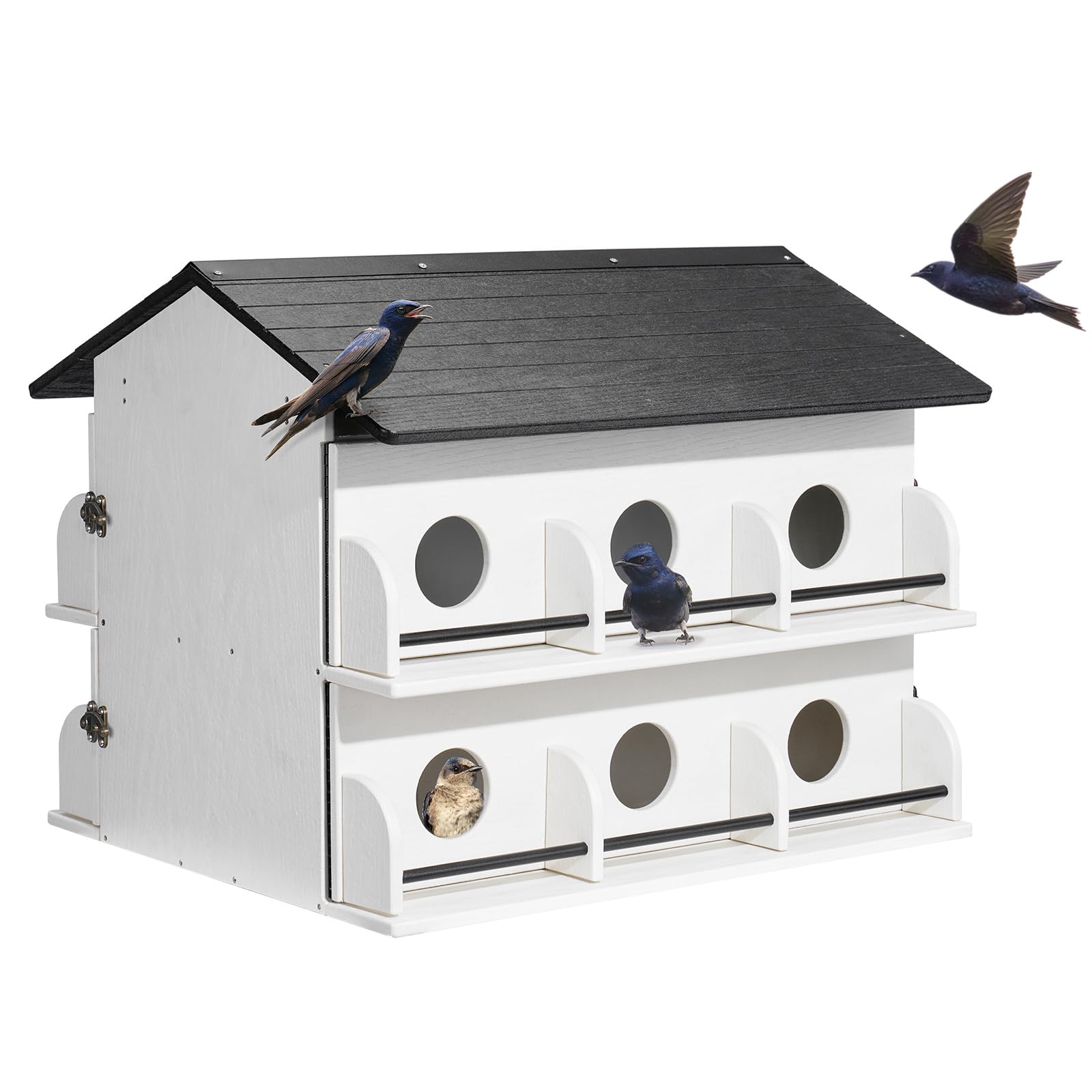
The Kingsyard 12-Room arrives fully assembled, which eliminates the single biggest barrier to entry for new purple martin landlords. The recycled plastic construction is dense enough to resist denting and cracking, and the white finish reflects sunlight to keep interior temperatures lower than dark-colored plastic houses. Each of the 12 compartments has a front door that swings open independently for cleaning.
Measuring 19.6 inches wide by 16.3 inches deep, this house offers generous porch space in front of each row of compartments, giving martins room to perch and socialize before entering. The material is UV-stabilized and shows no yellowing after a full season in direct sun. The roof features a slight overhang that provides shade to the upper compartments.
Be aware that the entry holes on this model are round, so starling pressure will need to be managed separately. The mounting system uses a standard post-hole adapter that fits most 1-inch poles, but the house does not include a pole or ground anchor. The recycled plastic can feel warm to the touch in direct summer heat, though internal temperatures remain manageable with proper ventilation.
Why we love it
- Zero assembly required — mount and open in minutes
- Durable recycled plastic resists cracking and rotting
- Individual front doors simplify compartment cleaning
Good to know
- Round entry holes are not starling-resistant
- Mounting pole must be purchased separately
4. Heath Outdoor Products AH-12D 12-Room Aluminum
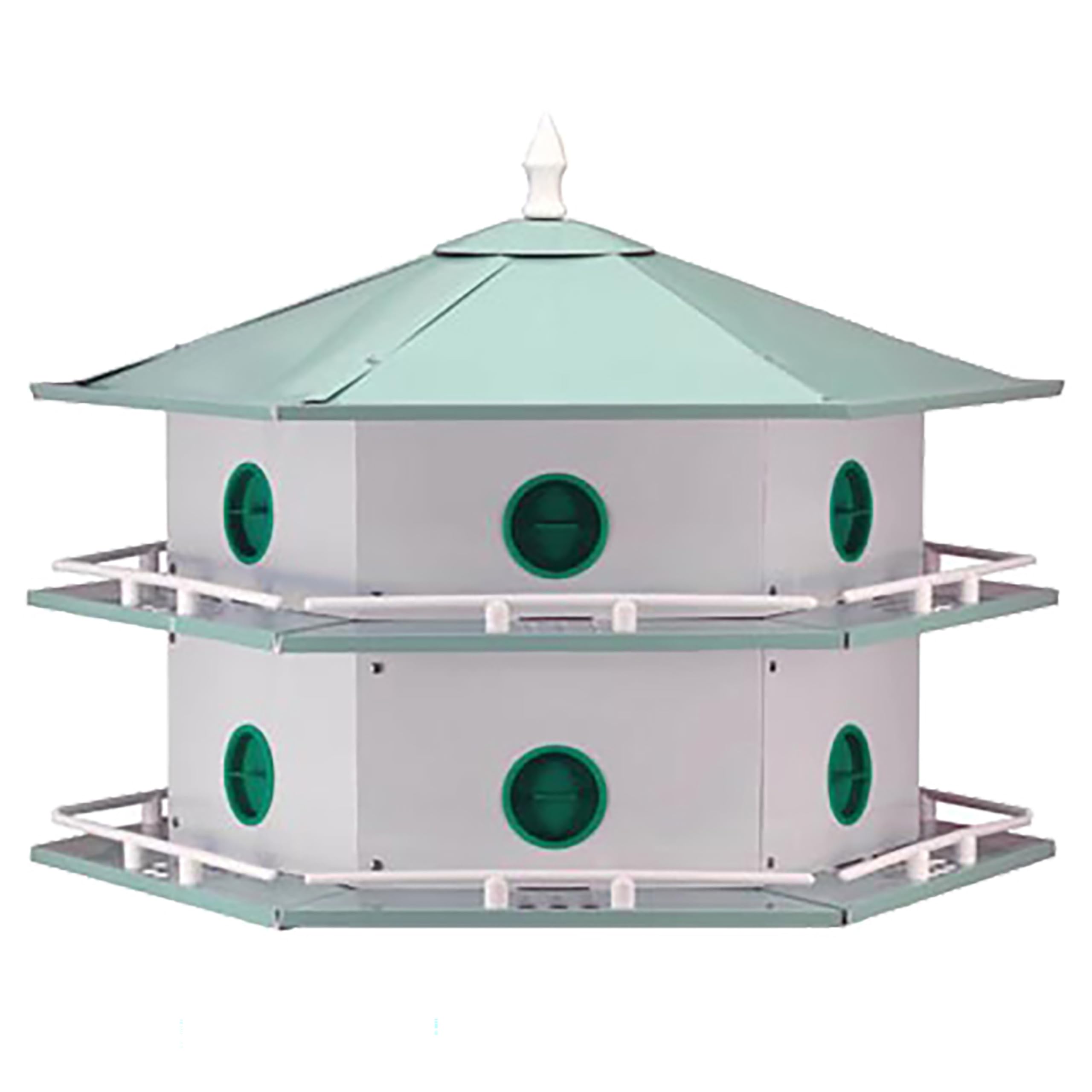
The Heath AH-12D delivers the thermal advantages of aluminum at a lower investment point than premium models. The hexagonal layout provides 12 compartments arranged around a central core, which improves air circulation compared to linear house designs. The white aluminum surface reflects the majority of solar radiation, and the lightweight construction — just 7.6 pounds — makes raising and lowering the house easy on a telescoping pole.
Snap-out floor sections make cleaning each compartment fast without tools, and the included door stops allow you to close compartments between migration seasons to prevent other birds from taking up residence. Porch railings run along each side of the hexagon, giving fledglings multiple safe exit paths. The hexagonal shape also provides better wind resistance than boxier designs.
Assembly is required, and the mounting pole is sold separately. The aluminum can dent if struck by falling branches, and the entry holes are round, so starling management will require aftermarket plates or regular monitoring. The house is best suited for landlords who prioritize weight reduction and heat management over natural aesthetics.
Why we love it
- Lightweight aluminum is easy to raise and lower on a pole
- Hexagonal design improves air circulation and wind resistance
- Snap-out floor sections enable tool-free cleaning
Good to know
- Round openings require starling-resistant add-ons
- Mounting pole is not included in package
5. S&K BH12 12-Room Plastic
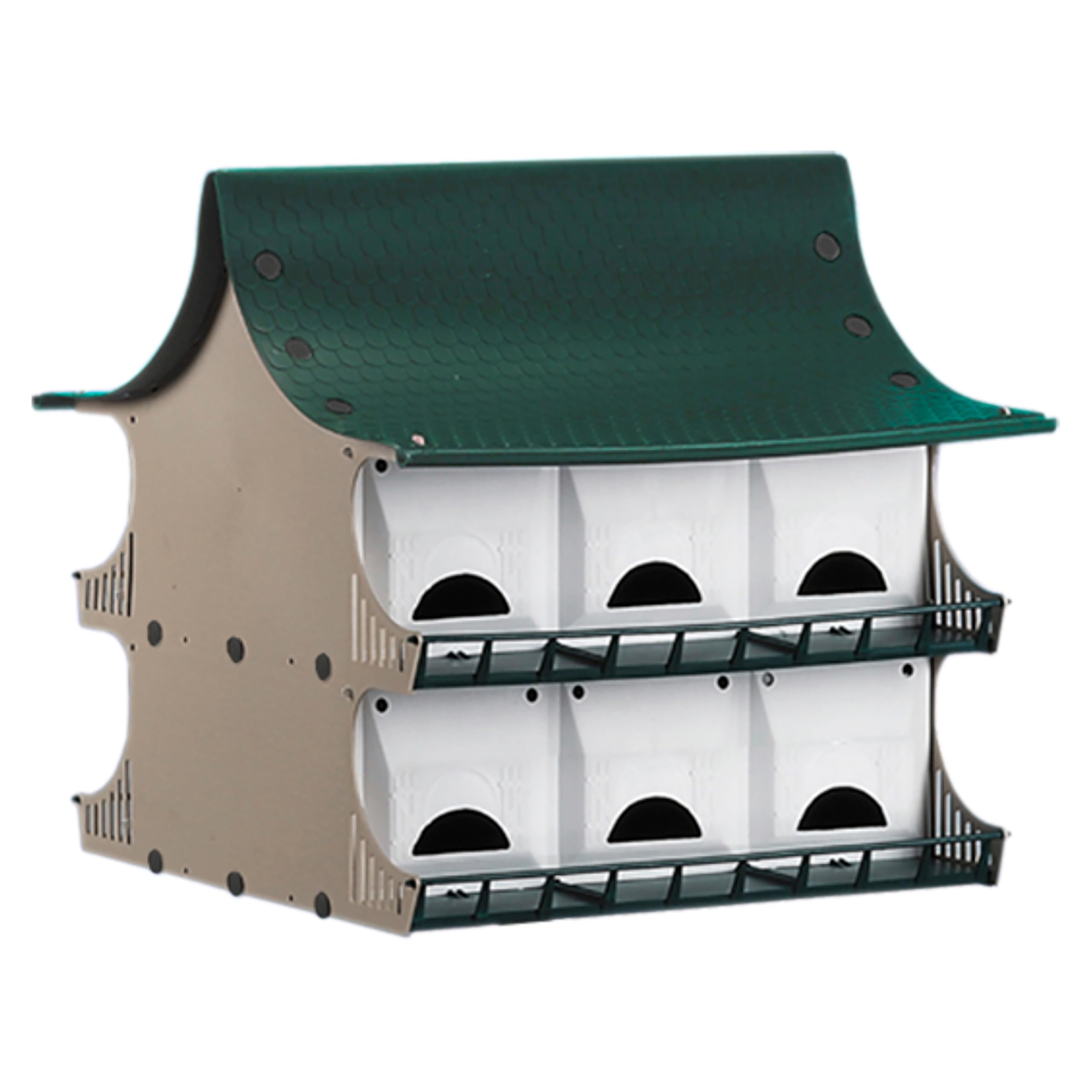
The S&K BH12 is the entry-level workhorse for purple martin housing. It snaps together in minutes with no tools required, and the UV-grade polypropylene copolymer resists fading and cracking through multiple seasons. The 12 compartments are arranged in four tiers with sloped floors that drain moisture away from nests — a thoughtful detail that prevents mold growth in humid regions.
At 8 pounds, this house is light enough to mount on a standard telescoping pole, and the triangular mounting opening is designed specifically for S&K pole systems. The white color reflects some heat, and the gap between the roof and the top tier provides passive ventilation. The compartments are sized correctly for martins and meet recommended depth standards.
Long-term durability is the primary trade-off at this level. The plastic will eventually become brittle after several years of UV exposure, though the manufacturer backs it with a limited warranty. The entry holes are round and lack any starling deterrent, and the snap-together joints can loosen over time if the house is raised and lowered frequently.
Why we love it
- Snap-together assembly takes under five minutes
- Sloped floors keep nesting material dry
- Very lightweight for easy pole mounting
Good to know
- Plastic can become brittle after extended UV exposure
- No starling-resistant entry features included
6. S&K Dual 24-Room Martin House
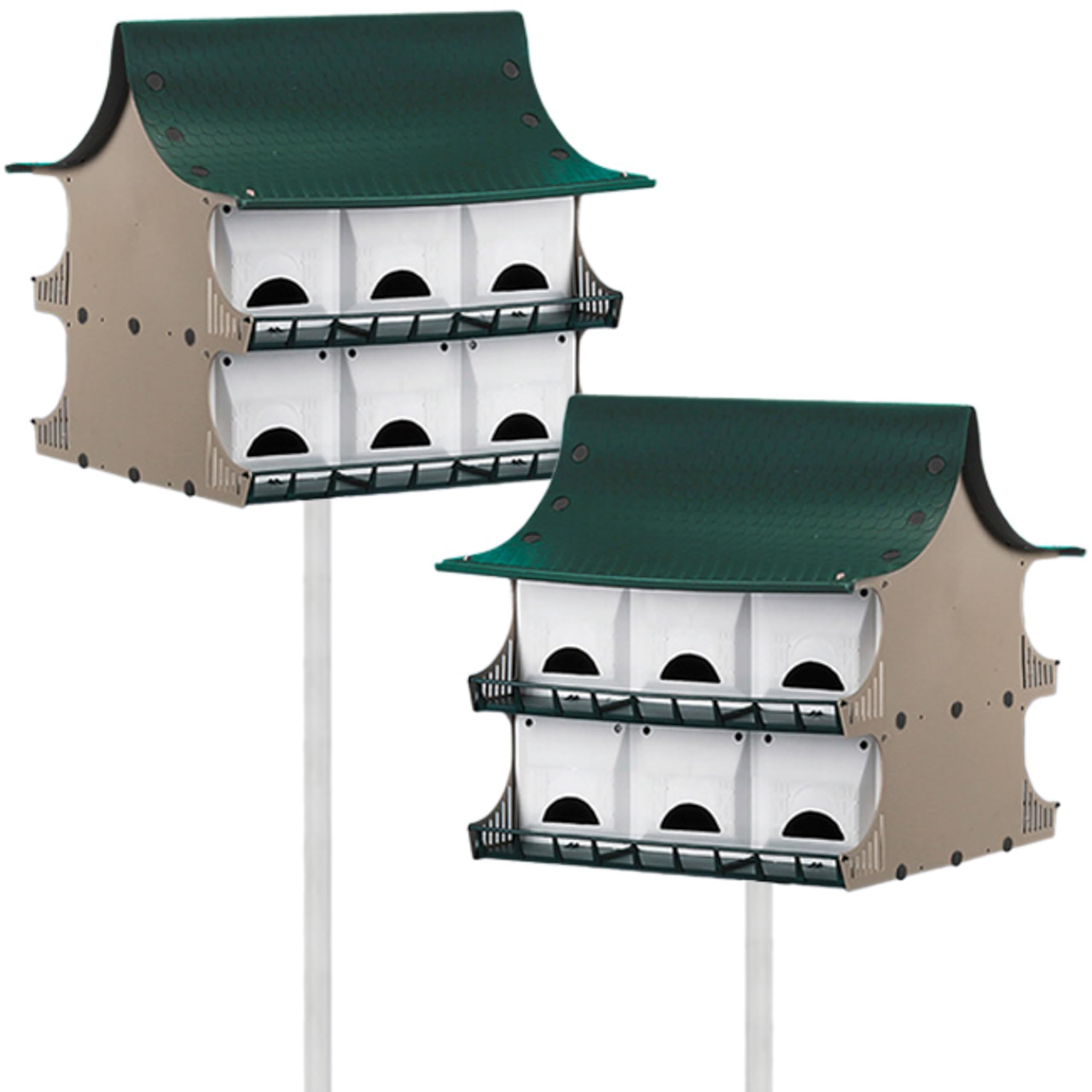
The S&K Dual 24-Room system is designed for landlords who want to manage a larger colony without purchasing a single monolithic house. It contains two separate 12-room houses that can be mounted together on a single S&K telescoping pole or placed on separate poles at different heights. The green and tan color scheme helps the houses blend into foliage, which martins prefer for predator avoidance.
Each house uses the same UV-resistant plastic construction as the S&K BH12, with sloped floors for drainage and triangular mounting openings for secure pole attachment. The combined 24-room capacity makes this one of the highest-density options available, and the modular design means you can start with one house and add the second as your colony grows.
The plastic material shares the same long-term UV degradation risk as other polypropylene houses, and both units require starling-resistant upgrades out of the box. The weight of the combined system (17.8 pounds) is manageable but requires a sturdy pole rated for dual-house loads. Assembly for each unit is tool-free, but mounting both on a single pole requires careful balancing.
Why we love it
- Dual-house system expands to 24 nesting rooms
- Modular design allows phased colony growth
- Natural green/tan finish blends into tree lines
Good to know
- Round holes require starling-proof modifications
- Dual mounting needs a heavy-duty telescoping pole
7. Birds Choice PMC8 Coates Original 8-Room
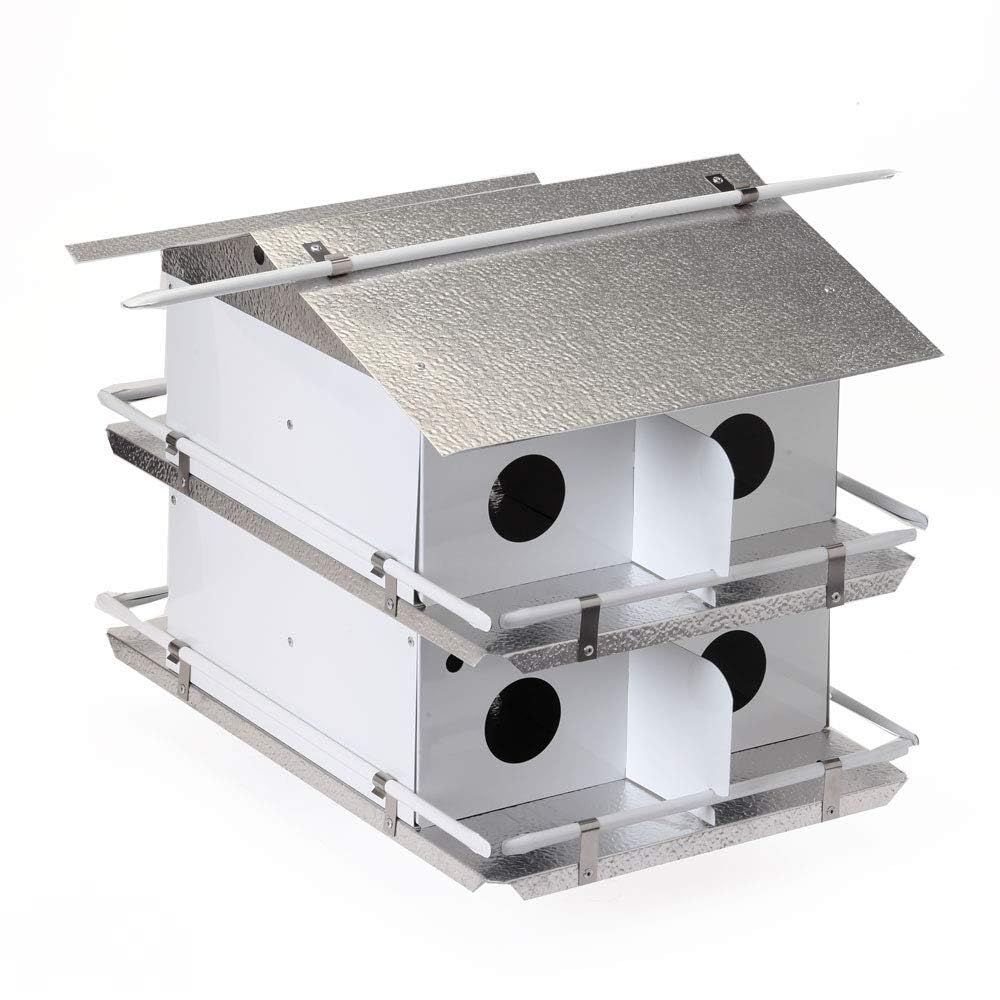
The Birds Choice PMC8 brings the same premium aluminum construction and stainless-steel hardware as its larger sibling but in a compact two-floor, eight-room format. The smaller footprint is ideal for suburban yards where a full 12-room house may overwhelm the space or outscale the local martin population. No assembly is required — the house comes fully assembled and ready to mount on any standard pole system.
This model includes the same reflective roof panels and ceiling ventilation ports found on the PMC12, ensuring consistent thermal regulation across all compartments. Porch dividers, guardrails, and a top perch are all included, along with hinged clean-out doors that seal tightly between seasons. The house weighs only 7 pounds, making it the easiest option for manual raising and lowering.
The obvious limitation is the reduced capacity — eight rooms may cap your colony size if your local population is robust. The round entry holes are not starling-resistant, and the smaller number of compartments means each nesting failure has a higher proportional impact on total colony output. For landlords just starting out, however, this is the most turnkey premium option available.
Why we love it
- Ready to mount with no assembly required
- Premium aluminum construction with excellent heat reflection
- Compact size fits smaller yards without overwhelming the space
Good to know
- Only 8 compartments limits total colony size
- Round entry holes need starling-resistant upgrades
FAQ
How many compartments does a purple martin colony actually need to start?
Are crescent openings really better than round holes for purple martins?
Final Thoughts: The Verdict
For most pet parents, the purple martin bird house winner is the Birds Choice PMC12 because the three-floor aluminum construction balances heat management, durability, and compartment depth better than any competitor. If you want natural starling resistance without aftermarket parts, grab the CEDAR ALPHA 12-Room. And for a turnkey experience with no assembly, nothing beats the Birds Choice PMC8.