
You scan the treeline, finally lock onto a warbler mid-song, raise your optic — and the image bounces, the color washes out, and you’re left chasing a blur. For the birder who values quick, steady identification over cropping a smartphone photo, the difference between a frustrating outing and a rewarding sighting comes down to build quality, glass, and mechanical precision in a single-handed device.
I’m Mo Mahin — the founder and writer behind Furric. I’ve spent months cross-referencing optical specifications against field reports, evaluating prism types, coating grades, waterproofing standards, and phase-correction claims to separate marketing gloss from genuine performance in this narrow category.
After weighing dozens of field-use case studies and verifying manufacturer integrity against independent optics tests, this guide provides a clear path toward the most trustworthy monocular for bird watching suited to your real budget and typical habitat.
How To Choose The Best Monocular For Bird Watching
Choosing a monocular for field birding requires more than comparing magnification numbers. The same mechanical decisions that drive an 8x versus 10x decision — exit pupil, prism type, coatings, and sealing — determine whether you see a sharp warbler at dusk or a muddy silhouette.
Magnification vs. Objective Lens Diameter
An 8x magnification paired with a 32mm or 42mm objective offers a wider field of view and a brighter exit pupil than a 12x or 15x unit with a small 25mm lens. For fast-moving songbirds in dense foliage, a lower magnification reduces shake and helps you acquire the target quickly. Higher magnification narrows your field of view and demands more steady hands or a tripod, which adds weight to your hiking kit.
Prism Type and Coating Quality
BAK-4 glass transmits more light than BK-7, resulting in a round, bright exit pupil versus a clipped, dim one. Fully multi-coated lenses — where every air-to-glass surface receives multiple anti-reflective layers — dramatically reduce glare and improve contrast, especially in low light. Skip “coated” or “multi-coated” labeling if you plan to bird early or late in the day.
Waterproofing and Fog-Proofing
A nitrogen-purged, O-ring-sealed monocular prevents internal fogging when you move from a humid trail into an air-conditioned car or get caught in a drizzle. Look for IPX7 or IP68 ratings that guarantee submersion protection, not just a splash-resistant claim. Unsealed optics can develop fungus in humid climates and require costly professional cleaning.
Quick Comparison
On smaller screens, swipe sideways to see the full table.
| Model | Category | Best For | Key Spec | Amazon |
|---|---|---|---|---|
| Bushnell Legend 10×42 | Premium | Low-light & fine detail | ED Prime glass, 4.2mm exit pupil | Amazon |
| Nocs Zero Tube 10×25 | Premium | Ultra-portable & rugged | ED glass, IPX7 submersible | Amazon |
| Nocs Zoom Tube 8×32 | Mid-Range | Wide field backpacking | 384ft field @1000yds, 9.5oz | Amazon |
| Vortex Solo 10×25 | Mid-Range | Lifetime warranty value | Fixed focus, fully multi-coated | Amazon |
| Olimt 8×25 ED | Mid-Range | Macro & close focus | 0.3m macro, 5.8oz | Amazon |
| K&F Concept 12×50 | Budget | Maximum magnification reach | IP68 10m waterproof, BAK-4 | Amazon |
| PhysioPhyx 12×60 Kit | Budget | All-in-one phone adapter kit | Includes tripod & phone mount | Amazon |
In‑Depth Reviews
1. Bushnell Legend 10×42 Ultra HD Monocular

The Bushnell Legend 10×42 earns the top spot because it brings ED Prime glass — a low-dispersion formulation that virtually eliminates chromatic aberration — into a 10×42 roof-prism body. The 4.2mm exit pupil delivers a bright image that holds up well under a dense canopy or during the golden hour. The 340-foot field of view at 1000 yards is generous for a 10x optic, allowing you to track a warbler as it flits between branches without losing your orientation.
This monocular is nitrogen-purged and O-ring sealed, so you can bird in steady rain or after a dunk in a stream without worrying about fogging. The rubber-armored exterior provides a confident grip even when your hands are damp. The twist-up eyecup has a proper intermediate stop, which helps eyeglass wearers maintain a full field of view.
Field reports consistently praise the contrast and color fidelity of the UWB (Ultra Wide Band) coating, which reduces glare off wet leaves. At roughly half the weight of many 10×42 binoculars, the Legend slides easily into a hip pack or jacket pocket, making it the most field-ready premium monocular for serious birders.
Why we love it
- ED Prime glass eliminates color fringing on white plumage
- 4.2mm exit pupil is bright in low forest light
- Rugged, waterproof, fog-proof build with non-slip armor
Good to know
- No tripod adapter thread built into the housing
- Eye relief is adequate but may feel short for deep-set eyes
2. Nocs Provisions Zero Tube 10×25 ED Glass
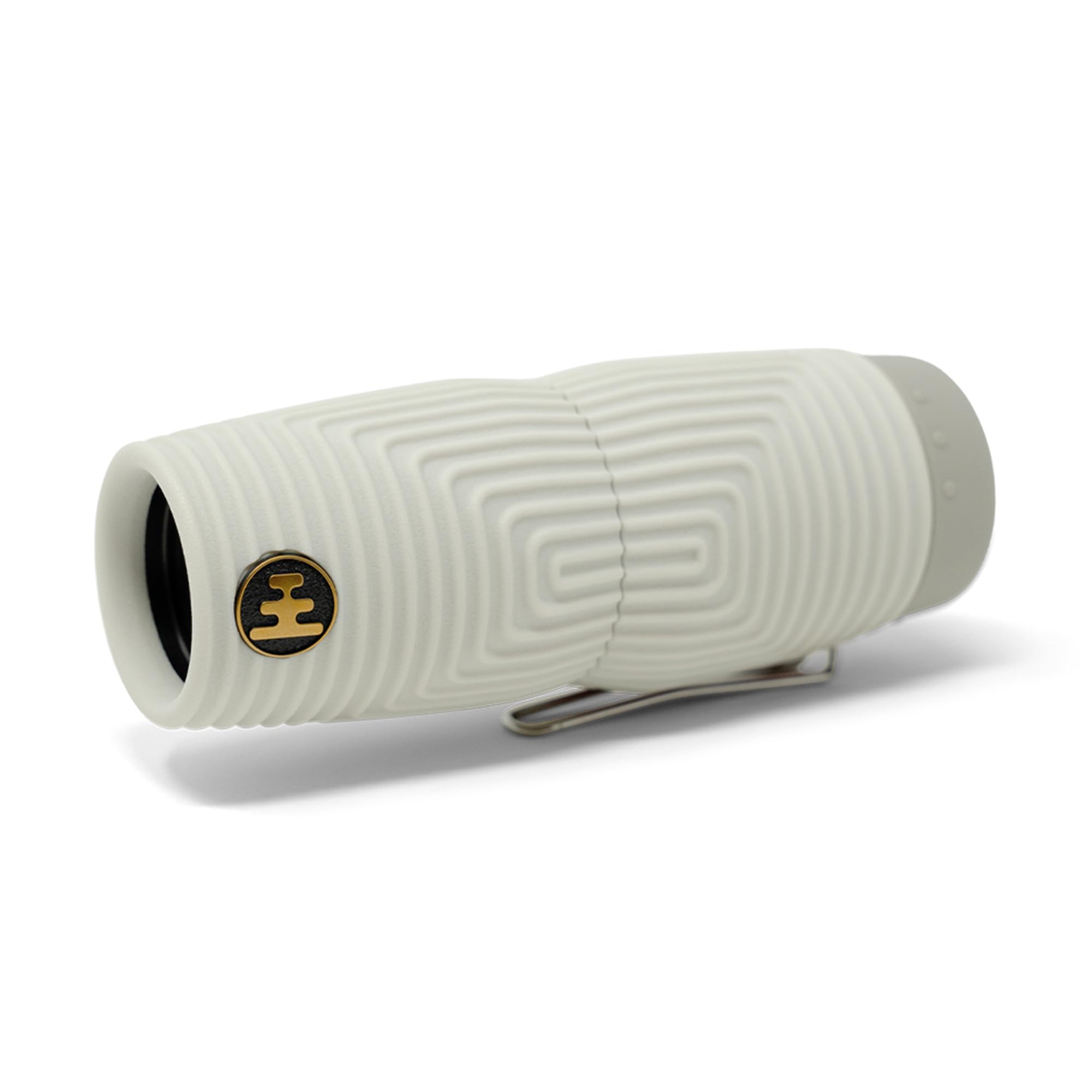
The Nocs Zero Tube 10×25 is a pocket-sized powerhouse that proves high-resolution performance doesn’t require a bulky barrel. Using ED glass across a 10-element, 7-group optical path, this monocular delivers sharpness and color saturation that competes with much larger models. The 341-foot field of view at 1000 yards is impressive for a 10×25 configuration, and the fully multi-coated lenses keep the image bright even in overcast skies.
What sets the Zero Tube apart from other compact monoculars is its IPX7 rating — it can be submerged to one meter for 30 minutes without taking on water. The nitrogen sealing prevents internal fogging when you pass through temperature shifts on a hiking trail. The rugged, impact-absorbing body and clip-on carry design mean you can attach it to a backpack strap and have it ready for an unexpected sighting without fumbling in a pouch.
The twist-up eyecup offers multiple click stops, making it easy to adjust for bare-eye or eyeglass use. The Nocs “No-Matter-What” Lifetime Warranty adds long-term confidence, and their 1% For The Planet commitment appeals to birders who value conservation as much as clarity.
Why we love it
- ED glass eliminates color fringing in a tiny package
- IPX7 waterproof and nitrogen-purged for fog-free views
- Clip-on design allows instant deployment from a strap
Good to know
- 2.5mm exit pupil requires steady hands for extended viewing
- Price point is high for a 10×25 entry-level optic
3. Nocs Provisions Zoom Tube 8×32

For birders who prioritize a wide, bright field of view over maximum zoom, the Nocs Zoom Tube 8×32 is a superb mid-range choice. With a 384-foot field at 1000 yards and an 8x magnification, this monocular lets you scan a marsh or treetop without feeling like you’re looking through a straw. The 4mm exit pupil provides ample light even under a shady forest canopy, and the fully multi-coated optics deliver crisp, true-to-life colors edge-to-edge.
The Swiss-designed BAK-4 prism ensures a clean, round exit pupil with no dark edges. The patented Rugged Wave Grip keeps the monocular securely in your hand, and the IPX4 water resistance protects against rain and splashes. Nocs has also integrated a 1/4-inch tripod mount into the frame, so you can attach a tabletop tripod for extended scanning sessions.
The multi-stop twist-up eyecup works well for eyeglass wearers, maintaining the full field without shadowing. At 9.5 ounces and roughly the size of a small water bottle, the Zoom Tube is light enough for a day hike but delivers enough optical quality to satisfy an experienced birder.
Why we love it
- Wide 384ft field of view excellent for scanning open habitats
- 4mm exit pupil provides bright images in low light
- Built-in tripod adapter for steady, long-duration viewing
Good to know
- IPX4 rated for splashes, not full submersion
- Weight is slightly higher than 8×25 compact alternatives
4. Vortex Optics Solo 10×25

The Vortex Solo 10×25 is a fixed-focus monocular built for low-fuss birding — no focusing wheel to adjust, just raise and look. This design suits field ornithologists who want to eliminate mechanical failure points entirely. The fully multi-coated lenses increase light transmission and resolution, giving you a clear, crisp image at distances from about 40 feet to infinity. The 107-foot field of view at 1000 yards is appropriate for a 10×25, allowing you to track birds in flight with reasonable ease.
Vortex’s VIP warranty — unlimited, unconditional, lifetime, and fully transferable — sets this monocular apart. If you damage it, Vortex repairs or replaces it at no charge (excluding loss, theft, or deliberate damage). For birders who work in harsh field conditions, this warranty provides serious peace of mind. The unit is nitrogen-purged and O-ring sealed for waterproof and fog-proof performance, and the rubber armor gives it a non-slip, durable exterior.
The fixed-focus system means you must rely on your own vision to find the sweet spot, and some users with mild astigmatism may prefer an adjustable focus. The eyecup twists to accommodate glasses, though the fixed focus may not suit close-range butterfly or insect observation.
Why we love it
- VIP lifetime warranty unmatched in this price tier
- Fixed focus simplifies operation in the field
- Fully multi-coated lenses for bright, clear images
Good to know
- Fixed focus limits close-range observation
- 2.5mm exit pupil may appear dim in deep forest
5. Olimt 8×25 ED Monocular

The Olimt 8×25 compresses ED glass and fully multi-coated lenses into a body that weighs only 5.8 ounces and measures 3.8 inches long. This makes it one of the most packable options for birders who also want to observe butterflies, dragonflies, or flowers. The 0.3-meter close focus distance is exceptional — you can get near-perfect focus on a tiny orchid or a caterpillar just a foot away, which opens up a macro dimension not available in most birding monoculars.
The 8x magnification with a 358-foot field of view provides a stable, easy-to-use image without the shake that can plague higher-power units. The IPX7 waterproof rating with nitrogen-filled interior means you can bird in the rain without concern, and the O-ring seals keep moisture out. The aluminum metal body feels solid in hand, and the included smartphone adapter compatibility allows you to digiscope on the fly.
The fully multi-coated ED lenses produce high color reproduction and contrast, though the 3.1mm exit pupil is a bit smaller than ideal for deep-forest dawn excursions. The twist-up eyecup works well with glasses, and the 16mm eye relief provides comfortable viewing for eyeglass users.
Why we love it
- ED glass and FMC coatings punch above its weight class
- 0.3m macro capability is rare in birding monoculars
- Extremely lightweight and compact for pocket carry
Good to know
- 3.1mm exit pupil limits low-light performance
- Small objective may struggle in very dim conditions
6. K&F Concept 12×50 IP68 Waterproof

For birders who need maximum reach — perhaps scoping distant raptors or shorebirds — the K&F Concept 12×50 delivers powerful magnification in a budget-friendly package. The 50mm objective paired with BAK-4 prisms and fully multi-coated lenses pulls in substantial light, and the 263-foot field of view at 1000 yards helps track moving targets at long range. The 4.17mm exit pupil is genuinely useful for low-light conditions where other value-priced monoculars would fall apart.
The standout feature here is the IP68 rating, which certifies waterproofing to 10 meters depth. This is rare at this price tier and means you can use it in heavy rain or even during snorkeling trips without hesitation. The rubberized barrel with a frosted texture provides a secure grip, and the included 1/4-inch tripod adapter is built into the housing for steady viewing.
The higher magnification does amplify hand shake, making a tripod almost necessary for extended sessions. The unit comes with a cleaning cloth, but the overall fit and finish is not as refined as the premium options above. For the birder who needs long-distance power and waterproof toughness on a tight budget, this is a compelling choice.
Why we love it
- IP68 rating to 10 meters is exceptional for any budget tier
- BAK-4 prism and FMC coatings provide genuine brightness
- 12x power reveals distant plumage details
Good to know
- 12x magnification requires tripod for stable use
- Overall build refinement is behind premium rivals
7. PhysioPhyx 12×60 HD All-in-One Kit
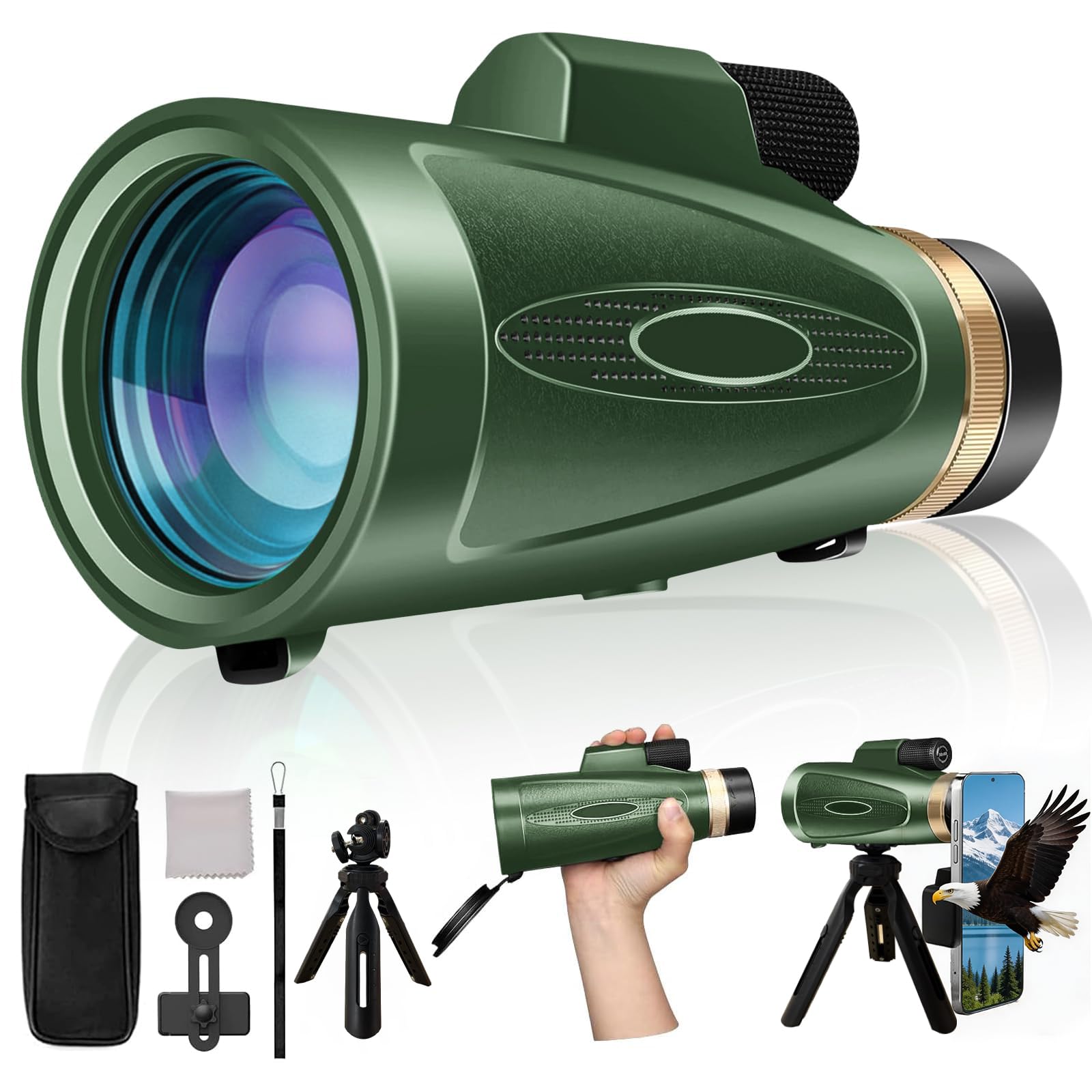
The PhysioPhyx 12×60 monocular is part of an all-in-one kit designed for immediate digiscoping — it comes with a smartphone adapter, a tripod, a carry pouch, and a cleaning cloth. The 60mm objective collects more light than the 50mm alternatives, and the BAK-4 prism paired with FMC coatings produces a bright, high-contrast image. The included tripod helps stabilize the 12x magnification, making it easier to share the view with family members during a group birding outing.
The ergonomic design with a rubber armor shell provides a comfortable grip, and the twist-up eyecup adjusts for eyeglass wearers. The kit aspect is particularly useful for beginners who want to start digiscoping immediately without buying additional parts. The smartphone adapter is easy to align and allows quick capture of distant birds for later identification.
The 12×60 configuration is heavy for extended handheld use, and the tripod is a basic tabletop model that works best on a stable surface. The compact carry pouch fits the monocular but may be snug with the tripod and adapter inside. As an entry-level kit for families or casual birders who want maximum versatility, this delivers good value.
Why we love it
- Complete kit with tripod and phone mount for instant digiscoping
- 60mm objective provides excellent light gathering
- BAK-4 prism and FMC coatings deliver bright, clear images
Good to know
- 12x magnification needs tripod for shake-free use
- Included tripod is basic and best on stationary surfaces
FAQ
What is the ideal magnification for bird watching with a monocular?
How do BAK-4 and BK-7 prisms affect image quality?
What does IPX7 waterproof rating mean for a monocular?
Can I use a birding monocular for digiscoping with a smartphone?
Final Thoughts: The Verdict
For most serious birders, the monocular for bird watching winner is the Bushnell Legend 10×42 Ultra HD because its ED Prime glass, large 4.2mm exit pupil, and rugged waterproof build provide professional-level clarity in a portable single-hand package. If you need ultra-portability with top-tier optics for backpacking, grab the Nocs Provisions Zero Tube 10×25. And for birders on a tighter budget who still demand waterproof toughness and long-distance reach, the K&F Concept 12×50 offers exceptional value with its unique IP68 rating.