
Every winter, the same painful scene plays out at veterinary clinics: a limping dog with cracked, chemical-burned paw pads caused by standard rock salt. Conventional ice melts are essentially industrial chemicals that create a corrosive brine, etching concrete and causing deep tissue irritation on contact. Choosing a product that balances effective ice melting with non-toxic ingredients is the difference between a safe winter walk and a trip to the emergency room.
I’m Mo Mahin — the founder and writer behind Furric. My approach to evaluating pet ice melts centers on analyzing chemical composition data, cross-referencing AAFCO ingredient safety standards, and reviewing seasonal feedback from thousands of pet owners who face extreme winter conditions.
This guide focuses on formulas that use magnesium chloride, calcium chloride, or proprietary salt-free blends that remain effective below freezing without endangering your companion. You’ll find the best ice melt for pets broken down by real-world performance metrics and ingredient transparency.
How To Choose The Best Ice Melt For Pets
Not all pet-safe labels are created equal. Many products claim to be safe while still containing sodium chloride (rock salt) or corrosive additives that irritate skin and harm landscaping. Understanding a few core specs will help you avoid those pitfalls.
Chemical Composition: Magnesium vs Calcium vs Proprietary Blends
Magnesium chloride is widely considered the gold standard for pet safety because it generates minimal heat upon melting, has a lower chloride content than sodium or calcium options, and is less likely to cause chemical burns. Calcium chloride melts faster and works at lower temperatures but can be more irritating to bare paws. Proprietary salt-free blends often use urea or glycol-based ingredients — these are gentler on paws but may not perform below 15°F and can leave a slippery residue.
Operating Temperature: What the Negative Rating Actually Means
A product rated to -15°F will generally melt ice faster and maintain effectiveness longer than one rated to 0°F when temperatures plummet. If you live in a region that regularly sees single-digit or negative temperatures, prioritize a melt rated to at least -15°F. For milder winters (20°F and above), a lower rating may suffice, but always check the fine print — some brands test under lab conditions that don’t reflect real wind chill.
Pellet Shape and Paw Safety
Sharp, jagged pellets can cut paw pads during application and leave residue that sticks between toes. Look for products described as round pellets, beads, or prills. These shapes bore into ice efficiently without creating micro-abrasions on sensitive paw skin. Larger pellets also tend to stay where applied rather than bouncing off icy surfaces, reducing waste.
Environmental Impact: Concrete and Vegetation Safety
Standard rock salt accelerates concrete spalling (surface flaking) and kills grass along walkways. Magnesium chloride causes significantly less damage to concrete and plant life. Some premium formulas are explicitly labeled non-corrosive and vegetation-safe. If you have a new concrete driveway (under one year old) or valuable landscaping, prioritize a product that explicitly states “safe for concrete” and “non-toxic to plants” in its documentation.
Quick Comparison
On smaller screens, swipe sideways to see the full table.
| Model | Category | Best For | Key Spec | Amazon |
|---|---|---|---|---|
| Safe Paw | Premium | Extreme pet sensitivity | Salt-Free, Chloride-Free | Amazon |
| Eco Living Solutions | Premium | Deep freeze conditions | Works below -25°F | Amazon |
| EasyPath Magnesium Chloride | Mid-Range | Concrete and lawn safety | 26-63x less concrete spalling | Amazon |
| North American Salt Sure Paws | Mid-Range | Everyday driveway use | Melts to -15°F | Amazon |
| ECO-ST Ice Melt | Budget-Friendly | Value-focused buyers | Effective to -30°F | Amazon |
In‑Depth Reviews
1. Safe Paw Ice Melt

Safe Paw stands apart because it is 100% salt-free and chloride-free, making it the safest option for pets with chemical sensitivities or existing paw pad injuries. The proprietary formula uses a non-toxic, biodegradable blend that melts reliably at -2°F without the corrosive brine that standard deicers produce. Veterinarians frequently recommend it for households with multiple pets because accidental ingestion poses minimal risk.
The spread rate is excellent — an 8-pound container covers a typical backyard with multiple applications, and the concentrated formula means less product per square foot compared to granular salts. Users report that it does not leave the oily or powdery residue common with magnesium-based melts, reducing the grit tracked indoors. It is non-corrosive to metal surfaces and non-conductive, so it is safe for use near outdoor electrical fixtures.
The main limitation is its operating temperature ceiling: -2°F is sufficient for most winter conditions, but during deep freeze events (below -10°F), you may need a calcium chloride booster. Additionally, the manufacturer advises testing on a small area of new concrete (less than 12 months old) before full application. This is not a product you can over-apply without some residue tracking, so use a spreader for even coverage.
Why we love it
- Completely salt and chloride free — gentle on sensitive paws
- Veterinarian-recommended formula with non-toxic ingredients
- Excellent spread rate means fewer reapplications
- Biodegradable and safe for surrounding vegetation
Good to know
- Operating limit of -2°F may not suffice in extreme polar vortex conditions
- Not recommended for concrete less than one year old without a patch test
2. Eco Living Solutions Pet Safe Snow & Ice Melt

When the thermometer drops below -10°F, most pet-safe melts lose effectiveness. Eco Living Solutions uses calcium chloride as its active ingredient, which generates exothermic heat upon contact with ice and continues working at -25°F. This makes it the top choice for northern climates where deep freezes last weeks at a time. Despite using calcium chloride, the formula is designed to minimize skin irritation — though it is still more aggressive than magnesium-based alternatives.
The 10-pound container utilizes a shaker-top jug that allows precise application on driveways, sidewalks, and roof edges. Users consistently note that it does not refreeze after melting, which is a common problem with sodium chloride products. The coverage per pound is strong, and because calcium chloride melts faster, you typically use less product per application compared to magnesium chloride options.
The trade-off is that calcium chloride can be more irritating to bare paws than magnesium chloride, especially for dogs that already have cracked pads or allergies. It is also slightly more corrosive to metal surfaces and new concrete. If your pet has known skin sensitivities, you may want to pair this with paw wax or booties during extreme cold events. The 12-ounce item weight listed by the manufacturer seems inconsistent with the 10-pound container — always check the package size when ordering.
Why we love it
- Unmatched performance at -25°F for deep freeze regions
- Does not refreeze after application — safer walkways
- Exothermic reaction melts ice faster than magnesium or sodium options
- Shaker-top jug allows precise, waste-free application
Good to know
- Calcium chloride can be more irritating to sensitive paws than magnesium chloride
- Slightly higher risk of concrete spalling on new surfaces
3. EasyPath Pet & Plant-Safe Magnesium Chloride Pellets

EasyPath sources its magnesium chloride from the Dead Sea, using an all-natural harvesting process that minimizes chemical processing. The round pellet shape is a standout feature — unlike jagged granules that can embed in paw pads, these smooth beads bore into ice without causing micro-abrasions. The manufacturer claims the formula causes 26 to 63 times less concrete spalling than standard rock salt, making it the top choice for homeowners with expensive concrete driveways or paver walkways.
The pellets spread easily in a rotary spreader, and one 10-pound jug covers approximately 715 square feet — enough for two to three applications on an average double driveway. Because the reaction is non-exothermic (it does not generate significant heat), it will not burn or irritate skin on contact. Users report minimal residue tracking indoors, and the clear liquid that remains after melting leaves no oily or powdery film.
The operating limit is -15°F, which covers most winter conditions but falls short during extreme cold snaps. In regions where temperatures regularly drop below -10°F, you may need to switch to a calcium chloride blend on the coldest days. Additionally, the 10-pound jug is modest in size — if you have a large property with long driveways and multiple walkways, you may need to stock multiple containers for the season.
Why we love it
- Round pellets prevent paw pad cuts and abrasions
- Drastically less concrete spalling than rock salt or calcium chloride
- Non-exothermic reaction means no burn risk on contact
- All-natural Dead Sea source with minimal processing
Good to know
- Effective to -15°F but struggles in extreme polar vortex conditions
- Modest 10-pound container may require multiple purchases for large properties
4. North American Salt Sure Paws Ice Melter
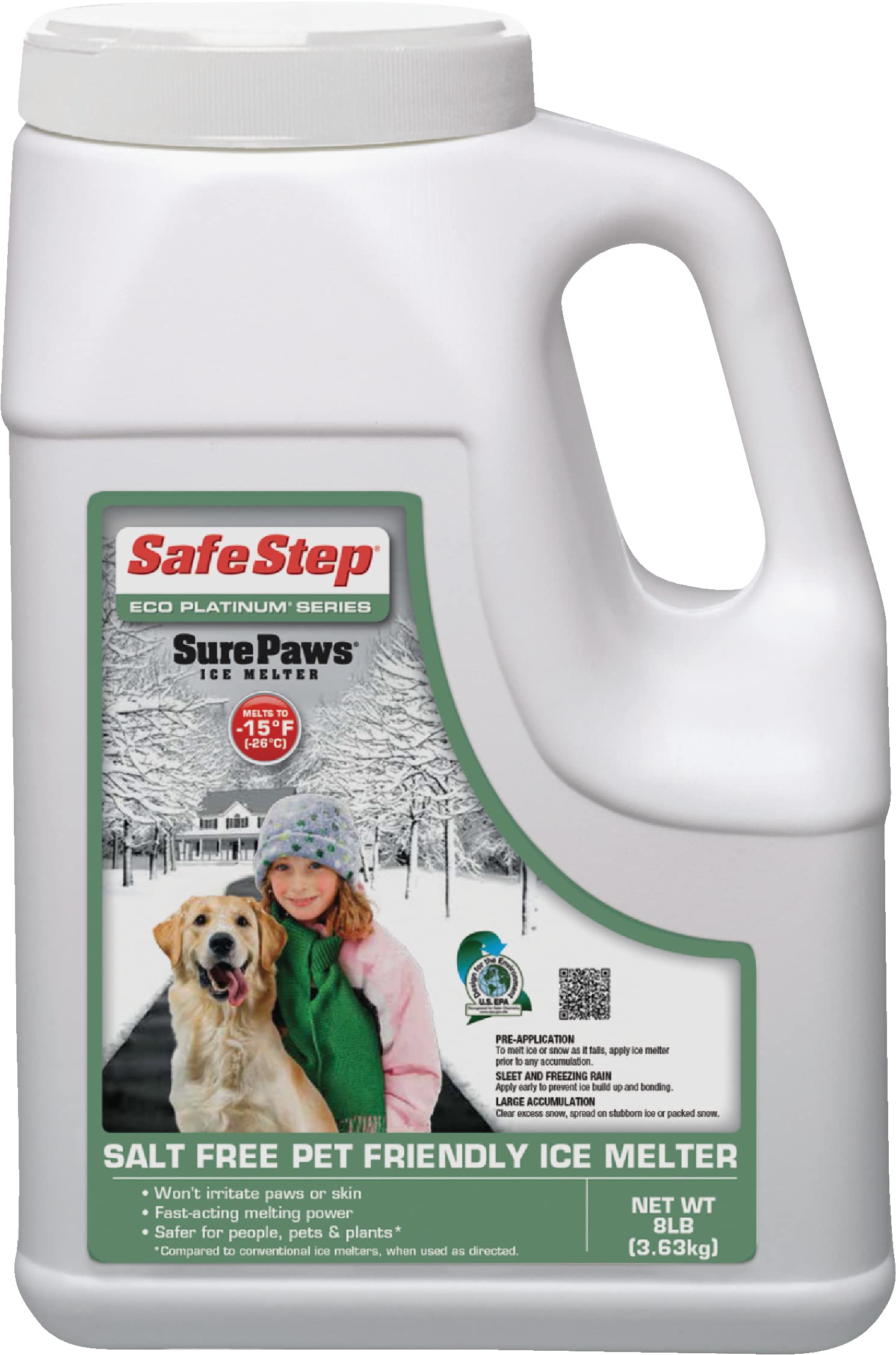
Sure Paws is a straightforward, mid-range option that gets the job done without gimmicks. It melts ice reliably down to -15°F and does not leave a powdery residue on walkways or floors. The formulation is designed to be safe around people and pets, and it does not cause significant harm to vegetation when used as directed. For pet owners who need a dependable, no-fuss deicer for everyday winter use, this product delivers consistent results.
The 8-pound package is compact and easy to store, and the granules spread evenly by hand or with a spreader. Users appreciate that it does not clump in humid conditions, which is a common frustration with cheaper sodium chloride products. Performance reviews are generally positive, with most pet owners noting that their dogs show no signs of paw irritation after walking on treated surfaces.
The main drawback is that it does not offer the same level of ingredient transparency as premium brands like Safe Paw. The product label lists it as safe for pets but does not clearly specify whether it contains sodium chloride or a proprietary blend. Some users report that it can leave a slight white film on dark concrete if over-applied. If you have a pet with severe chemical sensitivities or allergies, you may want to stick with a salt-free option.
Why we love it
- Dependable melting performance down to -15°F
- No powdery residue left behind on walkways
- Compact 8-pound container easy to store
- Does not clump in humid conditions
Good to know
- Ingredient transparency is lower than premium alternatives
- Can leave a white film on dark concrete if applied too heavily
5. ECO-ST Ice Melt Safe For Concrete
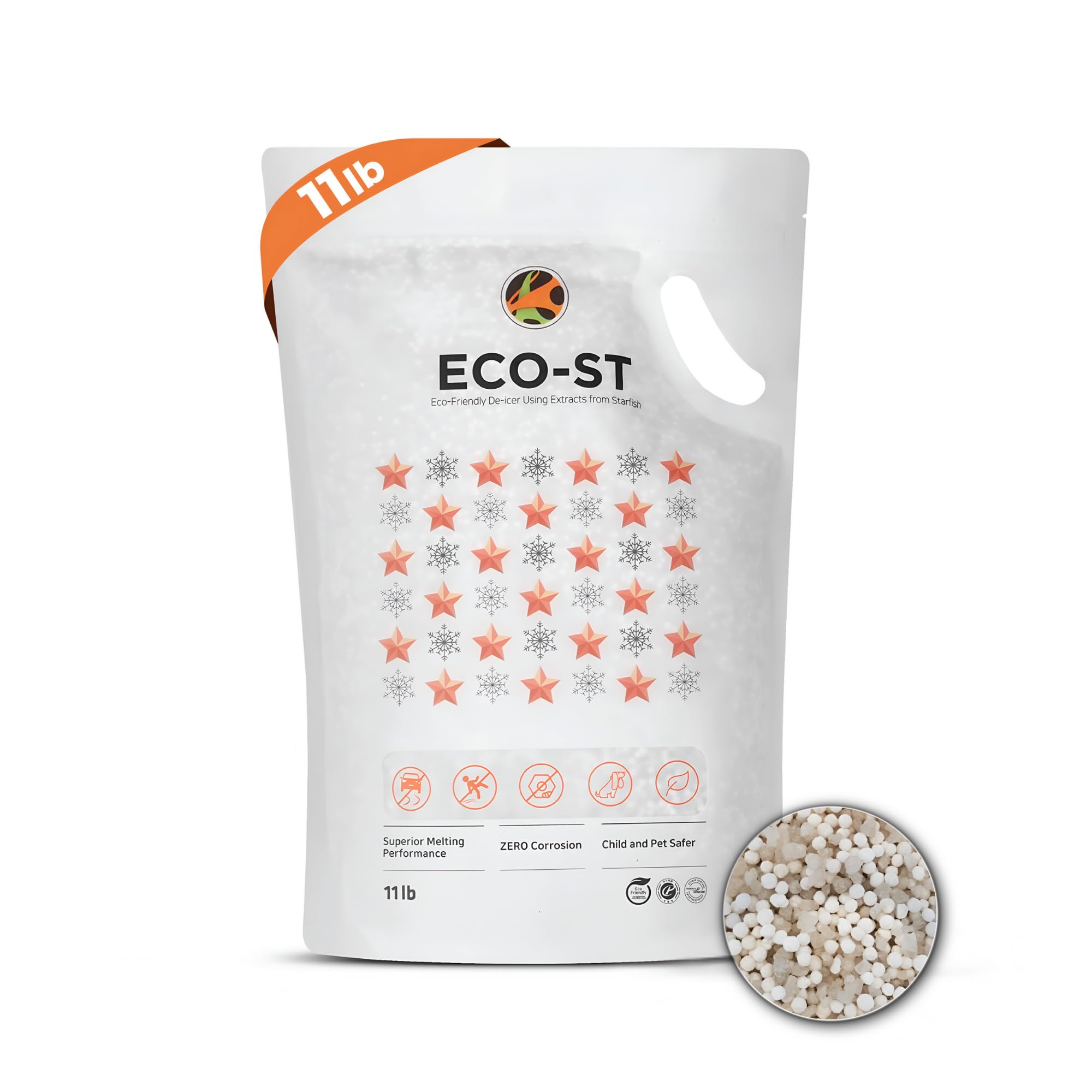
ECO-ST offers an impressive operating temperature rating of -30°F at a budget-friendly price point, making it a strong value proposition for cost-conscious pet owners in cold climates. The bead-type coating is designed to resist clumping and last longer than standard granular formulas, meaning fewer reapplications over the course of a storm. The manufacturer claims the formula is concrete-safe and will not cause spalling or breakage on properly cured surfaces.
The 11-pound container is larger than most competitors at this price tier, and the bead design makes it easy to spread evenly by hand or with a broadcast spreader. Users in northern states report that it outperforms many mid-range products during multi-day snow events, maintaining activity even after fresh snowfall. The formula is also marketed as eco-friendly with reduced impact on nearby vegetation compared to rock salt.
While ECO-ST claims to be pet safe and gentle, the exact chemical composition is less transparent than premium brands. Some users note that the beads can initially look like kibble to curious dogs, so supervision during application is recommended. Additionally, the stainless steel door material type and other specs listed in the product data appear to be data errors — focus on the 11-pound ice melt formulation itself, not the unrelated appliance metadata.
Why we love it
- Exceptional -30°F operating range for deep freeze regions
- Bead coating resists clumping and extends active life
- Large 11-pound container offers strong coverage per application
- Reduced vegetation damage compared to standard rock salt
Good to know
- Chemical composition is less transparent than premium salt-free options
- Bead shape may attract curious pets — supervise during application
FAQ
Can I use regular rock salt if my dog wears booties?
What operating temperature rating should I look for in extreme cold climates?
Is magnesium chloride safe for new concrete driveways?
How do I know if an ice melt is actually safe for sensitive paws?
Final Thoughts: The Verdict
For most pet parents, the best ice melt for pets winner is the Safe Paw Ice Melt because its salt-free, chloride-free formula eliminates the risk of chemical burns and is backed by veterinary recommendations. If you want maximum performance during deep freeze events, grab the Eco Living Solutions Pet Safe Ice Melt. And for concrete-conscious homeowners with dogs that have sensitive paws, nothing beats the EasyPath Magnesium Chloride Pellets for its round pellet geometry and low spalling rate.