
Bird photography demands more than just a long lens. The split-second window to capture a kingfisher’s dive or a raptor’s turn is measured in milliseconds, and your gear must keep up without hesitation. A body that locks focus fast and a lens that reaches without sacrificing sharpness are the non-negotiable foundation of this craft.
I’m Mo Mahin — the founder and writer behind Furric. My market research here focuses on evaluating autofocus systems, burst rates, and lens compatibility specific to avian subjects, cross-referencing veterinary-grade safety standards for field gear and analyzing aggregated feedback from experienced bird photographers.
After comparing sensor speed, buffer depth, and reach across eleven distinct configurations, I’ve separated the setups that truly deliver from those that leave you with blurred silhouettes. This guide to the camera for bird photography cuts through the noise to help you invest in the tool that matches your skill and your ambition.
How To Choose The Best Camera For Bird Photography
Selecting the right body means understanding how specs translate to field performance. The three pillars for avian work are autofocus speed and coverage, burst rate with a deep buffer, and effective reach through sensor crop or lens focal length. A clean ISO range also matters when you’re shooting in dawn or dusk light.
Autofocus Points & Tracking Intelligence
Birds move unpredictably, so you need phase-detection points that cover most of the frame. A system with 153 to 850 points, especially with dedicated animal eye-detection algorithms, lets you track erratic flight paths without losing focus. Contrast-detection alone is insufficient for birds in motion.
Burst Rate & Buffer Depth
Continuous shooting at 10 frames per second or higher is the baseline for wing-flap sequences. But the buffer — the number of raw frames the camera can hold before slowing — is equally critical. A shallow buffer locks you out after a few seconds, while deep buffers (200+ frames at 10 fps) let you hold the shutter through an entire dive.
Sensor Crop Factor & Reach
For a given lens, an APS-C or Micro Four Thirds sensor gives you a narrower field of view, effectively extending your reach. This 1.5x to 2.0x crop factor lets you fill the frame with a distant bird using a shorter, lighter, and more affordable lens. Full-frame sensors offer better high-ISO noise but require longer, heavier glass for equivalent reach.
Quick Comparison
On smaller screens, swipe sideways to see the full table.
| Model | Category | Best For | Key Spec | Amazon |
|---|---|---|---|---|
| Canon EOS R5 | Mirrorless Full-Frame | High-res in-flight detail | 45 MP, 12 fps, 1053 AF points | Amazon |
| Sony Alpha 7R V | Mirrorless Full-Frame | Maximum resolution & AI AF | 61 MP, 10 fps, 693 AF points | Amazon |
| Canon EOS R6 Mark II | Mirrorless Full-Frame | Balanced speed & value | 24.2 MP, 40 fps, Dual Pixel AF | Amazon |
| Nikon D850 | DSLR Full-Frame | Studio-grade dynamic range | 45.7 MP, 9 fps, 153 AF points | Amazon |
| Panasonic LUMIX S5IIX | Mirrorless Full-Frame | Hybrid photo & video | 24.2 MP, 779 AF points, Active I.S. | Amazon |
| Nikon D500 | DSLR APS-C | Action sports & wildlife | 20.9 MP, 10 fps, 153 AF points | Amazon |
| Sony Alpha a6400 | Mirrorless APS-C | Compact reach with Real-Time Eye AF | 24.2 MP, 11 fps, 425 AF points | Amazon |
| Nikon D5600 | DSLR APS-C | Entry-level learning camera | 24.2 MP, 5 fps, 39 AF points | Amazon |
| OM SYSTEM E-M10 Mark IV | Mirrorless MFT | Ultra-portable birding kit | 20 MP, 8.7 fps, 121 AF points | Amazon |
| Tamron 18-300mm Lens | Lens Only | All-in-one reach for Canon RF | 16.6x zoom, 1:2 macro, VC | Amazon |
| Panasonic LUMIX G100 | Mirrorless MFT | Walk-around starter kit | 20.3 MP, 10 fps, 49 AF points | Amazon |
In‑Depth Reviews
1. Canon EOS R5

The Canon EOS R5 delivers a rare combination for birders: a 45-megapixel stacked CMOS sensor that resolves feather detail with blistering clarity, paired with a Dual Pixel CMOS AF system that covers the entire frame with 1,053 points. You get animal eye-detection that locks onto a moving subject and holds it even through erratic flight paths, making it one of the most reliable bodies for in-flight capture.
Shooting at 12 frames per second with the mechanical shutter — or 20 fps using the electronic shutter — means you can fire through a full burst without losing focus, and the deep buffer handles those sequences without stuttering. The 8K video capability also allows you to extract high-resolution stills from footage, a useful backup when the action is too fast for single shots.
On the downside, the R5 runs warm during extended 8K recording, and the RF mount requires native glass that is priced at a premium. Third-party lens support is growing but still limited compared to E-mount or F-mount ecosystems. The body itself is weather-sealed, which is reassuring for damp marshland shoots.
Why we love it
- Full-frame 45 MP sensor with no optical low-pass filter for maximum feather sharpness
- 100% frame coverage with 1,053 Dual Pixel AF points and animal eye-tracking
- 20 fps electronic shutter burst with deep buffer for rapid action sequences
Good to know
- Heats up during extended 8K video recording sessions
- RF lens ecosystem is premium-priced with limited third-party options
- Higher pixel density demands faster shutter speeds or better stabilization for hand-held shots
2. Sony Alpha 7R V

The Sony Alpha 7R V pushes resolution to 61 megapixels with a back-illuminated Exmor R sensor, giving you the ability to crop deeply into a frame without losing print-quality detail. The dedicated AI processing unit drives Real-time Recognition autofocus, which can distinguish bird species and track them even when they’re partially obscured by branches or flying against a cluttered background.
With 693 phase-detection points covering the vast majority of the frame and a BIONZ XR processor that handles data eight times faster than its predecessor, the 7R V maintains reliable lock-on at 10 frames per second. The 8K 24p video mode also lets you pull high-resolution stills from footage, though the file sizes are massive and demand high-capacity, high-speed memory cards.
The body is well-built and weather-sealed, but the 61 MP sensor is demanding on lenses — only the very sharpest glass can resolve detail at that density. Rolling shutter can appear with fast-moving subjects when using the electronic shutter, so mechanical shutter is preferred for wing-beat sequences.
Why we love it
- 61 MP back-illuminated sensor allows extreme cropping for distant birds
- AI-based Real-time Recognition AF with species-specific bird detection
- 8K 24p video with 4K 60p oversampling for high-reach footage
Good to know
- Sensor demands ultra-sharp, premium glass to avoid visible softness
- 10 fps burst is adequate but not class-leading for fast action
- Electronic shutter rolling shutter makes mechanical preferable for birds in flight
3. Canon EOS R6 Mark II

The Canon EOS R6 Mark II is the speed specialist of this lineup, offering an astonishing 40 frames per second with the electronic shutter and 12 fps with the mechanical. That burst rate, combined with Canon’s refined Dual Pixel CMOS AF and animal eye-detection, makes it exceptionally effective for capturing the precise moment a bird launches from a branch or catches prey mid-air.
The 24.2-megapixel full-frame sensor is a well-tested sweet spot: enough resolution for large prints and significant crops, but with large pixels that soak up light beautifully at high ISOs. You can shoot confidently at ISO 6400 and above, which is a real advantage in the low light of early mornings or dense forest canopies. The 6-hour Full-HD recording limit with no overheating worry also makes it a hybrid workhorse.
The electronic viewfinder runs at 120 fps with minimal blackout, so you stay connected to the action. The main limitation is the buffer depth when firing at 40 fps — the camera can sustain that rate for about a second before slowing, so timing your bursts matters.
Why we love it
- 40 fps electronic shutter with minimal blackout for capturing split-second wing flaps
- Excellent high-ISO performance up to ISO 6400 for low-light dawn or forest shoots
- Reliable Dual Pixel CMOS AF with animal eye-detection that tracks through obstacles
Good to know
- Buffer fills quickly at 40 fps — burst discipline is required
- 24.2 MP resolution means less cropping headroom than the R5 or A7R V
- RF mount limits lens selection to Canon’s native line or adapted EF glass
4. Nikon D850

The Nikon D850 remains a benchmark DSLR for bird photography, pairing a 45.7-megapixel back-side illuminated full-frame sensor with a Multi-CAM 20K autofocus module that places 153 points — 99 of them cross-type — across the frame. The BSI design means excellent dynamic range and clean shadows, which is critical when you’re recovering detail from a bird in harsh backlight or deep shadow.
At 9 frames per second with the battery grip, the D850 may not match the burst speed of modern mirrorless bodies, but the deep buffer can hold approximately 200 14-bit raw frames before slowing. The optical viewfinder offers zero blackout and instantaneous subject recognition, which many birders still prefer over electronic finders for fast, reflexive tracking.
The F-mount lens ecosystem is vast and mature, with affordable used telephoto primes and zooms available. The main drawback is the body weight and the lack of in-body animal eye-detection — the D850’s Group Area AF is excellent but requires more manual intervention than a dedicated bird-tracking algorithm.
Why we love it
- 45.7 MP BSI full-frame sensor with industry-leading dynamic range for shadow recovery
- Deep buffer that holds ~200 raw frames at 9 fps for prolonged action bursts
- Vast, affordable F-mount telephoto lens ecosystem for specialized birding glass
Good to know
- Heavier body compared to modern mirrorless alternatives
- No on-sensor phase detection or animal eye-tracking AF
- Maximum 9 fps burst rate without accessory grip
5. Panasonic LUMIX S5IIX
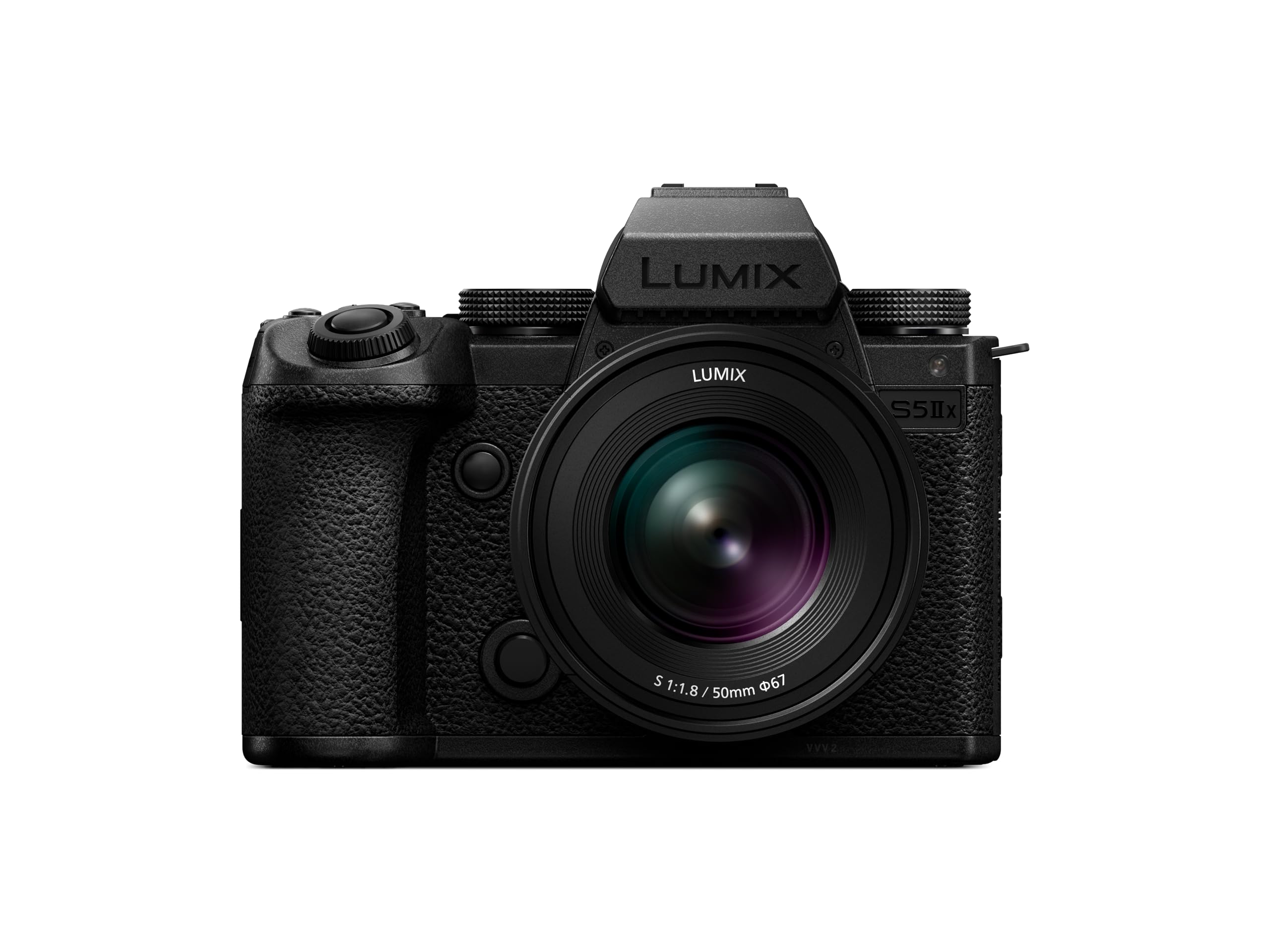
The Panasonic LUMIX S5IIX marks a turning point for the L-mount system by introducing true phase-detection autofocus with 779 points, finally closing the gap with Sony and Canon for bird tracking. The 24.2-megapixel full-frame sensor delivers clean files up to ISO 12800, and the in-body Active I.S. compensates for handheld sway when you’re following a bird through dense brush.
Video shooters will appreciate the unlimited 5.8K ProRes internal recording and the built-in heat dissipation fan that prevents overheating during extended wildlife video sessions. The hybrid hybrid phase-detection system in this body is fast enough to track a gannet in a dive, but the continuous burst rate is capped at around 9 fps with continuous AF, which is adequate rather than impressive.
The kit bundle includes both a 20-60mm zoom and a 50mm f/1.8 prime, giving you a solid general-purpose foundation. For bird photography, you will still need a dedicated telephoto lens, and the L-mount telephoto options from Sigma and Panasonic are growing but remain more limited than Sony or Canon’s selections.
Why we love it
- Phase-detection AF with 779 points enables reliable bird tracking for the first time in L-mount
- Active I.S. system smooths handheld tracking shots through uneven terrain
- Unlimited 5.8K ProRes recording with fan-based heat management
Good to know
- Continuous AF burst rate is limited to approximately 9 fps
- L-mount telephoto lens selection is still maturing compared to EF or E-mount
- Body plus kit lenses adds carrying weight for extended field hikes
6. Nikon D500

The Nikon D500 is widely regarded by wildlife shooters as the best APS-C DSLR ever made for action. Its 20.9-megapixel DX sensor delivers a 1.5x crop factor, turning a 300mm lens into an effective 450mm reach, and the Multi-CAM 20K module provides 153 focus points that cover a broad portion of the frame. That combination makes it a superior tool for filling the frame with small birds at a distance.
The D500 fires at 10 frames per second with a buffer depth of approximately 200 raw frames, which is exceptional. You can hold the shutter down during an entire burst of a hunting osprey and not hit the wall. The native ISO extends to 51200 with an expanded setting to ISO 1640000, giving you usable images in very dim woodland light.
The body is built with a magnesium alloy chassis and full weather sealing, so rain and dust are non-issues. On the downside, the D500 is a DSLR with no eye-detection for animals, meaning you rely on the Group Area AF system, which is fast but requires the photographer to keep the active point on the bird manually.
Why we love it
- 1.5x crop factor gives instant reach boost for small, distant birds
- 10 fps with a massive ~200-frame raw buffer for prolonged action sequences
- Weather-sealed magnesium body built for harsh field conditions
Good to know
- No animal eye-detection AF — requires manual point placement during bursts
- 20.9 MP resolution limits cropping flexibility compared to modern 24 MP+ sensors
- DSLR size and weight exceed most mirrorless alternatives of similar capability
7. Sony Alpha a6400

The Sony Alpha a6400 packs Real-Time Eye Autofocus for animals into a compact APS-C body, giving it a decisive edge for bird photography at a reasonable investment point. The 24.2-megapixel sensor uses 425 phase-detection points covering roughly 84 percent of the frame, and the dedicated AI algorithm can detect and track a bird’s eye across erratic movements. The 1.5x crop factor means a 70-350mm lens gives you an effective 525mm reach.
Burst shooting at 11 frames per second with continuous AF is snappy for the class, though the buffer depth is limited to around 116 frames in JPEG mode and fewer in raw. The tilting LCD screen is useful for low-angle shots when you’re photographing waterfowl or ground-feeding species, and the compact body is easy to carry on long hikes without fatigue.
The main compromises are the lack of in-body image stabilization — you rely on lens-based stabilization or a tripod — and the single UHS-I card slot, which slows write speeds during long bursts. The menu system is also dated compared to newer Sony bodies, requiring some setup time to customize for bird tracking.
Why we love it
- Real-Time Eye AF reliably locks onto bird eye and maintains tracking in motion
- Compact and light body paired with APS-C crop factor delivers excellent reach in a small kit
- 11 fps burst rate is competitive for this camera size and price tier
Good to know
- No in-body image stabilization — requires stabilized lenses or a tripod
- Single UHS-I card slot creates a write-speed bottleneck during raw bursts
- Menus are less intuitive than newer Sony bodies and need upfront customization
8. Nikon D5600

The Nikon D5600 serves as a strong entry point for bird photographers who are still building their skills. The 24.2-megapixel DX sensor delivers the same 1.5x crop factor as the D500, giving beginners extra reach with affordable telephoto lenses like the Nikon AF-P 70-300mm. The vari-angle touchscreen is useful for composing low-angle shots of shorebirds or ground-nesting species without lying in the mud.
The 39-point autofocus system is phase-detection and covers a central cluster, which works well for birds that are stationary or moving across a predictable path. The Expeed 4 processor drives full HD video at 60 fps, and SnapBridge connectivity allows for easy wireless transfer of images to a phone for quick sharing. The battery life is excellent, lasting well over 800 shots per charge.
The D5600’s 5 fps burst rate and the limited spread of AF points mean you will miss many fast, erratic flight sequences. It also lacks a dedicated animal AF mode, so you are relying on the standard Dynamic Area AF system. This body is best viewed as a learning tool — it will teach you fieldcraft and exposure fundamentals before you upgrade to a faster body.
Why we love it
- Affordable entry into the Nikon DX ecosystem with the same crop factor as pro bodies
- Vari-angle touchscreen simplifies low-angle bird photography
- Excellent battery life with user-friendly SnapBridge wireless sharing
Good to know
- 5 fps burst rate is too slow for most in-flight bird capture
- 39-point AF cluster limits tracking for birds moving outside the central frame area
- No animal-specific AF mode or eye-detection capability
9. OM SYSTEM E-M10 Mark IV

The OM SYSTEM E-M10 Mark IV uses a Micro Four Thirds sensor with a 2.0x crop factor, turning a 150mm lens into a 300mm equivalent and a 300mm lens into a 600mm equivalent. This extreme reach is the primary reason birders consider MFT systems. The 20-megapixel Live MOS sensor, paired with an in-body 5-axis image stabilization system rated at 4.5 stops, allows you to shoot handheld with long lenses far more steadily than on an unstabilized body.
The 121-point contrast-detection AF system works well for perched birds and slow-moving waders, and the flip-down monitor with a dedicated selfie mode is a novel feature for framing shots from unusual angles. The body is small and lightweight, making it the most portable kit in this list for birding trips where weight is a concern.
The contrast-detection AF is the system’s main weakness for bird photography — it struggles with fast, erratic flight patterns compared to phase-detection systems. The burst rate is 8.7 fps with continuous AF, but the buffer fills quickly in raw mode. For stationary subjects and casual birding, this is a capable travel companion, but serious action work demands a different body.
Why we love it
- 2.0x crop factor gives exceptional telephoto reach with compact, affordable MFT glass
- In-body 5-axis stabilization rated at 4.5 stops aids handheld long-lens shooting
- Smallest and lightest body in this list for travel-oriented birding
Good to know
- Contrast-detection AF is unreliable for fast, erratic birds in flight
- Buffer depth is shallow in raw mode during continuous bursts
- 20 MP sensor limits cropping headroom compared to 24 MP APS-C options
10. Tamron 18-300mm F/3.5-6.3 Lens
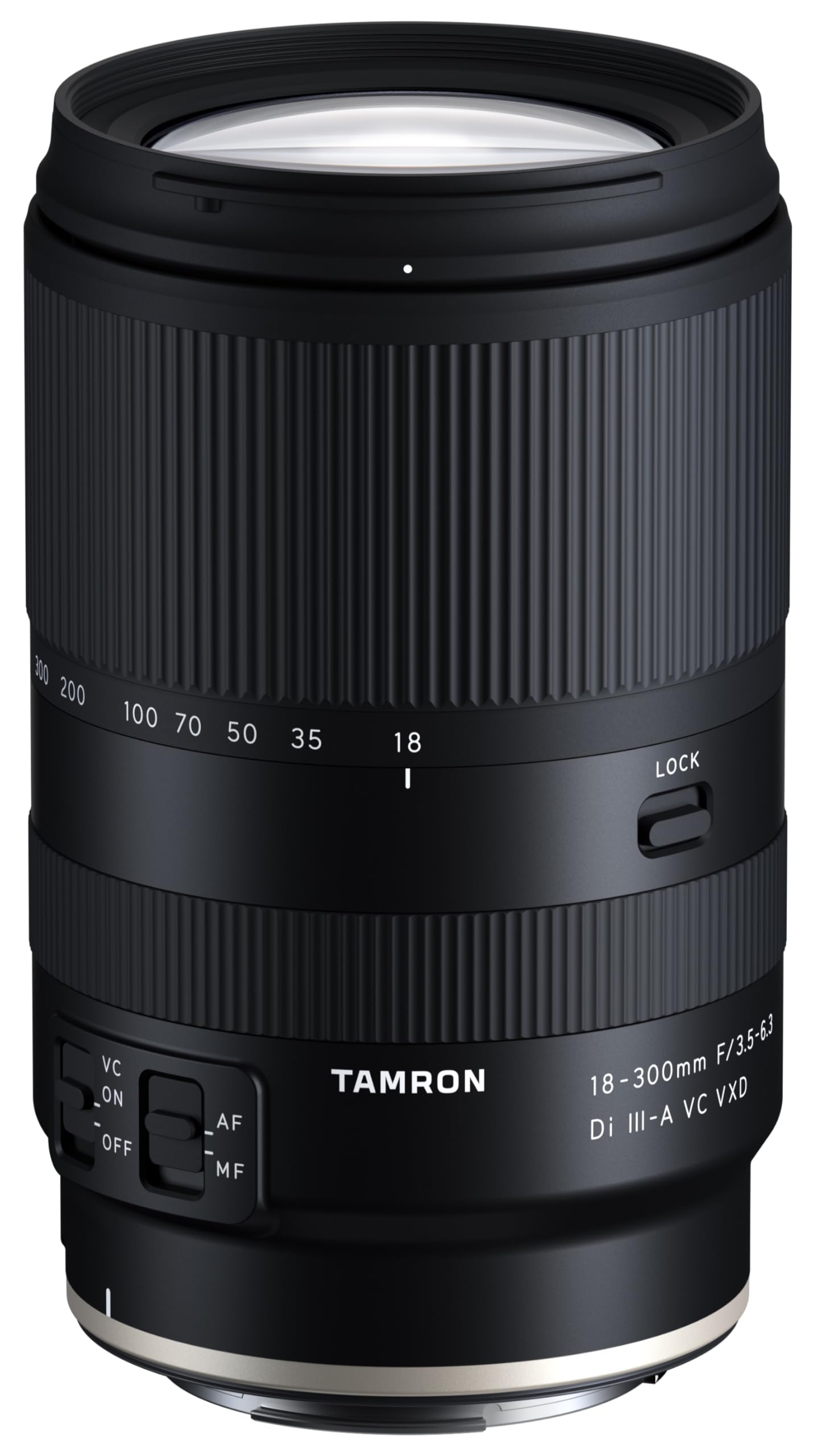
The Tamron 18-300mm F/3.5-6.3 Di III-A VC VXD is a lens rather than a camera body, but it deserves a spot in this guide because it’s the single most practical way to get bird-in-flight reach without swapping glass. With a 16.6x zoom ratio, this lens covers everything from group landscapes to tight bird portraits at 300mm. On an APS-C body with a 1.5x crop factor, that range becomes an effective 27-450mm.
The VXD linear motor focuses quickly and quietly, and the Vibration Compensation (VC) system provides up to four stops of stabilization, which is crucial when you push the telephoto end without a tripod. The 1:2 maximum magnification also lets you shoot half-life-size close-ups of insects or flowers when the birds aren’t active, making this a genuinely versatile all-day lens.
The variable aperture of f/3.5-6.3 means significantly less light at the long end than a fixed f/2.8 or f/4 telephoto zoom, which limits performance in low light and requires higher ISO settings. The image quality at 300mm is good for a superzoom but does not match the edge-to-edge sharpness of a dedicated telephoto prime.
Why we love it
- 16.6x zoom covers wide to 450mm effective reach on APS-C — one lens for a whole day out
- VXD motor offers fast, near-silent autofocus suitable for bird tracking
- VC stabilization reduces handshake at long focal lengths without a tripod
Good to know
- Variable f/6.3 aperture at the long end limits low-light birding performance
- Superzoom design cannot match prime lens sharpness at 300mm
- Only compatible with Canon RF-mount APS-C mirrorless bodies
11. Panasonic LUMIX G100

The Panasonic LUMIX G100 is the most budget-conscious entry on this list, offering a 20.3-megapixel Micro Four Thirds sensor in a compact body with a 12-32mm kit lens. The 2.0x crop factor provides the same inherent reach advantage as other MFT cameras — a 200mm lens becomes a 400mm equivalent — making it a low-cost way to experiment with bird photography.
The camera features 5-axis hybrid image stabilization and a 49-point contrast-detection AF system that works acceptably for slower, predictable subjects like herons or perched songbirds. The iA (intelligent auto) mode simplifies settings for beginners, and the ability to shoot 4K 24p video means you can capture bird behavior and then pull still frames later.
The G100’s autofocus system is fundamentally unsuited for birds in flight — contrast-detection lacks the speed and predictive tracking of phase-detection systems. The 10 fps burst rate is fine, but the buffer is shallow and the camera will stutter after a short burst. Budget-conscious beginners can use this to learn fieldcraft and composition, but it will be outgrown quickly for serious avian work.
Why we love it
- MFT 2.0x crop factor gives effective reach on any telephoto lens you attach
- Lightweight body with intelligent auto mode minimizes the learning curve for beginners
- 4K video capture allows frame extraction for moving subjects
Good to know
- Contrast-detection AF cannot track birds in flight reliably
- Shallow buffer depth interrupts extended continuous shooting bursts
- Kit lens (12-32mm) is not useful for bird photography — a separate telephoto lens is required
FAQ
Is a full-frame sensor better than APS-C for bird photography?
How many frames per second do I need for birds in flight?
What is the most important autofocus feature for bird photography?
Should I buy a DSLR or a mirrorless camera for birding?
Final Thoughts: The Verdict
For most bird photographers looking to elevate their work today, the clear winner among the camera for bird photography options is the Canon EOS R5 because it balances ultra-high resolution with a fast, dependable autofocus system and a deep buffer, all in a weather-sealed body that handles the field. If you prioritize raw burst speed above all else and want animal eye-tracking that practically never misses, grab the Canon EOS R6 Mark II. And for the birder who wants maximum reach per dollar on a compact body, nothing beats the crop-factor advantage and rugged build of the Nikon D500.