
A backyard flock’s health lives or dies by what’s in the feed bag. Choosing the wrong ration—whether it’s a starter mash low in protein or a layer formula lacking proper calcium—directly impacts egg production, feather quality, and your birds’ long-term vitality. The shelf is crowded with bags making bold claims, but a few key specs separate genuinely balanced nutrition from expensive filler.
I’m Mo Mahin — the founder and writer behind Furric. My recommendations come from months of market research, cross-referencing veterinary nutritional standards, and analyzing aggregated feedback from hundreds of dedicated flock owners to find what truly delivers for poultry.
This is your targeted guide to choosing the best food for poultry, built around core nutritional science and real-world performance data.
How To Choose The Best Food For Poultry
Poultry feed is a formula-driven purchase. Get the ratios wrong, and your flock will underperform—fewer eggs, weaker shells, or stunted growth. Here are the three factors that separate a sound ration from a gamble.
Protein Levels for Each Life Stage
Chicks (0–8 weeks) need a starter feed with 18–20% protein to build muscle and feather follicles. Grower formulas for pullets drop to 15–16% to prevent rapid weight gain that stresses developing bones. Laying hens thrive on 16–18% protein, which supports consistent egg production without excess body fat. A one-size-fits-all approach here will cost you in long-term flock health.
Calcium and Phosphorus Balance for Strong Shells
Laying hens require around 3.5–4.5% calcium in their daily ration—most layer feeds supply this through added limestone or oyster shell. Phosphorus should sit around 0.4% to balance calcium absorption without binding it. A ratio that’s off even slightly can produce thin-shelled or shell-less eggs.
Ingredient Sourcing and Additives
Certified organic or Non-GMO feeds like the Scratch and Peck starter provide traceability and eliminate corn and soy common in commodity feeds. Added value features—like Purina’s Omega-3 enrichment or marigold extract for yolk color—can improve egg quality, but they should never compensate for missing base nutrition.
Quick Comparison
On smaller screens, swipe sideways to see the full table.
| Model | Category | Best For | Key Spec | Amazon |
|---|---|---|---|---|
| Scratch and Peck Starter Mash | Starter | Holistic chick nutrition | 20.5% Protein | Amazon |
| Prairie’s Choice Layer Feed | Layer | Non-GMO adult maintenance | 16% Protein | Amazon |
| Purina Layena Crumbles | Layer | Value-driven egg production | 50 lb Bag | Amazon |
| Purina Layena+ Omega-3 | Layer+ | Omega-enriched eggs | 40 lb Pellet | Amazon |
| SANSECT Dried Mealworms | Supplement | High-protein treat | 51.2% Protein | Amazon |
In‑Depth Reviews
1. Scratch and Peck Whole Grain Starter Mash

This 10-pound bag of certified organic, Non-GMO mash delivers 20.5% protein from whole grains—sourced entirely in the Pacific Northwest. The formula is intentionally corn- and soy-free, reducing the risk of digestive upset and allergen reactions in sensitive chicks. It’s designed for the critical first eight weeks, a window where proper nutrition sets the foundation for skeletal strength and feather development.
A standout feature is its fermentability; you can serve it dry for convenience or soak it to encourage slower, more balanced eating habits that mimic natural foraging. The eco-friendly packaging is 100% recyclable and compostable, reflecting a production process that prioritizes both flock vitality and environmental responsibility.
For a premium starter mash that supports robust growth and clean nutrition without artificial additives, this Scratch and Peck bag sets a high bar. The smaller 10-pound size is perfect for small flocks or first-time chick rearers who want to avoid feed waste during the short starter window.
Why we love it
- Certified organic and Non-GMO with full ingredient traceability
- Corn- and soy-free formula reduces allergy risks in chicks
- Can be dry-fed or fermented for flexible feeding options
Good to know
- Limited to the 8-week starter phase—not suitable for layers
- Small 10-pound bag may require frequent reordering for larger flocks
2. Prairie’s Choice Backyard Chicken Feed — Layer Formula

Prairie’s Choice delivers a straightforward layer feed that hits the essential notes: 16% protein, all-natural ingredients, and a certification that the entire bag is Non-GMO, antibiotic-free, and gluten-free. Housed in a 25-pound bag of crumble form—ideal for hens 16 weeks and older—it prioritizes digestibility over filler-heavy formulas that can lead to pasty vents or reduced feed efficiency.
The feed is grown, milled, and packaged in the USA, adding a layer of supply chain transparency that serious flock owners appreciate. The crumble texture reduces dust compared to powders and encourages slower consumption, which helps prevent crop impaction in greedy eaters. It’s also non-medicated, giving you full control over any health interventions you choose to administer separately.
For mid-range buyers seeking a dependable, clean-label option for their laying flock, this Prairie’s Choice formula offers balanced nutrition without the premium price tag of organic certifications. It’s a reliable staple for daily maintenance feeding.
Why we love it
- Non-GMO, antibiotic-free, and gluten-free for clean nutrition
- U.S.-sourced ingredients with transparent supply chain
- Crumble form reduces dust and slows eating rate
Good to know
- No added Omega-3 enrichment for egg quality enhancement
- Only available in crumble—not ideal for pellet-preferring flocks
3. Purina Layena Crumbles — 50 lb

Purina’s Layena Crumbles is the 50-pound workhorse of layer nutrition, trusted by backyard operations and small farms alike. It supplies a complete, balanced formula with added marigold extract—a natural pigment that deepens yolk color without synthetic dyes. Essential amino acids, calcium, manganese, and trace minerals round out the profile, supporting both shell integrity and overall hen health.
The crumble form is particularly effective for mixed-flock scenarios where birds of different sizes feed together; it minimizes waste and ensures each hen gets a consistent ration. Purina’s veterinary diet classification means the formula has been developed with guidance from animal nutritionists, though the exact protein percentage is not as high as premium organic blends.
If you’re looking for a high-volume, cost-efficient feed that maintains solid egg production and shell quality across a large flock, this is the bag to grab. The 50-pound size reduces the frequency of restocking trips for serious keepers.
Why we love it
- Large 50-pound bag offers excellent value for multiple hens
- Marigold extract deepens yolk color naturally
- Veterinary diet formulation with essential amino acids
Good to know
- Not certified Non-GMO or organic
- Protein content is moderate—may not suit high-demand layers
4. Purina Layena+ Omega-3 Formula — 40 lb
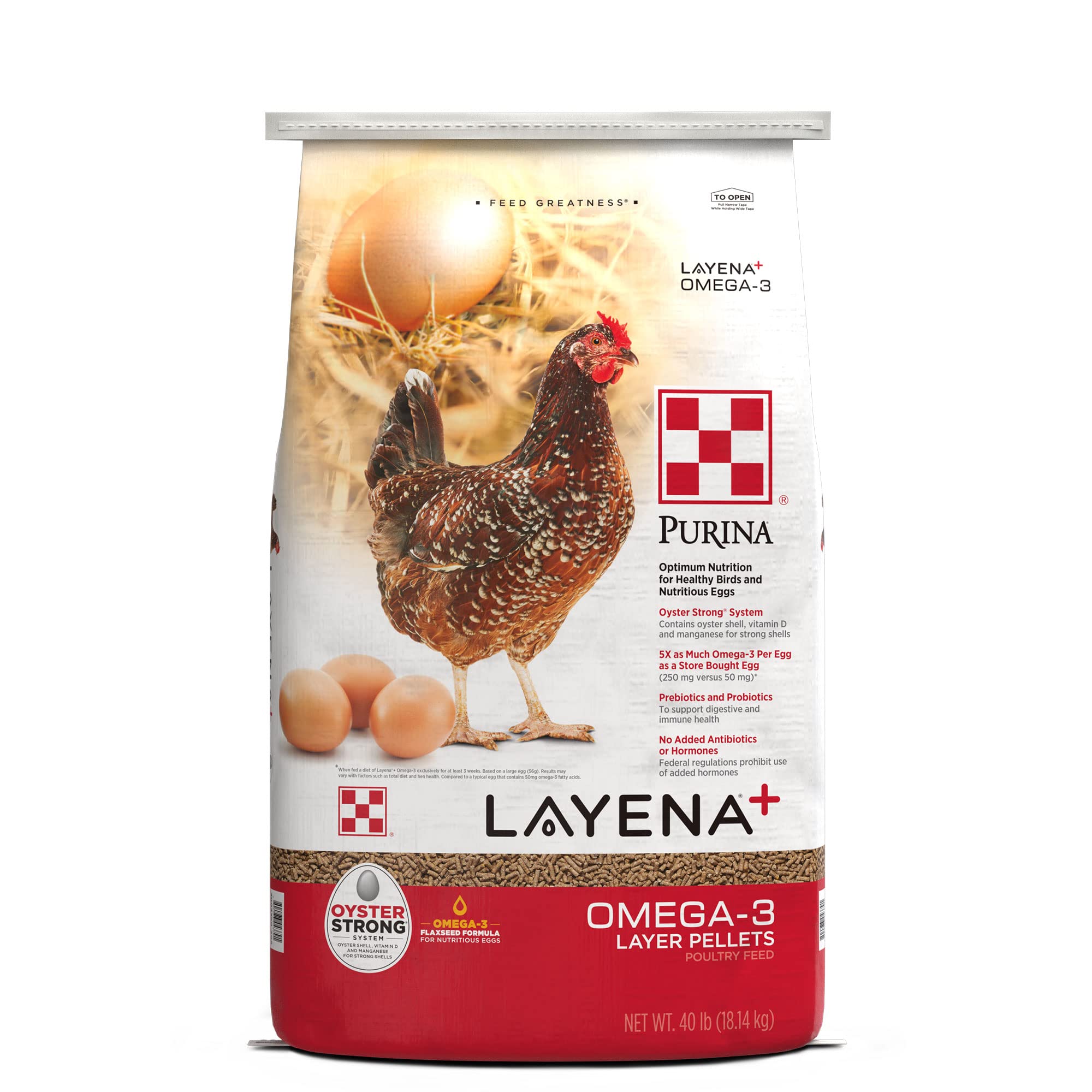
Purina Layena+ is specifically formulated to produce large eggs containing 250 mg of Omega-3 fatty acids per egg—roughly five times the amount found in a standard store-bought egg. This 40-pound bag of pellet feed uses an “Oyster Strong System” to deliver additional calcium directly to the shell gland, reducing thin-shell occurrences even in peak production cycles.
The pellet form is dense and compact, meaning less waste from birds flicking crumbles away. It’s also easier to manage in automatic feeders or large troughs. The formula is suitable for all breed sizes and maintains the complete, balanced nutrition profile that Purina is known for, making it a direct upgrade from the standard Layena line if egg enrichment is a priority.
For homesteaders who sell eggs or simply want the healthiest possible product from their own flock, the Layena+ premium is worth the investment. The added Omega-3s shift your eggs from commodity-level to specialty-market quality.
Why we love it
- Produces eggs with 250 mg of Omega-3—5x the standard
- Oyster Strong System strengthens shells during heavy lay
- Pellet form minimizes waste and feeds efficiently
Good to know
- Premium tier pricing per pound vs. standard layer feeds
- Not Non-GMO or organic certified
5. SANSECT Dried Mealworms — 10 lb
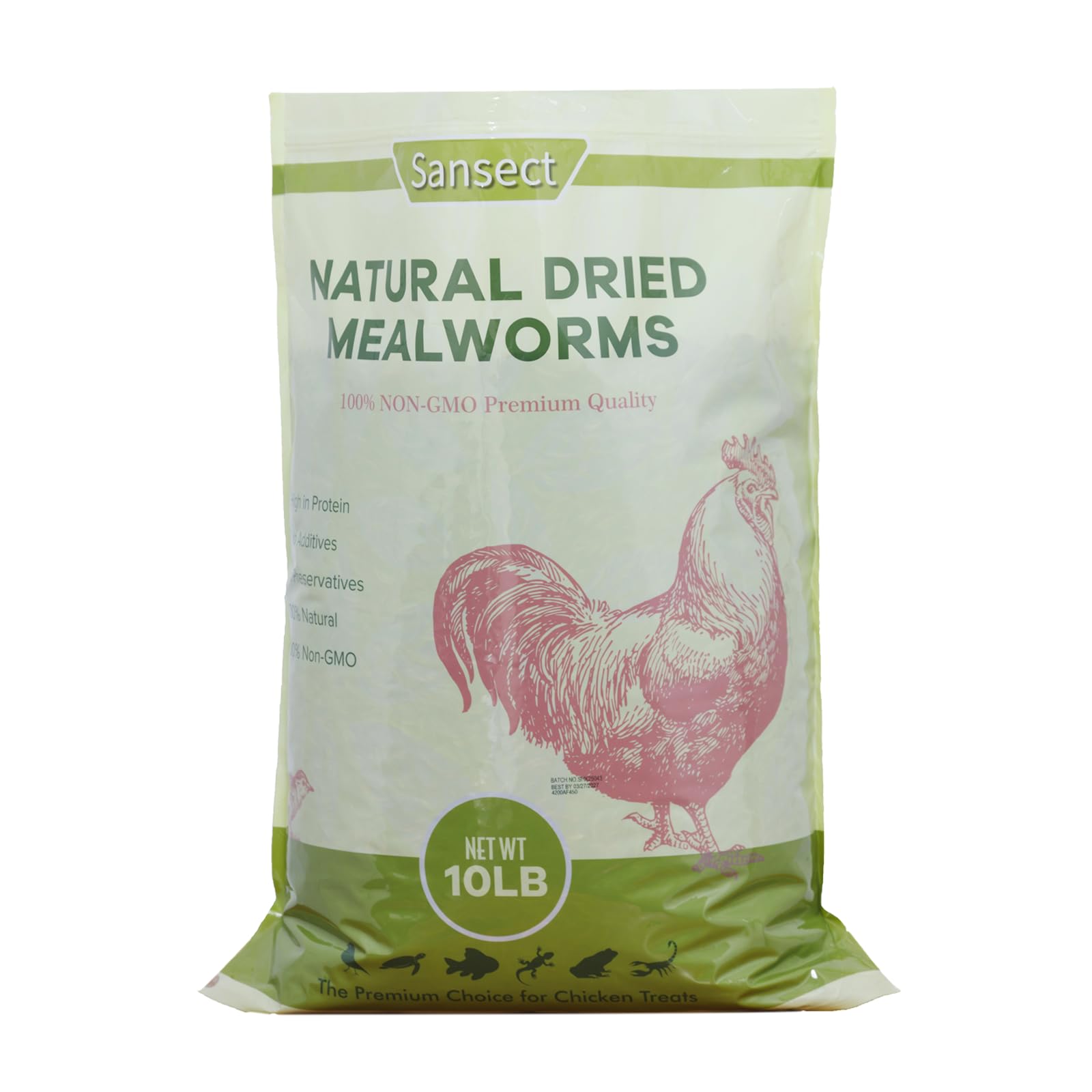
SANSECT’s 10-pound bag of dried mealworms packs 51.2% protein—10% higher than black soldier fly larvae—making it a powerful supplement for supporting feather regrowth, winter energy, and egg quality during molting. The larvae are raised on an organic diet of wheat, corn, carrots, fruits, and vegetables, then hand-sorted to remove empty shells and low-quality pieces before packaging.
This is a treat, not a complete feed, so it should be used to supplement a balanced layer or starter ration rather than replace it. The resealable zip-top bag keeps the contents fresh without refrigeration, and the lack of added preservatives or additives aligns with a natural feeding philosophy. It’s suitable for chickens, ducks, wild birds, and other poultry at all life stages.
For flock owners who want to reward good foraging behavior or provide a high-energy boost during cold months, this bulk package of SANSECT mealworms delivers outstanding nutritional density in a convenient, shelf-stable format.
Why we love it
- Extremely high protein (51.2%) supports feather and egg health
- Sustainably raised on organic feed, no additives
- Convenient resealable pouch with long shelf life
Good to know
- Not a complete feed—must be used as a supplement only
- Some birds may prefer fresh mealworms over dried texture
FAQ
Can I feed starter mash to laying hens?
What’s the difference between crumbles and pellets?
Should I add oyster shell if the feed already has calcium?
Final Thoughts: The Verdict
For most flock owners, the best food for poultry overall is the Scratch and Peck Whole Grain Starter Mash because it delivers certified organic, corn- and soy-free protein that’s perfect for the critical chick stage. If you want rich egg nutrition, grab the Purina Layena+ Omega-3 Formula. And for cost-effective daily feeding of a large laying flock, nothing beats the Purina Layena Crumbles.