
Managing a horse with metabolic concerns like insulin resistance, Cushing’s disease, or a tendency toward laminitis means every bite matters. Standard feeds loaded with molasses and high-starch grains can destabilize insulin levels, trigger painful episodes, and undo months of careful management. The solution lies in identifying feeds that prioritize fiber, use fat for calories, and keep starch and sugar levels strictly controlled.
I’m Mo Mahin — the founder and writer behind Furric. My approach to horse feed analysis involves comparing ingredient lists, studying NSC percentages, and aggregating long-term owner feedback on how specific formulations affect weight, energy, and metabolic markers across different breeds and life stages.
Whether you want a complete ration for a senior or a low-NSC supplement for a laminitic pony, this guide evaluates seven formulations to help you confidently choose the best low starch low sugar horse feed for your horse’s specific needs.
How To Choose The Best Low Starch Low Sugar Horse Feed
Feeds that claim to be “low sugar” can still pack enough starch to spike insulin. Understanding a few critical metrics and ingredient categories will keep your selection safe and effective.
NSC — The Number That Really Matters
Non-Structural Carbohydrates (NSC) is the sum of starch plus water-soluble sugars (ESC). For horses with metabolic syndrome, Cushing’s, or laminitis risk, most vets recommend keeping total NSC under 12%. Feeds under 10% are even safer. Look for the guaranteed analysis on the tag — if it doesn’t list starch content, the manufacturer may be hiding high levels.
Fat vs. Sugar Calories
When you pull starch and sugar out of a feed, you must replace those calories with something else. High-fat ingredients like stabilized rice bran, flaxseed, and vegetable oils provide dense energy without triggering an insulin response. Feeds that rely on fat rather than molasses or grain are safer for metabolic horses and produce “cool” energy that keeps hot-headed horses calmer.
Fiber Source Quality
Beet pulp (without molasses), soy hulls, and alfalfa meal are excellent low-starch fiber sources that support hindgut health and slow-release energy. Feeds with these ingredients tend to have a lower glycemic response than those based on corn, oats, or barley. Avoid feeds where grain or molasses appear in the first five ingredients.
Quick Comparison
On smaller screens, swipe sideways to see the full table.
| Model | Category | Best For | Key Spec | Amazon |
|---|---|---|---|---|
| Hygain Zero | Complete Feed | Metabolic & insulin-resistant horses | Less than 1.5% Starch | Amazon |
| Purina Active Senior | Senior Complete Feed | Active senior horses needing weight | High Fiber & Fat Formulation | Amazon |
| Triple Crown Senior | Senior Complete Feed | Senior horses with dental issues | Beet Pulp Based Formula | Amazon |
| Purina Mini Horse & Pony | Concentrate | Miniatures & ponies | Controlled Sugar & Starch Levels | Amazon |
| Standlee Beet Pulp Pellet | Supplement | Fiber-boosting mash additive | 39% Crude Fiber | Amazon |
| Manna Pro Cool Calories 100 | Fat Supplement | Weight gain for hard keepers | 99% Dry Fat Content | Amazon |
| Hilton Herbs Herballs | Treat | Low-sugar training rewards | No Molasses or Added Sugar | Amazon |
In‑Depth Reviews
1. Hygain Zero
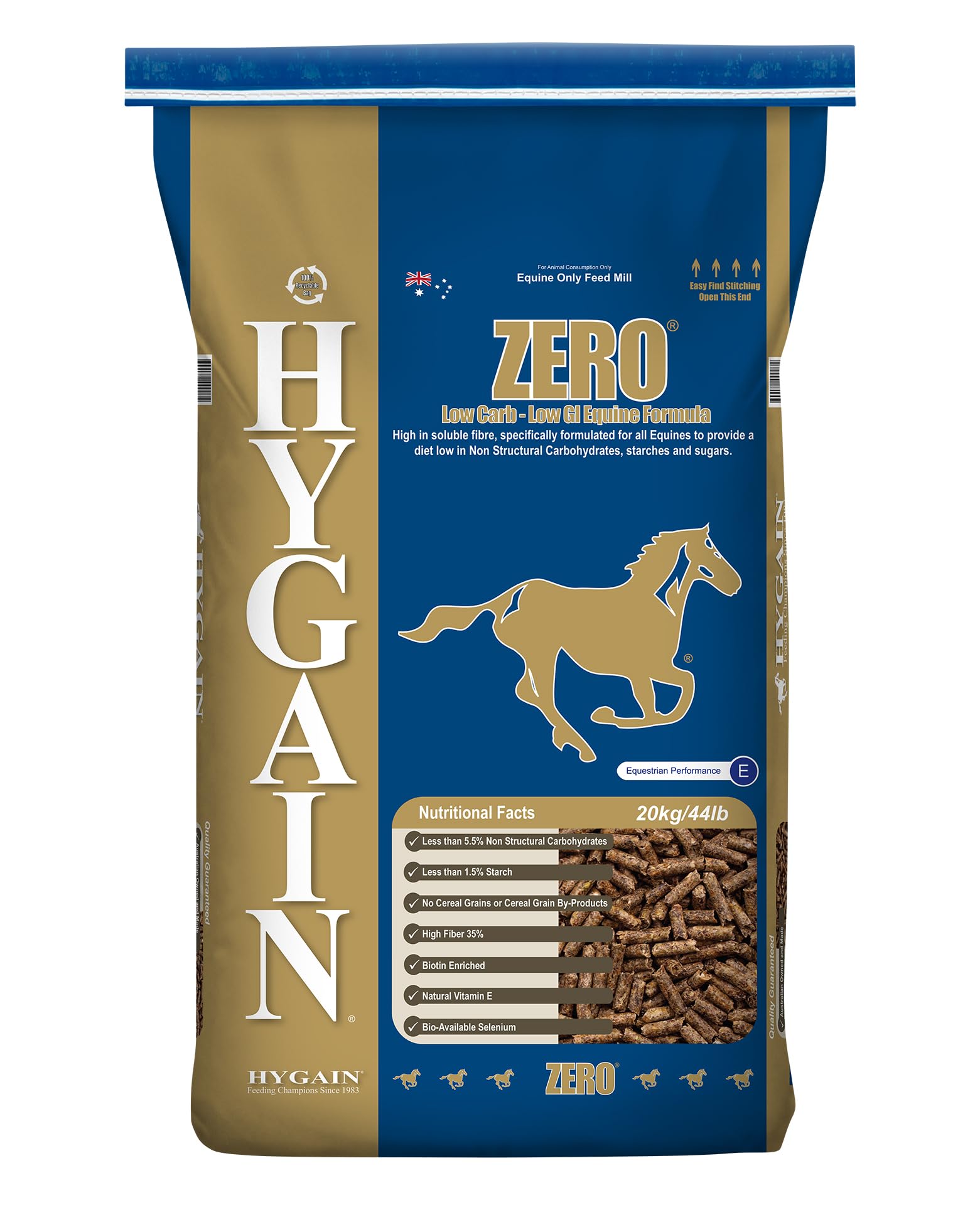
With a starch content below 1.5% and total NSC under 6.5%, Hygain Zero sets the gold standard for metabolic safety. This Australian-formulated feed uses high soluble fiber (35%) and natural vitamin E instead of grain-based energy, making it suitable for horses with laminitis, Cushing’s, Equine Metabolic Syndrome, tying up, and insulin resistance. The complete feed format means it can serve as the sole ration for horses that cannot tolerate pasture or hay.
Biotin enrichment supports hoof quality, which is often compromised in metabolic horses. The cereal-grain-free formula eliminates corn, oats, barley, and molasses entirely, removing the biggest insulin triggers from the diet. Owners report improved energy stability and fewer laminitic flare-ups after switching. The bag size (44 lb) is slightly smaller than the standard 50 lb, but the nutritional density compensates.
Import from Australia means supply can occasionally be interrupted, so ordering ahead is wise. Some owners find the pellet softer than other complete feeds, which benefits seniors with dental issues. If you need the absolute lowest starch and sugar numbers on the market, this is the benchmark.
Why we love it
- Starch under 1.5% — safest for insulin-sensitive horses
- High fiber content supports healthy hindgut fermentation
- Fortified with biotin and natural vitamin E
Good to know
- Import product — supply chain can be inconsistent
- 44 lb bag is lighter than standard 50 lb competitor bags
2. Purina Active Senior Horse Feed
Purina’s Active Senior formula targets horses over 15 years old who still need energy for light work or turnout. The pelleted ration relies on high fiber and moderate fat levels to provide calories without relying on molasses or excessive grain starch. Purina’s proprietary Amplify nugget adds a controlled fat source for weight maintenance and coat shine.
This feed works well for seniors who are hard keepers but do not show extreme metabolic sensitivity. The controlled starch levels are safer than standard senior feeds, but the exact NSC percentage is not printed on the bag, so you need to rely on the brand’s reputation for quality control. Owners frequently note weight gain within 4–6 weeks for underweight horses.
The pellet size is moderate — not ideal for horses with severe dental problems, but manageable for seniors with decent chewing ability. Some owners find the feed expensive compared to buying from local farm stores, but the formulation quality justifies the premium for horses that need a specialized senior diet.
Why we love it
- High fiber and fat support weight gain in seniors
- Designed for active older horses still in work
- Trusted Purina quality control and formulation
Good to know
- Starch content not explicitly listed on packaging
- Pellet texture may be too hard for horses with severe dental issues
3. Triple Crown Senior Horse Feed

Triple Crown Senior uses beet pulp as its base, which provides a fermentable fiber source that is naturally low in starch and sugar. The high-fat, high-fiber formulation supports weight maintenance for senior horses without relying on grain fillers. This feed can be mixed with water to create a soft mash, which is a lifesaver for horses with missing teeth, gum disease, or difficulty swallowing.
Many owners use it as the sole ration for horses that can no longer chew hay or graze pasture effectively. The reduced starch levels make it safer for older horses with mild metabolic concerns, though it is not positioned as a metabolic therapy feed. Some users report that the pellet hardness varies between bags, and dry pellets can be tough for very old horses to crunch.
Soaking the feed for 10–15 minutes solves the texture issue entirely. The 50 lb bag is a standard size that feeds one horse for roughly 2–3 weeks at maintenance levels. If you manage a senior with dental challenges, this is the most practical option on the list.
Why we love it
- Beet pulp base is naturally low in starch and sugar
- Can be soaked into a soft mash for horses with dental issues
- High fat content supports weight maintenance in seniors
Good to know
- Dry pellets can be hard — expect to soak before feeding
- Not the best choice for severe metabolic conditions
4. Purina Mini Horse & Pony Feed
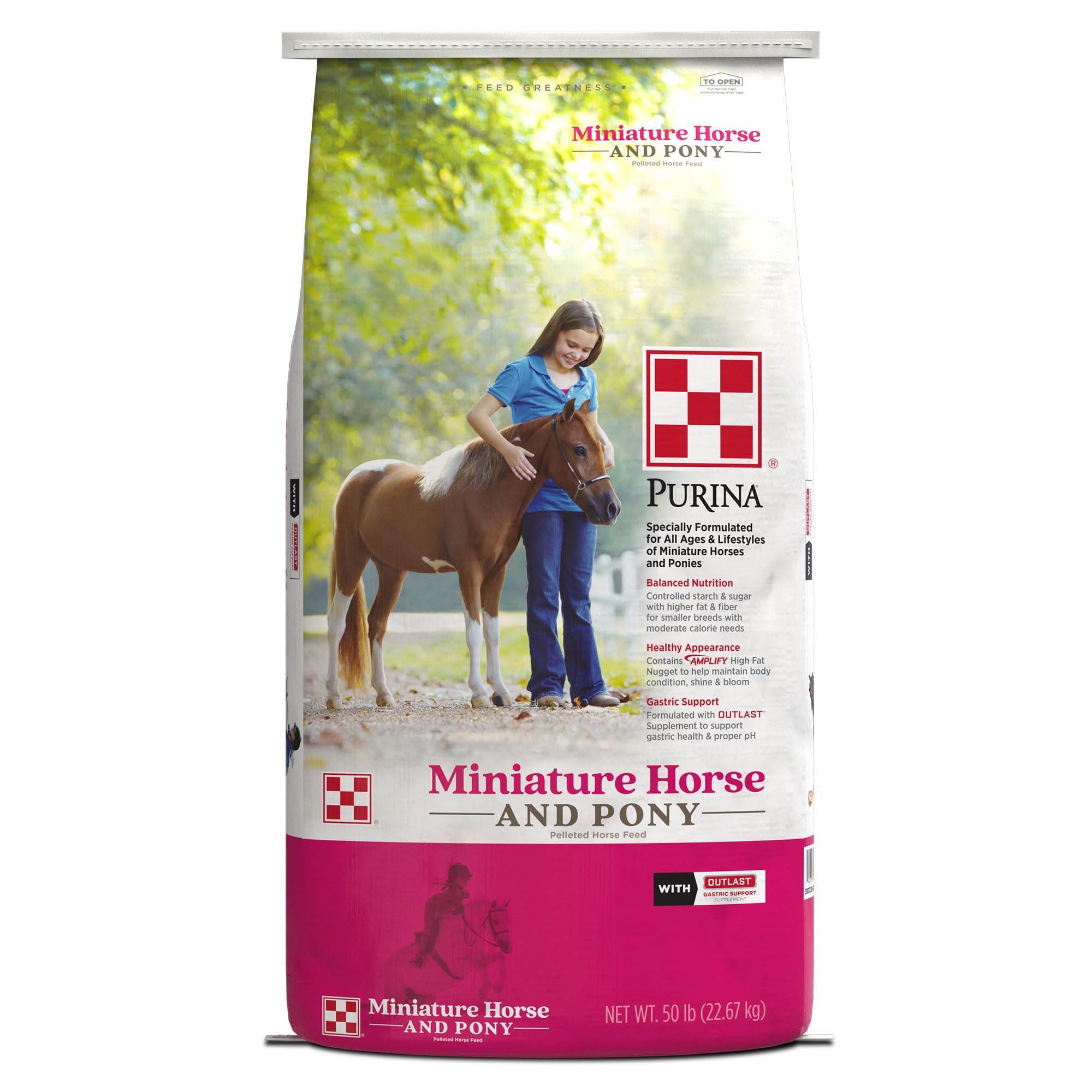
Miniature horses and ponies are prone to obesity and metabolic issues even more than full-sized horses, making controlled sugar and starch levels essential. Purina formulated this concentrate specifically for these smaller breeds, using the Amplify high-fat nugget to provide energy without spiking insulin. The Outlast gastric health ingredient supports digestive function, which is crucial for ponies prone to ulcers or hindgut imbalances.
The controlled sugar and starch levels help reduce the risk of laminitis and EMS in breeds like Shetlands, Welsh ponies, and miniatures. Owners report that the 50 lb bag lasts a long time for a single mini, since the feeding rate is much lower than for a full-sized horse. The pellets are small and easy for miniatures to chew, with a palatable aroma that even picky eaters accept.
A few owners noted that the price on Amazon is significantly higher than at local farm supply stores. If you have a Tractor Supply or other retailer nearby, check local pricing first. The formulation itself is excellent, but the delivery premium can make this a less economical choice compared to buying in person.
Why we love it
- Formulated specifically for miniature horses and ponies
- Controlled sugar and starch for EMS-prone breeds
- Amplify nugget provides high-fat energy without insulin spikes
Good to know
- Online price is often much higher than local feed stores
- Concentrate feed — must be fed with hay or pasture
5. Standlee Beet Pulp Pellet

Beet pulp is one of the safest calorie sources for metabolic horses — it is high in fermentable fiber, very low in starch, and provides slow-release energy without insulin spikes. These Standlee pellets are plain beet pulp without added molasses, which is critical because many beet pulp products come “molasses-added” and can contain significant sugar. The 40 lb bag is a standard staple for barns managing laminitic or insulin-resistant horses.
You must soak these pellets before feeding — they expand significantly in water and can cause choke if fed dry. Soaking also increases water intake, which helps horses stay hydrated. Many owners mix soaked beet pulp with a low-starch ration balancer or supplement to create a complete meal. The fiber content (around 39% crude fiber) supports hindgut health and provides a feeling of fullness without adding sugar.
A small number of batches have inconsistent pellet density, and some owners reported molasses contamination in certain lots. Check the ingredient label on arrival to confirm no added molasses. For the price per pound, this is one of the most cost-effective ways to add safe fiber to a metabolic horse’s diet.
Why we love it
- High fiber, low starch — safe for metabolic horses
- Plain beet pulp without added molasses
- Cost-effective fiber supplement for underweight horses
Good to know
- Must be soaked before feeding to prevent choke
- Check each bag for molasses — some batches may vary
6. Manna Pro Cool Calories 100

When a horse needs weight without the metabolic risk of grain, Cool Calories 100 delivers pure fat calories. This dry fat supplement contains 99% fat, providing more than double the caloric density of carbohydrates. It is designed for hard keepers, older horses losing condition, and performance horses that need extra energy without “hot” grain-like behavior.
The cool energy claims hold up in practice — owners consistently report weight gain without the fizziness or spookiness that high-grain feeds can cause. The fatty acid profile supports coat shine and hoof quality, making it a dual-purpose supplement for horses that need both weight and bloom. Adding one to two scoops per day to a low-starch feed or beet pulp mash provides substantial calories without increasing sugar or starch intake.
Some horses find the flavor sweet despite having no sugar, which helps with palatability for picky eaters. A small number of very sensitive horses may become more reactive, so monitor behavior during the first week. The 8 lb bag looks small, but a little goes a long way — one bag lasts several weeks for a single horse.
Why we love it
- 99% fat — adds dense calories without sugar or starch
- Promotes weight gain with cool, calm energy
- Improves coat shine and hoof quality
Good to know
- May make some sensitive horses more reactive
- 8 lb bag requires reordering more often than larger feed bags
7. Hilton Herbs Herballs No. 1 Oregano & Mint

Most commercial horse treats are loaded with molasses, corn syrup, or artificial sweeteners — none of which belong in a metabolic horse’s diet. Hilton Herbs Herballs offer a sugar-free alternative made with oregano, mint, and other herbs in a biscuit format. There is no added sugar, molasses, or artificial flavoring, making them safe for horses with insulin resistance, Cushing’s, or laminitis risk.
These treats serve as training rewards or positive reinforcement tools without the guilt of feeding sugar. The oregano and mint combination supports digestive health and fresh breath, and the biscuit texture is easy to break into smaller pieces for multiple reward sessions. Horses eagerly accept the herbal flavor, and owners appreciate the natural ingredient list.
The 4.4 lb bag is a convenient size for the barn or saddlebag. Some horses may not recognize these as treats initially if they are used to sweetened varieties, but most acclimate quickly. If your horse is on a strict metabolic diet, these are the safest treat option available without making your own.
Why we love it
- Zero added sugar or molasses — safe for metabolic horses
- Natural herbs support digestion and fresh breath
- Biscuit format breaks easily for training rewards
Good to know
- Some sugar-accustomed horses may be hesitant at first
- Bag resealing could be better for long-term freshness
FAQ
What NSC level is safe for a horse with laminitis?
Can I feed beet pulp to an insulin-resistant horse?
How do I know if a feed has hidden sugar or molasses?
Are high-fat feeds safe for horses with liver problems?
Can low-starch feeds replace hay entirely?
Final Thoughts: The Verdict
For most horses with metabolic concerns, the best low starch low sugar horse feed winner is Hygain Zero because its starch content under 1.5% and total NSC under 6.5% provide the widest safety margin for laminitic, Cushing’s, or insulin-resistant horses. If you manage an active senior that needs weight without extreme restriction, grab Purina Active Senior. And for a budget-friendly fiber boost that pairs with any low-starch ration, nothing beats Standlee Beet Pulp Pellets.