
A Pomeranian’s tiny digestive system processes food fast, making kibble size and nutrient density critical factors that most generic dog foods ignore. Feeding a breed prone to pancreatitis and dental crowding requires a formula that prioritizes small-bite geometry and precise fat-to-fiber ratios over marketing claims.
I’m Mo Mahin — the founder and writer behind Furric. I’ve spent years cross-referencing veterinary nutritional data, analyzing kibble dimensions and guaranteed analysis panels, and aggregating thousands of verified owner reports to identify what actually works for toy and small breed digestive health.
This targeted guide evaluates five formulas engineered for sensitive stomachs and small mouths, ranking each by ingredient transparency, stool consistency outcomes, and breed-specific caloric density. You’re reading the data-backed breakdown of the absolute best pomeranian food available right now.
How To Choose The Best Pomeranian Food
Selecting food for a Pomeranian means looking past the front-of-bag photos and reading the guaranteed analysis panel with a small-breed bias. Their high metabolic rate, crowded mouths, and genetic vulnerability to digestive upset make three characteristics non-negotiable: kibble geometry, protein-to-fat ratio, and the inclusion of targeted gut-support additives.
Kibble Size and Texture
A Pomeranian’s jaw cannot break down large, hard kibble effectively, which leads to gulping, choking, and poor nutrient absorption. The ideal kibble diameter for this breed is under 10 millimeters — small enough to pick up individually but dense enough to encourage chewing. Crunchy textures also provide mild abrasion that reduces plaque accumulation on those tiny teeth.
Guaranteed Analysis: Fat and Protein Targets
Pomeranians require a protein level between 28% and 32% to maintain their double coat without excess caloric load, while fat content should stay below 15% on a dry-matter basis to reduce pancreatitis risk. Higher fiber levels (above 4%) help regulate their fast transit time but can dilute essential nutrients if the fiber source is low-quality cellulose rather than pumpkin or pea fiber.
Digestive Health Additives
Probiotic-coated kibble and prebiotic fibers like chicory root inulin directly address the loose-stool episodes common in toy breeds. Live cultures that survive the extrusion process, such as Bacillus coagulans, provide measurable stool consistency improvements within two weeks. Formulas lacking any probiotic or prebiotic designation are a red flag for a breed with a notoriously sensitive gut.
Quick Comparison
On smaller screens, swipe sideways to see the full table.
| Model | Category | Best For | Key Spec | Amazon |
|---|---|---|---|---|
| Wellness CORE Digestive Health Small Breed | Dry Kibble | Probiotic gut support for picky adults | 4 lb, 10mm kibble, probiotics guaranteed | Amazon |
| Royal Canin Small Digestive Care | Dry Kibble | Regular stool quality for sensitive stomachs | 3.5 lb, highly digestible proteins, prebiotics | Amazon |
| Purina Pro Plan Sensitive Skin Senior | Dry Kibble | Senior coat health and joint mobility | 4 lb, salmon-based, glucosamine, 29% protein | Amazon |
| Healthy Breeds Pomeranian Omega HP | Supplement | Coat luster and skin inflammation control | 60 chews, omega fatty acids, fish oil base | Amazon |
| Royal Canin Size Health Nutrition Small Puppy | Dry Kibble | Brain development and puppy growth | 4 lb, tiny kibble, antioxidants, DHA support | Amazon |
In‑Depth Reviews
1. Wellness CORE Digestive Health Small Breed Adult Dry Dog Food
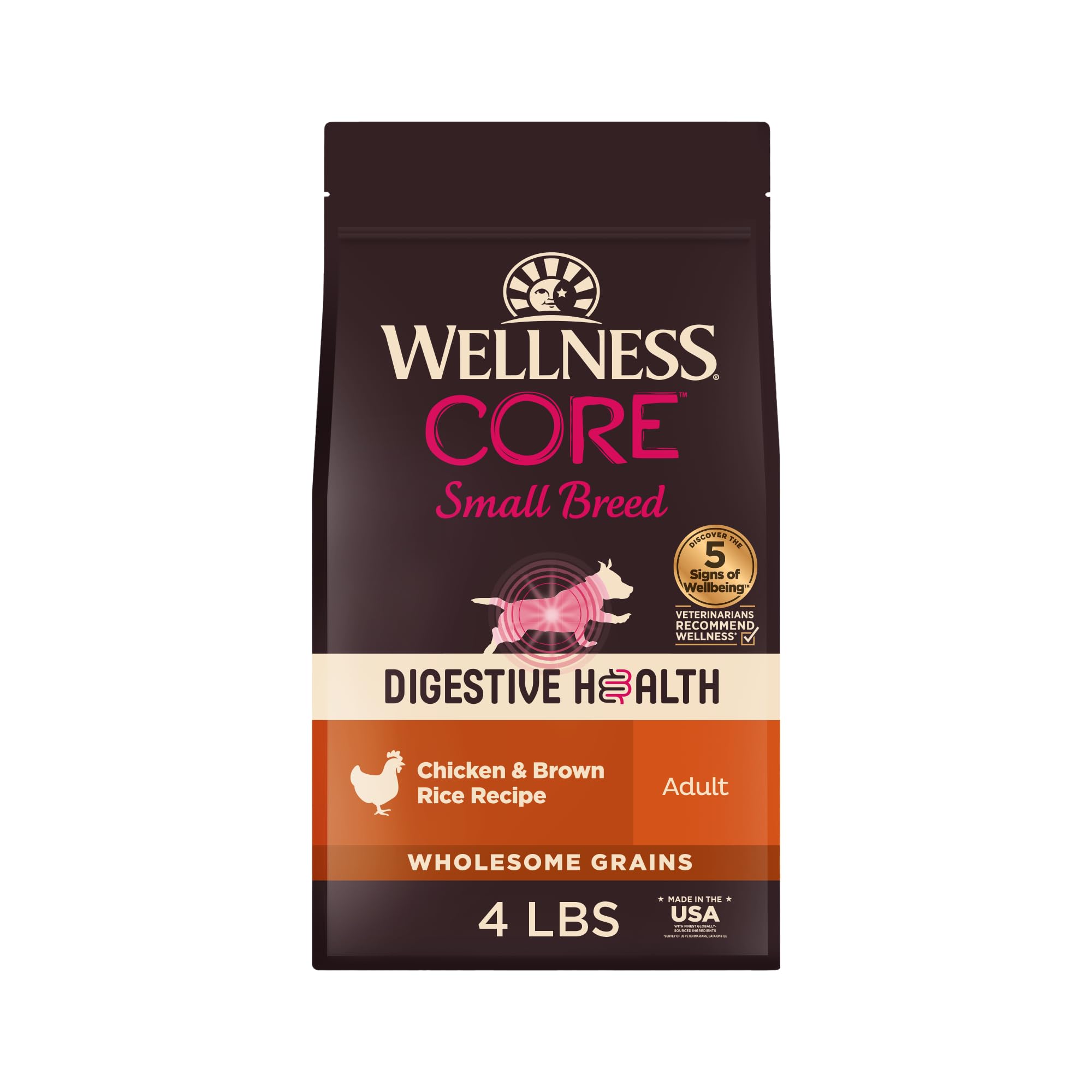
This 4-pound bag of chicken-based kibble packs a guaranteed level of probiotics that survive the extrusion process, which is the single most important feature for a Pomeranian prone to loose stool cycles. The kibble diameter falls under 10 millimeters, allowing even a 4-pound Pom to pick up individual pieces without gulping, while the brown rice base provides a whole-grain fiber source that firms stool without triggering grain allergies.
Dog owners consistently report firmer stools and reduced flatulence within the first week of transition, a direct result of the proprietary probiotic blend combined with digestive enzymes and prebiotic fibers from chicory root. The 28% protein content hits the ideal ratio for small adults, and the omega fatty acid inclusion supports the double coat without adding excessive calories that lead to weight creep in this breed.
The main drawback is the 4-pound bag size, which means mid-sized Pomeranian owners will need to set up a subscription to avoid running out during the month. A handful of owners also noted the kibble can feel greasy compared to baked formulas, and the chicken recipe may not suit the minority of Poms with confirmed poultry allergies.
Why we love it
- Probiotic coating survives kibble processing for measurable gut health
- Kibble size is small enough for toy breed mouths without choking
- Omega fatty acid levels visibly improve coat luster within three weeks
Good to know
- Only available in 4-pound bag — requires frequent repurchase
- Texture can feel greasy to the touch compared to baked alternatives
2. Royal Canin Canine Care Nutrition Small Digestive Care Adult Dry Dog Food
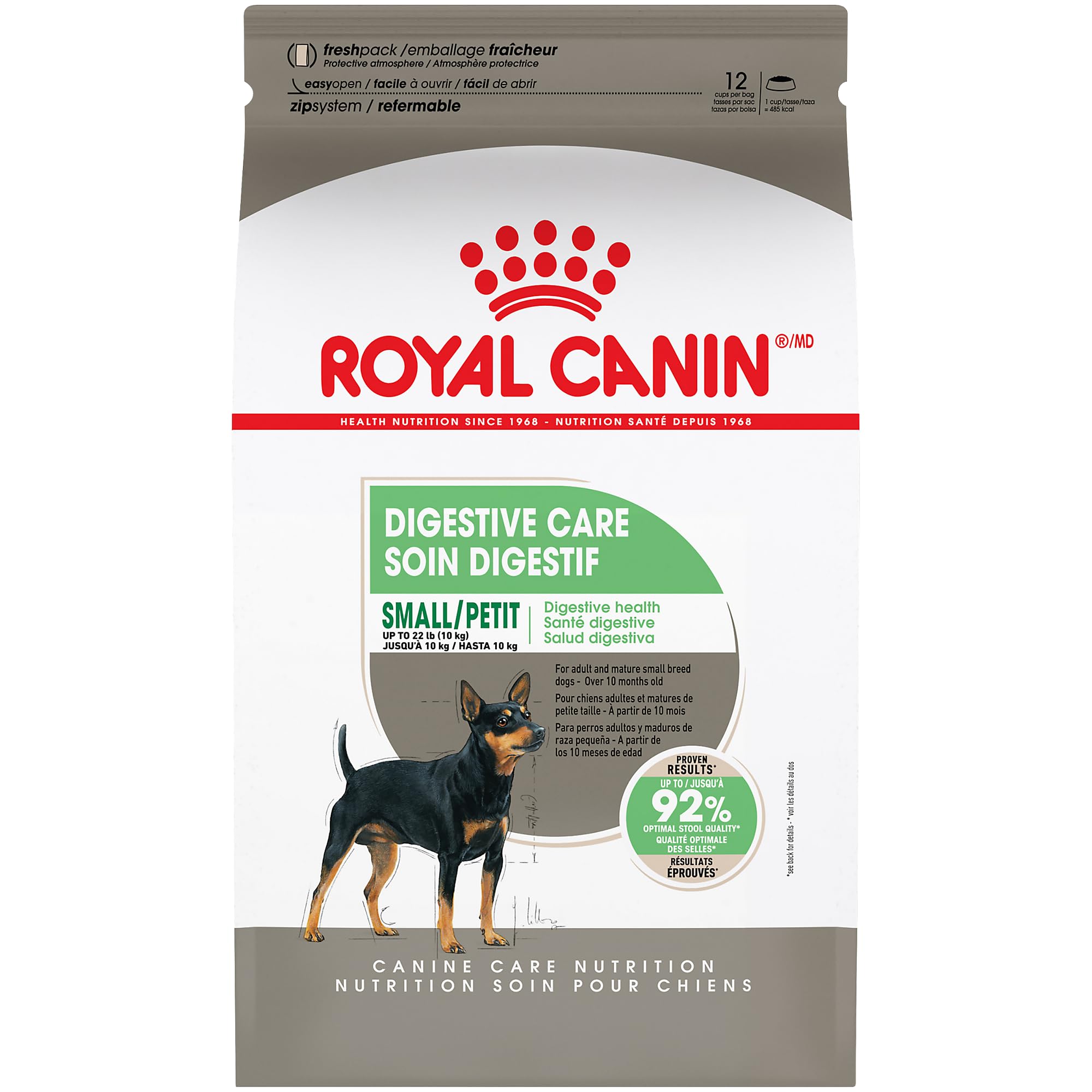
Royal Canin’s Small Digestive Care formula uses a micro-pellet geometry that is significantly smaller than standard small-breed kibble, making it the safest option for Pomeranians with crowded incisors or those recovering from dental procedures. The pellet shape is engineered to delay gastric emptying, which helps keep the small intestinal transit time slow enough for nutrient absorption to occur before the food reaches the colon.
The formula relies on highly digestible chicken protein combined with a precise blend of prebiotics — specifically fructooligosaccharides and mannanoligosaccharides — that feed beneficial bacteria populations in the gut lumen. Owners of Pomeranians with confirmed colitis or intermittent gastroenteritis report that this food produces the most consistently formed stools they have seen across three to four different brands.
The 3.5-pound bag is the smallest size in this lineup, and the price per pound places it in the premium tier. Some owners reported that their dogs eventually refused the kibble after two consecutive bags, suggesting flavor fatigue can be an issue, though rotating the wet food version of the same formula often resolves pickiness.
Why we love it
- Micro pellet size eliminates choking risk for tiny mouths
- Delayed gastric emptying improves nutrient absorption in fast-transit dogs
- Prebiotic blend produces the most consistently formed stools
Good to know
- Premium price per pound compared to non-veterinary options
- Some dogs refuse kibble after repeated bags — flavor fatigue reported
3. Purina Pro Plan Sensitive Skin and Stomach Senior Salmon and Rice Formula

This senior-specific formula from Purina Pro Plan uses salmon as the primary protein source, making it an excellent rotation option for Pomeranians with poultry sensitivities that manifest as chronic itching or ear infections. The 29% protein content is slightly higher than the breed ideal, but the senior orientation means it includes glucosamine and EPA for joint support, which directly addresses the patellar luxation common in aging Pomeranians.
The oatmeal and rice base provides a gentle carbohydrate source that bypasses the inflammatory responses triggered by corn or wheat in susceptible dogs. Owners transitioning their Poms from poultry-based diets report that skin inflammation and paw licking typically subside within two weeks of switching to this salmon formula, and the prebiotic fiber helps maintain stool consistency even in dogs with senior-onset digestive slowdown.
The kibble size is designed for medium-breed dogs, not true small-breed geometry, which means some Pom owners need to break the kibble in half or mix it warm water to soften the texture. The senior formulation also contains slightly higher fat content than standard adult small-breed recipes, so it is not ideal for Pomeranians under seven years old who already have weight management issues.
Why we love it
- Salmon base avoids poultry allergens that trigger coat itch in Poms
- Glucosamine and EPA support aging hip and patellar joints
- Oatmeal and rice base is gentle on senior digestive tracts
Good to know
- Kibble is medium-breed size — may need softening for small mouths
- Higher fat content not suitable for overweight adult Poms
4. Healthy Breeds Pomeranian Omega HP Fatty Acid Skin and Coat Support Soft Chews

These breed-specific omega soft chews deliver a high-potency blend of EPA and DHA from fresh-caught fish oil, formulated specifically for the Pomeranian’s double-coat maintenance requirements. The 60-count bag provides a two-month supply at a chewable dosage that eliminates the mess and smell of liquid fish oil, making it a practical daily addition for owners whose Poms suffer from dry, flaky skin or winter coat dullness.
Owner feedback consistently notes visible improvement in coat sheen and reduced scratching within three to four weeks of daily administration, with particular success reported for the breed’s predisposition to seasonal dermatitis and environmental allergies. The soft-chew texture is easily accepted even by picky eaters, and the inclusion of vitamin E acts as a natural preservative while also providing antioxidant support for the skin barrier.
These are a supplement, not a complete food, meaning they must be paired with a balanced kibble to avoid creating a nutrient imbalance. The fish flavor may be off-putting to some Pomeranians with sensitive palates, though the majority of owners report dogs eagerly treat-scavenge for the chews during administration.
Why we love it
- High-potency EPA/DHA blend addresses dry skin and winter coat dullness
- Soft-chew delivery avoids fish oil mess and odor
- Vitamin E provides antioxidant skin barrier support
Good to know
- Functional supplement only — not a substitute for complete food
- Fish flavor may be rejected by the most finicky individual dogs
5. Royal Canin Size Health Nutrition Small Puppy Dry Dog Food

Royal Canin’s small puppy formula is engineered specifically for the rapid growth phase of tiny breeds, with a kibble size that is noticeably smaller than its adult counterpart and a DHA content directly linked to cognitive development in the first ten months of life. The antioxidant blend supports the immature immune system during the critical vaccination window, and the balanced calcium-to-phosphorus ratio prevents the skeletal overgrowth issues that plague toy breeds fed generic puppy formulas.
Owner reports specifically from Pomeranian breeders highlight that this formula maintains optimal body condition scores throughout the 2-to-10-month window without causing the loose stool or gas that often accompanies rapid formula transitions. The crunchy texture provides sufficient dental abrasion to delay puppy teething discomfort, and the prebiotic inclusion helps stabilize the microbiome as the pup transitions from mother’s milk to solid food.
The formula is only appropriate for the puppy life stage — continuing it past ten months of age risks over-supplementation of growth-phase nutrients that can stress the adult Pomeranian’s liver and kidneys. The 4-pound bag size means larger litters or single-pup households will need to order monthly to maintain a fresh supply.
Why we love it
- DHA-enriched formula supports brain development during critical puppy phase
- Calcium-to-phosphorus ratio prevents skeletal overgrowth in toy breeds
- Crunchy texture provides teething relief while kibble size prevents choking
Good to know
- Puppy-only formula — not suitable for adult Pomeranians
- Frequent repurchase needed to keep supply fresh for single-pup homes
FAQ
How many cups of food should a Pomeranian eat per day?
What ingredients should Pomeranian owners avoid in dog food?
Can I feed my Pomeranian senior food before age 7?
Final Thoughts: The Verdict
For most Pomeranian owners, the best pomeranian food winner is the Wellness CORE Digestive Health Small Breed because its guaranteed probiotic count, appropriate kibble geometry, and balanced protein-to-fat ratio address the three biggest health pain points of this breed simultaneously. If you need a formula specifically engineered for regular stool quality, grab the Royal Canin Small Digestive Care. And for a senior Pomeranian with poultry allergies and joint stiffness, nothing beats the Purina Pro Plan Sensitive Skin Salmon.