
Thin, brittle, or missing eggshells are the first sign your laying flock is running on empty. Calcium is the non-negotiable mineral that drives shell formation, muscle function, and bone density in hens — but not all calcium supplements deliver the same absorption or eggshell integrity. Choosing the wrong form or particle size can leave your birds calcium-deficient even when you think you’re supplementing correctly.
I’m Mo Mahin — the founder and writer behind Furric. I’ve spent years analyzing the nutritional profiles, particle-size data, and owner-reported eggshell quality metrics across the leading calcium supplements to understand exactly which formulations actually correct deficiency in domestic flocks.
Whether you’re raising a backyard coop or managing a larger lay operation, this guide breaks down the top options for calcium for chickens — comparing flaked shells, fine powders, aragonite sources, and liquid formulas so you can match the right supplement to your flock’s specific needs.
How To Choose The Best Calcium For Chickens
Selecting a calcium supplement for your flock goes beyond grabbing the cheapest bag on the shelf. Particle size, source purity, and how the calcium is delivered all determine whether your hens actually absorb the mineral. Here are the three factors that matter most.
Particle Size And Form
Flaked oyster shell (roughly 2–4 mm) encourages natural grit consumption and stays in the gizzard longer, providing a slow release of calcium overnight when shell formation peaks. Fine powders or flour dissolve faster and are easier to mix into feed, but can be over-consumed or pass through the digestive tract too quickly. For most laying flocks, a flaked or granule form offers the best balance of intake control and timed calcium delivery.
Source Purity And Additives
The best supplements are 100% calcium carbonate with no fillers, bleaches, coral, or synthetic binders. Oolitic aragonite is a naturally purer form of calcium carbonate that contains trace amino acids, while standard oyster shell is widely abundant and affordable. Liquid formulas often include vitamin D3 and magnesium to aid absorption, making them useful for birds with known deficiencies or elderly hens that struggle to process dry calcium.
Feeding Method And Flock Size
Free-choice feeding in a separate dish lets each hen self-regulate her intake based on her laying cycle. Mixing into feed works best with powders or fine flakes but requires accurate dosing to avoid over-supplementing non-layers. Liquid calcium can be added to drinking water for flocks that resist dry supplements, though it requires daily mixing and may need refrigeration after opening.
Quick Comparison
On smaller screens, swipe sideways to see the full table.
| Model | Category | Best For | Key Spec | Amazon |
|---|---|---|---|---|
| Small Pet Select Flaked Oyster Shell | Flake | Slow nighttime calcium release | 5 lb, fine flaked oyster shell | Amazon |
| Southside Plants Oyster Shell Flour | Powder | Mixing into feed with minimal waste | 1 lb, fine powder | Amazon |
| Scratch and Peck Oyster Shell Supplement | Granule | Sustainably sourced flaked calcium | 4 lb, pure flaked oyster shell | Amazon |
| Bird Natural Aragonite Chicken Calcium | Powder | Maximum bioavailability with superfine texture | 5 lb, oolitic aragonite powder | Amazon |
| Morning Bird Calcium Plus Liquid | Liquid | Birds that resist dry supplements | 4 oz, liquid with D3 and Magnesium | Amazon |
In‑Depth Reviews
1. Small Pet Select 100% Flaked Oyster Shell
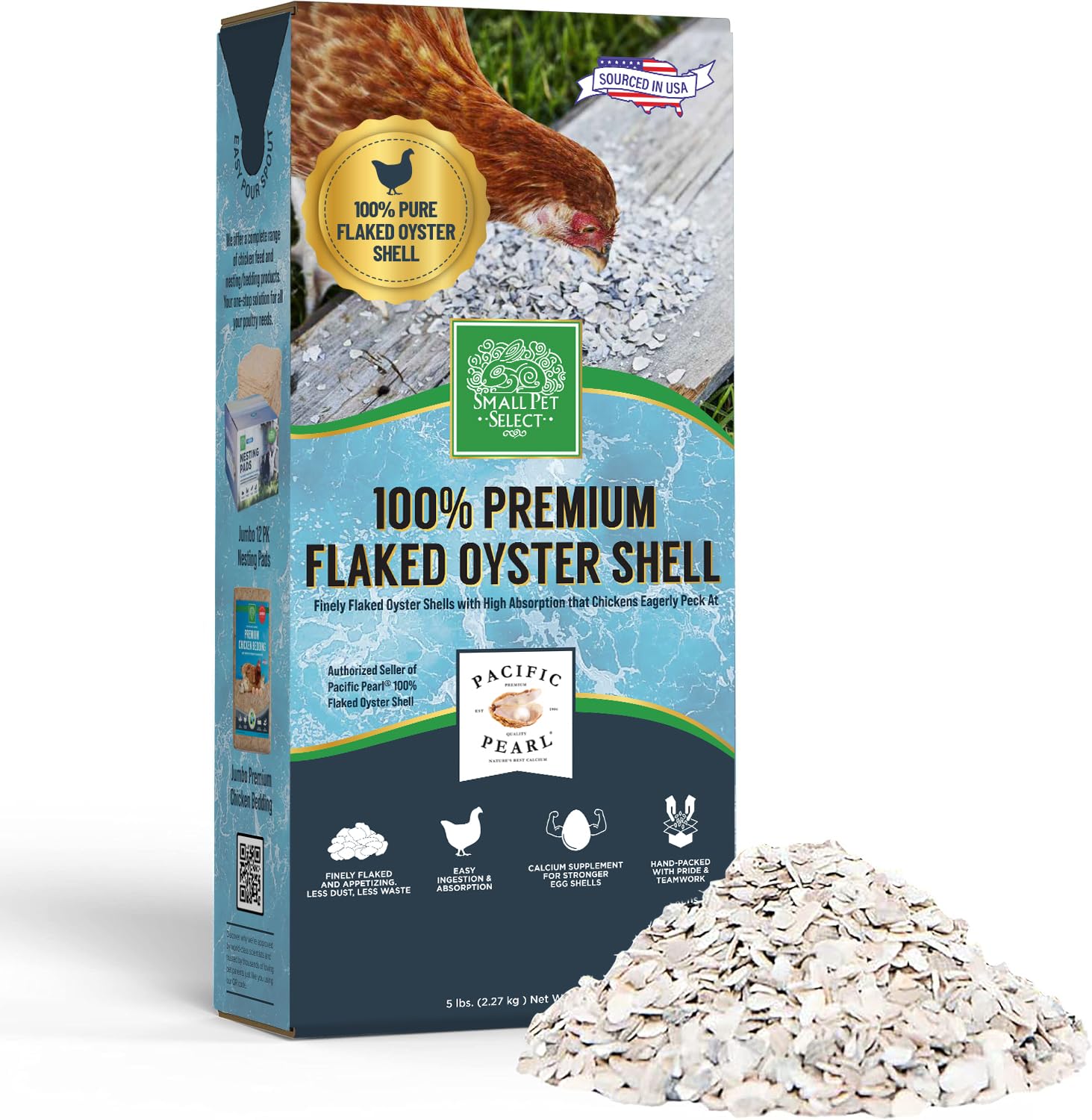
Small Pet Select delivers a 100% flaked oyster shell with uniformly sized particles that are large enough to stay in the gizzard for slow, overnight calcium release — exactly when hens form the next day’s eggshell. The fine flake texture eliminates the sharp, jagged edges found in some crushed shells, reducing the risk of crop irritation while still providing the mechanical grit poultry instinctively seek.
This 5-pound bag uses Pacific Pearl oyster shell sourced from a supplier with a century of history, and the formula is verified as low-dust, which means less wasted powder at the bottom of the dish and more calcium actually consumed. The flakes are small enough for bantam breeds and ducks to handle comfortably, yet substantial enough that hens don’t over-consume them in a single feeding.
Owners consistently report visible improvement in shell thickness within one to two weeks of switching to this supplement, and the free-choice feeding method works seamlessly — just offer it in a separate dish and let each bird self-regulate. For most backyard flocks, this is the most reliable and foolproof calcium delivery system available.
Why we love it
- Ideal flake size for slow gizzard digestion and timed calcium release
- Low-dust formula minimizes mess and product waste
- Proven supplier with history back to 1906
Good to know
- 5 lb bag may be large for single-bird households
- Flakes can scatter if offered in an open dish outdoors
2. Southside Plants Oyster Shell Flour

Southside Plants grinds oyster shell into a fine flour that blends cleanly into chicken feed, eliminating the sorting behavior hens sometimes show with flaked shell (eating around the calcium). The powder form is ideal for keepers who prefer to mix the supplement directly into a wet mash or dry crumble, ensuring every bird consumes a consistent dose without needing a separate feeder.
At 1 pound, this bag is the smallest option in this lineup — a practical size for small flocks of two to four hens or for testing whether your birds accept a powdered calcium source before committing to a larger volume. The flour is also labeled safe for reptiles, amphibians, and invertebrates, making it a versatile multi-species calcium supply for homesteads with varied animals.
The fine grind means faster dissolution in the crop compared to flakes, so this is best suited for birds that eat multiple small meals throughout the day rather than those that rely on one large evening feed. Owners mixing it into feed report less mess than flaked shell, though the powder can settle to the bottom of a feeder if not stirred regularly.
Why we love it
- Powder texture mixes easily into feed without waste
- Small bag size fits tiny flocks or trial use
- Safe for multiple species beyond chickens
Good to know
- Fine powder passes through digestive tract faster than flakes
- Not ideal for free-choice feeding in outdoor coops
3. Scratch and Peck Oyster Shell Supplement

Scratch and Peck Feeds sources its oyster shell exclusively from the Pacific Northwest, using a flaked form that is free from bleach, coral fragments, or filler shells — a purity standard that matters when you’re trying to avoid introducing contaminants into your flock’s diet. The 4-pound bag strikes a practical middle ground between a small trial pouch and a bulk supply, suitable for flocks of four to eight layers lasting several weeks.
Each granule is large enough to encourage natural foraging and gizzard grinding behavior, yet not so coarse that younger pullets or lighter breeds struggle to pick them up. The company packages this supplement in recyclable and compostable materials, reflecting a commitment to sustainable farming practices that aligns with eco-conscious backyard keepers.
Owner reports highlight a noticeable improvement in shell hardness within the first week of feeding, with many noting that their hens actively sought out the supplement when offered free-choice. If you want a responsibly sourced, no-filler calcium option from a brand that prioritizes regenerative agriculture, this is the cleanest choice in this review.
Why we love it
- No bleach, coral, or filler shells — pure flaked oyster shell
- Eco-friendly packaging (recyclable and compostable)
- Sourced from USA and Canada with transparent supply chain
Good to know
- Higher price per pound compared to standard oyster shell options
- Granule size may be too large for very young chicks
4. Bird Natural Aragonite Chicken Calcium

Bird Natural takes a different approach by using oolitic aragonite — a marine-derived calcium carbonate that is chemically purer than standard oyster shell and naturally contains trace amino acids that support calcium absorption. The superfine powder form maximizes surface area for dissolution, making this one of the most bioavailable calcium sources you can offer a laying hen, particularly useful for older birds with reduced digestive efficiency.
This 5-pound bag comes from a manufacturer that markets primarily to serious poultry keepers and aviculturists who prioritize nutritional density over filler bulk. The powder blends into feed without clumping, and the fine particle size means the calcium is available for absorption within minutes of ingestion rather than requiring hours of gizzard grinding.
Keepers whose flocks struggle with thin shells despite using standard oyster shell often see rapid correction with this aragonite powder due to the higher purity and absence of insoluble impurities. The superfine texture does require careful mixing to prevent dust inhalation during feeding, and it works best stirred into a wet mash rather than scattered loose.
Why we love it
- Oolitic aragonite is a purer calcium carbonate source than oyster shell
- Superfine powder offers superior bioavailability for older hens
- Contains naturally occurring amino acids for additional nutritional support
Good to know
- Fine powder creates dust during handling and feeding
- Not suitable for free-choice feeding—mixing into feed is required
5. Morning Bird Calcium Plus Liquid
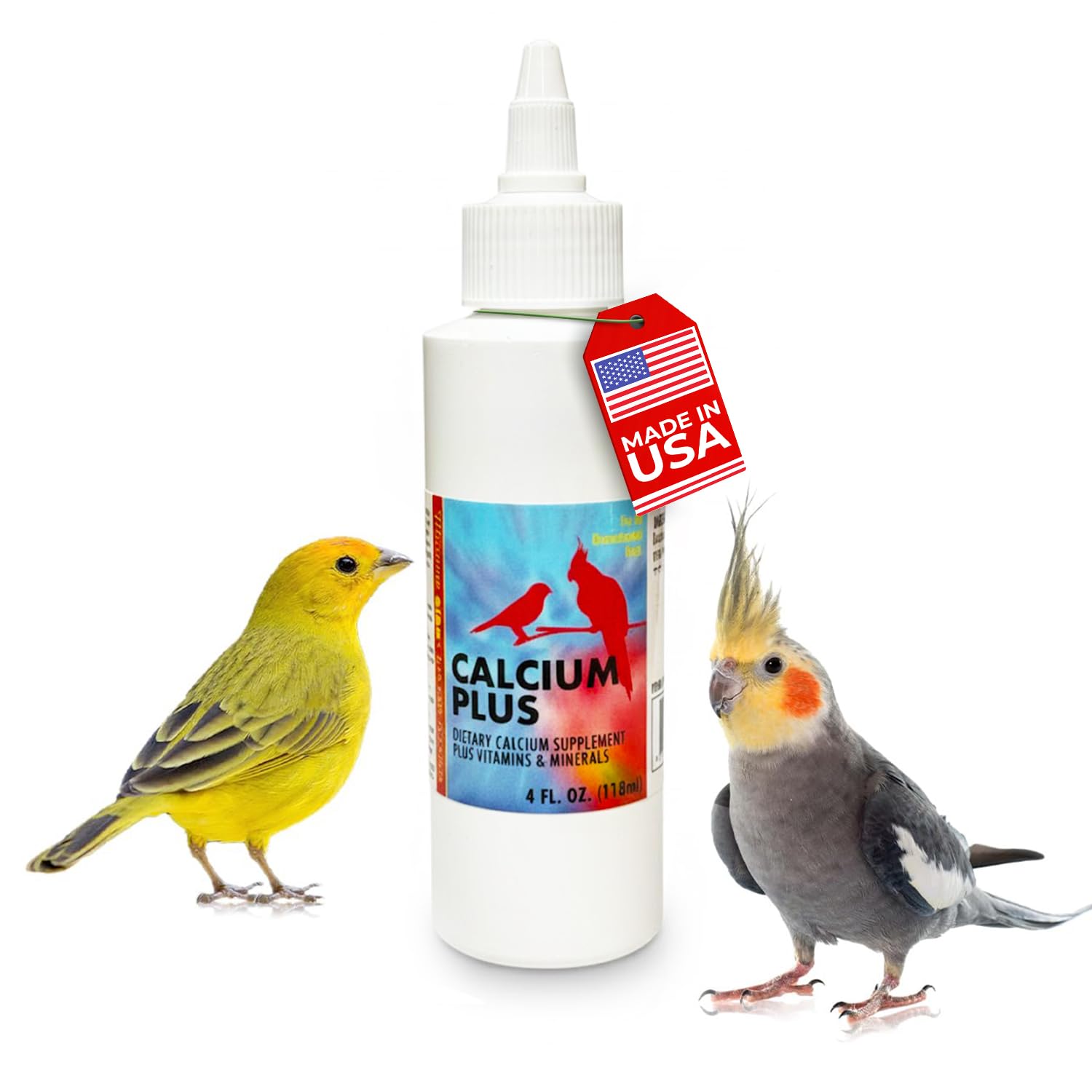
Morning Bird takes a completely different delivery route with a liquid calcium formula fortified with vitamin D3 and magnesium — two cofactors that directly enhance calcium uptake in the bird’s digestive system. This 4-ounce bottle is concentrated, with each dose designed to be mixed into drinking water, poured over feed, or administered directly into the crop for birds that refuse dry supplements.
The liquid format is especially valuable for treating individual hens that are recovering from egg binding, laying shell-less eggs, or showing signs of calcium deficiency that require immediate correction. Because the calcium is already in solution, absorption begins rapidly without relying on gizzard action, making it a first-aid tool as much as a maintenance supplement.
Available in sizes up to 32 fluid ounces for larger aviaries, this product is cost-effective on a per-dose basis, though the small 4-ounce bottle is best suited for flocks of two to five birds or for owners who want a backup calcium source for emergencies. The neutral flavor means most birds accept it in their water without hesitation, though daily mixing is required to maintain potency.
Why we love it
- Liquid format offers rapid absorption for deficiency correction
- Contains vitamin D3 and magnesium for enhanced calcium uptake
- Versatile application — water, feed, or direct crop dosing
Good to know
- Requires daily mixing and refrigeration after opening
- Small bottle size requires frequent repurchase for larger flocks
FAQ
Can I feed my chickens crushed eggshells instead of oyster shell?
How much calcium does a laying hen need per day?
Why are my eggshells thin even though I provide oyster shell?
Is liquid calcium better than dry oyster shell for chickens?
Final Thoughts: The Verdict
For most backyard flock keepers, the calcium for chickens that delivers the best balance of slow release, purity, and ease of use is the Small Pet Select 100% Flaked Oyster Shell because its uniformly fine flakes encourage natural gizzard grinding and timed overnight calcium release. If you need a powder that mixes cleanly into feed for smaller flocks, the Southside Plants Oyster Shell Flour offers a mess-free solution. And for keepers who want the purest calcium source with the highest bioavailability for aging or struggling hens, the Bird Natural Aragonite Chicken Calcium delivers superior uptake without fillers or impurities.