
A sensitive cat doesn’t just sneeze — it avoids the box entirely, signals distress, or develops respiratory irritation from airborne particulates. The wrong litter introduces dust, artificial perfumes, or rough textures that trigger paw-pad discomfort and allergic reactions. This guide isolates the precise formulations and material compositions that eliminate those triggers while maintaining effective odor control.
I’m Mo Mahin — the founder and writer behind Furric. I’ve analyzed thousands of litter formulations, studied feline respiratory and dermatological sensitivities, and cross-referenced verified owner accounts to identify which material types and dust-reduction claims actually hold up under daily use.
Whether your cat suffers from asthma, paw irritation, or a general aversion to scented products, this research-based review of the top five contenders for the best litter for sensitive cats will help you match the right texture, dust level, and ingredient profile to your cat’s specific needs.
How To Choose The Best Litter For Sensitive Cats
Selection for a sensitive cat requires looking past general marketing claims. The three critical factors are material makeup, dust measurement, and fragrance profile — each directly affects your cat’s respiratory health and paw comfort.
Material Type: The Allergen Source
Clay (sodium bentonite) is the most common base, but it contains crystalline silica dust that can accumulate in lung tissue over time. Grass seed, walnut shell, pine, and pea husk hybrids offer alternative textures with lower silica content. For truly sensitive cats, unscented grass seed or plant-based hybrid formulas typically produce the least respiratory reaction because they lack the fine particulate that clay generates during pouring and digging.
Dust Certification vs. Claim
Labels reading “99% dust-free” or “low dust” are not federally regulated, so the specific testing method matters. A litter claiming 99.9% dust-free has undergone a tighter sieve analysis than one claiming 99%. For asthmatic cats, only litters that specify a measurable percentage above 99% should be considered. The difference between 99% and 99.9% represents a tenfold reduction in airborne particulates.
Fragrance: Hidden Irritants
Even litters labeled “unscented” sometimes contain masking agents that neutralize odor chemically but still register as a scent to cats. True fragrance-free litters list no perfume, no vanilla, no baking-soda-based masking granules. Check the ingredients list for “fragrance,” “parfum,” or “essential oils” — any of these disqualify the litter for sensitive cats.
Quick Comparison
On smaller screens, swipe sideways to see the full table.
| Model | Category | Best For | Key Spec | Amazon |
|---|---|---|---|---|
| Boxie Unscented | Clay | Maximum dust reduction | 99.9% dust-free / 30-day odor | Amazon |
| Catit Go Natural | Plant Hybrid | Eco-friendly transition | 70% pea husk / 99% dust-free | Amazon |
| So Phresh Grass Seed | Grass Seed | Ultra-light texture | 50% lighter than clay / 99.9% dust-free | Amazon |
| Jonny Cat Fragrance Free | Clay | Allergen-free owners | No perfumes or dyes / 10 lbs bag | Amazon |
| Cat’s Pride Fresh and Light | Clay | Budget-friendly bulk | 25% lighter clay / Fragrance-free | Amazon |
In‑Depth Reviews
1. Boxie Unscented 30 Day Odor Control Clumping Clay Cat Litter

Boxie achieves a dust measurement of 99.9%, placing it in the highest tier of particulate reduction available for clay-based litter. The manufacturer specifies this level via sieve analysis, which means the airborne particle count during pouring is approximately ten times lower than most competitors that stop at 99%. For a sensitive cat with asthma or chronic rhinitis, this difference directly translates to fewer coughing episodes and less nasal inflammation around the litter box.
The 30-day odor control guarantee relies on hard, flat-top clumps that form instantly upon contact with urine. These clumps do not adhere to the box bottom or sides, reducing the scraping motion that can disturb additional dust during scooping. The material contains no cheap fillers or artificial fragrances — the claim of “scent free” is verified by the absence of any masking agent on the ingredients list, making it safe for cats that refuse boxes with even trace perfume residues.
Veterinarian approval and a hypoallergenic label add credibility, but the real validation comes from the clump architecture. Each clump encapsulates moisture and ammonia at the top surface rather than dissolving into sludge at the base, so the litter lasts 30–40 days without replacement. Owners of multi-cat households report that the absence of tracking dust on surrounding floors is the most noticeable improvement after switching from standard clay brands.
Why we love it
- Highest dust reduction (99.9%) among clay litters tested
- Hard, non-stick clumps reduce scooping disturbance
- No fillers, fragrances, or chemical additives
Good to know
- 16 lb bag is heavier than plant-based alternatives
- Some cats may still prefer a non-clay texture
2. Catit Go Natural Plant-Based Cat Litter
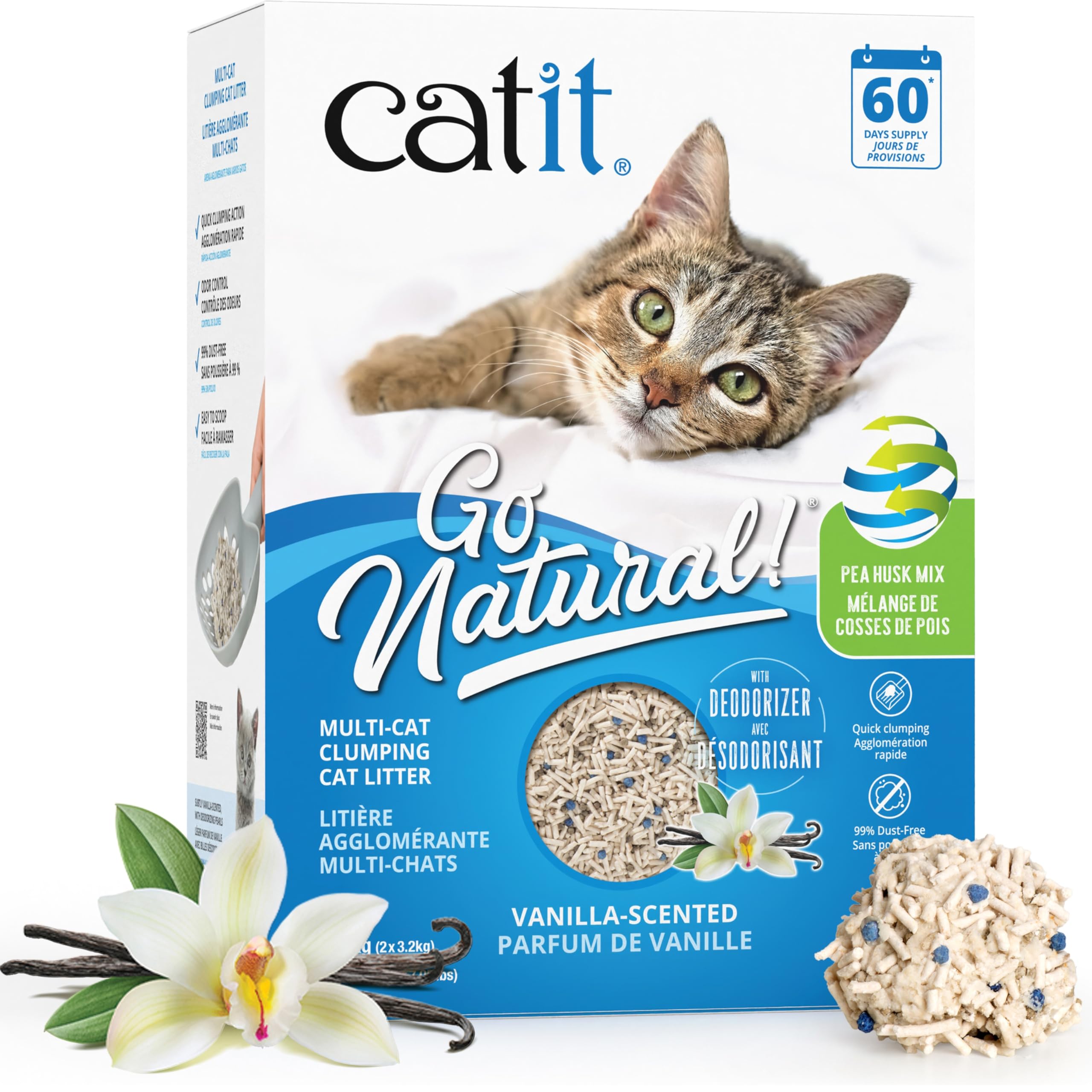
Catit’s 70/30 split between pea husk and bentonite clay creates a hybrid texture that is softer on paw pads than pure clay while retaining the clumping reliability that clay provides. The pea husk fibers are naturally low in silica, reducing the respiratory load compared to 100% clay formulations. At 99% dust-free, it still allows some fine particulate, but the plant fibers absorb moisture differently — they swell rather than fracture, so less dust is generated during digging.
The inclusion of vanilla-scented deodorizing pearls is the one caveat for ultrasensitive cats. While the base material is unscented, the pearls release a mild vanilla fragrance that some cats may detect. For cats that reject all artificial scents, this litter may still cause avoidance behavior. However, for most sensitive cats that react to strong chemical perfumes rather than faint natural extracts, the hybrid formula offers a much smoother transition from traditional clay to a more sustainable option.
Tracking is notably lower than standard clay because the heavier pea husk granules tend to stay in the box rather than clinging to fur or paw crevices. Multi-cat households benefit from the quick clumping speed — the bentonite component activates within seconds, preventing urine from spreading across the entire box surface. The 6.4 kg bag size is smaller than bulk options, making it ideal for testing before committing to a larger purchase.
Why we love it
- Low-silica pea husk reduces respiratory irritation
- Minimal tracking due to heavier granule weight
- Gentle transition from clay to plant-based material
Good to know
- Vanilla pearls may still bother scent-averse cats
- Smaller bag size for the price compared to bulk clay
3. So Phresh Extreme Clumping Unscented Grass Seed Cat Litter
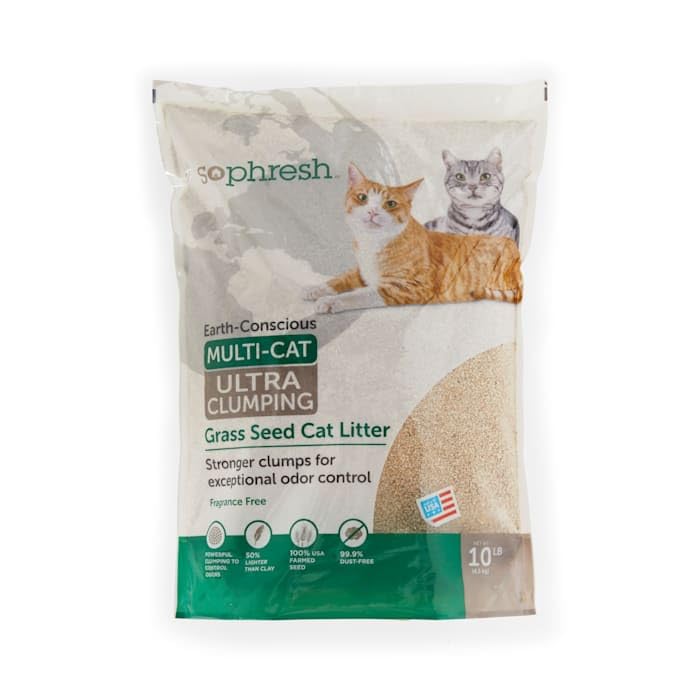
Grass seed litter is the lightest material option available, weighing 50% less than clay per volume. For sensitive cats, this translates to less impact force when jumping into the box and a softer digging surface. The 99.9% dust-free claim matches Boxie’s level, but the material itself generates even less airborne particulate because grass seed fibers do not fracture into sharp silica fragments the way clay crystals do. The 10 lb bag is the only option in this lineup that approaches truly hypoallergenic material composition.
Clumping performance is strong — the grass seed fibers bind urine into dense, scoopable clumps that do not disintegrate during removal. Odor control relies on the natural absorption capacity of the seed hulls rather than added perfumes or baking soda, so there is zero fragrance load. The unscented designation is authentic; no masking agents appear on the ingredient label. This makes it one of the safest options for cats with chemical sensitivities or those recovering from upper respiratory infections.
Because grass seed is naturally biodegradable, disposal is easier on septic systems and composting setups. The lighter weight also means less strain on the owner when carrying and pouring refills. Some users note that the clumps can be slightly softer than clay clumps after 12 hours, so more frequent scooping (twice daily) helps maintain clean conditions for sensitive noses.
Why we love it
- 50% lighter than clay — gentler on joints and paws
- True 99.9% dust-free with zero fragrance
- Biodegradable and USA-farmed seed material
Good to know
- Clumps soften slightly after 12+ hours
- Some cats take 2–3 days to accept the texture shift
4. Jonny Cat Fragrance Free Cat Litter

Jonny Cat uses a clay base that is deliberately stripped of perfumes, dyes, and chemical additives — the ingredients list is shorter than any other product in this comparison. The natural odor eliminator is a mineral component within the clay itself, not an added fragrance. This makes it a strong option for owners who themselves have allergies or chemical sensitivities, as the litter does not release any volatile organic compounds into the air.
The dust level is described as “low dust” rather than a quantified percentage, which is less precise than the 99.9% claims from Boxie or So Phresh. In practice, this means there is still visible dust when pouring a fresh bag, though it settles faster than standard clay brands. For cats with severe asthma, the unquantified dust level may be a drawback, but for cats with mild paw sensitivity or fragrance aversion, the absence of any chemical scent is the more critical factor.
The 10 lb bag is compact, and the clay forms moderate clumps that hold together during scooping. Odor control is adequate for a single cat but may require more frequent full changes in multi-cat homes. Owners of finicky cats report that the texture closely mimics natural soil, which helps cats who refuse all alternative materials like grass seed or wood pellets.
Why we love it
- Truly fragrance-free — no masking agents at all
- Minimal ingredient list reduces chemical exposure
- Texture familiar to cats accustomed to natural clay
Good to know
- Dust level is not quantified — may not suit severe asthma
- Odor control fades faster in multi-cat households
5. Cat’s Pride Fresh and Light Premium Fragrance Free Scoopable Cat Litter

Cat’s Pride Fresh and Light delivers a 25% weight reduction compared to standard clay while maintaining fragrance-free and dye-free credentials. The two 15 lb jug case provides a generous 30 lb total volume, making it the most economical option per pound for owners who need to fill multiple boxes. The low-dust formula is a step down from the quantified 99.9% claims of premium options, but it uses a lighter clay particle that produces less visible airborne dust than heavy, dense clays.
The scoopable clumps form reliably and hold shape during retrieval, though they are not as hard as Boxie’s flat-top clumps. Odor control relies on the natural absorbency of the clay rather than added fragrances, which keeps the chemical load low. For cats that are only mildly sensitive — showing paw-licking or occasional sneezing rather than full respiratory distress — this litter offers a budget-friendly middle ground that avoids the higher price tag of grass seed or plant hybrid formulations.
The jug packaging is more convenient than bags for pouring and resealing, reducing the chance of dust clouds during refills. However, the material is still clay, so cats with confirmed silica sensitivity or asthma may still react. The fragrance-free label is accurate — no perfume or masking agents appear on the ingredients list — but the absence of a quantified dust percentage means owners of severely sensitive cats should test with a smaller quantity first.
Why we love it
- Largest bulk quantity for the price — 30 lb total
- Jug packaging minimizes dust during pouring
- No fragrances or dyes for mild sensitivities
Good to know
- Clay base still contains silica — not for severe asthma cases
- Clumps are softer than premium clay options
FAQ
Can I use scented litter if my cat has asthma?
What is the difference between “unscented” and “fragrance-free” on a litter label?
How often should I change the entire litter box for a sensitive cat?
Does clumping speed affect sensitive cats differently?
Can paw texture alone cause a cat to reject a litter?
Final Thoughts: The Verdict
For most owners seeking the best litter for sensitive cats, the winner is the Boxie Unscented because it combines a verified 99.9% dust reduction with hard, non-stick clumps and zero fragrance — a triple threshold that few clay litters reach. If your cat needs a non-clay material due to paw irritation or silica aversion, the So Phresh Grass Seed offers the lightest, most dust-free alternative available. And for budget-conscious owners with mildly sensitive cats, the Cat’s Pride Fresh and Light delivers fragrance-free bulk value without the premium price tag.