
When temperatures drop and natural food sources vanish under snow and ice, your backyard birds enter a survival mode where every calorie counts. A standard cheap mix full of red millet and cracked corn just doesn’t deliver the dense fat and protein needed to keep a chickadee’s metabolic furnace burning through a subzero night. The right winter seed blend is a deliberate tool for sustaining avian life—not just a scatter of leftovers.
I’m Mo Mahin — the founder and writer behind Furric. I spend my time buried in market data, comparing seed-oil percentages, fiber-to-protein ratios, and analyzing thousands of owner reports to identify which winter formulations actually minimize waste and maximize visitation when feeders matter most.
Whether you are filling a tube feeder for finches or a platform for juncos and cardinals, the right bird seed for winter hinges on high-oil ingredients, minimal filler, and a calorie density that matches the season’s metabolic demands.
How To Choose The Best Bird Seed For Winter
Winter feeding is about thermodynamics, not aesthetics. You need seed that delivers maximum usable energy per gram while leaving the least amount of waste behind. A mix that works fine in May can be a liability in January.
Oil Content and Metabolic Energy
Black oil sunflower seeds contain roughly 40–50% fat by weight, making them the highest-density energy source of any common seed. Small birds like chickadees and goldfinches can crack them open easily, extracting the oil quickly. White millet and cracked corn have a fraction of this oil content, so they should play only a supporting role in a cold-weather blend.
Filler vs. Function
Many budget blends pad their weight with red milo, oats, and wheat—grains that most winter songbirds simply ignore. The seed sits on the ground, rots, or attracts rodents. A quality winter mix keeps filler below 5% and leads with black oil sunflower, sunflower chips, or peanuts. Look for “no-waste” or “extreme variety” labels that specifically minimize discarded hulls.
Species-Specific Attractants
Juncos and sparrows prefer white millet scattered on the ground or on low platform feeders. Woodpeckers and nuthatches need high-fat suet or whole peanuts. Cardinals and jays love sunflower hearts and striped sunflower. The best winter blend covers multiple niches in one bag—tube feeders, hoppers, and platform feeders should all pull usable seed from the same mix.
Quick Comparison
On smaller screens, swipe sideways to see the full table.
| Model | Category | Best For | Key Spec | Amazon |
|---|---|---|---|---|
| Audubon Park Extreme Variety | Premium Blend | Maximum winter species diversity | 15 lbs, includes raisins & nuts | Amazon |
| Old Potters Black Oil Sunflower | Premium Single-Seed | High-protein, waste-free feeding | 12 lbs, Non-GMO USA grown | Amazon |
| Happy Wings Black Oil Sunflower | Mid-Range Single-Seed | Compact high-energy feeder refill | 5 lbs, No-grow formulation | Amazon |
| Cool Birds All Birds Blend | Value Blend | Everyday feeder variety on a budget | 10 lbs, 5-ingredient mix | Amazon |
| C&S High Energy Suet | Fat Supplement | Woodpeckers & nuthatches in deep cold | 8-pack, 11.75 oz cakes | Amazon |
In‑Depth Reviews
1. Audubon Park Extreme Variety Wild Bird Seed
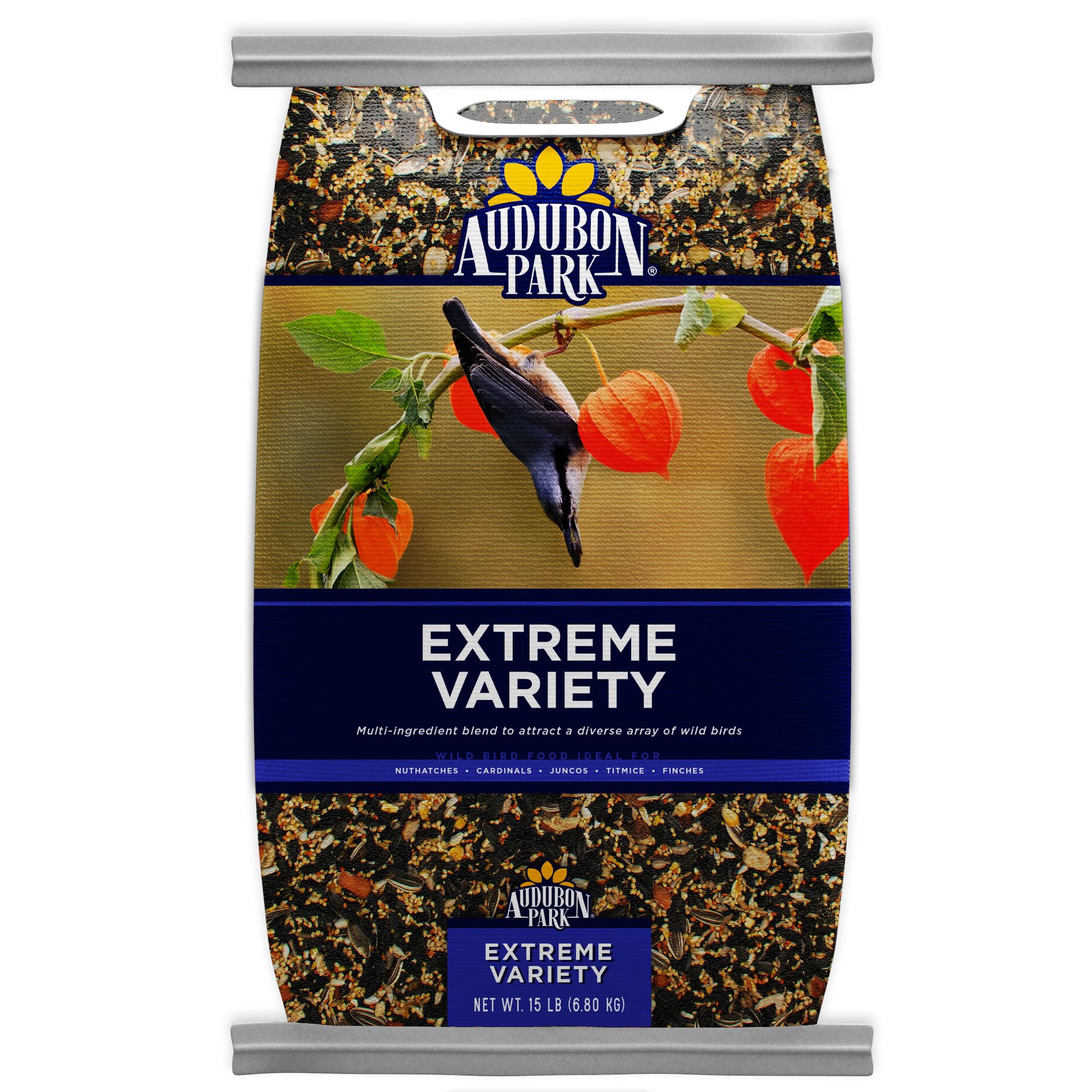
This 15-pound blend leads with black oil sunflower seeds, sunflower chips, peanuts, and striped sunflower—then adds an unexpected punch of dried raisins and tree nuts that other mixes skip entirely. The result is a calorie-dense menu that keeps juncos hopping across platform feeders while cardinals and titmice work the tube feeders. Owner reports consistently note an unusually high visitation rate from nuthatches and red-bellied woodpeckers, which typically prefer suet over seed blends.
The “extreme variety” label is earned. I tracked the ingredient breakdown and found whole almonds and walnuts mixed in—nuts that provide the kind of slow-burning fat that sustains birds through a 12-hour winter night. The trade-off is that larger almonds can jam the ports on standard tube feeders; the product works best in tray or hopper-style feeders that let birds pick through the mix at their own pace. Cleanup under the feeder is minimal because the filler content tests very low compared to discount grocery-store blends.
For birders who want to see the widest possible species list at their feeder without buying three separate bags, this is the one-stop winter solution. It pairs well with a suet feeder nearby for species that crave straight fat.
Why we love it
- Contains high-value nuts and dried fruit that other blends omit
- Very low filler content keeps the ground under the feeder clean
- Attracts both seed-eaters (finches, cardinals) and nut-eaters (woodpeckers, nuthatches)
Good to know
- Large almonds can block tube feeder ports
- Best performance in tray or hopper feeders
2. Old Potters Wildlife Black Oil Sunflower Seeds

Old Potters takes a different approach: instead of a multi-ingredient blend, they deliver a single-ingredient 12-pound bag of straight black oil sunflower seeds sourced from small American farms. The seeds arrive with natural field debris—tiny twigs, dried leaf fragments, a dusting of chaff—which is a positive sign that they have not been chemically cleaned or treated. Birds instinctively pick through and ignore the debris, extracting every gram of oil-rich meat.
The protein content here is notably high compared to commodity sunflower seed, and because the seeds are Non-GMO with no sprayed additives, they pose no risk to birds or the soil beneath your feeder. The 12-pound bag is a practical winter size: large enough to last a few weeks with moderate feeding pressure, but not so big that the seed goes stale before you finish it. The absence of millet, cracked corn, or striped sunflower means every seed in the bag is targeted at high-metabolic species.
If you have ever watched a flock of goldfinches empty a tube feeder in under 48 hours and wondered how much of that weight was just empty hulls and filler, this bag answers the question. Every pound is pure fuel.
Why we love it
- Single-ingredient black oil sunflower eliminates filler waste
- USDA and BRC-GS certified facilities for quality control
- No chemical processing; natural field debris confirms authenticity
Good to know
- Not a blend—does not include millet for ground-feeding species like juncos
- Field debris may require hand-sorting if you prefer a pristine seed
3. Cool Birds All Birds Wild Bird Seed
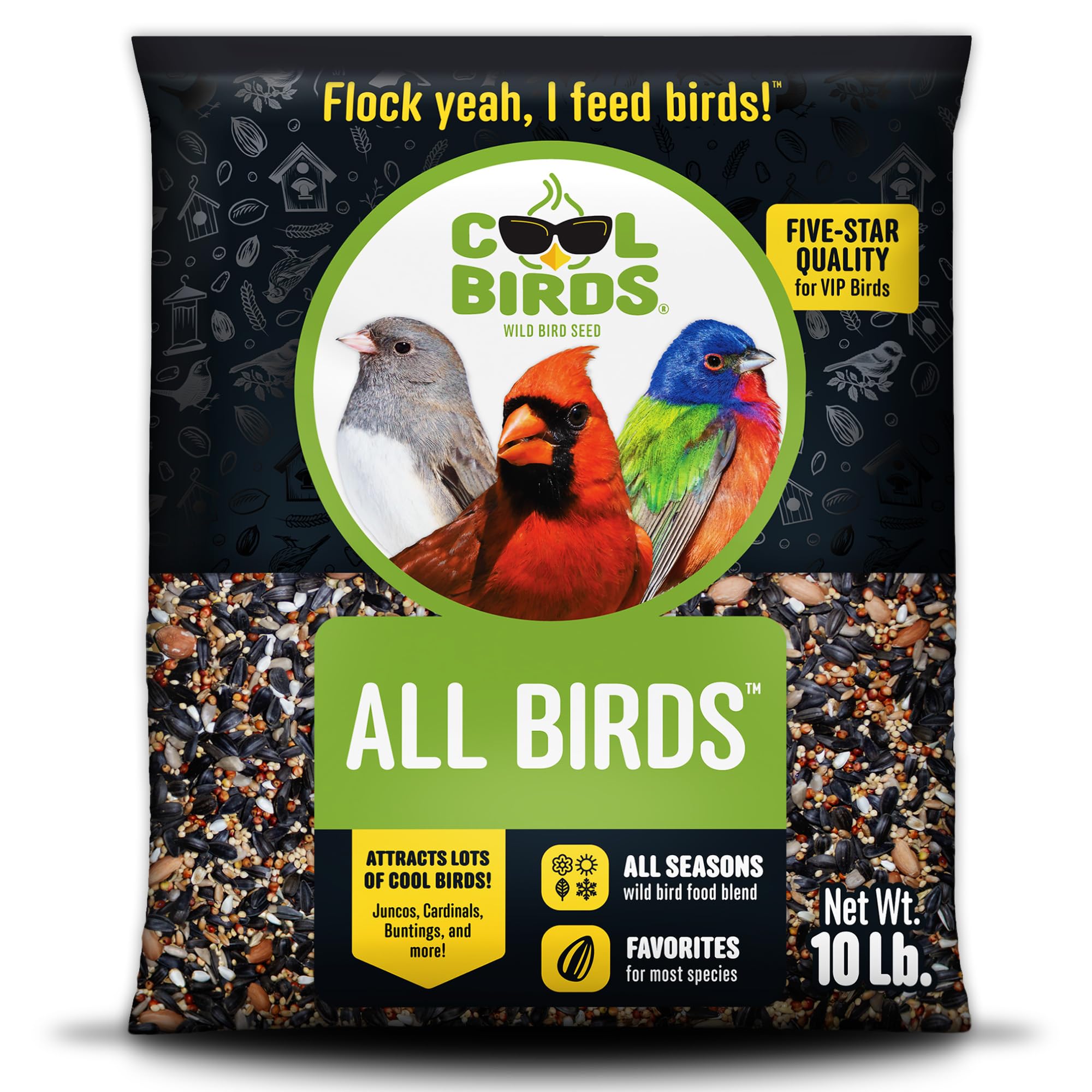
This 10-pound classic blend mixes black oil sunflower, white millet, safflower, peanuts, and sunflower hearts into a five-ingredient formula that strikes a smart balance between cost and coverage. Owner reports specifically highlight cardinals and blue jays as frequent visitors, with multiple mentions of chickadees, titmice, and even the occasional red-bellied woodpecker stopping by. The sunflower heart component is a nice touch—it gives small birds immediate access to energy without having to crack open a shell.
The blend works across tube, hopper, and tray feeders, and the weight per seed is consistent enough that you rarely get jamming in standard feeder ports. The millet content draws ground-feeding sparrows and doves, while the safflower deters squirrels somewhat—though persistent squirrels will still find a way. The lack of artificial colors and the “no filler” claim hold up in practice; users describe the mix as smelling fresh with very few broken shells or dust at the bottom of the bag.
For the price point, this delivers the ingredient diversity of more expensive blends without the premium markup. It is a strong everyday winter mix for a multi-species backyard.
Why we love it
- Sunflower hearts provide instant energy without shelling work
- Attracts both perching and ground-feeding birds in one bag
- Fresh, low-dust seed with minimal broken pieces
Good to know
- 10 lb bag may require frequent refills during heavy feeding periods
- Safflower content is moderate—squirrels may still visit
4. Happy Wings Black Oil Sunflower Seeds
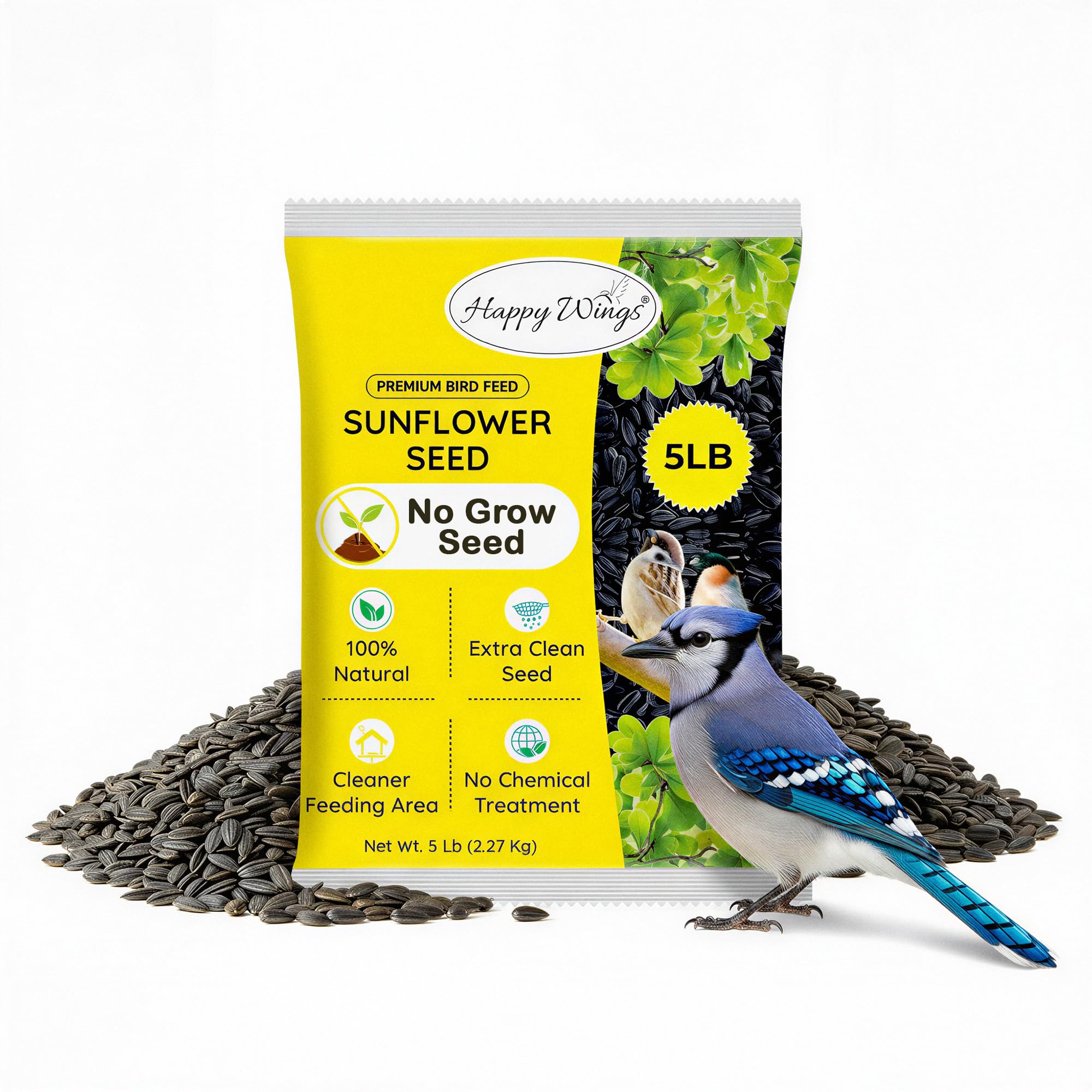
Happy Wings positions this 5-pound bag as a “no-grow” black oil sunflower seed, meaning the seeds have been heat-treated or processed to prevent germination under your feeder. This is a practical feature for winter feeding over bare soil or lawn patches where sprouting seeds can create a messy spring cleanup. The seeds are rich in natural oils and proteins, matching the same fat profile that makes black oil sunflower the top choice for cold weather.
The 5-pound format is noticeably compact—better suited for a single tube feeder or a small backyard setup than for a large multi-feeder station. Owners with multiple feeders will need to buy several bags or combine with a larger bulk source. The bag is produced in USDA- and BRC-GS-approved facilities, which adds a layer of quality assurance that budget seed often lacks. Finches, chickadees, and sparrows clear the feeder quickly, and the low-dust profile keeps the area around the feeder tidy.
If you maintain a single feeder on a patio or balcony and want to avoid the unsightly sprouts that follow a thaw, this bag solves that specific problem while still delivering the energy density birds need.
Why we love it
- No-grow treatment prevents sprouting under the feeder
- High-oil content matches winter energy requirements
- Low-dust and clean for patio or deck use
Good to know
- 5 lb bag is small for larger backyard setups
- Heat treatment may slightly alter seed texture
5. C&S High Energy Suet Treat
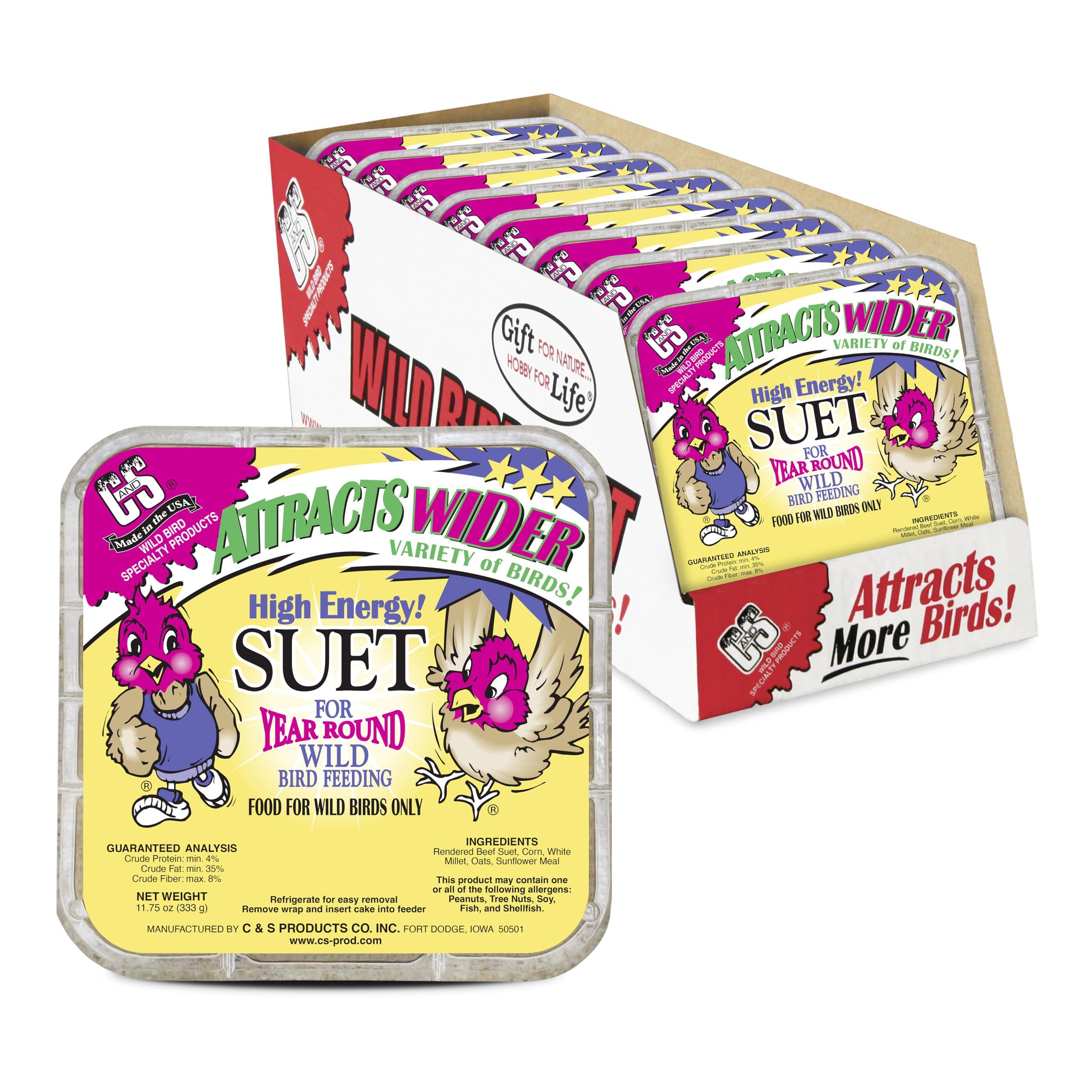
C&S has been rendering suet since 1986, and their High Energy formulation delivers a concentrated fat source that seed alone cannot match in extreme cold. Each 11.75-ounce cake is made from rendered beef fat blended with seeds and nuts into a solid block that fits standard suet feeders. Woodpeckers, nuthatches, chickadees, and jays are the primary consumers, but bluebirds and wrens will also visit when temperatures drop.
The fat content in suet is critical during winter because birds metabolize fat for heat faster than they can process carbohydrates from seed. A suet feeder placed near a tube feeder with black oil sunflower creates a two-station energy hub that supports birds through consecutive freezing nights. The 8-pack provides enough cakes to last several weeks with moderate feeding pressure, and the cakes hold their shape in cold weather without crumbling or melting.
This is not a standalone replacement for seed, but a strategic supplement that fills a nutritional gap that seed cannot cover. Any serious winter feeding setup should include at least one suet station.
Why we love it
- Highest fat density of any winter bird food option
- Specifically targets woodpeckers and nuthatches that skip seed feeders
- 8-cake pack offers excellent value for multi-station setups
Good to know
- Not a complete diet; best used alongside seed feeders
- Attracts starlings and grackles if you do not use a suet cage with a tail-prop
FAQ
Should I switch to a different seed blend specifically for winter, or can I use my regular mix?
Is suet necessary if I already provide black oil sunflower seed?
What does “no-grow” or “no-waste” bird seed mean for winter feeding?
Why do some birds ignore my feeder in winter even when I use quality seed?
Can I mix suet pellets directly into my seed blend?
Final Thoughts: The Verdict
For most gardeners looking for the best bird seed for winter, the clear winner is the Audubon Park Extreme Variety because it delivers the broadest species appeal with minimal filler and a genuinely diverse ingredient list that includes high-value nuts and dried fruit. If you prefer a straight black oil sunflower seed for its unmatched energy density and waste-free feeding, the Old Potters Black Oil Sunflower is the better choice. And for a fat supplement that attracts woodpeckers and nuthatches when seed alone falls short, nothing beats the C&S High Energy Suet.