
A dog’s liver is the central metabolic hub, responsible for detoxifying blood, processing nutrients, and regulating energy stores. When liver function is compromised — whether from portosystemic shunts, copper storage disease, or chronic hepatitis — every kibble and morsel you serve carries heightened stakes. Wrong protein levels or excess copper can accelerate liver cell damage, leading to neurological symptoms, lethargy, and declining quality of life.
I’m Mo Mahin — the founder and writer behind Furric. I’ve spent years cross-referencing veterinary nutritional data, analyzing copper and phosphorus concentrations in commercial dog foods, and studying owner-reported outcomes across hepatic-support diets to help you separate precise therapeutic formulations from marketing noise.
Managing your dog’s condition starts with selecting the right nutrition. This guide compares five rigorously formulated options so you can confidently choose the best food for dogs with liver problems based on your veterinarian’s specific dietary orders.
How To Choose The Best Food For Dogs With Liver Problems
Liver metabolism is complex, so the right diet hinges on matching specific ingredient restrictions to the underlying liver condition — not just grabbing any “liver health” bag. Here are the three non-negotiable factors your veterinarian will expect you to evaluate.
Copper Restriction — The Hidden Trigger
Copper-associated hepatitis (CAH) is common in Bedlington Terriers, Labrador Retrievers, and Dobermans. Diets with added copper supplements or copper-rich ingredients like liver, lamb, and certain shellfish can worsen accumulation. Look for formulas that explicitly state “low copper” or list copper content below 5 mg/1000 kcal ME. Prescription hepatic diets, like Hill’s l/d and Royal Canin Hepatic, deliberately limit added copper to minimize hepatic storage.
Protein Quantity vs. Protein Quality
A failing liver struggles to convert ammonia into urea, which leads to hepatic encephalopathy. Lowering total protein can reduce ammonia load, but overly restricted protein causes muscle wasting and poor immunity. The solution is highly digestible protein (egg whites, soy isolate, whey) that provides essential amino acids with minimal metabolic waste. A food with 14–18% protein from high-quality sources often beats a generic “low protein” food that uses poorly digested meat meals.
Phosphorus and Sodium Modulation
Chronic liver disease frequently progresses to secondary kidney stress. Excess phosphorus accelerates renal decline, while excess sodium promotes ascites (fluid in the abdomen). Therapeutic hepatic diets keep phosphorus below 0.5% on a dry-matter basis and sodium under 0.3%. Non-prescription “support” foods rarely achieve these thresholds, which is why most veterinarians prescribe a veterinary diet rather than an over-the-counter option.
Quick Comparison
On smaller screens, swipe sideways to see the full table.
| Model | Category | Best For | Key Spec | Amazon |
|---|---|---|---|---|
| Hill’s Prescription Diet l/d Liver Care | Veterinary Diet | Proven copper restriction for liver support | Low copper, controlled protein, chicken flavor | Amazon |
| Royal Canin Hepatic Dry | Veterinary Diet | Long-term management of copper storage disease | 26.4 lb bag, low copper, vegetable proteins | Amazon |
| Hill’s Prescription Diet i/d Digestive Care | Veterinary Diet | Secondary digestive upset with liver concerns | ActivBiome+ fibers, turkey flavor, wet pate | Amazon |
| Dave’s Pet Food Kidney Care | Non-Prescription Support | Owners seeking low-phosphorus wet food without a script | Tuna pate, 0.08% max phosphorus, 13 oz cans | Amazon |
| Halo Holistic Plant-Based Recipe | Non-Prescription Plant-Based | Mild liver sensitivity with omnivore or allergy dogs | Vegan, prebiotics + probiotics, 10 lb bag | Amazon |
In‑Depth Reviews
1. Hill’s Prescription Diet l/d Liver Care Dry Dog Food

Hill’s l/d is the most veterinarian-prescribed liver-support diet globally, and for good reason — it restricts copper to levels well below the AAFCO minimum to prevent hepatic accumulation while maintaining highly digestible chicken protein that reduces the ammonia burden on a failing liver. The formula uses controlled protein (roughly 14% DM) with added L-carnitine to help the liver metabolize fats without triggering encephalopathy.
Owner reports consistently note improvements in energy and decreased episodes of head-pressing or pacing — classic signs of hepatic encephalopathy — within two to four weeks of transition. The kibble size (5–7 mm diameter) works well for small to medium breeds, though some toy breeds may find it slightly large. The 17.6-pound bag typically lasts a single-dog household 4–6 weeks depending on weight and feeding guidelines.
Because this is a prescription diet, your veterinarian must authorize the purchase. Some owners express sticker shock, but the cost per serving is lower than many boutique raw diets that lack the precise copper moderation hepatic patients require.
Why we love it
- Clinically proven copper restriction for CAH management.
- Highly digestible protein reduces hepatic workload.
- Antioxidant blend supports immune function in sick dogs.
Good to know
- Requires a veterinary prescription to purchase.
- Small-breed picky eaters sometimes need kibble moistened.
- Chicken flavor may not suit dogs with poultry sensitivities.
2. Royal Canin Veterinary Diet Canine Hepatic Dry Dog Food
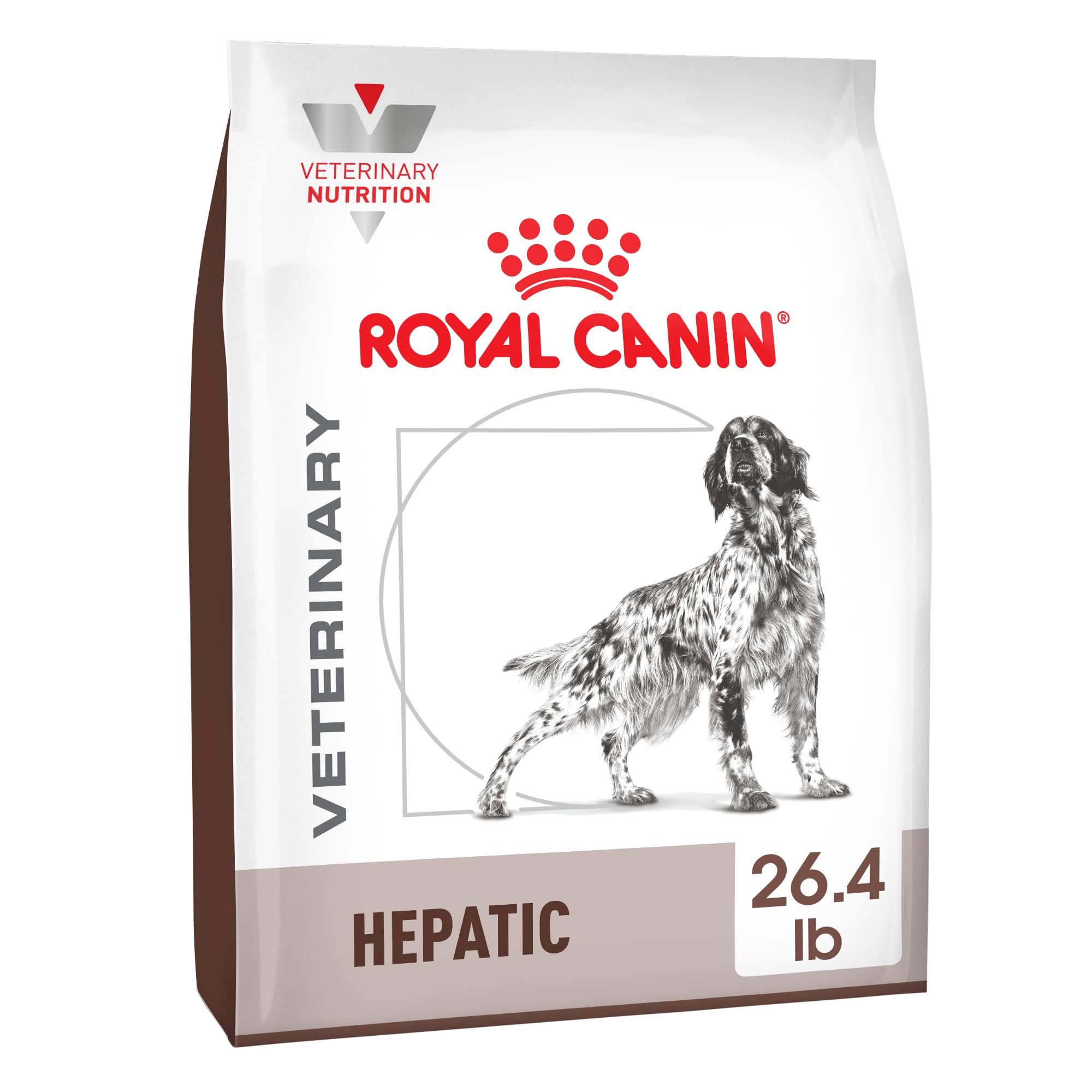
Royal Canin’s Hepatic formula takes a different approach from Hill’s by relying primarily on highly digestible vegetable proteins (soy protein isolate) rather than a single animal protein source. This reduces the immunological load and provides a consistent amino acid profile that dogs with advanced liver disease or multiple food allergies can tolerate without flare-ups. The kibble shape is slightly larger than Hill’s l/d — about 8–10 mm — which encourages chewing and slows fast eaters.
The 26.4-pound bag is one of the largest hepatic-specific offerings on retail shelves, providing roughly 131 cups of food per bag. For medium to large breeds (30–70 lbs), this can last 6–8 weeks, making the per-serving cost competitive with lower-tier maintenance foods. The low copper content (listed as “low copper” on the nutritional adequacy statement) specifically targets copper accumulation disorders, and the added prebiotics support a healthy gut microbiome often disrupted by liver medications like lactulose.
Some owners report that the soy-protein-based flavor is less palatable than chicken-based diets, especially for dogs accustomed to meat-forward formulas. Gradually mixing the new food over 10–14 days, combined with wetting the kibble with warm water, significantly improves acceptance rates.
Why we love it
- Soy protein isolate minimizes allergenic triggers and metabolic waste.
- Largest bag size provides excellent value for medium-to-large breeds.
- Low copper and added prebiotics for comprehensive hepatic + GI support.
Good to know
- Requires a veterinary prescription.
- Lower palatability may need a gradual transition for picky dogs.
- Not suitable for dogs with confirmed soy allergy.
3. Hill’s Prescription Diet i/d Digestive Care Wet Dog Food

While i/d is technically a digestive-care formula, not a dedicated hepatic diet, it frequently serves as a transitional or adjunct food for dogs with liver issues that trigger secondary gastrointestinal distress — particularly those with portal hypertension or cholestasis causing soft stool. The ActivBiome+ Digestion blend includes a patented mix of prebiotic fibers that rapidly activate beneficial gut bacteria, reducing the diarrhea and vomiting common in hepatic patients.
The canned pate format (turkey flavor) is an excellent option for dogs with inappetence resulting from liver congestion or medication side effects. Wet food provides additional moisture that supports hydration in dogs with increased urination (polyuria) — a frequent symptom of liver dysfunction. Each 13-ounce can delivers controlled levels of protein (around 4.5% DM) that are lower than standard maintenance foods but higher than strict hepatic diets, making this a bridge option when your vet wants to stabilize digestion while transitioning to a full hepatic plan.
Owners of senior dogs with combined kidney and liver concerns particularly appreciate the S+OXSHIELD technology, which helps reduce the risk of urinary crystal formation — a common comorbidity in chronic liver disease. The prescription requirement ensures that this formula is used under veterinary guidance rather than as an unsupervised long-term sole diet.
Why we love it
- ActivBiome+ fibers relieve GI upset frequently seen with liver conditions.
- Canned format encourages hydration and stimulates appetite in sick dogs.
- Low phosphorus and added electrolytes compensate for nutrient losses.
Good to know
- Not a complete hepatic diet — best as a short-term or adjunct solution.
- Turkey flavor may not suit dogs with poultry allergies.
- Requires a prescription; not available over the counter.
4. Dave’s Pet Food Kidney Care Dog Food (Tuna Pate)
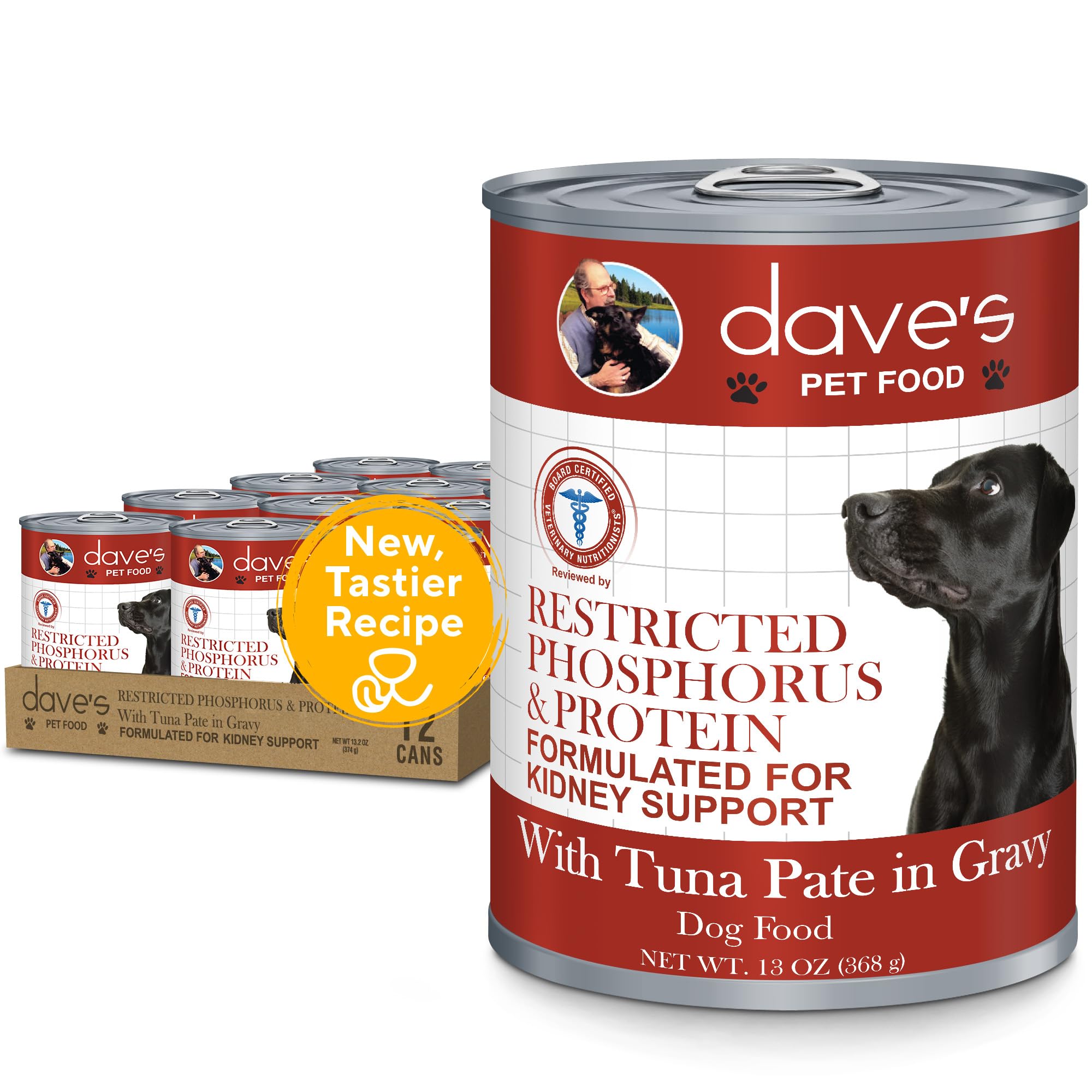
Dave’s Kidney Care is a non-prescription wet food that focuses on phosphorus restriction (0.08% max) rather than copper modulation, making it a useful option for dogs whose primary liver concern is secondary to renal compromise — a common pairing in older dogs. The tuna pate formula was developed by board-certified veterinary nutritionists, so the protein content (roughly 6% DM) is kept moderately low to reduce metabolic byproducts without dropping into starvation-level protein restriction.
Because this formula does not require a prescription, it offers a bridge for owners whose veterinarians recommend a low-phosphorus diet but do not insist on a full prescription hepatic plan. The 12-pack of 13-ounce cans provides decent value compared to single-can specialty foods. Omega-3 fatty acids and B-complex vitamins are added to replenish nutrients lost through increased urination — a benefit for dogs with liver-induced polyuria.
One limitation is that tuna-based diets can contribute to higher mercury exposure over very long feeding periods, so this is not recommended as a sole lifelong food for young dogs. It works best as a rotation component or as a palatable alternative when your dog refuses other low-phosphorus wet foods.
Why we love it
- No prescription needed — accessible for immediate dietary adjustments.
- Extremely low phosphorus (0.08%) suitable for combined liver-kidney cases.
- Rich flavor helps entice inappetent dogs with liver disease.
Good to know
- Tuna-based — rotate with other proteins to minimize heavy metal accumulation.
- Not specifically formulated for copper restriction.
- Wet-only format requires refrigeration after opening.
5. Halo Holistic Plant-Based Recipe With Superfoods

Halo’s Plant-Based Recipe fills a niche for owners who prefer a non-prescription, vegan diet for mild liver sensitivity — particularly when standard meat-based prescription foods trigger allergy symptoms or digestive upset. This formula uses pea protein and brewer’s dried yeast as its primary protein sources, delivering roughly 20% crude protein that is moderately lower than many conventional kibbles but still higher than strict hepatic diets.
What makes this relevant for liver support is the absence of animal-derived copper sources and the inclusion of prebiotics, probiotics, and postbiotics from the “microbiome triad” that supports overall gut health. Dogs with mild hepatic enzyme elevations (ALT, ALP) from non-specific causes often show improvement on this diet, as the high fiber content (5% max crude fiber) helps bind toxins in the colon — similar to a mild form of the low-protein approach used in hepatic diets.
However, this is not a veterinary therapeutic diet. It lacks the precise copper and phosphorus restriction needed for diagnosed copper storage disease or advanced liver failure. The 10-pound bag is best suited for small-breed dogs under 25 lbs or as a short-term rotation food under veterinary guidance. Owners report good palatability, with many picky eaters transitioning easily from meat-based foods.
Why we love it
- Vegan formula avoids common animal-protein allergens and added copper.
- Probiotics and prebiotics support gut health that affects liver function.
- Non-GMO, corn-, wheat-, and soy-free for sensitive stomachs.
Good to know
- Not a veterinary therapeutic diet for diagnosed liver disease.
- Higher protein (20%) than recommended for advanced hepatic cases.
- Small bag size — less economical for large breeds.
FAQ
Can I feed a liver-support diet without a prescription?
What copper level is safe for a dog with liver disease?
Should I add homemade toppers to a hepatic diet?
Can a dog with liver problems eat raw food?
Final Thoughts: The Verdict
For most dogs with diagnosed liver problems, the winner is food for dogs with liver problems that starts with veterinary prescription diets — and the top choice is Hill’s Prescription Diet l/d Liver Care because its proven copper restriction and controlled high‑digestibility protein directly address the two biggest dietary threats to hepatic function. If you need a larger bag for a medium‑to‑large breed and prefer a vegetable‑protein base, grab the Royal Canin Hepatic Dry. And for a non‑prescription wet food that supports combined kidney/liver concerns in older dogs, Dave’s Pet Food Kidney Care offers accessible low‑phosphorus nutrition without a script.