
You switch your flock to organic feed expecting healthier birds and richer eggs, but the bag of “premium” mash you grabbed is packed with corn, soy, and fillers that do little more than pad the weight. The real measure of a quality organic chicken feed isn’t the marketing label—it’s the protein density, the source of calcium, and whether the ingredients list reads like a field guide or a chemistry set.
I’m Mo Mahin — the founder and writer behind Furric. I’ve spent years dissecting ingredient panels, comparing crude protein percentages, and cross-referencing buyer feedback on layer formulas to separate the truly nutritious blends from the overpriced grain sacks.
After reviewing dozens of formulas, I narrowed it down to the five blends that deliver measurable results—from shell thickness to yolk color—so you can confidently choose the best organic chicken feed for your flock’s specific needs without second-guessing a single ingredient.
How To Choose The Best Organic Chicken Feed
Selecting an organic chicken feed goes beyond the label on the bag. You need to match the formula to your birds’ life stage, production goals, and any dietary sensitivities they might have. These three spec anchors will guide your decision.
Protein Percentage for Your Flock’s Stage
Layer hens older than 18 weeks need a minimum of 16% protein to sustain consistent egg production without putting stress on their bodies. A 17% or 18% formula gives a slight edge during molting or cold weather, when birds require more energy. Starter and grower chicks need higher protein (18–20%), so verify the bag’s intended age range before purchasing.
Calcium Type and Level
Oyster shell provides a slow-release, highly bioavailable calcium source that strengthens eggshells without upsetting the crop. Some feeds add oyster shell directly into the blend; others require you to offer it separately. If your hens produce thin or brittle shells, look for a formula with added oyster shell or a separate calcium supplement.
Corn and Soy Presence
Many hens tolerate corn and soy without issues, but a growing number of backyard flocks show sensitivity to these fillers. Corn-free and soy-free formulas swap in peas, flaxseed, and sunflower seeds for protein and energy. If you notice loose droppings, reduced laying, or lethargy after feeding a standard blend, moving to a corn/soy-free option often resolves the problem within a week.
Quick Comparison
On smaller screens, swipe sideways to see the full table.
| Model | Category | Best For | Key Spec | Amazon |
|---|---|---|---|---|
| Small Pet Select Layer Feed | Pellet | Soy-free high protein layers | 18% protein, corn & soy free | Amazon |
| New Country Organics Classic Layer | Flake | Heat-sensitive, soy-free flocks | 17% protein, certified organic | Amazon |
| Prairie’s Choice Layer Formula | Crumble | Digestion-sensitive adult hens | 16% protein, gluten free | Amazon |
| Purina Layena+ Omega 3 | Pellet | Omega-3 enriched daily eggs | 40lb bag, 250mg omega-3 | Amazon |
| Wholesome Harvest Layer Blend | Granule | Small flock, dual species | Specialty items feed, 10lb bag | Amazon |
In‑Depth Reviews
1. Small Pet Select Chicken Layer Feed Pellets

Small Pet Select pushes protein to 18% without relying on corn or soy, using sunflower, pumpkin, and flax seeds instead. The pellet form reduces fines and spillage compared to mash, and the 20lb bag covers a flock of six hens for about two weeks. Probiotics and botanical herbs are blended in to support digestive health—a practical advantage if your birds experience stress during molting.
You can feed these pellets dry or fermented. Fermenting lowers pH and increases enzyme availability, which some keepers use to improve feed conversion during winter. The inclusion of whole seeds means chickens get the mental stimulation of pecking out ingredients, though it may slow down feeders accustomed to uniform crumbles.
Omega-3 levels rise thanks to the flax and chia content, which translates directly to darker yolks and a richer nutrient profile in the eggs. The lack of fillers means less waste in the bedding and more usable nutrition per pound of feed.
Why we love it
- Corn-free and soy-free formula reduces digestive upset in sensitive flocks
- 18% protein supports peak lay and molting recovery
- Fermentable pellet format gives flexible feeding options
Good to know
- Price per pound is higher than conventional corn-based alternatives
- Some birds require a brief adjustment period when switching from crumble to pellet
2. New Country Organics Corn-Free Classic Layer

New Country Organics delivers 17% protein from certified organic grains grown in North America, and the low-starch formulation keeps birds cooler during hot summer months. The flake texture is coarser than a powder but finer than whole grain, making it easy for older hens to consume without straining their beaks. Kelp and probiotics are mixed in to aid digestion and shell formation.
This feed is corn-free and soy-free by design, but the manufacturer mills other feeds on the same equipment, so trace amounts of corn may be present. If your flock has a genuine corn allergy rather than a sensitivity, contact the company before purchase. The 25lb bag offers a lower cost-per-pound compared to smaller boutique blends.
Eggshell quality and internal yolk color consistently improve within the first week of feeding, according to keepers who switched from commodity layer rations. The added calcium and kelp provide a steady iodine source, which supports thyroid function and feather condition.
Why we love it
- Certified organic grains grown domestically—traceable sourcing
- Low-starch formula reduces heat stress in summer
- Kelp and probiotics boost shell strength and gut health
Good to know
- Not guaranteed 100% corn-free due to shared milling equipment
- Bag price positions it in the premium tier for daily feeding
3. Prairie’s Choice Non-GMO Backyard Chicken Feed

Prairie’s Choice covers the basics of a solid layer feed without the premium price tag: 16% protein, non-GMO ingredients, and a crumble texture that dissolves quickly in the crop. The formula is antibiotic-free and non-medicated, making it safe for flocks where you want to avoid any withdrawal periods. At 25lbs, it balances storage footprint with weekly feeding volume.
The lack of gluten makes this a safe option for birds with digestive sensitivities that manifest as pasty vent or loose droppings. The crumble form is especially effective for bantams and smaller breeds that struggle with larger pellets. Milled and packaged in the USA, the supply chain is shorter than imported feeds, which often means fresher stock at the retail level.
Owners of standard layer breeds report consistent egg production and firm shells when feeding this as a standalone ration. The protein floor of 16% is adequate for peak lay, but you may want to supplement with black soldier fly larvae or mealworms during extreme cold when hens require more metabolic energy.
Why we love it
- Gluten-free and non-medicated for sensitive digestive systems
- Affordable mid-range price for a 25lb bag
- Domestic milling supports fresher product on arrival
Good to know
- 16% protein is the minimum for peak lay—may need seasonal supplements
- Contains corn and soy, which some keepers prefer to avoid
4. Purina Layena+ Omega 3 Formula
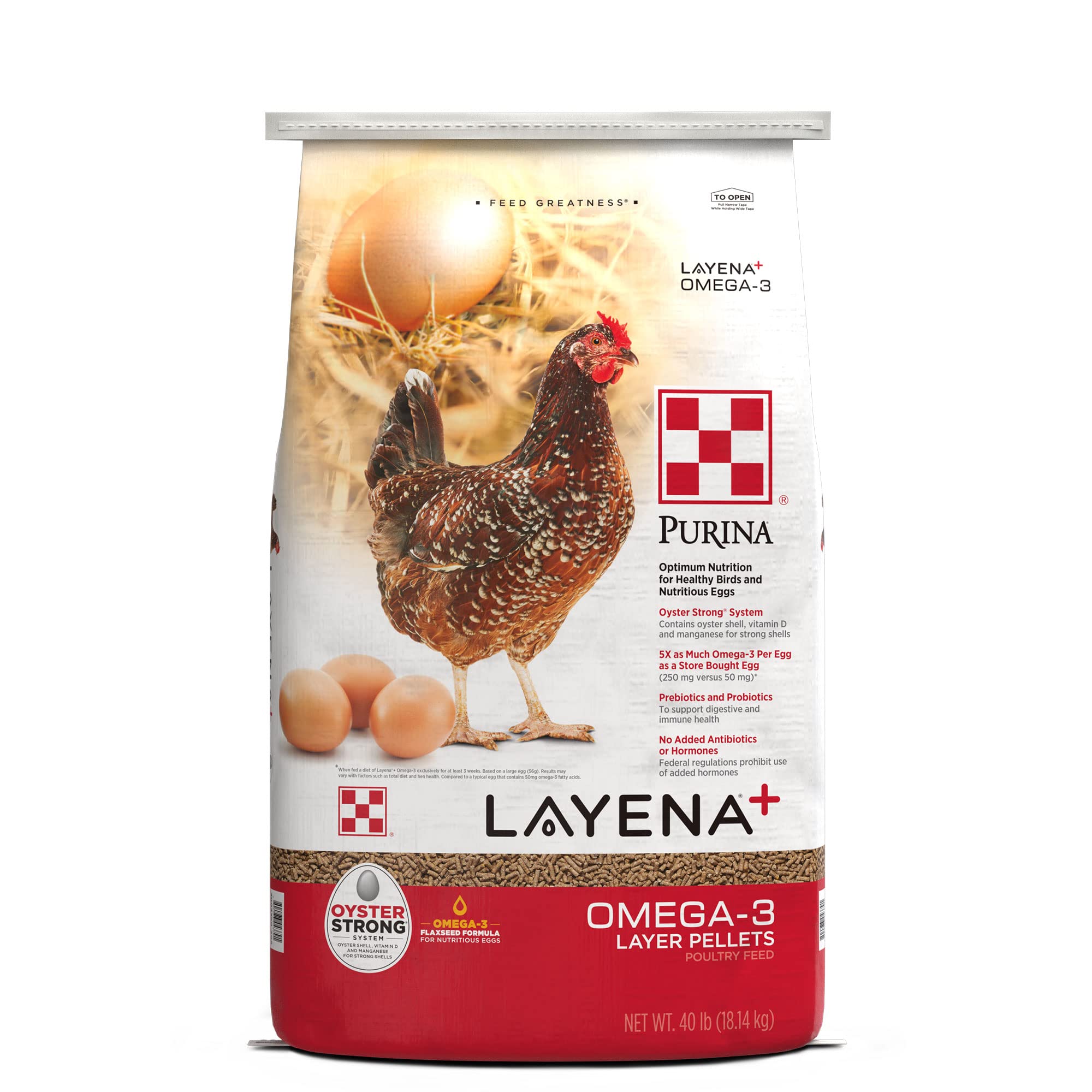
Purina packs 40lbs per bag and engineers each pellet to deliver 250mg of omega-3 fatty acids per egg—five times the amount found in standard grocery-store eggs. The Oyster Strong system adds extra calcium directly into the pellet, eliminating the need for a separate oyster shell feeder. This is a conventional organic-style feed rather than a certified organic product, but it uses non-GMO ingredients as the base.
The pellet size is uniform and dense, which slows down fast eaters and reduces waste from scattering. Keepers note that shells are noticeably thicker within two weeks of switching, and yolks turn a deeper orange due to the marigold extract and flaxseed inclusion. The 40lb bag is the most economical option per pound on this list, making it attractive for flocks of ten or more.
Customer feedback highlights that the product itself performs well but stock shortages occur during peak buying seasons. If you rely on auto-delivery, keep a backup bag on hand to avoid gaps. Some deliveries suffer from torn bags during shipping—requesting a boxed shipment rather than a poly-bag can mitigate this.
Why we love it
- 250mg omega-3 per egg—measurable nutritional enhancement
- Built-in calcium system simplifies feeding routine
- 40lb bag offers the lowest per-pound cost in the group
Good to know
- Not certified organic, though ingredients are non-GMO
- Inventory can be inconsistent—order ahead to avoid running out
5. Wholesome Harvest Non-GMO Whole Grain Layer Blend
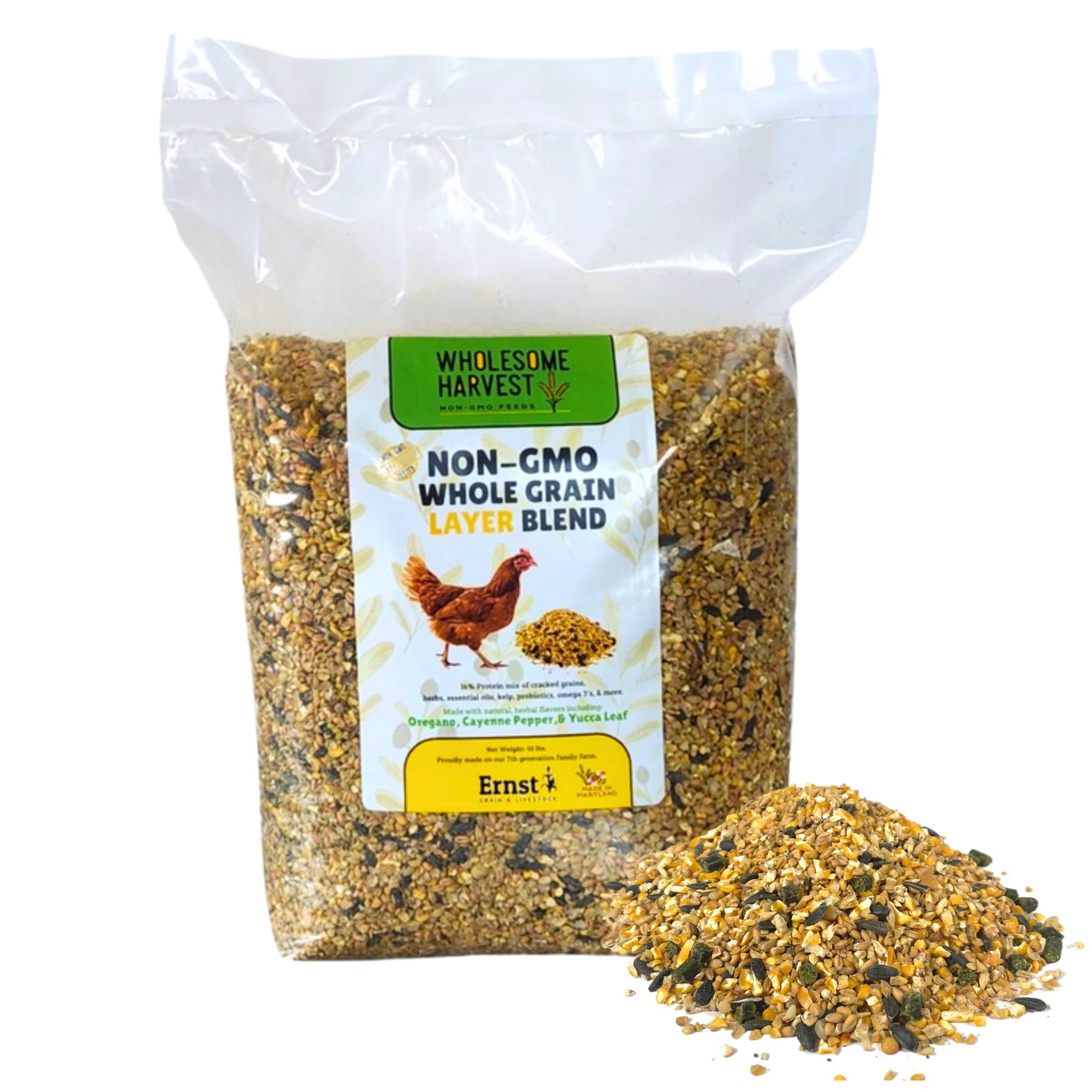
Wholesome Harvest targets small flocks and dual-species households with a 10lb bag formulated for both chickens and ducks. The granule blend includes cracked corn, soybeans, wheat, and barley, plus essential oils and herbs that give the feed a distinct aromatic profile. Oyster shell is already mixed in, so you don’t need a separate calcium source for shell production.
Bantams and smaller breeds are the primary beneficiaries of this size, as the 10lb bag stays fresh before it can spoil. The omega-3 enrichment from linseed oil improves yolk color and fatty acid content in eggs, though the 16% protein level is the baseline for layer formulas. Owners report that chickens actively forage for the herb pieces, which encourages natural scratching behavior.
The major trade-off is the bag volume—twenty bantam hens will go through this in under a week, making it a supplementary rather than primary feed for larger flocks. It works well as a rotation feed to introduce variety or as a trial bag before committing to a larger, more expensive formulation.
Why we love it
- Dual-species formula works for chickens and ducks in mixed flocks
- Pre-mixed oyster shell simplifies calcium management
- Small bag size ensures freshness for small flocks
Good to know
- 10lb bag is cost-inefficient for flocks larger than six birds
- Contains corn and soy, which may not suit all dietary preferences
FAQ
Can I feed organic layer feed to meat chickens?
What does the term “complete feed” mean on an organic chicken feed label?
How long does an open bag of organic chicken feed stay fresh?
Final Thoughts: The Verdict
For most gardeners, the best organic chicken feed winner is the Small Pet Select Chicken Layer Feed Pellets because it delivers 18% protein without corn or soy, supports digestive health with probiotics, and works well dry or fermented. If you want the most economical daily feed with proven omega-3 enrichment, grab the Purina Layena+. And for a certified organic, low-starch formulation that helps hens beat the summer heat, nothing beats the New Country Organics Classic Layer.