
A thistle bird feeder sits empty for weeks, yet goldfinches are thick in the area. That humming tube of metal and mesh is not calling them in the way it should. The problem is rarely the birds — it is the feeder itself. Port size, perch rigidity, and weather sealing determine whether finches trust the station or fly past it. Choosing the wrong tube leaves seed trays full and yard activity quiet.
I’m Mo Mahin — the founder and writer behind Furric. I’ve spent years analyzing bird-feeder market data, cross-referencing mesh density specs against feeding-port dimensions, and weighing hundreds of owner reports to isolate exactly which thistle-tube designs hold up under real yard conditions.
After comparing port counts, seed-access gaps, hanging stability, and cleaning ease across five popular models, one tube emerges as the most reliable daily performer for the best thistle bird feeder spot on your garden hook.
How To Choose The Best Thistle Bird Feeder
A thistle feeder looks simple, but tiny details separate a tube that fills daily from one that collects cobwebs. The feeding-port diameter is the first gatekeeper — most finches prefer ports around 5/32 to 3/16 inch. Ports that are too large let house sparrows and blackbirds muscle in and drain the seed in hours. Ports that are too small frustrate goldfinches and cause them to feed elsewhere.
Hanging Stability & Perch Design
Finches are jittery feeders. A tube that spins in every breeze or wobbles when a single bird lands scares the flock away. Look for a metal hook that clamps firmly rather than a thin wire loop. The perch length matters too — perches under 1.5 inches force birds into awkward angles, while perches around 2 inches let finches settle naturally. Mesh-surface tubes offer a different perching experience: birds cling directly to the mesh, which keeps the feeder stable because their weight is distributed across the entire body of the tube.
Metal vs. Polycarbonate Construction
UV exposure and rain degrade cheap plastics within one season. A polycarbonate tube from a reputable brand like Stokes Select can last several years if not physically damaged. Die-cast aluminum is effectively permanent for a backyard feeder — it will not crack in a freeze or shatter when bumped. However, aluminum tubes are heavier, meaning the hanging point and branch or pole must support extra weight. The trade-off is simple: polycarbonate is lighter and cheaper; aluminum is indestructible but costs more per ounce of seed capacity.
Drainage & Seed Freshness
Moisture is the fastest way to ruin nyjer seed and spread mold to visiting birds. A quality thistle feeder includes drainage holes at the base, plus a cap or roof over each port to shed rainwater. The bottom tray design matters equally — a flat tray without drainage pockets damp seed that sits against the metal. V-shaped spacers inside the tube prevent seed from settling into a wet, compacted brick at the bottom.
Quick Comparison
On smaller screens, swipe sideways to see the full table.
| Model | Category | Best For | Key Spec | Amazon |
|---|---|---|---|---|
| iBorn Finch Feeder | Mid-Range | Stability in wind | 14″ tube, 12 small ports, 8 metal perches | Amazon |
| Gtongoko Finch Feeder | Mid-Range | Large capacity + tray perching | 2.5 lb capacity, 6″ round tray, all-metal | Amazon |
| MIXXIDEA Finch Feeder | Budget-Friendly | Lightweight copper aesthetic | 8 feeding ports, 15.5″ tube, alloy steel/copper | Amazon |
| Stokes Select Thistle Tube | Premium | Weather-resistant polycarbonate | 6 feeding ports, 1.6 lb capacity, rust-proof polycarbonate | Amazon |
| Woodlink Audubon Finch Screen Tube | Premium | Lifetime aluminum construction | 13″ tube, die-cast aluminum, 1 lb capacity | Amazon |
In‑Depth Reviews
1. iBorn Finch Feeders for Outside, 14-Inch Tube
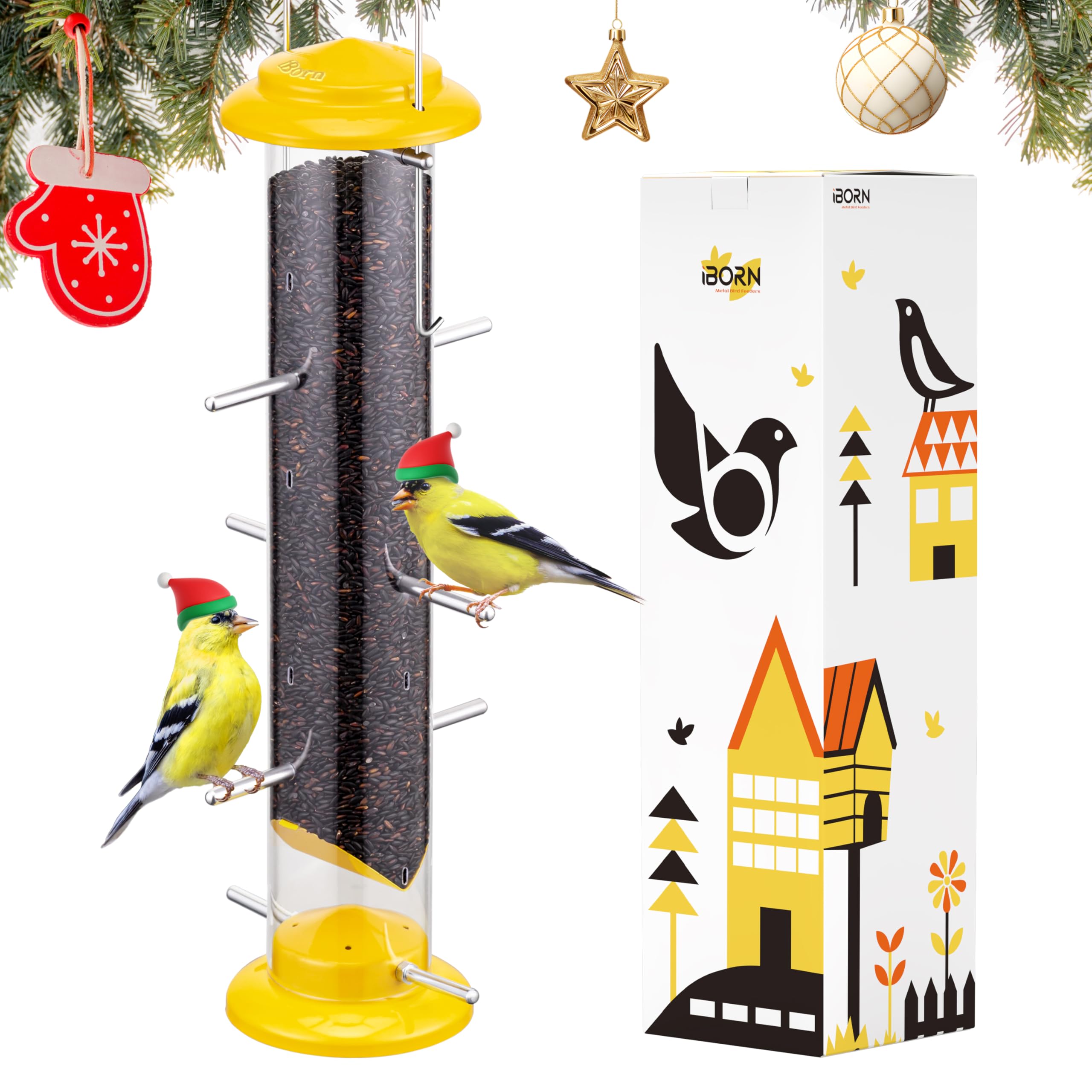
The iBorn tube addresses the most underrated issue in thistle feeders — wind wobble. Its reinforced metal hook clamps tight to the hanger, keeping the 14-inch tube nearly motionless even in a moderate breeze. That stability matters because goldfinches will not land on a spinning platform. The tube holds eight metal perches, each about 1.5 inches long, which gives finches room to settle without sliding off. The port size is tuned for nyjer seed specifically — small enough to exclude house sparrow beaks but wide enough for goldfinches to extract seed quickly.
Inside the tube, V-shaped spacers prevent seed from settling and trapping moisture against the bottom. Four drainage holes at the base keep any water that gets in from turning the seed into paste. The transparent compartment lets you see the seed level without removing the lid, and the flip-top opens wide enough for gloved hands during winter refills. Fill volume is generous for a 14-inch tube, though the exact capacity is not stated — expect roughly a pound and a half of nyjer.
One trade-off: the yellow finish fades slightly after a full summer of direct sun. Function remains unaffected, but if color retention matters, this tube may shift from bright to muted amber over two seasons. That said, the all-metal top, base, and perches will not crack in freezing temperatures, unlike all-plastic competitors that split at the screw threads after one cold snap.
Why we love it
- Metal hook eliminates feeder spin in wind, boosting finch confidence to land.
- V-shaped spacers inside the tube prevent seed compaction and moisture buildup at the base.
- Flip-top lid accommodates gloved hands during cold-weather refills.
Good to know
- Yellow paint may fade toward muted amber after extended direct sunlight exposure.
- Exact seed capacity is unlisted — estimate around 1.5 pounds per fill.
2. Gtongoko Finch Bird Feeders, 2.5 lb Capacity Metal Mesh Tube
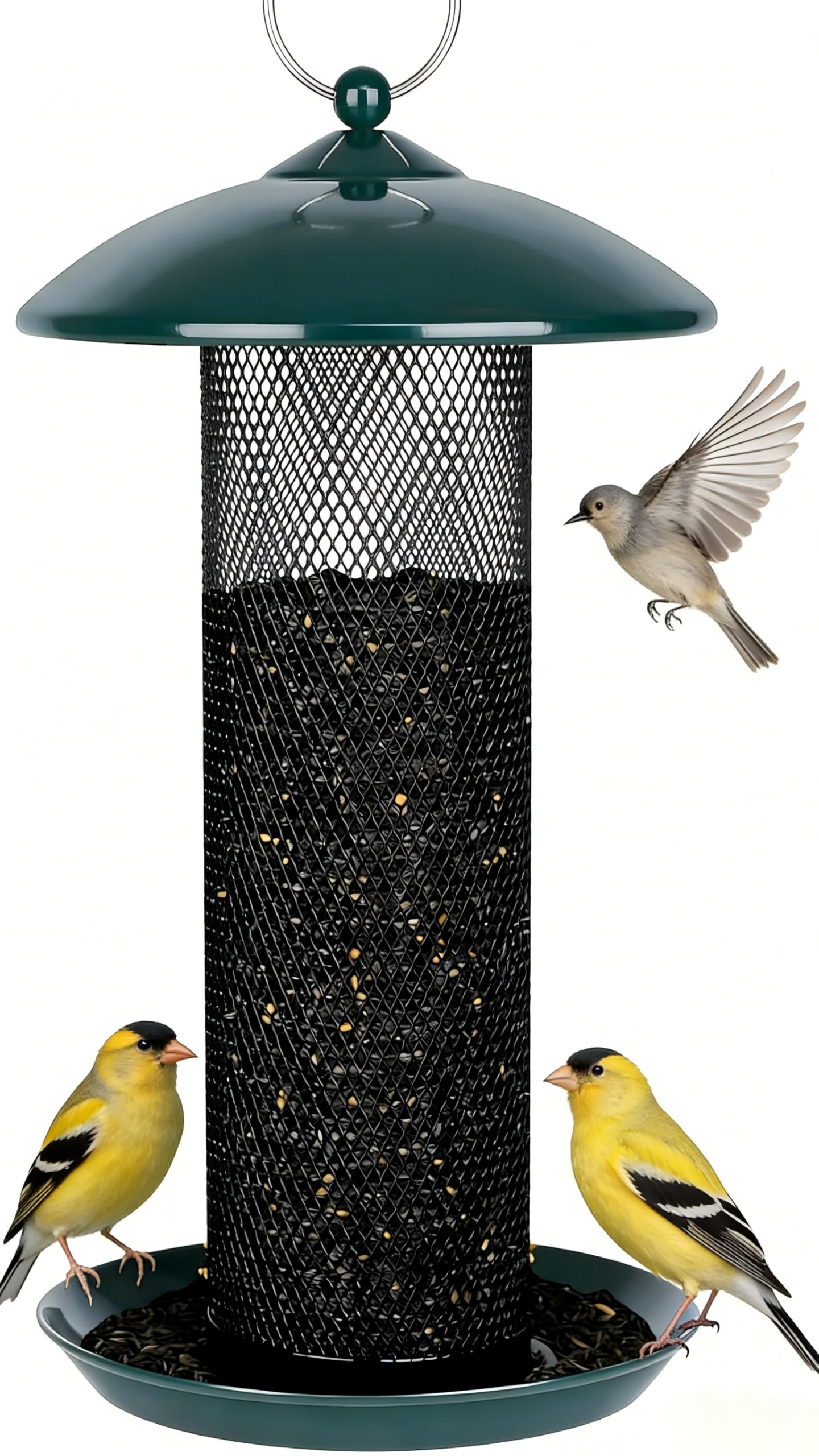
The Gtongoko feeder takes a different approach to thistle dispensing — it uses a full metal mesh tube surrounded by a 6-inch tray. This design lets finches cling directly to the mesh rather than landing on individual perches, which some goldfinch flocks prefer. The tray catches spilled seed, reducing ground waste, but it also invites larger birds like mourning doves to perch on the tray rim. If you want strictly finches, the tray might work against you. If you enjoy mixed flocks, the tray becomes an asset.
Capacity hits 2.5 pounds, which is the largest of any feeder in this roundup. For heavy feeding areas, that means refilling every four or five days rather than every day and a half. The all-metal construction — no wood or plastic — gives squirrels nothing to chew through. The lid overhangs the tube by about 0.75 inches, which does a decent job shedding rain, though in heavy downpours some moisture can still reach the seed through the mesh openings.
Cleaning requires twisting off both the top cap and the bottom tray. The wide mouth of the mesh tube lets you reach in with a bottle brush, but the mesh itself can trap seed hulls that require a rinse with a garden hose. The 12 drain holes in the tray keep standing water from accumulating. Overall, this is the best choice for a high-traffic yard that wants maximum seed staying power.
Why we love it
- 2.5-pound capacity means fewer refills during peak finch season.
- All-metal body with no wood or plastic resists squirrel chewing and weather cracking.
- Mesh surface allows clinging birds to feed from any angle around the tube.
Good to know
- Large base tray invites non-finch species like doves to land and feed.
- Mesh openings can trap hull fragments that require hose rinsing to remove fully.
3. MIXXIDEA Finch Bird Feeder Hanging Metal Thistle Seed Feeder, Copper

The MIXXIDEA tube offers the lightest hanging weight in this group — 0.28 kilograms with seed — which makes it suitable for thinner branches or shepherd hooks that cannot support a heavy aluminum tube. The copper-colored steel finish gives it a warmer aesthetic than the standard neon-yellow tubes most finch feeders use. Eight feeding ports ring the 15.5-inch tube, spaced evenly so multiple finches can feed simultaneously without crowding each other off the perches.
Durability is a mixed story. The alloy steel construction handles seasonal weather well, but the copper coating is cosmetic rather than protective — it will tarnish and develop patina over time, which some gardeners want and others do not. The transparent tube section allows quick seed-level checks, and the top lid twists off without tools. However, the perches are shorter than on the iBorn or Gtongoko models, which some finches may find less stable for extended feeding sessions.
Port size is listed as standard thistle-compatible, but actual opening width is not specified in the documentation. Several owner reports mention that occasional sunflower chips dropped by larger birds can jam the ports, requiring a toothpick or small brush to clear. For pure nyjer feeding this is not an issue, but if your yard gets mixed-feeder traffic, the ports may need periodic unclogging. This unit works best as a dedicated thistle station in a single-seed zone.
Why we love it
- Lightweight construction (0.28 kg with seed) suits thin branches and starter poles.
- Copper aesthetic offers an alternative to the standard yellow tube look.
- Eight ports spaced evenly reduce territorial blocking by dominant birds.
Good to know
- Copper coating tarnishes naturally over time rather than staying shiny.
- Ports may clog if larger seed fragments or sunflower chips mix in with nyjer.
4. Stokes Select Thistle Tube Bird Feeder, 1.6 lb Capacity

The Stokes Select thistle tube proves that polycarbonate can be a premium material when the design is intentional. Each port includes a small roof that overhangs the feeding opening to shed rain — a detail many tubes skip, resulting in wet seed clumping inside the port. The 1.6-pound capacity is moderate, but the tube geometry ensures that seed feed down evenly without bridging across the bottom. The bright yellow color is the classic finch magnet shade, and the polycarbonate resists UV yellowing better than standard plastics.
Owner reports over years of use consistently mention that finches prefer this feeder over others in the same yard. This might relate to the short, 1-inch perch length, which prevents house sparrows from comfortably balancing while feeding. Sparrows need a longer perch to brace their larger bodies, and the Stokes perch forces them into awkward positions that most choose to avoid. The roof-top design on each portal also helps — rain beads off the polycarbonate surface and drips away from the seed opening rather than running down into the feeding hole.
The weak point is impact resistance. Polycarbonate can crack if the feeder is dropped onto a concrete patio or if a heavy branch falls on it during a storm. Several long-term owners report owning theirs for three to five years without issue, but one reported a crack after a pole collapse. For the typical yard that does not experience heavy falling debris, the Stokes Select tube delivers reliable daily finch traffic with a lower weight than any metal alternative.
Why we love it
- Rooftop overhangs at each port keep rain off the seed, reducing clumping and mold.
- Short perches (~1 inch) selectively exclude house sparrows while finches feed comfortably.
- Polycarbonate resists UV yellowing far better than standard acrylic or cheap plastic.
Good to know
- Polycarbonate can crack under impact from a falling branch or drop onto hard ground.
- 1.6-pound capacity requires more frequent refills in high-traffic feeding zones.
5. Woodlink NAWLNT Audubon Die Cast Aluminum Finch Screen Tube

The Woodlink Audubon tube is the endgame for buyers who never want to replace a thistle feeder. Made from die-cast aluminum, this 13-inch tube will not rust, crack, warp, or fade. The mesh-screen construction lets finches cling to the entire surface, distributing their weight and keeping the feeder stable. The beige color blends into tree bark and fence lines, which helps cautious finches approach without alarm. It holds exactly one pound of nyjer seed — smaller than most tubes — but the trade-off is a feeder that could outlast the fence it hangs from.
Squirrels cannot chew through aluminum, but they can try to tip the tube to spill seed. The metal hook prevents them from gnawing through the hanger, and the mesh openings are too small for a squirrel paw to reach seed. The one-pound capacity means refilling every two to three days in active yards, but the wide mouth and lack of internal baffles make refilling a 15-second task: pop the top, pour, replace. No threading, no twisting, no tools.
The same mesh that makes perching easy also lets wind blow through, so the tube does not catch gusts like solid-walled tubes do. This actually improves stability in exposed hanging locations because wind passes straight through rather than pushing the tube sideways. Downsides: the aluminum body conducts temperature, so in sub-freezing weather the metal can be cold enough that finches may prefer the polycarbonate option. Also, the beige color can be harder to spot against a tree trunk from a distance, making seed-level checks require a closer walk.
Why we love it
- Die-cast aluminum body will not rust, crack, warp, or fade across decades of outdoor use.
- Mesh screen lets wind pass through, reducing feeder sway in exposed hanging locations.
- Wide mouth and tool-free top make refills faster than any threaded-cap design.
Good to know
- One-pound capacity is the smallest in this roundup, requiring more frequent refills.
- Aluminum conducts cold temperatures; finches may slightly prefer warmer polycarbonate tubes in winter.
FAQ
What is the ideal feeding port size for finches?
Can I mix nyjer seed with sunflower chips in a thistle feeder?
Why do finches ignore my feeder even when it is full?
How often should nyjer seed be replaced in a feeder?
Final Thoughts: The Verdict
For most gardeners, the best thistle bird feeder winner is the iBorn 14-Inch Tube because its reinforced metal hook and V-shaped internal spacers solve the stability and moisture problems that cause finches to avoid other feeders. If you want maximum seed capacity to reduce refill frequency, grab the Gtongoko 2.5 lb Mesh Tube. And for a feeder that will never need replacing, nothing beats the Woodlink Audubon Die Cast Aluminum Tube.