
Choosing a kibble for a Chihuahua, Yorkie, or Toy Poodle isn’t the same as feeding a Labrador. Tiny mouths need smaller kibble, and those fast-growing bodies demand a precise balance of calcium, DHA, and protein that differs from large-breed formulas. One wrong bag can mean picky eating, digestive upset, or developmental missteps in those critical first ten months.
I’m Mo Mahin — the founder and writer behind Furric. I dig into ingredient panels, compare guaranteed analyses against AAFCO standards, and cross-reference real owner feedback to cut through the marketing and find formulas designed for small-breed puppies’ unique metabolic needs.
This guide breaks down five recipes built for dogs under 22 pounds, from grain-free options to veterinarian-backed blends for puppy food for small breed puppies.
How To Choose The Best Puppy Food For Small Breed Puppies
Small-breed puppies have a faster metabolism and reach skeletal maturity earlier than larger dogs. That means their food must deliver concentrated energy and precise nutrients without overshooting calcium levels that can interfere with bone development. Here are the specifications to check on every label.
Kibble Size and Shape
Small mouths struggle with oversized pellets. The ideal kibble measures roughly 6 to 10 millimeters in diameter — small enough for a Yorkie or Toy Poodle to pick up and chew without choking. Heart-shaped, star-shaped, or round kibble can also assist in mechanical teeth cleaning during the puppy stage.
Protein and Fat Percentage
Look for a minimum of 28 percent crude protein and 15 percent crude fat on a dry matter basis. Small-breed puppies burn energy fast, and chicken meal, lamb meal, or deboned chicken as the first ingredient ensures amino acids for muscle growth without excessive fillers like corn or soy.
DHA and Calcium Balance
Docosahexaenoic acid (DHA) from fish oil supports brain and retinal development during the first year. Calcium levels should fall between 0.8 percent and 1.5 percent — too much can cause growth plate issues in toy breeds. A formula with chelated minerals improves absorption without overloading the system.
Grain-Free vs. Grain-Inclusive
Grain-free recipes benefit puppies with wheat or gluten sensitivities, but they often rely on pea or potato protein, which some dogs find harder to digest. Grain-inclusive blends using brown rice, oatmeal, or barley provide soluble fiber that stabilizes sensitive stomachs. Match the choice to your puppy’s stool consistency and coat condition.
Quick Comparison
On smaller screens, swipe sideways to see the full table.
| Model | Category | Best For | Key Spec | Amazon |
|---|---|---|---|---|
| Royal Canin Small Puppy | Premium | Brain & immune support | 8mm kibble, 30% protein | Amazon |
| Merrick Lil’ Plates | Premium | Grain-free joint support | 900mg/kg glucosamine | Amazon |
| NutriSource Small & Medium | Mid-Range | Wholesome grain digestion | Prebiotics + probiotics | Amazon |
| Hill’s Science Diet Puppy | Mid-Range | Veterinarian-recommended | DHA from fish oil | Amazon |
| Solid Gold Toy & Small Breed | Value | Sensitive stomachs | 90M probiotics/lb | Amazon |
In‑Depth Reviews
1. Royal Canin Size Health Nutrition Small Puppy Dry Dog Food

Royal Canin’s formula is engineered with a precise 8-millimeter kibble that fits the jaw structure of dogs expected to weigh between 9 and 22 pounds at maturity. The crunchy pellet helps scrape away early plaque while the puppy chews, which reduces tartar buildup during the teething phase. Chicken is the primary protein source, and the guaranteed analysis delivers 30 percent crude protein and 19 percent crude fat — enough to fuel the high energy output of a growing Toy Poodle or Shih Tzu.
DHA from fish oil is included at levels shown to support cognitive function and retinal development, while an antioxidant blend of vitamin E and beta-carotene reinforces the immature immune system. The formula also contains prebiotics such as fructooligosaccharides to maintain a balanced gut microbiome, which minimizes loose stools during breed transitions. Each 4-pound bag uses a resealable zipper, though the kibble density means a 4-pound bag lasts about two weeks for a 5-pound puppy.
The recipe is designed for puppies aged 2 to 10 months. It pairs well with Royal Canin’s Small Puppy Thin Slices in Gravy wet food for mixed-feeding variety. One note: the bag lists fish and gluten as potential allergens, so it may not suit every dog with confirmed sensitivities. Overall, the brand remains the top veterinarian-recommended choice for portion-controlled small-breed growth.
Why we love it
- Veterinarian-formulated with breed-specific kibble size
- Includes DHA for brain and eye development
- Strong antioxidant blend supports early immunity
Good to know
- Contains gluten and fish, not ideal for all sensitivities
- 4-pound bag may require frequent reordering
2. Merrick Lil’ Plates Grain Free Dry Puppy Food

Merrick targets small-breed puppies with deboned chicken listed as the first ingredient, providing a high biological value protein that supports lean muscle development without excessive fat. The kibble is cut into a small, round shape that measures about 9 millimeters, making it accessible for breeds like the Miniature Pinscher or Havanese. Crucially, each pound contains 900 milligrams of glucosamine and 700 milligrams of chondroitin — levels typically found in senior joint formulas, but here included to protect developing hip and elbow joints in fast-growing toy breeds.
The grain-free recipe swaps wheat and corn for sweet potatoes and peas, which deliver complex carbohydrates for sustained energy. Omega-6 and omega-3 fatty acids from chicken fat and salmon oil support a glossy coat and reduce skin inflammation during the puppy shedding phase. Probiotics such as dried Bacillus coagulans are added to maintain digestive regularity, a common pain point when transitioning puppies to a new dry food.
One potential drawback is the calorie density: roughly 390 kilocalories per cup. A four-pound Chihuahua puppy needs only about 1/2 cup per day, so owners must measure precisely to avoid overfeeding. The bag is a standard 4-pound size with a zip-lock seal. This formula works well for puppies that thrive on a grain-free diet and need extra joint protection from their earliest months.
Why we love it
- High glucosamine and chondroitin for joint development
- Grain free, suitable for wheat-sensitive puppies
- Deboned chicken is the first ingredient
Good to know
- Calorie-dense; portion control is essential for toy breeds
- Grain-free may not suit all digestive systems
3. NutriSource Puppy Food for Small and Medium Breeds

NutriSource uses chicken meal as the concentrated protein base, delivering 28 percent crude protein without the water weight that dilutes deboned chicken. The formula is grain-inclusive, featuring brown rice, oatmeal, and barley as carbohydrate sources that provide soluble fiber for steady glucose release and firm stools. Each serving includes proprietary prebiotics and probiotics — specifically dried Enterococcus faecium fermentation product and dried Lactobacillus acidophilus — to populate the gut with beneficial bacteria right from the first bag.
The addition of L-carnitine (at roughly 50 mg per cup) supports fat metabolism and heart muscle function, which is relevant for small breeds prone to mitral valve issues later in life. Taurine is also supplemented at 0.15 percent minimum to further guard against dilated cardiomyopathy. The kibble shape is round and about 8 millimeters in diameter, appropriate for both Extra Small and Small breed jaw sizes. Omega-3 and omega-6 fatty acids come from chicken fat and sunflower oil, contributing to a healthy coat without fish-derived ingredients that might trigger allergies.
The 4-pound bag is competitively priced for a mid-range option, and the brand provides a guaranteed analysis that meets AAFCO requirements for all life stages. Because the recipe contains grains, it is not suitable for puppies with confirmed celiac-like sensitivities. Still, for owners seeking a probiotic-forward, grain-inclusive recipe with heart-supporting nutrients, NutriSource delivers reliable daily nutrition.
Why we love it
- Prebiotic and probiotic blend promotes gut health
- L-carnitine and taurine support heart development
- Grain-inclusive for stable energy and stool quality
Good to know
- Contains grains, not suitable for gluten-free diets
- Small bag size; frequent reordering for fast-growing pups
4. Hill’s Science Diet Puppy Dry Dog Food, Lamb Meal & Brown Rice

Hill’s uses lamb meal and brown rice as the core ingredients, making this a solid choice for puppies that have shown chicken intolerance in the past. The protein content sits at 27.5 percent on a dry matter basis, slightly below some competitors, but the digestibility of lamb meal is high, and the amino acid profile supports muscle growth without putting stress on the kidneys. DHA from fish oil is included at 0.05 percent, a level consistent with clinical studies that link early DHA intake to improved trainability and visual acuity in puppies.
Balanced minerals — calcium at 1.0 percent and phosphorus at 0.8 percent — provide the correct ratio for skeletal development without overshooting levels that could cause hip dysplasia in fast-growing small breeds. The kibble is approximately 10 to 11 millimeters, which is the largest on this list, but it still fits comfortably in the mouths of most toy and small breeds. The formula is made in the USA with globally sourced ingredients, and it carries the seal of approval from Hill’s global network of veterinary nutritionists.
The lamb flavor tends to appeal to picky eaters who turn up their noses at chicken-based kibble. One limitation is that the 4-pound bag, when first opened, can go stale faster than thicker bags; a container or clip is recommended. This recipe is suitable for all breed sizes, but owners of Extra Small breeds (under 5 pounds) may prefer a smaller kibble diameter. Nonetheless, for a widely recommended, clinically tested lamb recipe, Hill’s delivers dependable nutrition.
Why we love it
- Lamb recipe is excellent for chicken-sensitive puppies
- DHA from fish oil supports cognitive development
- Balanced calcium-to-phosphorus ratio for safe bone growth
Good to know
- Largest kibble in this comparison; not ideal for very tiny mouths
- Bag seals moderately well; transfer to an airtight container
5. Solid Gold Toy & Small Breed Dry Dog Food
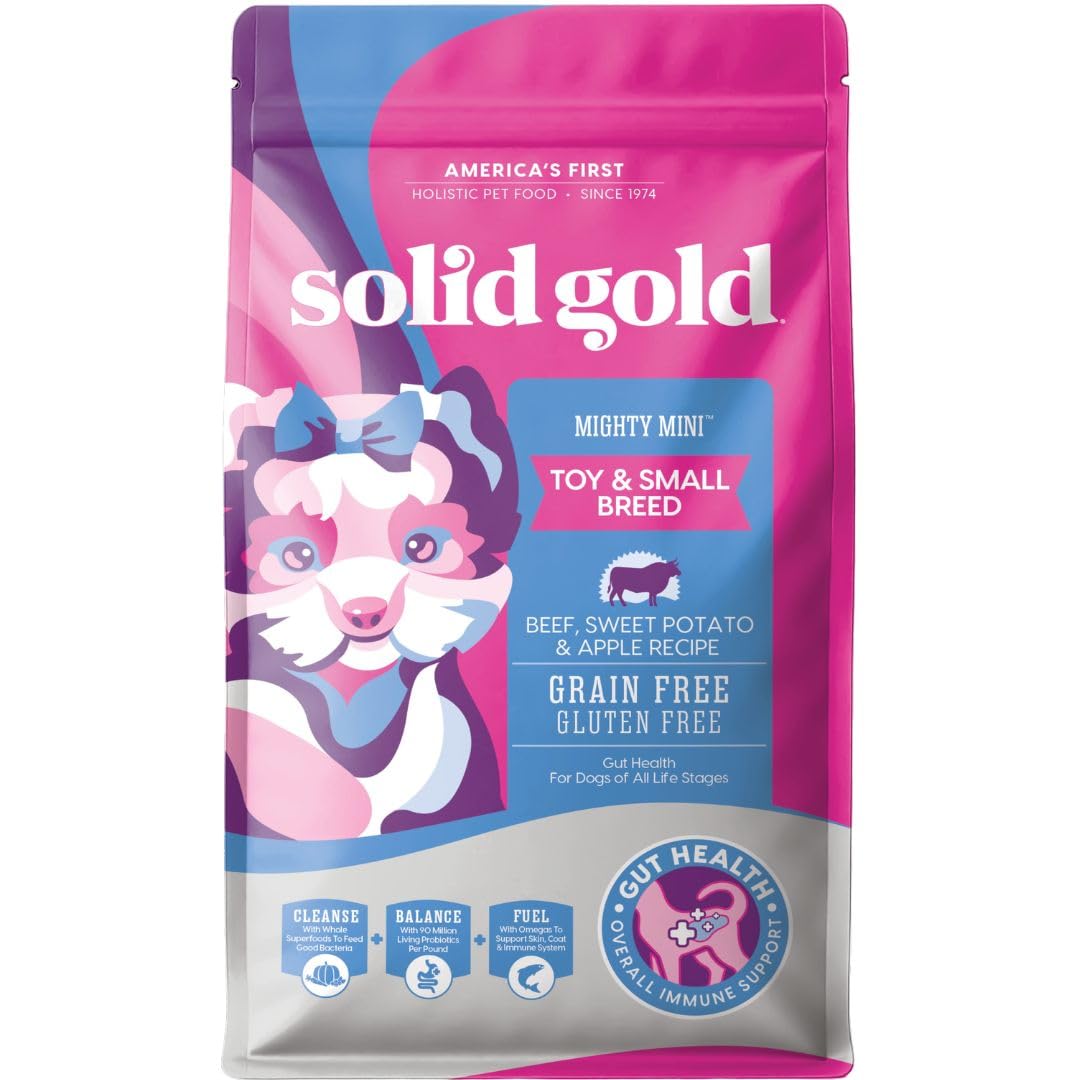
Solid Gold’s Mighty Mini recipe packs 90 million probiotics per pound — the highest concentration in this comparison — using dried Bacillus coagulans to reinforce gut flora from the first serving. The first ingredient is real beef, offering a novel protein for puppies that have only eaten chicken-based foods before. The kibble is heart-shaped and roughly 7 millimeters in diameter, designed specifically for toy breeds like Affenpinschers, Brussels Griffons, and Toy Poodles whose tiny teeth struggle with standard pellets.
This recipe is grain-free and gluten-free, relying on sweet potatoes and chickpeas for carbohydrate content. It also omits corn, wheat, and soy, which makes it a strong candidate for puppies with known environmental or food sensitivities. Omega-3 and omega-6 fatty acids come from flaxseed and canola oil, supporting a healthy coat without fish-derived ingredients. The 4-pound bag is compact, and the guaranteed analysis shows 28 percent crude protein and 14 percent crude fat, which is slightly lower fat than some competitors — a plus for toy breeds prone to pancreatitis.
Owner reviews consistently mention that picky eaters who refused other brands finished every bite of this beef and sweet potato formula. One caveat: the kibble is very small, so a puppy may gulp it without chewing, though the small size reduces choking risk. The formula is intended for all life stages, meaning it can transition from 8-week-old puppy to senior without a recipe change, though the calcium level (1.1 percent) is appropriate throughout.
Why we love it
- Highest probiotic content for digestive health
- Real beef as first ingredient; novel protein option
- Tiny heart-shaped kibble perfect for toy breeds
Good to know
- Lower fat content may not meet energy needs of very active pups
- Grain free; not suitable for all digestive types
FAQ
At what age should a small breed puppy start eating puppy food?
What is the difference between all life stages and puppy-specific formulas?
Can I mix wet food with my small breed puppy’s dry kibble?
How do I know if the kibble size is right for my puppy?
Is grain-free food better for small breed puppies with allergies?
Final Thoughts: The Verdict
For most owners, the puppy food for small breed puppies winner is the Royal Canin Size Health Nutrition Small Puppy because its 8-millimeter kibble, veterinarian-backed formulation, and precisely calibrated calcium and DHA levels are purpose-built for toy breed growth. If you want a grain-free option with joint-supporting glucosamine, grab the Merrick Lil’ Plates. And for a sensitive-stomach formula packed with probiotics, nothing beats the Solid Gold Toy & Small Breed.