
Choosing an equine dewormer isn’t just about grabbing a tube off the shelf. Internal parasites like small strongyles, roundworms, and bots can cause colic, poor coat condition, and weight loss if your treatment protocol misses the mark. The real challenge is balancing potency with a rotation schedule that prevents drug resistance. This guide cuts through the marketing to focus on the active ingredients and delivery formats that actually work for adult horses and foals.
I’m Mo Mahin — the founder and writer behind Furric. I’ve spent years analyzing veterinary parasitology data, comparing active ingredient concentrations, and cross-referencing owner-reported efficacy to identify which formulations deliver reliable clearance rates without breaking the bank.
Whether you’re managing a single backyard companion or a full barn, these recommendations cover paste syringes and pellet top-dresses so you can confidently select the best equine dewormer for your horse’s current weight and parasite burden.
How To Choose The Best Equine Dewormer
Before you buy, understand the parasite cycle active on your property and the active ingredient your current rotation requires. Every dewormer belongs to one of three chemical classes: macrocyclic lactones (ivermectin, moxidectin), benzimidazoles (fenbendazole, oxibendazole), or pyrimidines (pyrantel pamoate). Using the same class repeatedly breeds resistant strongyle populations. The goal is to hit the right parasite at the right life stage with the right dose.
Active ingredient versus brand name
Brands like Zimecterin, Panacur, and Durvet Duramectin are simply delivery vehicles for the same core molecules. What matters most is the concentration per gram and the weight range the syringe covers. A 1.87% ivermectin paste treats up to 1250 pounds per dose. A 10% fenbendazole paste targets encysted small strongyles that ivermectin misses. Don’t pay for a fancy label — pay for the ingredient your vet recommended for this month’s rotation.
Paste versus pellet formulation
Paste syringes deliver a precise single dose directly into the horse’s mouth, ensuring full ingestion. Pellets are alfalfa-based top-dresses that mix into the feed, which is ideal for horses that resist the syringe. However, pellets require the horse to eat the entire portion at once — if they sort out the medicated bits, the dose is incomplete. For most owners, paste offers the most reliable control, while pellets are a convenience option for easy keepers.
Spectrum of activity and bot control
Ivermectin and moxidectin are the only two actives that kill bot larvae (Gasterophilus) in the stomach. If your region has a bot fly season, your late-fall or early-winter treatment must include one of these. Fenbendazole and pyrantel do not affect bots. On the other end, fenbendazole reaches encysted small strongyle larvae that ivermectin cannot touch. Choosing a dewormer without checking the parasite label is like guessing which weed you’re spraying.
Quick Comparison
On smaller screens, swipe sideways to see the full table.
| Model | Category | Best For | Key Spec | Amazon |
|---|---|---|---|---|
| Merial Zimecterin Gold | Paste | Broad-spectrum single dose | 1.87% ivermectin + praziquantel | Amazon |
| Durvet Duramectin Paste 3-Pack | Paste | Ivermectin rotation value | 1.87% ivermectin, 3 tubes | Amazon |
| SHEVAT VITAMINS Ivermectin Paste | Gel Paste | Apple-flavored 3-count | 1.87% ivermectin, 6.08g each | Amazon |
| Intervet Safeguard Pellets | Pellet | Feed-based fenbendazole | 10% fenbendazole, 1.25 lb bags | Amazon |
| Panacur Paste 10% 2-Pack | Paste | Fenbendazole rotation | 10% fenbendazole, apple-cinnamon | Amazon |
In‑Depth Reviews
1. Merial Zimecterin Gold Equine Dewormer

Zimecterin Gold pairs 1.87% ivermectin with praziquantel, making it one of the few single-syringe options that covers tapeworms alongside bots, small strongyles, and ascarids. Twenty-year buyers consistently report zero breakthrough infestations, which speaks to the efficacy of the invermectin backbone combined with tapeworm-specific praziquantel. The syringe tip is rigid enough to deposit paste behind the incisors without bending, and the twist-dose plunger reduces guesswork for weight bands up to 1250 pounds.
The packaging arrived without an outer box for some customers, which caused concern about authenticity — the tube itself carries Merial markings, so the medication is genuine. The paste consistency is slightly thicker than gel alternatives, which helps it stick to the back of the tongue and reduces drooling or spitting. For a single-dose rotation that covers tapeworms and bots in one step, this is the most complete option on the shelf.
Some owners feel the unit price has crept up compared to generic ivermectin-only tubes. If you’re only targeting strongyles and bots and have no tapeworm pressure, a simpler ivermectin paste may stretch your rotation dollars further. But for a comprehensive spring or fall treatment, the dual-active formulation justifies the premium.
Why we love it
- Ivermectin plus praziquantel kills tapeworms, bots, and strongyles in one dose
- Syringe design delivers accurate weight-based dosing without mess
Good to know
- Occasionally ships without retail box, which may concern first-time buyers
- Price per tube is higher than single-ingredient ivermectin pastes
2. Durvet Duramectin Equine Wormer Paste 3-Pack

Durvet Duramectin delivers the same 1.87% ivermectin concentration as the brand-name tube but at a noticeably lower per-dose cost when purchased in the 3-pack. Each syringe treats a 1250-pound horse and kills bots, large strongyles (including the arterial stages of S. vulgaris), small strongyles, ascarids, and pinworms. For barn owners rotating multiple horses, buying a three-pack reduces the need to reorder every month. The paste has a generic apple-cinnamon scent that most horses accept without excessive head-shaking.
The plunger mechanism is straightforward — twist to set the desired weight mark and push. A few users noted the paste can be slightly stiffer in colder temperatures, so warming the tube in your pocket for a minute before dosing helps it extrude smoothly. The tube dimensions (9.75 x 3 inches) fit standard equine syringe holders if you prefer to use a dosing gun. Durability of the plastic cap is acceptable; store upright to prevent the paste from settling into the neck.
Because it’s ivermectin-only, Duramectin does not cover tapeworms. If your fecals show tapeworm eggs, you’ll need to pair this with praziquantel or use a different product in your rotation. For straight ivermectin power at a budget-friendly multi-pack price, this is the most practical choice for a single-active rotation schedule.
Why we love it
- 3-pack delivers the lowest per-tube cost for ivermectin-only deworming
- Kills bots, S. vulgaris, and strongyles with the industry-standard active ingredient
Good to know
- No tapeworm coverage — combine with praziquantel if needed
- Paste stiffens in cold weather; warm slightly before use
3. SHEVAT VITAMINS Ivermectin Horse Paste 1.87% 3-Count
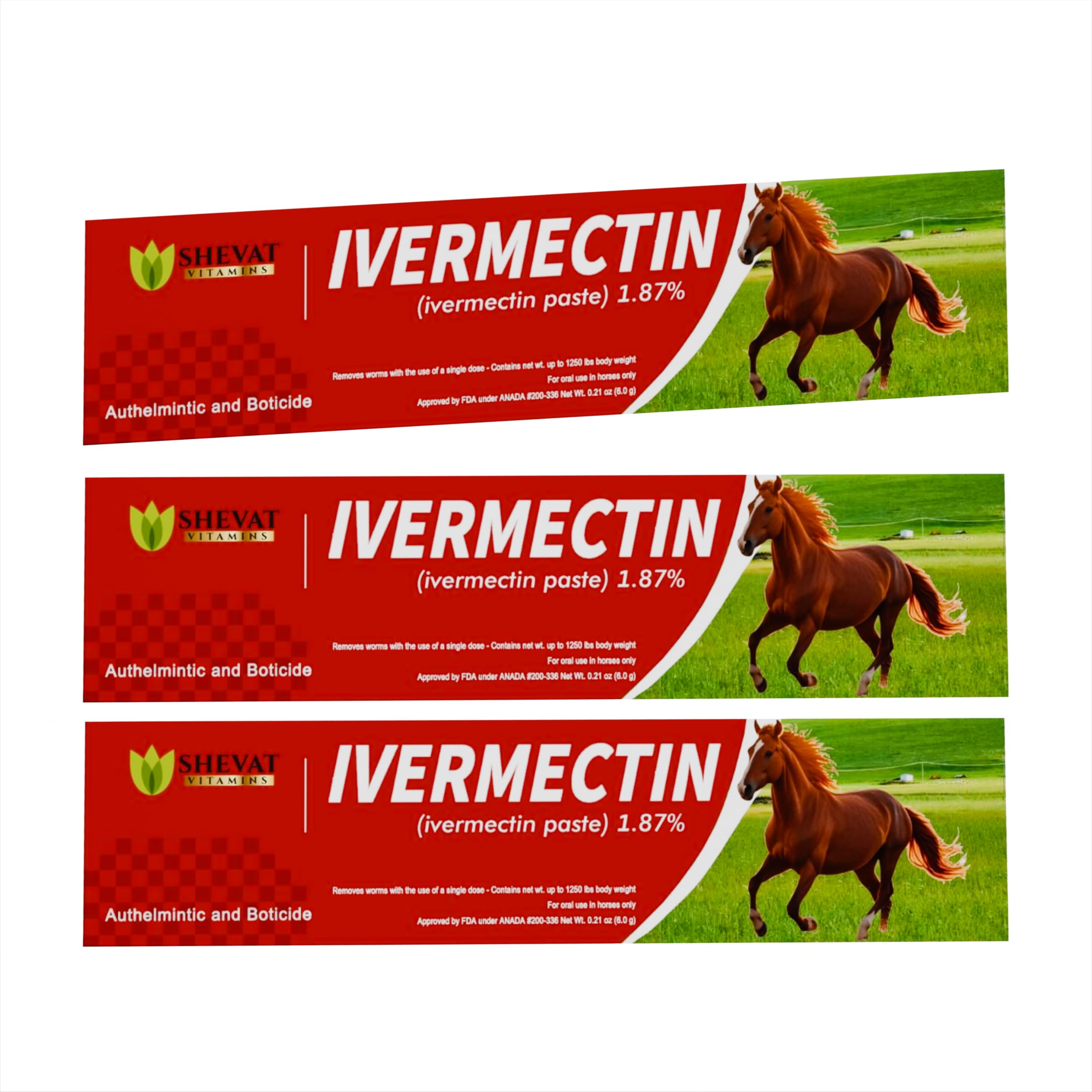
SHEVAT VITAMINS offers a 3-tube pack of 1.87% ivermectin that some owners describe as a gel rather than a traditional paste. The apple flavor is very faint, which can be an advantage — some finicky horses dislike strong artificial scents and accept this formula more readily. Each 6.08g tube treats up to 1250 pounds, and the unit count means you can stock a three-month rotation cycle without repurchasing. The gel texture allows for a thinner dose that spreads evenly on the tongue, reducing the chance the horse spits a clump onto the stall floor.
A minor labeling discrepancy exists: the box says “paste” but the consistency is distinctly gel-like. This does not affect the drug concentration or efficacy — ivermectin is ivermectin regardless of vehicle. A few reviewers noted the lack of a prominent apple taste compared to competitors, so if you’re relying on flavor to mask the medication, your horse may still detect the drug. The tubes are made in the USA, which appeals to owners who prefer domestic manufacturing for veterinary consumables.
Because this is ivermectin-only, the same rotational gap for tapeworms applies. The per-tube cost falls between the premium multi-packs and single-tube options, making it a solid mid-range choice for owners who want a three-pack without paying brand-name markup. The gel format is genuinely easier to administer to horses that clamp their mouths shut against thick paste.
Why we love it
- Gel consistency spreads easily and resists spitting
- 3-tube pack offers good rotational stock at a reasonable per-dose price
Good to know
- Box description says paste but the inside is a gel texture
- Faint apple flavor may not mask the drug taste for sensitive horses
4. Intervet Safeguard Dewormer Pellets for Horses 1.25-Pound (Pack of 2)
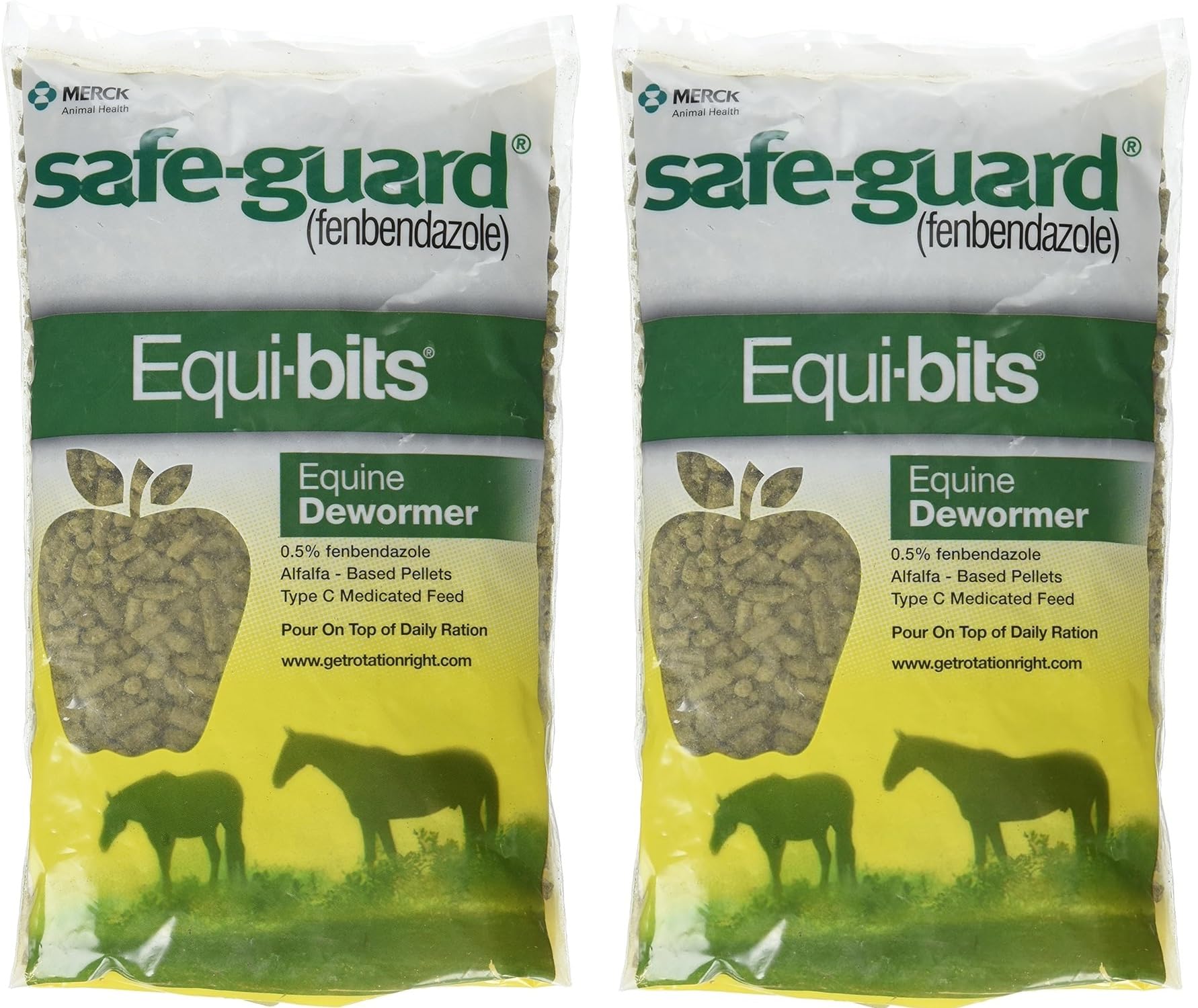
Intervet Safeguard Pellets use fenbendazole 10% in an alfalfa-based pellet format — you simply mix one pouch into the horse’s morning grain. Each 1.25-pound bag treats a 1250-pound horse, and this pack of 2 gives you a two-dose rotational treatment for fenbendazole months. The big advantage here is zero restraint: horses that fight the syringe or have mouth sensitivity can be dewormed simply by eating their breakfast. The alfalfa base is palatable enough that most horses finish the entire meal.
Fenbendazole is the active of choice for targeting encysted small strongyles and ascarids, making this pellet ideal for a late-winter or early-spring rotation when encysted larvae are emerging. It does not kill bots, tapeworms, or large strongyles, so you must still schedule an ivermectin or moxidectin treatment during bot season. The pellets come in sealed foil pouches; store them in a cool dry place to prevent moisture from clumping the feed. Each pouch includes a measuring cup for accurate weight-based portioning.
The downside of any pellet top-dress is that the horse must eat the entire portion immediately. If your horse is a picky eater or sorts out pellets, you risk incomplete dosing. Watch the horse for a few minutes after feeding to confirm the bowl is empty. For horses that tolerate syringes well, a paste alternative may give you more certainty. For the syringe-resistant horse, this is hands-down the least stressful option.
Why we love it
- No syringe stress — horse eats the dose with grain
- Fenbendazole reaches encysted small strongyles that ivermectin misses
Good to know
- No bot or tapeworm coverage; must be part of a larger rotation
- Horse must eat the entire pellet portion immediately to guarantee full dose
5. Panacur Dewormer Horse Paste 10% 2-Pack

Panacur from Merck Animal Health delivers fenbendazole 10% in a paste syringe flavored with artificial apple-cinnamon. This 2-pack provides two full treatments, each tube dosing a 1250-pound horse. Fenbendazole is the standard ingredient for targeting encysted small strongyle larvae and ascarids, making Panacur a non-negotiable part of any complete rotational schedule. The paste consistency is smooth and easy to extrude at room temperature, and the apple-cinnamon scent helps mask the bitter drug taste that some horses object to.
The tube design is standard for the category — twist-tab weight settings from 250 to 1250 pounds in 250-pound increments. One practical note: the product is labeled for unisex-adult use and carries Merck’s manufacturing quality standards. The paraben-free formulation reduces concern about preservative sensitivities in horses with known allergies. Because Panacur does not kill bots or tapeworms, you should use it in months when your rotational plan calls for benzimidazole treatment, such as spring encysted-strongyle season.
This 2-pack falls at a mid-range price point per tube. Some owners report that the paste holds well in the mouth and doesn’t pool at the corners, reducing waste from drooling. If you’re building a three-class rotation (ivermectin, fenbendazole, pyrantel), Panacur is the benzimidazole anchor that fills the gap left by macrocyclic lactone pastes. For barns rotating monthly, grab this alongside an ivermectin option for complete coverage across the year.
Why we love it
- Fenbendazole 10% specifically targets encysted small strongyles
- Apple-cinnamon flavor improves palatability over unmedicated paste
Good to know
- No tapeworm or bot coverage — pair with ivermectin in rotation
- Paraben-free but still contains artificial flavoring
FAQ
How often should I rotate dewormer active ingredients?
Can I use a paste meant for 1250 pounds on a smaller pony?
Why does my dewormer not list all the parasites I’m worried about?
Final Thoughts: The Verdict
For most owners, the best equine dewormer winner is the Merial Zimecterin Gold because it combines ivermectin and praziquantel in a single syringe, covering bots, strongyles, and tapeworms without needing a second product. If you want the best per-dose value for a straight ivermectin rotation, grab the Durvet Duramectin 3-Pack. And for a horse that fights every syringe, nothing beats the stress-free Intervet Safeguard Pellets mixed into morning grain.