
The difference between a boa that thrives and one that merely survives often lies under its body. The wrong substrate can cause scale rot, respiratory issues from improper humidity, or constant stress from a texture your snake dislikes. For a constrictor that can reach eight feet or more, the bedding choice is a health decision, not an aesthetic one.
I’m Mo Mahin — the founder and writer behind Furric. I’ve spent thousands of hours cross-referencing bag-specific hydration capacities, particle-size distributions, and long-term owner feedback to separate marketing claims from the reality of what works inside a boa’s vivarium.
Whether you are setting up your first enclosure or switching from a dusty aspen mix, our research on the best substrate for boa constrictors focuses on moisture retention, dust levels, and ease of spot-cleaning for these powerful ground-dwelling snakes.
How To Choose The Best Substrate For Boa Constrictors
Boa constrictors are semi-arboreal and ground-dwelling snakes that require a substrate capable of holding 60-80% humidity without becoming waterlogged. The wrong material leads to shedding problems, respiratory infections, or bacterial blooms. Here is what the pros consider before laying down any bag.
Particle Size and Texture
Large, chunky coconut husk chips (10-35mm) are ideal for boas because they allow the snake to burrow without compacting into a solid mass. Fine particles, like ground coconut coir or aspen shavings, can be ingested during feeding or cause scale irritation. The loose structure of chips also creates air pockets that prevent anaerobic bacteria from forming.
Moisture Retention vs. Drainage
A boa enclosure needs the top layer to dry out slightly between mistings while the lower layer retains humidity. Premium coconut chips absorb 8-10 times their weight in water and release it gradually. Substrates that dry out in hours require constant intervention; substrates that stay wet for days raise the risk of scale rot. Look for compressed bricks that expand into open, fibrous chips rather than dense mud.
Dust Levels and Respiratory Health
Boa constrictors have sensitive respiratory tracts. Substrates that produce fine dust when disturbed—common with cheap peat moss or low-grade coco coir—can cause long-term issues. Bagged products labeled “dust-free” and “sorted” are worth the premium. Even compressed bricks should be inspected for particulate dust before use.
Quick Comparison
On smaller screens, swipe sideways to see the full table.
| Model | Category | Best For | Key Spec | Amazon |
|---|---|---|---|---|
| Halatool 8 Pack | Premium | Multiple enclosures or deep bioactive layers | 8 bricks, 8-10x water absorption | Amazon |
| Riare 10LB | Mid-Range | Large 4x2x2 enclosures needing 72 quarts | 72 Quart expanded yield | Amazon |
| Legigo 10LBS | Mid-Range | Long-term humidity retention | 10-35mm chip size | Amazon |
| ZeeDix 10LBS | Mid-Range | Dust-free setup for sensitive boas | 10mm-35mm chip range | Amazon |
| BabiChip 12 Quart | Entry-Level | Smaller tanks or starter enclosures | Ready-to-use loose chip, 12 Quart | Amazon |
In‑Depth Reviews
1. Halatool 8 Pack Compressed Coconut Fiber Substrate
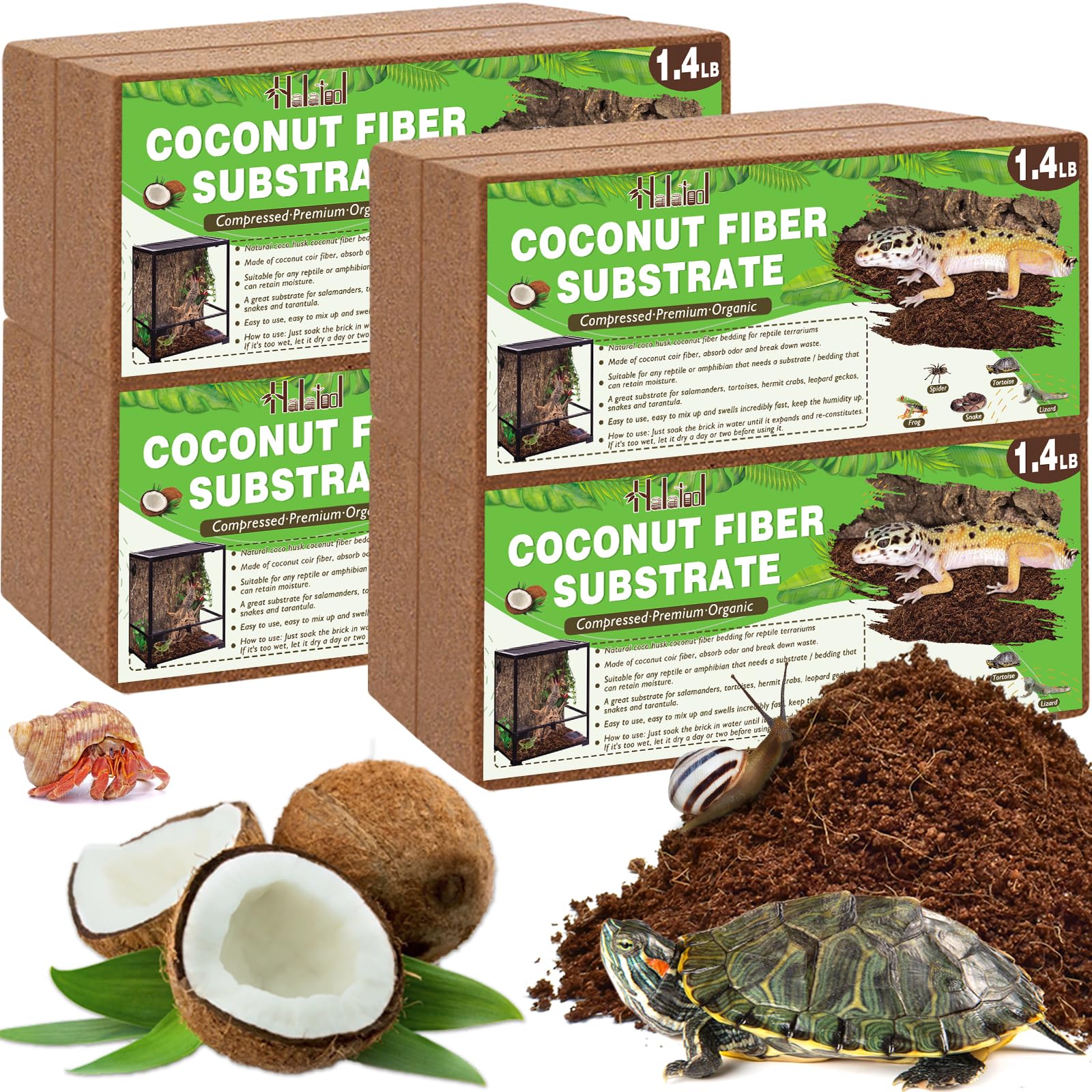
Halatool’s 8-pack delivers the most total substrate volume per purchase in this group, making it the go-to for keepers managing multiple boas or building deep bioactive layers. Each compressed brick absorbs 8-10 times its weight in water, expanding into a light, fibrous medium that holds moisture for days without turning into mud. The organic coconut husk material is clean and free from dirt or foreign substances, which reduces the chance of introducing contaminants into a sensitive enclosure.
The individual brick size—roughly 7.87 x 3.94 x 1.97 inches per unit—allows you to hydrate only what you need for spot refills rather than soaking the entire bag. Owners report that this material is particularly effective for ground-dwelling reptiles and can be repurposed as a garden amendment after it is retired from the vivarium. The 10.21-pound total package is still easy to handle and store despite the high yield.
The texture of Halatool’s bricks is finer than loose coconut chip substrates, leaning closer to coir than chip. This makes it excellent for holding shape during burrowing but means it compacts more under the weight of a large adult boa. Keepers of heavy-bodied boas may need to fluff the top layer weekly to prevent compaction against the enclosure floor.
Why we love it
- Highest total volume per package for multi-enclosure setups
- Exceptional 8-10x water absorption supports stable humidity
- Organic, compostable material that is safe for bioactive systems
Good to know
- Fine coir texture compacts more than chunky chip options
- Requires soaking time to fully expand each brick
2. Riare 10LB Coconut Chip Substrate 72 Quart

Riare’s 10-pound compressed brick expands to a staggering 72 quarts of loose coconut chip, enough to fill a standard 4x2x2 enclosure with several inches of depth. Customers with ball pythons—a species with humidity needs nearly identical to boa constrictors—consistently rate this substrate at a perfect 5/5, noting that it holds humidity “super well” and breaks apart with hot water. The chip size is slightly more crushed and fibrous than pure chip products, which gives it a softer texture that encourages natural burrowing.
The material is odorless straight out of the brick and effectively absorbs waste liquids without producing strong ammonia smells inside the vivarium. Multiple verified purchasers have switched from well-known brands like ReptiChip to Riare, citing equivalent quality at a better value. The brick measures 11.81 x 11.81 x 5.12 inches, making it compact to store until needed.
Because the chips are crushed finer than some competing products, boas that actively push through the top layer may kick small pieces into water bowls more frequently. Keepers who prefer a larger chip size for minimal mess may need to screen out the finest fibers. One owner noted that while the substrate is softer, their snakes did not hollow out nest spots as much as with chunkier chips.
Why we love it
- 72-quart expanded volume delivers excellent coverage per dollar
- Soft, fibrous texture that boas enjoy burrowing into
- Perfect 5/5 reviews from snake keepers for humidity retention
Good to know
- More crushed than full-chip substrates; may contain small fibers
- Can be kicked into water bowls by active snakes
3. Legigo 10LBS Coconut Chip Substrate 72QT
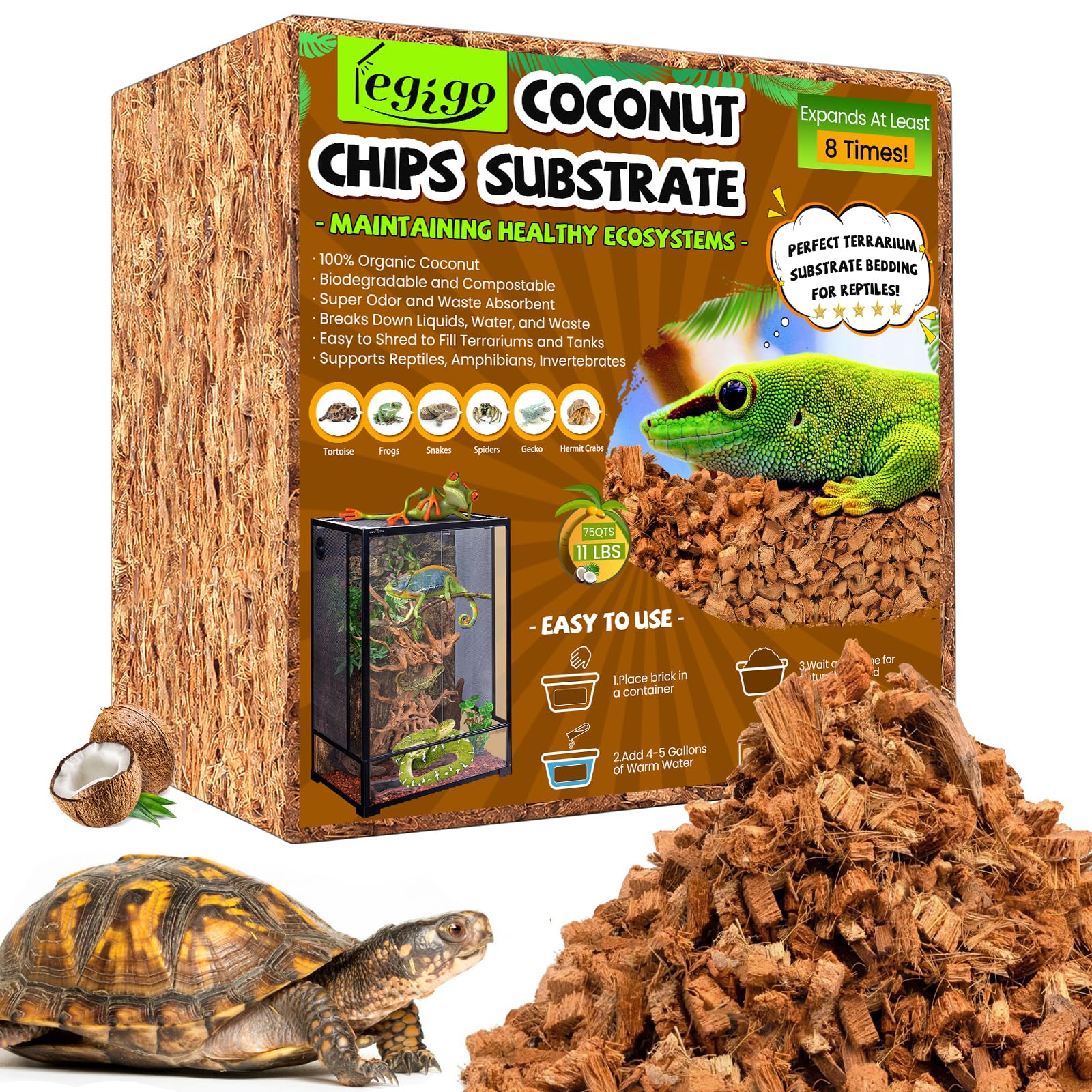
Legigo’s coconut chip substrate emphasizes a chunkier particle size that mimics the natural forest floor where boas evolved. The 10-pound compressed brick expands into chips ranging from 10mm to 35mm, creating an open, airy structure that resists compaction even under a large adult boa’s body. This loose texture allows heat and humidity to circulate through the bedding, reducing the risk of hot or cold pockets developing in the lower layers.
Made from 100% organic coconut husk, the material is designed to be safe if accidentally ingested during feeding strikes—the chips are not sharp and will pass without harm. The substrate absorbs odors from urine and feces effectively, and owners can spot-clean waste clumps without having to change the entire enclosure. When the top layer dries out, a simple spray of water rehydrates the chips without oversaturating the bottom.
The smaller compressed brick format compared to larger blocks means less effort breaking it apart before hydration. However, because Legigo prioritizes larger chip sizes, the overall water retention is slightly lower than finer crushed coconut products. Boa keepers in very dry climates may need to mist more frequently to maintain 70%+ humidity levels compared to using a coir-based substrate.
Why we love it
- Large chip size resists compaction and aerates the substrate layer
- 100% organic husk material safe for accidental ingestion
- Easy to rehydrate top layer without soaking the base
Good to know
- Lower water retention than finer substrates; needs more frequent misting in dry rooms
- Compressed brick requires soaking time to fully expand
4. ZeeDix 10LBS Coconut Husk Chip Substrate 72QT
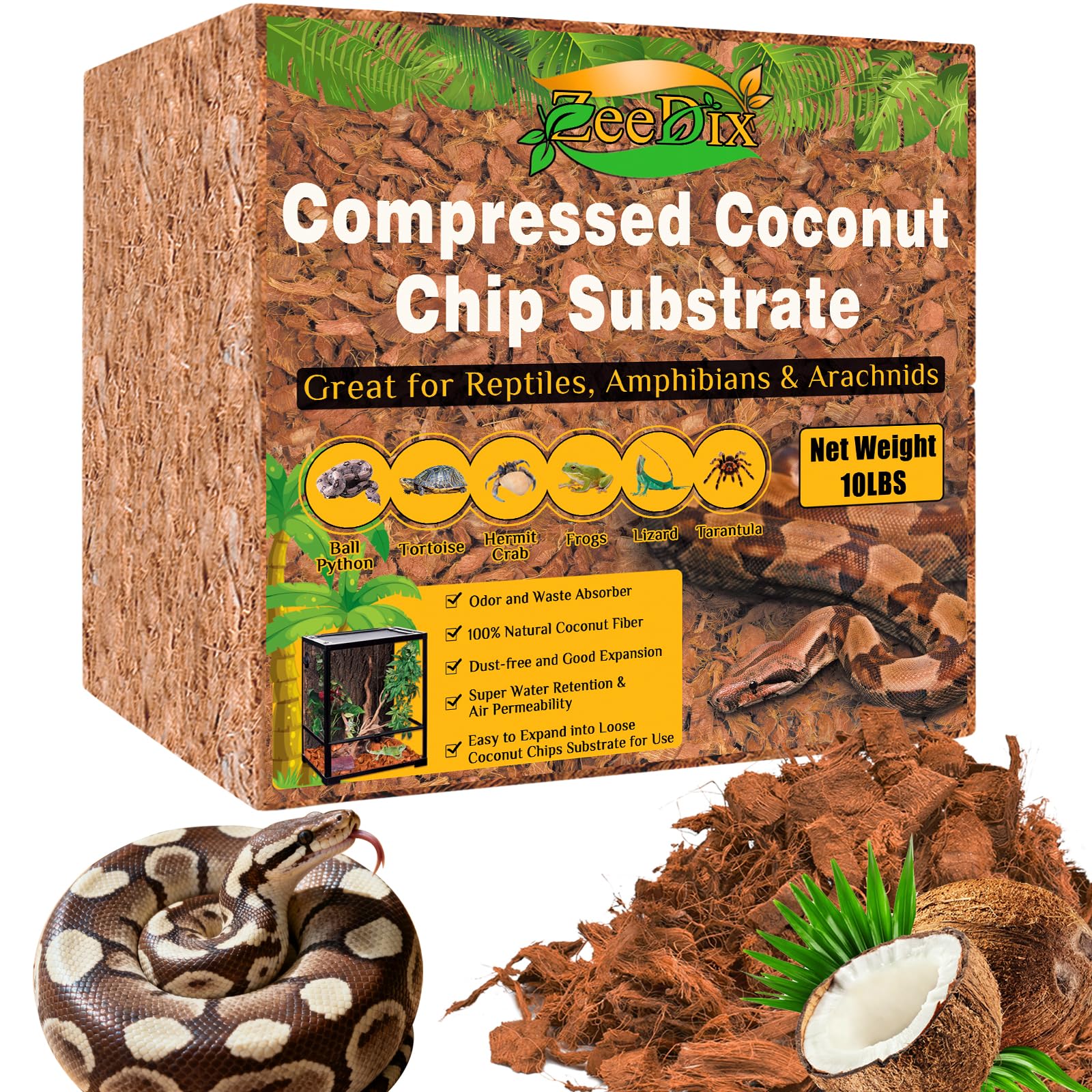
ZeeDix positions itself as a dust-free alternative for keepers who prioritize respiratory health. The 10-pound compressed brick expands into loose chips measuring between 10mm and 35mm, and the brand specifically emphasizes clean handling with minimal particulate matter. For boa constrictors—which can develop respiratory infections from prolonged dust exposure—this feature alone justifies the consideration.
The natural coco husk material is described as loose and breathable, creating a clean environment that balances humidity without becoming soggy. The chips absorb waste liquids and odors quickly, and the substrate holds its structure well during spot-cleaning sessions. The packaging is straightforward: a single compressed brick that requires a large container and water to expand before use.
The chip size consistency from ZeeDix is reliable, but a few users have noted that the bricks can require manual breaking of stubborn compressed sections even after soaking. This is common with many compressed husk products and is manageable with a few minutes of hand mixing. Once fully expanded, the chips maintain their individual shape without disintegrating into mush, which helps with long-term enclosure maintenance.
Why we love it
- Dust-free design minimizes respiratory risks for boas
- Chips maintain shape without disintegrating during use
- Quick absorption of liquids and odors keeps the enclosure fresh
Good to know
- Some bricks have compressed sections that need manual breakup
- Requires a large container for initial expansion
5. BabiChip Coconut Chip Substrate 12 Quart

BabiChip is the only substrate in this lineup that comes ready-to-use straight from the bag without any soaking or expansion. The 12-quart loose-fill format is ideal for smaller starter enclosures, quarantine tubs, or keepers who want to test a coconut chip substrate without committing to a large compressed brick. The material is sorted and refined in the United States to remove dust and debris, resulting in a clean, consistent chip size.
The coconut chip can be used dry for arid setups or moistened for tropical species. For boa constrictors, adding water turns the chips into a humidity-retaining layer that supports proper shedding. The product is 100% organic and biodegradable, and its odor-absorbing capabilities help manage waste between full substrate changes. The smaller bag size (2.16 pounds) also makes it easy to transport and store.
A 4x2x2 tank would require multiple bags to achieve the 2-3 inch depth most boa keepers recommend. This makes BabiChip a better fit for juvenile boas, temporary setups, or keepers who mix substrates rather than using a single source.
Why we love it
- No soaking required—use straight from the bag
- Sorted and refined in the US for minimal dust
- Versatile for both dry and humid applications
Good to know
- 12-quart volume is too shallow for large adult boa enclosures
- Multiple bags needed to match the coverage of compressed bricks
FAQ
Can I use aspen shavings for my boa constrictor?
How deep should the substrate layer be for an adult boa?
Is coconut substrate safe for bioactive boa enclosures?
Final Thoughts: The Verdict
For most keepers setting up a boa enclosure, the best substrate for boa constrictors winner is the Riare 10LB Coconut Chip because it balances 72-quart expansion, excellent humidity retention, and a fluffy texture that burrows well without compaction. If you want maximum volume for multiple tanks or deep bioactive layers, grab the Halatool 8 Pack. And for an allergy-sensitive, dust-free environment where respiratory health is the top concern, nothing beats the ZeeDix 10LBS Coconut Husk Chip.