
The wrong bite size or a recipe loaded with corn and wheat can cause gagging, loose stools, or a dull coat that hides that signature fluffy appearance.
I’m Mo Mahin — the founder and writer behind Furric. I’ve spent years cross-referencing feline nutritional requirements with breed-specific anatomy, analyzing ingredient lists for calcium-to-phosphorus ratios, and tracking how particular kibble geometries affect brachycephalic cats at feeding time.
After comparing protein levels, DHA content, kibble dimensions, and real owner reports across five leading formulas, I’ve narrowed down the options to those that genuinely support a Persian kitten’s growth, digestion, and coat quality. Here is my curated list of the best food for persian kitten development and long-term wellness.
How To Choose The Best Food For Persian Kitten
Selecting the right formula for a Persian kitten goes beyond picking a bag with a kitten graphic on the front. Their flat facial structure, slower eating pace, and predisposition to urinary and digestive issues demand specific nutritional and physical characteristics from their food.
Kibble Shape and Size for Brachycephalic Faces
Persian kittens have a shortened muzzle and a small mouth opening, making large, thick kibble difficult to grasp and chew. Look for small-diameter, disc-shaped, or rehydratable kibble that softens quickly with saliva or water. Large, hard triangles can cause gagging or refusal to eat, especially in kittens under six months.
Protein Source and Digestive Tolerance
A single, identifiable animal protein — ideally chicken, salmon, or turkey listed as the first ingredient — reduces the risk of food sensitivities that manifest as loose stools or gassiness in Persians. Avoid vague “poultry by-product” or “meat meal” labels. A digestibility-friendly recipe with prebiotic fiber (like beet pulp or chicory root) helps maintain formed, easy-to-clean stool in a breed prone to litter box tracking.
DHA and Omega Fatty Acids for Coat and Brain
The Persian’s thick double coat requires adequate omega-3 and omega-6 fatty acids — specifically from salmon oil or fish meal — to remain glossy and tangle-free. DHA (docosahexaenoic acid) is equally critical during the first year for retinal and neural development, supporting coordination and learning in early kittenhood.
Balanced Calcium and Phosphorus for Skeletal Growth
Kittens grow rapidly, and an imbalanced calcium-to-phosphorus ratio (ideal range 1:1 to 1.3:1) can lead to skeletal deformities, especially in larger-boned breeds like Persians. Look for formulas that explicitly list these minerals and meet AAFCO growth profiles without excessive calcium supplementation.
Quick Comparison
On smaller screens, swipe sideways to see the full table.
| Model | Category | Best For | Key Spec | Amazon |
|---|---|---|---|---|
| Royal Canin Mother & Babycat | Premium Dry Kibble | Weaning to 4 months; rehydratable kibble | Small, rehydratable 5 mm kibble | Amazon |
| ORIJEN Kitten Recipe | High-Protein Dry | Muscle growth and coat health | 90% animal ingredients, 4 lb bag | Amazon |
| Hill’s Science Diet Sensitive Stomach | Digestive Care Dry | Sensitive stomachs and skin support | Prebiotic fiber, 3.5 lb bag | Amazon |
| Blue Buffalo Freedom Grain-Free Indoor | Grain-Free Dry | Indoor kittens needing weight management | 5 lb bag, LifeSource Bits | Amazon |
| Tiki Cat Baby Wet Variety Pack | Wet Food Shreds | Hydration and variety for picky eaters | 12 cans, 2.4 oz each | Amazon |
In‑Depth Reviews
1. Royal Canin Feline Health Nutrition Mother & Babycat Queen Dry Cat Food
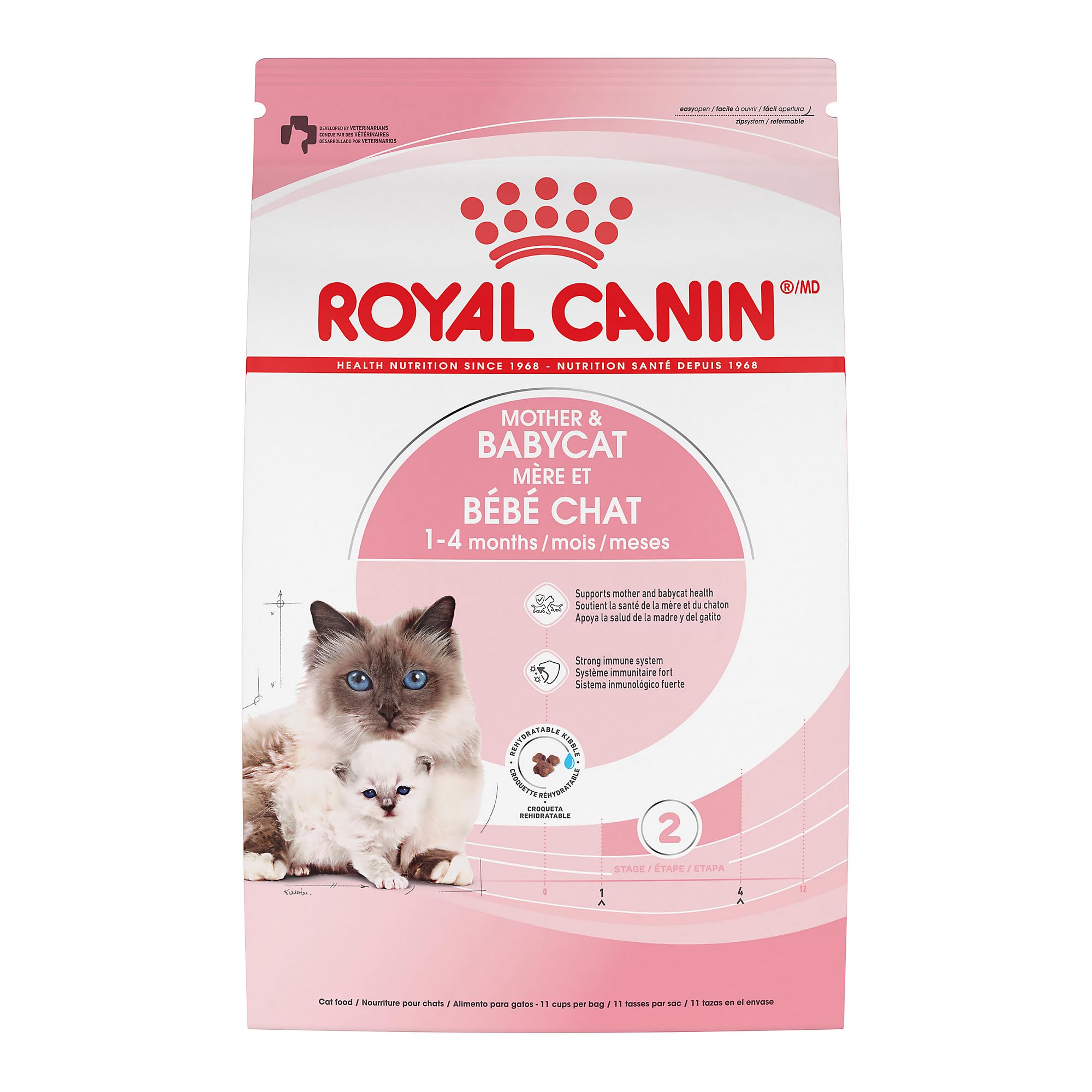
Royal Canin designed this formula specifically for the weaning-to-four-month window, which aligns perfectly with a Persian kitten’s transition from mother’s milk to solid food. The kibble measures roughly 5 millimeters and softens within minutes when moistened — a critical advantage for a flat-faced kitten that struggles to crunch large, dry pieces. The chicken-based recipe includes clinically proven antioxidants (vitamins E and C) that support immune system maturation during the fragile early weeks.
Prebiotics and highly digestible proteins work together to maintain a balanced intestinal microbiome, reducing the loose-stool episodes that often accompany diet changes in brachycephalic breeds. The formula’s calcium and phosphorus proportions meet AAFCO growth standards, laying the groundwork for proper skeletal development without over-supplementation. Veterinarians frequently recommend this line for orphaned, rejected, or slow-to-wean kittens because of its gentle texture and nutritional density.
Owners of Persian kittens report that the rehydratable kibble encourages self-feeding earlier than standard dry food, and the small disc shape minimizes waste in the bowl. The 3-pound bag is a practical starter size for the first four months, after which you can transition to a larger-kibble kitten maintenance formula. Keep a shallow water dish nearby, as the rehydratable texture works best when the kitten drinks regularly during the meal.
Why we love it
- Kibble softens quickly with moisture for easy chewing
- Antioxidant blend supports early immune development
- Prebiotic fiber promotes consistent, formed stools
Good to know
- Limited to kittens under four months of age
- Slightly higher carbohydrate content than grain-free alternatives
2. ORIJEN Grain Free High Protein Premium Dry Cat Food Kitten Recipe

ORIJEN packs 90 percent animal ingredients — including fresh free-run chicken, turkey, wild-caught salmon, whole herring, and chicken liver — into a biologically appropriate recipe that mirrors the nutrient profile a kitten would get from whole prey. For a Persian kitten whose coat requires consistent omega-rich fats, the salmon and herring deliver EPA and DHA directly, promoting a silky, tangle-resistant topcoat and supporting retinal development during the first year. The kibble measures 7.5 by 3.5 millimeters, a flattened disc shape that lies low in the bowl and reduces the tipping issue flatter-faced kittens encounter with round kibble.
The freeze-dried raw coating adds a palatable umami layer that encourages self-feeding even in picky weanlings, and the high protein density (around 40 percent crude protein) fuels steady muscle growth without requiring large portion sizes. The formula is grain-free and potato-free, which minimizes the carbohydrate load on a Persian’s sensitive pancreas and supports a lean body condition. Owners consistently note that their kittens maintain high energy levels and produce smaller, firmer stools compared to lower-protein diets.
The 4-pound bag is economical for single-kitten households and the resealable pouch helps preserve the freeze-dried coating’s freshness. Introduce this food gradually over a week to allow the digestive system to adapt to the elevated protein content.
Why we love it
- High animal protein ratio supports lean muscle development
- Freeze-dried raw coating boosts palatability for picky eaters
- Omega-3s from fish ingredients improve coat shine and skin health
Good to know
- Too calorie-dense for sedentary kittens; requires portion monitoring
- Higher price point per pound than mid-range dry foods
3. Hill’s Science Diet Kitten Sensitive Stomach & Skin Dry Cat Food
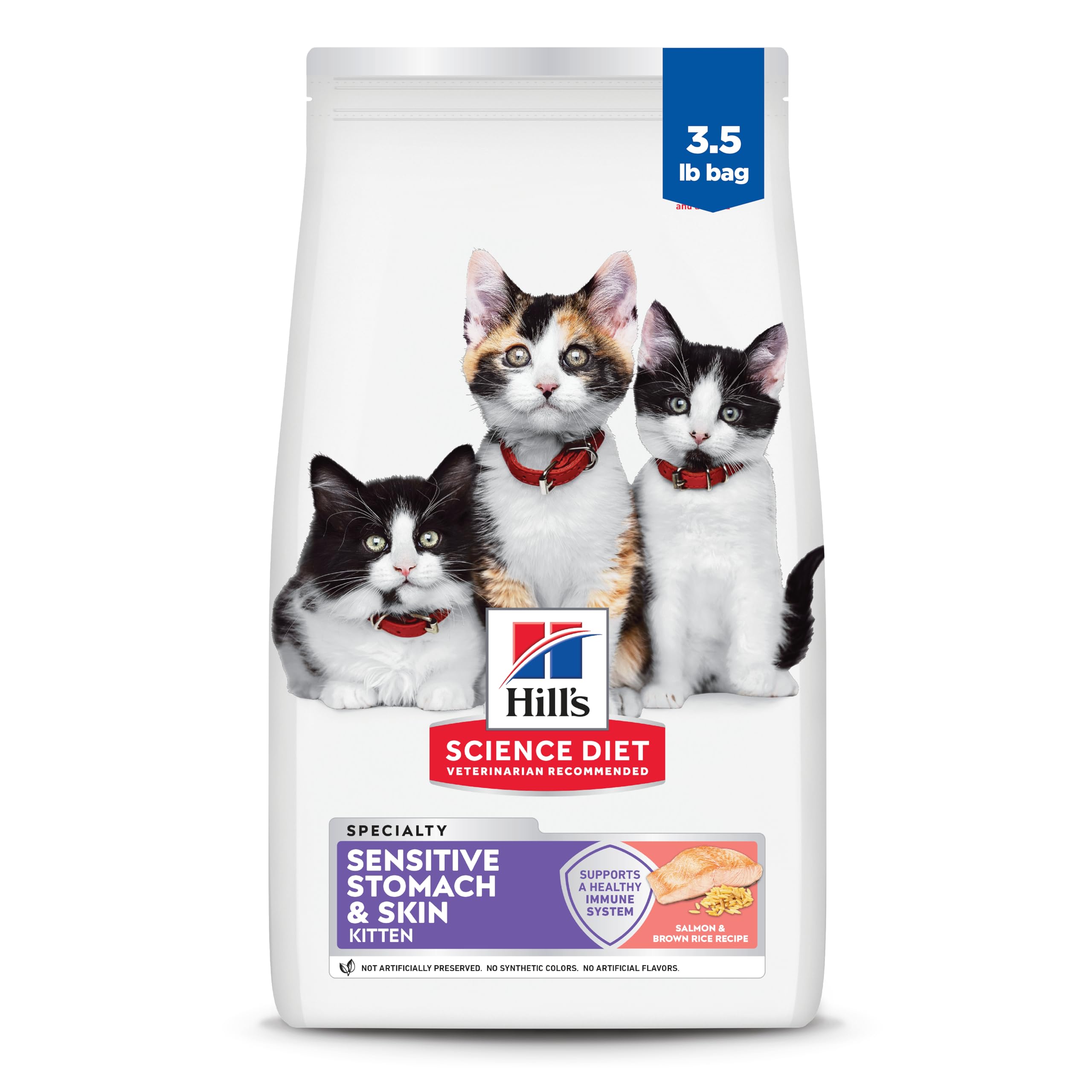
Hill’s Science Diet formulates this recipe with salmon as the primary protein source and brown rice as a digestible carbohydrate, creating a low-irritation option for Persian kittens prone to gastric upset. The prebiotic fiber (from beet pulp) encourages the growth of beneficial gut bacteria, and real owner reports confirm that stool consistency improves within the first week of transition — a meaningful benefit for a breed that sometimes struggles with loose movements during dietary changes. The kibble size is noticeably smaller than standard adult formulas, though it lacks the rehydratable property of the Royal Canin option, so kittens with very flat faces may need a splash of warm water to soften each serving.
Enriched with vitamin E, omega-3, and omega-6 fatty acids, this formula supports both skin barrier function and coat luster — two areas where Persians commonly show deficiency when fed generic kitten chow. The calcium and phosphorus levels are balanced within AAFCO recommended ranges for growth, and the addition of DHA supports cognitive development during the social-learning phase of kittenhood. It is made in the USA with globally sourced ingredients, and Hill’s is the most frequently recommended brand by US veterinarians for digestive sensitivity.
The 3.5-pound bag is a manageable trial size, and the resealable zipper top keeps the kibble fresh between feedings. Some owners note that the salmon scent is stronger than chicken-based formulas, but most kittens accept it readily. Transition gradually over five to seven days, mixing increasing proportions of Hill’s with the previous food to minimize digestive disruption.
Why we love it
- Clinically proven to improve stool firmness in sensitive kittens
- Salmon provides high-quality protein and omega fatty acids for coat health
- Widely available and trusted by veterinary professionals
Good to know
- Kibble does not rehydrate easily; may need added water for flat-faced kittens
- Brown rice base means it is not grain-free
4. Blue Buffalo Freedom Grain-Free Indoor Dry Kitten Food

Blue Buffalo Freedom positions itself as an indoor-specific kitten formula, which means it includes slightly lower fat content and added fiber to help manage hairball formation — a relevant concern for long-haired Persian kittens that begin grooming themselves heavily around three months of age. Real chicken appears as the first ingredient, providing a single-source protein that minimizes allergenic confusion, and the recipe is entirely free of corn, wheat, soy, and poultry by-product meals. The kibble shape is a small, round disc that most Persian kittens can manage without difficulty, though the lack of a rehydratable coating means brachycephalic kittens may benefit from moistening the portion.
LifeSource Bits are cold-formed antioxidant pellets interspersed throughout the kibble, delivering a concentrated blend of vitamins C and E plus beta-carotene to support immune function during the vaccination and socialization period. DHA and ARA are included for brain and eye development, matching the neurological support found in premium competitors. The grain-free formulation reduces the carbohydrate load, helping indoor kittens maintain a lean body condition without restricting calorie intake excessively.
The 5-pound bag offers the highest volume at the entry-level price point among the reviewed dry foods, making it an economical choice for multi-kitten households. Some owners report that the LifeSource Bits settle to the bottom of the bag, so shake the bag gently before each serving to distribute the antioxidant pellets evenly. Transition your kitten over a week, mixing with the previous diet to avoid digestive upset.
Why we love it
- Indoor-specific fiber blend helps manage hairball formation in Persians
- Grain-free and free of common fillers like corn, wheat, and soy
- Largest bag size at the most accessible price point
Good to know
- LifeSource Bits can settle unevenly; shake bag before scooping
- Round kibble may still be slightly large for very young or small Persians
5. Tiki Cat Baby Wet Cat Food for Kittens, Shreds Variety Pack

Tiki Cat Baby delivers a shred-style wet food in 2.4-ounce cans, offering a moisture-rich alternative to dry kibble that helps Persian kittens maintain proper hydration — a breed with a higher risk of urinary crystal formation later in life. The variety pack includes four recipes (Chicken & Salmon, Chicken Tuna & Chicken Liver, Chicken Duck & Duck Liver, and Chicken & Egg), each featuring hand-shredded meat pieces suspended in a light broth rather than a pâté or gravy base. This texture mimics whole-prey muscle meat and encourages slower eating, which benefits brachycephalic kittens that tend to inhale pâté-style foods too quickly.
The formula is high in protein and fat to support rapid growth, includes DHA for brain and vision development, and uses added taurine plus a balanced calcium-phosphorus ratio for skeletal health. Prebiotics aid gentle digestion, and the ingredient list is entirely free of grains, fruits, vegetables, carrageenan, and artificial fillers — a clean profile that aligns with the low-irritation needs of a Persian kitten’s sensitive gut. Each can provides a complete and balanced meal for kittens aged eight weeks and older, and the single-serve format eliminates leftovers.
Owners of Persian kittens appreciate that the shreds are easy to portion into two small meals per can, and the broth content adds valuable fluid intake without requiring a kitten to drink from a bowl. Introduce wet food gradually if your kitten is accustomed to dry-only feeding, as the high moisture content can initially cause looser stools until the digestive system adjusts. Supplement dry kibble with one can per day for a mixed feeding approach that delivers both hydration and dental abrasion.
Why we love it
- High moisture content supports urinary tract health in Persians
- Shredded texture encourages slower, more controlled eating
- Variety pack prevents flavor fatigue during the picky kitten phase
Good to know
- Wet food only does not provide dental cleaning; pair with dry kibble
- Must refrigerate unused portions; not resealable within the can
FAQ
Why is kibble shape important for a Persian kitten?
Should I feed my Persian kitten wet food, dry food, or both?
At what age can a Persian kitten switch to adult cat food?
Final Thoughts: The Verdict
For most Persian kitten owners, the best food for persian kitten is the Royal Canin Mother & Babycat because its small, rehydratable kibble works with the breed’s flat face and delivers targeted immune support during the first four critical months. If you want a high-protein, coat-enhancing formula that mirrors a whole-prey diet, grab the ORIJEN Kitten Recipe. And for a kitten with a sensitive stomach that needs a gentle, veterinarian-backed digestive solution, nothing beats the Hill’s Science Diet Sensitive Stomach & Skin.