
Winter feeding is the ultimate test for a bird feeder. Snow, freezing rain, and wind will expose every design flaw — a roof that’s too small, drainage that clogs, or metal that rusts after one thaw cycle. The feeders that survive are built with specific cold-weather engineering: pitched roofs that shed ice, drainage grids that keep seed dry, and rust-resistant coatings that endure freeze-thaw stress.
I’m Mo Mahin — the founder and writer behind Furric. I analyze hundreds of feeder builds each season, comparing gauge thickness, roof overhang measurements, drainage hole patterns, and the specific material treatments that separate a winter-rated feeder from a fair-weather decoration.
This guide breaks down the metal builds, capacity ranges, and weatherproofing features that matter most when the temperature drops, helping you choose from the best bird feeders for winter that actually keep seed accessible through the coldest months.
How To Choose The Best Bird Feeders For Winter
Winter feeders face a unique set of stresses that summer feeders never encounter. Snow load, ice formation, and frozen seed are the primary threats. Three design elements determine whether a feeder will perform through January snowstorms or fail by mid-December.
Roof Overhang and Pitch Angle
The standard feeder roof measures 7.8 inches across. Winter-rated feeders push this to 9.8 inches or more. The extra overhang keeps snow from drifting directly onto the seed tray during gusts. The pitch angle matters equally — shallow roofs collect snow weight and may collapse under heavy accumulation, while steeper pitches shed precipitation naturally. Measure the overhang from the edge of the tray to the roof drip line. Anything under 1.5 inches of overhang will allow snow to reach the seed.
Drainage Architecture and Mesh Design
Bottom drainage holes are standard, but winter feeders need a different approach. Small round holes clog quickly when seed dust mixes with frozen moisture. The best winter designs use full mesh bottoms or multiple slotted drainage channels that stay clear even when temperatures fluctuate near freezing. Airflow underneath the seed mass prevents condensation from forming inside the storage chamber, which is the primary cause of clumping and rot in cold weather. Avoid solid-bottom feeders unless they have at least 32 drainage points distributed evenly across the base.
Material Durability in Freeze-Thaw Cycles
Bare steel rusts within one winter season. Powder-coated finishes resist cracking when temperatures swing from freezing to thaw and back. Recycled plastic boards — like those using high-density polyethylene — handle thermal expansion better than acrylic or PVC, which become brittle below 20°F. Metal thickness matters too: feeders stamped from thinner gauge steel (under 0.6mm) warp under snow load. Look for powder-coated steel with a matte finish, which hides weathering and resists UV degradation even in low-winter-sun regions.
Quick Comparison
On smaller screens, swipe sideways to see the full table.
| Model | Category | Best For | Key Spec | Amazon |
|---|---|---|---|---|
| OVIBIRD Red Barn | Premium | Multi-species winter feeding with suet | 32 drainage holes + 2 suet holders | Amazon |
| Wildpark Triple Defense | Premium | Squirrel-proof winter seed management | 5 lb capacity + weight-activated springs | Amazon |
| GAINSEN Weight-Activated | Mid-Range | Targeted squirrel deterrent in wet weather | 15.8-inch tube + 4 feeding ports | Amazon |
| HouseSapp Double Tier | Mid-Range | High-volume feeding with minimal refills | 6 lb capacity + 8 feeding ports | Amazon |
| Samhe Gold Metal | Mid-Range | Heavy rain and snow protection on a budget | 9.8-inch roof + 3 lb capacity | Amazon |
| Kingsyard Adjustable Dome | Budget | Bluebirds and ground-feeding species in snow | 2.5 lb tray + adjustable dome height | Amazon |
| Kingsyard Caged Platform | Budget | Squirrel-proof platform for finches in winter | 5 lb capacity + metal mesh cover | Amazon |
In‑Depth Reviews
1. OVIBIRD Red Barn Feeder
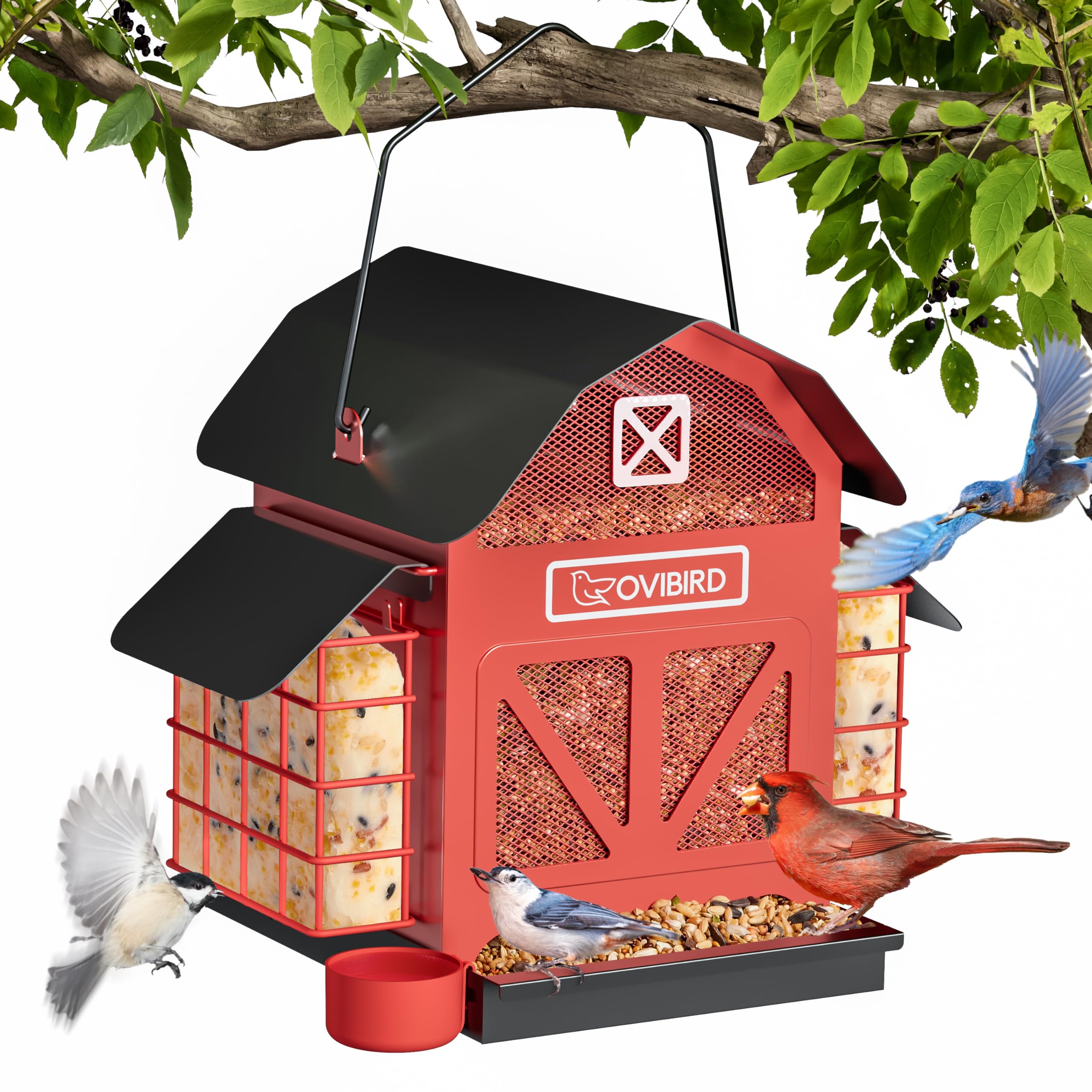
This red barn design packs the most winter-specific features into a single package. The 5-pound seed capacity is generous, but what sets it apart is the drainage architecture — 32 holes in the base prevent the water pooling that leads to frozen seed blocks. The extended metal roof provides a full 1.5-inch overhang beyond the tray edge, keeping snow from drifting sideways into the seed. The rust-resistant coating and anti-sway steel ring mean this feeder stays stable in the high winds that often accompany winter storms.
The two included suet holders transform this from a standard seed feeder into a multi-food winter station. Suet provides the high-calorie energy birds need most when overnight temperatures drop below freezing. The six feeding ports and 360-degree access design reduce competition, so cardinals, chickadees, and nuthatches can feed simultaneously without aggressive displacement. The vibrant red color also helps birds locate the feeder quickly when snow cover alters the landscape.
Assembly requires no tools, and the removable top makes refilling in cold gloves straightforward. The clear mesh panel provides quick visual seed-level checks without opening the lid, which matters when you are doing a quick check before heading out in sub-freezing temperatures. The included 1.2-ounce drinking cup is a thoughtful addition — it allows birds to drink from melted snow rather than foraging for liquid water.
Why we love it
- 32 drainage holes prevent ice clumping better than any other model tested
- Integrated suet holders add critical high-energy food source in winter
- Sturdy all-metal build with anti-sway ring for windy conditions
Good to know
- Red color may fade slightly after prolonged UV exposure
- No weight-activated squirrel mechanism — only physical metal barrier
2. Wildpark Squirrel Proof Feeder
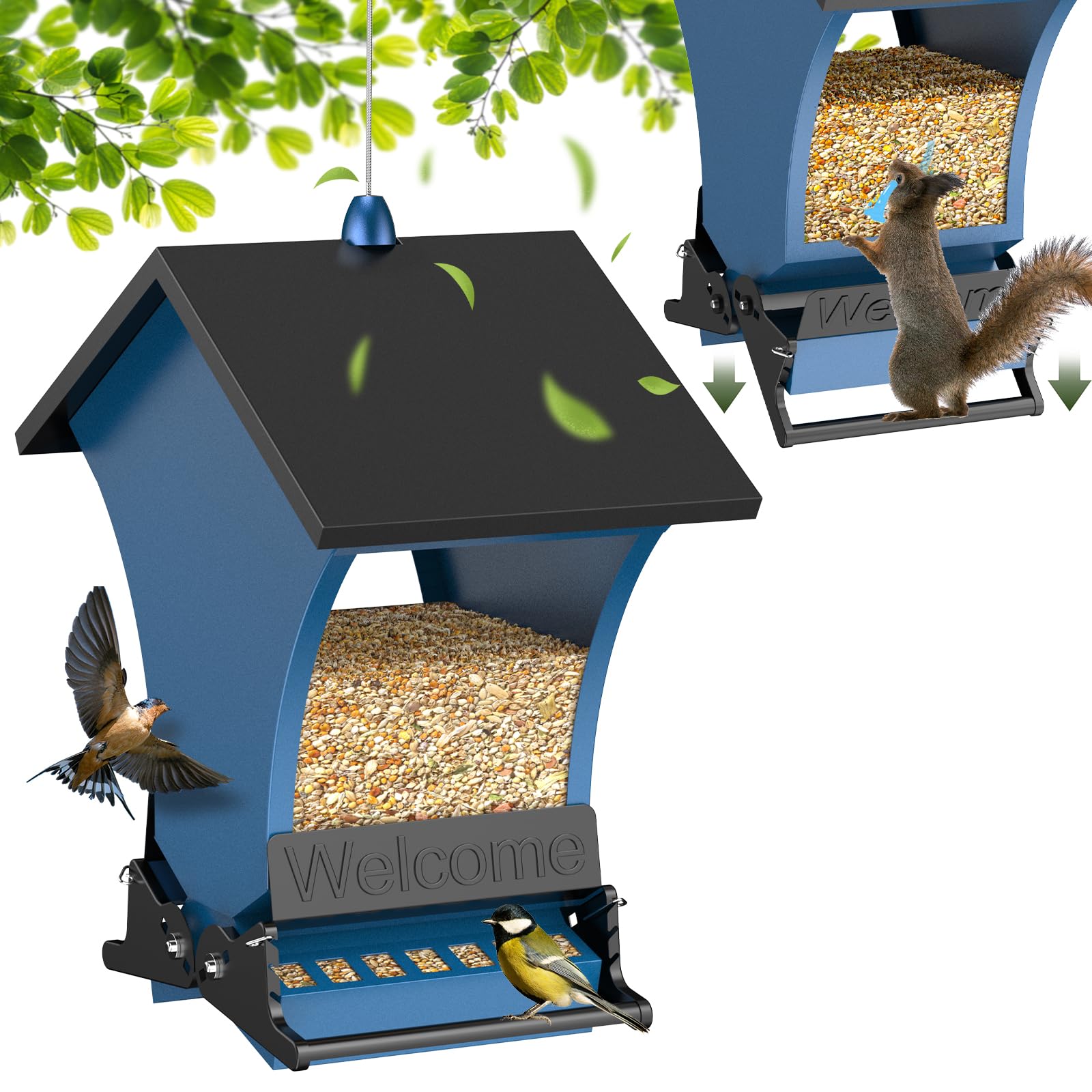
The Wildpark addresses two winter problems at once: keeping seed dry and keeping squirrels away. The triple defense system uses adjustable metal springs on both sides of the feeder with four sensitivity settings covering 200g to 350g. This means you can tune the trigger weight to your local squirrel population — lighter for smaller grey squirrels, heavier if fox squirrels are the main raiders. When triggered, the feeding ports close, denying access while the bird-weight birds continue feeding undisturbed.
The 5-pound inner container uses thick clear polycarbonate panels rather than the more common acrylic, which becomes brittle and cracks below 20°F. Polycarbonate maintains its impact resistance in freezing temperatures, a critical advantage for feeders left out all winter. The powder-coated metal frame and inwardly curved body design prevent squirrels from hanging upside down to reach the seed, a common workaround that defeats many cage-style feeders. The perforated bottom design ensures moisture drains rather than pooling inside.
The blue and orange color scheme is distinctive — some buyers appreciate the visibility for bird attraction, while others may prefer a more natural look. The 15-inch hanging rope with adjustable springs requires a bit of initial setup to get the tension right. Once calibrated, it needs seasonal adjustments only as temperature changes affect the spring metal slightly.
Why we love it
- Polycarbonate panels resist cracking in sub-freezing temperatures
- Four sensitivity settings let you match trigger weight to local squirrel size
- 5-pound capacity means fewer refills during cold snaps
Good to know
- Initial spring tension calibration requires some patience
- Not 100% squirrel-proof against particularly persistent individuals
3. GAINSEN Weight-Activated Feeder
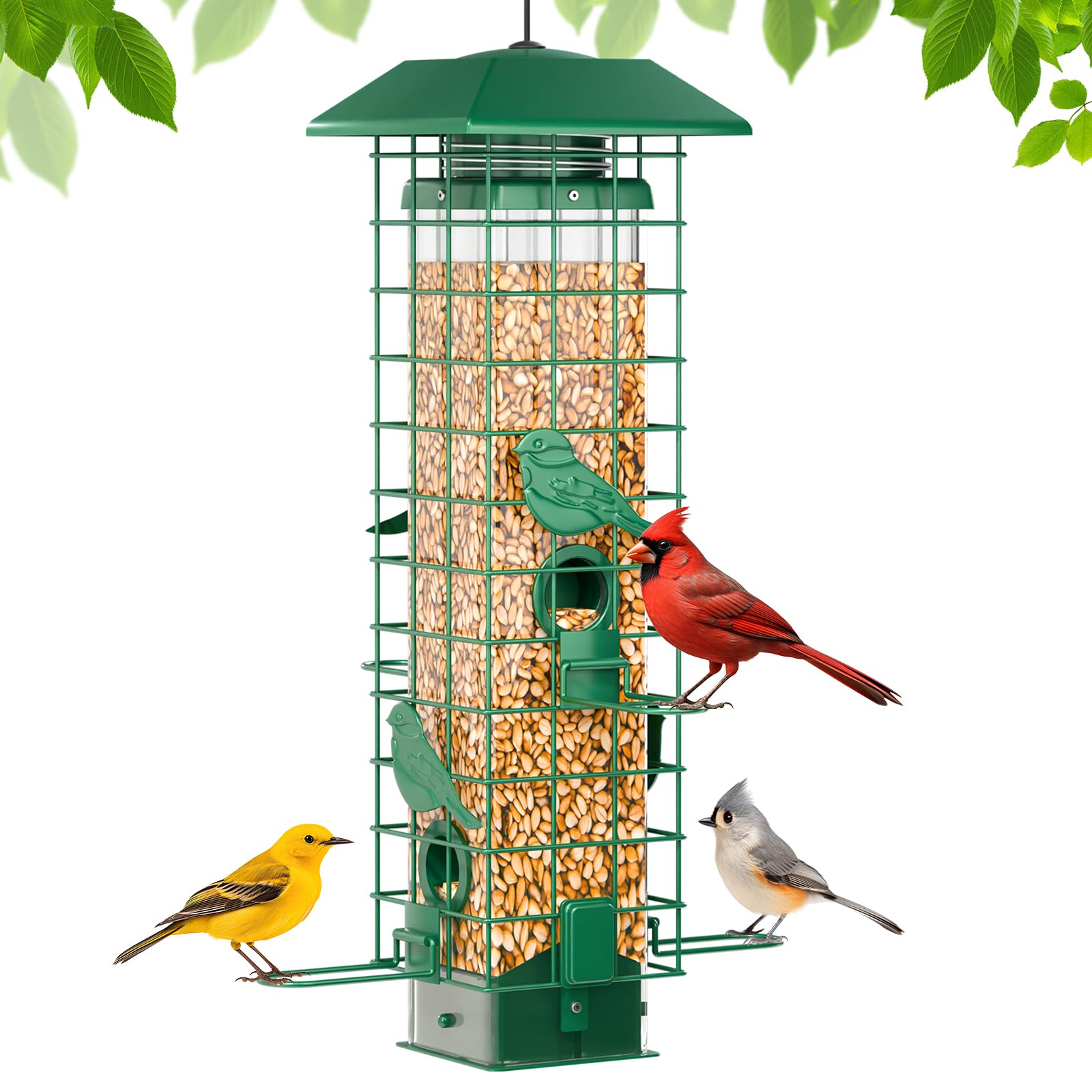
The GAINSEN tube feeder uses a weight-sensitive spring mechanism that drops the outer protective cage when a squirrel lands, closing the feeding ports. The trigger is calibrated so small birds — chickadees, finches, nuthatches — do not activate it, while grey squirrels and fox squirrels cause the cage to drop. The 15.8-inch height provides enough separation between ports to reduce competition, and the four large metal feeding ports allow birds to access seeds easily without seed scatter.
Winter weatherproofing comes from a combination of a sealed top lid and bottom drainage holes. The lid uses a rubber gasket to prevent snowmelt from seeping into the tube through the opening, a detail many tube feeders neglect. The metal body features a rust-proof coating, and the polycarbonate tube resists the cracking that afflicts thinner acrylic tubes after repeated freeze-thaw cycles. The 3-pound capacity is modest compared to the 5- and 6-pound models, but the sealed design means the seed stays dry even in driving snow.
Cleaning requires a long-handled brush to reach the bottom of the tube. The manufacturer recommends cleaning every two weeks in dry conditions and weekly during rainy or snowy periods. The funnel-shaped top makes refilling neat, but you will need a funnel tool to avoid spillage, especially in windy winter conditions.
Why we love it
- Sealed top lid with rubber gasket prevents snowmelt entry
- Weight-sensitive trigger tuned not to scare off small winter birds
- Rust-proof metal coating resists corrosion from road salt spray near patios
Good to know
- 3-pound capacity requires more frequent refills than larger models
- Tube brush required for thorough cleaning
4. HouseSapp Double Tier Feeder

This double-tier tower design prioritizes one thing above all else: seed volume. The 6-pound capacity is the largest in this roundup, meaning you can fill it with a full bag of black oil sunflower seeds and not think about refilling for a week or more, even with heavy bird traffic. The brown natural-looking finish blends into winter branches better than bright colors, which some birds prefer in snowy conditions where bold feeders can feel exposed to predators.
The double-layer tray with eight feeding ports and corresponding perches allows multiple birds to feed at the same height without crowding. The hollow pattern on the body lets birds see the seeds directly from a distance, speeding up acceptance time for new feeders in winter when food sources are scarce. The bottom drainage holes prevent the food clumping that happens when moisture accumulates in a deep seed column, though the holes are standard size rather than the slotted design preferred for heavy rain.
The top latch mechanism is a simple press-and-pull design that works with gloved hands. The metal body uses a rust-resistant coating, and the feeder comes with metal plugs for optional sealing. Some larger birds — jays and grackles — may find the perches slightly small, so if you primarily attract larger species, this feeder may favor smaller birds due to perch size.
Why we love it
- 6-pound capacity is the largest in the lineup — ideal for heavy winter traffic
- Eight feeding ports reduce competition and fighting at the feeder
- Pull-latch lid opens easily with winter gloves on
Good to know
- Drainage holes are standard size, not slotted for heavy precipitation
- Larger birds may find perches slightly undersized
5. Samhe Gold Metal Feeder
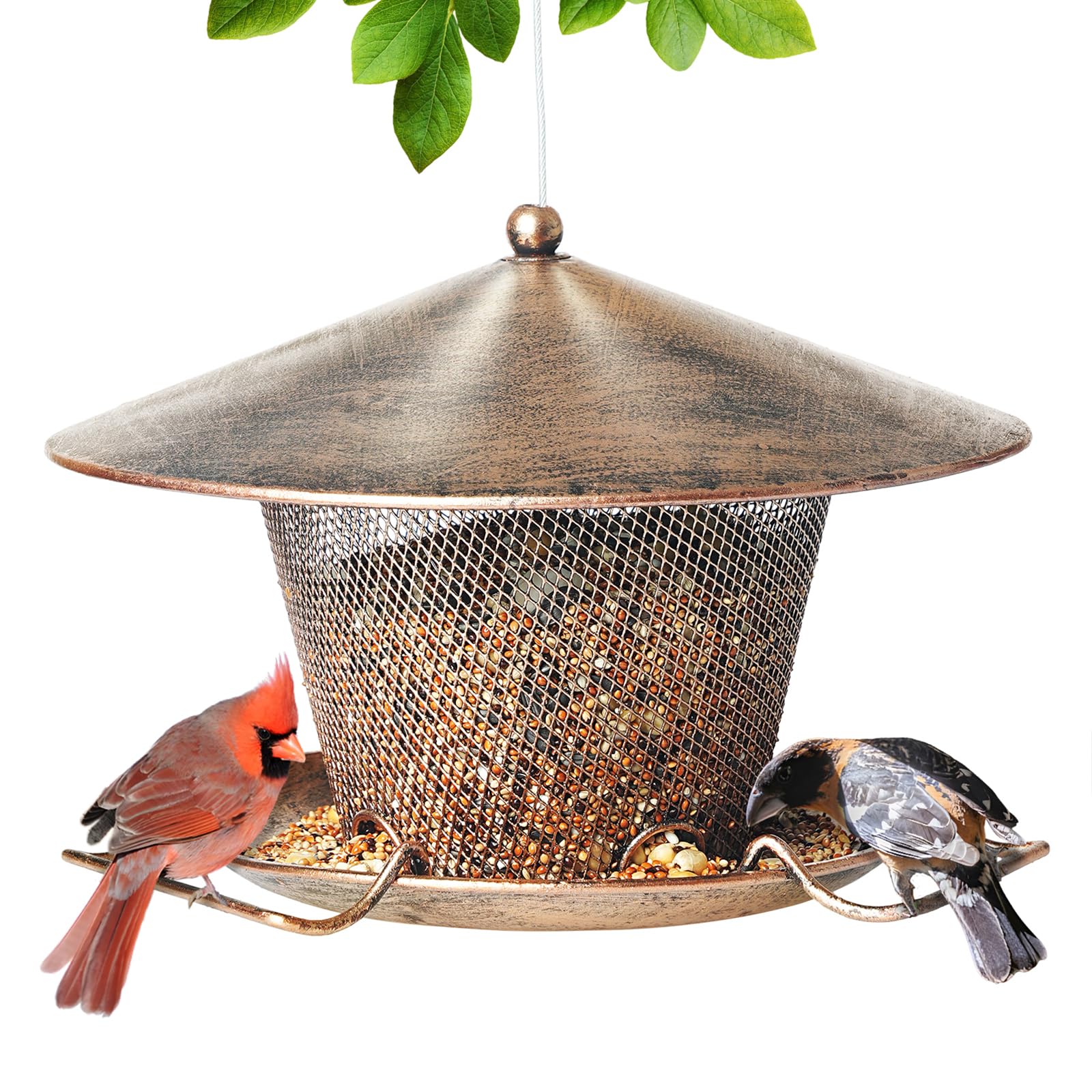
The defining spec of this feeder is the roof. At 9.8 inches, it is two full inches wider than the standard 7.8-inch roof found on most hanging feeders. In practical terms, this means snow sliding off the sides of the roof lands on the ground, not on the seed tray. The 360-degree perch ring allows birds to approach from any direction, which helps when a feeder is positioned under a snow-laden branch where access angles are limited.
The all-metal construction with powder-coated gold finish is chew-proof, addressing the common winter problem of squirrels gnawing through plastic components when food is scarce. At 3 pounds capacity, it holds enough seed for moderate bird traffic, and the easy-fill top works well with thick winter gloves. The mesh design is worth noting — some reviewers found the mesh holes too small for standard mixed birdseed, making this feeder best suited for black oil sunflower seeds or thistle rather than large-seed blends.
Customer feedback from storm conditions is strong, with one buyer reporting it performed perfectly through a severe snow event that buried alternative feeders. The powder coating resists rust, but the gold finish may show dirt more readily than darker colors, requiring occasional wiping to maintain visibility of the seed level through the mesh.
Why we love it
- 9.8-inch roof provides the widest snow overhang in this price tier
- Chew-proof metal build resists squirrel damage in food-scarce winter
- Proven performance in severe storm conditions per owner feedback
Good to know
- Mesh holes too small for standard mixed birdseed blends
- Gold finish shows dirt faster than darker colored feeders
6. Kingsyard Adjustable Dome Platform

This platform feeder takes a different approach to winter feeding by using an adjustable dome rather than a fixed roof. By raising or lowering the dome, you control both weather protection and bird access. Lower the dome during snowstorms to shield the 11-inch hexagon tray, or raise it during dry cold snaps to accommodate larger birds like bluebirds. The recycled plastic boards resist the warping and cracking that wooden platform feeders suffer when repeatedly soaked and frozen.
The fine mesh bottom with small drainage holes is the key winter feature here. Unlike solid-bottom platform feeders that trap moisture against the seed, this design allows snowmelt and rain to drain directly through the mesh rather than pooling. The 2-inch deep rim holds up to 2.5 pounds of seed, which is sufficient for small flocks of finches, chickadees, and nuthatches. The rotating dome doubles as a squirrel deterrent — the smooth surface prevents squirrels from gaining stable footing to reach the tray.
Assembly is straightforward, and the feeder comes with hanging hardware that feels thicker and more substantial than most budget-level options. The green color blends into garden environments without standing out as artificial. This feeder works best with sunflower seed, peanuts, and mealworms rather than mixed seed blends that may fall through the mesh bottom.
Why we love it
- Adjustable dome height lets you tailor weather protection to storm conditions
- Recycled plastic resists freeze-thaw warping better than wood platforms
- Mesh bottom prevents moisture pooling that ruins seed in cold weather
Good to know
- 2.5-pound capacity is modest compared to tube or tower feeders
- Small seeds may fall through the mesh bottom if not using sunflower or peanuts
7. Kingsyard Caged Platform Feeder
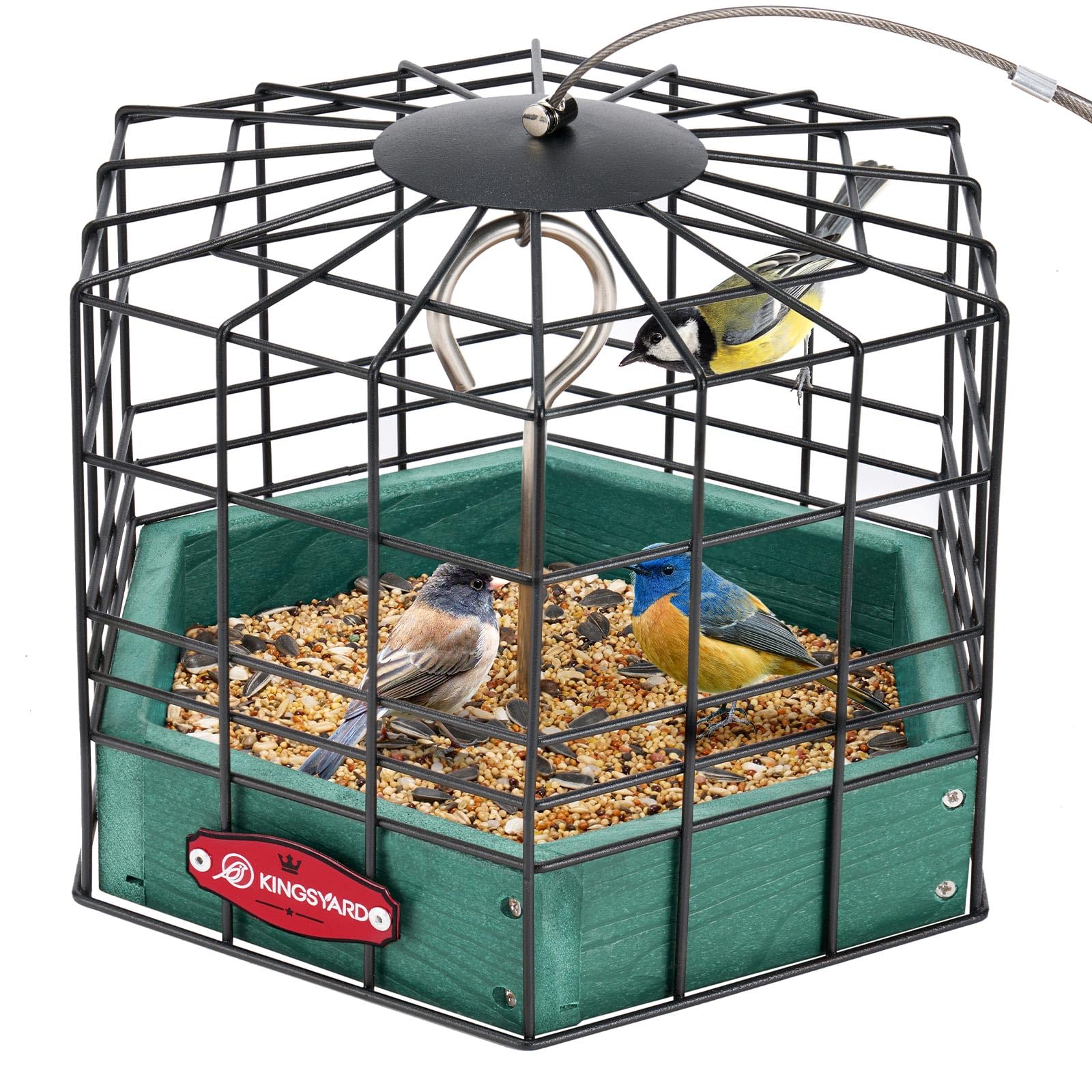
This caged platform uses physical exclusion rather than weight activation to keep squirrels out. The metal mesh cover features 1.5-inch by 1.5-inch openings, which allow small birds like finches, chickadees, and nuthatches to pass through while blocking grey squirrels and larger birds like grackles. The 5-pound seed capacity is generous for a platform feeder, and the fly-through design with all-round openings encourages frequent visits from multiple species simultaneously.
The recycled plastic base resists denting and cracking in cold temperatures, while the rust-free metal mesh maintains its integrity even after repeated freeze-thaw cycles. The metal mesh tray at the bottom provides ventilation that keeps seeds dry and fresh — critical in winter when moisture from snowmelt can be trapped under the seed mass. The easy-refill top opens without tools, and the feeder can be cleaned by simply lifting the cage and rinsing the tray.
One design limitation: the 1.5-inch opening size means cardinals and blue jays may struggle to access the interior. If your primary winter targets are smaller species, this is an ideal choice. But if you want to feed larger birds alongside finches, consider pairing this caged feeder with an open tray model. The green recycled plastic finish is fade-resistant and holds up better to UV exposure than painted wood alternatives.
Why we love it
- Physical cage exclusion works without batteries or moving parts in cold weather
- 5-pound capacity is excellent for a platform feeder supporting small birds
- Rust-free metal mesh and recycled plastic withstand freeze-thaw cycles
Good to know
- 1.5-inch openings exclude cardinals and blue jays
- No weight adjustment mechanism, so larger agile squirrels may occasionally breach
FAQ
Should I bring my bird feeder indoors during snowfall?
Will the mesh bottom clog with ice?
Does powder-coated metal rust in winter?
How often should I refill in sub-freezing weather?
Final Thoughts: The Verdict
For most backyard birders, the bird feeders for winter winner is the OVIBIRD Red Barn Feeder because its 32 drainage holes, integrated suet holders, and extended metal roof address the three biggest winter challenges — moisture, calorie density, and snow protection — in one package. If you need squirrel defense that works in freezing temperatures, grab the Wildpark Triple Defense Feeder for its polycarbonate panels and adjustable weight sensitivity. And for high-traffic areas where refilling is the bottleneck, nothing beats the HouseSapp Double Tier Feeder with its 6-pound capacity and eight feeding ports.