
Doberman puppies grow fast—really fast. That rapid skeletal expansion puts immense pressure on their developing joints, and the wrong kibble can accelerate growth so quickly that it triggers hip dysplasia or bone deformities before their first birthday. Choosing a diet that delivers precise calcium-to-phosphorus ratios and moderate caloric density is the single most important decision you will make for their long-term structural health.
I’m Mo Mahin — the founder and writer behind Furric. My recommendations here are grounded in months of cross-referencing breed-specific growth studies against ingredient panels, guaranteed analysis profiles, and aggregated owner-reported health outcomes for Doberman puppies across multiple online forums.
This guide breaks down five carefully vetted formulas that match the unique nutritional demands of the breed, helping you find the right food for doberman puppy without guesswork.
How To Choose The Best Food For Doberman Puppy
Dobermans are a large, athletic breed with a deep chest and a lean frame. Their puppy stage demands high-quality protein for lean muscle development, controlled fat for steady growth, and a tight calcium-to-phosphorus ratio—typically around 1.2:1 to 1.4:1—to avoid orthopedic issues. General all-breed puppy foods often overshoot these numbers, so a large-breed-specific formula is essential.
Calcium and Phosphorus Balance
Excess calcium in puppyhood is the primary dietary contributor to developmental orthopedic disease in Dobermans. Look for a guaranteed analysis showing calcium between 0.8% and 1.2% on a dry-matter basis, with phosphorus close behind. A food marketed specifically for large breeds usually nails this ratio; generic puppy foods often do not.
Protein Source and DHA Levels
Doberman puppies need high-quality animal protein—chicken, salmon, bison, or turkey—as the first ingredient to build strong muscle mass. DHA (docosahexaenoic acid) from fish oil or marine microalgae is critical for brain and vision development during the first 12 months. Check that the food lists an omega-3 source explicitly rather than a vague “fish meal.”
Kibble Size and Digestive Support
A Doberman puppy’s mouth and throat are proportioned for larger kibble, but the pieces should still be small enough to encourage chewing. Probiotics and prebiotic fiber (like dried chicory root) aid digestion, which matters because Dobermans are prone to bloat—a large kibble that is gulped too fast can exacerbate the risk. Grain-inclusive formulas often settle stomachs better than grain-free for this breed.
Quick Comparison
On smaller screens, swipe sideways to see the full table.
| Model | Category | Best For | Key Spec | Amazon |
|---|---|---|---|---|
| Purina Pro Plan Sport Development 30/18 | Mid-Range | High-energy Doberman puppies | 30% protein / 18% fat | Amazon |
| Purina Pro Plan Sensitive Stomach | Mid-Range | Puppies with sensitive digestion | Salmon #1, oat meal | Amazon |
| Blue Buffalo Baby Blue Large Breed | Premium | All-around large breed growth | 24-lb bag, LifeSource Bits | Amazon |
| Wellness CORE Large Breed Puppy | Premium | High-protein grain-free diet | 45% protein ingredients | Amazon |
| Taste of the Wild High Prairie Puppy | Budget-Friendly | Owners seeking novel proteins | 28% protein, bison/venison | Amazon |
In‑Depth Reviews
1. Purina Pro Plan Sport Development Large Breed 30/18
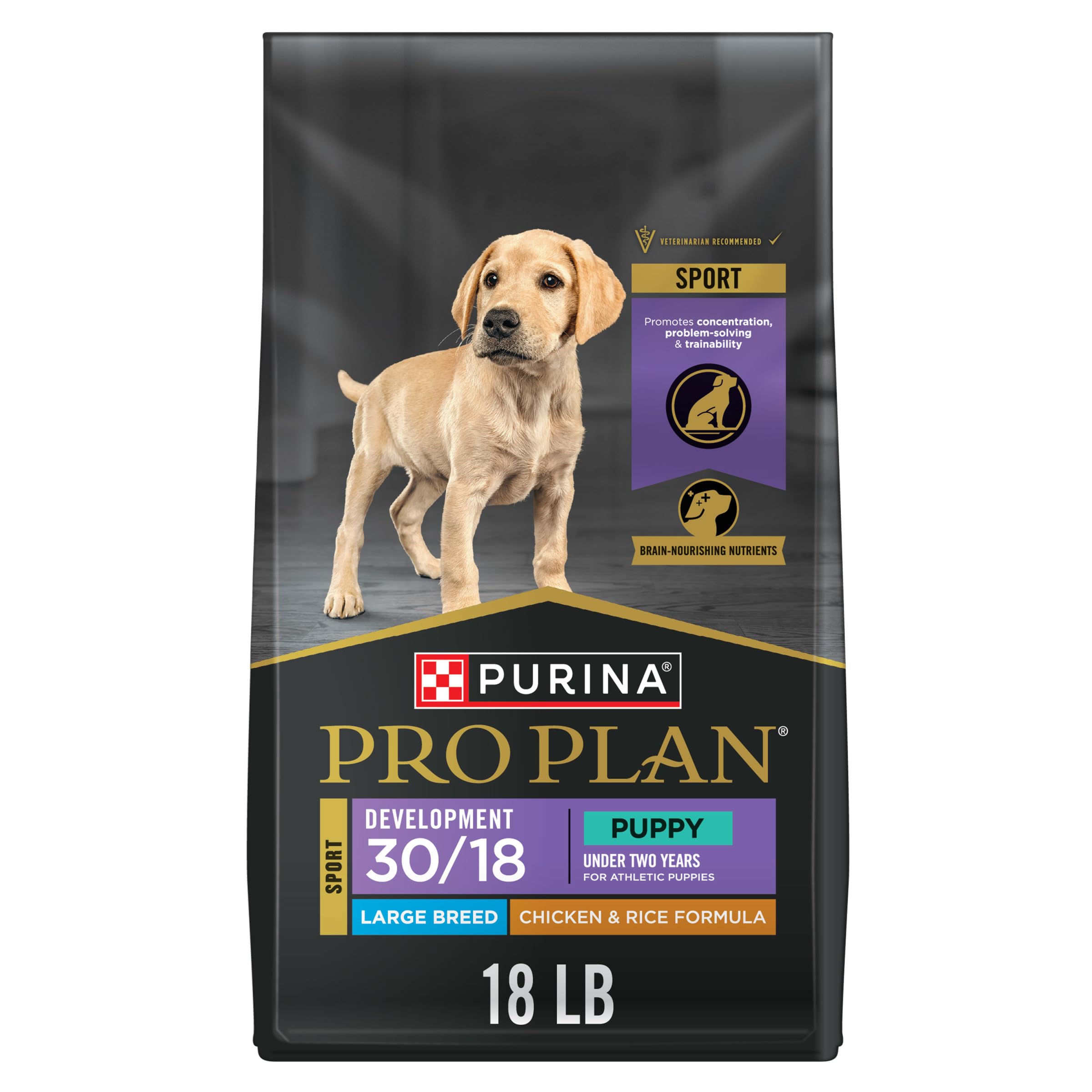
Real chicken is the number one ingredient here, delivering 30% crude protein and 18% fat—ideal for a Doberman puppy’s high-energy metabolism. The formula’s DHA from fish oil supports trainability and cognitive focus, which matters for a breed known for its sharp intelligence. Glucosamine and optimal calcium-to-phosphorus levels promote controlled bone growth and joint integrity.
Owners report consistent firm stools and excellent muscle tone, even during rapid growth phases. The 18-pound bag offers a reasonable cost per pound compared to premium grain-free alternatives, making it a financially sustainable choice for a breed that needs high-quality feeding from weaning through adolescence.
This is a large-breed-specific formula, so it avoids the excesses of generic puppy foods. It contains chicken by-product meal (which is a concentrated protein source), not whole meat only—if you prefer whole-meat-first recipes, consider the Blue Buffalo option reviewed below.
Why we love it
- 30% protein plus DHA for brain development
- Large-breed calcium ratio supports controlled growth
- Glucosamine included for joint health
Good to know
- Contains chicken by-product meal
- Bag size may run out quickly for an active Doberman
2. Purina Pro Plan Sensitive Skin and Stomach Large Breed Puppy

This formula swaps chicken for salmon as the primary protein, which reduces the likelihood of food sensitivities that some Doberman lines develop. Oatmeal replaces corn or wheat as the carbohydrate source, providing gentle, digestible fiber that helps regulate bowel movements—a key win for puppies prone to loose stools during transitions.
Sunflower oil supplies omega-6 fatty acids alongside vitamin A, and Doberman owners frequently note a noticeably shinier, softer coat within two to three weeks of switching. Guaranteed live probiotics further support digestive health, and the grain-inclusive recipe aligns with the current veterinary consensus that grains are beneficial for most dogs unless a specific allergy is confirmed.
The 16-pound bag is smaller than most large-breed foods, so a rapidly growing Doberman will eat through it quickly. Ordering larger sizes or subscribing is advisable once you confirm your puppy tolerates the formula well.
Why we love it
- Salmon is easier on sensitive stomachs than poultry
- Oatmeal provides gentle, digestible fiber
- Omega-6 and vitamin A promote a glossy coat
Good to know
- Smaller bag size for the price
- Not the highest protein percentage for very active puppies
3. Blue Buffalo Baby Blue Natural Large Breed Puppy
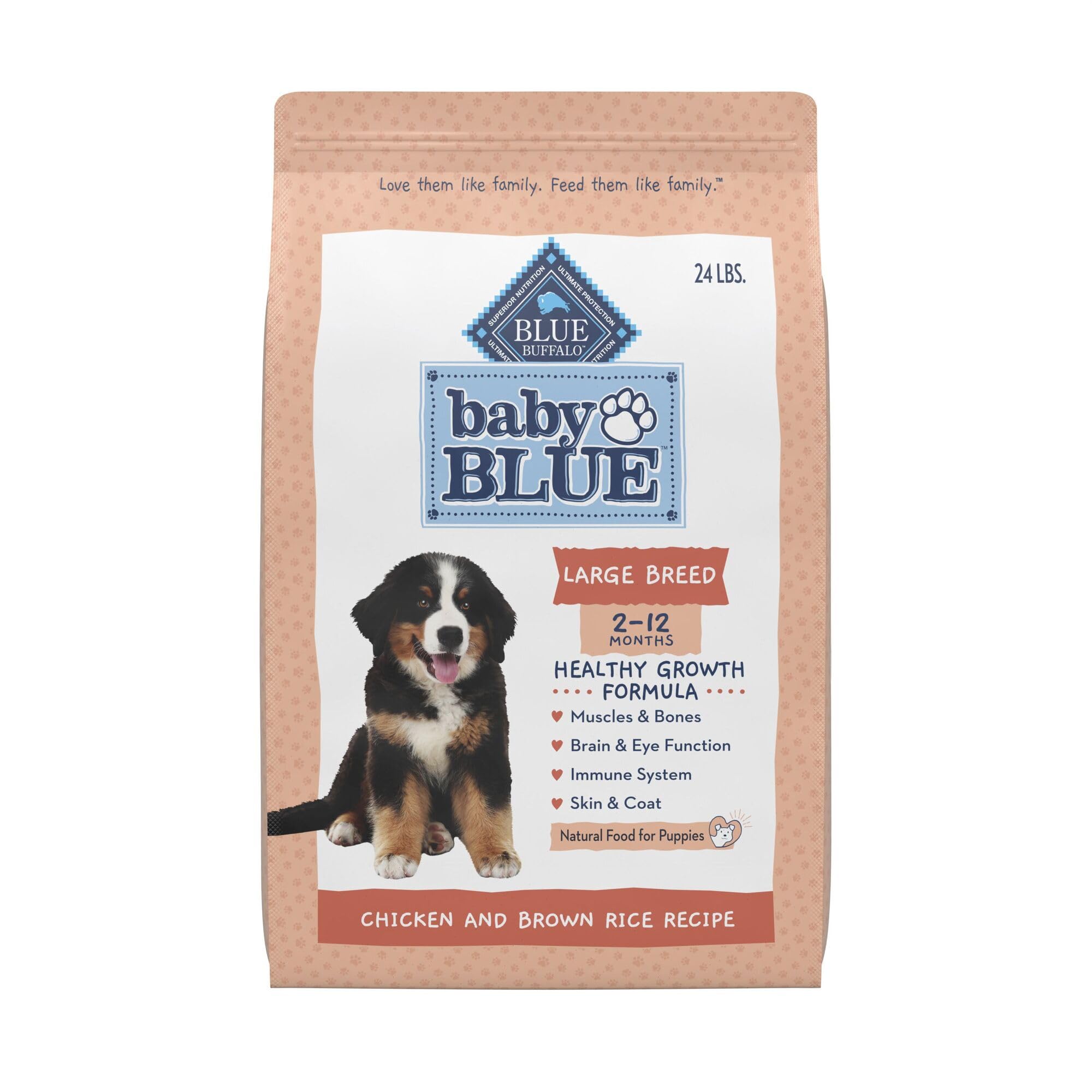
Real chicken is the sole first ingredient, and the formula is explicitly crafted for both large and giant breeds, meaning the calcium and phosphorus levels are dialed in for Doberman-specific growth rates. The inclusion of DHA supports cognitive development, and antioxidant-rich LifeSource Bits—a precise blend of vitamins, chelated minerals, and fruits—boost immune function during the vulnerable puppy months.
Blue Buffalo avoids chicken or poultry by-product meals entirely, which appeals to owners who prefer whole-ingredient sourcing. The bag yields 24 pounds, providing solid value for a premium-brand product and reducing the frequency of repurchasing for a hungry Doberman puppy.
Some owners find the kibble size slightly large for very young puppies (under 10 weeks). If you bring your Doberman home early, you may need to moisten the kibble or break it into smaller pieces during the first few days.
Why we love it
- No poultry by-product meals—whole chicken first
- Large bag provides excellent cost efficiency
- LifeSource Bits deliver targeted antioxidants
Good to know
- Kibble chunks can be large for very young puppies
- Transition slowly to avoid digestive upset
4. Wellness CORE Large Breed Puppy Grain Free

Wellness CORE is marketed for adult dogs, but several key product lines are formulated to support large-breed growth stages. The 45% high-quality protein ingredients drive lean muscle development, and added glucosamine and chondroitin support the joint structure that Doberman puppies stress during their rapid growth phase. Omega fatty acids from flaxseed and fish oil enhance skin and coat health.
This grain-free recipe avoids corn, wheat, and soy entirely, which can be beneficial if your Doberman shows signs of grain sensitivity. The 26-pound bag is the largest in this roundup, offering the lowest cost-per-pound among the premium-tier options and reducing hassle for multi-dog households.
Because the labeling specifies “Adult,” confirm with your veterinarian that the calcium and phosphorus levels are appropriate for your puppy’s age. Some Doberman owners prefer to use this only after 12 months to avoid over-accelerated growth.
Why we love it
- Very high protein concentration for muscle support
- Glucosamine and chondroitin for joint protection
- Largest bag size improves per-pound value
Good to know
- Labeled as adult formula—vet check recommended for puppies
- Grain-free may not suit all Doberman digestive systems
5. Taste of the Wild High Prairie Puppy
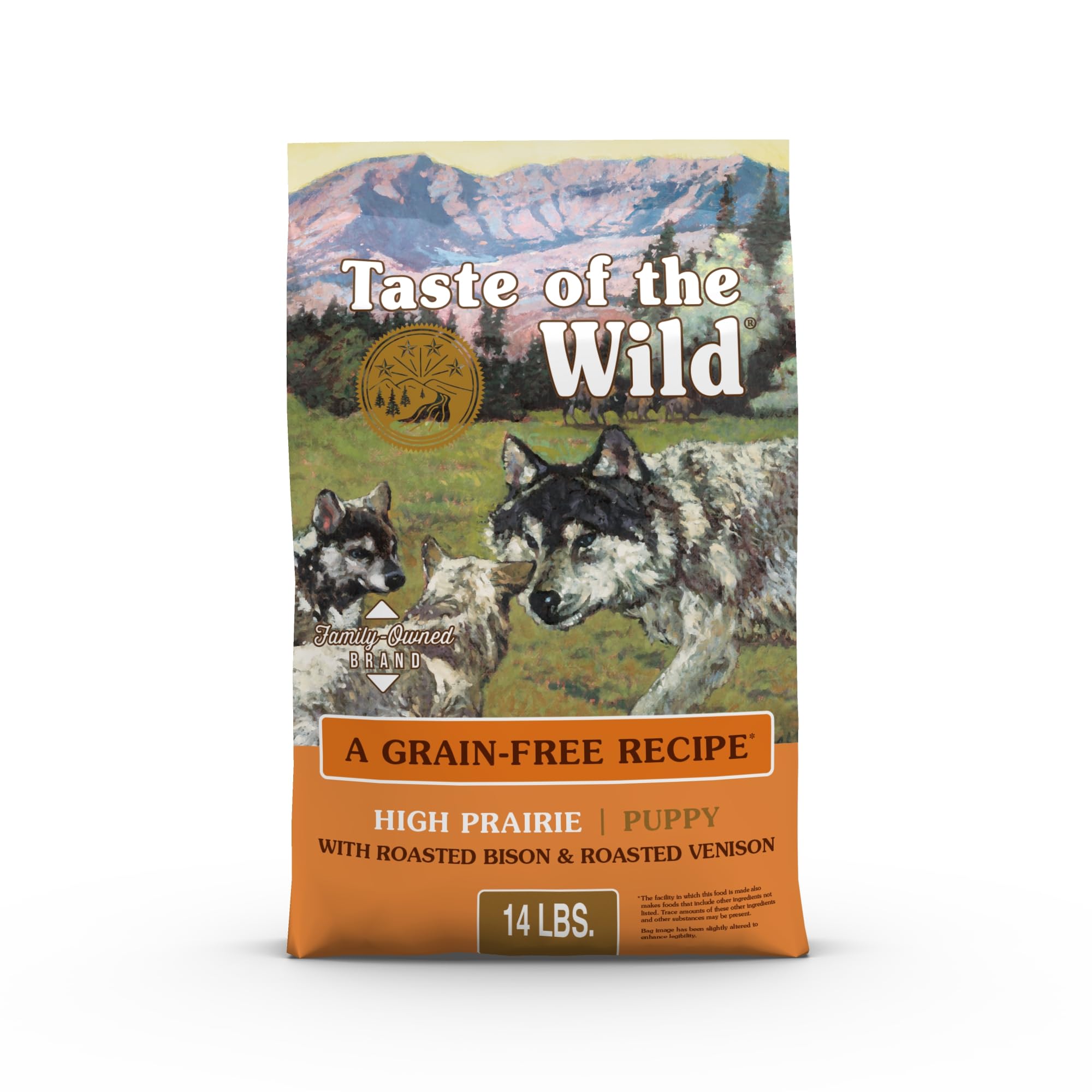
Taste of the Wild brings novel proteins—roasted bison and roasted venison—as the primary ingredients, which can be beneficial if your Doberman develops poultry sensitivities. The 28% protein and moderate fat levels provide ample energy for growing puppies without pushing growth rates into the danger zone. Species-specific K9 Strain proprietary probiotics and prebiotic fiber support consistent digestion, a strong plus for a breed with a sensitive gastrointestinal tract.
It is grain-free, which may be a positive for owners who prefer to avoid grains, but recent veterinary guidance suggests grain-inclusive diets may be safer for large-breed puppies. The 14-pound bag offers a low entry price, making it accessible for owners who want to trial a high-quality food without committing to a large investment.
Customer feedback highlights that puppies love the taste and the small kibble size, which makes it easy for young pups to chew. However, note that this food is labeled for “all life stages,” so the calcium content may not be as tightly controlled as a dedicated large-breed puppy formula.
Why we love it
- Novel bison and venison proteins for allergy-prone dogs
- Probiotics aid digestion and stool firmness
- Affordable price point for high-quality ingredients
Good to know
- All life stages formula—calcium ratio may not be ideal for rapid growth
- Smaller bag means more frequent purchases
FAQ
Should I feed my Doberman puppy grain-free or grain-inclusive?
How much should I feed a Doberman puppy at 8 weeks old?
When should I switch my Doberman from puppy food to adult food?
Final Thoughts: The Verdict
For most Doberman owners, the food for doberman puppy winner is the Purina Pro Plan Sport Development 30/18 because it delivers the optimal protein-to-fat ratio, DHA for trainability, and glucosamine for joint health at a sustainable price. If your puppy has a sensitive stomach, grab the Purina Pro Plan Sensitive Stomach Salmon & Rice. And for owners who want whole-meat ingredients in a large bag with immune-supporting antioxidants, nothing beats the Blue Buffalo Baby Blue Large Breed.