
The right sand for a planted aquarium does more than just sit at the bottom — it anchors root systems, buffers water chemistry, and becomes the stage where your hardscape and livestock shine. Choosing poorly leads to cloudy water, compacted layers, and stunted plant growth.
I’m Mo Mahin — the founder and writer behind Furric. I’ve analyzed hundreds of substrate formulas, studied grain-size impact on root penetration, and cross-referenced thousands of owner reports across freshwater planted tanks to identify which sands actually deliver on their promises.
Whether you keep shrimp, corydoras, or heavy root-feeders like crypts and swords, reading this guide will help you confidently select the best sand for planted aquarium setups that balances aesthetics, plant health, and maintenance ease.
How To Choose The Best Sand For Planted Aquarium
Planted aquarium sand isn’t one-size-fits-all. The best choice for a high-tech CO2-injected tank may suffocate the roots in a low-tech Walstad setup. Here’s what to evaluate before you buy.
Grain Size and Texture
Sand grains between 0.3mm and 2mm create an ideal balance for root penetration without compaction. Finer sands (<0.3mm) pack too densely and restrict oxygen flow to roots, while coarser sands (>2mm) allow food and detritus to settle deep into the substrate bed, causing anaerobic pockets. Run your fingers through the dry sand — it should feel uniform, not silty or gravelly.
Inert vs Active Substrates
Inert sands (silica, natural river sand) do not alter water chemistry and require root tabs or liquid fertilization to feed heavy root-feeders. Active substrates (aqua soils, clay-based sands) lower pH, soften water, and provide cation exchange capacity — they release nutrients and buffer water naturally. For shrimp tanks or soft-water biotopes, active sands are preferred; for hard-water cichlid tanks, inert sand is safer.
Color and Light Reflectivity
Dark substrates absorb light, making plants and fish colors pop against the black background. Light sands reflect more light upward, which can wash out the tank’s lower areas and stress light-sensitive fish like certain loaches. Black sand also hides detritus better, while white or tan sands show every speck of waste and require more frequent spot-cleaning.
Quick Comparison
On smaller screens, swipe sideways to see the full table.
| Model | Category | Best For | Key Spec | Amazon |
|---|---|---|---|---|
| Aqua Natural Galaxy Sand | Cosmetic Sand | Shrimp tanks & high-contrast aquascapes | Sparkling black, consistent grain size | Amazon |
| LANDEN Aqua Soil Substrate | Active Soil | High-tech planted tanks & soft-water shrimp | 3-5mm porous clay granules | Amazon |
| LANDEN Namale Aquarium Sand | Natural Sand | Blackwater biotopes & minimalist layouts | 0.3-0.5mm fine natural tan grains | Amazon |
| Ausluru Silica Gravel | Inert Gravel | Budget-friendly mixed-substrate experiments | 1-2mm multi-purpose silica grains | Amazon |
| Imagitarium Black Sand | Decorative Sand | Low-maintenance community tanks | Non-toxic black sand, 20 lb bag | Amazon |
In‑Depth Reviews
1. Aqua Natural Galaxy Sand

The Aqua Natural Galaxy Sand hits the sweet spot for visual impact and ease of use. Each 20-pound bag contains fine black sand with mica-like sparkles that catch tank lighting and make shrimp colors “pop” dramatically. Multiple owner reports confirm that even a basic rinse in a bucket until the water runs clear is sufficient — a few hours of filtration clears the initial clouding completely. The grain size is consistently fine without silty dust, which is rare at this price point.
Aquascapers appreciate how the deep black background hides mulm between cleanings while contrasting strongly with green plants and bright fish. Corydoras keepers note the smooth, rounded edges of each grain — no sharp silica fragments that could damage barbels. The 20-lb bag covers a standard 20-gallon long with a 2-inch sand bed, making it efficient for medium tanks.
The sand is ethically sourced under license in the USA and carries no chemical dyes. Some users report patches of brown in isolated spots, but the vast majority of feedback emphasizes the consistent dark tone after the sand settles. For a purely cosmetic sand that elevates a planted tank without active buffering, this is the top pick.
Why we love it
- Deep black color with natural sparkle
- Very little rinsing effort needed
- Rounded grains safe for bottom-dwellers
Good to know
- Occasional inconsistent color patches
- Inert — requires root tabs for heavy root-feeders
2. LANDEN Aqua Soil Substrate

LANDEN’s Aqua Soil Substrate brings active filtration and nutrient exchange to the planted aquarium world. The 5-liter (10-pound) bag holds dark, 3-5mm porous granules that look like natural clay rather than uniform spheres — an aesthetic bonus for biotope-style layouts. This is a genuine active substrate: it lowers pH into the 6.0-6.5 range and softens water, which makes it the go-to choice for crystal red shrimp, bee shrimp, and delicate soft-water plant species like Tonina and Eriocaulon.
Users report that plant growth increases noticeably within the first two weeks, with root systems spreading quickly through the porous structure. The product does produce floaters when water is added — a net or a slow filling technique solves this. Some bags have contained small organic debris (dried leaves, grass bits), but the majority of owners consider this natural for an earth-based product and not a deal-breaker. The substrate does release ammonia initially; frequent water changes during the first two weeks are mandatory to stabilize the tank.
For hobbyists who want a single substrate that feeds plants, softens water, and looks natural, the LANDEN Aqua Soil is the most cost-effective active substrate per pound. It outclasses many premium brands on value while delivering measurable KH reduction and steady pH buffering — verified by dozens of owners testing with API drop kits.
Why we love it
- Actively buffers pH and softens water
- Porous structure promotes beneficial bacteria
- Real clay look, not artificial spheres
Good to know
- Requires 1-2 weeks cycling before stocking
- Some bags contain organic debris
3. LANDEN Namale Aquarium Sand

LANDEN Namale Aquarium Sand is a natural product designed to replicate a riverbed look in blackwater or minimalist setups. The grains measure just 0.3-0.5mm — fine enough for foreground carpet plants to root quickly but not so fine that they compact into an anaerobic layer. The color is a warm natural tan, distinctly darker than listing photos suggest, which creates a soft, earthy base that doesn’t steal attention from the plants.
Multiple reviews highlight how clean the sand arrives: vacuum-packed and pre-screened, requiring only a brief rinse before use. The 2-liter bag (about 7 pounds) covers a LANDEN 45P tank with a 1cm layer, though most planted setups will want multiple bags to reach the 2-3cm depth needed for stable rooting. The sand does not buffer pH or hardness — it is inert, so root tabs or liquid fertilization is needed for demanding species.
For aquascapers aiming for a natural blackwater biotope with fine root mats, this sand provides the most realistic substrate appearance available at this price. The material is uncoated, unleached natural silica, so there is zero risk of dye leaching or chemical spikes that could harm sensitive blackwater fish like wild bettas or pencilfish.
Why we love it
- Natural tan color perfect for biotopes
- Very clean — minimal rinsing needed
- Uniform fine grain supports carpet plants
Good to know
- Dark tan is heavier than listing photos show
- Small bag size for the price per volume
4. Ausluru Silica Gravel
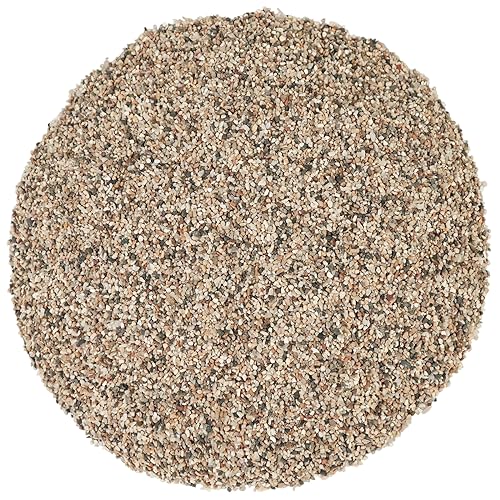
The Ausluru Silica Gravel is a 100% natural silica product with a particle size of 1-2mm, positioning it at the coarser end of the sand spectrum. This 11-pound bag offers serious volume for the price, making it an attractive option for budget-conscious aquarists who need to cover a large footprint without breaking the bank. The mixed natural color provides a subtle, non-reflective base that works for both planted tanks and as a fire pit layer outside the aquarium.
Because the grains are 1-2mm, they allow solid water flow through the substrate bed — good for under-gravel filter setups but less ideal for fine-rooted foreground plants like Monte Carlo or dwarf hairgrass that prefer a tighter medium. The material is inert and will not affect pH, GH, or KH, so you’ll need to supplement with root tabs or liquid fertilizers for any rooted plant growth. The bag is lightweight at 11 pounds and easy to handle, but the loose gravel texture means it may need a deeper layer (3-4 inches) to prevent plants from being uprooted by curious fish.
While this is not an active or buffering sand, it excels as a multi-purpose filler or base layer under a finer cap. For hobbyists setting up a low-budget tank with undemanding plants like Java fern or anubias (which attach to wood rather than root in substrate), this silica gravel offers unbeatable value per pound.
Why we love it
- Very large bag for the money
- Chemically inert — safe for all setups
- Dual use as fire pit base
Good to know
- Too coarse for fine carpet plants
- Requires root tabs for any plant growth
5. Imagitarium Black Aquarium Sand
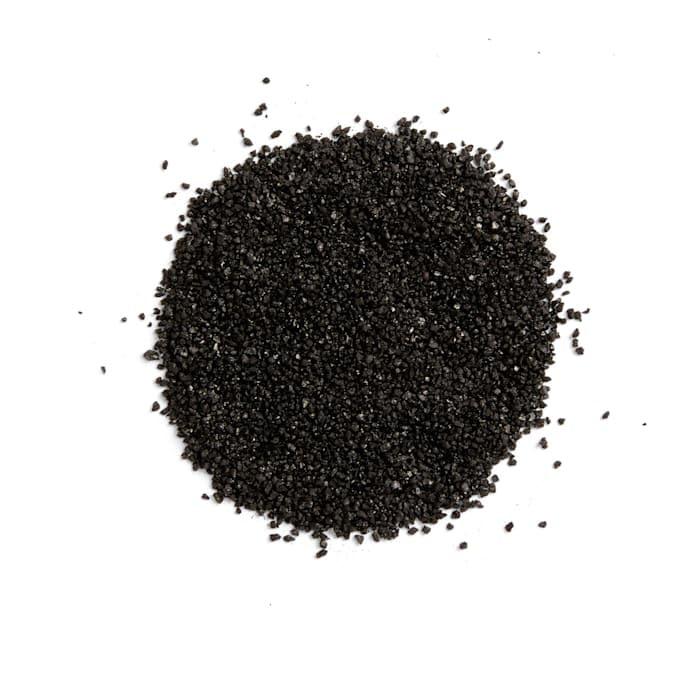
The Imagitarium Black Aquarium Sand is a Petco brand mainstay that has been a reliable entry-level substrate for over five years. The 20-pound bag provides enough sand for a 40-gallon breeder tank with a 1.5-2 inch layer, giving it the best weight-to-cost ratio among cosmetic sands on this list. The black color is non-toxic and fish-safe, designed to promote beneficial bacteria colonization that breaks down waste naturally.
This sand is inert and purely decorative — it will not alter water parameters, which is a double-edged sword: safe for hard-water community fish but useless for buffering pH for sensitive species. Owners report that thorough rinsing is essential; unrinsed sand can cause significant clouding that takes 24-48 hours to clear. Once settled, the black layer creates a clean aesthetic that hides detritus well between weekly water changes. The texture is fine enough for small bottom-feeders, though some users note that sand compaction can occur in deeper layers without regular stirring.
For the hobbyist who wants massive volume at the lowest per-pound cost and doesn’t need active water buffering, the Imagitarium Black Sand delivers on its core promise: a visually clean, safe, and natural-looking base for a community planted tank. Pair it with root tabs in the planting zones and a power head for circulation to prevent dead spots.
Why we love it
- Generous 20-pound bag covers large tanks
- Non-toxic black color looks great
- Encourages beneficial bacteria growth
Good to know
- Requires thorough rinsing to avoid clouding
- Inert — needs root tabs for heavy plant growth
FAQ
How do I know if my aquarium sand needs rinsing?
Can I mix active soil with inert sand in the same tank?
Why does my sand turn brown after a few weeks?
Final Thoughts: The Verdict
For most aquarists, the best sand for a planted aquarium winner is the Aqua Natural Galaxy Sand because it combines dramatic black aesthetics, safe rounded grains for bottom-dwellers, and impressively low dust content. If you need active pH buffering and nutrient-rich media for high-tech planted tanks, reach for the LANDEN Aqua Soil Substrate. And for those on a budget covering a large tank with minimal planting demands, the Imagitarium Black Sand offers unbeatable volume at the lowest cost.