
The search for a puppy food that skips chicken entirely is rarely a simple flavor preference—it’s often a response to recurring ear infections, itchy paws, or loose stools that appear after every meal. For many owners, eliminating chicken becomes the first real step toward a calm digestive system and a comfortable, growing puppy.
I’m Mo Mahin — the founder and writer behind Furric. I spend my time cross-referencing ingredient panels, comparing protein-to-fat ratios, and studying owner-reported outcomes across dozens of non-chicken formulas to find the ones that actually deliver consistent nutrition.
This guide breaks down the top-rated options, from limited-ingredient recipes to sensitive-stomach formulas, to help you confidently select the best non chicken puppy food for your growing dog’s unique needs.
How To Choose The Best Non Chicken Puppy Food
Selecting a chicken-free formula for a growing puppy means balancing allergen avoidance with complete nutritional support. Puppies need higher protein levels, DHA for cognitive development, and a specific calcium-to-phosphorus ratio for steady bone growth—all while excluding a major protein source.
Protein Source and Digestibility
The first ingredient directly replaces chicken. Look for named animal proteins like deboned lamb, salmon, turkey, bison, or venison. Novel proteins—those your puppy has never eaten—are less likely to trigger a reaction. Avoid vague terms like “meat meal” or “poultry byproduct” because those can hide chicken derivatives.
DHA and Omega Fatty Acid Content
DHA, a type of omega-3 fatty acid, directly supports retinal and brain development in puppies. A formula that lists salmon oil, fish oil, or DHA as an additive is a stronger choice than one that relies on flaxseed alone, because marine sources provide a more bioavailable form. Omega-6 and omega-3 balance also affects coat quality and skin barrier function.
Kibble Size and Texture
Puppies have smaller jaws and developing teeth. A kibble that is too large or too hard can discourage chewing, leading to incomplete nutrition. Many non-chicken formulas now offer breed-specific kibble sizes—small, medium, or all-breed—that reflect the puppy’s mouth dimensions and bite force.
Quick Comparison
On smaller screens, swipe sideways to see the full table.
| Model | Category | Best For | Key Spec | Amazon |
|---|---|---|---|---|
| Taste of the Wild High Prairie Puppy | Premium | Novel protein (bison & venison) | 28% crude protein | Amazon |
| Hill’s Science Diet Puppy Sensitive Stomach & Skin | Premium | Digestive wellness & itchy skin | DHA + prebiotic fiber | Amazon |
| Farmina N&D Mini Lamb & Blueberry | Premium | Small breeds & grain-free diet | Grass-fed lamb first ingredient | Amazon |
| Nulo FreeStyle Limited Ingredient Salmon | Mid-Range | Single protein & sensitive digestion | 30% crude protein, BC30 probiotics | Amazon |
| NutriSource Grain Free Turkey Puppy | Mid-Range | Small & medium breed puppies | Turkey & fish, grain-free | Amazon |
| Merrick Grain Free Texas Beef | Mid-Range | High animal protein from beef | 70% animal protein source | Amazon |
| Bully Max 25/11 Lamb | Mid-Range | Weight management & low fat | 25% protein, 11% fat | Amazon |
In‑Depth Reviews
1. Taste of the Wild High Prairie Puppy
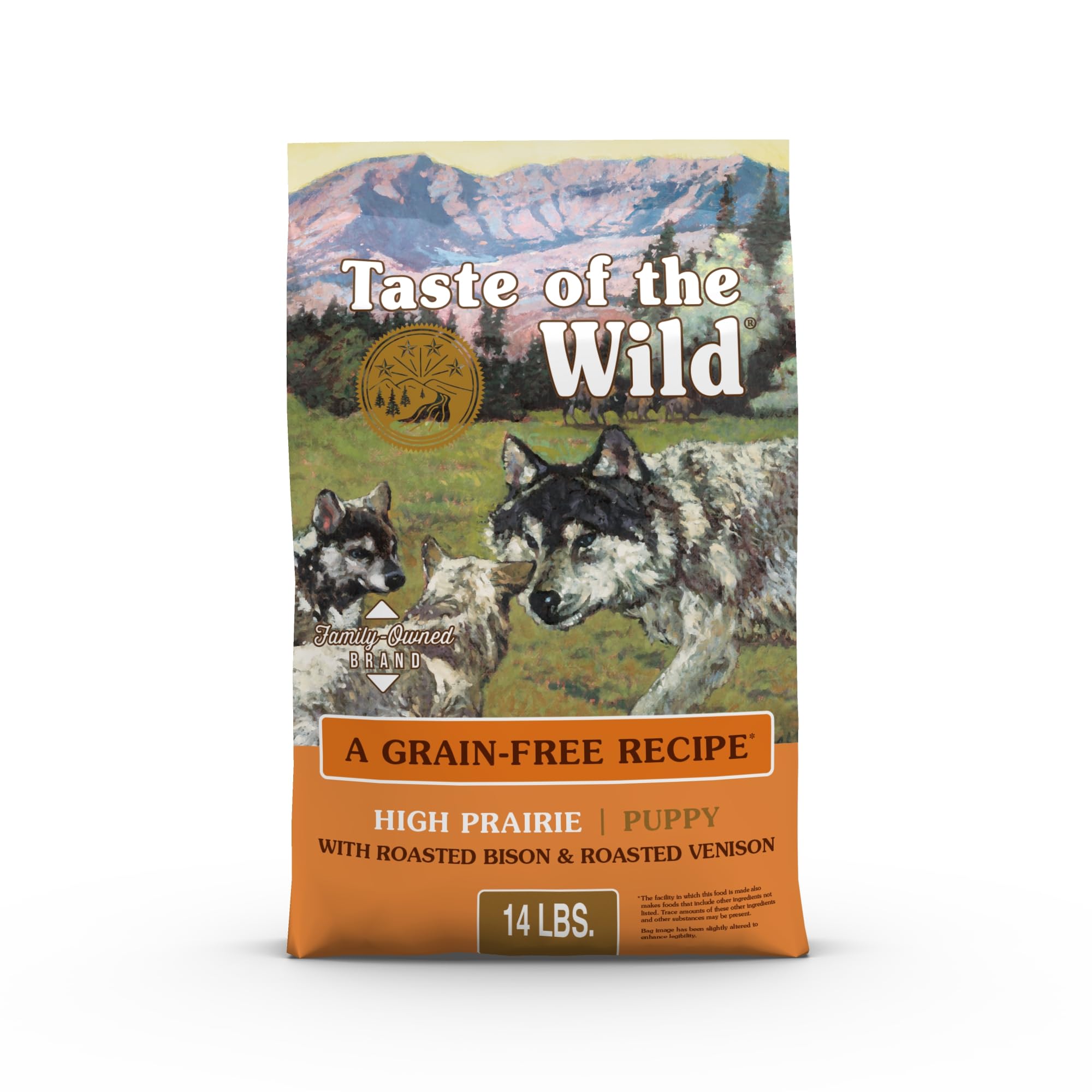
Taste of the Wild leads this list with a 28% crude protein formula built around roasted bison and venison—two novel proteins that rarely appear in standard puppy chow. The absence of chicken is deliberate, and the inclusion of species-specific K9 Strain probiotics supports digestive transition for puppies coming off a different food. The small-kibble geometry works well for medium and large breed puppies during teething.
Owner feedback consistently highlights firm stool formation and improved coat gloss within two weeks of switching. The 14-pound bag is one of the larger sizes among premium non-chicken options, which extends the per-pound value. DHA is present through proprietary probiotic sources rather than added marine oil, though the omega-3 levels remain sufficient for early neurological development.
The grain-inclusive carbohydrate base (sweet potatoes and legumes) provides steady energy without spiking blood sugar. This formula meets AAFCO standards for all life stages, including large-breed puppies, making it a versatile pick for households with multiple dogs of different ages.
Why we love it
- Two novel animal proteins reduce allergy risk
- Proprietary probiotics aid food transitions
- Larger bag size for extended feeding
Good to know
- Contains grain (not suitable for grain-free diets)
- Not ideal for toy breeds due to kibble diameter
2. Hill’s Science Diet Puppy Sensitive Stomach & Skin Salmon & Brown Rice
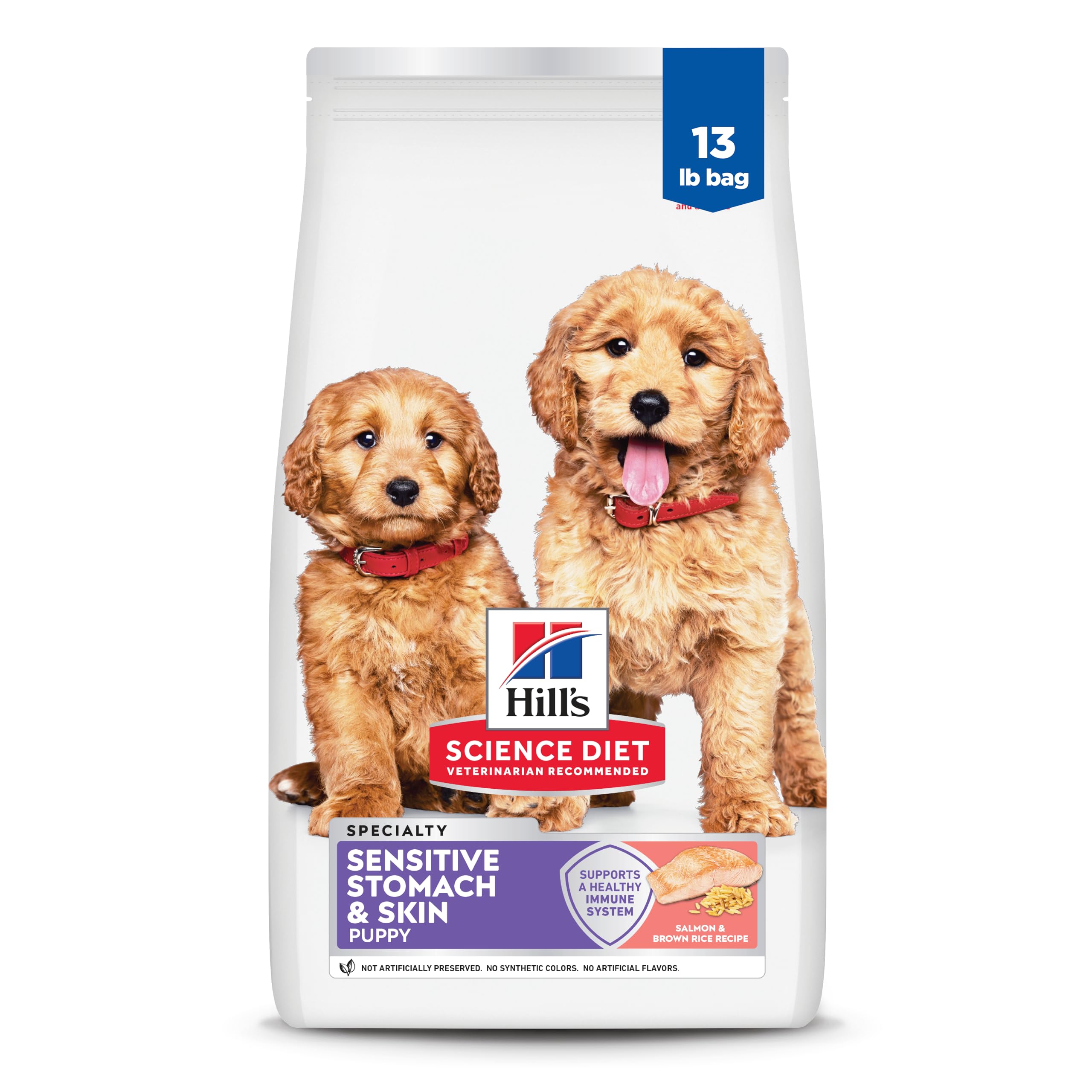
Hill’s Science Diet delivers a veterinarian-formulated option that specifically targets puppies with sensitive stomachs and skin reactions. Salmon is the first ingredient, providing a marine-based alternative to chicken that is inherently lower on common allergen lists. The formula includes DHA directly (not just precursors), supporting retinal and cognitive development during the critical first year.
The prebiotic fiber blend helps regulate transit time, which is particularly valuable for puppies prone to loose stools after food changes. Omega-6 and omega-3 ratios are calibrated at clinically studied levels—not just listed ingredients—which may explain why owners report visible reduction in scratching and dry patches within three weeks. The 13-pound bag is a practical size for single-puppy households.
Hill’s uses brown rice as a carbohydrate source, skipping legumes that some owners prefer to avoid. Cooking quality ensures high digestibility, and the kibble is shaped for easy chewing across all breed sizes. It is not grain-free, so those committed to a zero-grain regimen should look elsewhere.
Why we love it
- DHA is explicitly added for brain development
- Clinically proven antioxidant blend (C+E)
- Prebiotic fiber for sensitive digestion
Good to know
- Premium price per pound
- Contains brown rice (not grain-free)
3. Farmina N&D Mini Lamb & Blueberry

Farmina’s N&D line stands apart by using fresh grass-fed lamb as the first ingredient while deliberately excluding grains, legumes, and peas. The low-glycemic carbohydrate base comes from spelt and oats, supporting stable blood sugar levels for puppies. The “Mini” designation means the kibble is cut smaller—roughly 8–9 mm in diameter—ideal for toy and small breed puppy mouths that struggle with standard kibble sizes.
Blueberries provide natural antioxidant support without relying on synthetic vitamin supplements. Glucosamine and chondroitin are added for hip and joint health, which matters for puppies of predisposed breeds. European manufacturing standards (the brand is Italian) often impose stricter quality controls than domestic benchmarks, which some owners find reassuring for allergy-prone lines.
The 2.5-kilogram bag (approximately 5.5 pounds) places this at a higher per-pound cost than domestic alternatives. However, picky eaters—particularly Australian Labradoodles and other finicky small breeds—show strong acceptance for the lamb flavor profile. Owner feedback notes that the formula resolves intermittent vomiting and grass-eating behavior within days of introduction.
Why we love it
- Grass-fed lamb as single animal protein
- Small kibble diameter for toy breeds
- European manufacturing standards
Good to know
- Higher cost per pound
- Small bag size requires frequent repurchasing
4. Nulo FreeStyle Limited Ingredient Salmon
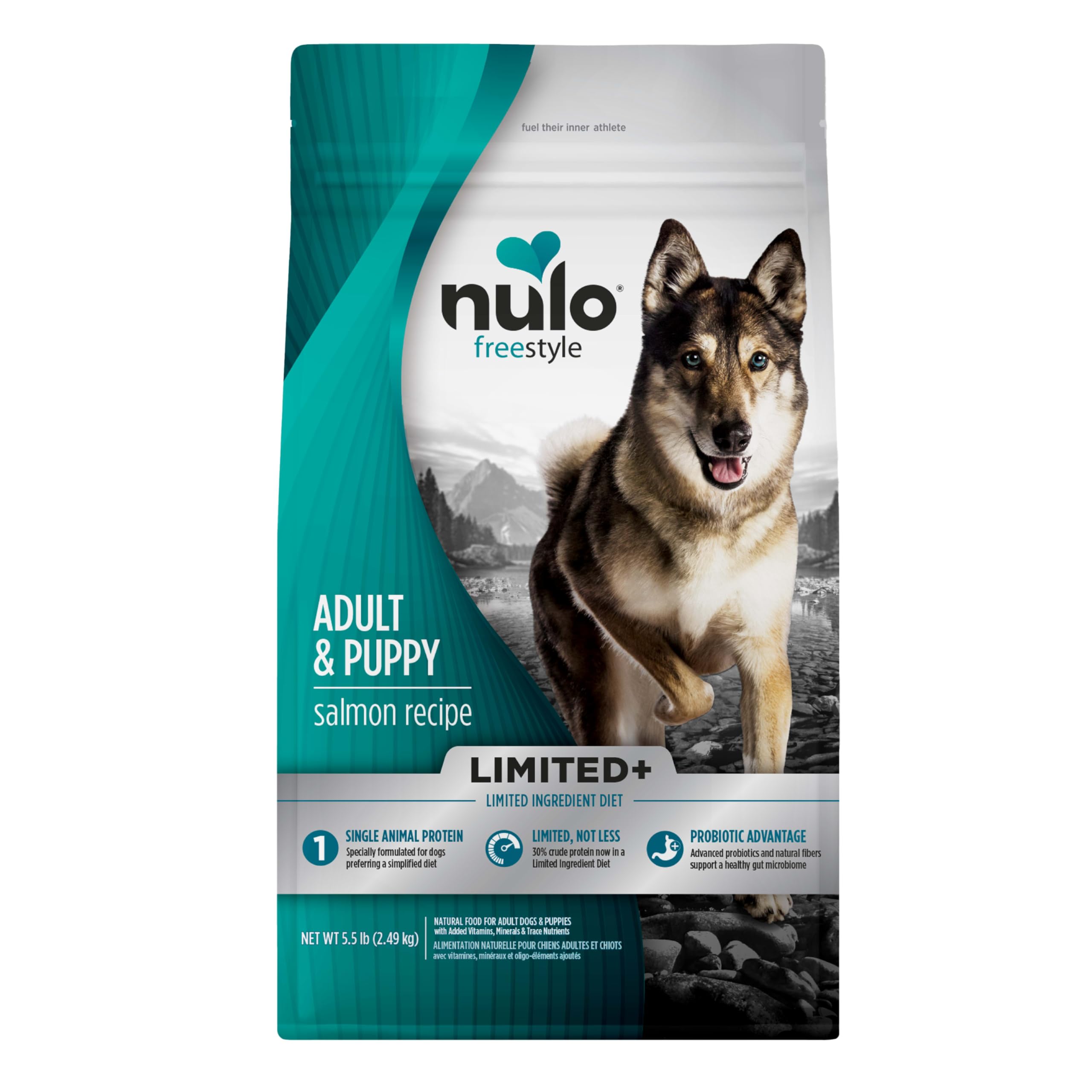
Nulo FreeStyle Limited+ uses salmon as the single animal protein, completely free of chicken, eggs, peas, and artificial additives. The 30% crude protein level is on the higher end for puppy formulas, providing essential amino acids for lean muscle development without overloading fat. The BC30 probiotics are a patented strain with a higher survival rate through the digestive tract compared to standard probiotic cultures.
Owners switching from chicken-based foods frequently report that chronic diarrhea resolves within three to five days, suggesting the limited ingredient approach reduces gut inflammation. The formula achieves a 3.2:1 calcium-to-phosphorus ratio, which is within the large-breed puppy safety range—important for owners of Great Danes and other giant breeds who worry about skeletal growth rates.
The kibble is a medium-sized round shape that suits most breed sizes but may be slightly large for 8-week-old toy breeds. Salmon oil provides omega-3 fatty acids in a highly absorbable form, promoting skin barrier function and reducing the zinc-responsive dermatitis that some chicken-allergic dogs display.
Why we love it
- Single animal protein for sensitive systems
- BC30 probiotics survive stomach acid
- Safe calcium-to-phosphorus ratio for large breeds
Good to know
- Kibble may feel firm for very young puppies
- Moderate bag size (5.5 lb) for the price
5. NutriSource Grain Free Turkey Puppy

NutriSource offers a grain-free, potato-free, and chicken-free formula that uses turkey and fish as protein sources. The “Small Medium Puppy” designation means the kibble size is calibrated for jaws up to approximately 40 pounds at maturity, which covers the majority of popular family breeds like Beagles, Corgis, and Australian Shepherds. The Good 4 Life System includes probiotics and prebiotics for digestive health.
Owner feedback highlights that highly picky eaters—particularly Poodles and Poodle mixes—show strong preference for this formula’s smell and texture. The absence of lentils (which some owners link to dilated cardiomyopathy in grain-free diets) is notable; instead, the carbohydrate base comes from low-glycemic vegetables. The 5-pound bag is a practical trial size for owners unsure about food acceptance.
Humane certification for the turkey source adds an ethical dimension for owners who prioritize protein sourcing. The formula is free of artificial colors, flavors, and preservatives, and it does not rely on potato starch as a binder, which can be a hidden allergen for some puppies.
Why we love it
- Grain, potato, and chicken free
- Ideal small/medium kibble geometry
- Humane-certified turkey protein
Good to know
- May not suit large breed calcium needs
- Small bag size for price point
6. Merrick Grain Free Texas Beef Puppy
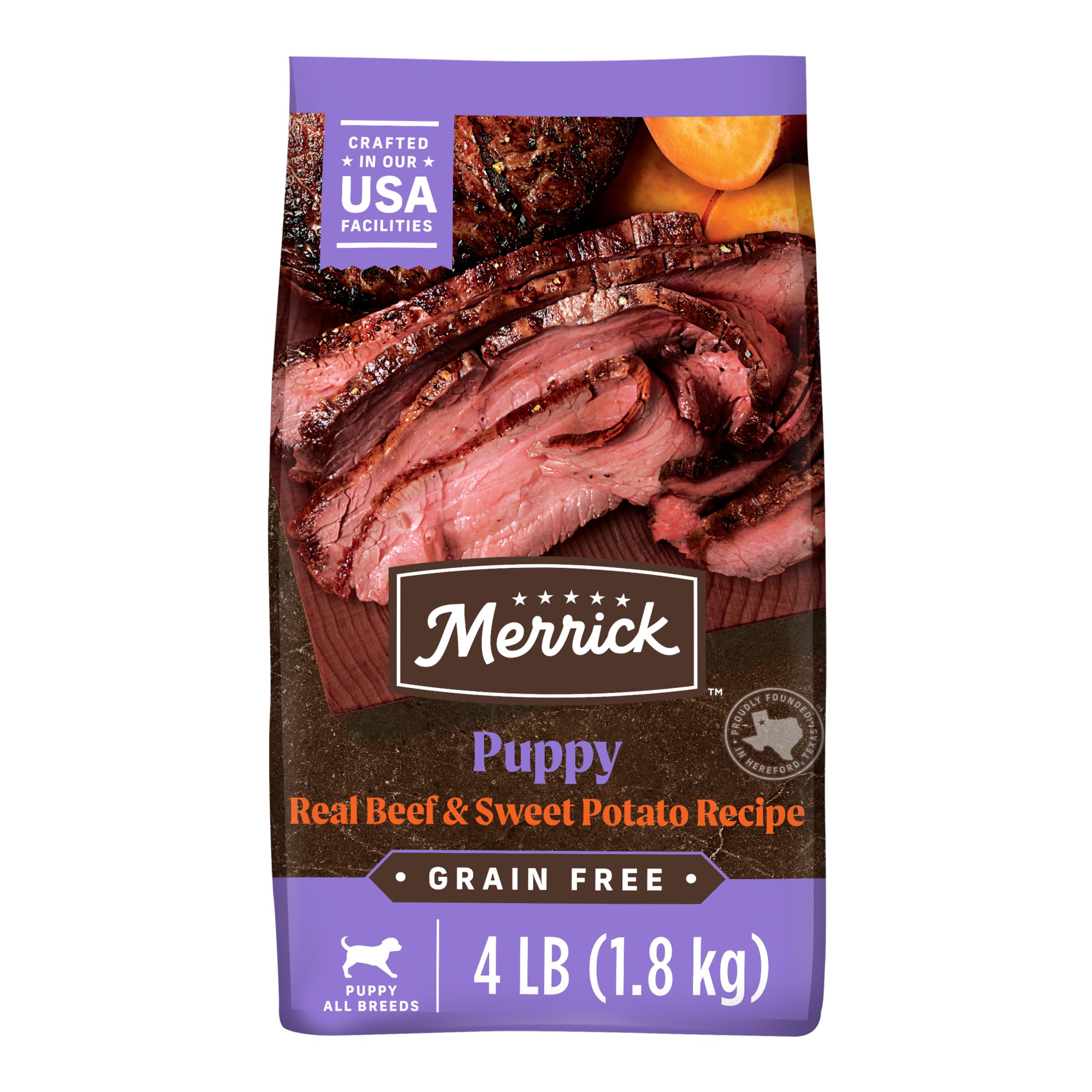
Merrick’s grain-free puppy formula leads with real deboned beef, making it a strong candidate for puppies who need a high proportion of animal-sourced protein—70% of the total protein comes from animal sources. The DHA content supports brain development, while omega-6 and omega-3 fatty acids from beef fat and flaxseed promote skin health. Smaller kibble size is designed for developing teeth.
Reviews note that German Shepherd puppies and other large breeds maintained firm stool consistency after switching. The 4-pound bag is ideal for a trial period before committing to a larger bulk order. Glucosamine and chondroitin levels are present but lower than dedicated joint-formula brands, making this a better maintenance choice than a therapeutic option.
This formula is free of artificial colors, flavors, and preservatives. It does not contain corn, wheat, or soy—common fillers that can mask chicken derivatives. The sweet potato base provides a low-glycemic carbohydrate source that aids steady energy release throughout the day.
Why we love it
- 70% of protein from animal sources
- Includes glucosamine and chondroitin
- Small kibble size for puppy jaws
Good to know
- 4-pound bag is relatively small
- Joint supplements may need boosting for giant breeds
7. Bully Max 25/11 Lamb Puppy & Adult
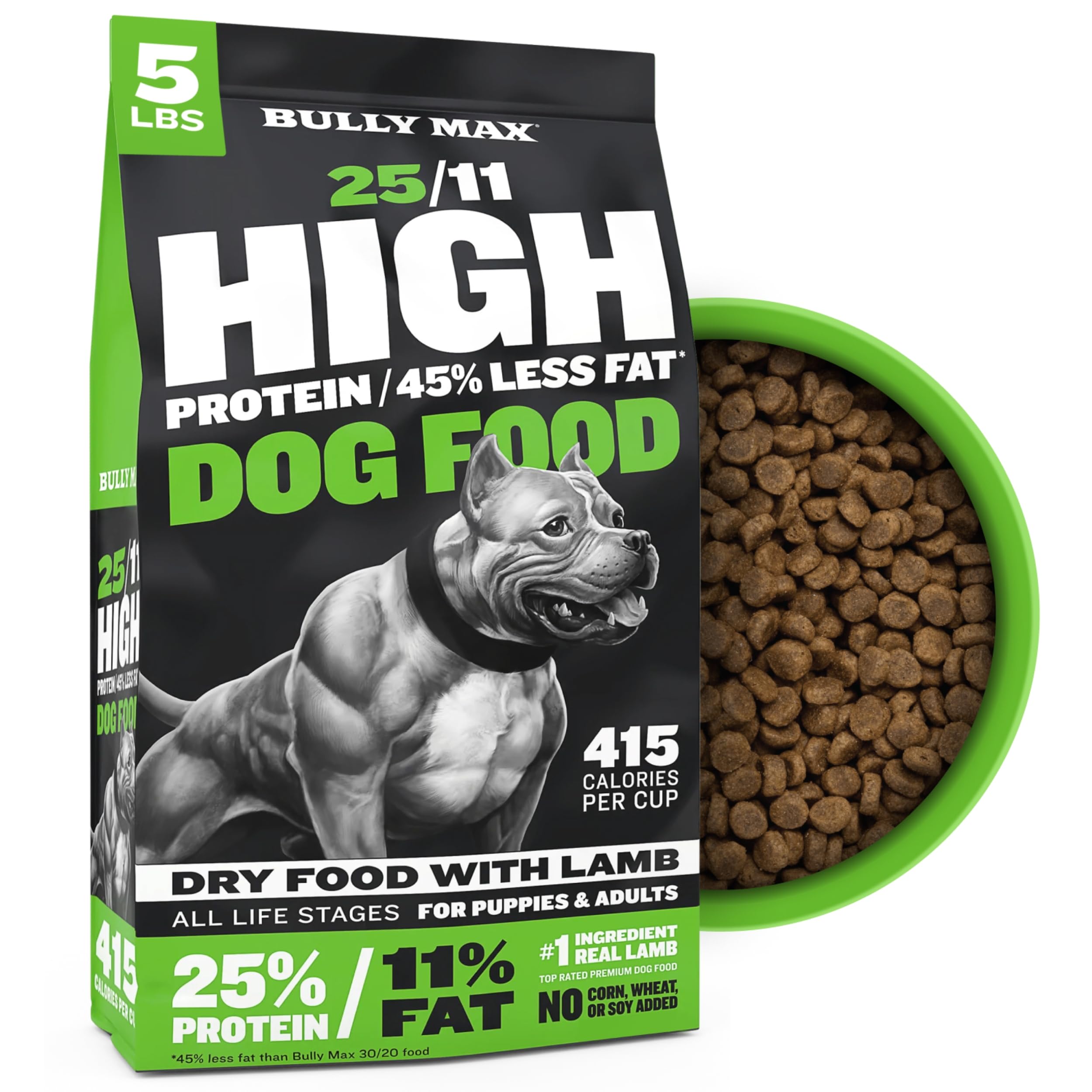
Bully Max’s 25/11 formula is engineered for weight management without sacrificing muscle mass, making it 45% leaner than the brand’s 30/20 recipe. The lamb-based protein is chicken-free and suitable for puppies as young as 4 weeks, though it is also labeled for adult dogs, which means the calcium-to-phosphorus ratio leans toward all-life-stage maintenance rather than strict puppy growth support. Probiotics and postbiotics are included for digestive balance.
Owners of Pitbulls, Cane Corsos, and Rottweilers report that their dogs maintained energy levels while shedding excess body fat. The larger kibble size (approximately 12–14 mm) encourages chewing and slows eating speed, which reduces bloat risk in deep-chested breeds. Salmon oil provides omega-3 fatty acids without relying on fish meal, which can contain hidden chicken byproducts.
The low-fat profile (11%) may not suit rapidly growing toy breeds that need higher caloric density. The formula meets AFFCO requirements but is designed more as a performance diet than a general puppy maintenance food—ideal for active working breed puppies who need lean muscle conditioning.
Why we love it
- Low fat prevents unhealthy weight gain
- Large kibble slows eating for deep-chested breeds
- Probiotic and postbiotic support
Good to know
- Low fat may not suit high-energy toy breeds
- Large kibble size may be tough for small puppies
FAQ
How do I know if chicken is causing my puppy’s allergies?
Can a puppy eat adult non-chicken food if it has the right protein level?
Is grain-free necessary for a puppy with chicken sensitivity?
Final Thoughts: The Verdict
For most owners searching for non chicken puppy food, the top recommendation is Taste of the Wild High Prairie Puppy because its dual novel proteins (bison and venison) minimize the risk of cross-reactivity while delivering 28% protein and digestive probiotics. If your puppy has a confirmed sensitive stomach or skin allergies, the Hill’s Science Diet Puppy Sensitive Stomach & Skin adds veterinarian-developed prebiotic fiber and clinically proven antioxidants. For owners of toy or small breeds, Farmina N&D Mini Lamb & Blueberry provides a tiny-kibble, grass-fed option that picky eaters reliably accept.