
The difference between a blurry speck in the treeline and a crisp portrait of a warbler’s eye comes down to one thing: reach. A superzoom camera for birding must balance extreme focal length, fast autofocus, and a stabilization system that lets you shoot handheld at 2000mm without a tripod.
I’m Mo Mahin — the founder and writer behind Furric. I’ve spent hundreds of hours comparing bridge-camera zoom ranges, analyzing contrast-detection vs. hybrid AF systems, and cross-referencing owner field reports to find the models that actually deliver sharp images of fast-moving birds at extreme distances.
This guide cuts through the marketing noise to identify the best superzoom camera for birding across a range of budgets, with a focus on usable reach, real-world autofocus performance, and image stabilization that earns its keep.
How To Choose The Best Superzoom Camera For Birding
Birding photography is a unique discipline. The subject is small, fast, often backlit, and almost always at a distance that punishes weak zoom lenses. A true birding superzoom must prioritize reach, stabilization, and autofocus responsiveness above all other features.
Optical Zoom Range Is Non-Negotiable
Ignore digital zoom entirely — it’s a crop, not a zoom. Optical zoom delivers genuine reach at the sensor plane. For birding, a minimum of 60x optical zoom (roughly 1200mm equivalent) is the baseline for small songbirds at moderate distances. The 83x on the Nikon COOLPIX P950 (2000mm) is a far more useful range for warblers, finches, and shorebirds. The 125x on the P1000 (3000mm) pushes into lunar photography territory and allows feather detail at extreme ranges where other cameras produce only silhouettes.
Autofocus Speed and Tracking Capability
A bird flits from branch to branch unpredictably. Contrast-detection AF (common in bridge cameras) hunts more than phase-detection or hybrid systems. The Nikon COOLPIX P1000 offers 100 AF points and a dedicated bird mode that biases toward feather texture patterns. The Canon Rebel T7 kit includes a 9-point system that struggles with erratically moving subjects — it requires prefocusing skill. The Panasonic LUMIX ZS99 uses a hybrid AF system that snaps focus faster than pure contrast-detection, useful for birds in flight if you can keep the tracking point on the bird.
Image Stabilization at Extreme Focal Lengths
Handheld shooting at 2000mm amplifies every tremor into frame-shaking blur. Dual Detect Optical VR on the Nikon P950 and P1000 combines lens-shift stabilization with electronic compensation to deliver sharp handheld shots at shutter speeds as low as 1/60s at full zoom — a remarkable feat. The Canon RF 200-800mm lens relies on its own optical IS system, coordinated with the R-series body’s IBIS in many models, giving a substantial advantage on Canon mirrorless systems. The Minolta Pro Shot claims stabilization, but at 67x zoom, it falls short of the smoother, more predictable Nikon system in real-world testing.
Sensor Size and Low-Light Performance
Birding often happens at dawn or dusk, in shaded woodlands, and under heavy canopy. A 1/2.3-inch sensor (standard in most bridge superzooms) is the main limitation: noise becomes apparent above ISO 800, forcing slower shutter speeds and increasing motion blur. The Canon Rebel T7’s APS-C sensor (24.1MP) captures significantly cleaner images at ISO 1600, giving you two extra stops of usable speed for freezing a bird in flight. If you plan to crop heavily or print, a larger sensor with a super-telephoto lens (like the Canon RF 200-800mm on an R-series body) is the ultimate path, though at a higher investment and with the need to carry interchangeable gear.
Quick Comparison
On smaller screens, swipe sideways to see the full table.
| Model | Category | Best For | Key Spec | Amazon |
|---|---|---|---|---|
| Nikon COOLPIX P1000 | Bridge / Premium | Extreme reach for distant birds & moon | 125x optical zoom (3000mm equiv.) | Amazon |
| Nikon COOLPIX P950 | Bridge / Mid-Range | Best balance of reach and handling | 83x optical zoom (2000mm equiv.) | Amazon |
| Canon RF 200-800mm Lens | Telephoto Lens | Pro-grade image quality on mirrorless | 200-800mm zoom (RF mount) | Amazon |
| Canon EOS Rebel T7 + 500mm Kit | DSLR Kit | Entry-level DSLR with super-tele reach | APS-C sensor + 500mm preset lens | Amazon |
| Panasonic LUMIX ZS99 | Compact Travel Zoom | Pocketable birding for casual trails | 30x optical zoom (720mm equiv.) | Amazon |
| Panasonic LUMIX FZ80D | Bridge / Budget | Value pick with 4K and 60x zoom | 60x optical zoom (1200mm equiv.) | Amazon |
| Minolta Pro Shot 20MP | Bridge / Budget | Entry-level superzoom for beginners | 67x optical zoom + 16GB card | Amazon |
In‑Depth Reviews
1. Nikon COOLPIX P1000

The Nikon COOLPIX P1000 holds the crown for the most powerful optical zoom ever placed in a bridge camera: 125x optical magnification delivers a staggering 3000mm equivalent focal length. That reach lets you photograph a kingfisher 100 yards away as a full-frame subject, not a speck. The Dual Detect Optical VR system compensates for handshake at these extreme lengths far better than any competitor in this class, allowing usable handheld shots at full zoom on overcast afternoons.
Beyond raw reach, the P1000 includes bird-specific scene modes that bias autofocus algorithms toward feather detail rather than generic contrast edges. The 100 AF points combined with a 1/4000s maximum shutter speed give you a fighting chance at birds in flight, though the slower f/8 aperture at the long end means bright sunlight is your friend. Reviewers consistently praise the camera’s ability to capture recognizable feather patterns and eye detail on warblers, finches, and even distant raptors that other superzooms render as blurry silhouettes.
The 4K UHD video at 30fps is solid, and the vari-angle 3.2-inch LCD screen makes overhead canopy shots far less painful on your neck. The biggest trade-off is the 1/2.3-inch sensor: low-light noise creeps in above ISO 800, so you must be disciplined about shutter speeds or use a monopod. For the dedicated birder who wants maximum reach from a single camera system, the P1000 is the undisputed champion.
Why we love it
- Unrivaled 3000mm optical reach for distant birds
- Dual Detect VR works exceptionally well at full zoom handheld
- Bird-specific scene modes improve keeper rates
- 4K video and vari-angle screen for overhead shooting
Good to know
- Small sensor struggles above ISO 800
- Lens slows to f/8 at maximum zoom
- Heavy and bulky for long walks in the field
2. Nikon COOLPIX P950

The Nikon COOLPIX P950 is the sweet spot in the superzoom birding world. Its 83x optical zoom (2000mm equivalent) provides enough reach for 95% of birding situations — from warblers in mid-canopy to ducks across a pond — with a smaller, lighter body than the P1000. The 16MP sensor pairs with the NIKKOR ED glass lens to produce sharp images at the middle zoom ranges, and the Dual Detect Optical VR keeps handheld shots steady at full zoom in good light.
Built-in Bird Mode automatically adjusts exposure and autofocus to prioritize feather texture, making it easier for beginners to get usable shots without manual tweaking. The 399-point contrast-detection AF system is responsive but does hunt in low contrast scenarios like a bird against a bright sky. The rotating LCD screen articulates for low-angle and overhead compositions, and the built-in Wi-Fi lets you transfer images to your phone for instant sharing with field guides or birding groups.
Reviewers consistently note that the P950’s 4K UHD video is crisp enough for digiscoping-style documentation, and the raw (NRW) format gives you latitude for post-processing tricky lighting. The f/2.8 to f/6.5 aperture range means you sacrifice some light at the long end, but the smooth zoom ring and ergonomic grip make extended handheld sessions comfortable. If you need the ultimate reach of 3000mm, go P1000; if you want a lighter, more manageable camera that still reaches 2000mm, the P950 is your best call.
Why we love it
- Excellent 2000mm reach in a lighter body
- Dedicated Bird Mode simplifies settings
- Strong optical VR for handheld shooting
- Raw format support for post-processing
Good to know
- AF can hunt against bright backgrounds
- Sensor noise visible above ISO 1600
- Average burst rate for fast-moving birds
3. Canon RF 200-800mm f/6.3-9 IS USM Lens
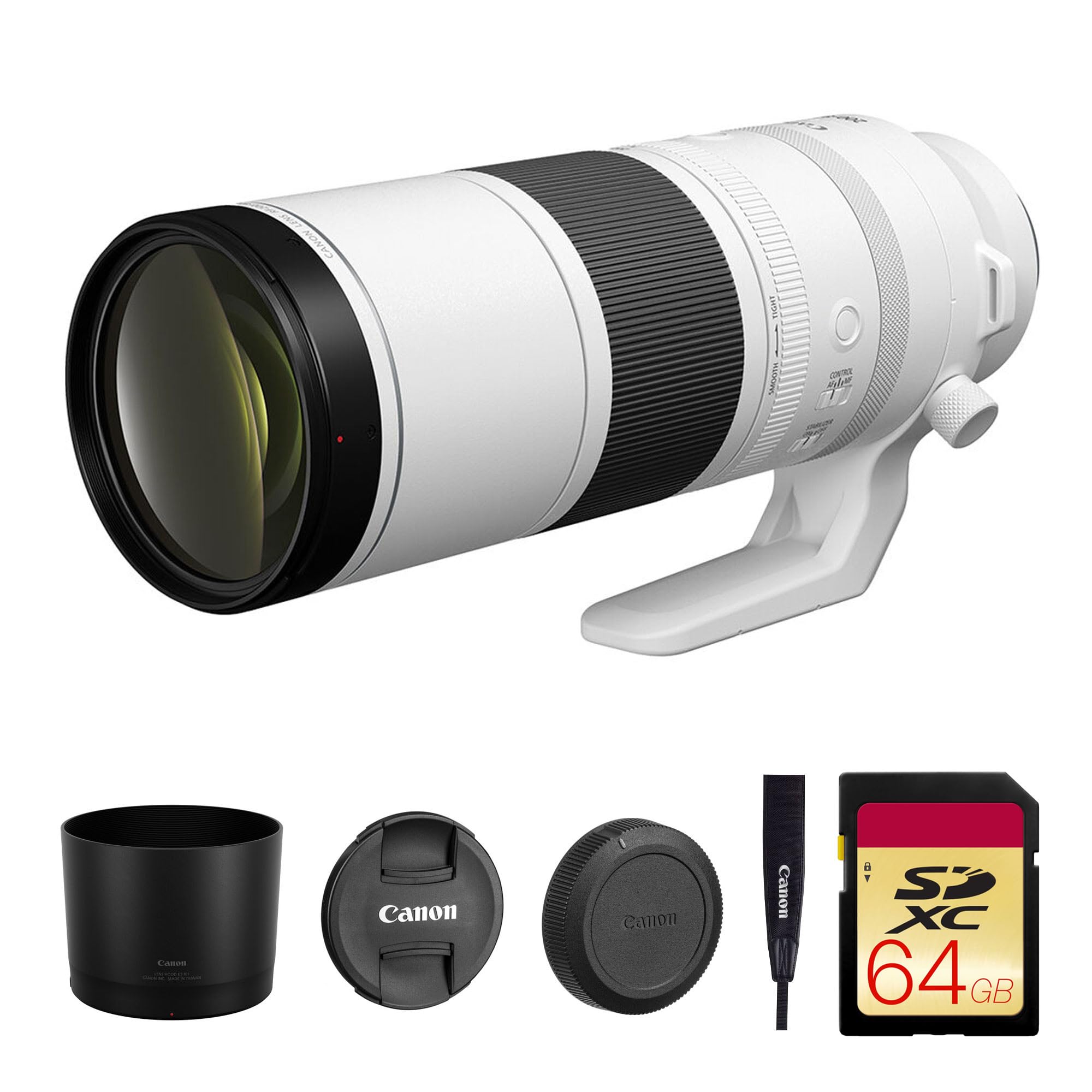
For birders who already own or plan to buy a Canon EOS R-series mirrorless body, the RF 200-800mm f/6.3-9 IS USM lens is the most practical super-telephoto zoom for feathered subjects. This lens delivers 200-800mm of pure optical reach on a full-frame sensor, and when paired with an APS-C R body like the R7, the effective reach jumps to 320-1280mm — competitive with bridge cameras while delivering vastly superior image quality from the larger sensor.
The built-in optical image stabilization constantly communicates with the body’s IBIS system (on compatible R-series models) to provide up to 5.5 stops of shake correction. That means you can shoot handheld at 800mm and 1/125s with confidence, freezing birds at golden hour without a tripod. The Nano USM autofocus motor is nearly silent and incredibly fast — essential for tracking warblers flitting through dense branches or swallows executing aerial maneuvers.
Despite the impressive reach, the lens weighs only 7 pounds, which is light for a super-telephoto zoom of this range. Reviewers praise the weather-sealed construction for extended field use in damp environments. The trade-off is that the maximum aperture closes down to f/9 at 800mm, limiting performance in deep shade or heavy overcast. But for the birder who prioritizes image quality, crop flexibility, and a clear upgrade path to a pro-level system, this Canon lens is the gold standard.
Why we love it
- Exceptional image quality from full-frame sensor
- Up to 1280mm effective on APS-C bodies
- Quiet, fast Nano USM autofocus
- Weather-sealed for field durability
Good to know
- Requires Canon R-series mirrorless body
- Narrow aperture (f/9) at long end
- Substantial investment compared to bridge cameras
4. Canon EOS Rebel T7 + 500mm Preset Lens Kit

The Canon EOS Rebel T7 DSLR combined with a 500mm preset telephoto lens is a unique entry point for birding photography. The 24.1MP APS-C sensor delivers significantly cleaner images at higher ISOs than any 1/2.3-inch bridge camera, meaning you can push to ISO 1600 or 3200 in woodland shade and still produce usable feather detail. The 1.6x crop factor of the APS-C sensor converts the 300mm kit lens to a 480mm effective focal length, and the included 500mm preset lens gives you 800mm of reach — enough for moderate-distance songbirds.
The 500mm preset lens is a manual-focus, fixed-aperture (f/8) design, which requires patience and precise focusing on a static subject. It is not suitable for birds in flight or rapid action, but for perched birds where you have a few seconds to dial in focus, the results can rival entry-level superzooms in clarity, with far better color and dynamic range. The kit includes a monopod, which is necessary for the 500mm lens — handheld at 800mm effective shot through an f/8 lens in low light is nearly impossible without stabilization.
The bundled 18-55mm and 75-300mm lenses provide flexibility for landscape and closer wildlife, making this a versatile kit for a birder who also enjoys general photography. The 9-point autofocus system is basic by modern standards, but the Canon ecosystem offers an upgrade path to faster lenses and advanced bodies. For the budget-conscious birder who values sensor quality over extreme zoom reach, this kit is a compelling foundation.
Why we love it
- Large APS-C sensor for clean, high-ISO images
- 800mm effective reach from the 500mm preset lens
- Includes multiple lenses for versatility
- Full manual control and raw shooting
Good to know
- 500mm lens is manual focus only
- 9-point AF system limits tracking ability
- Requires monopod for sharp shots at long end
5. Panasonic LUMIX ZS99

The Panasonic LUMIX ZS99 is the camera you can carry every single day without excuses. Its compact body truly slips into a jacket pocket while still offering a 24-720mm LEICA zoom lens with 30x optical reach. For casual birding on neighborhood walks, city parks, and nature trails where you aren’t hauling dedicated gear, the ZS99 lets you capture a sparrow at 720mm without announcing your presence with a massive bridge camera body.
Hybrid autofocus and a 1,840k-dot tiltable touchscreen make fast composition possible, and the 4K video at 30fps captures solid footage for later still extraction. The stepped zoom feature lets you jump between pre-set focal lengths instantly — useful when a bird moves between branches. Built-in Bluetooth 5.0 and a dedicated Send Image button simplify sharing with birding apps. Reviewers note that while the 1/2.3-inch sensor limits low-light performance, the image quality at moderate ISOs with good daylight is pleasing for social sharing and reference documentation.
The ZS99’s 30x zoom is modest compared to the 60x-125x of dedicated bridge cameras, but for the birder who prioritizes portability and always having a camera on hand, it is the best trade-off between convenience and reach. The LEICA lens produces pleasing color and contrast, and the USB Type-C charging means you can top up from a battery pack in the field. This is not a replacement for a dedicated birding camera, but it is the perfect complement for everyday carry.
Why we love it
- Pocket-sized body for daily carry
- Hybrid AF and stepped zoom for quick framing
- 4K video and 120fps slow-motion HD
- Bluetooth sharing and USB-C charging
Good to know
- 30x zoom is limited for distant small birds
- Small sensor struggles in low light
- No built-in flash for fill light
6. Panasonic LUMIX FZ80D
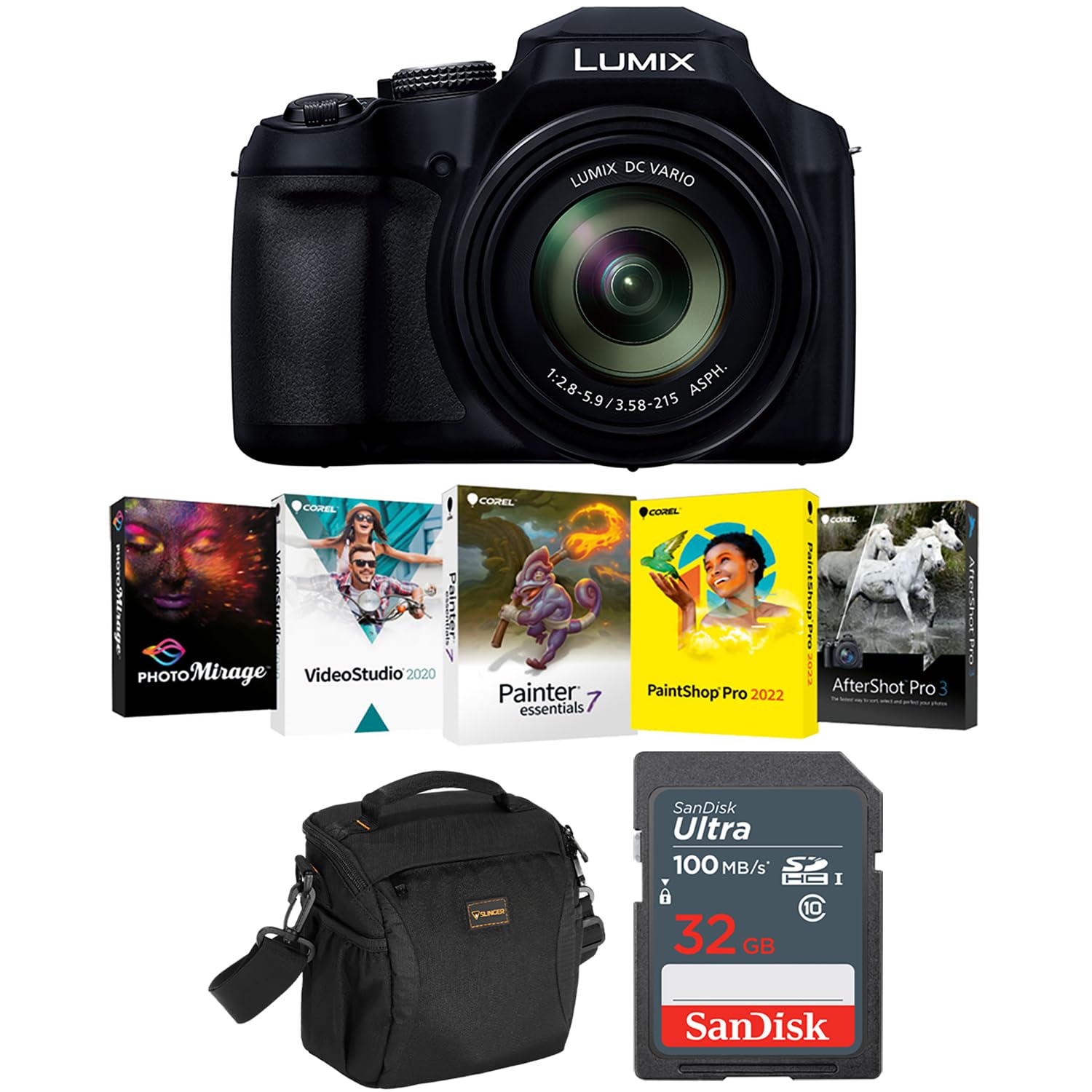
The Panasonic LUMIX FZ80D is the entry-level bridge camera that gets the fundamentals right for birders on a tight budget. Its 60x optical zoom covers the 20-1200mm equivalent range — enough reach for backyard feeders, lake ducks, and larger wading birds. The 18.1MP 1/2.3-inch MOS sensor is standard for this price tier, but the POWER O.I.S. image stabilization performs better than many similarly priced competitors at the long end of the zoom.
4K UHD video at 30p is a standout feature at this price point, allowing you to grab high-resolution clips for documentation and extract 8MP stills from the 4K Photo burst mode. The 30-point contrast-detection autofocus is adequate for stationary or slowly moving birds but struggles with erratic flight patterns. The 2.36m-dot OLED live viewfinder is bright and helps in direct sunlight, while the 3.0-inch 1.84m-dot LCD provides good playback detail.
The included 32GB SD card and shoulder bag add immediate value, but the real draw is the 1200mm reach at a price that undercuts almost every other bridge camera with comparable zoom. Reviewers note that the f/2.8-5.9 aperture range is decent for a superzoom, but the small sensor means you need good light to avoid noise. For a beginning birder who wants to see if superzoom photography is their path before committing more, the FZ80D is the safest starting point.
Why we love it
- Affordable entry to 1200mm reach
- POWER O.I.S. helps at full zoom
- 4K video and 4K Photo burst mode
- Bundle includes SD card and bag
Good to know
- Small sensor noise limits high-ISO use
- AF system is slow for fast-moving birds
- Plastic body build feels less durable
7. Minolta Pro Shot 20MP Digital Camera

The Minolta Pro Shot 20MP camera offers a 67x optical zoom that covers roughly 24-1600mm equivalent — impressive on paper for an entry-level bridge camera. The optical image stabilization helps reduce blur at the long end, though it is less refined than the Nikon Dual Detect VR system, meaning you will get usable but not tack-sharp results at full zoom in moderate light. The 20MP sensor captures detail sufficient for web sharing and 4×6 prints at lower ISOs.
The articulating 3-inch 920k-dot LCD screen is functional for overhead canopy angles, and the built-in Wi-Fi allows basic image transfer to a smartphone. The 39-point autofocus system works fine for static subjects like a perched robin but hunts noticeably when tracking birds in flight or through foliage. The included 16GB SD card means you can start shooting immediately, and the scene modes (including landscape and portrait) help beginners avoid bad settings.
Reviewers appreciate the all-in-one package for the price, but note that the 1080p HD video (30fps) feels dated compared to 4K offerings from Panasonic and Nikon in the same tier. The f/2.8-5.6 aperture range is standard, but the image stabilization doesn’t fully compensate for the small sensor’s low-light weakness. For the absolute beginner who wants the most zoom per dollar and isn’t chasing rare species in low light, the Minolta Pro Shot is a functional starting tool.
Why we love it
- High zoom-to-price ratio for beginners
- Articulating screen aids overhead shots
- Wi-Fi connectivity for quick sharing
- Includes 16GB SD card out of the box
Good to know
- Stabilization less effective than premium models
- AF hunts on moving subjects
- 1080p video only, no 4K
FAQ
How much optical zoom do I really need for birding?
Will a superzoom bridge camera replace a DSLR or mirrorless for birding?
What does image stabilization do at extreme zoom ranges?
Can I use a superzoom camera for birds in flight photography?
Why do bridge cameras have smaller sensors than DSLRs?
Final Thoughts: The Verdict
For most gardeners, the best superzoom camera for birding winner is the Nikon COOLPIX P1000 because its 125x optical zoom and effective Dual Detect VR provide maximum reach for identifying distant birds. If you want a lighter setup with a dedicated Bird Mode, grab the Nikon COOLPIX P950. And for uncompromising image quality and a clear upgrade path to pro-level gear, nothing beats the Canon RF 200-800mm lens on a mirrorless body.