
Selecting the wrong ground cover for a leopard gecko enclosure can lead to impaction, respiratory irritation, and a stressed pet that refuses to explore. The difference between a thriving bioactive setup and a hazardous tank often comes down to particle size, moisture management, and whether the material mimics the loose, arid soils of their native Afghanistan and Pakistan range.
I’m Mo Mahin — the founder and writer behind Furric. I specialize in cross-referencing horticultural substrate science with exotic pet husbandry data, analyzing hundreds of owner reports to identify which products actually hold burrows, control humidity, and pass the safety test for insectivorous reptiles.
This guide breaks down the five most viable options on the market so you can confidently select the best substrate for leopard geckos based on enclosure style, maintenance tolerance, and natural behavior goals.
How To Choose The Best Substrate For Leopard Geckos
Leopard geckos require a substrate that balances low dust with structural integrity so tunnels don’t collapse. Avoid loose particles under 2 mm that stick to food—those increase ingestion risk. Prioritize materials that dry quickly on top yet hold trace moisture in lower layers to support shedding without raising ambient humidity above 40 %.
Particle Size and Impaction Risk
Particles smaller than 2 mm—fine sand, dusty soil, or ground walnut shell—cling to feeder insects and lodge in the gecko’s digestive tract. Coarse coconut chips, fir bark chunks, or compressed fiber bricks that break into 5–15 mm flakes pass through safely if ingested and don’t stick to prey.
Humidity Management and Burrow Holding
Arid-adapted geckos need a top layer that dries within hours while the base retains slight dampness for humid hides. Coconut husk chip and coarse fiber drain fast enough to prevent scale rot. Blends with sphagnum peat (like jungle mixes) hold more moisture and require drier hides or less frequent misting to avoid respiratory issues.
Bioactive Versus Loose Bedding
Bioactive-ready mixes contain organic soil, sand, and clay components engineered to support a cleanup crew (isopods, springtails) and live succulent plants. These substrates hold burrows permanently and rarely need full replacement. Standard coconut products are simpler for quarantines, hospital tanks, or keepers who prefer monthly total changeouts.
Quick Comparison
On smaller screens, swipe sideways to see the full table.
| Model | Category | Best For | Key Spec | Amazon |
|---|---|---|---|---|
| Riare Coconut Chip | Coconut Husk Chip | Burrow stability & low dust | Chunky 5–15 mm chips | Amazon |
| Halatool Coconut Fiber | Coconut Fiber Brick | Budget bulk for humid species | 60–80 % humidity range | Amazon |
| Legigo 4‑Pack Fiber | Coconut Fiber Brick | Multi-enclosure or large tanks | 4 bricks, 5.7 lb total | Amazon |
| Zilla Jungle Mix | Fir & Peat Blend | Humidity-loving rainforest geckos | 24 qt, fir bark + sphagnum | Amazon |
| Bio Dude Terra Sahara | Bioactive Soil Mix | Bioactive desert vivariums | 6 qt, holds burrows | Amazon |
In‑Depth Reviews
1. Riare 2‑Pack Natural Coconut Chip Substrate

The Riare coconut chip substrate delivers the coarsest particle profile in this lineup—individual chips range from roughly 5 to 15 mm, which means they don’t stick to feeder insects or clump into dust. Once expanded, the texture stays open enough for a leopard gecko to dig tunnels that won’t collapse after the first shed cycle. Owners report that one 1.4‑lb brick expands to roughly 30 liters, enough to fill a 20‑gallon long enclosure at the recommended 2‑inch depth.
Odor control stands out because the chunky structure allows air to circulate through the bedding rather than trapping moisture against the bottom. Several long-term ball python keepers switched from reptichip to this product specifically because the chips held their shape longer before breaking down into fines. The compressed packaging also stores flat, which matters for keepers buying in bulk for multiple enclosures.
The primary consideration is that the chips are physically larger than fiber-based substrates, so geckos that prefer to push bedding around with their snouts may find it slightly heavier to move. Still, for a keeper prioritizing impaction safety and burrow longevity over ultra-light texture, this is the most balanced coconut chip option currently available.
Why we love it
- Large chip size minimizes ingestion risk compared to dusty alternatives
- Expands to 30+ liters per brick with hot water
- Retains shape for weeks without turning to mush
Good to know
- Heavier chips may be harder for very young geckos to push aside
- Single brick may not fill a 40‑gallon breeder fully
2. The Bio Dude Terra Sahara Bioactive Substrate

The Bio Dude Terra Sahara is the only mix in this roundup formulated specifically for arid bioactive vivariums. It combines organic soil, sand, and clay into a dense yet breathable blend that supports desert plants like succulents and cacti while keeping ambient humidity low—critical for leopard geckos prone to respiratory infections. Owners consistently note that the substrate holds steep burrow walls without slumping, even after weeks of isopod activity.
Multiple verified reviews from leopard gecko keepers confirm that switching to Terra Sahara immediately increased exploratory and digging behavior. The 6‑quart bag covers a 20‑gallon long at about a 2‑inch depth, though bioactive setups typically run 3–4 inches for a proper drainage layer. The mix includes larger pieces of rock and twig, so tong-feeding is recommended to prevent accidental ingestion of those fragments.
The tradeoff is that this is a bioactive-only substrate—it requires a cleanup crew and periodic spot-cleaning rather than full replacement. Keepers who prefer monthly total changeouts may find the upfront cost and maintenance style mismatched. But for anyone aiming for a self-sustaining desert enclosure, this is the gold standard.
Why we love it
- Engineered specifically for dry bioactive terrariums with low humidity
- Burrows stay intact for weeks without reinforcement
- Directly supports live succulent and cactus planting
Good to know
- 6 qt bag only covers small enclosures at bioactive depth
- Larger rock/twig pieces require tong-feeding or hand-picking
3. Legigo 4‑Pack Compressed Coconut Fiber Substrate
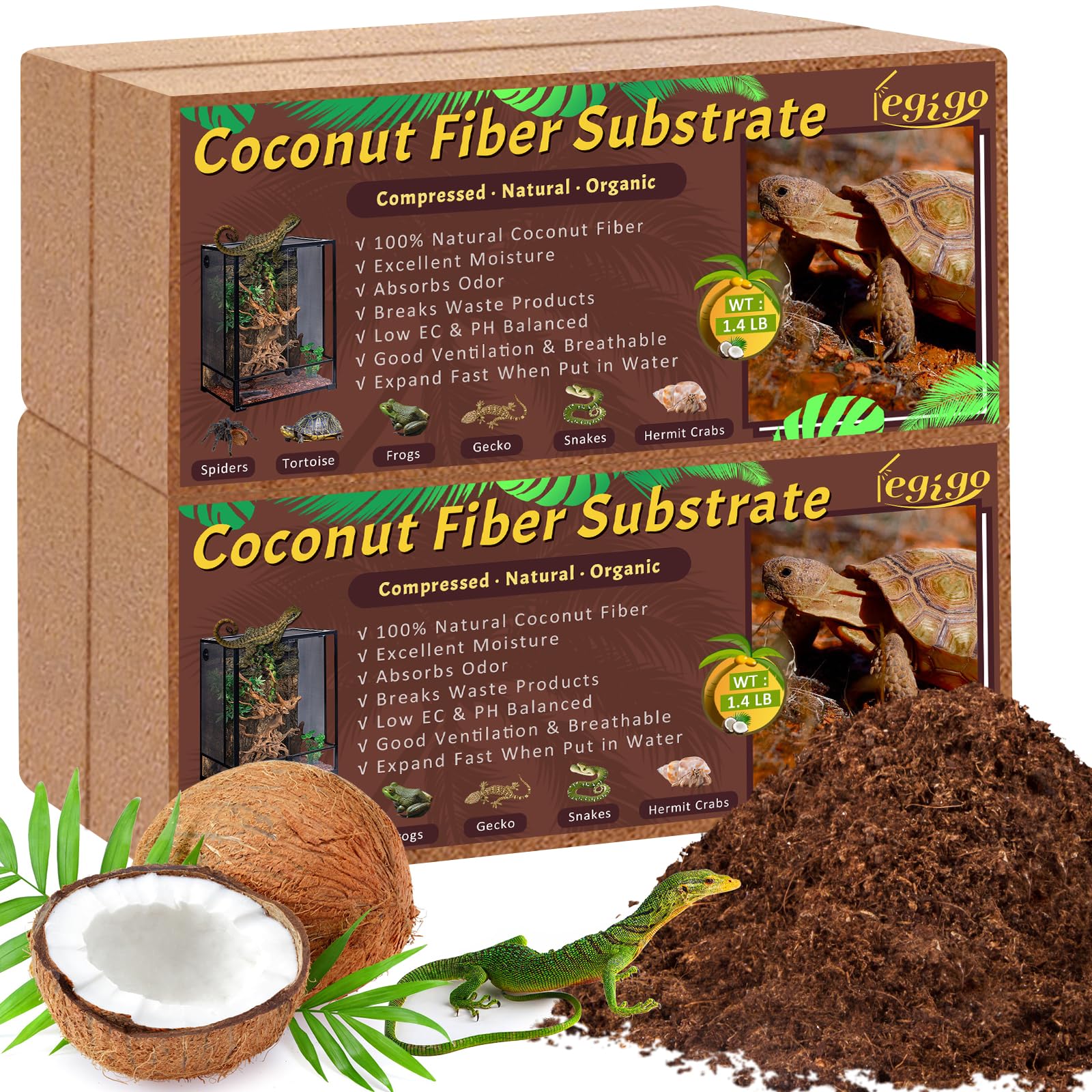
The Legigo 4‑pack offers the highest raw volume per dollar in this selection—five pounds of compressed fiber that expands into roughly 60 quarts of usable bedding. Each brick measures 7.9 x 3.9 x 2 inches and expands with hot water in about 15 minutes. The resulting texture is finer than the Riare chips, more similar to a consistent coconut coir that packs evenly across the tank floor.
Owners using this for tortoise hatchlings and snake setups report that the fiber breaks down into a soft, dust-free material that holds moisture well without becoming waterlogged. The 4‑pack quantity suits keepers running multiple enclosures or a single large 40‑gallon breeder that requires a deeper substrate layer. Some users noted a lack of printed instructions on the packaging, but the process is straightforward: soak, drain, and air-dry briefly before introducing the animal.
The finer particle size means this is better suited as a base layer under slate or tile in a leopard gecko setup, rather than as a standalone loose substrate for heavy diggers. If your gecko tends to mouth substrate while feeding, the smaller fiber particles pose a slightly higher ingestion risk compared to chunky chip products.
Why we love it
- Exceptional volume per dollar—great for multi-tank setups
- Dust-free and soft texture that compresses evenly
- Expands rapidly with hot water, ready in under 20 minutes
Good to know
- Finer fiber may cling to feeder insects more than coarse chips
- No re-sealable packaging or printed instructions included
4. Halatool Coconut Fiber Substrate 2‑Pack
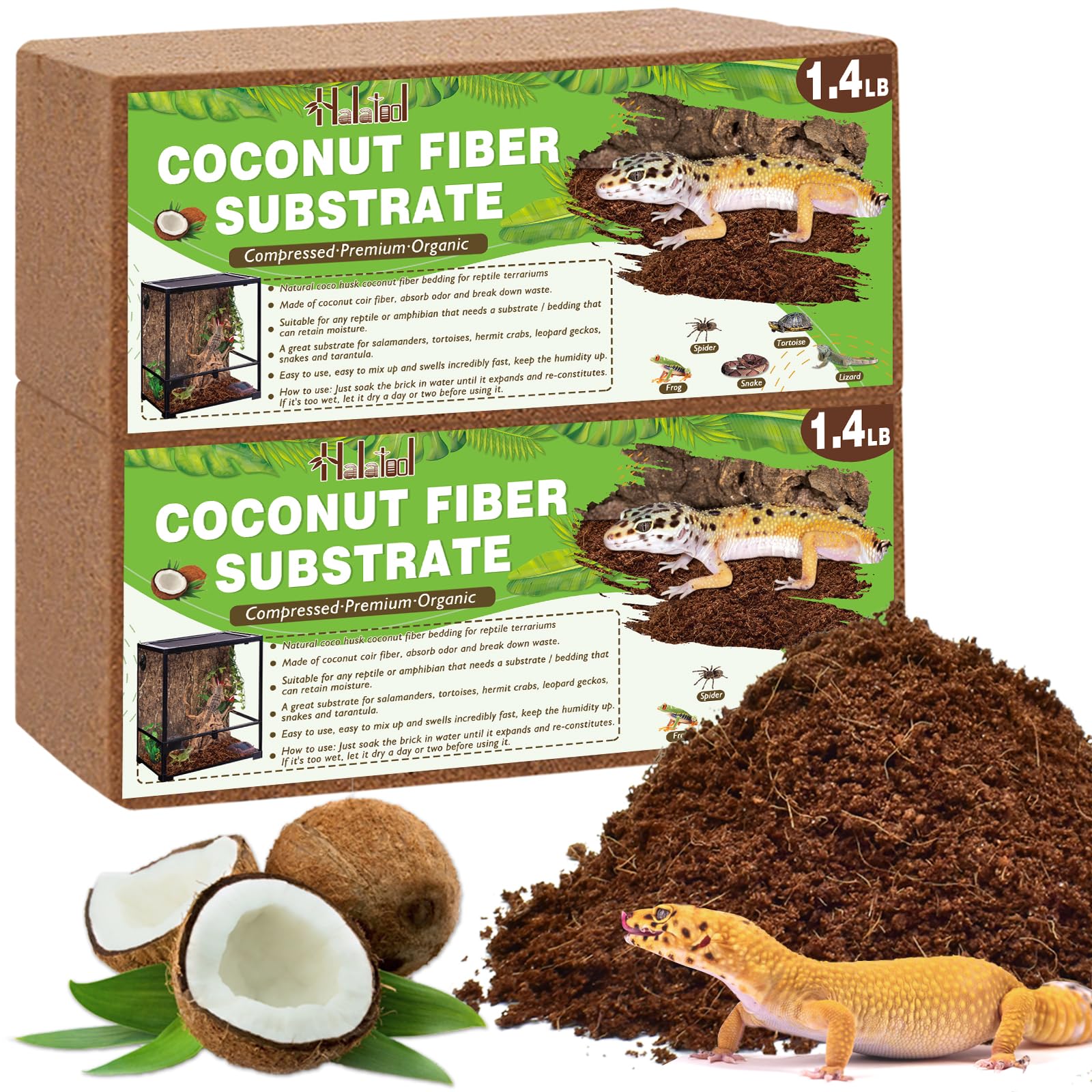
The Halatool 2‑pack targets keepers who need a reliable humidity-boosting substrate for species like crested geckos or hermit crabs, but its digestible fiber composition also makes it a safe option for leopard gecko temporary enclosures or humid hides. Each 1.4‑lb brick expands to roughly three times its compressed volume, filling a 4‑gallon terrarium per brick.
Verified reviews highlight that the bricks are extremely compressed—soaking in hot water for 10–15 minutes is recommended, followed by a 1–2 day drying period to bring moisture down to leopard-gecko-safe levels. The organic coco fiber is certified free of dirt and foreign substances, and the fibrous structure allows for good aeration that reduces belly scale abrasion compared to sand or fine soil.
The main limitation for leopard gecko owners is that this substrate is optimized for 60–80 % humidity, which is too wet for a full arid enclosure. It works best as a moist hide substrate or quarantine bedding where higher humidity is temporarily needed for shedding. For a full dry-side setup, it requires significant drying before use.
Why we love it
- 100 % organic coco fiber with no chemical additives
- Excellent for humid hides and shedding assistance
- Expands significantly—great value for small enclosures
Good to know
- Requires 1–2 days of drying before use in arid setups
- High humidity range not suitable as primary enclosure substrate
5. Zilla Jungle Mix Terrarium Bedding

The Zilla Jungle Mix is a 100 % organic blend of aged Douglas fir bark and sphagnum peat moss designed specifically for tropical and forest habitats. The 24‑quart bag is the largest single-volume option in this list, sufficient to fill a 40‑gallon breeder at a 2‑inch depth. Its open, chunky texture provides excellent aeration while the peat component retains moisture for longer periods between mistings.
This substrate is ideal for leopard gecko keepers who run a mixed microclimate with a humid hide section and a dry basking zone. The fir bark pieces are large enough that they don’t compact into a hard surface, allowing geckos to dig and nest. The earthy scent is mild and natural, and the material breaks down slowly over several months before needing replacement.
The primary drawback is that the sphagnum peat retains more moisture than coconut-based products, so careful monitoring of ambient humidity is necessary to prevent respiratory issues. This substrate is best suited for keepers experienced with managing humidity gradients in a single enclosure. It also weighs nearly 15 pounds when fully moistened, so tank lids must be secure.
Why we love it
- Large 24‑quart volume covers big enclosures in one purchase
- Chunky fir bark holds burrows without collapsing
- Organic composition with no fillers or synthetic additives
Good to know
- Peat component raises humidity—must monitor in arid setups
- Heavy when wet, requiring sturdy enclosure support
FAQ
Can I use pure sand as substrate for a leopard gecko?
How often should I replace coconut fiber substrate in a leopard gecko tank?
Is coconut fiber or coconut chip safer for a juvenile leopard gecko?
Does bioactive substrate require special lighting or plants?
Final Thoughts: The Verdict
For most keepers, the best substrate for leopard geckos overall is the Riare 2‑Pack Coconut Chip Substrate because its chunky 5–15 mm particles virtually eliminate impaction risk while holding stable burrows. If your goal is a self-sustaining desert vivarium with live plants, grab the Bio Dude Terra Sahara for its burrow-holding clay and low-humidity formulation. And for budget-conscious keepers managing multiple enclosures, the Legigo 4‑Pack Fiber Substrate delivers the most volume per dollar without sacrificing dust-free quality.