
A dog that sheds is a dog that leaves a trail of fur across your couch, your clothes, and into your morning coffee. The right undercoat rake turns that constant battle into a quick weekly maintenance task that your dog actually enjoys. The difference between a tool that pulls painfully and one that glides through the coat comes down to blade design, tooth length, and handle ergonomics.
I’m Mo Mahin — the founder and writer behind Furric. I spend my time comparing grooming tool specifications, studying blade geometry for different coat types, and analyzing aggregated owner feedback to separate what actually works from what just looks good on a shelf.
After sifting through countless grooming routines and real-world usage patterns, I’ve narrowed down the most effective options to help you find a deshedding tool for dogs that matches your specific breed and shedding intensity.
How To Choose The Best Deshedding Tool For Dogs
Not every deshedding tool works on every coat. Thick double coats like those on Golden Retrievers need deeper penetration than the fine, silky hair of a Yorkie. Understanding a few key specs will prevent you from buying a tool that either scrapes the surface or snags painfully.
Blade Type and Tooth Length
Stainless steel blades with alternating long and short teeth reach different depths of the undercoat in a single pass. Tools with tooth lengths around 0.5 inches handle medium coats well, while 0.75-inch teeth are better for dense undercoats. Razor-sharp edges cut through loose hair without pulling healthy topcoat when the angle is right.
Self-Cleaning vs. Manual Cleaning
A self-cleaning button that ejects trapped hair in one click saves significant time during a grooming session, especially if you are working with a heavy shedder. Tools without this feature require manual picking or a separate comb to clear the bristles between strokes, which can double the total brushing time.
Ergonomics and Grip
A non-slip silicone or rubber handle reduces hand fatigue when grooming a large breed or tackling a full undercoat blowout. The tool weight matters too — anything over 5 ounces becomes noticeable after 15 minutes of continuous use, so a lightweight design around 3 to 4 ounces offers better control.
Quick Comparison
On smaller screens, swipe sideways to see the full table.
| Model | Category | Best For | Key Spec | Amazon |
|---|---|---|---|---|
| BOSHEL Dematting Comb | Undercoat Rake | Long-haired breeds | 9 rounded + 17 razor blades | Amazon |
| iToleeve Dual Flex Slicker Brush | Slicker Brush | Sensitive / curly coats | Dual-head curved & straight bristles | Amazon |
| Wahl 2-in-1 Pet Rake | Double Row Rake | General deshedding + detangling | Rotating stainless-steel pins | Amazon |
| Pet Grooming Self-Cleaning Brush | Self-Cleaning Rake | Quick 5-10 min sessions | 4-inch stainless steel edge | Amazon |
| Slicker Brush for Small Dogs | Slicker Pin Brush | Small breeds and puppies | Gentle fine pins | Amazon |
In‑Depth Reviews
1. BOSHEL Dematting Comb for Dogs
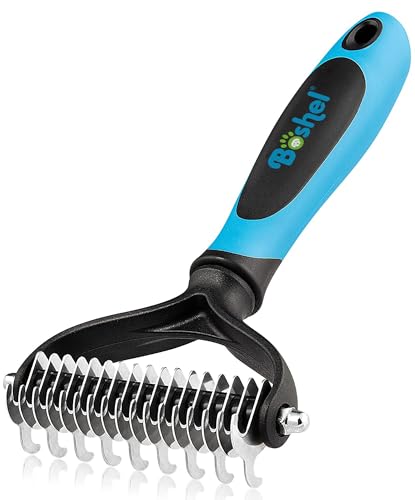
The BOSHEL comb stands out for its dual-headed approach to serious undercoat work. One side uses 9 rounded stainless steel blades designed specifically for dematting, while the other side carries 17 razor-sharp blades for the actual deshedding pass. This split lets you tackle matted sections first without dragging a shedding blade across a knot, then switch to the wider blade bank for volume removal.
The anti-slip silicone handle offers good control even with wet or soapy hands, and the 4.59-ounce weight keeps fatigue low during a full session. Owners of Golden Retrievers and other long-haired double-coat breeds report the comb reaches deep enough to pull loose undercoat that other tools miss entirely, especially around the rear and thigh areas where shedding concentrates.
Cleaning requires manually flicking hair off between sides, as there is no self-cleaning mechanism. The blades also demand occasional oiling to prevent rust in humid environments. For households dealing with heavy seasonal shedding from a long-coated dog, this tool delivers professional-grade extraction power at a practical weight.
Why we love it
- Dual head covers dematting and deshedding in one tool
- Rust-resistant stainless steel withstands frequent use
- Non-slip handle keeps control during long sessions
Good to know
- No self-cleaning mechanism; requires manual removal
- Best suited for medium to long coats, not short fine hair
2. iToleeve Dual Flex Slicker Brush
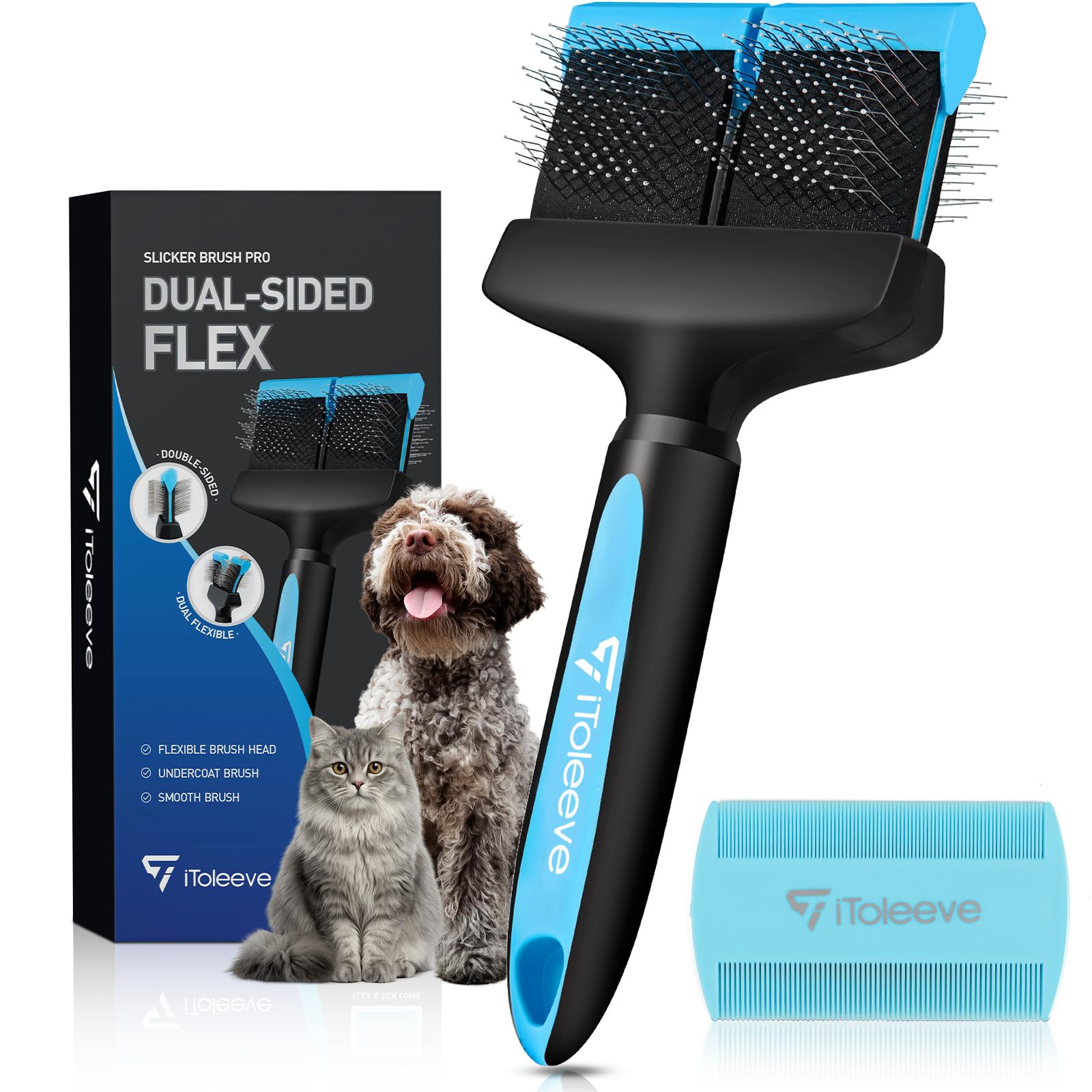
The iToleeve slicker brush solves a specific problem: dogs with allergies, dermatitis, or sensitive skin that react to traditional wire brushes. The dual flex head design has two distinct sides — curved bristles for deshedding and undercoat work, and straight bristles for fluffing and finishing. The fine bent wires penetrate deep into the coat without scratching the skin surface, which makes it a strong option for doodles and poodles with soft, easily irritated skin.
Weighing only 3.7 ounces, this brush is extremely light and the flexible head follows the dog’s body contours naturally around ribs and legs. Groomers in online demos have highlighted its ability to work behind elbows and inner thighs where mats form most frequently. The wide bristle bed covers more surface area per stroke than standard slicker brushes, reducing total grooming time.
The brush collects hair well, but the fine bristles require cleaning with a separate comb between heavy sections. There is no self-cleaning button. The plastic construction feels less sturdy than full-metal alternatives, so rough handling or dropping may shorten its lifespan. For owners of sensitive-skinned dogs who need a gentle daily brush, this tool minimizes irritation while still removing significant undercoat.
Why we love it
- Two-sided design adapts to deshedding and fluffing needs
- Lightweight 3.7-ounce body reduces hand fatigue
- Flex head contours to body for less tugging
Good to know
- Bristles need manual cleaning between strokes
- Plastic frame is less durable than metal alternatives
3. Wahl 2-in-1 Combination Pet Rake
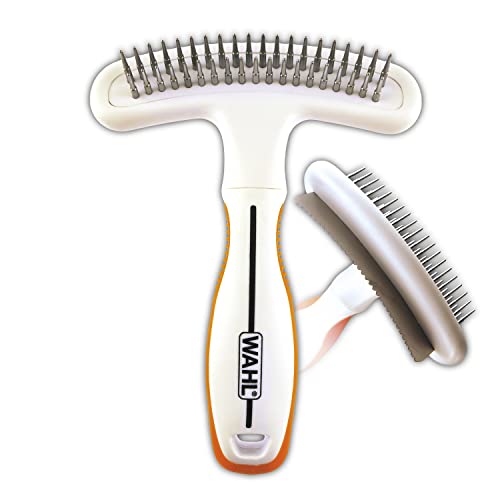
The Wahl 2-in-1 combines a heavy deshedding blade with a detangling rake in a single tool that weighs just 3.21 ounces. The deshedding side features a straight blade edge that cuts through outer coat hair, while the back side uses two rows of rotating stainless steel pins for lighter deshedding and detangling. The rotating pins follow the coat direction naturally, reducing the need for re-angling the tool mid-stroke.
The no-slip rubber grip is wide enough to accommodate larger hands comfortably, and the tool’s narrow profile makes it easy to store in a grooming drawer or bag. The rotating pins work especially well on medium-length coats that have mild tangles but not full mats, offering a gentler alternative to a dematting comb. Wahl’s century-long reputation in grooming tools adds confidence in the build quality and blade sharpness retention.
This rake is less effective on extremely dense double coats or heavy matting, where a dedicated dematting tool would perform better. The deshedding blade can snag if used at too steep an angle, so it requires some practice to get the right stroke direction. For owners who want a single tool that handles both basic deshedding and light detangling without switching devices, this is a space-saving pick.
Why we love it
- Two tools in one saves drawer space and switching time
- Rotating pins adapt to coat direction for less pulling
- Trusted Wahl brand build quality
Good to know
- Deshedding blade requires careful angle control
- Not strong enough for heavy matting or dense double coats
4. Pet Grooming Self-Cleaning Undercoat Deshedding Tool
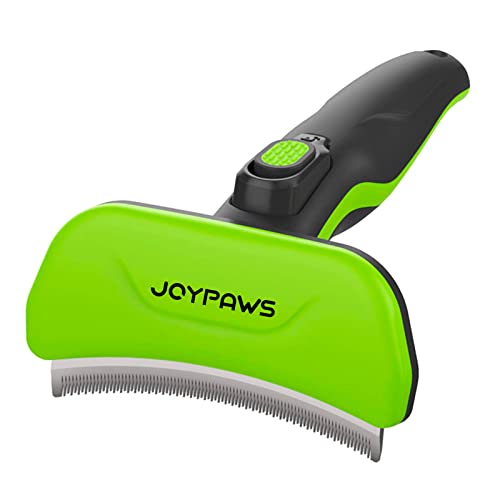
This self-cleaning brush from Joypaws is designed for efficiency on short to medium coats. The 4-inch stainless steel edge combines long and short teeth to grab undercoat at different depths, and the built-in self-cleaning button pushes trapped hair off the teeth in one motion. Owners report that a full body grooming session on a medium-sized dog takes only 5 to 10 minutes, which is significantly faster than tools requiring manual cleaning between sections.
The lightweight 8.15-ounce feel combined with an ergonomic handle makes this comfortable for quick maintenance sessions, and the lifetime warranty adds a safety net for budget-conscious buyers. Customer feedback highlights how well it works on cats and short-haired dogs, with some cats that previously resisted brushing sitting still for this tool due to the gentle sensation of the alternating teeth.
The blade is not designed for heavy matting or long-haired breeds with dense undercoats — the teeth can catch on thick tangles and cause discomfort. The self-cleaning mechanism works well for loose hair but may jam if large clumps are pressed into it. For owners with short-haired shedders like Beagles or Labradors who want a fast, low-fuss weekly tool, this delivers excellent value.
Why we love it
- Self-cleaning button saves significant grooming time
- Lightweight and easy to handle for quick sessions
- Lifetime warranty provides long-term peace of mind
Good to know
- Not suitable for heavy matting or dense long coats
- Self-cleaning button can jam with large hair clumps
5. Slicker Brush for Small Dogs and Puppies

This pink slicker brush is purpose-built for small breeds and puppies with fine coats that tear easily under harsh bristles. The fine pin design gently removes loose hair and light tangles without scratching delicate puppy skin, making it suitable for Yorkies, Poodles, and small mixed-breed dogs. The brush head is compact enough to reach around ears and under legs without overloading the coat.
The lightweight plastic handle keeps the overall weight low, and the bristles are arranged in a dense pattern that catches fine hairs that wider-spaced tools miss. For maintenance grooming between deshedding sessions with a rake or comb, this brush works as the finishing step to smooth the topcoat and distribute natural oils.
The fine pins bend under heavy pressure, so this is not a tool for mat removal or thick undercoat extraction. Larger breeds or heavy shedders will find the brush head too small for efficient full-body coverage. Cleaning requires picking hair from the dense bristle bed with a comb or fingers. For owners of toy breeds who need a daily gentle brush that does not frighten a nervous puppy, this fills that role effectively.
Why we love it
- Fine pins protect sensitive puppy and small breed skin
- Compact head reaches tight grooming areas like ears
- Lightweight design reduces puppy anxiety during grooming
Good to know
- Not intended for heavy deshedding or mat removal
- Requires manual cleaning of the dense bristle bed
FAQ
How often should I use a deshedding tool on my dog?
Can a deshedding tool damage my dog’s topcoat?
What blade type works best for short-haired dogs versus long-haired?
Is a self-cleaning deshedding tool worth the extra cost?
Final Thoughts: The Verdict
For most dog owners, the deshedding tool for dogs that balances versatility and power is the BOSHEL Dematting Comb because its dual-headed system handles both mat removal and undercoat extraction without multiple tools. If your dog has sensitive skin that reacts to standard blades, grab the iToleeve Dual Flex Slicker Brush. And for quick weekly maintenance on short-haired dogs, nothing beats the self-cleaning convenience of the Pet Grooming Self-Cleaning Brush.