
The wrong substrate turns a betta’s planted tank into a maintenance nightmare—trapped debris, stunted root growth, and a pH that drifts away from the 6.5–7.0 sweet spot your fish and plants actually need.
I’m Mo Mahin — the founder and writer behind Furric. I’ve spent years comparing particle sizes, porosity ratings, and nutrient-release profiles from dozens of substrate brands to pinpoint which formulations deliver stable water chemistry and robust root anchorage for betta-planted systems.
Below, I’ve filtered the options down to five proven substrates that balance root aeration, buffering capacity, and visual appeal, giving you a clear path to selecting the right substrate for betta fish and plants.
How To Choose The Best Substrate For Betta Fish And Plants
Selecting a substrate isn’t about picking the prettiest color—it’s about matching grain size, chemical composition, and nutrient profile to your betta’s environment and the plant species you want to grow. Here are the three specifications that separate an effective substrate from an expensive mistake.
Grain Size and Porosity
Grains between 2 and 5 mm allow water to flow through the bed, preventing compaction and the formation of toxic hydrogen sulfide pockets. Porous grains—like fired clay or natural pumice—provide surface area for nitrifying bacteria, which convert ammonia into safer nitrates. Avoid sharp-edged gravel that can damage a betta’s delicate fins during foraging.
pH Buffering Capacity
Bettas thrive in neutral to slightly acidic water (pH 6.5–7.0). Some aqua soils actively lower pH through organic acids, which benefits plants but requires monitoring to avoid sudden swings. Inert gravels maintain whatever pH your source water has, so you must manage buffering through filtration or additives.
Nutrient Availability
Root-feeding plants like Amazon swords and crypts need a substrate that either contains embedded nutrients (aquasoil) or allows root tabs to be inserted easily. Inert gravel is nutrient-free and works only with supplementary fertilizers, while nutrient-rich substrates feed plants for months without additional dosing.
Quick Comparison
On smaller screens, swipe sideways to see the full table.
| Model | Category | Best For | Key Spec | Amazon |
|---|---|---|---|---|
| Fluval Plant & Shrimp Stratum | Aquasoil | Planted tanks needing pH buffering | Porous granules, buffers pH to 6.5 | Amazon |
| LANDEN Aqua Soil | Aquasoil | Shrimp & plant root systems | 3–5 mm grains, 5 L bag | Amazon |
| Seachem Flourite Black | Clay Gravel | Long-term planted tanks | Porous fired clay, 7.7 lb | Amazon |
| Aqua Natural Gold Pearl | Natural Pebble | Natural riverbed aesthetic | 2–4 mm, triple-washed | Amazon |
| Imagitarium Blue Jean Gravel | Colored Gravel | Budget-friendly decoration | 20 lb, non-toxic coating | Amazon |
In‑Depth Reviews
1. Fluval 12695 Plant and Shrimp Stratum

The Fluval Stratum is a lightweight, porous aquasoil that actively buffers pH to the neutral-to-slightly-acidic range bettas and most aquatic plants prefer. Its granular structure allows roots to penetrate easily while promoting rapid colonization by beneficial nitrifying bacteria. This combination reduces ammonia spikes during the initial cycle and keeps water parameters stable long-term.
Each 17.6-pound bag covers a 20-gallon tank at a 2-inch depth, making it cost-effective for medium planted aquariums. The substrate does not require rinsing before use—adding water gently over a bowl prevents cloudiness. The dark brown color provides a natural contrast for bright green plants and betta fins.
One trade-off is that Stratum is lightweight, so large water changes or strong filter outflow can disturb the top layer. It also depletes its nutrient content after roughly six to nine months, requiring root tabs afterward. For a substrate that blends biological filtration, root support, and pH management in one bag, this is the most complete choice.
Why we love it
- Built-in pH buffering to 6.5 benefits betta health
- Porous structure accelerates beneficial bacteria growth
- No rinsing needed before installation
Good to know
- Lightweight grains may shift during heavy water flow
- Nutrient reserves last 6–9 months, then require supplementation
2. LANDEN Aqua Soil Substrate 5L

LANDEN’s aqua soil is formulated from specially processed natural material that releases organic acids and trace elements, creating the mildly acidic water conditions plants and soft-water shrimp species favor. The 3–5 mm grain size balances root anchoring with water flow, preventing compaction while giving plant roots room to spread.
This substrate is ready to use straight from the bag—no rinsing required. During the first two weeks, partial water changes help stabilize the initial ammonia release as the soil establishes its biological filter. After that period, water conditions typically settle, and the substrate continues providing nutrients for several months.
The 5-liter bag (roughly 10 pounds) suits nano to medium tanks up to 15 gallons. The black color works well with both bright and dark aquascaping themes. Because it softens water and lowers pH, it’s essential to monitor parameters when housing sensitive fish or inverts; bettas adapt well to this range but should be introduced after the tank has fully cycled.
Why we love it
- Natural soil composition feeds plants for months
- Uniform 3–5 mm grains prevent compaction
- No rinsing needed before use
Good to know
- Initial ammonia release requires frequent water changes in week one
- Smaller bag size limits coverage in large tanks
3. Seachem Flourite Black Clay Gravel, 7.7 lb

Seachem Flourite is a porous fired clay gravel that does not alter water chemistry, making it a stable choice for betta keepers who prefer to control pH through other means. The clay matrix holds iron and other micronutrients that plant roots can access directly, supporting steady growth without releasing ammonia during the initial setup.
The 7.7-pound bag provides enough depth for a 10-gallon planted tank. Each granule is naturally colored—no artificial coatings that might chip or fade over time. Because the material is dense, it stays in place during water changes and filter flow, and it resists shifting as fish dig through the top layer.
Flourite requires thorough rinsing before installation, as manufacturing dust can cloud the water if added directly. It is also heavier than aquasoils, which can make deep substrate layers more labor-intensive to arrange. For aquarists who want a long-lasting, chemically inert substrate that supports plants via embedded nutrients, this is a durable workhorse.
Why we love it
- Porous clay stores nutrients without leaching ammonia
- Natural color won’t chip or fade over time
- Stays put during water changes and current
Good to know
- Requires thorough rinsing to avoid initial cloudiness
- Heavier than aquasoil, harder to rearrange deeply
4. Aqua Natural Gold Pearl 20 lb Gravel

Aqua Natural Gold Pearl is a 100% natural river pebble sourced from New Zealand, graded to a consistent 2–4 mm size that is smooth enough for betta fins but large enough to prevent sifting into filter intakes. The triple-washed and kiln-dried processing means minimal dust, though a quick rinse before use is still recommended for best clarity.
The gold-toned pebbles catch light and add a textured three-dimensional look, ideal for aquascapers who want a natural riverbed aesthetic. Because this is an inert substrate, it does not buffer pH or release nutrients, which gives you full control over water chemistry and fertilizer dosing through supplements and root tabs.
The 20-pound bag covers a 20-gallon tank at a standard 2-inch depth. While the stones are smooth, some users note that a small amount of silt remains even after washing; an extra rinse cycle removes most of it. For betta tanks with heavy root-feeding plants, pair this gravel with root tabs to ensure adequate nutrition.
Why we love it
- Naturally smooth pebbles safe for betta fins
- Consistent 2–4 mm grading for even coverage
- Ethically sourced and kiln-dried for low dust
Good to know
- Inert—requires root tabs for heavy root feeders
- Some silt remains after initial rinsing
5. imagitarium Blue Jean Gravel 20 lbs
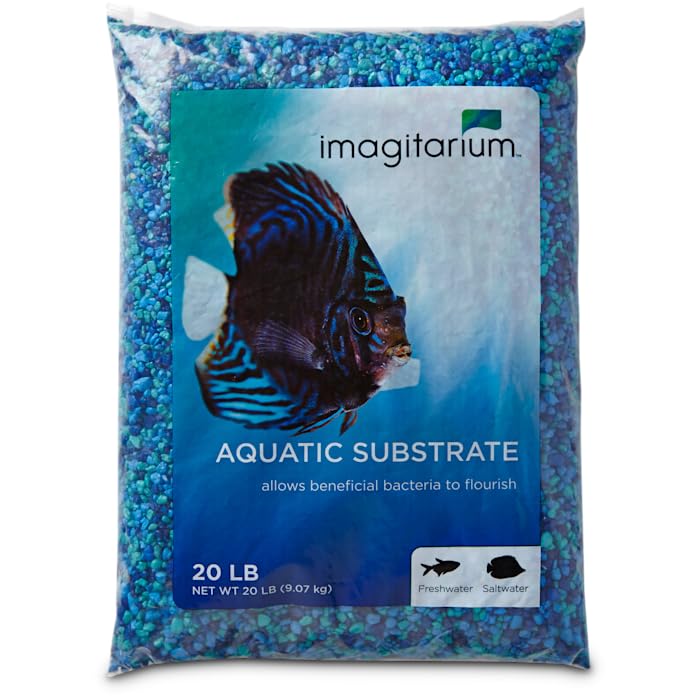
The imagitarium Blue Jean gravel offers an affordable entry point for betta keepers who want a colorful, themed substrate without a large investment. It is made from non-toxic, fish-safe materials with a blue coating that holds its vibrancy over time—reviews note color lasting for years without noticeable fading.
At 20 pounds per bag, this gravel provides enough material to cover a 20-gallon tank at the recommended 2 pounds per gallon rule. The rounded pebbles are gentle on betta fins, and the coating resists chipping during rinsing and handling. Some users do report minor paint flakes in the final rinse water, but a thorough wash removes the excess before it reaches the tank.
Because this is an inert colored gravel, it offers no nutrient value for plants and no pH buffering. Bettas with live plants will require root tabs injected into the gravel bed and liquid fertilizers. For a strictly decorative setup or a low-tech tank with only a few easy plants, this budget pick delivers reliable color and safe chemistry.
Why we love it
- Large 20-pound bag at a low entry cost
- Non-toxic coating lasts for years without fading
- Rounded pebbles safe for betta fins
Good to know
- Inert—no nutrients for plants without supplements
- Some paint flakes may appear during first rinse
FAQ
Can I use regular potting soil as a substrate for betta fish?
How often should I replace the substrate in a betta tank?
Does black substrate make betta colors pop better?
Final Thoughts: The Verdict
For most gardeners, the substrate for betta fish and plants winner is the Fluval Plant and Shrimp Stratum because it combines pH buffering, porous biological filtration, and plant nutrients in one easy-to-use bag. If you want a long-lasting inert gravel that won’t alter water chemistry, grab the Seachem Flourite Black. And for a budget-friendly decorative option that keeps betta safety as a priority, nothing beats the imagitarium Blue Jean Gravel.