
A horse that’s off because of a poorly fitted boot is a horse that’s not performing, not recovering, and not comfortable. Whether you’re protecting an injured fetlock, supporting an aging joint, or preventing a young horse from interfering, the right pair of horse hoof boots is the single most important piece of tack between your horse and the ground. The wrong choice leads to rubs, instability, and wasted money on gear that doesn’t stay put.
I’m Mo Mahin — the founder and writer behind Furric. I’ve spent years comparing hundreds of product specs, studying the biomechanics of equine limb protection, and analyzing aggregated owner feedback to separate the boots that truly protect from those that just look good on a shelf.
Whether you need rugged turnout protection, sport-specific support, or a budget-friendly pair for daily training, this guide breaks down the best horse hoof boots by fit, material, and intended use.
How To Choose The Best Horse Hoof Boots
A hoof boot that slips, rubs, or lacks impact protection is worse than no boot at all. You need a fit that’s snug enough to stay put during a gallop but breathable enough to prevent heat buildup. Here are the three specs that define a solid pair.
Closure System: Hook-and-Loop vs Zip vs Pull-On
Hook-and-loop (Velcro) allows micro-adjustments for varying leg shapes but can weaken over time, especially if you wash them with closures open. Zippers offer a consistent, strong hold and are faster to remove, but they can jam or collect dirt. Pull-on designs are rare on sport boots — they sacrifice adjustability for simplicity, making them a poor fit for high-impact work where precision matters.
Material Density and Breathability
Neoprene is the standard because it strikes a balance between shock absorption and flexibility. The key is thickness: 6mm neoprene provides excellent impact protection and stability for heavy work, while 3–4mm perforated neoprene is better for hot weather or horses with sensitive skin. Rubber soles on hoof boots must be non-marking and have a deep tread pattern to prevent slipping on wet concrete or turf.
Measuring for Fit: Height, Circumference, and Hoof Size
The boot must wrap the fetlock joint and extend high enough to protect the splint bones without restricting the movement of the knee or hock. Measure the circumference at the widest part of the cannon bone, just below the knee, and compare to the manufacturer’s size chart. Boot height matters too — a boot that’s too tall, such as 12+ inches, will hit the carpal joint and cause gait interference. For hoof boots that cover the entire hoof, measure the length and width of the hoof wall at its widest point.
Quick Comparison
On smaller screens, swipe sideways to see the full table.
| Model | Category | Best For | Key Spec | Amazon |
|---|---|---|---|---|
| Professional’s Choice SMBII | Sling Boot | High-impact events & recovery | 11.75″ height / 13″ circumference | Amazon |
| Classic Equine ClassicFit Sling | Sling Boot | Joint support for older horses | Suspensory sling angle alignment | Amazon |
| LeMieux Turnout Boots | Turnout Boot | Pasture & paddock protection | Polycarbonate strike guard | Amazon |
| Weaver Leather Prodigy Original | Athletic Boot | Daily schooling & jumping | EVA foam with neoprene liner | Amazon |
| Harrison Howard Splint Boots | Splint Boot | Speed training & endurance | Shock-absorbent neoprene 4-pack | Amazon |
| Tough1 Combo Boots | Combo Boot | Fetlock interference prevention | Perforated neoprene bell design | Amazon |
| Cavallo Trek Regular Sole | Hoof Boot | Trail riding & barefoot transition | Built-in drainage, replaceable Velcro | Amazon |
In‑Depth Reviews
1. Professional’s Choice SMBII Sports Medicine Boot
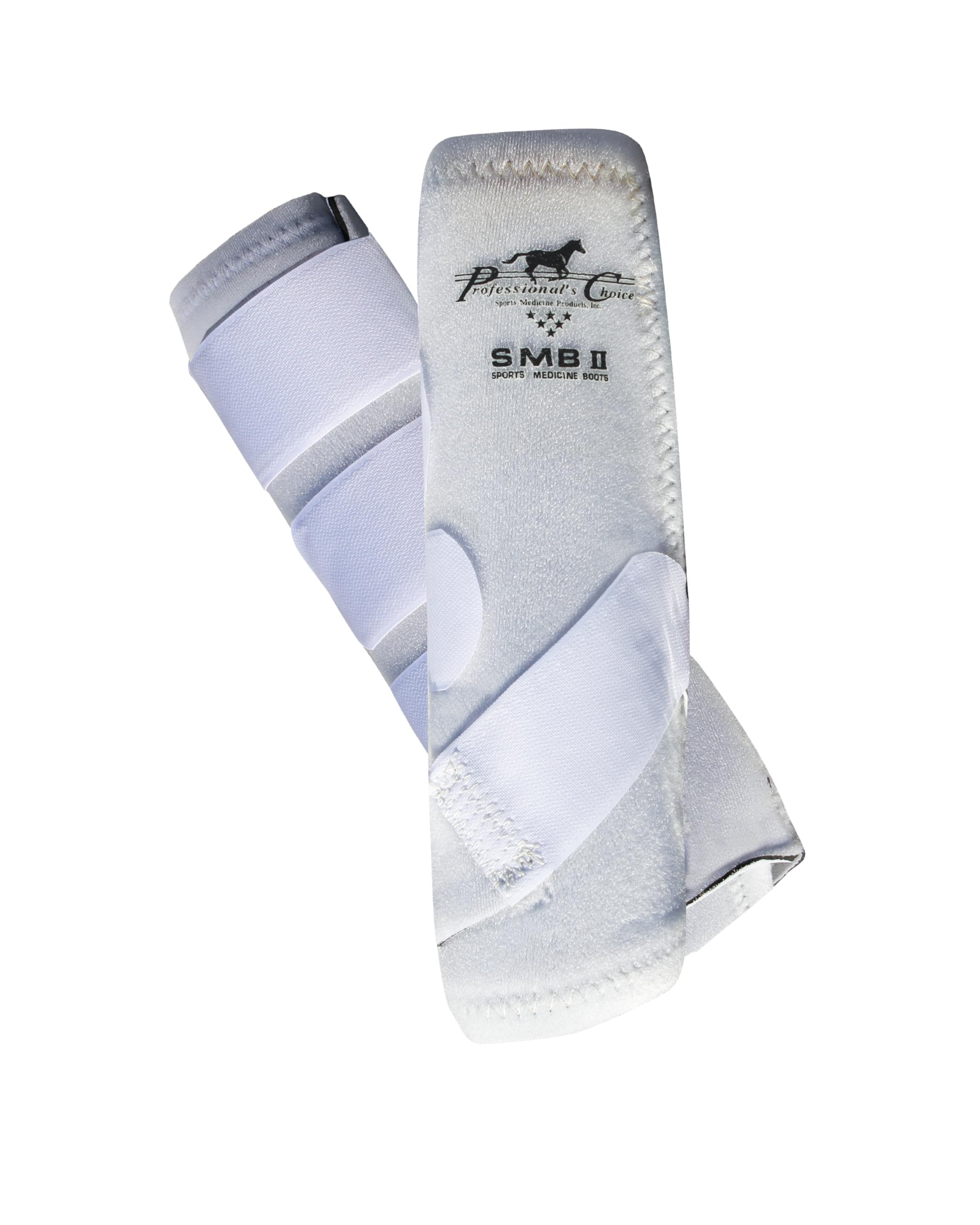
The SMBII is a benchmark in equine leg protection, trusted across polo, reining, barrel racing, and jumping circuits. Its 11.75-inch height and 13-inch circumference provide broad coverage over the cannon bone and fetlock, while the zip closure ensures consistent tension every time you fasten it. The neoprene body is reinforced with leather and wool outer layers, offering a balance of shock absorption and durability that outlasts cheaper all-neoprene builds.
This boot uses a sling design that supports the suspensory ligaments, making it a favorite for horses in high-impact sports where periodic injury risk is high. The 30-day guarantee and six-month warranty reduce the risk for buyers investing in a premium pair. Owners consistently report that these boots stay in place during quick stops and tight turns where lesser boots shift or rotate.
The outer leather adds some heft — this is not a lightweight schooling boot. It’s also priced higher than most, but for serious competition or post-injury recovery support, the build quality justifies the investment. The wool-content lining needs careful cleaning; machine washing is not recommended.
Why we love it
- Industry-standard sling support for ligaments.
- Leather and wool construction adds serious durability.
- Zip closure is fast and provides even pressure.
Good to know
- Heavier than neoprene-only athletic boots.
- Not machine washable — requires spot cleaning.
- Size range may not fit very heavy or draft breeds.
2. Classic Equine ClassicFit Sling Boots, Front
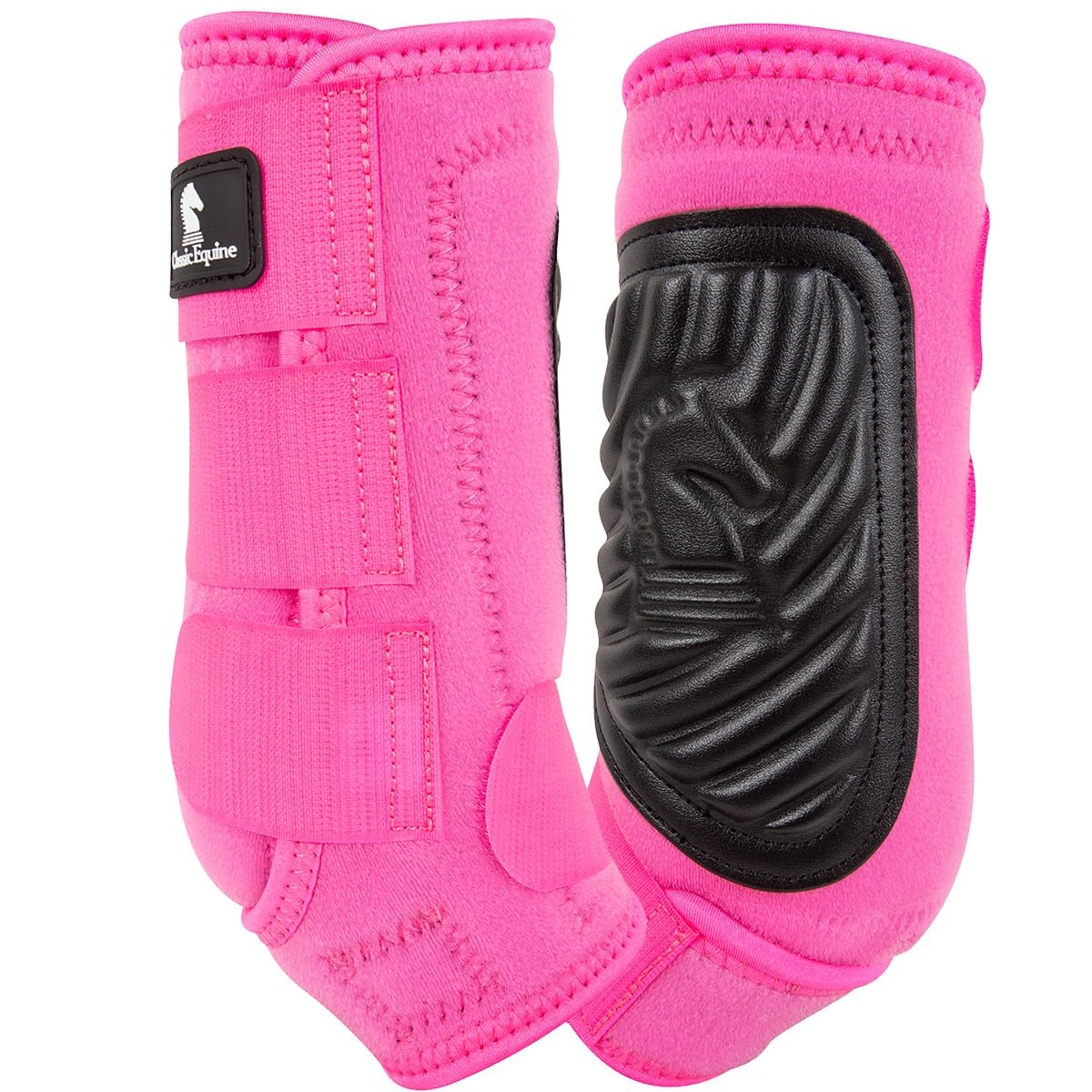
The ClassicFit Sling Boots are engineered with a uniquely positioned suspensory sling that supports the lower limb at the correct anatomical angle. This sits in contrast to generic boots that simply wrap the leg without targeted ligament support. The ergonomic cotton-shell exterior is bound at the edges to block dirt and debris from creeping under the boot, a common cause of rubs on long trail rides.
Owners of older horses with joint arthritis report that the medium size fits a 15.2-hand gelding’s front legs very well, providing enough lift to reduce fatigue on short outings. The cotton fabric is lighter than leather or thick rubber, making these boots a sensible choice for horses that don’t need heavy impact protection but do need consistent structural support under the fetlock.
The pull-on closure system is simple, but it doesn’t offer the micro-adjustability of multiple Velcro straps. If your horse has unusually tapered legs, you may find the fit either too loose above the fetlock or too tight below. They are machine washable, which is a practical bonus for frequent use on muddy trails.
Why we love it
- Sling alignment targets ligament support, not just impact.
- Machine washable for easy maintenance.
- Bound edges prevent debris buildup.
Good to know
- Pull-on design limits fit adjustability.
- Cotton outer is less durable than neoprene or leather.
- Not heavy enough for high-impact speed work.
3. LeMieux Turnout Horse Boots

LeMieux’s Turnout Boots are built for the hardest daily test a boot faces: a horse running loose in a pasture. The ventilated neoprene body is both lightweight and breathable, reducing the risk of overheating during extended wear. The distinguishing feature is the polycarbonate strike guard positioned over the back of the joint, which protects the fetlock from kicks and collisions more effectively than soft neoprene alone could.
The elasticated, angled strap positions allow the boot to flex naturally with the horse’s movement, which is critical for turnout use where the boot stays on for hours. These boots are sold in pairs and fit both front and hind legs, depending on the strap configuration. The skid cap at the base helps keep the boot correctly oriented even when the horse rolls or kicks out.
Cleaning is straightforward — hose them off or machine-wash on a low setting with Velcro fastened and clips attached. Air drying is essential; heat sources can warp the neoprene. Some owners note that the large size runs slightly generous, so measuring the leg circumference above the fetlock is crucial before ordering.
Why we love it
- Polycarbonate guard adds genuine kick protection.
- Breathable neoprene prevents heat buildup during long turnout.
- Elasticated straps allow natural movement.
Good to know
- Large size may run slightly big on some leg types.
- Not designed for high-speed competition support.
- Price is mid-to-premium for a turnout-specific boot.
4. Weaver Leather Prodigy Original Athletic Boots

The Prodigy Original Athletic Boots from Weaver Leather leverage a Dynamic Sling System that wraps the leg with an EVA foam core inside a neoprene liner. The EVA foam is what sets these apart — it offers superior shock absorption without the bulk of heavier boots, making them a strong candidate for disciplines like jumping and eventing where weight on the legs can affect a horse’s arc and stride.
The zipper closure combined with stretchy binding creates a snug fit that stays clean at the edges, reducing the amount of dirt that gets trapped under the boot. At 13.6 ounces per boot, they are noticeably lighter than the Professional’s Choice SMBII, which matters for horses that show signs of fatigue over a long course or training session.
One notable trade-off is the EVA foam’s lifespan. Over many wash cycles or constant exposure to mud and moisture, the foam can compress faster than solid neoprene. Dry cleaning is recommended, which adds a step to maintenance. They are sold as a 2-pack, so you’ll need two packs for all four legs.
Why we love it
- EVA foam absorbs impact better than standard neoprene.
- Lightweight design reduces leg fatigue.
- Darted binding keeps dirt out effectively.
Good to know
- EVA foam may compress faster with heavy use.
- Dry clean only — not easy for daily washing.
- 2-pack means double purchase for full set.
5. Harrison Howard Splint Boots 4-Pack

The Harrison Howard Splint Boots deliver a four-boot set at a price point that undercuts most competition packs by a significant margin. The neoprene construction is thick and plush, with moisture-wicking properties that draw sweat away during intense activities like speed events and endurance training. The cradle fetlock design wraps the lower leg in four directions, providing all-around support to tendons and ligaments across varied terrain.
The four hook-and-loop closures are robust — owner reviews mention that the Velcro is stronger than expected at this price level. The boots are easy to apply: you position the fetlock cup, bring the top three straps around toward the tail, and fasten the bottom strap across the fetlock for targeted support. This design works well for young horses with slim legs or for horses that are clumsy and prone to interfering.
One consistent note from buyers is that the bright scarlet color shown in marketing photos appears less vibrant in person — closer to a peach tone than the deep red displayed. The neoprene is durable but generates heat during prolonged wear, so these are best reserved for work sessions under two hours rather than all-day turnout.
Why we love it
- 4-pack at a budget-friendly price.
- Strong hook-and-loop closures hold securely.
- Moisture-wicking neoprene reduces heat retention.
Good to know
- Color may not match product photos.
- Best for moderate-duration sessions, not turnout.
- Not ideal for very hot climates during hard work.
6. Tough1 Combo Boots
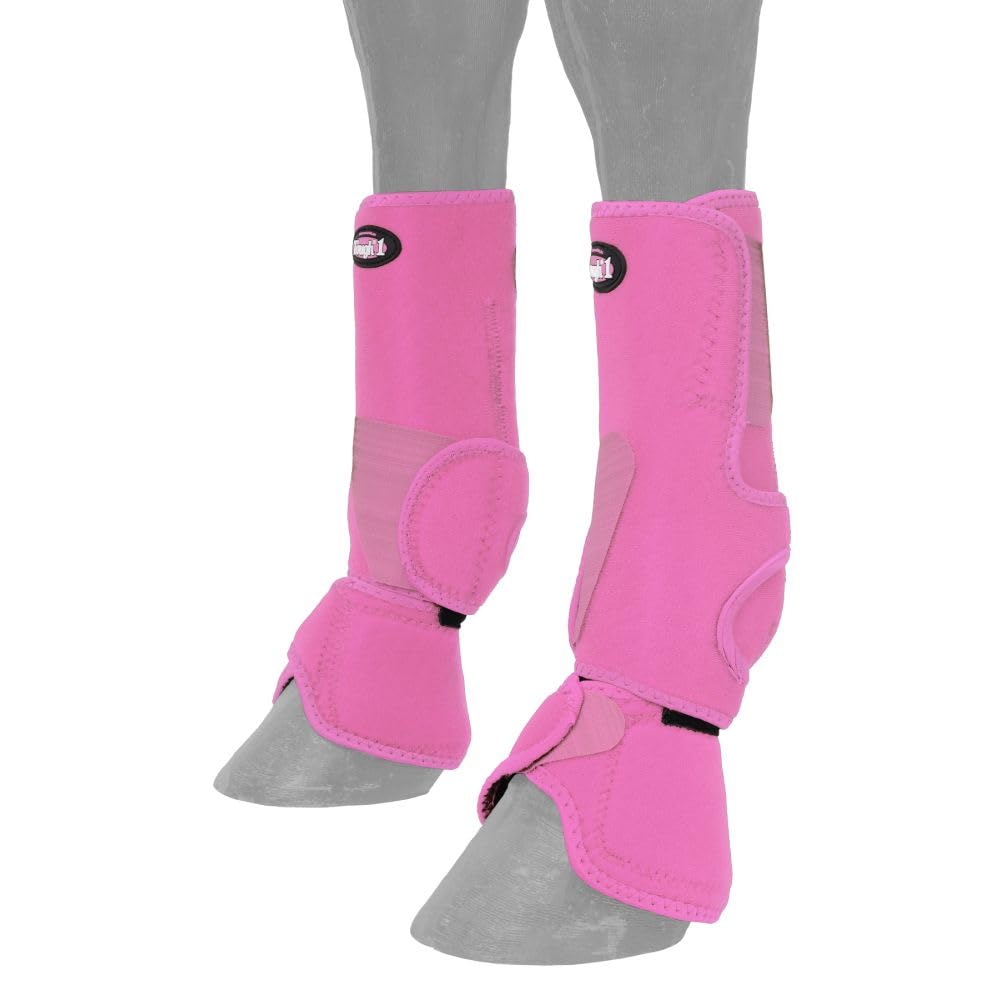
The Tough1 Combo Boots solve a common problem: keeping a bell boot attached while maintaining splint boot coverage. By integrating the bell into the boot body, these prevent the bell from rotating or slipping down, which happens frequently with separate bell boot setups. The perforated neoprene allows heat to escape, making them suitable for horses that tend to overheat in bulky rubber bells.
The two quick-grip closures are strong and audible — you’ll hear when they’re fully fastened. One owner notes using these on hind legs to stop a mare from banging her inside hoof wall, which gave the horse enough confidence to run freely again. The design is less bulky than separate boots and bells combined, which helps maintain a cleaner leg profile for horses that brush often.
Hand wash only is the stated care instruction, and the neoprene dries relatively quickly. The fit is snug, so ordering up a size is wise if your horse falls between measurements. The combo boot sacrifices some of the wrap-around adjustability that separate splint boots offer, especially for horses with very thin or very thick cannon bones.
Why we love it
- Integrated bell stays put — no rotation or slipping.
- Perforated neoprene reduces heat buildup.
- Easy to put on with only two straps.
Good to know
- Less adjustable than separate boot-and-bell setups.
- Hand wash only; not machine safe.
- May run small — size up if between sizes.
7. Cavallo Trek Regular Sole Hoof Boot

The Cavallo Trek is not a splint or fetlock boot — it’s a full hoof boot designed to replace or supplement a metal shoe, making it the odd entry in this lineup but a critical one for barefoot horses or those needing extra traction on trails. The rubber sole absorbs shock and concussion effectively, and the built-in drainage holes prevent mud and water from pooling inside during wet rides.
The replaceable RES Velcro closure system is a smart touch; instead of throwing the whole boot away when the straps wear out, you can swap just the closure component. This extends the boot’s lifespan considerably, especially for riders who log high trail mileage. The boot fits left or right hoof individually, so you can buy just one replacement if a single boot is damaged.
The main limitation is that the Trek offers no protection above the coronary band. For horses that interfere or need fetlock support, you would need to layer these with separate splint boots. The fit requires precise hoof measurements — length and width at the widest point — and the sizing can be finicky for horses with unusually narrow or wide hooves.
Why we love it
- Full hoof protection with shock-absorbing rubber sole.
- Replaceable Velcro extends product life.
- Built-in drainage prevents mud packing.
Good to know
- No fetlock or cannon bone coverage.
- Requires precise hoof measurement for fit.
- Sold individually — price adds up for two hooves.
FAQ
How tight should my horse’s hoof boots feel when fastened?
Can I use turnout boots for ridden exercise and competition?
What is the difference between a splint boot and a sling boot?
How do I measure my horse for the correct boot size?
Final Thoughts: The Verdict
For most horses that need a reliable combination of ligament support and competition-grade protection, the horse hoof boots winner is the Professional’s Choice SMBII because its leather- and wool-reinforced construction and proven sling design hold up across the widest range of intense disciplines. If you need a boot that’s lighter and still EVA-cushioned for jumping and schooling, grab the Weaver Leather Prodigy Original. And for a full-coverage turn-out boot that stands up to pasture kicks and mud better than any other, nothing beats the LeMieux Turnout Boot.