
Setting up a ball python enclosure means recreating a subtle slice of West African savanna, and the most critical element is a heat source that provides consistent belly-warmth without blasting their sensitive eyes with bright white light. A wrong choice can throw off your snake’s feeding response, shed cycle, or day-night rhythm, making the selection of this specific component a non-negotiable priority for responsible keepers.
I’m Mo Mahin — the founder and writer behind Furric. My approach to this list comes from deeply analyzing infrared wavelengths, cross-referencing bulb longevity data against manufacturer claims, and aggregating hundreds of owner experiences from ball python communities to find what actually keeps a 4-foot snake comfortable in a 40-gallon enclosure.
After sorting through the options, I’ve compiled this guide to help you find the best heat lamp for ball python enclosures, focusing on safety, proper heat penetration, and 24-hour functionality that doesn’t disturb your pet’s natural circadian rhythm.
How To Choose The Best Heat Lamp For Ball Python
Selecting a heat source for your ball python requires understanding how these snakes thermoregulate in the wild — they need a warm basking spot around 90-92°F and an ambient cool side around 78-80°F. The wrong lamp either overheats the enclosure or fails to establish that vital gradient, so pay attention to three key aspects before buying.
Bulb Type: Ceramic vs Deep Heat Projector vs Incandescent
Ball pythons evolved to bask under moonlight and dawn/dusk conditions, meaning any visible white light at night can cause chronic stress and reduced feeding response. A ceramic heat emitter produces infrared heat with zero visible glow, making it safe for 24/7 operation alongside your thermostat. Deep heat projectors emit Infrared A and B for deeper tissue penetration, but they cost more upfront. Standard incandescent bulbs produce useful heat but must be turned off at night, which can cause temperature swings that trigger respiratory issues. For most ball python setups, a ceramic emitter at 100W provides the most reliable, stress-free baseline heat.
Wattage and Enclosure Size
A 100-watt ceramic emitter is the standard sweet spot for 20 to 40-gallon enclosures — it raises the ambient temperature 10-20°F above room temperature without overpowering the space. Smaller 40-60W units may struggle to maintain a proper warm side in a larger tank, especially in cooler rooms. Going above 100W in a standard 40-gallon breeder can create dangerously high basking surface temperatures that exceed 120°F, so always pair any heat source with a reliable thermostat to regulate output.
Fixture Construction and Base Compatibility
The fixture holding your bulb must match the base type — E26 is the standard medium screw base used by almost all ceramic emitters and deep heat projectors, while E12 is a smaller candelabra base used by some compact bulbs. Look for fixtures made from aluminum or ceramic with ventilation holes on top to prevent overheating, and an independent on/off switch for convenience. A polished aluminum reflector inside the dome increases light and heat output efficiency by directing infrared waves downward into the basking zone, so prioritize fixtures with high-reflectivity interiors over dull, uncoated metal.
Quick Comparison
On smaller screens, swipe sideways to see the full table.
| Model | Category | Best For | Key Spec | Amazon |
|---|---|---|---|---|
| Fluker’s Deep Thermal Heat Lamp | Deep Heat Projector | 24/7 infrared A & B heat | 100W, E26 base, carbon fiber filament | Amazon |
| LUCKY HERP Shallow Dome Fixture | Fixture Only | Budget fixture with switch | 5.5″ dome, E26 base, 100W max | Amazon |
| DXOPHIEX Deep Dome Fixture | Fixture Only | Safety-focused built-in design | 5.5″ deep dome, ventilated, UL certified | Amazon |
| Zoo Med Repticare Ceramic Emitter | Ceramic Emitter Bulb | High-humidity tropical setups | 100W, E26 base, flat face design | Amazon |
| Fluker’s Ceramic Heat Emitter | Ceramic Emitter Bulb | Entry-level no-light heat | 100W, E12 base, non-light emitting | Amazon |
In‑Depth Reviews
1. Fluker’s Deep Thermal Heat Lamp, 100 Watt

This deep heat projector from Fluker’s uses a carbon fiber filament that emits both Infrared A and B wavelengths, giving your ball python deeper muscle tissue penetration that mimics natural sunlight heat without any visible light. The parabolic reflector focuses infrared waves downward, which means a 100W unit can maintain a proper 90°F basking spot at the bottom of a 40-gallon enclosure while keeping ambient humidity stable — a critical factor for ball python respiratory health. Multiple ball python owners in the review pool specifically confirm this lamp holds the warm side at the right temperature in tanks up to 4 feet tall.
The build quality stands out against standard ceramic emitters: the base uses a standard E26 screw socket, the outer casing runs cooler than many alternatives, and the temperature guide printed on the packaging removes guesswork for first-time keepers. Verified reviews note it lasts 4-6 months of continuous 24/7 use when paired with a thermostat, which puts it ahead of cheaper bulbs that degrade after 2-3 months. The nearly invisible glow is a genuine benefit for nocturnal snakes that need total darkness to feel secure and feed reliably.
One limitation: this is a bulb-only purchase, so you need a separate fixture with a ceramic socket rated for at least 100W. The added depth of heat penetration also means you cannot leave it uncovered directly on a screen top without a cage — the surface gets hot enough to burn a curious snake. However, for keepers who want premium infrared spectrum coverage and don’t mind buying a fixture separately, this is the heater their ball python will thrive under.
Why we love it
- Dual infrared A + B wavelengths for deep muscle warming without visible light
- Parabolic reflector focuses heat into a tight basking zone at the enclosure floor
- Consistent 4-6 month lifespan under 24/7 thermostat control
Good to know
- Bulb only — requires a separate fixture with E26 socket rated for 100W+
- Surface temperature is very hot; a protective cage or elevated fixture is mandatory
2. LUCKY HERP Aluminum 5.5inch Shallow Dome Fixture

If you already own a ceramic heat emitter bulb and just need a reliable, affordable fixture to hold it, this shallow dome from LUCKY HERP delivers the essential function without overcomplicating things. The 5.5-inch aluminum reflector is polished on the interior to direct UVA, UVB, and infrared output downward, and the ceramic E26 socket is rated for bulbs up to 100W — exactly the wattage most ball python enclosures need. The 71-inch power cord with an inline on/off switch gives you flexibility in positioning across different enclosure types, from front-opening PVC to standard glass tanks with screen tops.
Verified reviews consistently call it well made and affordable, with turtle and hognose snake keepers praising its heat output. The aluminum construction dissipates heat quickly through the ventilation holes on top, reducing the risk of the fixture itself overheating. It works well with deep heat projectors, ceramic emitters, and standard basking bulbs, making it a versatile backup or primary fixture for a ball python setup. One reviewer specifically noted it created plenty of heat for their hognose snake when paired with a dimming thermostat.
The trade-off is noticeable fragility in the dome metal — multiple buyers mention it bends fairly easily if you overtighten the clamp or drop it during installation. The shallow dome depth also means it’s less efficient at focusing heat downward compared to a deep dome fixture, so you may need to mount it slightly closer to the basking surface. Despite these minor concessions, this fixture hits a price point that makes stocking a spare or building a multi-tank setup painless.
Why we love it
- Polished aluminum reflector efficiently directs heat and UV output into the tank
- Inline on/off switch simplifies daily adjustments without unplugging
- Ceramic E26 socket handles up to 100W, compatible with most standard bulbs
Good to know
- Dome metal bends relatively easily under clamping pressure or accidental drops
- Shallow dome design is less effective at focusing heat than deep dome models
3. DXOPHIEX 5.5inch Deep Dome Reptile Heat Lamp Fixture

This 5.5-inch deep dome fixture from DXOPHIEX brings a noticeable step up in build quality and safety features compared to budget shallow domes. The 1mm thick aluminum body resists deformation even at sustained high temperatures, and the deep parabolic shape focuses heat into a tighter basking area — essential for creating that precise 90-92°F warm spot your ball python needs to digest properly. The fixture includes a visual heat warning sticker that turns red when the lamp wall reaches high temperature, giving you a clear indicator to keep your hand or your snake away from the surface.
UL certification means the wiring and socket assembly have passed independent safety testing, which matters when a 100W ceramic emitter runs 24/7 on a thermostat inside a wooden or PVC enclosure. The polished interior reflector maximizes both UVA/UVB and infrared output depending on the bulb you install, and the independent switch lets you cut power without pulling the plug. The included hanging hook attaches to lamp stands or screen top frames, and multiple ventilation holes on the dome top prevent heat buildup inside the fixture itself. Owners of bearded dragons, turtles, and snakes have all reported stable long-term performance, with one keeper noting the fixture still looks and works like new after months of continuous use.
The only notable shortcoming is coverage width — because the deep dome directs heat straight down, the basking spot is relatively concentrated. In a 40-gallon breeder tank, the hot zone covers roughly a quarter of the floor area, which may require an additional heat source for the cool side if your room runs particularly cold. Some reviewers found the lamp gets extremely hot to the touch on the metal exterior, so mounting it on a lamp stand or using a protective ring is recommended to prevent burns if your snake climbs near the screen top.
Why we love it
- 1mm thick aluminum body resists warping under continuous 100W heat load
- UL certified wiring for safe 24/7 operation in enclosed terrariums
- Heat warning sticker provides visible safety cue when fixture surface is dangerous
Good to know
- Deep dome creates a focused but narrow basking zone — may need supplemental heat for large enclosures
- Exterior metal surface runs very hot; use a lamp stand or protective barrier to prevent burns
4. Zoo Med Repticare 100 Watt Ceramic Infrared Heat Emitter
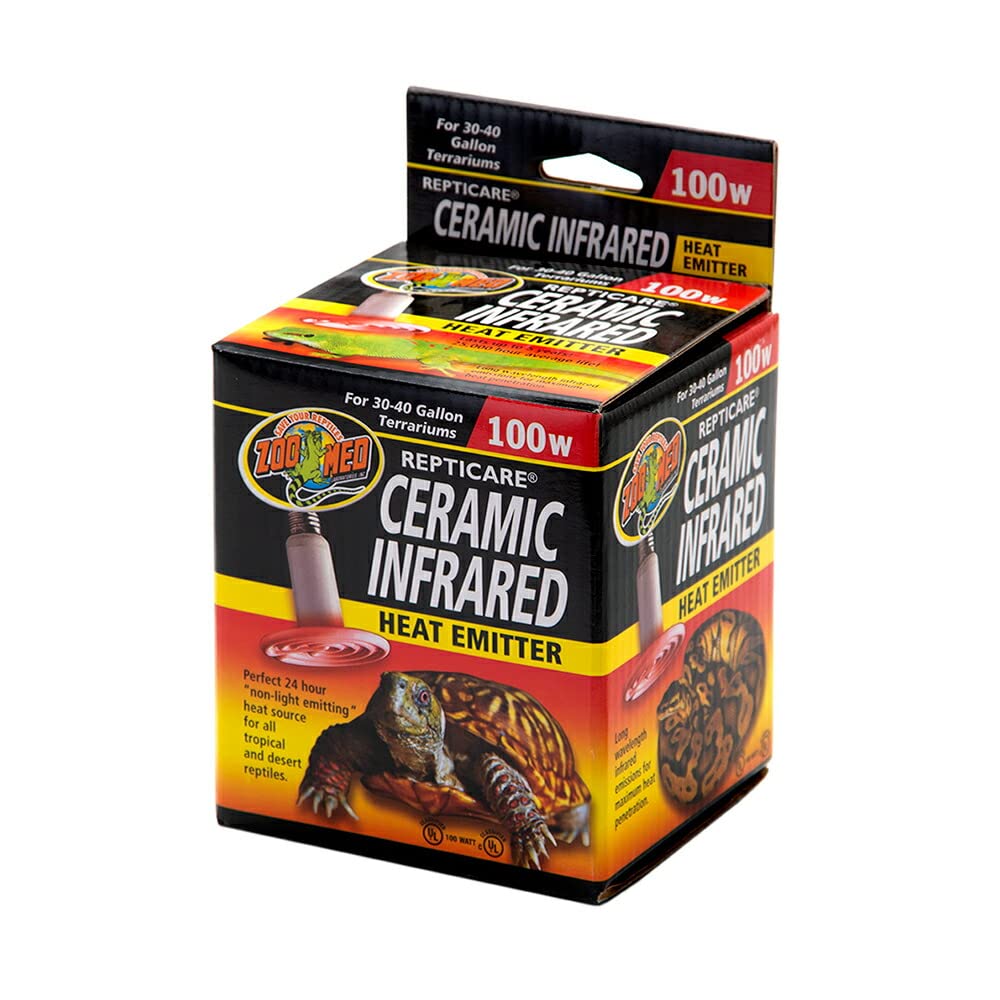
Zoo Med is a long-standing name in the reptile industry, and this Repticare ceramic emitter reflects that reputation with a flat face design that distributes heat more evenly than conical competitors. The 100W version raises terrarium air temperature 10-20°F above ambient room temperature, which is precisely the delta needed to establish a functional warm side for a ball python in a standard 40-gallon enclosure. The ceramic element is specifically rated for high humidity environments — important for ball python keepers who need to maintain 55-65% humidity levels without worrying about moisture damaging the heat source or causing electrical shorts.
The flat face geometry is the standout engineering detail here: instead of a pointed cone that sends heat in a narrow beam, the flat surface radiates infrared energy over a wider area, creating a more natural basking gradient. The E26 screw base fits into any standard fixture, and the emitter produces zero visible light, so it can run 24/7 without disturbing the snake’s photoperiod. Made in America, with a 95 color rendering index that indicates clean infrared output, this is a solid choice for keepers who prefer a proven brand and a wider heat dispersal pattern over a focused hot spot.
On the downside, this emitter runs slightly less efficient energy to heat concentration compared to a deep heat projector — you might need a higher ambient room temperature or a higher wattage to achieve the same floor-level basking temperatures in a tall enclosure. A few keepers in reptile forums mention that the flat face design also collects dust and shed particles more visibly than domed emitters, though this does not affect performance. For a straightforward, humidity-safe ceramic heat source from a trusted manufacturer, this emitter delivers consistent, no-fuss heating.
Why we love it
- Flat face design radiates heat over a wider area for better gradient coverage
- Rated for high-humidity terrariums — safe for ball python ambient moisture levels
- Zero visible light output supports natural nocturnal behavior
Good to know
- Less focused than deep heat projectors; may need higher wattage in tall enclosures
- Flat surface accumulates dust and shed more visibly than domed ceramic emitters
5. Fluker’s Ceramic Heat Emitter, 100 Watt
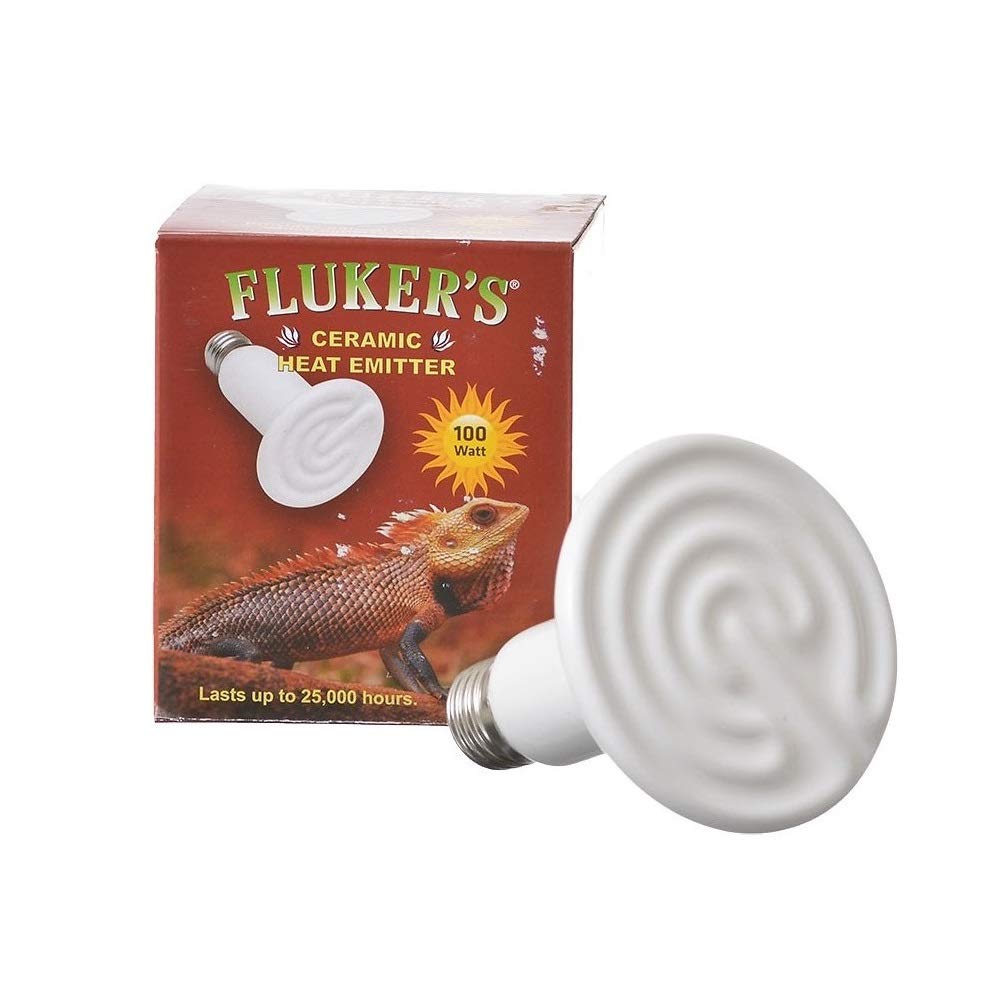
This is the entry-level ceramic heat emitter that has been a staple in reptile keeping for years, and it works exactly as advertised: 100 watts of non-light emitting infrared heat that can run 24/7 inside a clamp lamp or fixture. For a ball python in a 20-gallon or smaller enclosure, this single bulb paired with a thermostat provides all the heat needed to maintain a proper warm side. The large circular emitter design directs heat downward, and the A15 bulb shape fits standard dome fixtures without needing a deep dome adapter.
The key spec to watch here is the bulb base type — this Fluker’s emitter uses an E12 candelabra base, not the more common E26 medium base. That means you cannot screw it into a standard household lamp socket or into many reptile fixtures that are built around the E26 standard. You need either a dedicated E12 fixture or an adapter, which adds an extra step to the setup. The accepted voltage is 100-120V at 60Hz, standard for US households, and the push button control method refers to the built-in switch on compatible Fluker’s clamp lamps rather than the bulb itself having a switch.
Customer feedback notes that these emitters last about 6-12 months before the ceramic element degrades, which is average for the category. The lack of a visible light component is a genuine plus for ball python owners who need to maintain a natural photoperiod. However, the E12 base limitation means this bulb is best paired with a Fluker’s Repta-Clamp Lamp or a similar E12 fixture — buyers who already own an E26 fixture should choose the Zoo Med or a DHP instead to avoid compatibility headaches.
Why we love it
- Proven budget-friendly ceramic emitter design with consistent no-light heat output
- 100W sufficient for small to medium ball python enclosures (up to 20 gallons)
- Long-standing reputation in reptile keeping with straightforward installation
Good to know
- E12 candelabra base is less common than E26 — verify fixture compatibility before buying
- Shorter lifespan compared to deep heat projectors; expect replacement every 6-12 months
FAQ
Can I use a red heat lamp for my ball python at night?
What wattage is best for a 40-gallon ball python enclosure?
Do I need a special fixture for a ceramic heat emitter?
Final Thoughts: The Verdict
For most ball python keepers, the heat lamp for ball python winner is the Fluker’s Deep Thermal Heat Lamp because its carbon fiber filament delivers Infrared A and B for deep muscle penetration without any visible light, paired with a parabolic reflector that creates a stable basking zone in enclosures up to 40 gallons. If you already have a bulb and need a safe, fixture-focused setup, the DXOPHIEX Deep Dome Fixture stands out with its UL certification and integrated heat warning sticker. And for a straightforward, high-humidity-safe ceramic emitter that pairs well with a thermostat in bioactive enclosures, the Zoo Med Repticare remains a dependable choice that keeps your snake warm through shedding and breeding cycles alike.