
Every dog owner knows the telltale signs: the gurgling stomach, the loose stool, the sudden loss of appetite. Finding a food that actually stays down and keeps your dog comfortable can feel like a scavenger hunt through ingredient lists and marketing claims, with your pup’s health on the line with every bag you try.
I’m Mo Mahin — the founder and writer behind Furric. I spend my days digging through nutritional data, comparing limited-ingredient formulas, and analyzing thousands of owner reports to separate veterinary-backed remedies from empty promises.
Whether your dog has chronic digestive issues or occasional flare-ups from stress or diet changes, identifying the right dog food for sensitive stomach means focusing on digestible proteins, limited ingredients, and gut-supporting prebiotics that actually heal from the inside out.
How To Choose The Best Dog Food For Sensitive Stomach
Not all sensitive-stomach formulas are created equal. Some rely on exotic proteins that can trigger new allergies, while others pack in fillers that defeat the purpose. Focus on these key factors when evaluating options.
Protein Source: Single vs. Multiple Animal Proteins
Stick to a single novel or easily digestible protein — chicken, turkey, or lamb are common, but if your dog has known sensitivities, look for limited-ingredient labels that name exactly one meat source. Multiple proteins increase the chance of a reaction.
Fat Content and Digestibility
High-fat foods can trigger pancreatitis and loose stool in sensitive dogs. Formulas with 6%–12% crude fat are generally safe for daily feeding, while ultra-low-fat options (around 6%) help during active flare-ups. Check the guaranteed analysis, not just marketing.
Prebiotics, Fiber, and Grain Concerns
Prebiotic fibers like inulin and pumpkin promote healthy gut bacteria and firmer stool. Grains aren’t the enemy — white rice is often the most digestible carb for an upset stomach. Avoid unnecessary fillers like corn, soy, and pea protein that offer no digestive benefit.
Wet vs. Dry Food for Sensitive Stomachs
Wet food provides higher moisture and is easier to digest during acute episodes. Dry kibble with a large crunchy texture can be harder on a tender stomach. Many owners keep both on hand — wet for flare-ups and dry for maintenance once digestion stabilizes.
Quick Comparison
On smaller screens, swipe sideways to see the full table.
| Model | Category | Best For | Key Spec | Amazon |
|---|---|---|---|---|
| KOHA Bland Diet Chicken & Rice | Wet | Acute flare-ups & convenience | Single protein, pumpkin-fortified | Amazon |
| Dave’s Bland Diet Chicken & Rice | Wet | Low-fat daily feeding | 6% crude fat, AAFCO compliant | Amazon |
| Blue Buffalo Basics Turkey & Potato | Dry | Grain-free kibble maintenance | Turkey single protein, LifeSource Bits | Amazon |
| Purina Pro Plan EN Gastroenteric | Wet Veterinary | Veterinary-recommended GI support | MCT oil, prebiotic fiber (inulin) | Amazon |
| Royal Canin Medium Digestive Care | Dry Veterinary | Medium breed daily digestive care | Highly digestible proteins, prebiotics | Amazon |
In‑Depth Reviews
1. KOHA Limited Ingredient Bland Diet, Chicken & Rice Wet Food

KOHA’s formula is the closest you can get to a homemade bland diet without cooking a single grain of rice. It uses one protein source — chicken — paired with white rice and pumpkin, which provides soluble fiber to firm up loose stool and soothe intestinal inflammation. The texture is a soft pâté that even picky dogs with reduced appetite will lick clean.
This food is sold in over 5,000 vet clinics and pet stores, giving it a clinical credibility that many retail brands lack. Owners report that dogs who were vomiting or had chronic diarrhea stabilized within two to three days of switching. The absence of peas, potatoes, corn, soy, and artificial preservatives makes it a clean choice for dogs with multiple sensitivities.
Some customers note that delivery can take longer than expected, so it’s wise to order ahead rather than waiting for an active flare-up. The price per can lands in the premium tier of wet food, but for acute digestive crises or travel convenience, the no-prep, balanced formulation justifies the cost.
Why we love it
- Ready-to-serve, no cooking required
- Pumpkin supports firm stool and gut health
- Vet-clinic trust with AAFCO balance
Good to know
- Can be pricey compared to topper-only options
- Delivery delays reported; stock ahead of need
2. Dave’s Pet Food Bland Diet Dog Food, Chicken & Rice
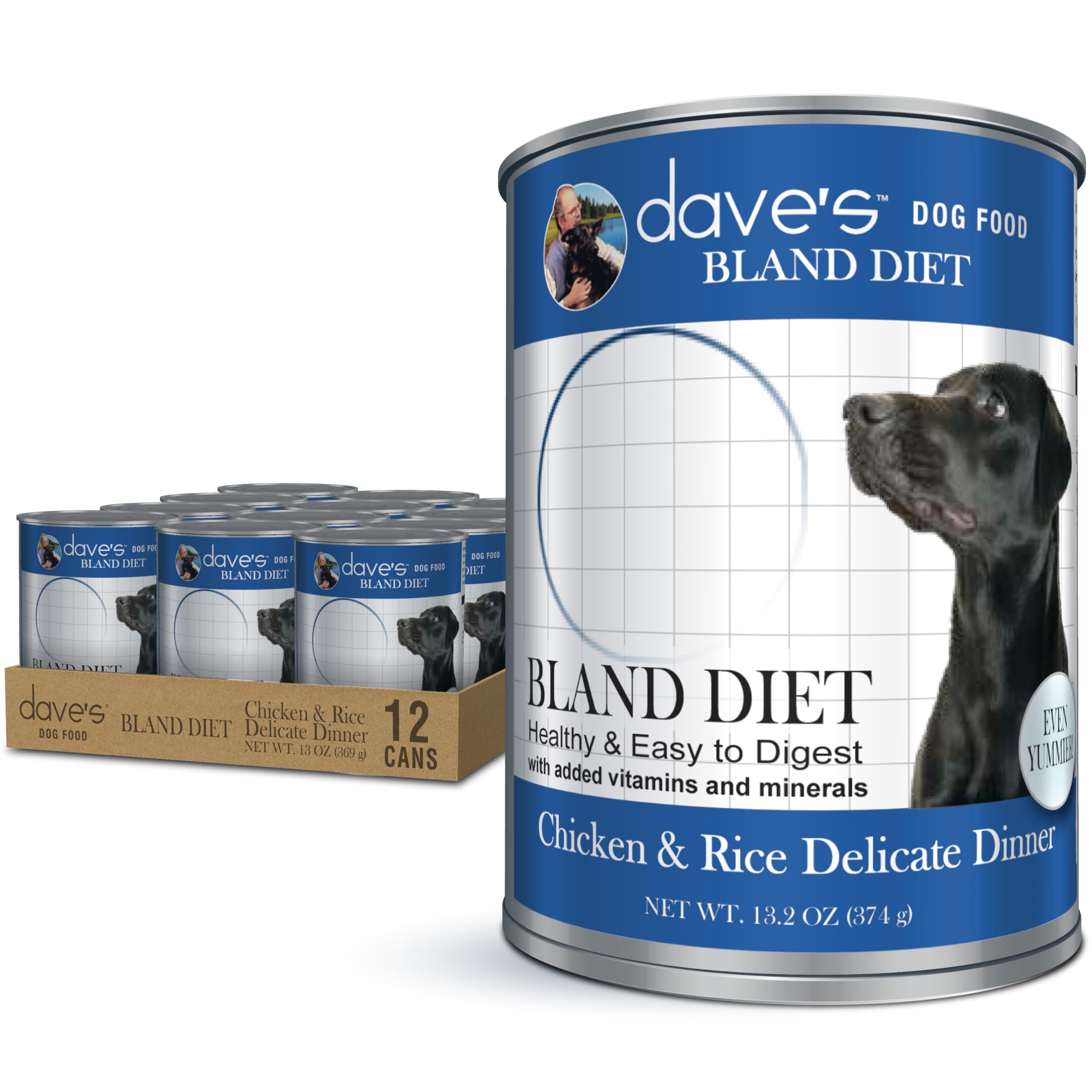
Dave’s Bland Diet stands out because it is formulated as a complete and balanced meal — not just a temporary topper — while keeping crude fat at only 6%. That low-fat threshold is critical for dogs prone to pancreatitis or those who need gentle nutrition during an extended recovery period. The smooth pâté texture is soft enough for senior dogs and small breeds with sensitive teeth or gums.
The limited ingredient list sticks to chicken and white rice with essential vitamins and minerals, avoiding wheat, gluten, artificial flavors, and meat by-products. With over 5 million cans sold, this food has a proven track record among owners managing chronic stomach sensitivities or post-surgery diets. It can be fed daily or used during dietary transitions.
While the formula is excellent for maintenance, some dogs with very specific protein allergies may need a more exotic single source like lamb or venison. The 13.2-ounce cans are convenient for large-breed households, but for small dogs, the 5.5-ounce format might reduce waste. Overall, it’s a workhorse option that balances affordability with clinical-grade simplicity.
Why we love it
- Low 6% fat ideal for pancreatitis-prone dogs
- AAFCO compliant for adult maintenance
- Widely available and trusted by vets
Good to know
- Single protein chicken may not suit all allergies
- Large can size may require portion freezing
3. Blue Buffalo Basics Adult Grain-Free Dry Dog Food, Turkey & Potato

Blue Buffalo Basics takes a different approach by avoiding chicken and poultry by-products entirely, using turkey as the sole animal protein. This is a strong option for dogs who react to chicken — one of the most common protein allergens in dogs. The turkey and potato recipe is grain-free, which may benefit dogs with grain sensitivities, though it’s important to note that grain-free diets aren’t necessary for every sensitive stomach.
The formula includes exclusive LifeSource Bits — a blend of antioxidants, vitamins, and minerals that support immune health. Combined with Omega 3 and 6 fatty acids, this kibble targets skin and coat issues that often accompany chronic digestive upset. The 11-pound bag is a reasonable entry size for a trial run before committing to larger volumes.
Some dogs with very tender stomachs may find dry kibble harder to process during active diarrhea episodes. Owners often use this as a maintenance food once acute symptoms have passed, or mix it with warm water to soften the texture. While the turkey base is unique in this lineup, dogs requiring prescription-strength digestive support may need a veterinary diet instead.
Why we love it
- Turkey single protein avoids common chicken allergens
- Grain-free for dogs with cereal sensitivities
- Omega fatty acids support skin and coat health
Good to know
- Kibble may be too harsh for acute GI flare-ups
- Not a veterinary diet for severe conditions
4. Purina Pro Plan Veterinary Diets EN Gastroenteric Wet Dog Food

Purina’s EN Gastroenteric formula is a veterinary-exclusive therapeutic diet designed for dogs with severe digestive disorders, including inflammatory bowel disease (IBD) and chronic gastroenteritis. The inclusion of medium-chain triglyceride (MCT) vegetable oil provides a rapidly absorbed energy source that bypasses the typical digestive process, reducing the workload on an inflamed gut.
Prebiotic inulin fiber actively nourishes healthy gut flora, helping rebuild the microbiome after episodes of diarrhea or vomiting. The high total digestibility ensures that every calorie is absorbed, which is critical for dogs who have lost weight due to chronic malabsorption. Owners consistently report firmer stool within days of starting this food, even in breeds like Greyhounds with notoriously sensitive digestion.
The main trade-off is the prescription requirement and the premium price point. This isn’t a food you can grab on a whim — it typically requires a vet authorization. Some owners find the large 13.4-ounce cans are more than their small dog can eat before spoiling, so portion freezing is recommended. For dogs with confirmed GI pathology, this is the most targeted option on the market.
Why we love it
- MCT oil for easy energy absorption
- Inulin prebiotic rebuilds healthy gut flora
- Highest digestibility rating in this comparison
Good to know
- Veterinary prescription required
- Premium price per can adds up for multi-dog homes
5. Royal Canin Canine Care Nutrition Medium Digestive Care Dry Dog Food

Royal Canin’s Medium Digestive Care is engineered specifically for adult medium-breed dogs weighing 23 to 55 pounds, with kibble size and shape optimized to encourage thorough chewing and slower eating — a subtle but important factor for dogs who gulp their food and then vomit. The formula combines highly digestible proteins with a precise blend of prebiotics and dietary fibers.
The real-world results are dramatic: owners of Whippets, Border Collies, and Bull Terriers report that this was the only food that stopped chronic diarrhea and vomiting after years of trial and error. The balanced intestinal flora support translates to predictable, well-formed stool that owners can rely on. For medium breeds with lifelong sensitivities, this is a maintenance diet that doesn’t require periodic rotation.
On the downside, this food is not suitable for small or large breeds outside the 23–55 pound window, as the kibble size and nutrient density are specifically calibrated for that range. It’s also on the higher end of the dry food price spectrum, though still more affordable than many prescription wet food regimens. Some owners combine it with Royal Canin’s wet Digestive Care formula for best results during transitions.
Why we love it
- Breed-specific kibble shape reduces gulping
- Proven to eliminate chronic digestive issues
- Prebiotic blend supports long-term gut health
Good to know
- Only for medium breed weight range
- Not suitable for severe acute flare-ups alone
FAQ
Can I feed sensitive stomach dog food as a long-term diet?
What is the difference between limited ingredient and veterinary diet?
Should I choose wet food or dry kibble for my dog’s upset stomach?
My dog vomits after eating — is it the food or the bowl design?
How do I know if my dog has a chicken allergy?
Final Thoughts: The Verdict
For most dogs with recurring stomach issues, the dog food for sensitive stomach winner is the KOHA Bland Diet Chicken & Rice because it delivers a vet-backed, ready-to-serve bland diet with pumpkin for immediate gut relief. If you need a low-fat option that works for daily feeding, grab the Dave’s Bland Diet. And for chronic, diagnosed GI conditions where nothing else works, the Purina Pro Plan EN Gastroenteric is the clinical-grade solution worth the prescription effort.