
Ball pythons thrive when their enclosure mimics the humid, soft-floor microclimate of their native West African grasslands. Pick the wrong bedding, and you are fighting a constant battle against low humidity, dusty surfaces that irritate your snake’s respiratory tract, or coarse chips that make burrowing uncomfortable. The substrate you choose directly impacts shedding success, hydration levels, and how often you need to spot-clean the tank.
I’m Mo Mahin — the founder and writer behind Furric. I have spent over a decade analyzing owner-reported performance data, comparing moisture retention across different coco fiber structures, and studying how each chip size affects ball python burrowing behavior.
What follows is my curated line-up of the most reliable snake bedding for ball python options on the market, ranked by moisture retention, dust control, and long-term value.
How To Choose The Best Snake Bedding For Ball Python
Ball pythons have specific environmental needs that make substrate selection a non-negotiable part of enclosure setup. A substrate that works for a bearded dragon may be harmful or unusable for a ball python. Here is what you need to evaluate before buying.
Humidity Retention Is The Top Priority
Ball pythons require ambient humidity between 55% and 70%, with spikes to 80% during shed cycles. A substrate with poor moisture retention forces you to mist constantly, drying out the snake’s skin and causing stuck sheds. Coconut husk chips and coco fiber naturally hold water without becoming waterlogged, releasing moisture slowly over days.
Chip Size And Impaction Risk
Large, sharp wood chips can scratch soft scales and increase impaction risk if ingested. Small chips or fine coir are safer for ball pythons because they pass through the digestive tract more easily. The ideal particle size is loose medium to small chips that hold their shape when dry but soften when wet — avoiding both fine dust and large spiky chunks.
Dust Levels Directly Affect Respiratory Health
Ball pythons are prone to respiratory infections when exposed to airborne particulate matter. Cheap substrates that release clouds of fine dust when disturbed irritate the snake’s sensitive lungs. Look for products explicitly labeled “dust-free” or “low dust,” and inspect packaging reviews for mentions of dusty batches.
Organic Composition Matters
Synthetic additives, chemical dyes, or scented products have no place in a ball python enclosure. Stick to 100% organic coconut husk or coco coir. These materials are naturally resistant to mold, biodegradable, and safe if accidentally ingested during feeding.
Quick Comparison
On smaller screens, swipe sideways to see the full table.
| Model | Category | Best For | Key Spec | Amazon |
|---|---|---|---|---|
| RediChip Loose Coconut Chip | Loose Bag | Immediate use, arid or tropical setups | 12 Quart loose medium chips | Amazon |
| BabiChip Small Chip Substrate | Loose Bag | Smaller snakes, impaction-sensitive owners | 12 Quart small coco chips | Amazon |
| Legigo 10LB Coco Chip Brick | Compressed Brick | Large enclosures, bulk storage | 72 Quart expanded from 10lb brick | Amazon |
| Riare 10LB Coconut Chip Brick | Compressed Brick | Deep bedding, high humidity maintenance | 72 Quart expanded, soft textured chips | Amazon |
| Halatool 6-Pack Coco Fiber Brick | Compressed Brick | Budget entry-level, multi-reptile households | 6 bricks, expands 8-10x weight in water | Amazon |
In‑Depth Reviews
1. RediChip Loose Medium Coconut Chip Substrate

The RediChip loose bag is the gold standard for ball python keepers who want a ready-to-use substrate with zero prep time. These medium-sized coco chips have been triple-screened to remove the fine dust that triggers respiratory irritation in ball pythons. Out of the bag, the chips are dry enough for arid species, but a quick misting turns them into a humidity-retaining base that holds 60-70% RH for days in a PVC enclosure.
Because this is a loose product, you avoid the wrist fatigue of breaking apart compressed bricks. The medium chip size is large enough to prevent your ball python from kicking bedding into its water bowl constantly, yet small and smooth enough to rule out any impaction risk. Owner reports consistently note zero dusty residue after pouring.
ReptiChip backs this with a 100% organic certification and a manufacturing process that sorts and refines the husk inside the United States. The 12-quart bag fills a standard 40-gallon breeder tank to a depth of roughly 2 inches, which is the minimum recommended depth for ball pythons that enjoy shallow burrowing.
Why we love it
- Zero prep — open, pour, and use
- Dust-free processing protects respiratory health
- Holds humidity without becoming sludgy
- Biodegradable and compostable after use
Good to know
- 12-quart bag may require two bags for deep burrowing setups
- Medium chips may be too large for very young hatchlings
2. BabiChip Small Coconut Chip Substrate

BabiChip is the smaller-chip variant from the same ReptiChip manufacturing line, designed specifically for keepers who worry about impaction in smaller ball pythons. The particle size is roughly half that of the RediChip medium, making it the safest option for juvenile ball pythons or individuals with a history of substrate ingestion. Customer feedback from owners of 150g hatchlings confirms the chips pass harmlessly when accidentally consumed during feeding strikes.
Moisture retention is identical to the medium chips because the material is the same coconut husk — the difference is purely mechanical. The smaller surface area per chip means the substrate feels softer under the snake’s body, which encourages natural burrowing behavior. Owners report that their ball pythons bury themselves deeper in BabiChip than in larger-chip alternatives.
Odor encapsulation is another strong point. The fine chip structure traps waste particles and slows ammonia release, keeping the enclosure smelling fresh between spot cleans. This product also works as a mixing base for bioactive setups, combining well with drainage layers and clean-up crews.
Why we love it
- Tiny chip size minimizes impaction risk
- Enables deep burrowing for enrichment
- Superior odor encapsulation versus medium chips
- Works beautifully in bioactive terrariums
Good to know
- Some adults may prefer larger chips for traction
- Compressed bricks of the same brand cost less per quart
3. Legigo 10LB Coconut Chip Substrate
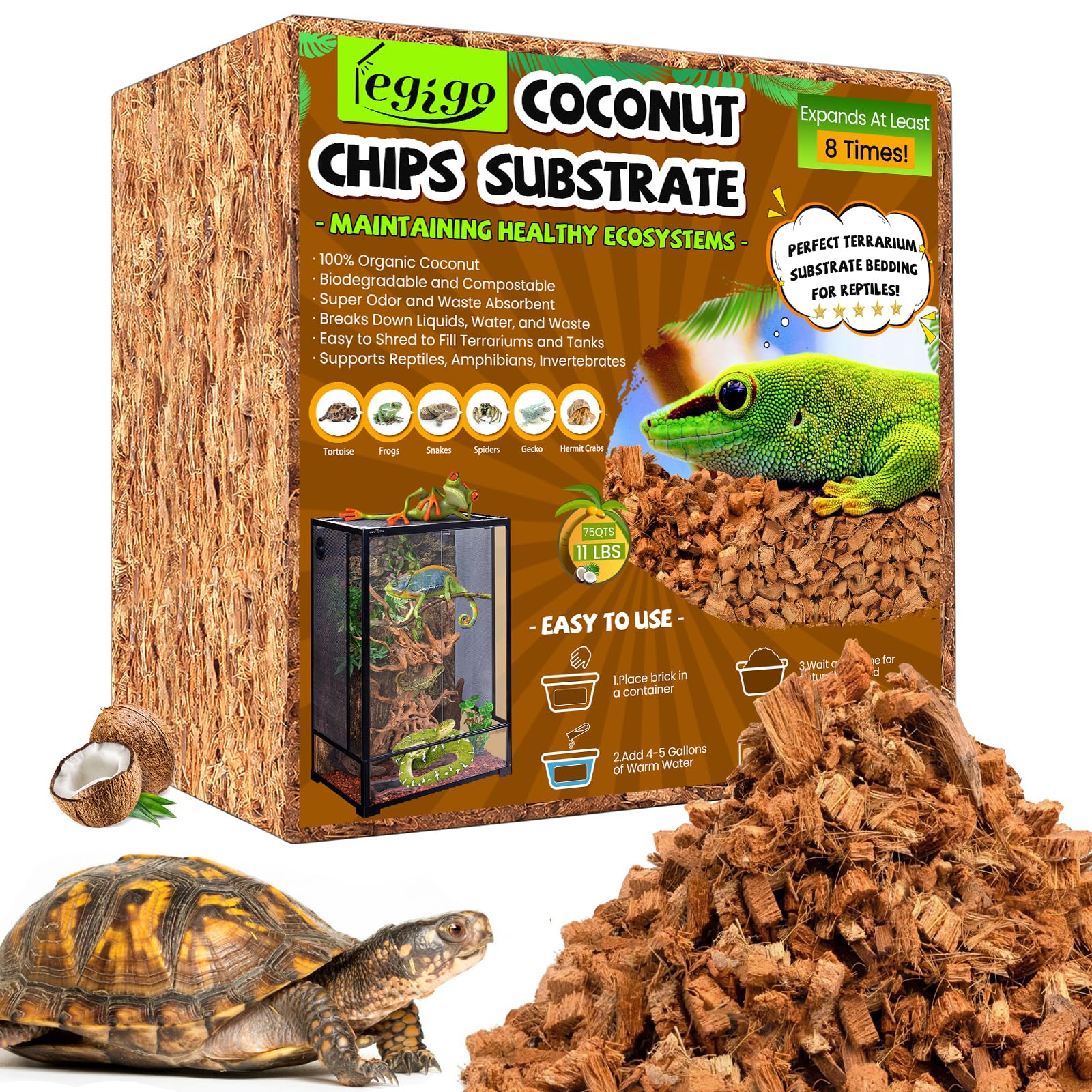
The Legigo 10LB compressed brick delivers 72 quarts of expanded substrate — enough to fill a 4x2x2 foot PVC enclosure with a 3-inch deep layer. This is ideal for keepers who maintain multiple ball pythons or want to replace bedding less frequently. The compressed brick breaks apart easily in warm water, and the resulting chips are uniformly sized with very few fines or dust particles.
Ball python owners who switched from name-brand substrates to Legigo report that the moisture retention matches premium competitors at a significantly better cost-per-quart ratio. The chips hold humidity well across weekly spot-cleaning cycles, and the natural texture encourages burrowing without sharp edges. The brick rehydrates fully within 20 minutes when submerged in warm water.
An overlooked benefit of the Legigo substrate is how well it doubles as a soil amendment for houseplants — several owner reviews mention reusing spent bedding in potting mixes for tropical aroids. This makes the product nearly zero-waste for environmentally conscious keepers.
Why we love it
- Exceptional value at 72 quarts per 10lb brick
- Breaks apart easily with hot water
- Dust-free and safe for respiratory health
- Reusable as garden soil amendment
Good to know
- Compressed brick requires prep time versus loose bag
- Chips can be slightly more fibrous than premium competitors
4. Riare 10LB Coconut Chip Substrate

The Riare 10LB compressed brick is structurally similar to the Legigo offering but stands out for its softer, more crushed chip consistency. When rehydrated, the chips break down into a loose, almost soil-like texture that ball pythons find particularly comfortable for tunneling. Owner reviews from keepers of multiple ball pythons note that their snakes consistently burrow deeper and more frequently in Riare substrate compared to standard coco chips.
At 72 quarts expanded volume, a single brick fills a 4x2x2 foot enclosure to a depth of just over 3 inches, which is the sweet spot for humidity retention. The crushed texture means fewer air pockets in the bedding, which translates to more consistent humidity levels across the entire tank. Several long-term users report that one brick lasts 3-4 months before needing a full replacement.
The value proposition is strong: multiple owner reviews mention switching from ReptiChip to Riare for the same quality at a lower cost-per-quart. The product is unscented, chemical-free, and compostable at end of life.
Why we love it
- Soft crushed texture encourages burrowing
- Excellent humidity consistency across the enclosure
- Holds up well for 3-4 months between changes
- Competitive cost versus name-brand alternatives
Good to know
- More fibrous than loose bag substrates
- Requires thorough soaking to break apart fully
5. Halatool 6-Pack Coco Fiber Bricks
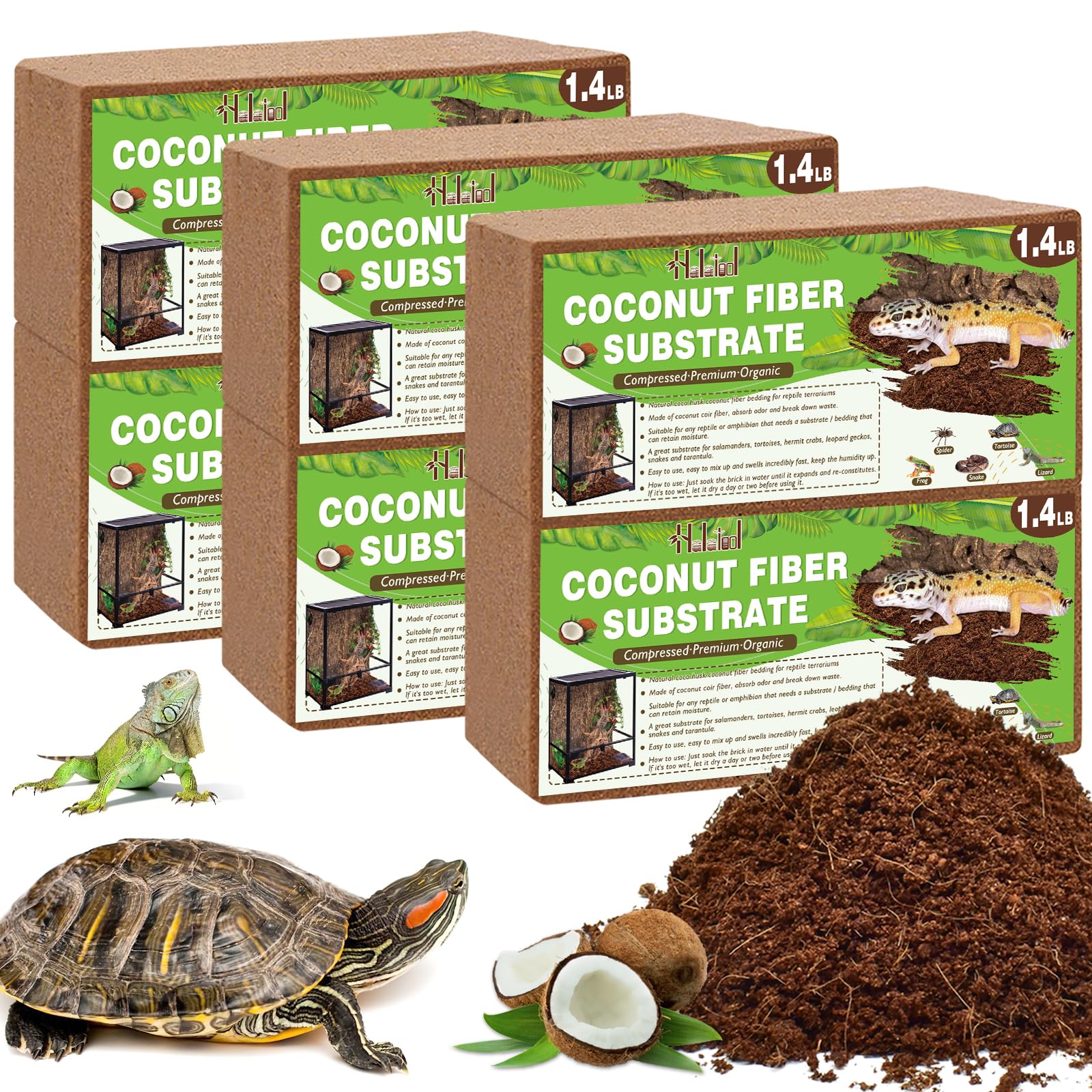
The Halatool 6-Pack offers the lowest entry point for new ball python owners who are still dialing in their husbandry. Each brick expands to roughly 8-10 times its dry weight in water, producing a fine coco fiber substrate that holds moisture like a sponge. The fiber texture is softer than chip-based substrates, making it an excellent choice for hatchlings or post-surgery snakes that need a very soft surface.
Because this is pure coco coir rather than husk chips, the substrate compacts more densely under the snake’s weight. This creates a solid base that holds tunnels well if you pack it down, but it can be dusty if you let it dry out completely between mistings. Owners who keep the humidity above 60% report no dust issues; the fiber stays slightly damp and clumps together for easy spot cleaning.
The 6-brick bundle gives you plenty of substrate for multiple enclosure changes or for use in other reptile setups simultaneously. Several owners also use the expanded coir as a soil amendment for moisture-loving houseplants, adding to the value proposition. Just note that fine coir requires more frequent top-ups than chip-based substrates because it degrades faster.
Why we love it
- Lowest entry cost for new keepers
- Soft fiber texture ideal for sensitive snakes
- Each brick expands significantly with water
- Dual-use as reptile bedding and plant soil
Good to know
- Fine coir can become dusty if allowed to dry out
- Degrades faster than coco husk chips
- Requires thorough soaking and manual breaking
FAQ
Can I mix coco chips with sphagnum moss for higher humidity?
How often should I replace snake bedding in a ball python enclosure?
Is aspen bedding safe for ball pythons?
Can I use compressed coco bricks directly without soaking them first?
Final Thoughts: The Verdict
For most keepers, the snake bedding for ball python winner is the RediChip Loose Medium Coconut Chip because it combines zero-prep convenience with industry-leading dust control and reliable humidity retention. If you want a softer texture for a hatchling or impaction-sensitive ball python, grab the BabiChip Small Chip. And for filling large enclosures at the best bulk value, nothing beats the Legigo 10LB Compressed Brick.