
An aquarium pump is the quiet workhorse that keeps your fish thriving—delivering oxygen, powering sponge filters, and driving water movement. But not every pump lives up to the promise: some vibrate against the glass, others lose output after a few months, and a surprising number generate enough hum to ruin a living-room ambiance. Choosing the right one means balancing airflow volume, noise control, build materials, and the number of outlets you actually need.
I’m Mo Mahin — the founder and writer behind Furric. I’ve spent years studying the aquarium hardware market, comparing pump specifications against real-world owner feedback, and analyzing the engineering choices that separate a reliable aerator from a disposable buzz-box.
Whether you run a single planted tank or a multi-tank fish room, finding the best aquarium pump comes down to matching flow rate to your tank volume while rejecting anything that rattles, overheats, or chokes under backpressure.
How To Choose The Best Aquarium Pump
An aquarium pump is defined by three core specs: airflow volume, maximum pressure, and outlet configuration. Ignore flashy marketing and focus on the numbers that actually keep your fish tank oxygenated and your equipment running silently for years.
Match GPH to Your Tank Volume
For a standard freshwater aquarium, a pump should turn over the total tank volume 4–6 times per hour. A 50-gallon tank needs at least 200–300 GPH of airflow through air stones or sponge filters. Oversized pumps are fine as long as they offer adjustable airflow or individual valve control on each outlet.
Noise Isolation Matters More Than Motor Size
Vibration is the primary noise source in aquarium pumps. Look for rubber stabilizer feet, silicone shock absorbers, or foam pads included in the box. Enclosed ABS shells reduce airborne motor whine, while aluminum housings aid heat dissipation but can transmit vibration if not properly isolated.
Outlet Count Determines Flexibility
A single-outlet pump is fine for one tank with one air stone. A four-outlet pump lets you run multiple sponge filters, a bubbler decoration, and a protein skimmer simultaneously across different tanks. Each outlet should have its own control valve so you can balance airflow without buying additional manifolds.
Build Materials and Heat Management
Plastic pumps are lightweight and cheap but can warp under continuous 24/7 operation. Aluminum-alloy pumps dissipate heat more effectively, which extends motor life in high-output commercial applications. Stainless steel outlets resist corrosion better than brass or chrome-plated fittings, especially in saltwater setups.
Quick Comparison
On smaller screens, swipe sideways to see the full table.
| Model | Category | Best For | Key Spec | Amazon |
|---|---|---|---|---|
| AquaMiracle Commercial Air Pump | Commercial | High-output multi-tank / pond | 600 GPH / Aluminum housing | Amazon |
| hygger Dual-Outlet Air Pump | Mid-Range | Quiet bedroom / living room setup | 95 GPH per outlet / 35 dB | Amazon |
| FEDOUR 4-Outlet Air Pump | Mid-Range | Multi-tank with filter cotton | 256 GPH / 20 kPa pressure | Amazon |
| Persuper Dual Outlet Pump | Compact | Small quiet room / nano tanks | 158 GPH / 25 dB noise | Amazon |
| AQUANEAT 4-Outlet Pump | Value | Starter multi-tank systems | 300 GPH / 4 outlets | Amazon |
| HITOP 4-Outlet Air Pump | Value | Hydroponic / pond oxygenation | 320 GPH / 10W motor | Amazon |
| VIVOSUN 2-Pack Submersible Pump | Submersible | Fountain / waterfall / hydroponics | 210 GPH / 3.3 ft lift | Amazon |
In‑Depth Reviews
1. AquaMiracle Commercial Air Pump

The AquaMiracle sits at the top of the lineup because it combines commercial-grade output with a 6-outlet manifold in a package that fits under most aquarium stands. The aluminum-alloy housing pulls heat away from the 18W electromagnetic motor, which means this pump can run 24/7 without the thermal degradation common in plastic-bodied units. At 600 GPH and 20 kPa of pressure, it handles multiple sponge filters, a pond, or even a fish farm setup without breaking a sweat.
Real-world owners consistently praise its ability to oxygenate 100+ gallon tanks while remaining quieter than comparable piston-driven compressors. The chrome-coated metal manifold gives you individual control over each outlet, so you can dial back airflow to a small air stone while sending full pressure to a large bubble wall. It comes with the manifold and pump head only — you supply your own tubing and check valves, which lets you customize line lengths.
This is not a whisper-quiet desktop pump; the motor produces a steady hum that fish-room veterans will find acceptable, but it may be audible in a living-room setup. Place it on a vibration-dampening pad and ensure good ventilation around the aluminum fins for maximum longevity. If you need one pump to run an entire fish room or a koi pond, this is the unit that delivers.
Why we love it
- Aluminum alloy housing dissipates heat far better than ABS plastic
- Six individually adjustable outlets give unmatched multi-tank flexibility
- 600 GPH output at 20 kPa pressure handles deep tanks and long tubing runs
Good to know
- No accessories included — tubing, check valves, and air stones sold separately
- Motor hum is noticeable; requires vibration isolation for quiet rooms
- Heavier than plastic alternatives at nearly 2 pounds
2. hygger Dual-Outlet Air Pump

The hygger dual-outlet pump redefines what a quiet aquarium aerator can be. Owners across hundreds of reviews describe it as inaudible inside a cabinet — the main noise you hear is the bubbles themselves, not the motor. The double-layer ABS shell and four rubber shockabsorbing feet suppress vibration so effectively that many users forget the pump is running at all. Maximum output reaches 95 GPH per outlet at 20 kPa, making it suitable for tanks up to 120 gallons when used with two air stones.
The adjustable knob provides precise airflow control without the clicking or stuttering found on cheaper potentiometer-based pumps. Stainless steel dual outlets resist saltwater corrosion, which is a rare feature at this tier — most pumps in the mid-range use brass or plastic fittings that degrade in marine environments. The included accessory kit contains 4.9-foot tubing, two check valves, and two air stones, so you can set it up right out of the box.
One limitation: the 4W model delivers 95 GPH total (190 GPH combined), which is adequate for a single 120-gallon tank but won’t drive multiple sponge filters in a fish room. If you need more airflow, the 7W and 11W variants exist, but they push the pump toward the premium segment. For a living-room or bedroom aquarium where silence matters more than raw volume, this is the pump to beat.
Why we love it
- Genuinely whisper-quiet operation — owners report 35 dB or less
- Stainless steel outlets resist saltwater corrosion
- Complete accessory kit allows immediate setup
Good to know
- 4W variant outputs only 95 GPH per outlet — not for high-demand systems
- Limited to two outlets; multi-tank users need a splitter or second pump
- Airflow adjustment knob can be stiff to turn initially
3. FEDOUR 4-Outlet Air Pump

FEDOUR builds this four-outlet pump around an 8W motor that produces 256 GPH total at a maximum pressure of 20 kPa — enough to oxygenate tanks up to 300 gallons when split across four air stones or sponge filters. The upper and lower shells are tightly sealed with thickened side panels that trap motor whine, and the soft silicone feet isolate vibration from the surface. Owners running fish rooms report that the pump remains barely audible even when placed on a wooden shelf.
What sets the FEDOUR apart is the inclusion of replaceable air filter cotton. The intake filter traps dust before it reaches the diaphragm, which extends the pump’s life significantly compared to units that pull unfiltered room air. Two spare filter pads come in the box. The metal air outlets are corrosion-resistant and maintain consistent airflow over years of operation, a problem area for all-plastic fittings.
The one compromise: the included airline tubing measures only 4.9 feet per piece. For tanks positioned far from the pump, you’ll need to buy longer tubing or use the included T-connectors to extend runs. The electronic airflow adjustment knob is smooth and remains stable once set — it doesn’t drift overnight like some mechanical valves. For aquarists running three or four tanks from a single pump, this is a balanced choice between output and operating cost.
Why we love it
- Replaceable air filter cotton extends diaphragm life
- 256 GPH output supports multiple tanks up to 300 gallons combined
- Soft silicone feet nearly eliminate vibration transfer
Good to know
- Included tubing is short at 4.9 feet per outlet
- 8W motor draws continuous power; consider a timer for non-critical setups
- Plastic housing is durable but traps more heat than aluminum designs
4. Persuper Dual Outlet Air Pump
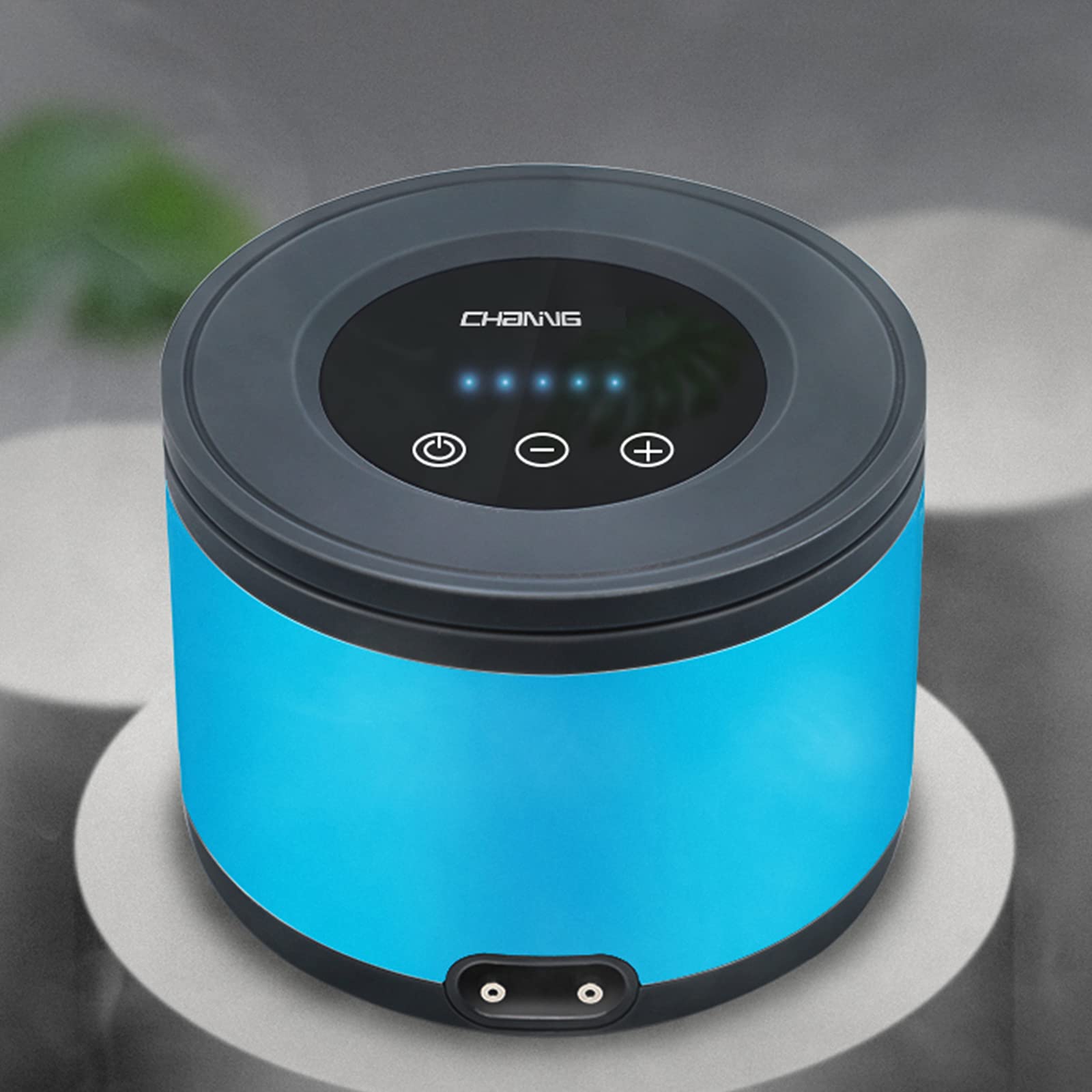
The Persuper pump is engineered for the noise-sensitive aquarist. It claims a 25 dB noise floor — quieter than a whisper — and owner feedback confirms that most of the sound you hear comes from the air stone bubbles, not the unit itself. The fully enclosed pure copper motor sits inside a double-layer ABS shell that deadens the electromagnetic vibration typical of diaphragm pumps. At 5W and 110V, it draws minimal power while delivering up to 158 GPH (10 L/min) at 0.022 MPa.
The digital push-button controls offer five levels of airflow adjustment, a step up from the continuous knobs found on most competitors. Each level corresponds to a specific pressure and flow rate, eliminating guesswork when setting up a new tank. The dual-valve design lets you run different flow rates on each outlet — useful for a heavily stocked tank needing maximum aeration alongside a planted tank that prefers gentle circulation.
Important: this pump ships without any accessories. You must supply your own airline tubing, check valves, air stones, and any splitters. The product listing explicitly notes this to keep the price low for aquarists who already own those components. The pump itself is lightweight at 1.9 pounds and compact enough to fit inside a nano aquarium cabinet. For a bedroom betta tank or a desktop planted setup where size and silence are priorities, this is the quietest option in the roundup.
Why we love it
- Genuine 25 dB operation — barely perceptible in a quiet room
- Five digital airflow levels provide repeatable, drift-free adjustment
- Compact 1.9-pound footprint fits tiny cabinets
Good to know
- No accessories included — requires separate purchase of tubing and valves
- 158 GPH max output limits use to tanks under 40 gallons per outlet
- Dual-outlet only; not suitable for multi-tank fish rooms
5. AQUANEAT 4-Outlet Air Pump

AQUANEAT delivers the highest per-dollar airflow in the lineup with 300 GPH total capacity across four independently controllable outlets. The pump comes with an entire accessory bundle out of the box: 16 feet of airline tubing, four air stones, four check valves, four control valves, four suction cups, and even four T-connectors. For the aquarist setting up their first multi-tank system, this kit eliminates the need for any additional purchases.
Owners note that the pump is not silent — it produces a noticeable white noise hum and some vibration at high airflow settings. Placing it on a towel or foam pad reduces the vibration transfer significantly. The control knob allows airflow adjustment, but some users report that the pump becomes noisier when the airflow is restricted, a quirk common in unregulated diaphragm designs. The four rubber stabilizer feet help, but they are not as effective as the silicone isolation found on premium pumps.
Where this pump shines is sheer value for money. It handles multiple sponge filters across separate tanks, oxygenates a 200-gallon system, or powers hydroponic deep-water culture setups. The plastic construction is adequate for indoor use but may degrade if placed in high-humidity environments without ventilation. If your budget is tight and you need to oxygenate several tanks immediately, this is the most complete package available at this tier.
Why we love it
- Comes with everything — tubing, stones, check valves, and connectors
- 300 GPH total output handles up to 200 gallons across four outlets
- Four independent control valves for balancing different tanks
Good to know
- Noise increases noticeably when airflow is restricted
- Rubber feet reduce but do not eliminate vibration transfer
- Plastic housing may degrade faster in high-humidity environments
6. HITOP 4-Outlet Air Pump

The HITOP 4-outlet pump edges past the AQUANEAT in raw airflow capacity at 320 GPH, powered by a 10W motor. This extra headroom makes it a better fit for hydroponic deep-water culture systems where consistent oxygenation is critical for root health, or for ponds that need aeration at depth. The four outlets each receive an individual control valve, letting you throttle flow individually without affecting the other lines.
Build quality aligns with the mid-range segment — a plastic housing with four suction cups for mounting vertically or horizontally. The included accessory kit mirrors the AQUANEAT package with tubing, air stones, and check valves, so setup is equally straightforward. Owners running fish rooms appreciate that the 10W motor maintains stable airflow even when pushing air through 10-plus feet of tubing to a distant tank.
The tradeoff for the higher output is increased noise. The HITOP is audibly louder than the FEDOUR or hygger pumps, especially at full throttle. It benefits from being placed in a fish room or basement rather than a living space. For the aquarist who prioritizes airflow volume over absolute silence and needs to oxygenate a network of tanks or a hydroponic system, this pump delivers the most cubic feet of air per dollar in the roundup.
Why we love it
- 320 GPH output leads the value segment in sheer airflow
- 10W motor maintains pressure over long tubing runs
- Complete accessory kit included for immediate installation
Good to know
- Noticeably louder than mid-range competitors
- Plastic housing without heat-dissipation features
- Better suited for utility rooms than living-room setups
7. VIVOSUN 2-Pack Submersible Pump

The VIVOSUN is a different category of pump — a submersible water pump rather than an air pump — but it earns a place because many aquarists need both water circulation and aeration in a single setup. Each unit delivers 210 GPH with a maximum lift height of 3.3 feet, making it suitable for moving water through a small fountain, a waterfall filter, or a hydroponic nutrient delivery system. The 8W motor is energy-efficient enough to run continuously.
The two-pack format gives you a backup pump or lets you run two separate water features simultaneously. Four suction cups on each unit secure it to the tank bottom or sump wall without additional hardware. The flow-regulating valve lets you dial back the output — a feature often missing on budget submersibles. The 5-foot power cord is long enough for most cabinet placements but may require an extension for tall tanks.
This pump is not an aerator — it moves water, not air. Use it to drive a powerhead current, feed an external filter, or create surface agitation that promotes gas exchange. If you need bubble-style aeration, pair it with a Venturi attachment. For pond pumps, fountain pumps, or anyone who wants reliable water circulation at a budget-friendly two-pack price, the VIVOSUN delivers solid performance with easy disassembly for cleaning.
Why we love it
- Two pumps in one box for redundant or dual-water-feature setups
- Easy disassembly for cleaning prevents clog buildup
- Flow-regulating valve gives control over water movement
Good to know
- Not an air pump — provides water circulation, not bubble aeration
- 3.3-foot lift limits use to shallow ponds or elevated tanks
- Suction cups may lose grip on textured or dirty surfaces
FAQ
How many GPH do I need for a 55-gallon aquarium?
Can I use an air pump designed for freshwater in a saltwater aquarium?
Why is my aquarium pump making a loud humming noise?
How often should I replace the diaphragm in my aquarium pump?
Can I run multiple air stones from a single outlet?
Final Thoughts: The Verdict
For most aquarists, the best aquarium pump winner is the hygger Dual-Outlet Air Pump because it delivers genuinely silent operation with stainless steel outlets that last, all at a mid-range investment. If you need commercial-grade output for multiple tanks or a pond, grab the AquaMiracle Commercial Air Pump — its aluminum housing and six-outlet manifold are unmatched in this price tier. And for budget-conscious setups requiring immediate multi-tank aeration, nothing beats the complete package of the AQUANEAT 4-Outlet Pump.