
That raw, weeping pastern — the unmistakable hallmark of scratches — can turn a simple mud puddle into a source of relentless misery for your horse. The constant stomping, the flinching when you bring the hoof pick near, and the stubborn scabs that seem to regenerate overnight create a specific, grinding frustration that only someone dealing with this particular dermatitis understands.
I’m Mo Mahin — the founder and writer behind Furric. I’ve spent months cross-referencing equine dermatology guidelines with real-world owner reports to distinguish the treatments that actually resolve pastern dermatitis from those that just sit on the skin and do nothing.
After analyzing ingredient lists, owner testimonials, and application protocols, I’ve narrowed the market down to the five most effective options in this guide to the best treatment for scratches in horses.
How To Choose The Best Treatment For Scratches In Horses
Scratches is a bacterial/fungal complex that thrives in wet, muddy conditions. The right treatment does three things: delivers an antimicrobial agent deep into the scab, soothes the inflamed skin, and stays in place long enough to break the infection cycle. Here is what separates effective products from the rest.
Active Ingredient: MicroSilver vs. Traditional Antiseptics
MicroSilver BG is a next-generation silver that maintains its antimicrobial activity even in the presence of thick exudate and organic matter. Traditional iodine and chlorhexidine are effective but can be inactivated by the scab material typical of scratches. MicroSilver works through the scab layer without needing manual debridement.
Application Format: Spray vs. Ointment
For wet, oozing lesions with minimal scabbing, a spray format allows you to treat the entire pastern without touching the sensitive skin. For thick, crusty scabs that have built up over weeks, a thick ointment or salve delivers prolonged contact time and physically softens the scab to encourage natural sloughing.
pH Balance and Microbiome Effects
The equine pastern has a delicate microbiome. Alkaline treatments can disrupt this balance, making the skin more susceptible to secondary yeast infections. A pH-balanced formula supports the skin’s natural defenses and avoids the rebound dermatitis that occurs when harsh antiseptics strip away all surface bacteria — good and bad.
Quick Comparison
On smaller screens, swipe sideways to see the full table.
| Model | Category | Best For | Key Spec | Amazon |
|---|---|---|---|---|
| Silver Honey Rapid Relief 6oz Spray | Spray | Wet, oozing scratches with heavy scabbing | RapidSorb microencapsulation technology | Amazon |
| Absorbine Silver Honey Ointment | Ointment | Dry, crusty scabs and post-surgical sites | pH balanced, thick ointment base | Amazon |
| Bickmore Gall Salve | Salve | Working horses in hot, wet conditions | Heat-resistant, non-greasy formula | Amazon |
| Farnam Triple Action Wound Treatment | Ointment | Girth rubs, hot spots, general skin relief | Menthol-infused for instant itch relief | Amazon |
| Farnam Purishield Fast-Acting Spray | Spray | Multi-species household with varied wounds | Ceragenin-based, 24-hour protection | Amazon |
In‑Depth Reviews
1. Silver Honey Rapid Relief 6oz Spray
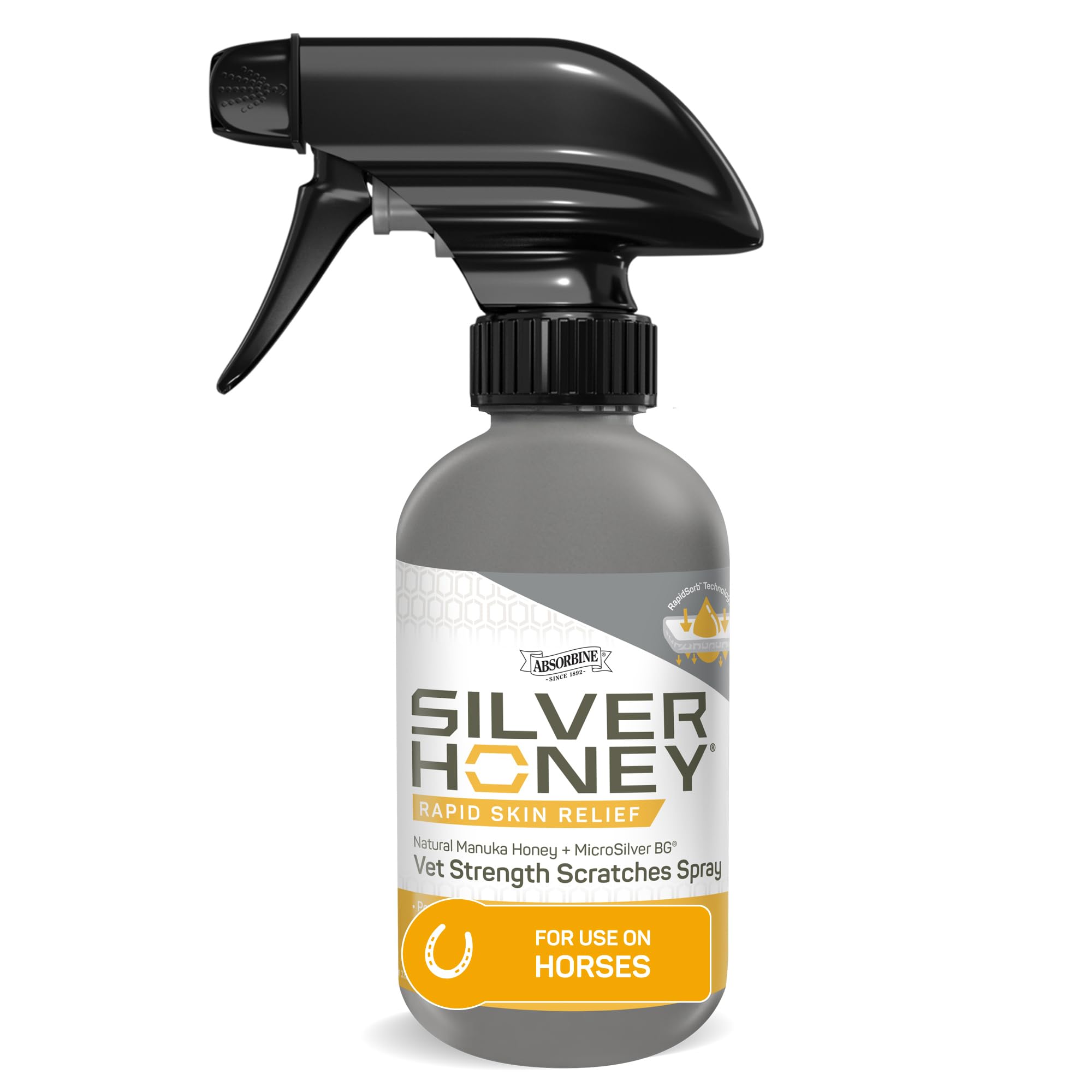
The RapidSorb technology in this spray is not marketing fluff — it microencapsulates the MicroSilver BG and Manuka Honey so that the active ingredients physically penetrate through the thick, layered scabs typical of advanced scratches. Owners report visible improvement after just two applications on stubborn mud-fever cases, which is remarkable for a spray format generally considered less tenacious than ointments.
The vet-developed formula prioritizes natural debridement — meaning you do not need to manually pick off dry scabs before application. The essential oil blend provides immediate sensory relief; horses stop stomping within minutes of the spray making contact with the inflamed pastern. For owners dealing with the daily misery of deep, crusty lesions in a wet climate, this is the most practical first-line option available.
Pairing the spray with the Silver Honey Medicated Shampoo as a pre-wash dramatically improves results by removing surface mud without scrubbing the tender area. The bottle size at 6oz is appropriate for spot treatment; a single session requires about 3 to 5 sprays per leg, giving roughly 30 to 40 applications per bottle.
Why we love it
- Penetrates thick scabs without abrasive picking.
- Immediate cooling effect stops stomping behavior.
- Does not promote proud flesh on lower-leg wounds.
Good to know
- Small bottle; heavy-use barns will reorder frequently.
- Not a replacement for systemic antibiotics in deep infections.
2. Absorbine Silver Honey Rapid Wound Repair Ointment 2oz Tube

This thick ointment is engineered for dry, crusty scabs that need prolonged contact time to soften and slough naturally. The pH-balanced formula (a critical detail for pastern dermatitis) ensures you are not disrupting the skin’s microbiome while the MicroSilver BG works through the organic barrier — a key advantage over straight iodine products that can cause chemical burns on already compromised skin.
The 2oz tube is compact enough for the grooming bucket or trail saddlebag, but the product spreads remarkably thin — a pea-sized dollop covers a two-inch-wide scab area. Owners treating multiple horses with widespread lesions may find the tube size limiting, but for focused treatment of one or two legs, it lasts several weeks. The lack of antibiotic content means zero contribution to antimicrobial resistance, which is increasingly important for show barns with biosecurity protocols.
It is also indicated for sweet itch, rain rot, and bug bites, making it a versatile multi-purpose wound dressing. The ointment forms a flexible, breathable barrier that does not crack when the horse moves, unlike some drying pastes that flake off after turnout.
Why we love it
- Stays in contact with the scab for hours without drying out.
- Safe for use on surgical sites and burns.
- No antibiotics, no resistance concerns.
Good to know
- Small 2oz tube; high-volume use requires multiple tubes.
- Thick texture can mat hair if applied too heavily.
3. Bickmore Gall Salve Wound Cream 14oz

The Bickmore Gall Salve occupies a unique slot in the scratches treatment landscape: it does not rely on MicroSilver or honey, but on a heavy, waxy base that physically locks onto the skin and refuses to melt off, even on a 95-degree day with a horse working under saddle. This is the only product in the lineup specifically formulated to resist the body heat and friction of an active horse, making it the pragmatic choice for competition barns or trail horses that cannot rest during treatment.
The application texture is a dry, non-greasy paste that goes on cleanly and does not attract dirt or bedding — a significant practical advantage over sticky ointments that turn into a mud magnet the moment the horse steps into the paddock. Owners of horses with galled shoulders, necks, and backs from tack pressure also reach for this salve because it stays precisely where you put it without migrating down the leg.
The 14oz container is the most generous volume in this comparison, representing excellent value for multi-horse barns. The formula penetrates scratches and mud scalds by softening the scab from the outside in, a slower process than the MicroSilver-based alternatives, but one that avoids the inflammation spike sometimes associated with rapid chemical debridement.
Why we love it
- Refuses to melt or rub off on active, sweaty horses.
- Dry finish does not attract dirt, manure, or shavings.
- Massive 14oz tub for multi-horse barns.
Good to know
- Slower debridement than MicroSilver products.
- Waxy texture requires hand-warming before application in cold weather.
4. Farnam Triple Action Wound Treatment 14oz
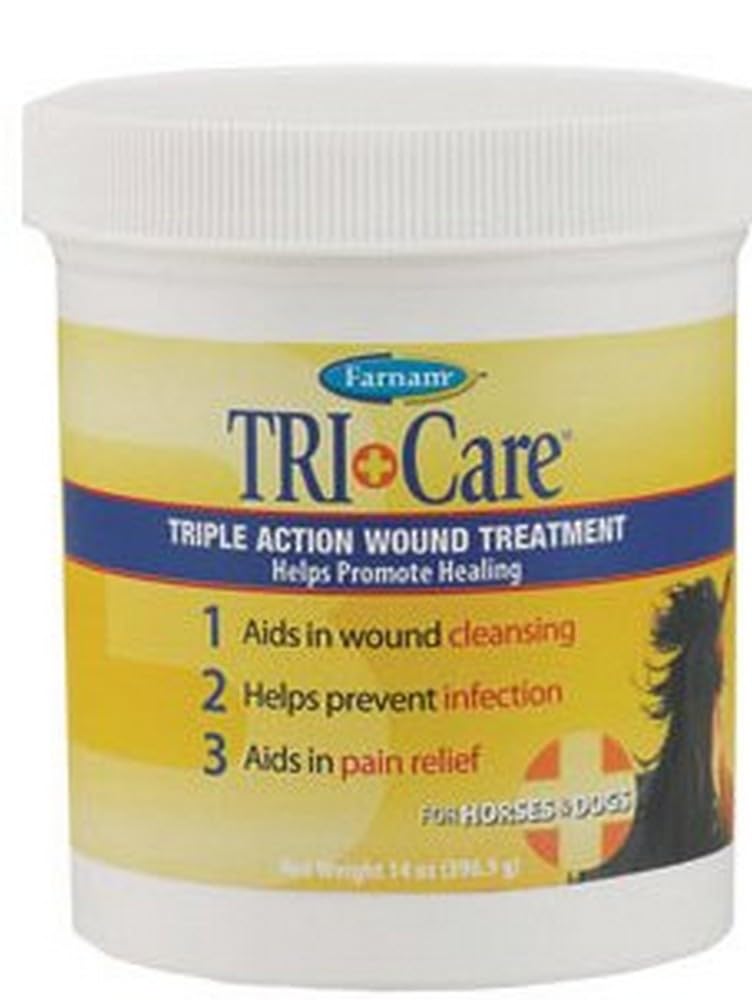
This ointment distinguishes itself through the inclusion of menthol — a detail that matters enormously for horses whose scratches present with intense pruritus (itching). The classic scratches lesion is painful, not itchy, but a subset of horses develop a secondary yeast or moisture-associated component that drives relentless rubbing against stall walls and fence posts. The menthol provides immediate counter-irritation that breaks the itch-scratch cycle.
The 14oz tub is the second-largest format in this guide, and the thick ointment base is excellent for applying to girth rubs, cinch galls, and the midline belly itching that often accompanies scratches in horses with metabolic sensitivities. Owners report that it softens the skin visibly within two days of application, making it a strong adjunct therapy for horses that also have concurrent rain rot or sweet itch on the body.
It is labeled for horses, ponies, and dogs, so it earns a spot in the multi-species first-aid kit. The ointment is moderately sticky — plan to wrap lower legs with a light standing bandage if your horse is turned out on deep bedding, as the exposed ointment will collect shavings.
Why we love it
- Menthol component provides real relief for itchy lesions.
- Large 14oz tub at a practical price point.
- Works on girth rubs and midline itch alongside scratches.
Good to know
- Sticky texture attracts bedding in deep stalls.
- Not pH-balanced; may cause stinging on raw, open skin.
5. Farnam Purishield Fast-Acting Spray 12oz

Purishield’s claim to attention in the scratches category is its patented Ceragenin technology — synthetic molecules that mimic the body’s own antimicrobial peptides. This is a fundamentally different mechanism from silver or iodine; Ceragenins enhance the local immune response rather than relying on direct chemical kill. The result is a non-irritating, non-stinging spray that horses tolerate extremely well, even on raw, weeping pasterns.
The 12oz spray bottle covers a lot of ground, and the 24-hour protection claim — while dependent on application stability — is credible for a product that forms a molecular bond with the skin rather than sitting on the surface. This is the best option for barns with multiple species (horses, dogs, cats) where a single product must cover everything from a cat bite abscess to a dog hot spot to a horse’s scratches flares.
It contains no steroids, antibiotics, alcohol, or chlorine, making it safe for use on compromised skin that cannot tolerate the sting of traditional antiseptics. The spray format is ideal for early-stage scratches where the scabs are still soft and moisture-prone, but less effective against thick, dessicated scabs that require the prolonged contact of an ointment or salve.
Why we love it
- Completely non-stinging; horses do not flinch at application.
- Works on dogs, cats, and livestock — one bottle for the whole barn.
- Ceragenin technology avoids resistance issues of antibiotics.
Good to know
- Less effective on thick, dry, established scabs.
- Spray format less tenacious than ointments in wet turnout.
FAQ
Should I pick the scabs off before applying treatment?
Can I use a scratches treatment on other skin conditions?
How long does it take for scratches to heal with proper treatment?
Is it safe to use a spray if my horse has cracked heels?
Final Thoughts: The Verdict
For most horse owners tackling pastern dermatitis, the treatment for scratches in horses winner is the Silver Honey Rapid Relief 6oz Spray because the RapidSorb technology penetrates established scabs without manual picking and provides immediate soothing relief that stops the stomping cycle. If your horse works through treatment and the scabs are dry and crusty, choose the Absorbine Silver Honey Ointment for prolonged contact time. And for a multi-species barn that needs a single, non-stinging spray for everything from scratches to hot spots, nothing beats the Farnam Purishield Fast-Acting Spray.